Skip to content

Taxonomy term

Content type

The closer the problem, the nearer its solution

Oxfordshire is one of ten early testers for Place Universal Offer (PUO) funding in England and we’ve used this support to turbo-charge our community-driven work to tackle systemic inequalities and to get more people moving.

With Oxfordshire becoming a Marmot Place, proportionate universalism is writ large in our work as a system.

PUO investment gives us a practical opportunity to provide a universal offer of leadership training, supporting work in culturally-competent ways, upscaling what works and sharing learning; all whilst, simultaneously, focusing more intensely on where needs are greatest and inequalities are most stark.

The role of Community Anchor Organisations

Our belief is that the closer we are to the challenges, the nearer we are to finding their solutions too.

PUO work is more than simply starting from scratch or creating new projects or programmes.

Instead, it’s about identifying community leaders in priority areas who already understand their barriers and have trust within their own communities.

PUO is also about working with and through them to create the biggest impact, and it’s about listening far more than talking and being ready to learn and shift the way that we work to optimise processes and results.

That’s why we have made a deliberate choice to work with a small number of Community Anchor Organisations in our priority neighbourhoods, including Oxford Community Action.

By working in this way, we can put lived experiences at the front and centre in the creation of solutions.

What difference is being made so far?

Whilst it is early days for our PUO journey, we are seeing some positive early signs that reinforce how it’s possible to enable both short-term action and long-term systemic shifts.
 

PUO is about identifying community leaders in priority areas who already understand their barriers and have trust within their own communities.

Communities can’t wait years for change, and they shouldn’t have to, but PUO funding has enabled us to start creating the environments needed for long-term change to empower action now.

The conditions defining these new environments are:

  • an increase in referrals from communities in priority areas into sport and physical activity interventions, which have proven to decrease inactivity and to improve wellbeing
  • regular dialogue with community leaders, which has strengthened our organisational knowledge and our understanding of community matters
  • direct community feedback and collaborative work with national governing bodies and their constituent clubs, which has resulted in the creation of new provisions, especially Sunnah activities
  • placing community needs at the front and centre of physical activity opportunities, which has resulted in five grassroots organisations receiving support to sustain these activities by Oxford Community Action
  • more upstream, systemic conversations taking place about how community groups can access leisure, sport and activity more easily.

Key learnings so far

So how has all this work helped us grow?

These are the key learnings that we’d like to share in case they can help others too:

  • Community leaders are not just vehicles through which communities can be reached and physical activity delivered. They are strategic trailblazers and face the same challenges as any other leads. In fact, the stakes on them are arguably higher as they live, work and play in the communities they serve.
  • Community work is a 24/7 job for community leaders. Organisationally, they need to be prepared to work differently. As one community leader told us: “For us, this is our live". We need to demonstrate that we truly care and want to make a difference to successfully build trust to undertake place-based work.
  • We need to be ready to step out of our comfort zone and be prepared to really listen to understand and speak honestly with each other.
  • We aim to blur the line between organisations, so there’s no more “us and them” and the system and communities see each other as part of the same team.
  • By working through Community Anchor Organisations, our network and reach naturally grow to include people and organisations we may not have met otherwise. This allows for the rapid growth of movement, as each person and organisation in turn introduces more people and organisations to this way of working.

We are six months into our three-year PUO journey and are really excited by early learnings and future potential.

This is a system-wide effort, with organisations like Oxford Community Action at the heart of change and, together, we are working to create healthier futures for the residents of Oxfordshire.
 

Preventing crime from the ring

Boxing is my religion. Like all spiritual journeys it began with a moment of divine inspiration and my baptism was conducted whilst watching Muhammed Ali defeat George Foreman in “The Rumble In The Jungle”.

I grew up in boxing gyms with the sport giving me purpose, discipline and titles – including representing my country on numerous occasions.

These days it offers me the chance to inspire the next generation of boxers and to help anyone who walks through the gym door, to believe in themselves and choose a positive path in life. 

When people ask me why boxing matters so much to me, my answer is simple: it changes and saves lives.

A safe space for all

Of course, it also improves health and builds confidence, but boxing keeps people – especially young people – away from anti-social behaviour and crime, something that I can personally verify as a former Youth Justice Manager. 

With the number of proven offences committed by children seeing an increase of 4%change has never been so important and there are many ways boxing helps fight crime.

Firstly, boxing gives young people structure and boundaries.

Many of the children and young people who walk through the doors of a boxing gym – like mine in Oldham, Greater Manchester – come from difficult backgrounds and have challenging lives. 

Having little or no access to opportunities and therefore a lack of agency in the world, may result in challenging behaviours. But not dealing with these pressures means they risk spilling out onto the streets and that’s where crime starts. 

Not because young people are 'bad', but because they have nowhere positive to pour their energy into. But boxing gyms can change that, as these spaces are built on discipline, respect, routine and team spirit.

Boxing gyms offer me the chance to inspire the next generation of boxers and anyone who walks through the gym door, to believe in themselves and choose a positive path in life.

You don’t just turn up to your gym whenever you feel like it. Instead, you’re expected to train on time, plus you have to listen to your coach, and you learn that effort leads to results and that shortcuts rarely work.

These lessons transfer directly into everyday life and children who understand discipline in a boxing gym are far less likely to make reckless decisions outside it.

Boxing also teaches emotional control, becasue contrary to what some may think, this sport helps a young person understand how to control their emotions, particularly aggression, and how to think and act under pressure.

I’ve seen it first hand – children who once lashed out can calm themselves because boxing gave them an outlet for their emotions and that allows them to thrive.

The many lessons of boxing

Boxing is a good metaphor for life and can help to develop those personal and social skills that people need, contributing to tackling deep seated worklessness and low aspirations.

The sport also fosters the development of positive character, self-esteem, self-discipline, courage, perseverance and resilience.

Instead of throwing punches on the street, they hit the pads, the bags and their coach or opponent inside the ring, but always with respect to the sport’s rules, under supervision and with a reason.

Boxing also teaches respect — for yourself and for others. You shake hands, you follow rules and you learn that real strength comes from self-control, not intimidation. These values reduce crime at its roots.

Another factor that's key is the sense of belonging among those practising the sport. A boxing gym offers identity and loyalty because, at a gym, you’re part of a team.

You train together, look out for each other and you wear the gym name with pride. That sense of identity can pull someone away from a path that leads to anti-social behaviour and crime.

I’ve seen boxing change lives in Oldham and Greater Manchester, where young people that were heading toward trouble now have focus and a reason to stay on the straight and narrow, and I’ve also seen young people who had no confidence, find self-belief.

Not all these children will become a champion boxer and that's okay.

Building better lives through sport

The real victories happen when a young person chooses to stay in school, can find a job or simply chooses not to commit a crime because they don’t want to let their gym or coach down.

At our newly refurbished Greater Manchester Boxing and Development Hub, we’ve been lucky enough to benefit from Sport England funding. 

To my mind, our investors aren’t just putting money into a boxing club and community gym. They’re investing in crime prevention and harm minimisation.

It costs less to fund a gym than it does to deal with the consequences of crime and anti-social behaviour policing, court cases, prison and reform  as recent estimates place the total economic and social cost of serious youth violence at £11 billion between 2009 and 2020.

For me, boxing is more than titles and trophies, it’s about giving people a chance.

Every time a young person chooses to walk into a gym and away from 'the road', I believe that’s crime prevention in action and that’s why boxing will always matter. 

As one of the 10 boroughs of Greater Manchester, Oldham forms part of Sport England’s Place Partnership with Greater Manchester Moving and other local bodies to implement Sport England's Uniting the Movement strategy for getting people active.

I’m proud of what boxing can do to change lives.

In the words of the iconic social activist, pacifist and politician, Nelson Mandela: “Sport can awaken hope where there was previously only despair.

Every day, I get to see the truth in these great words in action.
 

The not-so-obvious benefits of being active for young men

Suicide prevention and increased employability among young men might not be the traditional aims of physical activity programmes, but at Rise – the leading North East health and wellbeing charity – we're showing how lives and communities can be transformed using the power of movement.

Rise is the active partnership for Tyne and Wear, Northumberland and County Durham, and we’re using physical activity as part of a pioneering approach to reduce inequalities and to boost physical and mental health.

As part of this work, we’ve undertaken a significant project in Berwick called Rise’s Healthy Minds for Healthy Livesworking directly with more than 100 men aged 16-30.

Understanding the issues faced by our young men

Like many communities in the North East, young people in Berwick face complex socio-economic problems including unemployment, poor health, relationship difficulties and issues surrounding debt, poverty and substance misuse.

These struggles have had a consequential effect on the mental health of young men in town.

Using data from referrals and initial interviews of the young men we worked with in Berwick, we found that:

  • 43% constantly considered suicide
  • 76% had diagnosed mental health disorders
  • 81% had substance abuse issues
  • 67% were unemployed
  • 43% faced significant debt.

Our work within the community in Berwick addresses the physical and psychological aspects of wellbeing but it goes beyond that, giving people practical skills as well.

This broad and comprehensive approach helps build stronger and resilient mental health, enhancing young people’s overall quality of life, and by working directly with people who need our help the most, we aim to improve their immediate health and wellbeing.

We also build on their ambitions, motivations and employability prospects, which helps them grow their confidence, improve their mental health and to strengthen their wellbeing through physical activity.

Deacon's story

One positive example from our work within the Berwick community is Deacon’s story.

A local resident of 29 years of age, Deacon had struggled with social issues including anxiety and depression from a young age.
 

Suicide prevention and increased employability among young men might not be the traditional aims of physical activity programmes, but we’re showing how lives and communities can be transformed using the power of movement.

Following a difficult living environment, Deacon moved away from his support network to Berwick with his father and that's when isolation set in.

Deacon said: “I needed to be more active and find solutions. I’d never filled in housing applications; I’d never filled in job applications. That help was there when I needed it and I’ve improved in every aspect of my life. I refer to Jaki as the woman who saved my life. She’s absolutely amazing, I cannot thank her enough.”

When Deacon came to see us, I could have scraped him off the floor – he had no sense of self-worth – and I think that had been destroyed by the environment that he had been in.

But then I was able to get him enrolled onto an outdoor equine and nature activity course followed by an employment and wellbeing course.

Fortunately the course providers paid for the transport, which took away that barrier of him getting in from where he lived and he even helped him secure a job out of it!

After gaining employment, Deacon was able to acquire a bike and that enabled him to cycle to and from work, which helped him improve his physical health.

A month after that, he was also offered a local authority flat. The smile on his face was immense. I’m proud of how Deacon has turned it around.

The power of physical activity

Our internal data reflects that since May 2021, Rise has supported 118 young men to improve their lives. Recent evaluations found that: 

  • 96% showed a reduced risk of anti-social behaviour
  • 76% had successfully applied for a job, training or further learning
  • 87% now take part in physical activity
  • 75% felt confident with themselves and felt they were making positive choices.

Rise’s Healthy Minds for Healthy Lives project was initially supported by the Northumbria Violence Reduction Unit and London North Eastern Railway and has subsequently been funded by the National Lottery to enable the work to continue.

Through working within communities, we've helped transform the lives of young men, demonstrating how physical activity has the power to enact positive change. 

Find out more

What kids really need

He wasn’t lazy. He was bright, funny and desperate to be out in the world. But his local park felt unsafe, the youth club had closed and the nearest sport sessions cost more than his family could spare.

By the time he came to my paediatric clinic, what looked like a 'health problem' – low mood, poor sleep, weight gain – was really a place problem.

Why local spaces are key

We often talk about children’s health as if it starts in the hospital or the GP surgery, but as I explored in my recent BBC Radio 4 series, Three Ages of Child, the real foundations of health are laid much earlier and elsewhere: in homes, schools, streets and parks – places where children feel they belong in their own areas.

Sport England’s latest place work and research puts into numbers what many of us see every day – like the fact that over half a million children, one in ten 12-17-year-olds, say they don’t feel they belong in their community.

This means that almost one in five don’t feel proud of where they live, often because there’s nowhere for young people to go to, and because of the worries about crime and antisocial behaviour.

Take a step back and look at how this paints a stark picture of children growing up in places that feel unsafe, unwelcoming and not really 'for them', so it’s no surprise that in those conditions activity levels are low and health problems multiply.

The same research also points to part of the answer.
 

We often talk about children’s health as if it starts in the hospital or the GP surgery, but the real foundations of health are laid much earlier and elsewhere: in homes, schools, streets and parks – places where children feel they belong in their own areas.

When asked what gives them a sense of community – beyond friends and family – the top answer from young people was sports clubs and activity groups.

Anyone who has ever watched a child beam with pride after football training or a dance class knows why: a club is not just about exercise; it’s about belonging.

It offers a safe place to go with people who know your name and that offers the chance to be part of a team.

Dangers of the postcode lottery

But access to those opportunities is deeply unequal.

In England’s most deprived places, over a third of people are inactive, compared to around a fifth in the least deprived areas – a postcode lottery for physical activity that deepens health inequalities.

As a paediatrician, I see every day that a child’s postcode can be a stronger predictor of their health than their genetic code.

When local streets feel unsafe, there’s nowhere affordable to go and young people don’t feel they belong, it shows up in their bodies and in their minds.

If we care about the future of public health, we have to turn our thinking on its head, because health isn’t built in hospitals. It’s built in communities.

Exercise and sport are a kind of miracle cure – for health, wealth and happiness – but only if everyone can actually take part.

According to research by Sport England, every pound spent on community sport and activity brings multiple pounds back in benefits to health, wellbeing and the wider economy.

That’s why I welcome efforts to work in a genuinely place-based way – including Sport England’s commitment to invest in the areas facing the greatest challenges.

But beyond the work of any single organisation, the principle stays: you can’t fix place-based problems with purely top-down solutions.

Making children proud

For me, this is what it looks like to move from treating symptoms to changing systems.

You can’t lecture a child into feeling proud of their area or prescribe their way out of a broken play park.

But you can bring together the people who know that place best – including children and young people themselves – and invest in the spaces, clubs and connections that allow them to move, play and belong.

That means co-production, not just consultation: listening to what families say they need, backing trusted local organisations, designing activities that reflect different cultures, bodies and lives and being in it for the long haul.

Our children are telling us they want to feel proud of where they live and that they want to be part of something bigger.

Working locally, listening deeply and backing places over the long term is how we start to make that real – street by street, pitch by pitch, park by park.
 

Find out more

Place Partnerships

Making physical activity fun for all

At Get Doncaster Moving (GDM) we have a mission: to support the youngest in our society and their families to be as active as possible, because the benefits of moving are something that will accompany them for the rest of their lives.

It is with that mission in mind that across Doncaster, partners within our network are working together to create the conditions to help children, young people and their families build healthier, more active lives.

Through a place-based approach, the network is enabling innovative programmes, unlocking new partnerships and supporting communities to develop sustainable activity habits.

This is something we’ve undertaken as a long-term mission.

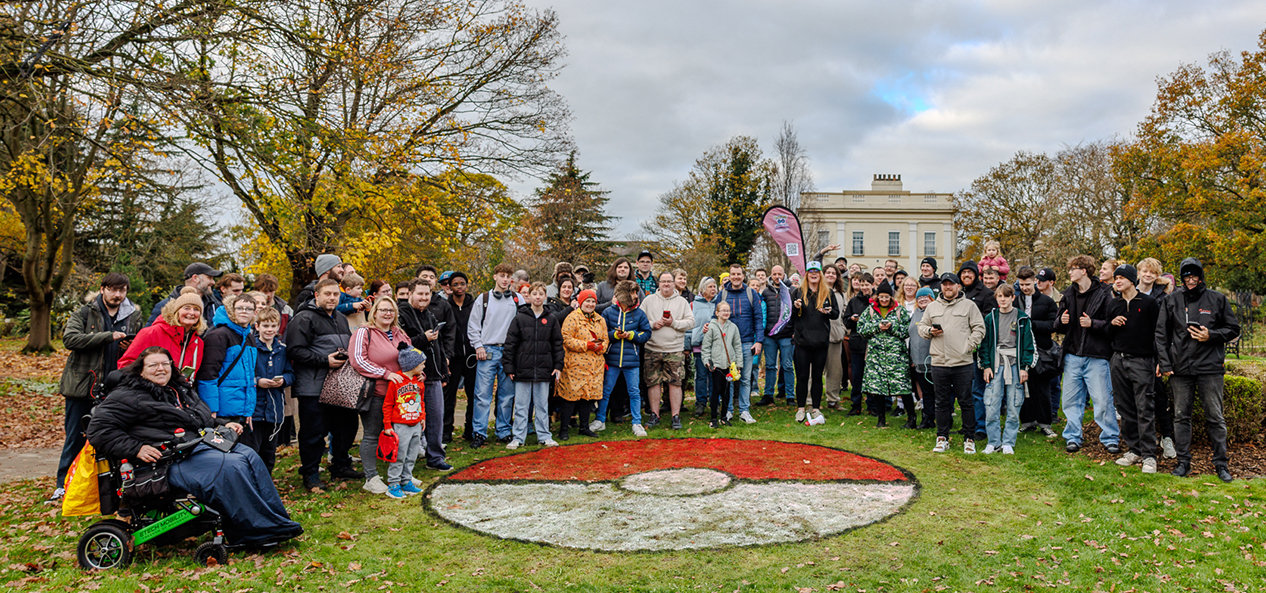
A group of poeple pose around a Pokemon ball that's been painted on park's floor.


Thinking outside the pitch

Reflecting on the past year, there are some stand out examples of how innovative partnerships have been the key driver behind GDM’s work to support children and young people – and their families – to move more.

Firstly, we’ve been developing new outdoor experiences to help children and families connect with local parks in different ways.

For example, GDM’s partnership with Enigma.Rooms introduced interactive digital trail games in parks across the city that engaged new and younger audiences through fun problem-solving and exploration.

The initiative was a success and contributed to Hexthorpe Park receiving the national ‘Green Space Innovation Award’ in 2025.

Then in November, and thanks to the efforts of the local Pokémon community, Doncaster was selected to host a Pokémon GO: Community Celebration event (the first place in Europe be chosen!), attracting thousands of local players and visitors.

The trails across two major parks showcased Doncaster’s green spaces while promoting movement through play.

Through a place-based approach, the network is enabling innovative programmes, unlocking new partnerships and supporting communities to develop sustainable activity habits.

GDM is continuing its work with local Pokémon Go group ‘Raiding Doncaster and beyond’ to grow this welcoming, inter-generational walking and gaming community, and encouraging new players to engage in this family-friendly activity, and to move more – particularly within Doncaster’s parks and green spaces.  

Trying something new

In sport, the ‘Free Park Tennis’ initiative started a couple of years ago in a local park to expand opportunities for children and families.

Resident volunteers have been trained as Free Park Tennis Activators to deliver free, weekly sessions to the community in two Doncaster parks, which led to one park being awarded ‘Park Venue of the Year’ by Yorkshire Tennis.

Our most recent park venue to host Free Park Tennis sessions, Haslam Park, which started in May this year, has already seen 369 attendances, with four local volunteers upskilled to deliver the weekly sessions.

This has been a fantastic opportunity for people to come along and 'have a go' at tennis in a relaxed and social setting, and it has been very popular with both children and families.

Doncaster’s place-based model played a key role in connecting partners and enabling the Active Start initiative, a programme designed for staff working with children aged 2–5.

Active Start is led by Yorkshire Sport Foundation, working in partnership with, and funded by, the South Yorkshire Integrated Care Board's Children and Young People’s Alliance. Their latest Impact Report: Giving children an Active Start is full of learnings and data.

This information is key to the training and resources they provide to early years professionals to help embed movement and active play throughout everyday learning.

This approach not only supports physical development but also communication efforts, social skills and school readiness, giving children the strongest start in life.

Doncaster’s Public Health and Early Years teams have trained as tutors, offering one-on-one support, continuing professional development opportunities and resources to nurseries, schools, childminders and all 12 family hubs, which are places for families to go within their communities to access groups and support.

Many settings have already taken part in centralised training and are now better equipped to encourage movement in class and at home.

But this is not all, because work will continue into the 2025/26 academic year as the programme develops further across South Yorkshire.          

Looking ahead, shifting the dial on children’s engagement in activity will require continued place-based collaboration.

Sustained shared learning, creativity and innovation – alongside a connected, empowered GDM network – will help Doncaster’s young people to move more, play more and thrive.

Find out more and connect with us

The power of our communities

Sport changed my life. I have vivid childhood memories of being driven all over North Yorkshire by my mum and dad.

We spent our Saturdays going from one brilliant and unique cricket ground to another, and I can still hear those echoes of leather on willow when I see them today.

Those weekends set off a lifelong love affair with cricket and the county I’m proud to call home, and even more proud to represent every day as a Mayor of York and North Yorkshire.

Everyone should have the same opportunities to get moving that I did, and that is why I am proud to launch the £2.75 million Movement, Activity and Sport fund.

Bringing the joy of movement to everybody

This is the first of the funds to be launched under my Moving Forward campaign and we are working closely with partners to make sure this investment targets support for those who need it most.

Beyond the health benefits, there aren’t many better ways provided by sport and physical activity to meet new people and build strong relationships in our local communities.

However, this is particularly key in our rural and coastal areas, where there are some pockets of real deprivation.

Too often families cannot get over the hurdle of costly cricket bats, football kits or transport to games, which means that those who would benefit the most aren’t able to get involved.

But by funding activities for those who might otherwise turn to anti-social behaviour, we can change lives and make our towns and villages a better place to live.
 

This is the first of the funds to be launched under my Moving Forward campaign and we are working closely with partners to make sure this investment targets support for those who need it most.

Our research tells us that over 30% of adults are classed as physically inactive, meaning they do less than 30 minutes of exercise a week, and that over 60% are overweight or obese, increasing the risk of long-term health conditions.

But this reality can be turned, and early intervention and prevention can make a big difference.

We can help that by making positive choices like introducing physical activity in our day to day, by considering more walking, wheeling and cycling for our working commute or to meet up with friends.

We are moving in the right direction, but there’s still so much more work to do!

After years of being ignored or minimised, women’s sport is getting the recognition it deserves with success after success for our national rugby and football teams, but girls still don’t get the same opportunity to get moving when compared to boys.

Moving forward together 

I have seen that first hand, because while my son had the pick of so many football clubs, we struggled to find one for our daughter. How can that be happening in 2025?

This plays out with so many families across the region and the UK every year, and it’s a big reason why girls are more likely to stop playing sport when they become teenagers. But we can also change that.

By enhancing skills development and training in the sector, alongside offering more inclusive activities, we will also tackle the barriers that people with disabilities face.

Disabled people are almost twice as likely to be physically inactive, but by working together with our partners we can start to improve those numbers and change lives.

My Moving Forward campaign is about backing people across our region to build the healthy and thriving communities they deserve. 

I believe in the power of our communities, the people and local organisations that keep them going.  

Our work is made so much easier thanks to the support of our strategic partners, including North Yorkshire Sport and the Place Universal Offer from Sport England and I’m truly excited about these, because together we can achieve so much more!

The best part of my job is seeing the huge impact that hard-working groups have on their neighbourhoods.

They know what they need, and we will work with them every step of the way as we continue Moving Forward together.
 

Communities on the edge

Coastal communities are some of the most beautiful places in England and many of the country’s wealthiest spots are on the coast.

But it is also true in England that a disproportionate number of the places suffering the most deprivation, worst physical and mental health outcomes and lowest healthy life expectancy are on the coast too.

All this may read contradictory, but coastal communities haven’t ended up in this position by accident.

Many were once thriving seaside economies, built on tourism and seasonal work, but as those patterns changed, they left behind communities with deep roots but with fewer opportunities than those in urban and rural communities.

This deteriorating state of coastal living standards is driven by deprivation and the complex and challenging issues around housing, transport and employment, which together lead to disproportionate lower levels of physical activity.

As Sport England highlight with their sustainability strategy, Every Move, adding to these challenges is that those facing the greatest inequalities are often the least active and the most affected by climate change.

Plus, coastal communities are facing significant climate effects through coastal erosion, flooding and the fact that industries on the coast are the ones producing the majority of the UK’s carbon emissions.

So how can we turn the tide on physical inactivity on the coast?

Can you define ‘coast’?

It is amazing that whilst we are an island, there is no agreed government definition for the term ‘coast’, unlike clear definitions for urban and rural areas.

This leads to the coast often being lost in talks around deprivation as the debate revolves around those in urban and rural areas.

The deteriorating state of coastal living standards is driven by deprivation and the complex and challenging issues around housing, transport and employment, which together lead to disproportionate lower levels of physical activity.

The Coastal Navigators Network, which tackles health inequalities on the coast, has identified that whilst coastal communities are often small individual places, when considered together, they are as large and significant as a national population group (19%) and the near equivalent of the entire North West and North East regions combined.

So with this in mind, what inequalities do people living in coastal areas face in terms of access to sport and physical activity?

The most obvious one is that for coastal communities half their catchment area is in the sea!

Away games are often long car journeys to the far away urban areas for at least half of their season and let's not forget about those extra carbon emissions!

However, it is the opposite for their urban colleagues, who consider their fixture in the season on the coast as going to the seaside for the day!

Sport and physical activity has come late to the policy work across England about improving opportunities for coastal communities, but is now beginning to build the partnerships with organisations like the Coastal Communities Alliance, OneCoast, the Coastal Navigators Network, and the Coastal Cultural Network.

In fact, in February 2026, the APPG Coastal Communities have scheduled a briefing session on the Culture, Creative & Sport Sector in coastal communities. (Please note that while no final information is available yet, the Coastal Community Alliance is currently organising this with the APPG, so check their sites and socials for more information.)

Where is the good work happening?

Five years on from its launch, Active Withernsea is making a real difference in creating physical activity opportunities and lifestyles and transforming its local community.

Local data by Sport England-funded Active Withernsea highlights that while in 2018, 44% of people in Withernsea were inactive (that is doing under 30 minutes of exercise a week), this number has gone down to 15 % of residents being inactive in 2024.

Further, the percentage of residents who are now active increased from 44% to 62% over this time period.

Happiness and satisfaction with life have also improved and anxiety amongst Withernsea residents has decreased, while activity for those with a disability has seen the biggest increase.

A Physical Activity and Community Engagement (PACE) network has been established to lead physical activity projects going forward and ensure that the work continues with more than 100 residents, groups and partners now directing the next steps to continue to deliver physical activity for the people of Withernsea.

What Active Withernsea has shown is that when national policy makers do focus on coastal communities, significant change can help increase physical activity levels. 

What is also clear is that Sport England place-based funding has begun to turn the tide for coastal communities and that, together, we will keep working to improve the lives of those living by the sea.

Find out more

Active Humber

Active environments – more than ‘a nice to have’

“If physical activity were a drug, we would refer to it as a miracle cure.”

This was the joint statement of the Chief Medical Officers of the UK in 2019 when referring to the evidence that physical activity can prevent and help treat many illnesses, including cardiovascular disease, type 2 diabetes, depression, cancers and dementia.

However, we know from Sport England’s most recent Active Lives survey that a significant proportion of adults, children and young people in England are not active enough to reap these benefits and, worse, some are entirely inactive (undertaking fewer than 30 minutes of activity a week).

And this is because, for many people, the barriers to getting active are still too high.

Moving around should be fun, easy and safe

According to Sport England research, if you are less affluent or live in a less affluent place and/or if you have a disability or long-term health condition, you are much less likely to be active.

The report also highlights that women and girls' activity levels are still lower than men’s.

But whilst inclusive and accessible sports opportunities and facilities are vital, at the Town and Country Planning Association we believe that where people live and their opportunities for easy and daily activity are crucial in getting people to move more.

Because whether people have the genuine opportunity to walk, wheel or cycle in their lives to commute, run errands and for leisure is important, especially for the least active.

The built and natural environments in which people live, work and play need to be ‘active environments’; that is, surroundings that facilitate activity for physical, social and emotional purposes.

Moving about a village, neighbourhood or city must be easy and fun, plus people must feel safe and comfortable in them, as active environments make 'the active choice' to be 'the easy choice' for everyone.

But creating active environments is not only a question of design but also of power, policy and participation.

Whilst inclusive and accessible sports opportunities and facilities are vital, we believe that where people live and their opportunities for easy and daily activity are crucial in getting people to move more.

Decisions about where new homes are built, how streets are laid out and whether parks, pavements and public transport are prioritised, all play a role in shaping how active people can be in their daily lives.

Yet too often, physical activity is seen as a leisure issue, rather than a systemic one rooted in spatial planning, social justice and public health.

To effectively embed physical activity into our environments and daily routines must be a shared ambition across sectors and professions – from planning and transport, to health and housing, as well as for leisure and open-space management.

Want to go out to play?

For example, it is no use creating miles of cycle paths if we are creating homes and town centres without space for secure cycle storage, not providing opportunities for our children to learn to ride bikes through programmes like Bikeability, or addressing poor attitudes towards cycling and reducing traffic speeds so that people (especially parents and caregivers) feel it is safe to ride even short distances.

Equally, we cannot expect our children to play out, like many of us used to do back in the day, if their neighbourhood streets and doorstep places are full of parked cars (too often on pavements) and moving traffic.

Research shows that basic, free outdoor play has fallen to its lowest level ever, with now only one in four children playing outside regularly compared to their grandparents’ generation, where almost three-quarters played outside on a regular basis.

Too often when we think about play in neighbourhoods, we default to thinking about structured activity and providing spaces that are designated and equipped.

Whilst play parks are important assets for all neighbourhoods, the doorstep and immediate street is also critical, and importantly, a space for children to play on a daily basis.

Accessible, safe street space is the most inclusive step we could take to make places more active and friendly for children, meaning we need to grapple with car and parking-centric design.

All of this is why a systems approach is needed – one that listens to communities, addresses inequalities and prioritises long-term health outcomes in decisions about land usage and investment.

Active environments cannot be a ‘nice to have’; they must be seen as essential infrastructure for a healthier, more equitable future.

The Town and Country Planning Association works to make homes, places and communities in which everyone can thrive.

We work to influence and shape the planning system at the national and local level, but we recognise the multi-dimensional nature of place-making and how places and spaces are shaped by communities and can be ‘activated’ for activity.

For the last six years, in a partnership with Sport England, we have worked to create healthier, more active communities, building knowledge and capacity with partners and local authorities and advocating for health and activity to be embedded in planning policy.

A welcome new approach to school sport

The Prime Minister has announced a bold new vision for school sport, introducing plans for new School Sport Partnerships and an Enrichment Framework.

The announcement also sets a clear commitment for equal access and the protection of two hours of high-quality physical education for every child each week, along with the introduction of new ‘sport profiles’ that outline each school’s sport and enrichment provision.

We welcome this announcement as the latest Active Lives Children and Young People Survey Report highlights persistent and significant challenges in how children and young people engage with sport and physical activity, reinforcing the urgent need for more inclusive, youth-led and enjoyable movement experiences:

  • Fewer than half of children meet the Chief Medical Officer’s Physical Activity Guidelines.
  • Only 49% of children strongly agree that they enjoy being active.
  • Government guidelines recommend that children and young people achieve 30 minutes of physical activity during the school day, and 30 minutes outside of school. However, our research indicates that only 45% of children meet this target during school hours and just 56% meet it outside of school, with participation levels varying significantly across different demographic groups.
  • For some young people, school is their only opportunity to experience the benefits and enjoyment that sport and physical activity can bring in these formative years.

The announcement sets out a clear strategic vision that will benefit generations to come.

We welcome this announcement as the latest Active Lives Children and Young People Survey Report highlights persistent and significant challenges in how children and young people engage with sport and physical activity.

Given the strong link between physical activity and improved whole-school outcomes – from embedding essential life skills to broadening horizons and helping young people build a positive, lifelong relationship with movement – we support plans for this more concerted effort around the school sport agenda.

The announcement builds on the work the government is already doing with partners including the Youth Sport Trust and ourselves to boost participation, having already invested £100m to upgrade sports facilities back in March this year.

We strongly believe that this new approach to school sport should build on the existing strengths, assets, and resources of the current school sport system.

We look forward to working with government to bring this new approach to life, sharing the insights from the recent School Games Organisers Network Review (whose Objective A report will be published towards the end of the month), shaped by the contributions and time of many colleagues across the school sport landscape.

A new step in tackling inequalities

At Sport England, our mission, which we call Uniting the Movement, is clear: to ensure that sport and physical activity are accessible to everyone, particularly those who need it most.

As part of this commitment, we are excited to launch the Place Need Assessments.

These are a collection of key resources designed to help organisations better understand the specific needs of different communities and where (and how) to target efforts in tackling inequalities, so everyone is able to be active.

The new assessments demonstrate how our Inequalities Metric and Place Need Classification can enable us and our partners to make more informed and data-driven decisions.

But what exactly are the Inequalities Metric and Place Need Classification?

The Inequalities Metric is a tool that identifies the key characteristics that have the most impact on people's minutes of activity.

It shows that those with two or more characteristics of inequality (for instance, someone with a disability and who is also over 65 years old) are significantly less active than those without these attributes helping us focus our support where it’s needed most.

On the other hand, the Place Need Classification highlights the areas with the greatest need by combining data on physical activity levels and wider social information, including the Index of Multiple Deprivation and Community Need Index.  

The new assessments demonstrate how our Inequalities Metric and Place Need Classification can enable us and our partners to make more informed, data-driven decisions.

This classification helps us and our partners target investment and action in the areas where it will have the most impact.

These tools have been instrumental in shaping our work and informing investment decisions..

The importance of intersectionality

A key message from the Inequalities Metric is that intersectionality has an impact on activity levels.

If we're to level the field so everyone is able to be active, we need to do more to cater for people with multiple characteristics of inequality.

The numbers are clear:

  • 75% of adults with no inequality characteristic meet activity guidelines, compared to 44% for those with two or more.
  • 51% of children with no inequality characteristics meet activity guidelines, compared to 39% for those with two or more.

These figures prove that if adults with one, two or more characteristics of inequality were active at the same levels as those with zero characteristics of inequality, there would be over four million more active adults and an estimated £15.6 billion more annual social value created by sport and physical activity.

Therefore, the good news is that there is an opportunity to be more focused and tailored to those whose behaviour we’re trying to influence and where (which places).

This doesn't mean we should solely focus on people with two or more characteristics of inequality, or that there aren't other groups who experience inequalities in participation or who experience discrimination. 

What it means is that where we're applying the Inequalities Metric (and Place Need Classification, of which the Inequalities Metric is a component), we're using the data to inform (not restrict) our decisions, and we'd expect the same from our partners and other organisations.

How the Place Need Assessments work

The Place Need Assessments are designed specifically to support other organisations to use the Inequalities Metric and the Place Need Classification to support localised decision-making.

These two tools provide a structured approach to identifying and understanding inequalities in sport and physical activity at local and neighbourhood levels. 

Using national and local data, organisations can:

  • identify priority areas and groups where interventions can have the greatest impact
  • assess both sporting needs (where people are less active and inequalities in participation are high) and social needs (where health, wellbeing and economic outcomes are poorer, meaning that increased activity could have the greatest benefits)
  • tailor interventions and programmes to address local characteristics effectively.

The assessments are an example of how to take a data-driven approach to guide decision-making and ensure that investment, support and interventions are directed towards, and tailored to, the communities where they can create the most meaningful change. 

Thanks to our Place evaluation we know that this type of analysis is an important foundation for locally productive partnerships.

And we also know that partners collaborating on an approach like this can help build shared understanding and purpose, increasing the likelihood that combined actions are aligned and effective.

They are not an exhaustive approach and, within them, we highlight where different types of data (e.g. local, national, qualitative – including lived experience – and quantitative) can play a role.

They are intended to provide a framework where organisations might need support but, of course, there are other datasets and other means of analysis that can achieve similar outcomes.

Next steps and how to get involved

We've developed a range of resources to support organisations to use the Place Need Assessments. These are:

  • What you need to know: a summary highlighting the insights you'll gain from carrying out a Place Need Assessment.
  • A Step-by-Step Guide: a document outlining how to conduct a Place Need Assessment.
  • Real-World Examples: three assessments to serve as examples demonstrating how need differs from place to place and how to draw conclusions from the data.
  • Supporting data files: the data needed to conduct a Place Need Assessment, following the approach outlined in the Step-by-Step Guide.

By using these resources, you'll be able to better target interventions, ensuring that sport and physical activity reach those who need them most.

If you’d like to learn more, please visit our new webpages or get in touch to discuss how the assessments can support your work.

Let’s continue working together to tackle inequalities and to create more opportunities for everyone to be active.

Find out more

Place Need Assessments

Place support for children and young people’s activity levels

According to the results from Sport England's latest Active Lives Children and Young People Survey Report, more than half of all children and young people (52.2%) aged from five to 16 are not meeting the Chief Medical Officer’s guideline of taking part in an average of at least 60 minutes of sport or physical activity a day.

The results also show that significant inequalities remain in activity levels, with Black (42%) and Asian (43%) children and young people, and those from the least affluent families (45%), still less likely to play sport or be physically active than the average across all ethnicities and affluence groups.

The outcomes are, of course, concerning, not only for the current physical and mental health and wellbeing of our children and young people, but also for their future too – if people aren’t active when they are children, they are also less likely to be active as adults.

Starting young and local

However, seeing results like these, has led the APNO and Active Partnerships network – a group of 42 organisations who are immersed in their places and that work with local communities and local partners in different parts of the country to help everyone live a more active life – to underline their commitment to working with children and young people.

It’s why we’re more determined than ever to support this key group – especially those who face barriers to be active – and to help them develop a life-long love of sport, physical activity and movement.

This week, around 100 people from across the Active Partnerships network and Sport England will be coming together in Birmingham to explore how we can better support young people through our work in place, as evidence suggests that the place where a person is born and lives has a huge influence on how likely they are to be physically active.

According to the results from the latest Active Lives Children and Young People Survey Report, more than half of all children and young people (52.2%) aged from five to 16 are not meeting the Chief Medical Officer’s guideline of taking part in an average of at least 60 minutes of sport or physical activity a day.

Place work involves Active Partnerships, along with a multitude of partners, and it's supported by investment from Sport England to dig into the detail of the specific issues and challenges that are preventing people from being active in a particular area.

This kind of work also looks at the systems they are connected to (or influenced by) in the areas that they live, and to find how best to provide support and work together to try and find sustainable solutions.

We know this approach works thanks to existing Place Partnerships (previously known as local delivery pilots) like JU:MP in Bradford, which is funded by Sport England and is supported by the Yorkshire Sport Foundation.

Among other important cross-cutting themes that will be discussed and explored, the event in Birmingham will focus on how to embed positive experiences in sport and physical activity for children and young people, the role of active environments, youth justice and health, and how we continue embedding youth voice.

Supporting the future generations

Positive Experiences and Youth Voice are two interconnected approaches.

Youth Voice is about ensuring that young people get to choose how they move and it focuses on respecting their right to have their voices heard and acted upon.

Embedding youth voice is one of the key ways that we can keep making sure that children and young people have positive experiences, because when young people feel heard, they’re more likely to continue participating in sport and physical activity.

Youth Voice has been a particular focus of the Opening School Facilities (OSF) – a three-year programme where Active Partnerships and partners supported more than 330,000 children and young people (as well as nearly 120,000 community users) to take part in physical activity sessions in more than 1,600 schools across England.

In fact, one of our OSF consortium partners, Street Games, undertook a series of Youth Voice consultation sessions with students and this research helped to provide insight around the type of activities that young people want to take part in.

So, where else can Active Partnerships play a key role?

It was good to hear that the Government wants to create the happiest and healthiest generation of young people ever and movement, physical activity and sport can clearly play a crucial role in achieving this.

So, as well as continuing our work with partners in places across England, we’re also looking forward to finding out how we can play our part in achieving this mission, as we continue supporting all children and young people to live active lives.

Place-making for young people

We only get one childhood and there was a time when being a child meant playing out, spending time with friends in person, exploring, joining teams, falling out, making up and everything in between.

Sadly, this is not the case for most young people nowadays, but why?

On the one hand, our research indicates that at least one in four young people feel they don’t ‘belong’ at school.

And Sport England's latest Active Lives Children and Young People report tells us that almost 50% of young people are not meeting the Chief Medical Officers' guidelines of having 60 minutes of physical activity a day, and that young people are spending more time interacting with screens than with their peers.

A Black boy wearing a blue t-shirt with a white Youth Sport Trust logo stands on an outdoors football pitch pointing at something with his right hand while holding a yellow football with the other one. A group of three kids is seen behind him.

But what are the underlying reasons for these worrying statistics?

Young people’s opportunities to be active depend on systemic issues including their postcode, their social and physical environment and the cultural norms they live by.

This is why at Youth Sport Trust we’ve taken a place-based approach to understand and tackle these stubborn inequalities.

We want to do things ‘with’ people, rather than ‘to’ or ‘for’ them.

Why Place-making?

In 2023 we launched Inspiring changemakers, building belonging – our new strategy to reach more young people and the communities we serve with a renewed focus on starting locally and building momentum.

We started in three places with three schools that are in the top 5%-10% of deprivation in England: The Prescot School in Knowsley (Merseyside), Prince Albert High School in Perry Barr (Birmingham), and Mulberry Stepney Green Mathematics Computing and Science College (Tower Hamlets, London).

These three places face huge economic and cultural challenges, and their physical environments have been neglected, meaning that the ‘civic infrastructure’ (areas such as youth clubs, community centres or places and spaces to play) have been removed over time.

Young people’s opportunities to be active depend of systemic issues including their postcode, their social and physical environment and the cultural norms they live by

People here are used to being told what’s wrong but through hope, community spirit and ambition we wanted to focus on ‘what’s strong; not what’s wrong’, using a place-making approach.

Note we talk about an ‘approach’ rather than a ‘plan’ and this is because we’re following a set of principles, instead of rules.

Joining the dots

Place-making is a fluid and dynamic way of working that’s context-focussed, rather than project-focussed.

We wanted to put schools back at the heart of these communities for them to act as catalysts for social change.

However we had also heard stories of persistent absenteeism among students and of the struggle to recruit and retain teachers.

There were also descriptions of pupils' bad behaviour and lack self-regulation, which in many occasions resulted in a lack of aspiration and a rise in apathy.

That all needed to change, so for over 18 months we worked in these places, spent time there, built relationships, listened, learnt and tried to put wind in the sails of the educators and people who know these places better than anyone.

We wanted to listen to the people living, working and playing in these places, but with a listen-to-understand rather than a listen-to-respond attitude, and in order to achieve that we created a new role in schools: the place-maker.

Place-makers are members of staff that live in the community (or have strong connections to it) and who can help activate young people’s talents.

This small group of changemakers have been incredibly effective at joining the dots with local stakeholders including youth services, policing, transport, health and housing.

And there’s more!

We’ve also created the 'Communities of Place’, a series of safe and brave spaces where people are encouraged to raise important issues and work out solutions together.

The importance of trust

In Perry Barr, for instance, girls were not accessing opportunities at the same rate as boys, so the school made a connection to Saathi House, which is a vibrant local community hub specifically designed for women and girls.

Together, they listened to understand the community needs and, as a result, enabled an NFL Flag Football project to provide a safe, diverse and inclusive space for young girls to learn, play and grow together that was managed by a group of female mentors promoting physical fitness, teamwork, confidence and leadership.

Through our approach to Youth Voice, we've also discovered an appetite for Youth Leadership, so the schools invited students to apply to become a young place-maker.

They received 109 applications and there are now 35 young place-makers in Tower Hamlets and The Prescot School, proving the desire for young people to be the change they want to see in their community.

Our place-based work is built on shared values and purpose, because we:

  • spend time with people in their places
  • build reciprocal relationships and see what we can give rather than extract
  • understand by truly listening
  • focus on strengths rather than deficits or weaknesses
  • are transparent and have tough conversations.

If you take the first letter of these values, you get the most important component of what we do: trust.

Trust is fundamental to us because we’ve learned that progress travels at the speed of trust and that trust is also the hardest thing to earn and the easiest to lose.

And while we are also aware that we don’t have all the answers, we believe that the people in these places do and that part of our collective role is help them to unlock them.

Find out more

Youth Sport Trust

An integrated approach to increase activity and wellbeing

The first time the importance of spatial planning in creating population-level increases in physical activity was articulated was through the You’ve Got This (YGT) programme – the Sport England-funded Place Partnership in South Tees.

Sport England has worked on different approaches to capacity and hosting when taking a place-based, whole-systems perspective to work and I'm happy to have contributed to the latest set of resources published by the organisation.

YGT adopted the socio-ecological approach to systemic change, where policy and the physical environment appear as key components of the wider determinants of health. 

These aspects are recognised as carrying a high weighting in this framework – difficult to influence but once achieved, the changes are highly impactful over the medium and long-term.

The need for cooperation and understanding

These considerations resulted in the creation of my role.

My post looks at improving collaboration between public health, transport planning, and planning departments across South Tees to promote health, well-being, and physical activity through the Local Plan, the wider policy framework, and innovative new programmes.

My job looks at improving the collaboration between public health, transport planning and planning departments across South Tees to promote physical activity through the Local Plan and the wider policy framework for local healthcare services in a number of community wards and venues across Middlesbrough, Redcar and Cleveland, and Hambleton and Richmondshire.

Previous attempts to enhance collaboration across South Tees had faltered due to time constraints and heavy workloads.

Recognising this, YGT facilitated initial meetings where urban planners, transport planners and public health practitioners could gather away from the office environment.

This process revealed issues such as a limited understanding of each other's roles and decision-making processes, alongside a shared commitment to creating healthier environments and a strong desire to collaborate.

You've Got This has adopted the socio-ecological approach to systemic change, where policy and the physical environment appear as key components of the wider determinants of health.

Over the course of a year, three additional workshop sessions were convened to further explore these issues.

Simultaneously, through Sport England's partnership with the Town and Country Planning Association (TCPA), YGT established a new relationship with one of their experts, Gemma Hyde, who played a pivotal role in charting a path forward.

The culmination of these efforts brought together senior planners, transport planners and public health practitioners supported by Sport England, the TCPA and The Royal Town Planning Institute (RTPI).

Despite initial slow progress, participants valued the time for reflection and identified key issues like capacity and staff training.

Collectively, it was agreed that there were specific challenges related to coordinating the work and addressing the need for knowledge and training among staff and elected members.

To support the process, YGT agreed to fund a position initially for a period of two years and that this role would encompass the whole of South Tees, with Middlesbrough Council (MC) serving as the employer.

This is where I join the story.

Reflecting on progress to date

My background as a behavioural scientist and public health spatial planner definitely came together on this project, as behavioural science studies the patterns, motivations, and factors that influence human behaviour across different contexts, using scientific methods to understand why people make the decisions they do and how behaviour can be modified or improved at individual and societal levels.

Our boroughs, MC and Redcar and Cleveland Borough Council (RCBC) are currently at different stages of the Local Plan cycle.

In the emerging Local Plan for MC, I contributed to the Health and Wellbeing Policy and successfully secured an agreement to require Health Impact Assessments (HIAs) for all residential developments that exceed 100 dwellings.

I also devised an additional HIA screening process based on health and open-space ­deprivation on a ward-by-ward basis to be conducted for all major development across town.

There was also the completion of a Health in All Policies (HiAP) assessment of the emerging plan (Regulation 18).

Productive discussions with colleagues in RCBC have centred on the potential for a similar approach in the future review of the Local Plan.

I've also facilitated, with colleagues across public health and spatial planning and other stakeholders, the creation of MC’s first HIA toolkit, which has physical activity at its heart and taking as our primary model the well-respected HIA materials created by John Wilcox and colleagues at Wakefield City Council.

Public Health South Tees recently completed our Joint Strategic Needs Assessments (JSNAs), to which I also contributed, ensuring that the JSNA is integrated into MC's emerging local plan for health and wellbeing policy.

Once adopted in late 2025 or early 2026, this will provide developers with clear baseline information about our communities and our priority goals for health and wellbeing across the borough.

Looking ahead

The foundational changes we're beginning to implement in South Tees represent a significant shift in how we integrate public health, planning and transport policies to promote physical activity and wellbeing.

However, we face significant challenges ahead.

We'll need to secure sustained funding beyond the post's initial two-year period, maintain momentum across different planning cycles between our boroughs and ensure consistent implementation of our new policies.

Looking to the future, our next steps of sharing best practices through Sport England's expansion process and deepening collaboration with the Tees Valley Combined Authority are crucial for scaling our innovations.

If we succeed, we could contribute to a new standard for how local authorities approach integrated planning for health and physical activity, potentially influencing national strategy and contributing to more active, healthier communities across England.

Why integrate activity into health and care?

Health has never been higher on the nation’s agenda and if this was ever in doubt, the launch of the government’s consultation to build a health service fit for the future confirms this.

Their ambitions are clear and aim to move health care ‘from the hospital to community’ and for us at the Active Partnerships network, this is high on our agenda too. 

Unfortunately we also know that our health and care systems are under huge pressure.

According to the Richmond Group of Charities, more than 14 million adults in England live with two or more long-term health conditions. That’s one in four of us and as an ageing population this number is set to grow.

We believe that wealth will be built through health, as people leading active lives turbo-charge our wellbeing and help to prevent and manage illness, saving the NHS billions and thereby boosting economic growth.

Backing this statement is Sport England’s latest social value of sport and physical activity report, which found that being active relieves some of the NHS burden by preventing 1.3 million cases of depression, 600,000 cases of diabetes and 57,000 of dementia. 

Health has never been higher on the nation’s agenda and if this was ever in doubt, the launch of the Government’s consultation to build a health service fit for the future confirms this.

Further, their research found that leading active lives saves the NHS £540m on reduced GP visits and £780m on reduced mental health services usage.

It’s clear that supporting people to get active is the sustainable way to secure the future of our NHS and that this is key to creating healthy, active and long lives for everyone in England.

Physical activity and sport must therefore be at the heart of a prevention-first health system and, by default, integrating physical activity into our health and care systems will help achieve this. 

Local work for a national ambition

Across England, we are seeing more and more collaboration between physical activity and the health and care sectors, but we need to keep moving this forward and at pace. 

However, for this to work it must happen locally, starting at a community level. But what does this look like in practice? Let me share a couple of examples.

Take the work of wesport. The team there has brought the falls prevention programme – Fall-Proof – to communities across the West of England, including Bath, Bristol, parts of Somerset and South Gloucestershire. 

This strength-and-balance campaign consists of easy-to-follow guides, a series of Move to Improve self-help cards and classes to prevent falls.

By building simple exercises into people's everyday lives and routines, this helps to keep them steady, strong and able to get out and about, improving their quality of life and opportunities. 

The programme was made possible because of the system-wide advocacy and investment across the South West – from integrated care boards and from the voluntary and community sectors.

Elsewhere, Active Essex forged a strategic partnership with Essex County Council’s adult social care and community organisation, Sport For Confidence.

The aim is to create further opportunities for disabled people and for those living with long-term health conditions to be active and to engage in physical activity within their community in order to enable independence and to achieve wider outcomes.

The resulting Prevention and Enablement Model (PEM) was a range of system-led, co-designed and context-specific opportunities.

The programme also included an integrated falls-prevention programme, inclusive activity sessions in leisure centres and support for health and social care professionals to embed physical activity into their everyday practice.

Independent assessments of the programme by the University of Essex, found that the social value calculation was that for every £1 invested there was a £58 return of investment of social value.

And their insights revealed that people who accessed PEM services perceived themselves to have experienced benefits such as enhanced health, wellbeing, confidence, skills, independence and improved routine and structure to their days. 

The success of the programme speaks for itself as it is now being rolled out county-wide through Reconnect.

A goal best achieved together

Ours is a complex challenge where collaboration is key, which is why – thanks to funding from Sport England – our network is working with specialist physical activity consultancy Move Consulting on a 15-month project that will support people living with, or at risk of, long-term health conditions to be more active.

Our Integrating Physical Activity Pathways for Health project will provide consistent, quality-assured models of delivery trusted by health and care colleagues to offer better assistance for those communities in most need.

Together, we aim to develop a framework of support that includes information, guidance and resources and tools that can be applied and used locally to help improve access to community-based activity.

By working closely with the health and care sector – including our partners NHS Horizons, the Richmond Group of Charities and CIMSPA  and in a sustained and systemic way that allows understanding, listening and acting on the needs of our communities, physical activity can be delivered alongside routine care as a key intervention to support our health. 

So our mission is clear: working together to develop physical activity as a core component of our health and care systems and provide opportunities and programmes of support for those who need it most, so people feel empowered to lead more active, healthier and happier lives for longer.

A personal campaign against diabetes

November is National Diabetes Month, which brings us an opportunity to consider those living with this long-term health condition.

Without intervention and management, diabetes can limit a person's life satisfaction and can affect all sorts of opportunities including the enjoyment of work and leisure.

According to Diabetes UK, nearly 10% of the Blackburn with Darwen population has this long-term condition and more people have been diagnosed with it in the borough than anywhere else in the North West.

An old gentleman is seen bare chest and witha swimming cap on with an indoors swimming pool behind him. The words" Diving in at the deep end." appear to his right and behind him and over a yellow rectangle on the bottom left it says "Blackburn with Darwen" and then on the bottom right the copy says "Proudly supporting We Are Undefeatable" and the suffix "able" is underlined.

Research by the NHS shows that people who move less are more likely to develop Type 2 Diabetes and that physical inactivity is responsible for an estimated 15% of diabetes cases.

On top of that, last year's Active Lives adults data show that people across Blackburn with Darwen are significantly less physically active than the national average with only 58.5% of people doing 150 minutes a week of physical activity in this borough, compared to the national average of 63.4%.

We also know that inactivity is one of the key factors driving premature mortality from non-communicable diseases in our area, including cardiovascular disease, diabetes, respiratory diseases and cancers.

And thirdly, we knew that there was so much we could do to support our residents living with diabetes and other long-term health conditions and that physical activity had a huge part to play.

Without intervention and management, diabetes can limit a person's life satisfaction and all sorts of opportunities including the enjoyment of work and leisure.

So in June 2024 we began working with Blackburn with Darwen Borough Council and other partners to bring We Are Undefeatable to communities across our region.

We Are Undefeatable is a national behaviour change campaign which encourages people with long-term health conditions to stay active.

Exactly what we needed!

But we wanted it to really resonate and to have maximum impact and for that we needed to make the campaign relevant to our residents.

Combining national efforts with local faces

Developed by 15 leading health and social care charities and backed by The National Lottery funding from Sport England, We Are Undefeatable supports people with a range of health conditions, including (but not limited to) arthritis, Alzheimer’s, asthma, cancer, dementia, heart disease and diabetes.

Through We Are Undefeatable, we wanted to support our residents living with these long-term health conditions to lead a full life and to show them that they can actually improve their physical and mental wellbeing by being active.

So, together with partners across the borough, we sought to localise the campaign by featuring Blackburn with Darwen residents living with these conditions and signposting others to local services. 

We created bus shelter adverts, images for digital screens in the town centres and a social campaign across multiple accounts and platforms with pictures of our residents living with long-term health conditions being active, and – more importantly  feeling the benefits derived from it.

From boxing and wild swimming to cycling and walking, these inspiring individuals showcased the diverse ways to be active, regardless of their condition.

One of these residents was Ralph. 

Ralph has had two heart attacks, a heart bypass and lives with Type 2 Diabetes, which led to him becoming visually impaired.

In films, photos, in print and online, we showed that Ralph loves to swim and how he walks whenever he can to keep as active as possible.    

This approach is working! 

We’ve seen the power of a localised health initiative, in partnership with a national campaign, to help tackle and reduce health inequalities in our borough.

Working together, we took a whole-systems approach to tackling physical inactivity.

We engaged all stakeholders, including council and health leaders, community, voluntary organisations, the wider public sector, private business and local communities themselves, to make a significant difference to the health and wellbeing of our residents.

Using data-driven insights, including population health data at ward-level, and collaborating with a diverse array of partners, the campaign has gone above and beyond initial expectations and made significant impacts in targeted communities.

The collective strength that resides within our communities is inspiring and empowering.

Through localising We Are Undefeatable and through people like Ralph, we’ve shown the transformative power of collaboration and how together we can create a culture of health and wellbeing in Blackburn with Darwen and beyond.
 

Happy anniversary, Place Expansion

They say time flies and while this is a cliché, it is one that’s undeniably true. 

It’s certainly the case when it comes to our Place Partnerships, because as we celebrate a year since we kickstarted our Place Expansion, a lot has happened!

Back in November 2023, our Place Expansion programme committed to investing £250 million of National Lottery and Exchequer funding into local communities across England in the following five years, to ensure those in greatest need were able to get active.

We've had a busy and positive year

In the past 12 months, and through this first phase of this Place Expansion, we’ve invested in 53 new places across England, partnering with 27 Active Partnerships and the dedicated organisations they work alongside.

From Swindon to Stoke-on-Trent, Blackpool to Brent and Walsall to West Norfolk, we’ve been partnering with key stakeholders in each of these places to establish what the local ambition and approach will be.

A group of kids play on a scooters park in Exeter during the Cranbrook Pump Track launch event in September 2024. Image credited to Matt Round Photography.

And through this way of working we have engaged partners from local government, the health sector, the community and voluntary sector, and the transport and housing sectors.

The result? A real positivity from these stakeholders about the approach we are taking.

We are currently working alongside our partners to establish ‘where next?’ so that we can continue to grow this approach with pace and impact (spoiler alert: we have plans to expand our investment to 80 places in the coming months).

We’ve also begun to invest £35m into our original 12 Place Partnerships to help deepen and strengthen these relationships so that, together, we can have an even greater impact.

Yet, we want all places to feel part of this approach.

With that aim in mind, most recently work began to roll out our Universal Offerwhich will see a £25m investment to support the whole sector to supercharge their efforts to tackle inequality and inactivity and evaluate the impact they are having. 

We are currently working alongside our partners to establish ‘where next?’ so that we can continue to grow this approach with pace and impact.

Our support will ensure all places across England will gain access to the tools, resources, learnings and capabilities to help them work more collaboratively and achieve the systemic change that is needed at a local level to address the barriers to getting people active. 

By galvanising the system in this way, we know we can bring about lasting and sustainable change to every part of the country.

Working together for local change

Since launching our place-based expansion last November, we’ve invested nearly £20m to help each of our place partners develop their individual approach.

This way of working – ground up and rooted in the needs of local communities – is contributing towards achieving a positive impact that we have not seen previously. 

We’ve seen that baking in physical activity into local, long-term strategic and policy commitments is a key solution to driving change within wider outcomes such as health, environmental sustainability and community cohesion.

Take Exeter as an example.

They have embedded our Active Design principles into their Liveable Exeter strategy –  a 20-year housing plan – by which they will build 12,000 homes where giving people chances of being physically active are at the front and centre of those developments.

We’re also seeing greater connection and collaboration amongst partners within a place than we’ve ever seen before.

At the end of September, the Greater Manchester Memorandum of Understanding brought together the combined authority, integrated care partnership, the transport, voluntary and community sectors, leisure providers, the GM Moving Active Partnership and Sport England. 

Through this collaboration, we will see resources aligned to support the integration of physical activity and sport at the highest decision-making levels in the city and region. 

And within these communities, we are seeing that this work is contributing towards positive signs of inequalities reducing and the inactivity gap closing. 

The contribution of the work and the focus of partners in Greater Manchester has seen year-on-year reductions of inactivity levels in children and young people and, for the first time, this is lower than the national average.

Meanwhile, in Pennine Lancashire, direct engagement and collaboration with the Muslim community has seen over 5,000 young people increase their daily activity levels through the Active Madrassahs programme.

More positive change to come

Impact like this is being felt up and down the country and this work really does speak for itself with a robust message: together we are stronger. 

Our Place Partnerships will see us work in every corner of the country, partnering with organisations in areas that face the biggest barriers to a more active life. 

Together we will create lasting change within the communities that need it most to ensure that more people can live active and healthier lives for longer.

So, looking forward to reaching new places in the next year and to keep celebrating across the country.
 

Find out more

Place Partnerships

Addressing inactivity through place-based working

Inactivity is inequality and being inactive is not just about personal choice. It also comes from a lack of opportunities.

Often, people in low-income communities simply don’t have the access to the same facilities or opportunities as those in wealthier areas. And it’s exactly these places that would benefit the most from living more active lives. 

Understanding inactivity at a local level

Being able to be physically active in our communities and opening these up with streets, parks and spaces where everybody can live happier, healthier and more fulfilled lives are all key factors to being active.

But right now, we don’t all have the same opportunities to get involved in physical activity or sport close to home, work or education.

While some people can be inspired and empowered by their surroundings, others feel trapped or restricted by them and through our long-term strategy, Uniting the Movement, Sport England is determined to level the playing field.  

That’s why we have begun expanding our Place Partnerships to the communities who need the most support to live more active lives.

Inactivity is inequality and being inactive is not just about personal choice. It also comes from a lack of opportunities.

In its first phase and through a new set of resources for partners working in local settings, we’re updating and enhancing our support to 53 places across the country.  

Key to this is our partner network of Active Partnerships.

As our local system partners that span across every corner of the country, Active Partnerships are working closely with key stakeholders in places who need the most support to activate their communities.

Because by growing relationships with local community organisations that people know and trust, we can collectively improve our understanding around what people want to see for their community, build on the valuable things and people that are already there, and address the gaps in support or knowledge that stand in the way of people benefiting from active lives.  

In my role as executive director of Place at Sport England, over the last 18 months I have had the privilege of visiting many of our current Place Partnerships and have seen first-hand this approach in action.

I am completely convinced that, together, we can find the right support and solutions to get each community moving.  

Looking for answers together

Key to this is a new kind of leadership, with leaders that listen, collaborate, devolve decisions and lead with empathy and bravery.

When leaders across all parts of the system are willing and able to change, the key conditions and ways of working will become embedded and long-lasting, allowing for transformational change within communities to be achieved. 

Whether it's senior leaders, those who are working directly with people and communities or even those working behind the scenes in back-office functions, everyone has a role to play in creating (and sustaining) the conditions for enabling successful place-based systemic working.   

We still don’t have all the answers – but that’s the whole point.

Because when it comes to the needs and aspirations of a community, nobody will ever know better than the brilliant, dedicated people who have made their lives there. 

But by listening, collaborating and harnessing the enthusiasm and expertise at the heart of each community, we can build better places across England. 

Places people love to live, move in and thrive.  

Is doing the work, the work? Or is how we do the work, the work?

When you think of what you do for a living, is 'doing' the work the work? Or is 'how' you do the work, really the work?

For me, it’s absolutely the latter.

In my experience, it’s how we do the work (the approach) that tends to lead to more sustainable change and it’s developed around the things that are likely to make the most difference in communities when working to reduce inequalities.  

The power of understanding lived experiences

I’m sure that we can all think of examples of when we’ve observed ‘top-down’ approaches that may have seemed like great ideas in theory or design, but in the reality of lived experience, they’ve actually been pretty bad. 

In recent years, it’s been great to see an increased emphasis on co-production as a way of working within the voluntary sector, public service design etc, but there is a risk that co-production just becomes a process-driven approach.

For our work in seeking change, I’d like to add an additional layer for consideration that brings to life why ‘how we do’ the work needs to go beyond co-production, although this remains incredibly important. 

To me, the ‘how we do the work’ that’s rooted in communities with some of the deepest inequalities, often stemming from systemic issues such as poverty, racism, etc (and the intersectionality of some of these issues), needs to be met with behaviours that embody empathy, understanding, humility, kindness and a real commitment to understanding lived experience and the barriers that this may present to someone’s physical activity journey. 

In my current role as head of programme for Hackney’s Sport England partnership (formerly one of the 12 local delivery pilots – LDPs), I remember an early conversation with a colleague about why people are inactive. 

The emphasis on inactivity being a choice and something that people were simply not prioritising and almost deliberately choosing not to engage with, was very much the focus of the discussion and their view.

During this conversation I was really struck by two things: the heaviness of the judgement being made and how little attempt there had been to actually understand the day-to-day realities of people’s lives.

In my experience, it’s how we do the work (the approach) that tends to lead to more sustainable change and it’s developed around the things that are likely to make the most difference in communities when working to reduce inequalities.  

I suggested that perhaps I could offer a different perspective.

One that came from my own lived experience, from the knowledge and interest in the community that we were working with and from our role in enabling positive change. 

The alternative view was one of busy parents with multiple caring responsibilities, some managing health conditions for themselves or within the family, limited income or working several jobs to make ends meet, plus a strong community network of support, all within the context and impact of reduced opportunities as a result of environmental and systemic causes of inequality.   

I often revisit this conversation and it always reminds me of the different ways we can look at things and how we make choices in the ways we choose to work.

I recently joined Tom Hughes from Move More Sheffield as part of the Sport England ‘Place Change Makers’ podcast series

During our episode we had a lively and interesting discussion about what it takes to do this work and the skills, mindsets and behaviours that have been important along the way. 

The series is made up of six episodes and 18 place partners covering a range of topics that are important when taking a place-based whole systems approach.

I recommend everyone to have a listen and find out more.

Relationships – a key for change

Working on the podcast made me think of a paper I read a few years ago.

It was a paper by Julia Unwin CBE called Kindness, emotions and human relationships: the blind spot in public policy

To me, the report provides the explanation for the additional layer of the 'how we do what we do' that I mentioned earlier in this blog as needing to be paired with the co-production process.

Julia highlights ways of working that are centred around relationships as a key driver for change around big policy challenges. 

The importance of relationships within places has been a key learning point emerging from the LDPs.

As Julia notes in her report: "Thinking about kindness contributes to an analysis that is far from comfortable."

She also mentions that kindness makes us focus on the relationships rather than the transactions by considering the reality of people’s lives beyond the data and how questioning what we know, beyond our rational capabilities, plus putting ourselves in the other person’s proverbial shoes, are key when trying to understand their motivations, desires and choices.

So my final reflection, and what I hope you are able to take from the conversation between Tom and I, is that alongside all of our practical skills and experience, this work is very much about behaviours and ways of working that start with us as individuals and are rooted in our capacity as humans. 

Active Essex: beyond the numbers

March was an important month for Active Essex, as we launched our digital 2023/24 Impact Report.

The report shines a light on the fantastic work of the partners, stakeholders, groups and individuals that the Active Essex team works with, all uniting towards a common purpose – ‘an active Essex for everyone’s health and wellbeing’.

The Impact Report highlights our contribution to our Essex Fit for the Future strategy as well as the Sport England Uniting the Movement strategy.

The importance of storytelling

The study, which is presented on a microsite, shows that in Essex - just like in the rest of the country - we are still recovering from the devastating effects the pandemic had on the general physical activity levels of the population. 

However, in the case of our region I am delighted that Essex has seen:

  • an overall increase in activity levels and reduction of inactivity levels. We have seen a 3.9% increase in the number of physically active residents in the county and a 0.9% reduction in the number of inactive residents across Essex.
  • increased levels of girls and women's activity levels. More females in Essex are active now compared to the year 2022. Brentwood has seen more active females than males over the past year, which is the first time this has happened since we've had Active Lives data.
  • increased activity levels for those living with long-term health conditions like cancer or diabetes.
  • those belonging to under-represented groups getting more active.  

Stats are important but can often be dry and not appeal to our human nature, so one key area that the Active Essex team has prioritised is the power of storytelling.

Through our work and our partnerships we have uncovered incredible stories of how physical activity is transforming lives, families and communities.

And it’s precisely through our Impact Report that we tell these stories by using an engaging mix of video, audio, photos and quotes.

Talking of quotes, Active Essex is very fortunate to have an inspirational Chairman - Dr William Bird.
 

Stats are important but can often be dry and not appeal to our human nature, so one key area that the Active Essex team has prioritised is the power of storytelling.

He opened the report highlighting how for him, and the rest of our organisation, using a place-based approach is paramount in achieving significant change in our communities.

His vast experience, knowledge and imagination in health, nature, community resilience and physical activity are all having a phenomenal positive impact on the Active Essex Board and the overall team.

The place-based approach signalled by Dr. Bird is especially relevant as we grow our collective place-based work as part of the £250 million investment by Sport England’s Place Partnerships expansion, announced in November 2023.

Learning and sharing our knowledge

In Essex we are carefully planning our transition from local delivery pilot to Place Partnerships.

Adopting a long-term place-based working model has been one of our most fundamental learnings over the past few years.

It ensures a common purpose, secures collaboration between local residents, local voluntary and community organisations, and the networks across the public sector.

The trusted relationships that these create, guarantee that we all understand the unique local conditions and needs, as well as the main barriers and enablers within each place.

Our Impact Report can be easily navigated to look closely at our places, our five strategic priorities and our showcase portfolio programmes, and it underlines our commitment to share and learn.

For instance, since the last edition of this work, we’ve increased our workforce training and system networking and we now produce share-and-learn events to inform and inspire all of us that make up the Essex physical activity system.

We’re excited about what the new year will bring to the people of Essex and how we’ll find new ways of helping them reap the many benefits of being active.

And especially how we’re going to keep sharing all those amazing stories with you all.
 

Uniting the Movement through Place

There’s no better feeling in the world than seeing your work (and that of your colleagues) of the last five years materialising in front of you.

And that’s exactly what happened last week, when I had the pleasure of joining partners on Canvey Island, Essex, to celebrate our work supporting Uniting the Movement.

Active Essex hosted us at the Waterside Farm Leisure Centre, a fantastic backdrop to see the impact of place-based systemic work.

Activities were being delivered for all ages and adapted to be inclusive for all.

I also heard some brilliantly emotional stories of impact and life-changing journeys from individuals in the community.

On top of that, a panel of system leaders from local health and government organisations, as well as Sport England, spoke about how this way of working is creating lasting change and is enabling us all to focus unashamedly on the people that have most to gain from being active.

It was a brilliant day and the perfect platform for launching the expansion of our place partnerships.

Sport England's Place expansion launch in Essex

Over the next five years we’ll be investing £250m of National Lottery and Exchequer funding into places across the country that have greater levels of inactivity and inequality.

But as we often say, we can’t work alone.

Instead, through our network of Active Partnerships and current place partnerships we will work with a further 80-100 places to take a more systemic approach to reducing inactivity, increase activity, tackling inequality and providing positive experiences for children and young people.

This project started in 2018 when we began piloting this work in a small number of places across the country – testing out the conditions, behaviours and approaches needed to work more systemically and creating more sustainable solutions to the barriers that exist to moving more, in a way that is right for every individual.

Over that time, we’ve learnt heaps and we now know more not only about the complexity of these barriers, but also how we can work to remove them.

Key learnings that stood out are:

  • Leadership is key at all levels - developing understanding on the importance of 'how' you do things not just ‘what’.
  • Change takes time - it doesn't happen overnight. We need committed partners standing shoulder to shoulder for the long term and especially when the going gets tough.
  • Progress moves at the pace of trust - when we create strong connections, trust builds which is a great platform for momentum and change.
  • Understand the lived experience of communities – ground up, not top down. Meet people where they’re at, not where we think they’re at.
  • Asset-based community development is critical - start with what is 'strong' not what is 'wrong'. Our communities have pride in their places and we need to support them to unlock their potential.  
     

It was a brilliant day and the perfect platform for launching the expansion of our place partnerships.

We are now ready to grow this as a movement across the country.

We all know how tough life is right now. Particularly prevalent is the cost of living, which is forcing individuals, families and communities to make difficult choices which ultimately means the decision to be active is becoming harder and harder.

For many, though, the cost-of-living crisis isn’t a new phenomenon – it’s just even tougher than ever before and this means that our collective work hasn’t just got bigger, but even more crucial.

We have to find a way, as partners in places, to come together and share our resources behind a common purpose and agenda, to better serve those communities that for too long have been left behind by our sector.

We all appreciate the physical and mental health benefits we receive when we move and this should be an opportunity for everyone, no matter who they are and where they live.

I mentioned that we will be taking a targeted approach that is needs-led in 80-100 places.

However, we want to provide an offer to all – it’s our ambition that all places work in this way and take a systemic approach to these issues.

That’s why we're developing an enhanced ‘Universal Offer’.

This will be an easily accessible suite of tools, resources, investment and support.

Please watch this space for more information on this in the coming weeks and if you are interested in helping us to shape this offer for the future then please complete this short form.

I really hope you want to come on this exciting journey with us.

If we can collaborate and not compete, if we can start with lived experience and build on local assets, if we can focus our collective resources towards those that need it most – then I truly believe by Uniting the Movement in places, we can create a more active and healthier nation.
 

Delivering a place-based legacy for local people

The Commonwealth Games will take place in Birmingham this summer and they’ll be a golden opportunity to build more active communities and deliver ‘A Games for everyone’.

But we at Sport Birmingham, as members of the Commonwealth Active Communities (CAC) Fund, along with Sport England, want this to be more than a nice slogan.

But what is the CAC Fund exactly?

Girls do boxing training indoors

The CAC Fund is one of the two funds –the other being the Places and Spaces Fund –  that Sport England announced in November 2021 to improve facilities and level up access to community sport across the West Midlands as part of the legacy from the Commonwealth Games in Birmingham.

The investment made by these two funds represents £10m to tackle inactivity in local communities and to engage underrepresented groups, like those on lower incomes and disabled people.

So, in short – The CAC Fund is money that will be spent in helping make sport and physical activity available to everybody.

"The Commonwealth Games will take place in Birmingham this summer and they’ll be a golden opportunity to build more active communities and deliver ‘A Games for everyone’."

But those working for CAC want to go even further and conduct research to properly understand how the Games will improve the activity levels of the most disconnected communities, their mental health awareness and whether they can increase their levels of walking and cycling.

A series of local delivery pilots (LDPs), and other place-based programmes, have provided us with important learnings to develop and amplify opportunities through the Games legacy and, in particular, through the CAC programme.

Through this scheme we’ve come up with a series of concrete and tangible areas to focus on, in order to reduce levels of inactivity and address inequalities.

At the heart of the CAC fund there are:

  • Physical spaces and places to be active in – from streets to open spaces, parks and the waterways that connect our communities
  • Networks and organisations working together to support people to get active and environments where communities own what they want and need
  • People giving their time to support others
  • Leaders across communities at all levels working more closely together
  • Policy and strategy changes to sustain approaches and enable further roll out in the future.

Four of these programmes are happening across the West Midlands Combined Authority area – hosted in Birmingham, Solihull, Coventry and a joint programme for the Black Country – as a partnership between the four local authorities of Dudley, Sandwell, Wolverhampton and Walsall.

Each place has hosted an association of partners from a wide range of organisations and agencies who have come together to address inequalities and reduce inactivity.

The players involved are working to co-produced and agreed principles, and through this work they are committed to:

  • Working in places with the largest health inequalities and areas of greatest levels of inactivity, where the impact can be the greatest
  • Ensuring an inclusive and accessible approach in the work it does
  • Approaching the work in a collaborative style across sectors by co-producing methods and delivery with groups working through an asset-based community development model
  • Having a strong community engagement and being willing to distribute leadership within the community and create co-ownership
  • Building approaches based on need, evidence, evaluation and insight
  • Building trusted partnerships
  • Bringing partners that have a role to play in local wellbeing, working together to embed a sustainable approach to developing active communities
  • Joining this work with their local strategic priorities, complementing existing work and opportunities, and bringing forward the chance for joint funding approaches
  • Responding to the vision and the five key pillars of the Commonwealth Games 2022.

The CAC programme will also create a system-wide approach that will connect to other Games and join up with the other strands of Sport England’s investment, such as our work with national governing bodies.

Together, we will address inequalities in sport and will develop digital solutions to connect with communities, including the Gen 22 legacy project.

This is a scheme dedicated to young people in the West Midlands to gain life skills from Games-related activities, such as the confidence gained from volunteering to help their community get active.

The programmes started developing concepts and having local conversations in late 2021 and are now moving into the implementation phase.

More will be shared as the programmes grow and we’ll capture the learnings from this vital work.

We know these programmes are key to Sport England’s aspirations within Uniting The Movement. But they’re even more important to local communities and their representatives, who see this not as a project or programme, but as the start of a journey and as a catalyst for change for reducing inactivity and addressing inequalities.

People and places, an introduction to our story

Most of you will have heard of the phrase ‘building the plane as you fly it’.

They say real change takes place in real work, and for the last few years the experience of working with our local delivery pilots has certainly felt like this.

Yet it is very easy as you are going along, immersed in the challenges of the moment, to forget the learning and insight that you pick up along the way – what went well, what didn’t really work and how to confront and use that.

Before you know it, you’ve worked with others to build something different and you have to work hard at remembering the journey.

Today, we are publishing the story of the local delivery pilots, ‘People and Places: The story of doing it differently’, in order to capture and share the collective learning to date. Covering the period from concept in 2017 through to the vivid realities of the current pandemic, I hope our collective story will resonate with anyone who is wrestling with the challenge of tackling inequalities through ‘system change’ in places.
 

This isn’t a simple step-by-step manual of instructions on ‘how to do it’, but it will explore the ‘how’ and ‘why’ of the approach, the amazing people and places that have shaped the change, and where we think this journey could take us next.

The fundamental question was to understand how working with, and in, places, we could address the stubborn inequalities that exist among the least active through community-led solutions.

We wanted to explore how the social and physical environment we live in, the organisations that serve us and how local and national policies could join up to help communities to be active and thrive.

What we've learnt

Through this work we now understand that, while people’s motivations and attitudes are part of the picture, what’s happening in our lives day-to-day in the places we live and work, and the extraordinary community assets that exist, are much bigger factors.

I’m convinced the best chance for success is a more integrated and holistic approach to increasing physical activity based around the places and spaces where people spend their time.

It’s in communities where the ‘jigsaw pieces’ can best come together. To get to this point was hard. We looked for willing partners with an appetite to explore a different and ‘messier’ more iterative style of working.

We ourselves had to change and embrace new behaviours as a funder. This different approach required us to start with people and place, to be needs-led and framed within the challenges and opportunities, as opposed to any pre-judgement of interventions.

The fundamental question was to understand how working with, and in, places, we could address the stubborn inequalities that exist among the least active through community-led solutions.

On reflection, I think there was a degree of expectation that one of the pilots would create a single innovative breakthrough – a silver bullet – that could then be scaled up or just done everywhere. We soon came to realise that this was a mirage.

In fact, the real change was in changing how we work and an emerging set of ‘ingredients’ that has shown impact, value and progress. All the theory in the world won’t help change the system if you don’t have the right people, mindset and values in place. 

Benefits have come from a more bottom-up approach to our work and investment. Working with – not doing things to – communities and helping those affected to play a role in what happens in their neighbourhood and how it gets done.

We have seen the true nature and power of collaboration.

Looking ahead, we need to ensure we work in collaboration with places – the people within them and the organisations relevant and trusted by them. No lesson has been learned more from our collective work with the pilots.

Please do take some time to have a read of our story and feel free to share what it provokes in you.

People and Places: The story of doing it differently.

Find out more