Skip to content

Taxonomy term

Content type

Making physical activity fun for all

At Get Doncaster Moving (GDM) we have a mission: to support the youngest in our society and their families to be as active as possible, because the benefits of moving are something that will accompany them for the rest of their lives.

It is with that mission in mind that across Doncaster, partners within our network are working together to create the conditions to help children, young people and their families build healthier, more active lives.

Through a place-based approach, the network is enabling innovative programmes, unlocking new partnerships and supporting communities to develop sustainable activity habits.

This is something we’ve undertaken as a long-term mission.

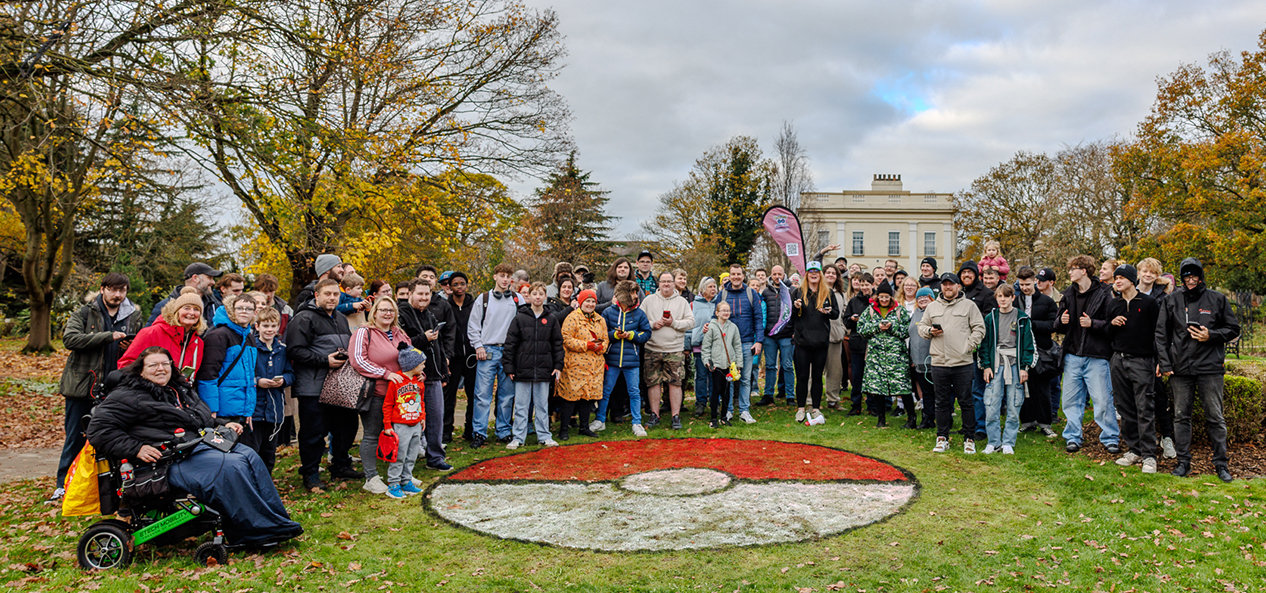
A group of poeple pose around a Pokemon ball that's been painted on park's floor.


Thinking outside the pitch

Reflecting on the past year, there are some stand out examples of how innovative partnerships have been the key driver behind GDM’s work to support children and young people – and their families – to move more.

Firstly, we’ve been developing new outdoor experiences to help children and families connect with local parks in different ways.

For example, GDM’s partnership with Enigma.Rooms introduced interactive digital trail games in parks across the city that engaged new and younger audiences through fun problem-solving and exploration.

The initiative was a success and contributed to Hexthorpe Park receiving the national ‘Green Space Innovation Award’ in 2025.

Then in November, and thanks to the efforts of the local Pokémon community, Doncaster was selected to host a Pokémon GO: Community Celebration event (the first place in Europe be chosen!), attracting thousands of local players and visitors.

The trails across two major parks showcased Doncaster’s green spaces while promoting movement through play.

Through a place-based approach, the network is enabling innovative programmes, unlocking new partnerships and supporting communities to develop sustainable activity habits.

GDM is continuing its work with local Pokémon Go group ‘Raiding Doncaster and beyond’ to grow this welcoming, inter-generational walking and gaming community, and encouraging new players to engage in this family-friendly activity, and to move more – particularly within Doncaster’s parks and green spaces.  

Trying something new

In sport, the ‘Free Park Tennis’ initiative started a couple of years ago in a local park to expand opportunities for children and families.

Resident volunteers have been trained as Free Park Tennis Activators to deliver free, weekly sessions to the community in two Doncaster parks, which led to one park being awarded ‘Park Venue of the Year’ by Yorkshire Tennis.

Our most recent park venue to host Free Park Tennis sessions, Haslam Park, which started in May this year, has already seen 369 attendances, with four local volunteers upskilled to deliver the weekly sessions.

This has been a fantastic opportunity for people to come along and 'have a go' at tennis in a relaxed and social setting, and it has been very popular with both children and families.

Doncaster’s place-based model played a key role in connecting partners and enabling the Active Start initiative, a programme designed for staff working with children aged 2–5.

Active Start is led by Yorkshire Sport Foundation, working in partnership with, and funded by, the South Yorkshire Integrated Care Board's Children and Young People’s Alliance. Their latest Impact Report: Giving children an Active Start is full of learnings and data.

This information is key to the training and resources they provide to early years professionals to help embed movement and active play throughout everyday learning.

This approach not only supports physical development but also communication efforts, social skills and school readiness, giving children the strongest start in life.

Doncaster’s Public Health and Early Years teams have trained as tutors, offering one-on-one support, continuing professional development opportunities and resources to nurseries, schools, childminders and all 12 family hubs, which are places for families to go within their communities to access groups and support.

Many settings have already taken part in centralised training and are now better equipped to encourage movement in class and at home.

But this is not all, because work will continue into the 2025/26 academic year as the programme develops further across South Yorkshire.          

Looking ahead, shifting the dial on children’s engagement in activity will require continued place-based collaboration.

Sustained shared learning, creativity and innovation – alongside a connected, empowered GDM network – will help Doncaster’s young people to move more, play more and thrive.

Find out more and connect with us

Routes to roots

At the heart of everything we do is fostering better integration and reducing isolation for culturally-diverse communities across the city of Exeter and beyond.

From our days during the pandemic delivering much-needed food parcels to South Asian and other culturally-diverse groups in our communities, our volunteer drivers became acutely aware of how many individuals felt socially isolated and inactive.

During these times, we worked with volunteers from several culturally-diverse communities – such as the Devon Bengali Association and the Exeter Hindu Cultural Centre – to arrange socially-distanced walks, giving many residents their only human contact and physical activity for months.

And those walks were just the beginning.

Fast-forward to today and many of our cultural events also include an element of physical activity within them.

With support from Live and Move, the Sport England Place Partnership in Exeter and Cranbrook, we have been able to run other activities, including zumba, women’s only yoga, badminton, volleyball and cricket.

Activities like these are very attractive to those from South Asian communities particularly.

From our days during the pandemic delivering much-needed food parcels to South Asian and other culturally-diverse groups in our communities, our volunteer drivers became acutely aware of how many individuals felt socially isolated and inactive.

Word-of-mouth spreads during Friday prayers at the Mosque and via our drop-in service, which supports residents with completing forms and accessing mainstream services, among other things.

And this approach is working.

The latest Live and Move local active lives survey data shows that levels of inactivity amongst culturally-diverse communities in Exeter have now almost decreased to pre-Covid levels.

Rates of inactivity

The success of this programme has enabled us to successfully apply for three years of funding from The National Lottery Community Fund to run our Better Connections project, enabling us to further support groups and individuals from South Asian and other communities.

With this funding, we are able to do so much more!

Our South Indian communities run an annual sports day, as does our Filipino community, plus the Devon Bengali Association put together a badminton tournament and a cricket tournament.

All these physical activities have become focal to our residents whether it’s fun games for children or a more competitive sports match, the aim is to ensure that everybody has fun and is a little bit active.

What’s vital and the reason it works is that we listen to our residents from a variety of ethnicities –  we learn what is important to them and what they were missing at the time and we try and plug the gap.

We’ve learned so much by engaging with different communities in this way.

We know that not all South Asian communities are the same. Each has their own cultural identity and it’s important that any organisation understands and appreciates these.

Culture, religion and food are important to many of the people that we work with. We focus events on these elements and slot physical activity in as appropriate.

Word-of-mouth is by far the most effective communication method.

Friday prayers at the mosque or our drop-in services and the women’s-only yoga sessions, all proved to be helpful ways of communication.

Sustainability comes about because of communities taking a certain amount of ownership over an activity. For instance, the yoga group quickly became ‘their’ yoga group, and as a result, participants have ensured its sustainability.

I’m proud that, through our activities, we are improving health and wellbeing, building cross-cultural understanding and strengthening community relationships in Exeter and across Devon.

I hope other places across England feel they can do the same.

Find out more

Inclusive Exeter

Together to Inspire

It’s only been a few weeks since I completed my first year as CEO of BAFA and I’ve been reflecting on the journey we’ve taken.

It’s been over 12 months of learning, growth and of laying foundations for the future of American football in the UK and this week I’m proud to share Together to Inspire – our new three-year strategy to inspire the next generation of British American football players, coaches, officials and volunteers by bringing the Britball (British American Football) community together alongside its partners and supporters.

Since securing our initial investment by Sport England we’ve made strong strides as a national governing body.

One of our first priorities was to reset the National Flag Football League under BAFA’s direct management, while reconnecting with clubs and players and also fostering a more inclusive, development-focused culture.

The support from the investment has allowed for some immediate short-term participation growth, but we now have a big opportunity in this space to grow the sport as we build towards the Olympic and Paralympic Games in Los Angeles in 2028.

We’ve also invested in our digital infrastructure – recognising that sound systems and processes are critical for long-term sustainability.

Platforms like JustGo are being enhanced to capture better data, helping us understand who’s playing and how to support them.

And in the meantime, our team continues to balance the efforts of our incredible volunteers with the consistency brought by skilled staff and contractors that then align into our chair and board members.

It hasn’t always been easy, but we think all these efforts are vital to our future.

Leading for now and what’s next

A key lesson this year was balancing ‘the urgent and important’ with the long-term priorities.

There’s always something pressing – a complaint to attend to, another scheduling to fix or a new opportunity for growth to be pursued.

But for me it’s been key to be able to step back away from the day-to-day business and connect with members across the game to ask them about the kind of sport we want to build.

That’s what our new long-term strategy aims to answer.

The support from the investment has allowed for some immediate short-term participation growth, but we now have a big opportunity in this space to grow the sport as we build towards the Olympic and Paralympic Games in Los Angeles in 2028.

With Together to Inspire we’re not just solving today’s problems – we’re building tomorrow’s potential.

And we’re doing so in continuing our alignment with Sport England’s long-term strategy, Uniting the Movement, by creating a sport that’s inclusive, connected and sustainable.

Whether it’s supporting clubs, widening access or growing the workforce, we’re proud to be part of that mission and the work we have delivered in year one.

Listening, learning and leading with community

The biggest insights in our strategy have come from conversations.

Hearing from coaches, volunteers, officials and players has shaped our understanding of what’s needed, but this is an ongoing activity.

Through National Flag League resets, youth competitions and GB performance camps, we’re creating more spaces for meaningful dialogue – not just consultation, but connection with our community.

U19 regional 11v11 pilot

In 2024, we piloted a regional 11v11 league for under-19 players – removing barriers while offering meaningful development.

It reached 400 players across 12 camps and six fixtures, and it led to 80 additional GB trial invites.

The result? A boost of 16% in under-19 registrations!

The pilot also developed new coaches, several of whom now contribute to GB performance teams.

This model reflects the Uniting the Movement’s focus on youth engagement and inclusive talent pathways.

Strengthening safeguarding

This year, we implemented MyConcern – a secure case management platform powered by First Advantage.

It streamlines case-tracking and integrates DBS checks via JustGo to streamline the process and make it easy and secure for the user.

We’re also working with CPSU and NSPCC to ensure our policies reflect best practice, by furthering a safe and trusted environment for all.

Looking ahead

There’s a lot to be excited about, including:

  • reimagining our participation pyramid around accessibility and values
  • building a flag-performance system for LA28 and beyond – backed by uksport
  • strengthening clubs, empowering volunteers and investing in coaches and officials.

The Los Angeles 2028 Olympic and Paralympic Games present a huge opportunity for us, not just for visibility, but for exciting partnerships with the likes of the NFL UK and BUCS that’ll aid long-term growth together.

We look at these games as the beginning, rather than the end.

Looking back, I’m proud of how far we’ve come – and even more excited about what’s next.

We’ll keep working with our clubs, volunteers and partners to build a thriving future for contact and flag football in the UK.

Together to Inspire is more than a strategy – it’s a goal to work with our partners to create a sport that is values-driven, to make a difference for our clubs, workforce and athletes.

Find out more

Together to Inspire

Taking the long view on volunteering

For many, the beginning of June is the unofficial start of the summer.

Holidays are on the horizon, Wimbledon and the Tour de France are getting closer and we get to celebrate volunteers in the best week of the year – Volunteers Week!

The latest data from our Active Lives Adult Survey Report shows that almost 10.5 million adults volunteered to support sport and physical activity across the 12-month period from mid-November 2023 to mid-November 2024.

This is an increase of 488,000 over the last 12 months and it shows a continued recovery of volunteering since the pandemic in 2020.

This huge contribution of people’s time, energy and skills in sport and physical activity is really something to celebrate, and everybody in Sport England wants to say a massive thank you to everyone who volunteers to keep the nation active. 

Volunteering not only enables participation opportunities for others, but it significantly boosts the wellbeing of volunteers themselves.

Our research into the social value of sport and physical activity demonstrated that adult volunteering in England is worth £8.2 billion annually in social value and these benefits to wellbeing are in addition to any value that comes from being physically active.

The present of volunteering

The recovery we’re seeing post-pandemic is positive and it demonstrates the resilience of sport volunteering, and that millions of people are still motivated to give their time.

However, there are also some more worrying trends that we need to take note of.

This huge contribution of people’s time, energy and skills in sport and physical activity is really something to celebrate and everybody in Sport England wants to say a massive thank you to everyone who volunteers to keep the nation active. 

Volunteering levels have been falling over the long-term and this was accelerated by the pandemic, plus we are yet to see volunteering return to pre-pandemic (November 2018-19) levels, as there are still 1.7m (4.8%) fewer volunteers compared to seven years ago (November 2016-17).

This decline is not unique to the sport and physical activity sector.

The Community Life Survey, which measures volunteering across sectors is also reporting that levels of formal volunteering have been in decline, suggesting that there are wider social and economic factors at play.

Our recent State of the Nation report points to some of the wider changes we’ve seen that provide interesting context for the data.  

There has also been little change in who volunteers.

Women, people with disabilities or a long-term health condition and those from lower socio-economic backgrounds continue to be underrepresented in volunteering, plus those with two or more characteristics of inequality are least likely to volunteer.

The data shows that, in many ways, volunteering mirrors the stubborn inequalities that we see in sport and physical activity participation.

As a result, community sports clubs and community groups continue to miss out on the valuable skills and experiences a more diverse volunteer base could bring.

It also means that the volunteers who help deliver sport and physical activity are not always representative of the communities they serve, which can pose challenges in staying relevant to the changing needs of diverse participants and communities.

Changing this is fundamental to creating a more inclusive and welcoming environment for everyone.  

Making a difference

A good starting point, and our focus in Uniting the Movement, is to focus on the volunteer experience; on changing culture and practices to enhance it, and on making it more inclusive and welcoming.

We recently commissioned Leeds Beckett University to complete an evidence and scoping review to understand the existing evidence and insights out there on the volunteer experience in sport and physical activity.

We’ll publish more details from this work as soon as we can, but it felt relevant here to share a snapshot of what the existing evidence tells us works to enhance the experience of volunteers, particularly those from underrepresented groups. These include:

  • supporting the development of feelings of connection to the purpose, values, work or people of the organisation
  • ensuring roles align with the individuals’ motivations to volunteer and that these roles are suited to their skills and experience
  • making sure volunteers feel able to manage role demands with their available personal resources and know where and how to access support
  • establishing an organisational culture that is welcoming, caring, safe and inclusive
  • creating environments volunteers feel seen, heard, known and valued throughout all stages of their volunteer journey
  • ensuring that organisations critically reflect on volunteer management, policies and practices
  • developing person-centred approaches that underpin the recruitment, development and retention of volunteers
  • providing a volunteer offer that is diversified and that's made easier through flexible, accessible and appealing roles
  • designing non-linear pathways to support the development and retention of volunteers and to address any skills gaps.

What about the future?

Imagine it’s 2035 and these principles and approaches have been embedded across sport and physical activity volunteering.

What changes would we see in the data about who volunteers?

Would there be an increase in volunteering with more people encouraged to give their time to support others to get active?

What we want is to see a future where volunteering in sport is uncomplicated, meaningful, well supported and easily integrated into people’s life.

And for this to be possible we need an inclusive, accessible, people-centric culture where volunteering is accessible and relevant to everyone.

We hope that, in the future, the volunteer workforce will reflect the diversity of the communities they serve, and that the experience of participants is richer and more positive within this inclusive environment.

I’m really looking forward to discussing and reflecting on these findings with our partners to understand how we might create these conditions in more of the clubs, groups and organisations to improve the experience of volunteers across the country.

In the meantime, I hope that this provides some inspiration for even small changes to help improve the experience of volunteers right now.

Find out more

Volunteer's Week

Celebrating our communities

The Mental Health Foundation is the home of Mental Health Awareness Week and has been setting the theme for more than 20 years.  

The campaign runs every May and it's designed to engage the public in discussion, education and positive action to support and nurture good mental health.

This year, the theme for the week is focused on the power of community to support good mental health and wellbeing.

Reconnecting through sport

Recently I saw firsthand the power of community in action as people danced, pushed, cheered, ran, walked, marshalled and waved along the 26.2-mile route of the TCS London Marathon.  

I laughed, cried, lost my voice and apologised to the people standing next to me that they would undoubtedly hear my voice in their sleep that night.  

But my favourite moment was seeing a friend who I’d not seen for four years, running past and then taking thirty seconds to give me the biggest hug!  

What a big sweaty moment of joy as we briefly reconnected!

Occasions like this truly showcase the incredible ways in which sport and moving our bodies bring us together as a community.  

This statement is supported by the latest Active Lives data, which was published last month, and it shows the positive association between activity and the life satisfaction levels, as those who are more active also achieve higher life-satisfaction scores.

Recently I saw firsthand the power of community in action as people danced, pushed, cheered, ran, walked, marshalled and waved along the 26.2mile route of the TCS London Marathon.  

The survey also demonstrates that those who are lonelier, have less social trust and feel less integrated and included, report lower life-satisfaction scores.

But when it comes to being active, it’s not all about grand marathon events, because special moments happen all year around, and up and down the country, in gyms, swimming pools, parks, courts, pitches or greens, to name but just a few.  

Coming together as a group for a shared common purpose, to connect, to be ourselves, to feel safe and to have purpose is good for our mental health, and sport and physical activity offer fantastic opportunities to foster community.

Creating inclusive environments where everyone belongs

Whether participating or cheering on our local teams, people come together to have fun, move their bodies, boost their mental health and wellbeing to celebrate or commiserate.

Movement brings incredible benefits for both mental and physical wellbeing and everyone should have the chance to experience them.

From players and umpires to volunteers, spectators, families, friends – and even our dogs! – everyone has a role to play in creating welcoming spaces.

Clubhouses, cricket greens, parks, and sports halls can be vibrant, inclusive environments where people feel encouraged to participate, connect and enjoy themselves.

The sport and physical activity community is filled with wisdom, experience and creativity, and there are so many ways to get involved.

Here are just a few practical ideas to bring this vision to life:

  • invite a friend or colleague to join you on a walk – you don’t have to walk a marathon, think of short, pleasurable distances at least to start with
  • as an organisation, maybe add an extra low-key activity before or after your weekly training or game to provide time for connecting as a community – maybe open up the clubhouse and invite people to have a cup of tea and cake
  • open up a club session to include family members and friends, perhaps have a fun introduction to the game that is accessible and suitable for those you want to attract
  • organise a volunteering activity which benefits the club or local community and  bring people together to help meet a need, such as painting the club house, organising the store cupboard that hasn’t been sorted since 1974, or hosting an afternoon tea party for a residential home.  

The key thing is to think about those who may feel isolated or going through a low point in their lives and to let them know they’re not by themselves – that they’re part of something bigger, a community that moves, in which there’s space for everybody and that shouldn't let anyone behind.

What you need to scale your impact

Today we’ve published a new resource in which we share the learnings from our Volunteering Scaling Programme.

By sharing practical tools and approaches that have worked within the programme, we hope to help other organisations develop their own actionable plans to scale, which in this context means to expand their reach and create lasting impact in sport and physical activity.

The resource is called 'Tools and mindsets to scale your impact' and you can download it at the bottom of this page.

The importance of scaling

We know that some of the partners we work with have really great solutions to some of the challenges we’re trying to address together in Uniting the Movement, but perhaps don’t know where to start when planning how to scale the impact of what works.

And it was exactly to address this challenge that the Volunteering Scaling Programme was originally designed.

A group of women walking - part of the Diversity Matters North West project

Not-for profit consultancy Spring Impact came on board to help, bringing with them a wealth of experience and expertise to support the cohort of organisations on the programme. 

Spring Impact work with mission-driven organisations and funders to scale their impact sustainably.

It’s all in the mind

Okay, well, that’s not exactly true, because scale also requires careful planning and an input of time and resources to work properly.

However, what we learned through the programme, and what Spring Impact have discovered in their extensive work in this field, is that having the right mindset in the approach to this work is key.

With this point at the front and centre of everything they do, Spring Impact have identified the Six Scaling Mindsets needed to achieve sustainable impact at scale.

Our aim with the resource we’re publishing today is to unpack these mindsets in more detail so you can explore what shifts you might need to see in your own thinking and approach. 

This shift wasn’t easy for anybody on the programme, so if what you read sounds challenging, it’s because it is! But it’s so worthwhile.

Some of our partners have really great solutions to the challenges we’re trying to address together in Uniting the Movement, but perhaps don’t know where to start when planning how to scale the impact of what works. The Volunteering Scaling Programme was originally designed to address this challenge.

The resource and the learnings within it are based on the real experiences of the five organisations that took on the scaling mindsets to improve their outcomes.

It took time for them to change existing ways of thinking and for them to apply this new approach consistently when implementing their plans for scale.

However, the organisations that were part of the programme saw wider value and benefits in their learnings and how these could be applied in their wider work and decision-making. 

The value of space and time

What really stands out to me from the Volunteering Scaling Programme was how valuable Sport England’s support was to provide the capacity and in allowing space and time for organisations to do the work to plan effectively for scale. 

The expert support and guidance from Spring Impact along the way also helped to ask the right questions and to create the space to positively challenge existing ways of thinking and doing things. 

The space and time needed to focus on this would not have been possible without our support and it led to wider benefits, such as beneficial opportunities for reflection and a transformative shift in how they worked. This had an impact beyond just planning for scale.

The cohort who took part reported that their approach is now more impact-driven and focused on long-term outcomes rather than short-term project outputs. 

In practical terms, this new way of working meant:

  • creating more space for careful decision-making, including improving existing processes
  • implementing a more strategic approach to identifying when to say 'no' to opportunities that wouldn’t support progress towards long-term vision and goals
  • using the knowledge and tools from the scaling programme to embed this behaviour and approach into other aspects of their organisation and overall work.

Wheels for All, who were part of the Volunteering Scaling Programme, said that as a result they had committed to working in a new and efficient way. 

They adopted a new mindset for the whole charity and believed this was key to them moving away from being project-led to more strategic in their approach. 

This has led to significant organisational transformation to support impact at scale.

A boy rides an adaptive three-wheel bike ahead of a girl in a similar bike being pushed by a woman.

The cohort also benefitted from the peer support of others on the journey, which helped build confidence as they embedded new skills and behaviours. 

Within this programme it felt like we were genuinely working with our partners in a different way to support them to shift their thinking and approach and that was really exciting to be part of!  

What next?

We're sharing this learning across our partners and networks; it will also influence how we think about scaling the impact of our own work at Sport England and how we can better support our partners on this journey. 

The scaling programme shows that, as funders, we can play a really important role in creating the right conditions, the right relationships and in building skills and confidence to allow organisations to succeed in scaling their impact.

Safety can be simple

After a suicide bomber attacked concert goers at the Manchester Arena in 2017, it was plain that a change was needed in how we protected people visiting public spaces.

In particular, there was widespread agreement that security and safety wasn’t just a matter for the police and emergency services; event organisers and the venues they used had to have a larger role in prevention and planning.

That realisation led to the campaign for Martyn’s Law, which is currently going through Parliament.

Officially known as the Terrorism (Protection of Premises) Bill, it will place a duty on premises and events to have security procedures in place to reduce the risk of harm if there’s an attack.

Some larger events and premises would need documented measures to reduce their vulnerability but it may well be some time before it fully comes into force as organisations and premises will need time to prepare.

As explained on ProtectUK – the dedicated website of the Home Office on counter-terrorism security information, training and materials – it will only directly apply to larger events and premises.

Yet we know that the people who want to do harm are just as capable of targeting small venues and small organisations.

Attacks on high-profile events or locations are getting harder to pull off, so how can we ensure people are protected everywhere they play, compete or train?

Luckily, we’re a society where voluntary associations have always taken responsibility to look after their people.

UK sports clubs and teams are exemplars of good practice in introducing safety and safeguarding protocols, and doing it with only the goodwill of volunteers to draw on.
 

Attacks on high-profile events or locations are getting harder to pull off, so how can we ensure people are protected everywhere they play, compete or train?

At the National Counter Terrorism Security Office we have been developing simple and easy-to-follow tools that are intended to demystify the steps needed to make people safer.

As well as working with some of the country’s biggest sporting organisations with large security set-ups, we’re conscious that security and terrorism are often the last thing on the mind of a club secretary who has to organise coaches, book referees, sweet talk parents into overseeing the car park or finding someone to collect the weekly subs.

Few people probably want to worry about having a plan to stop an intruder with a knife or think through how to manage multiple casualties caused by a rogue vehicle, but they want to know that someone has thought about the risks and that there are procedures in place.

Those procedures may be as simple as making sure you know who is coming into the building, organising the car park to limit the risk of an attacker getting up speed in a vehicle or having a protocol for getting people to safety inside a clubhouse, the changing rooms or the equipment store.

Or they might just involve regular volunteers by asking them to do a short free online security-awareness course.

Working with security experts across Government, industry and a number of national bodies, we’ve built a number of free tools on the ProtectUK website that clubs and teams are welcome to use.

You’ll find advice and resources covering subjects including identifying risks, event safety and eLearning for staff and awareness posters.

And if you can’t find what you need on our website – please, tell us. If it means that people can go about their sport in safety, we’re listening.
 

Find out more

ProtectUK

Are we there yet?

When we are travelling it is easy to get impatient and start wondering how long we’ll still have to go before we reach our destination.

And this edginess often appears even more so when we are on a long journey – like our quest for sustainability in the sport and physical activity sector.

But it is not just sustainable sports centres (to name one example) that we’re after.

We also want more sustainable homes, more sustainable businesses and more sustainable communities – so we are in for a long ride!

Looking back as we celebrate

And just to finish with the journey metaphor, it’s true that sometimes a trip can take you through breathtaking and inspiring places, while other times it drags on with no apparent progress being made.

The efforts around the sustainability journey are no different.

Cynics amongst us may say we are not making any progress with our sustainability efforts but I’d like to disagree.

At Sport England sustainability is a key part of our work, so I thought that as we celebrate the fourth anniversary of our long-term strategy, Uniting the Movement, it’d also be a great moment to reflect on the steps we’ve made so far and how we can keep moving ahead while ensuring we make the most of our natural resources without damaging or limiting our environment.

In 2022, we committed to ‘stepping up on environmental sustainability’.

Back then we highlighted three key points:

  • We recognised there was considerable work to do not only to reduce our negative impact on the environment but also to prepare our sector for a changing climate.
  • We committed to being clear on what actions we needed to take and to improving Sport England’s own environmental performance.
  • We said we’d collaborate with other organisations to make these things happen across the sector.

So, can we say we are nearly there? I’m afraid not quite, but we we’ve taken our first steps and we’re not alone, so we can’t stop now.

Plus we’ve done what we said and more. Much more!
 

Cynics amongst us may say we are not making any progress with our sustainability efforts but I’d like to disagree.

We listened to our partners and our internal teams and produced an environmental sustainability strategy and action plan, which we called Every Move.

We have a small team to deliver the action plan and embed sustainability across all our work but we can see people across the sector getting constantly involved with our efforts, like when almost 200 organisations signed our Going for Green Pledge last summer after our our Chair Chris Boardman cycled for eight days from Manchester to Paris to inspire action for climate change.

But perhaps the biggest change I’ve noticed is the cultural attitude to sustainability across the sport sector.

Our partners have embraced sustainability and a sign of this is that the language around sustainable development is dropped into everyday conversations.

As a collective we’re really beginning to understand the inter-connection between climate change, inequalities, participation in sport and our role in tackling that.

Environmental social governance is now included in the Code for Sports Governance, setting out levels of transparency and integrity for our funded partners.

Working together for everybody's future

In addition, many of our partners have developed, or are developing, their own sustainability action plans and these recognise the importance of tackling climate justice - addressing the unequal impacts of climate change on disadvantaged communities.

There are shining examples of projects across the country which reduce emissions, increase biodiversity, improve the sustainability of the things they buy and improve the accessibility and quality of our natural environment.

Projects include recycling, second-hand buying or looking at repairing broken items before buying brand new ones, using LED flood-lighting and solar panels on facilities, improving access to natural environments, purchasing goods without plastic packaging and medals made from bamboo, re-distributing good quality kit, cleaning up our natural surroundings or sowing wildflower gardens around cricket pitches.

These initiatives invariably make sport more accessible and appealing to a wider audience by creating inviting natural environments, reducing utility costs or providing the kit to enable sport to happen, plus these are ventures most of us can get involved with.

In England there’s over 75,000 sports and physical activity centres and, according to our latest Active Lives Adult Survey, our sector is powered by 10 million volunteers.

These numbers show that we have the perfect vehicle to spread the word around sustainable action being able to improve the quality of everyone’s life.

The journey ahead looks exciting but it looks tough too as, let’s face it, we still have a long way to go!

The focus must now be on delivery and ensuring we talk about it and share good work practices.

We need to make sure that we tackle sustainability at place-level, underpinning our actions with sustainable approaches.

Sustainability is inextricably connected to deprivation and will become even more so as our climate continues to change.

We must prepare for the future ensuring the places where we are active do not overheat or flood, have clean air and clean water, and are welcoming and accessible for all.

We also need to ensure energy security for our communities, building confidence in the ability to budget and plan.

So no, we’re not there yet, but will we ever get there? I believe the answer is yes.

Happy fourth anniversary, Uniting the Movement. Let's keep working to ensure we have even more to celebrate for your fifth!
 

Enabling disabled people to thrive at work

Disabled people face significant challenges in participating, volunteering and working in sport and physical activity due to financial, physical, psychological and structural barriers.

This data has inspired a partnership programme called Recover and Reinvent between Sport for Confidence (SfC) and Activity Alliance (AA) designed to promote roles enabling people with lived experience to work in the sector.

According to the Department for Work and Pensions, in 2023 the employment rate of disabled people was 53%, compared to 82% of non-disabled people – a gap representing a difference of over two million individuals.

And disability charity Scope says that disabled people are almost twice as likely to be unemployed, with jobseekers often facing barriers at every stage of the employment ladder.

Many employers have not seriously considered the inclusivity of their workplaces and, as a result, biases or misconceptions – such as believing it’s too difficult, risky or expensive to hire disabled individuals – remain widespread.

Sharing my experience

These attitudes impact disabled jobseekers’ ability to apply and get into work every day, plus they can also create inaccessible workplaces, so this problem needs to be addressed.

I am proud to contribute to the Recover and Reinvent partnership, which works to foster positive change because for many of us involved, discrimination is not theoretical – it is lived and deeply felt.
 

Disabled people face significant challenges in participating, volunteering and working in sport and physical activity due to financial, physical, psychological and structural barriers.

In my experience a failure to make reasonable adjustments meant my health constantly worsened – I would burn out, end up bed-bound or in hospital, recover and return, only for it to happen all over again.

The pressure to turn up to work every day despite the pain, fatigue, mental strain and sense of failure I felt was intense and overwhelming. 

This negative cycle eventually reduced my capacity to stay in long-term stable employment despite all the years of training and dedication to my profession, which ended in my career and purpose in life being taken away from me.

The lack of flexibility in many professions exacerbates these challenges, which have also been further amplified by the COVID-19 pandemic and cost-of-living crisis.

I was expected to use my planning and preparation time (which is time given to teachers to allow them time away from classroom delivery to do planning, preparation and assessment-based work each week) to attend hospital appointments and had to cancel many others because they didn’t ‘fit’ within the timetable and working hours.

As a result I missed treatments and my mental health spiralled, leading to a five-week hospital stay and recovery that meant I was unable to leave the house by myself for seven years let alone consider employment.

Finding solutions together 

So the solution is clear: workplaces must adapt to ensure equal opportunities for all current or future employees.

Change is needed across the board, making job advertisements, application processes and interview practices accessible to disabled individuals.

We need to support candidates through often rigid recruitment systems to foster experiences where people feel safe and supported.

For example, in my recent interview for the position on the Recovery and Reinvent Programme I felt much safer knowing that my lived experience would be considered a strength rather than a weakness or an obstacle to being able to do the job.

Potential employers may offer reasonable adjustments for application and interviews, but are these being communicated effectively to the 10 million working-age disabled people in the UK?

Simple measures can make a big difference.

For me, it was helpful to be able to bring my personal assistant to the interview without feeling self-conscious about it.

And for my personal assistant it was great having a place to wait and to be welcomed by the interview panel and provided with a drink.

This adjustment allowed me to focus on my interview with reduced anxiety levels.

Employers face challenges in integrating disabled people into the workplace, but these are not excuses.

Barriers like inaccessible environments, inadequate adjustments, biases and a lack of understanding must be addressed.

Talent assessment organisation Chally published an inclusion quote that I really relate to:

 “The workplace is one of the best scenarios where these differences can engage, support, challenge, and inspire curiosity. Championing diversity in an organisation leads to better outcomes and greater success for individuals and teams.”

Through our partnership we are collaborating with many national partners to reduce inequalities for disabled people to challenge organisations, partners, employers and individuals to bring about lasting societal change.

And we need to acknowledge and work against negative attitudes towards disability as these disempower individuals and fuel social exclusion.

Empowered by our lived experiences, occupational therapists and peer support workers working with the sport and physical activity sector are essential to the success of the programme.

Together, we aim to create a network of individuals who will enhance opportunities for disabled people to engage in physical activity, sports, volunteering  and employment.

If you share our passion and values, please get in touch and share your experiences (good or bad) because both will help us grow.

Let’s learn together, grow together and create opportunities that foster belonging among disabled people.
 

Happy first birthday, Buddle!

Today Buddle is celebrating its first anniversary and there's a lot to be happy and excited about.

And this is because in the last 12 months, Buddle  The National Lottery funded programme that replaced Club Matters one year ago  has reached lots of new clubs, groups, networks, volunteers and organisations, and this has translated into a 300% increase in website visits. 

With over 58,000 website views since its launch, Buddle keeps paving the way for free learning and resources to support grassroots organisations and those who work with them.

The image shows the buddle logo but with the message Happy Birthday right on top of the word buddle. Each letter of the word 'buddle' has a different colour in the following order: burgundy, navy blue, green, mustard, red and light blue. On top of the light blue 'e' there's a birthday hat and after the letter there's a dot in black. There's white copy over a burgundy background under it and it says: "Your place to experience the wonders of community sport and physical activity".

This is the ambition of Buddle: to provide an engaging programme where any volunteer or community group, club or collective can find the support they need.

From my point of view, it’s been amazing to see the impact over the past year and I look forward to continuing to build on this.

For the past 12 months, Buddle has successfully delivered over 200 workshops, plus our team has created a range of new webpages, guidance notes, animations and videos to meet the sector's needs and priorities.

They continue to foster and build on relationships across the sector, so thank you for supporting Buddle!
 

In the last 12 months, Buddle has reached lots of new clubs, groups, networks, volunteers and organisations, and this has translated into a 300% increase in website visits.

Because, in the end, we are nothing without the clubs and community organisations we serve and that’s why I was really proud to hear one of our users – Annie Dunham, the Bowls Development Alliance's club and community development officer – reflect on the last year and the positive impact Buddle has had on her organisation.

"A huge congratulations to Buddle on their 1st Birthday! In 2024, we have worked together to bring 15 workshops on a range of topics to 184 bowls club members," said Annie.

"We are really looking forward to continuing to work together to educate and upskill the volunteers who are the foundation of our sport!”

This is brilliant and I – like her – can't wait to continuing to collaborate to support this and many other sports.

Here's to the next year 

As we look ahead to Buddle's second year, we plan to continue with the following goals:

  • listening to partner, user and sector feedback to inform the support available
  • creating and promoting accessible and trusted tools, resources and advice for sport and physical activity clubs and organisations
  • equipping community clubs and groups with the support and guidance they need to thrive and operate safely and inclusively
  • hosting workshops to upskill and inform volunteers and the professional workforce that support them
  • signposting to sector experts and trusted stakeholders
  • sharing relevant news and developments from across the sector.

Among the many messages we received from Buddle's friends and colleagues, I was delighted by the words of Sophie Bartup, the chairwoman for Barton Inclusive FC praised Buddle (thank you Sophie) as she mentioned how proud they are to have contributed to our journey. 

"Buddle has been an invaluable resource, empowering our committee with the tools and guidance needed to enhance our governance and sustainability," said Sophie.

"Their support has been essential to us as volunteers ourselves, allowing us to focus on creating a positive, inclusive environment for everyone involved… Congratulations to Buddle on your first birthday!

"We’re so proud to have contributed to your journey and look forward to seeing you continue as a vital resource, championing inclusion and empowerment across the sport sector.”

You help Buddle improve and your feedback is invaluable to us, and as the platform celebrates its first birthday, I feel proud of the work Buddle does and look forward to the great opportunities and challenges ahead of us.

It really is a happy day. Thank you all.
 

Find out more

Buddle

What understanding, love and sport can do for us

This week is Inter Faith Week, a celebration that aims to strengthen good inter faith relations at all levels, to increase awareness of the different and distinct faith communities in the UK, and to increase understanding between people of religious and non-religious beliefs.

For us at Salaam Peace, this is a key week for our organisation as it was born out of a national tragedy: the 7/7 London bombings in 2005.

Building a project at the back of a terrible event

A week after this life-changing event, I was on my way to 10 Downing Street for a reception with the then Prime Minister, Tony Blair, for outstanding work in the community.

I remember entering the tube and everybody looking at me, with people breaking into sweat, grabbing rails and checking out for the next station.

What nobody knew is that I was a British Muslim with Indian heritage who had contributed to his community since 1987, at the age of 12.

Almost 38 years later, I am still active but I will never forget how hard it hit me being treated like a terrorist in the city I loved.

In 2006 contacted some friends from the Met Police and the army and I used my role at Leyton Orient to set up the Eid Cup – an event to bring communities together using the power of sport and food.

An imam opened the day educating over 500 people (of which 60% were non-Muslim) about respect, understanding and living a peaceful life by outlining the fact that terror and extremist acts have no place in Islam.

Leading by example

These principles formed the basis of Salaam Peace.

Our vision was to have an organisation that welcomed all, regardless of gender, social standing or class, faith (or the lack of it) or cultural traditions.

It's based on the Eastern/Indian philosophy of master/pupil and guru/student approach, that’s user-led by a team of staff and volunteers that are a product of our work.

Our mission is simple yet robust, “be the change in the community you want to see”, which is about every person taking ownership of social injustice and addressing it through action.

Our chief operating officer, Azi Mohammed, aged 26 and former Sport England intern, is a prime example of our job.
 

Our vision was to have an organisation that welcomed all, regardless of gender, social standing or class, faith (or the lack of it) or cultural traditions.

Azi began his journey as a participant with Salaam Peace in 2011.

Unaided, he found a source of funding aged 13 and in 2013 he began volunteering at a Friday morning breakfast tennis club at a local primary school.

Alongside his educational achievements, which included a first class degree from King's College in London, Azi attained a huge portfolio of qualifications and awards including The Diana Award and he successfully completed a summer internship at Sport England.

This role planted the seeds of a relationship with Salaam Peace and since joining the team full time in the summer of 2020, Azi has raised over £650,000 and implemented many processes to ensure the organisation remains a leader in the sector.

This year we had a weekly core engagement of more than 1500 toddlers, children, young people, adults and older citizens, which shows that our community is growing and we believe that sport and education are our primary tools for engagement with our groups.

Our reach cuts across many perceived challenges and we set our standards based on the values of respect, understanding, hard work, community spirit, action (as opposed to reaction), assimilation and family.

Mohammed X's story

One person who’s benefited from Salaam Peace’s work is Mohammed X.

I met Mohammed during his final months as an inmate at Pentonville Prison in 2009. 

When inmates' release date gets close many people come to speak to them and Mohammed and I connected at a Friday prayer in Leyton in mid-2009.

Salaam Peace was just getting started and I invited Mohammed to come to a group gym session and to a football game – Mohammed’s two favourite pastimes.

There, Mohammed met with some people from Salaam Peace who made him feel welcome and introduced him into a community of varied faiths and cultures.

We aimed at making the football sessions engaging and along with success on the pitch, friendships were built.

Mohammed began volunteering and supporting Salaam Peace’s work in East London and never was he singled out for his previous offences.

He openly shared that anti-British values, substance misuse and dealing had been a key part of his life before prison, a time when he got caught up in a cycle of hate and money-grabbing.

Mohammed had also bought into a frenzy of extreme Muslim views and drugs that gave him easy money.

But everything changed thanks to Salaam Peace.

Through our organisation, Mohammed was exposed to real role models – people who’d lead by example, saying little but doing so much and who introduced him to truthful Islamic values of community, respect, understanding and giving to the people that needed it most.

Mohammed now lives in Spain with his family and works for the Spanish equivalent to the NHS – a very different picture to what his life could have looked like had it not been for understanding, love and sport.
 

Find out more

Salaam Peace

Happy anniversary, Place Expansion

They say time flies and while this is a cliché, it is one that’s undeniably true. 

It’s certainly the case when it comes to our Place Partnerships, because as we celebrate a year since we kickstarted our Place Expansion, a lot has happened!

Back in November 2023, our Place Expansion programme committed to investing £250 million of National Lottery and Exchequer funding into local communities across England in the following five years, to ensure those in greatest need were able to get active.

We've had a busy and positive year

In the past 12 months, and through this first phase of this Place Expansion, we’ve invested in 53 new places across England, partnering with 27 Active Partnerships and the dedicated organisations they work alongside.

From Swindon to Stoke-on-Trent, Blackpool to Brent and Walsall to West Norfolk, we’ve been partnering with key stakeholders in each of these places to establish what the local ambition and approach will be.

A group of kids play on a scooters park in Exeter during the Cranbrook Pump Track launch event in September 2024. Image credited to Matt Round Photography.

And through this way of working we have engaged partners from local government, the health sector, the community and voluntary sector, and the transport and housing sectors.

The result? A real positivity from these stakeholders about the approach we are taking.

We are currently working alongside our partners to establish ‘where next?’ so that we can continue to grow this approach with pace and impact (spoiler alert: we have plans to expand our investment to 80 places in the coming months).

We’ve also begun to invest £35m into our original 12 Place Partnerships to help deepen and strengthen these relationships so that, together, we can have an even greater impact.

Yet, we want all places to feel part of this approach.

With that aim in mind, most recently work began to roll out our Universal Offerwhich will see a £25m investment to support the whole sector to supercharge their efforts to tackle inequality and inactivity and evaluate the impact they are having. 

We are currently working alongside our partners to establish ‘where next?’ so that we can continue to grow this approach with pace and impact.

Our support will ensure all places across England will gain access to the tools, resources, learnings and capabilities to help them work more collaboratively and achieve the systemic change that is needed at a local level to address the barriers to getting people active. 

By galvanising the system in this way, we know we can bring about lasting and sustainable change to every part of the country.

Working together for local change

Since launching our place-based expansion last November, we’ve invested nearly £20m to help each of our place partners develop their individual approach.

This way of working – ground up and rooted in the needs of local communities – is contributing towards achieving a positive impact that we have not seen previously. 

We’ve seen that baking in physical activity into local, long-term strategic and policy commitments is a key solution to driving change within wider outcomes such as health, environmental sustainability and community cohesion.

Take Exeter as an example.

They have embedded our Active Design principles into their Liveable Exeter strategy –  a 20-year housing plan – by which they will build 12,000 homes where giving people chances of being physically active are at the front and centre of those developments.

We’re also seeing greater connection and collaboration amongst partners within a place than we’ve ever seen before.

At the end of September, the Greater Manchester Memorandum of Understanding brought together the combined authority, integrated care partnership, the transport, voluntary and community sectors, leisure providers, the GM Moving Active Partnership and Sport England. 

Through this collaboration, we will see resources aligned to support the integration of physical activity and sport at the highest decision-making levels in the city and region. 

And within these communities, we are seeing that this work is contributing towards positive signs of inequalities reducing and the inactivity gap closing. 

The contribution of the work and the focus of partners in Greater Manchester has seen year-on-year reductions of inactivity levels in children and young people and, for the first time, this is lower than the national average.

Meanwhile, in Pennine Lancashire, direct engagement and collaboration with the Muslim community has seen over 5,000 young people increase their daily activity levels through the Active Madrassahs programme.

More positive change to come

Impact like this is being felt up and down the country and this work really does speak for itself with a robust message: together we are stronger. 

Our Place Partnerships will see us work in every corner of the country, partnering with organisations in areas that face the biggest barriers to a more active life. 

Together we will create lasting change within the communities that need it most to ensure that more people can live active and healthier lives for longer.

So, looking forward to reaching new places in the next year and to keep celebrating across the country.
 

Find out more

Place Partnerships

Reclaiming. Building. Thriving.

Getting to where you want to be in life is not always an easy ride.  

It hardly ever is, actually, and for me it came after many years of preparation, commitment, exams and travelling. 

This year’s Black History Month theme – ‘Reclaiming narratives’ – is something that I can totally relate to through my professional journey. 

It all started in 2008 with an email from a British Triathlon regional manager, containing information from the London Development Agency. 

They were looking to train Londoners to officiate at the 2012 Olympic and Paralympic Games with official London Sport funding, which meant committing to four years of training to be able to officiate at the Games. 

What was not to like about an offer like that?!   

Definitely not a sprint

However, getting on the then Level 1 Club/Assistant Referee course – we were not called Technical Officials (TOs) back then – and into the bursary process, was not what you’d call straightforward.  

Becoming a TO requires hours of commitment and there was a lot of travelling to triathlon events, shadowing qualified race referees and writing up detailed reports, plus this was all done on paper and emails with a lot of admin that took up a great chunk of time after every event.   

Moving up to a Level 2 (regional) seemed to be a much quicker process, though. 
 

This year’s Black History Month theme – ‘Reclaiming narratives’ – is something that I can totally relate to through my professional journey.

I thought I might be on track for the Olympics, but in order to get to the next stage (national technical official, NTO) I needed to complete two years of officiating at a specific number and type of events in various roles before I was able to apply for the relevant course and exam. 

Due to work I didn’t get on to a course on time, so I had to wait four years before the next opportunity became available.  

I finally qualified as an NTO in 2018 and then embarked on a number of TO roles (all self-funded) around the world, living amazing experiences and meeting some great colleagues, some of whom became good friends. 

But to become the continental technical official (CTO) I am now, I had to do two more years of officiating at specific events and finally I completed the course and its exam in 2022/23. 

So no, I didn't get to London 2012 as an official, but I was there as a ’Games Maker’ and that was an amazing experience! 

Remembering a particular sports event

As you can see, being a TO requires a lot of commitment over a long period of time, plus you need to have resources to get to events nationally and overseas.  

Of all the events I’ve officiated, I recall one in particular: the Blenheim Palace Triathlon when BADU Sports entered their first triathlon team.   

I got chatting to them when they arrived and explained my CTO role.  

One of the BADU team was extremely surprised that I had achieved such a title and was (in her words) “in charge” of other technical officials working at the event.  

However, what made me remember this event in particular was that when I returned to my car at the end of that day I heard one of the exhibitors comment that I must be part of the security team. 

That hurt, especially as the company they worked for was one of the major sponsors for British Triathlon. 

I know, and now you know, how much it takes to get to where I am today and it all got erased by one person’s assumption. It felt wrong. 

I don’t have anything against security professionals. They do an amazing job, and a difficult one too, but it’s just not my job. So why did that person think that it was?  

Helping make the change I want to see

As I mentioned before, this year’s Black History Month is about reclaiming our narrative and I’m using this opportunity to reclaim mine – the efforts and the years of my life I’ve invested in pursuing the place I’m at now.  

But I also want to highlight some positive changes I’ve witnessed since the start of my career, like the change in the face of triathlon in the UK since I first joined the sector.  

Back in 2006 I would be the only Black/Brown person at the event, but nowadays I see more people taking part from diverse backgrounds and cultures.   

However, when you look at the UK officiating team, the number from diverse backgrounds is low (1%) and I believe I know who they all are, too!    

I continue to officiate events and it would be great to see more diversity in my professional landscape. 

As well as supporting diversity in my job, I’ve been involved with equality, diversity and inclusion as a volunteer, as a representative of the Triathlon England Council and a participant of round-table talks. 

But, while for me it is important to reclaim my narrative, I’m here to also help others build theirs. 

There is a saying "you have to see it to be it" but I believe that "you have to be it for others to see it" because if we all waited for someone to inspire us, many people would still be waiting.  

But we’re done waiting. It’s all about reclaiming, building and thriving now.
 

Find out more

British Triathlon

Working together to protect the youngest in our sector

Keeping Your Child Safe in Sport Week is a campaign by the NSPCC Child Protection in Sport Unit (CPSU) that runs from 7 to 11 October 2024, highlighting the key role local communities can play in safeguarding children and young people when taking part in sport and physical activity.

The CPSU is one of Sport England's key safeguarding partners and we’re really proud of this collaboration.

Listening - the first step towards change

We all know that sport and physical activity are great ways for children and young people to learn new skills, support their wellbeing, reach their potential and make friends, but do you really know how important you are when it comes to keeping children and young people safe while being active?

I am talking about volunteers, spectators, helpers, family members, friends and carers – we all need to make sure children have a great time and feel safe when playing a sport.

Many of us are familiar with historic cases of abuse and learning from these is vital to inform practice.

Valuable insight has been gained from Sport England's recent partnership with the National Working Group (NWG) on the Voices in Sport project, which has developed a series of resources in collaboration with survivors and people with lived experience of abuse highlighting the real, lifelong impact of these incidents on their lives.

There is a common theme when you listen to survivors and those with lived experience of abuse and harm: the missed opportunities for intervention and the devastating lifelong consequences brought to each of them.
 

The NSPCC Child Protection in Sport Unit is one of Sport England's key Safeguarding Partners and we’re really proud of this collaboration.

Some of the testimonies include expressions like: “The signs were there” or “If only someone had listened, believed and responded.”

So now we must do everything we can to prevent future harm, and it is vital that we all know what signs to look out for and how to support creating a culture where  if you have even a slight concern  you feel you can speak up, ask questions and/or raise concerns.

Sadly, abuse in sport is not something that just happened in the past, because children and young people are still suffering the impact of having been harmed.

Joint efforts to change the future

The NPCC CPSU Case Data Tool Report – based on trends established from anonymised yearly data collected from 39 participating national governing bodies regarding cases that have reached a threshold (cases involving a statutory service, like children's services or police) – identified that between the period between October 2022 and October 2023, 91% of reported incidents occurred less than two years prior to the disclosure.

The good news is that there are many things we can do to reduce the risk of harm to young people and this is exactly the aim of Sport England in its partnership with funded bodies in the sector like the NSPCC CPSU and the NWG.

Recent investments of £14.83m of National Lottery funding into the network of Sports Welfare Officers are providing additional local support to this role within clubs, signposting organisations to the right advice and guidance, and raising awareness of campaigns such as Keeping Your Child Safe in Sport throughout the year.

Play Their Way is also a good example where, through collaboration, the sector has created a campaign for child-led coaching, giving the youngest a voice.

It can’t be emphasised enough how much we need to support sport to develop a culture at grassroots level where talking about the welfare of children is the norm. 

Sadly, many people walk away from a club or activity when something is not quite right.

That may be inappropriate behaviour from a coach, a volunteer or a parent, a concern, a doubt, a feeling of uneasiness or realising behavioural changes in a child.

Children and young people’s wellbeing is fundamental to their enjoyment of being active and the CPSU has done a phenomenal job in putting together a great array of ways to get involved including a resources library, short courses and animations to name a few.

I invite you to look at these materials, so we can all learn to play our role to keep children safe in our sector.
 

All I see is gold

My first Olympic memory is sitting in front of a small television, locked-in, watching US sprint legend Michael Johnson secure the historic 200m and 400m double gold at Atlanta 1996 while wearing his iconic golden spikes.

I don’t know what it was that drew me in.

Was it his unique, almost action-hero-like running style? His laser focus? His healthy disrespect for what people said was impossible? Or maybe it was just the gold shoes?

The influence of Atlanta'96

The 1996 Games were a major catalyst for my personal journey through sport, and it was also the catalyst for the transformation of the British high-performance sport system for a very different reason.

Atlanta saw Great Britain's worst performance at a summer Games since 1952, finishing 36th in the medal table with a single gold medal.

But as a nine-year-old, I couldn’t care less about the medal table. I just saw a man do the impossible in golden shoes!

Since then, the Olympics have always been special to me and at this year’s Paris 2024 Olympic Games I had the privilege of being on the leadership squad for Team GB’s Olympic preparation camp in Saint-Germain-en-Laye.

My role was to lead on all things technical-training across our sport venues, working with team leaders, coaches, athletes and city partners to ensure that all the athletes representing Team GB had the best possible training block before heading onto the village to compete.

Building into the future

Lots has changed for me since Atlanta 1996 but funnily enough, it’s still not Great Britain’s position in the medal table that drives me.

In my opinion, if you work in sport – to quote Manchester United football legend Roy Keane –  when it comes to winning or the relentless pursuit of victory, “that’s your job”.

Medals and world records may come or not, after all there are many factors you cannot control, so it’s the pursuit (not the outcome) that you should focus on.

Having worked with Team GB over the last twelve months towards Paris, when it comes to the ‘pursuit’ all I saw was gold (like the shoes, not the medals).
 

Some of the gold I saw at the 2024 Paris Olympic Games (All images © Hannibal Morris 2024)

The leadership, the athletes, the coaching, the environments, the behaviours... the complete process has been unique, laser-focussed and with a healthy disrespect for what people say is impossible.

The outcome is a testament to a finely tuned sporting system that many great people have built over the last 30 years and that many great people will continue to build into the future.

And what is Sport England doing to ensure the future is brighter than the present?

Within the talent and performance team here at Sport England, there are two objectives that guide everything we do – to achieve progression and greater inclusion.

Progression by producing higher quality athletes at every stage of the pathway and greater inclusion because pathways should be accessible to everyone with the potential to succeed at the highest level.

Of course, these two concepts are inextricably linked – quite simply, a pathway must be diverse to produce the highest quality athletes.
 

Medals and world records may come or not, after all there are many factors you cannot control, so it’s the pursuit (not the outcome) that you should focus on.

These objectives must also be considered alongside the fact that, as a nation, we are increasingly reliant on Olympic debutants to win medals: 14% in Sydney 2000 up to 32% in Tokyo 2020.

This trend also extends to Paralympic sport: 31% in Sydney 2000 up to 59% in Tokyo 2020.

Therefore, we need to be doing everything we can to ensure that debutants attending an Olympic or Paralympic Games are as prepared as possible for their first Games.

The School Games National Finals 

This is one of the reasons why Sport England recently invested £2.8 million in the upcoming School Games National Finals – one of very few multi-sport competition experiences that developing athletes will have before attending their first Olympic or Paralympic Games.

Fun fact – 118 of the Olympic athletes that competed in Paris this summer also competed at the School Games National Finals when they were youngsters. They achieved a total of 7 gold, 8 silver and 16 bronze medals for Team GB.

The 2024 School Games National Finals start today at Loughborough University and run until Sunday, 1 September.

For the last 12 months we have been working closely with our delivery partner, the Youth Sport Trust, to redesign the event to ensure it supports our ambitions across both progression and inclusion.

A series of innovations aim to help these goals:

  • a holistic enrichment programme designed to support the development of attendees as people, athletes and performers
  • deeper selection pools to ensure more young athletes from diverse backgrounds can benefit from this great developmental experience
  • for the first time, Obstacle Course Racing will be on the competition programme for Modern Pentathlon and all athletes attending the event will be given the opportunity to engage in an Obstacle Course Experience. This opportunity will offer sports a mechanism beyond their individual technical events and existing profiling techniques to explore the inter-relationship of performance and potential
  • an ambitious qualitative research programme – ‘The Aspiring Athlete Innovators' – has been developed to understand who the aspiring athlete is today so that we can better design experiences, environments and talent pathways that ensure they thrive not only as athletes and performers, but also as people (spoiler alert, my next blog will probably be sharing what we find out).

I’d like to finish this piece by shouting out everybody that made the Team GB prep camp what it was this summer… there are too many to list but you know who you are. Legends.

With the Paralympic Games underway, this Paris chapter will soon come to an end but for the athletes competing at the School Games National Finals this week, the pursuit has only just begun and I’ll be there, looking for gold (like the shoes, not the medals).
 

You've viewed of items.