Skip to content

Taxonomy term

Content type

From the riverbank to Prime Time

Long before I worked in sport, or even imagined running a sports charity, I was a state-school kid in Windsor learning how to row and trying to help keep our school boat club afloat.

My first experience of The Boat Race wasn’t from a fan park or a television screen but from the riverbank, where I was selling programmes to passers-by to help raise funds for the club.

That day, and what I felt during that time, stuck with me.

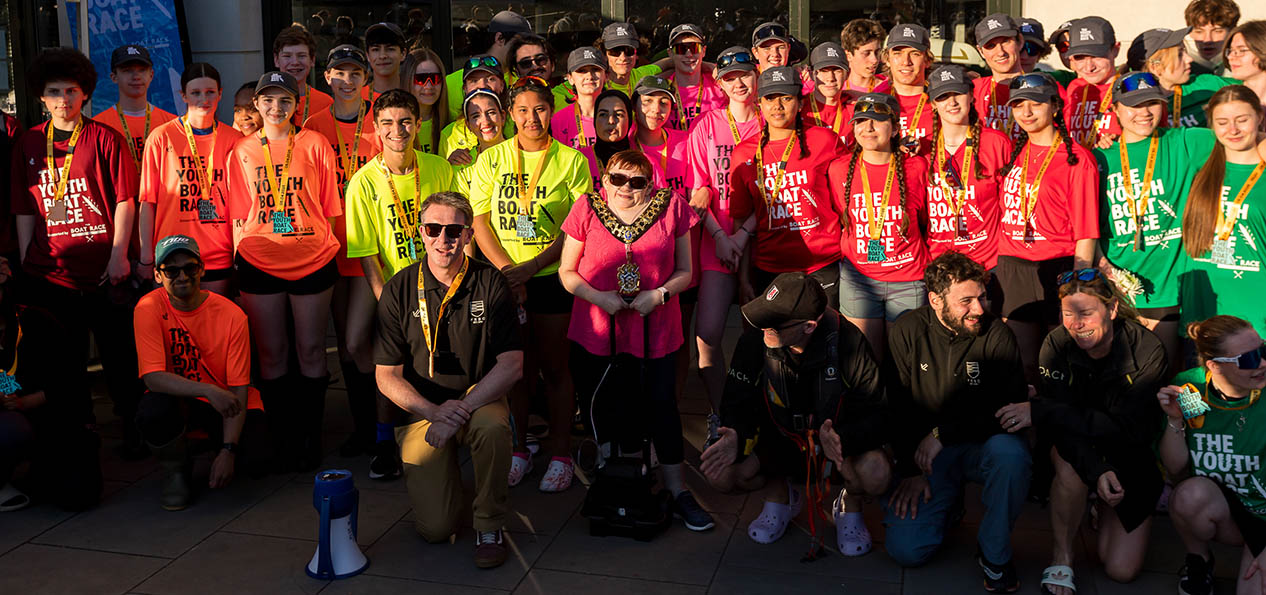
A group of young people with different colour t-shirts with "The Youth Boat Race" written on them pose with their medals on a sunny day.

The excitement of the day and its sense of history is huge, plus the Youth Boat Race aimed to bridge the gap between the on-water action and the young people watching from the bankside.

That memory was very much in my mind when in 2024 we began pitching the idea of a Youth Boat Race to the event organisers.

What the Youth Boat Race set out to achieve

After nearly 200 years of The Boat Race – one of the longest-running sporting events in the world, which this year will take place on Saturday 4 April – it felt there was an untapped opportunity for local young people, particularly those from state schools, to be part of it.

The ambition behind the Youth Boat Race was to change that, because this event was never just about racing. It was about access.

Access to rowing for young people who might not otherwise find it; access to the River Thames and its history and access to the feeling of belonging to an iconic and nationally televised major sporting event.

Inspired by The Boat Race and funded by The Oxford & Cambridge Rowing Foundation (OCRF), the charity that owns The Boat Race Company, the Youth Boat Race was designed to celebrate participation, teamwork and opportunity.

Crews would be mixed and inclusive, ensuring that everyone who wanted to race could do so, regardless of background or experience level and, just as importantly, the event was built with young people, not just for them.

The excitement of the day and its sense of history is huge, plus the Youth Boat Race aimed to bridge the gap between the on-water action and the young people watching from the bankside.

From school talks and volunteering opportunities to co-designing the event’s branding, the build-up and their input to shaping the event mattered, as those moments helped young rowers feel ownership, pride and a real connection to The Boat Race week itself.

Seeing the idea become reality

By April 2025, standing on the sunny banks of the Thames at Fulham Reach Boat Club, it was clear the idea had taken on a life of its own and the event featured on the BBC with a peak audience of 2.8 million. We even made our own video on the events of the day, which we are very proud of.

Over 100 state-school students and volunteers gathered for the second Youth Boat Race.

Eight mixed crews from schools across London raced side by side on the same stretch of river used by the Oxford and Cambridge University rowers, with families lining the banks and local supporters cheering.

The atmosphere was joyful, loud and deeply proud, with participants describing it as an amazing experience filled with music and laughter that they would “100% like to do again”, and "a very fun and a unique experience" that people thoroughly enjoyed and that built new memories with friends.

Watching young athletes race along the Championship Course was genuinely moving.

Many of them had discovered rowing through state school and community programmes, and that gave me an added sense of pride.

Speeches from OCRF Trustee Erin Kennedy OBE and Mayor Patricia Quigley captured exactly what the day represented: teamwork, trust, confidence and being part of something bigger than ourselves.

From pilot event to national stage

But for me, what has been most exciting is witnessing just how quickly the Youth Boat Race has grown.

From a small pilot in 2024, to a significantly expanded second year, all supported by the generosity of OCRF, the event has already become a meaningful fixture of Boat Race week. And now to see it included in Channel 4’s coverage this Easter Weekend 2026 truly feels like a milestone.

That visibility matters as it sends a powerful message to young people watching at home that rowing is something they can be part of.

After the inaugural Youth Boat Race in 2024, Owen Slot, chief sports writer at The Times, summed this up perfectly when he said: “Only when sports can spread the word like this does elite funding at the Olympic end really make sense.”

For me, that captures the essence of the Youth Boat Race and is the link between grassroots opportunity and elite sport, showing how inspiration, access and participation can exist hand-in-hand with elite level racing.

Looking ahead

The Youth Boat Race is still young, but its purpose is clear and each year it grows, not just in numbers, but in confidence, quality and impact too.

What began as an idea is now an event that brings communities together and opens doors for young people across London.

It proves that success isn’t measured by winning, but by the friendships formed, the confidence built and the moment a young person realises they belong on the river.

And this Easter, with the Youth Boat Race shared with a national audience, many more young people might just see themselves there too.

Sport and youth crime prevention

For more than ten years I’ve led the Sport and Safer strategy at StreetGames – a national sporting organisation committed to bringing sport to the doorsteps of young people in underserved communities.

Ten years of partnerships. Ten years of learning. Ten years of seeing what happens when sport shows up consistently where it’s needed most, and here’s what I now know: a decade of sport and youth crime prevention has changed many young people’s lives through sport, but we’re only getting started.

The policy moment is here

The conversation has changed.

Government strategies now talk about Safer Streets, Youth Matters, Child Poverty, Pride in Place, Freedom from Violence and Abuse and Fit for the Future.

And the common thread in all of these? That place matters, prevention matters and community matters.

The Government’s emerging Young Futures Programme – particularly its Prevention Partnerships and Hub model.

At StreetGames we have been doing something similar: identify vulnerable young people, focus on those in the 30% most underserved communities, connect them with trusted adults and engage them through high-quality, hyper-local sport, via a network of Community Partners.

The evidence has grown up

A decade ago, much of our work was powered by instinct and experience, but today it’s backed by robust research.

Our Theory of Change – Sport, Youth Offending and Serious Youth Violence was authored by Loughborough University, resourced by the Youth Endowment Fund and shaped with input from Sport England.

It sets out clearly how sport can reduce risk factors linked to youth offending while strengthening protective factors that keep young people safe.

That theory underpinned the Ministry of Justice’s £5m Youth Justice Sport Fund, which now informs more than a dozen place-based partnerships with Active Partnerships, Police and Crime Commissioners and Violence Reduction Units.

This isn’t theory gathering dust, but action that's shaping investment and practice, and that proves that when sport is delivered intentionally, it protects.

Why sport on the doorstep works

At StreetGames, we focus on doorstep sport – making it accessible, affordable and local. But this isn’t just about keeping young people busy. It’s about building identity.

Well-designed sport creates trusted adult relationships, safe spaces in the heart of communities, positive peer networks, emotional regulation and self-control, plus a sense of belonging.

These are protective factors – and protective factors matter.

A decade of sport and youth crime prevention has changed many young people’s lives through sport, but we’re only getting started.

When young people feel seen and connected, they are less likely to engage in harm and when they feel pride in their street or estate, they are less likely to damage it.

Doorstep sport also changes how places feel. A park filled with organised activity feels different. A street reclaimed for play feels different.

Putting a value on wellbeing

But ultimately, why does this matter?  Recently, we commissioned State of Life to conduct a social value study.

The research organisation looked at survey data from around 1,000 young people taking part in StreetGames’ doorstep sport, which many had entered through youth crime prevention pathways.

Using the WELLBY approach set out in HM Treasury’s Green Book guidance, the study estimated that the wellbeing uplift associated with participation equates to approximately £12,986 per young person, assuming the improvement lasts for one year.

That’s not a participation statistic. That’s the wellbeing value of doorstep sport.

Raising the bar

Our current Youth Endowment Fund-backed evaluation, Towards Sport, is using randomised control trials – the gold standard in evaluation. Results will land next year and we can’t wait!

But one thing is already clear: sport must be intentional. It must understand referral pathways. It must align with youth justice priorities. It must embed strong monitoring and learning. It must work in partnership, not in isolation.

Over the last decade, as a sporting organisation, we’ve become fluent in the youth justice system’s language – concepts and phrases such as trusted adults, contextual safeguarding, public health principles, system impact – and its significance.

This understanding has led us to a key learning: sport cannot simply turn up. It has to fit.

A decade in and still learning

We know many of Sport England system partners and Active Partnerships are active — or increasingly curious — in this space.

That’s encouraging because prevention is long-term work that requires humility, partnership and constant learning.

There is still more to understand and strengthen but the direction is clear.

Ultimately, this work is about supporting place-based community partners to support and protect vulnerable young people, getting them more physically active along the way. 

Think pro-social (not anti-social), build protective factors (not just manage risk) and, above all, use sport not as distraction, but as deliberate prevention and keep putting it where it works best and is needed the most.

These subjects, and more, will now become a series of deep-dive webinars that will be delivered in partnership with Sport England and the Active Partnerships National Organisation (APNO), and you can access the Quarterly Learning Session we had last week with Sport England. 

Together we will get more young people into sport and physical activity and away from crime.

Preventing crime from the ring

Boxing is my religion. Like all spiritual journeys it began with a moment of divine inspiration and my baptism was conducted whilst watching Muhammed Ali defeat George Foreman in “The Rumble In The Jungle”.

I grew up in boxing gyms with the sport giving me purpose, discipline and titles – including representing my country on numerous occasions.

These days it offers me the chance to inspire the next generation of boxers and to help anyone who walks through the gym door, to believe in themselves and choose a positive path in life. 

When people ask me why boxing matters so much to me, my answer is simple: it changes and saves lives.

A safe space for all

Of course, it also improves health and builds confidence, but boxing keeps people – especially young people – away from anti-social behaviour and crime, something that I can personally verify as a former Youth Justice Manager. 

With the number of proven offences committed by children seeing an increase of 4%change has never been so important and there are many ways boxing helps fight crime.

Firstly, boxing gives young people structure and boundaries.

Many of the children and young people who walk through the doors of a boxing gym – like mine in Oldham, Greater Manchester – come from difficult backgrounds and have challenging lives. 

Having little or no access to opportunities and therefore a lack of agency in the world, may result in challenging behaviours. But not dealing with these pressures means they risk spilling out onto the streets and that’s where crime starts. 

Not because young people are 'bad', but because they have nowhere positive to pour their energy into. But boxing gyms can change that, as these spaces are built on discipline, respect, routine and team spirit.

Boxing gyms offer me the chance to inspire the next generation of boxers and anyone who walks through the gym door, to believe in themselves and choose a positive path in life.

You don’t just turn up to your gym whenever you feel like it. Instead, you’re expected to train on time, plus you have to listen to your coach, and you learn that effort leads to results and that shortcuts rarely work.

These lessons transfer directly into everyday life and children who understand discipline in a boxing gym are far less likely to make reckless decisions outside it.

Boxing also teaches emotional control, becasue contrary to what some may think, this sport helps a young person understand how to control their emotions, particularly aggression, and how to think and act under pressure.

I’ve seen it first hand – children who once lashed out can calm themselves because boxing gave them an outlet for their emotions and that allows them to thrive.

The many lessons of boxing

Boxing is a good metaphor for life and can help to develop those personal and social skills that people need, contributing to tackling deep seated worklessness and low aspirations.

The sport also fosters the development of positive character, self-esteem, self-discipline, courage, perseverance and resilience.

Instead of throwing punches on the street, they hit the pads, the bags and their coach or opponent inside the ring, but always with respect to the sport’s rules, under supervision and with a reason.

Boxing also teaches respect — for yourself and for others. You shake hands, you follow rules and you learn that real strength comes from self-control, not intimidation. These values reduce crime at its roots.

Another factor that's key is the sense of belonging among those practising the sport. A boxing gym offers identity and loyalty because, at a gym, you’re part of a team.

You train together, look out for each other and you wear the gym name with pride. That sense of identity can pull someone away from a path that leads to anti-social behaviour and crime.

I’ve seen boxing change lives in Oldham and Greater Manchester, where young people that were heading toward trouble now have focus and a reason to stay on the straight and narrow, and I’ve also seen young people who had no confidence, find self-belief.

Not all these children will become a champion boxer and that's okay.

Building better lives through sport

The real victories happen when a young person chooses to stay in school, can find a job or simply chooses not to commit a crime because they don’t want to let their gym or coach down.

At our newly refurbished Greater Manchester Boxing and Development Hub, we’ve been lucky enough to benefit from Sport England funding. 

To my mind, our investors aren’t just putting money into a boxing club and community gym. They’re investing in crime prevention and harm minimisation.

It costs less to fund a gym than it does to deal with the consequences of crime and anti-social behaviour policing, court cases, prison and reform  as recent estimates place the total economic and social cost of serious youth violence at £11 billion between 2009 and 2020.

For me, boxing is more than titles and trophies, it’s about giving people a chance.

Every time a young person chooses to walk into a gym and away from 'the road', I believe that’s crime prevention in action and that’s why boxing will always matter. 

As one of the 10 boroughs of Greater Manchester, Oldham forms part of Sport England’s Place Partnership with Greater Manchester Moving and other local bodies to implement Sport England's Uniting the Movement strategy for getting people active.

I’m proud of what boxing can do to change lives.

In the words of the iconic social activist, pacifist and politician, Nelson Mandela: “Sport can awaken hope where there was previously only despair.

Every day, I get to see the truth in these great words in action.
 

Health drives wealth: gyms, pools and leisure centres play a big part

January is a difficult month for many of us. It’s dark, cold, wet and the glow of the festive season feels a long time ago.

But it’s also a moment when millions of people make a conscious decision to reset – to move more and invest in their health.

That’s why January matters so much for gyms, swimming pools and leisure centres. It’s consistently their busiest month of the year and not just because of New Year’s resolutions.

But beyond the first month of the year, there is a growing understanding that physical activity is preventative medicine and that a healthy population drives a healthy economy.

The places we move are of critical importance.

Earlier this week, alongside ukactive, I visited three very different facilities in one day – across both the public and private sector.

What struck me was how similar the stories were.

Operators talked about strong footfall, rising memberships and people coming through the doors for more than just exercise.

They’re coming for health, of course – but also for confidence, connection, and support.

This feels vitally important in a time that is characterised by increasing isolation, screens and polarised views.

Spaces open to everybody

Another feature which stood out was the remarkable diversity of the people there – from teenagers arriving in their uniforms after school, to the group of retirees who had originally been referred by the next door hospital and now were coming four days a week (and spending as much time over lunch as in the class).

It was also fantastic to see the level of innovation and use of technology to bring health and leisure closer together – with sophisticated health checks, devising personalised programmes for each individual, linking to 'e-gyms' and other virtual support.

This is the preventative health agenda in action. It’s getting active from the ground up and it sits at the heart of our ambition at Sport England, working with our partners to help millions more people become active.

January brings this ambition to life, but the real story is what’s happening year-round.

The scale and growth of the gym and leisure sector are significant.

The UK Health & Fitness Market Report 2025 shows a record 11.5 million people are now members of a health or fitness club – up 6.1% on the previous year – with 616 million facility visits recorded, an increase of 8.2%.

These are not short-term spikes. Participation has been growing over consecutive years, supported by a unique infrastructure of public, private, large, medium and independent operators working across the country.
 

Beyond the first month of the year, there is a growing understanding that physical activity is preventative medicine, and that a healthy population drives a healthy economy.

Sport England’s Active Lives Adults survey 2023-24 reinforces this picture.

Fitness activities and swimming continue to be major drivers of physical activity behind walking, with 904,000 more adults taking part compared to the previous year.

Demand is being driven by what people value most.

Polling from ukactive shows that 77% of members join a gym or leisure facility primarily to improve their mental health and wellbeing.

People also cite better sleep, increased confidence, managing health conditions and making new friends. This is about quality of life, not just physical fitness.

We’re also seeing important shifts in who is taking part. Female participation continues to grow, particularly through group exercise and classes.

Projects like Safer Spaces to Move, delivered with This Girl Can, are helping to remove barriers and make facilities more welcoming and safer for women.

Key community assets

Our latest Moving Communities report shows participation in public leisure has increased for every age group over 45, while gym activity is rising among under-16s, over-65s and people living in the most deprived communities.

Since 2017, the number of children and young people taking part in gym and fitness activity has increased by more than 12%.

Standards matter too. Facilities are improving every year, driven by initiatives such as The Active Standard, Quest and FitCert, ensuring that quality, safety and inclusion keep pace with growing demand.

All of this sits squarely within the Government’s priorities for economic growth and improving the NHS through the 10-year plan.

Health drives wealth and the social value created by being active is immense.

The sector contributes £122.9 billion in social value each year, including £15.9 billion in healthcare savings and £106.9 billion in wellbeing value – the equivalent of £2,600 per active adult – and more than double that for people with long-term health conditions or disabilities.

We gain £6 billion in productivity, thanks to a healthier workforce that takes fewer sick days.

The sector creates £5.7 billion in revenue and supports hundreds of thousands of jobs, many for young people at the start of their working lives.

These are extraordinary numbers.

January is important. But the real opportunity lies beyond it.

Gyms and leisure centres are not just places we go at the start of the year; they – and the people that work in them – are essential community assets, powering healthier lives, stronger communities and a more resilient economy all year round.
 

Find out more

ukactive

The not-so-obvious benefits of being active for young men

Suicide prevention and increased employability among young men might not be the traditional aims of physical activity programmes, but at Rise – the leading North East health and wellbeing charity – we're showing how lives and communities can be transformed using the power of movement.

Rise is the active partnership for Tyne and Wear, Northumberland and County Durham, and we’re using physical activity as part of a pioneering approach to reduce inequalities and to boost physical and mental health.

As part of this work, we’ve undertaken a significant project in Berwick called Rise’s Healthy Minds for Healthy Livesworking directly with more than 100 men aged 16-30.

Understanding the issues faced by our young men

Like many communities in the North East, young people in Berwick face complex socio-economic problems including unemployment, poor health, relationship difficulties and issues surrounding debt, poverty and substance misuse.

These struggles have had a consequential effect on the mental health of young men in town.

Using data from referrals and initial interviews of the young men we worked with in Berwick, we found that:

  • 43% constantly considered suicide
  • 76% had diagnosed mental health disorders
  • 81% had substance abuse issues
  • 67% were unemployed
  • 43% faced significant debt.

Our work within the community in Berwick addresses the physical and psychological aspects of wellbeing but it goes beyond that, giving people practical skills as well.

This broad and comprehensive approach helps build stronger and resilient mental health, enhancing young people’s overall quality of life, and by working directly with people who need our help the most, we aim to improve their immediate health and wellbeing.

We also build on their ambitions, motivations and employability prospects, which helps them grow their confidence, improve their mental health and to strengthen their wellbeing through physical activity.

Deacon's story

One positive example from our work within the Berwick community is Deacon’s story.

A local resident of 29 years of age, Deacon had struggled with social issues including anxiety and depression from a young age.
 

Suicide prevention and increased employability among young men might not be the traditional aims of physical activity programmes, but we’re showing how lives and communities can be transformed using the power of movement.

Following a difficult living environment, Deacon moved away from his support network to Berwick with his father and that's when isolation set in.

Deacon said: “I needed to be more active and find solutions. I’d never filled in housing applications; I’d never filled in job applications. That help was there when I needed it and I’ve improved in every aspect of my life. I refer to Jaki as the woman who saved my life. She’s absolutely amazing, I cannot thank her enough.”

When Deacon came to see us, I could have scraped him off the floor – he had no sense of self-worth – and I think that had been destroyed by the environment that he had been in.

But then I was able to get him enrolled onto an outdoor equine and nature activity course followed by an employment and wellbeing course.

Fortunately the course providers paid for the transport, which took away that barrier of him getting in from where he lived and he even helped him secure a job out of it!

After gaining employment, Deacon was able to acquire a bike and that enabled him to cycle to and from work, which helped him improve his physical health.

A month after that, he was also offered a local authority flat. The smile on his face was immense. I’m proud of how Deacon has turned it around.

The power of physical activity

Our internal data reflects that since May 2021, Rise has supported 118 young men to improve their lives. Recent evaluations found that: 

  • 96% showed a reduced risk of anti-social behaviour
  • 76% had successfully applied for a job, training or further learning
  • 87% now take part in physical activity
  • 75% felt confident with themselves and felt they were making positive choices.

Rise’s Healthy Minds for Healthy Lives project was initially supported by the Northumbria Violence Reduction Unit and London North Eastern Railway and has subsequently been funded by the National Lottery to enable the work to continue.

Through working within communities, we've helped transform the lives of young men, demonstrating how physical activity has the power to enact positive change. 

Find out more

Let’s make 2026 the year every child is active

Children and young people today are creative, passionate, and full of potential.

Their energy and ambition feel hopeful in a world that often feels uncertain and unstable.

But they’re also facing new challenges: social media addiction, rising mental health concerns, climate anxiety.

In 2025, parents, teachers, and leaders across the country voiced concerns about a growing disconnect between online and offline life.

School absence is rising; wellbeing is worsening. And physical inactivity remains a stubborn problem: more than half of children aren’t active enough.

The inequalities are stark. Children from less affluent families are far less likely to be active than wealthier peers.

Girls remain less active than boys, and Black and Asian children are less likely to be active than White children.

If these trends continue at pace, we could be heading for a children’s health crisis within a decade.

The Youth Sport Trust’s (YST) Class of 2035 report warns that without robust action, we’ll see soaring screen time, rising obesity, disengagement from education, and more children diagnosed with diseases like Type 2 diabetes – a condition once almost exclusive to adulthood.

But this isn’t a story of despair, it’s a call to action.

And the good news? We are making progress - and 2025 was testament to this.

Promising Signs of Progress

In December 2025, Sport England data shows children’s activity levels are now at their highest since the first Active Lives Survey in 2018.

Half a million more children are meeting the UK Chief Medical Officers’ guideline of 60 minutes of activity a day compared to seven years ago.

That’s thanks to the incredible work of schools, clubs, and community organisations and the people that run them.

Government action has also been integral.

The National Youth Strategy can be a landmark moment, creating more opportunities for young people to connect offline - and sport has a huge role to play.

Its emphasis on being shaped by young people is vital: policy done with young people, not to them.

The commitment to halt the decline in PE and ensure at least two hours of reimagined PE each week is another big step forward, as is the ambition to increase access to enrichment activities.
 

If these trends continue at pace, we could be heading for a children’s health crisis within a decade.

The new PE and School Sport Partnerships Network can build on past progress.

Campaigns like Let’s Move from the Department for Culture, Media and Sport (DCMS) and YST’s Inclusion 2028 programme (funded by the Department for Education) show what’s possible when national leadership meets local delivery.

Let’s Move is inspiring families to get active together.

Inclusion 2028 is empowering children with special educational needs and disabilities (SEND) to thrive through PE, school sport, and physical activity.

These initiatives prove that inclusive change is possible - and it’s already happening.

All this is happening against the backdrop Sport England’s £250m investment in place-based partnerships across more than 90 communities.

Why Movement Matters and Our Vision for 2026

Physical activity is often called the 'miracle cure' by medical experts - and for excellent reason.

It boosts physical and mental health, reduces stress and improves mood. And it’s a social salve too, helping to forge friendships and build connection across communities in the face of the polarising online world.

It’s also fantastic for people and the public purse; every £1 invested in community sport and activity generates over £4 for the economy and society.

School and community sport aren’t 'nice to have'; they’re essential for healthy development.

Research consistently shows us that active children are happier, more resilient and perform better at school.

And building good activity habits young is key for our country’s future health and wealth: active children are more likely to become active adults who enjoy better health, greater productivity and place less strain on the NHS.

That’s why we need to make movement easy and normal everywhere: in schools, communities, families, parks, and urban spaces.

This means working with partners beyond education, like UK Youth and community sport organisations, to embed activity into where young people live and socialise.

Sport England’s place partnerships have some fantastic examples of this happening from the ground up – from JU:MP in Braford to Move Together Blackpool.

Young people must be at the heart of this change. They want experiences that are fun and engaging; not just minutes of activity to be ticked off to hit targets.

Here’s what we think just some of the opportunities to achieve getting every child active in 2026 are:

  • a return to longer school breaks to give children more time to move and play.
  • increasing uptake of Always Active Uniform, building on new national guidance and making being active easier and more comfortable – particularly for girls and children with SEND.
  • greater restrictions on social media use for children, to free up time and attention for real-world play.
  • protecting the real-world places and spaces that children get active and play in
  • advocate for child-first coaching: supporting coaches to give children and young people voice and choice in physical activity. The Play their Way campaign is a fantastic example of child-first coaching in action.  

By rethinking existing policy and being bold, we can create system-wide changes that deliver a healthier, happier future for every child.

Our Mission and Call to Action

Our mission is clear: to inspire a generation that loves to move by making physical activity and everyday movement a normal part of life - giving every child 60 minutes of PE, sport, and play every day.

This is a cornerstone of Youth Sport Trust’s Inspiring Changemakers, Building Belonging strategy and Sport England’s next phase of Uniting the Movement. Working with schools, communities and families, we will redouble our efforts to create experiences that build the foundations for an active life.

Together, we can create a future where every child and young person has the opportunity to move, connect and thrive through sport and physical activity.
 

Find out more

Youth Sport Trust

What kids really need

He wasn’t lazy. He was bright, funny and desperate to be out in the world. But his local park felt unsafe, the youth club had closed and the nearest sport sessions cost more than his family could spare.

By the time he came to my paediatric clinic, what looked like a 'health problem' – low mood, poor sleep, weight gain – was really a place problem.

Why local spaces are key

We often talk about children’s health as if it starts in the hospital or the GP surgery, but as I explored in my recent BBC Radio 4 series, Three Ages of Child, the real foundations of health are laid much earlier and elsewhere: in homes, schools, streets and parks – places where children feel they belong in their own areas.

Sport England’s latest place work and research puts into numbers what many of us see every day – like the fact that over half a million children, one in ten 12-17-year-olds, say they don’t feel they belong in their community.

This means that almost one in five don’t feel proud of where they live, often because there’s nowhere for young people to go to, and because of the worries about crime and antisocial behaviour.

Take a step back and look at how this paints a stark picture of children growing up in places that feel unsafe, unwelcoming and not really 'for them', so it’s no surprise that in those conditions activity levels are low and health problems multiply.

The same research also points to part of the answer.
 

We often talk about children’s health as if it starts in the hospital or the GP surgery, but the real foundations of health are laid much earlier and elsewhere: in homes, schools, streets and parks – places where children feel they belong in their own areas.

When asked what gives them a sense of community – beyond friends and family – the top answer from young people was sports clubs and activity groups.

Anyone who has ever watched a child beam with pride after football training or a dance class knows why: a club is not just about exercise; it’s about belonging.

It offers a safe place to go with people who know your name and that offers the chance to be part of a team.

Dangers of the postcode lottery

But access to those opportunities is deeply unequal.

In England’s most deprived places, over a third of people are inactive, compared to around a fifth in the least deprived areas – a postcode lottery for physical activity that deepens health inequalities.

As a paediatrician, I see every day that a child’s postcode can be a stronger predictor of their health than their genetic code.

When local streets feel unsafe, there’s nowhere affordable to go and young people don’t feel they belong, it shows up in their bodies and in their minds.

If we care about the future of public health, we have to turn our thinking on its head, because health isn’t built in hospitals. It’s built in communities.

Exercise and sport are a kind of miracle cure – for health, wealth and happiness – but only if everyone can actually take part.

According to research by Sport England, every pound spent on community sport and activity brings multiple pounds back in benefits to health, wellbeing and the wider economy.

That’s why I welcome efforts to work in a genuinely place-based way – including Sport England’s commitment to invest in the areas facing the greatest challenges.

But beyond the work of any single organisation, the principle stays: you can’t fix place-based problems with purely top-down solutions.

Making children proud

For me, this is what it looks like to move from treating symptoms to changing systems.

You can’t lecture a child into feeling proud of their area or prescribe their way out of a broken play park.

But you can bring together the people who know that place best – including children and young people themselves – and invest in the spaces, clubs and connections that allow them to move, play and belong.

That means co-production, not just consultation: listening to what families say they need, backing trusted local organisations, designing activities that reflect different cultures, bodies and lives and being in it for the long haul.

Our children are telling us they want to feel proud of where they live and that they want to be part of something bigger.

Working locally, listening deeply and backing places over the long term is how we start to make that real – street by street, pitch by pitch, park by park.
 

Find out more

Place Partnerships

Youth Matters and the role of sport and physical activity

The publication of Youth Matters, the Government’s first national youth strategy in 15 years, sets an important direction for how we support young people over the next decade.

For us at Sport England, it also reinforces a clear message: if we are serious about improving young people’s wellbeing, connection and opportunities, sport and physical activity must be central to that ambition.

This response is not simply a welcome of the strategy, but a statement of intent.

It sets out why Youth Matters is important to our work, what young people have told us they need, and how our sector can help turn the strategy’s ambitions into meaningful change in places and communities across the country.

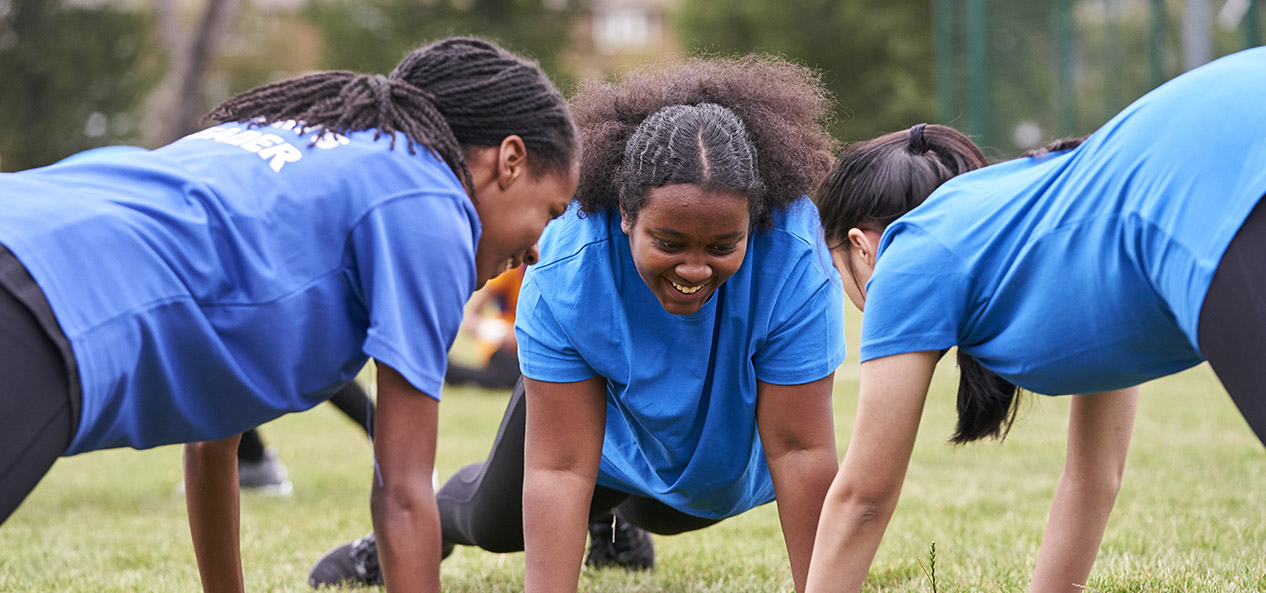
Three young girls adopt a press-up position on the grass outside, all facing each other in a circle

What young people are telling us

The strategy reflects what young people themselves have been saying for some time.

Many feel increasingly socially isolated, are worried about their mental wellbeing and financial security, and want to feel safer and more connected in their communities.

Crucially, they are also clear about what would most improve their daily lives: access to affordable, welcoming recreational and leisure opportunities, and the support of trusted adults.

These insights matter.

They underline the importance of spaces where young people can come together in person, build confidence, develop relationships and feel a sense of belonging – particularly at a time when pressures on services, families and communities are growing.

Why sport and physical activity matter

Sport and physical activity are not a 'nice to have' in responding to these challenges.

They provide proven, evidence-backed ways to support young people’s physical and mental wellbeing, create positive relationships with trusted adults, and strengthen connection to community and place.
 

They are also clear about what would most improve their daily lives: access to affordable, welcoming recreational and leisure opportunities, and the support of trusted adults.

Our sector already delivers experiences that young people value: inclusive activities, strong role models through coaches and volunteers, and environments where young people can feel safe, welcomed and supported to be themselves.

When done well, sport and physical activity can be a powerful protective factor in helping young people thrive, not just cope.

Inequality remains a barrier

Youth Matters rightly highlights the need to halve the participation gap between disadvantaged young people and their peers when it comes to enriching activities.

This is an area where urgency is needed.

Our latest Active Lives Children and Young People survey shows that while overall activity levels are rising, stubborn inequalities remain.

Young people from the least affluent families are still the least likely to be active, and too often face barriers related to cost, access, safety and whether opportunities feel designed for 'people like them'.

Less than half of young people say they are happy with the activities and services in their local area, and even fewer feel those opportunities reflect their needs and expectations.

Addressing this must be a priority if the ambitions of the strategy are to be realised.

Alignment with Uniting the Movement

The emphasis in Youth Matters on putting young people and communities at the heart of decisions, shifting from fragmented to collaborative working, and empowering local delivery strongly aligns with our long-term Uniting the Movement strategy.

Our Place Partnership approach is already focused on tackling inequalities, working alongside local partners and investing in long-term, community-led solutions.

Youth Matters validates this direction and reinforces the importance of sustained, place-based action rather than short-term interventions.

Our commitment

Delivering the ambitions of Youth Matters will require coordinated action across Government, sectors and communities.

Sport England is committed to playing our part: working with partners nationally and locally to ensure sport and physical activity are accessible, affordable, welcoming and shaped by young people themselves.

By listening to young people’s voices, focusing on the places facing the greatest challenges and continuing to address inequality head-on, we can help ensure this strategy delivers lasting impact over the next decade.

We look forward to continuing to work with Government, the youth sector and partners across sport and physical activity to turn this ambition into action for young people.
 

Making physical activity fun for all

At Get Doncaster Moving (GDM) we have a mission: to support the youngest in our society and their families to be as active as possible, because the benefits of moving are something that will accompany them for the rest of their lives.

It is with that mission in mind that across Doncaster, partners within our network are working together to create the conditions to help children, young people and their families build healthier, more active lives.

Through a place-based approach, the network is enabling innovative programmes, unlocking new partnerships and supporting communities to develop sustainable activity habits.

This is something we’ve undertaken as a long-term mission.

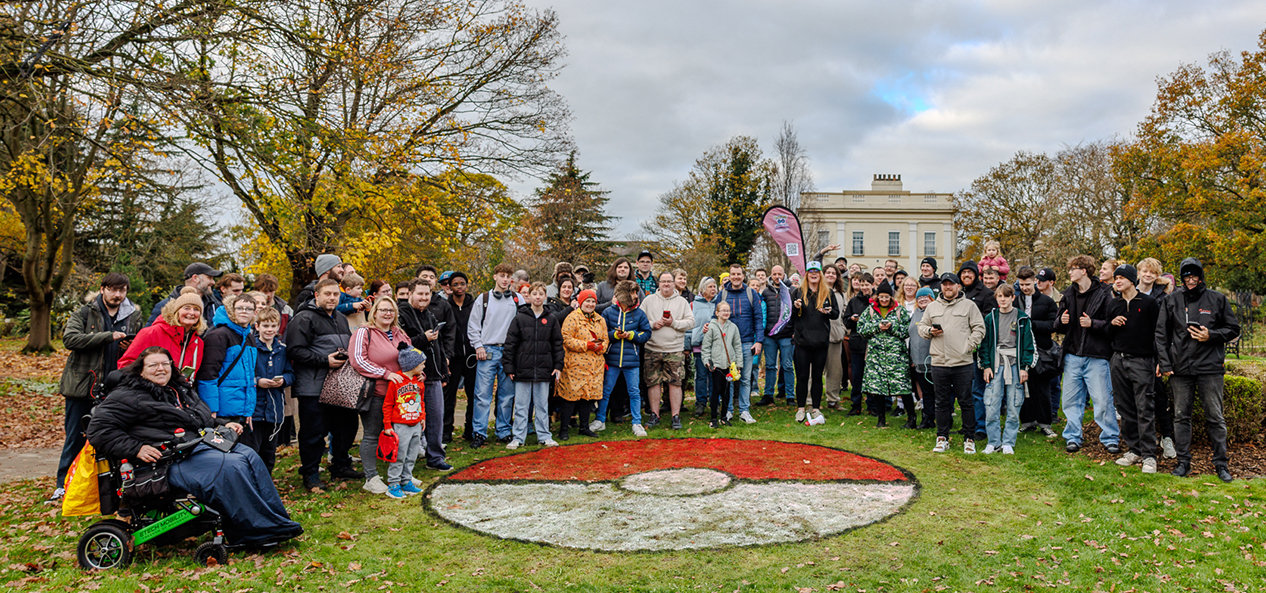
A group of poeple pose around a Pokemon ball that's been painted on park's floor.


Thinking outside the pitch

Reflecting on the past year, there are some stand out examples of how innovative partnerships have been the key driver behind GDM’s work to support children and young people – and their families – to move more.

Firstly, we’ve been developing new outdoor experiences to help children and families connect with local parks in different ways.

For example, GDM’s partnership with Enigma.Rooms introduced interactive digital trail games in parks across the city that engaged new and younger audiences through fun problem-solving and exploration.

The initiative was a success and contributed to Hexthorpe Park receiving the national ‘Green Space Innovation Award’ in 2025.

Then in November, and thanks to the efforts of the local Pokémon community, Doncaster was selected to host a Pokémon GO: Community Celebration event (the first place in Europe be chosen!), attracting thousands of local players and visitors.

The trails across two major parks showcased Doncaster’s green spaces while promoting movement through play.

Through a place-based approach, the network is enabling innovative programmes, unlocking new partnerships and supporting communities to develop sustainable activity habits.

GDM is continuing its work with local Pokémon Go group ‘Raiding Doncaster and beyond’ to grow this welcoming, inter-generational walking and gaming community, and encouraging new players to engage in this family-friendly activity, and to move more – particularly within Doncaster’s parks and green spaces.  

Trying something new

In sport, the ‘Free Park Tennis’ initiative started a couple of years ago in a local park to expand opportunities for children and families.

Resident volunteers have been trained as Free Park Tennis Activators to deliver free, weekly sessions to the community in two Doncaster parks, which led to one park being awarded ‘Park Venue of the Year’ by Yorkshire Tennis.

Our most recent park venue to host Free Park Tennis sessions, Haslam Park, which started in May this year, has already seen 369 attendances, with four local volunteers upskilled to deliver the weekly sessions.

This has been a fantastic opportunity for people to come along and 'have a go' at tennis in a relaxed and social setting, and it has been very popular with both children and families.

Doncaster’s place-based model played a key role in connecting partners and enabling the Active Start initiative, a programme designed for staff working with children aged 2–5.

Active Start is led by Yorkshire Sport Foundation, working in partnership with, and funded by, the South Yorkshire Integrated Care Board's Children and Young People’s Alliance. Their latest Impact Report: Giving children an Active Start is full of learnings and data.

This information is key to the training and resources they provide to early years professionals to help embed movement and active play throughout everyday learning.

This approach not only supports physical development but also communication efforts, social skills and school readiness, giving children the strongest start in life.

Doncaster’s Public Health and Early Years teams have trained as tutors, offering one-on-one support, continuing professional development opportunities and resources to nurseries, schools, childminders and all 12 family hubs, which are places for families to go within their communities to access groups and support.

Many settings have already taken part in centralised training and are now better equipped to encourage movement in class and at home.

But this is not all, because work will continue into the 2025/26 academic year as the programme develops further across South Yorkshire.          

Looking ahead, shifting the dial on children’s engagement in activity will require continued place-based collaboration.

Sustained shared learning, creativity and innovation – alongside a connected, empowered GDM network – will help Doncaster’s young people to move more, play more and thrive.

Find out more and connect with us

Closing the wellbeing gap

At StreetGames we are passionate about helping children and young people from the most deprived places build life-long habits in sport and physical activity.

We do this because we know the powerful role that sport and physical activity can play in helping young people build friendships, develop confidence, forge a sense of belonging, provide opportunities to connect with trusted adults, develop pro-social behaviours and improve attention, engagement and performance levels at school.

The triple dividend for young people

Sport and physical activity improves health and wellbeing for everyone, but for children and young people it delivers a ‘triple dividend’.

This refers, firstly, to the immediate gains from getting good active habits from a young age; secondly, to the potential of future benefits as today’s youngsters transition into adulthood and, thirdly, to the advantages that the next generation (i.e. their children) will enjoy from following their elders’ healthy behaviours.

As such, it’s encouraging to see this new research from Sport England and their research partners – State of Life, Sheffield Hallam University and Manchester Metropolitan University – which provides powerful data showing the significant wellbeing uplift children and young people gain from taking part in sport and physical activity.

The latest numbers include new calculations for 7-11-year-olds and applies the newly developed C-WELLBY measure, together with wellbeing values by demographic breakdowns for 11-16-year-olds.

The new results show an average yearly wellbeing value of an active young person aged 7-11 years of £3,100, and an updated average value of £4,300 for an active person aged 11-16 years.

There is also significant wellbeing value attached to young people who are ‘fairly active’, because taking part in at least some sport and physical activity regularly is better for the wellbeing of our young people than being ‘less active’.

Wellbeing calculations

In both cases, the average wellbeing values for participation are higher for children and young people than for adults, highlighting the importance of being active from a young age.

However, the research also highlights a ‘wellbeing gap’.

As we mentioned, the value of being active for 11-16-year-olds is £4,300, but analysis by demographic sub-groups shows a weaker association between physical activity and wellbeing among children and young people who are from low family affluence (£2,900), Black (£2,300), girls (£3,300), or disabled or living with a long-term health condition (£2,800).

Sport and physical activity improves health and wellbeing for everyone, but for children and young people it delivers a ‘triple dividend’.

As the report pinpoints, these wellbeing calculations do not take into consideration factors related to opportunity, motivation, enjoyment and experience – all of which are essential to developing a lifelong positive relationship with physical activity and that may go some way to explaining the disparities.

Indeed, recent analysis from Youth Sport Trust showed that motivation and enjoyment account for at least half of the wellbeing benefits of physical activity in school.

We also know from last year’s Active Lives Children and Young People 2023-24 survey data that only 37% of children and young people from low affluence families feel they have the opportunity to be physically active, compared to 57% of children and young people from high affluence families.   

This is a view that is very much echoed amongst young people StreetGames speak to and who are living in areas of high deprivation who tell us: “there isn’t a lot to do”, “parks don’t feel safe”, “the public facilities get vandalised and are not maintained”, “prices are very expensive” or “we would love to volunteer, but it’s difficult to find opportunities.

Equalising opportunities and provision 

However, when opportunity and choice are equalised – such as through school-based activity or accessible community provision – the association between physical activity and wellbeing appears stronger among more disadvantaged groups.

Youth Sport Trust analysis shows that the wellbeing benefit of physical activity in school is almost double for children who are disabled or receiving free school meals compared to their peers.

For those of us working to provide all children and young people with access to the benefits that come from taking part in sport and physical activity, this new research is important as it provides further evidence on the essential role that sport and physical activity can play in society. 

But also importantly, it emphasises the need to maintain an unwavering focus on reducing inequalities that exist, and on making sure all children and young people can take part in a variety of enjoyable and accessible opportunities that will help them to flourish not just now, but also in the future.

And if you still need further convincing, then we’ll leave the final say to young people who shared how sports and physical activity benefits them.

Some mention it’s all about having fun, others highlight how it helps them to meet new people and socialise, while for others being active brings “a nice break from daily stresses” that gives them a chance to “forget everything while being an active and healthy too”.

The advantages of being active really are too good to ignore and all children deserve to take advantage of them.

My day, my rights

Two years ago I shared my first blog for World Children’s Day to raise awareness of children’s rights.

Whilst progress has been made in our sector, the words of a member of a newly formed Youth Advisory Group (YAG) on behalf of the Children’s Coaching Collaborative (CCC), proves there is still work to do.

He said that children’s rights are something that he heard about in primary school, but that he now only finds “in random news articles". This young man is now 16!

However, ensuring that young people have positive experiences of being active that are safe and fun, and that also respect their rights, is one of the areas we at Sport England, and a number of partners across the sector, have been advocating for in the past few years.

And there’s an article about children’s rights in sport by Liz Twyford, from UNICEF UK, that I think is key because it highlights the subtle but important change that means putting the child first to make a difference, and the impact that coaches have on those they work with.

Supporting young people to Play Their Way

Play Their Way exists precisely to champion children’s rights in sport and physical activity.

The campaign was launched in 2023 with the idea of taking a child-first approach to coaching, to ensure that their rights, needs and enjoyment are always prioritised, so they can have a positive experience of being active.

The campaign has been gaining supporters non-stop and in September this year we celebrated reaching a milestone of 10,000 registered members.
 

Ensuring that young people have positive experiences of being active that are safe and fun, and that also respect their rights, is one of the areas we at Sport England, and a number of partners across the sector, have been advocating for in the past few years.

In a recent blog by our head of children and young people, a survey was shared to understand the range of youth voice and resources used across the sector.

Thanks to those who contributed, it has confirmed that listening to children and young people is an established priority with many brilliant examples.

However, for some, more support is needed to ensure a meaningful and sustainable youth voice practice to ensure children and young people feel included and supported to shape decisions affecting them through ongoing opportunities.   

Welcoming the Youth Advisory Group

To keep engaging and embedding the voice of young people in a meaningful way into the work of the CCC, earlier this year young people were invited to apply to join a YAG for our sector.

The initiative was led by Streetgames and saw 12 young people aged 14-19 with a range of experiences and backgrounds being 'recruited'.

Over the summer they spent time getting to know each other and understanding the role they would play as part of the group.

Within their applications, they were asked why they felt young people participating in shaping sport and physical activity opportunities was so important.

I was impressed by their thoughtful, positive and passionate responses that took into consideration not just themselves, but their peers too.

Some comments that I found particularly insightful mentioned that hearing what young people had to say is important as it “ultimately allows more young people to be able to access sport” (Poppy, 18).

That being listened to, allowed young people to have “a sense of empowerment” that made them see they’re “in control of the future” (Tasnuva, 16).

And, ultimately, that speaking out allows them to shape their own opportunities by
“influencing the accessibility and culture of sport for years to come” (Isobel, 18).

The group will be encouraged to share their experiences, views and opinions on coaching to inform the ongoing work of the CCC and will receive support to develop their own understanding of their rights. 

There are also other organisations with great initiatives to put children and young people’s views first in the sector.

For instance, the Positive Experiences Collective are hosting a range of resources and support connections to inspire advocacy for physical literacy, to help children and young people develop a positive and meaningful relationship with being active.

And the Centre for Youth Voice recently relaunched to continue to amplify the voices of young people and their impact. I recommend you check out their free online training and events on their website.

The future is young

Next month we’ll be releasing the Active Lives Children and Young People survey, covering the 2024-25 academic year.

This time we’ve introduced a new question to help us understand to what extent young people are heard by the adults delivering activity to them, which will provide a baseline to shape our work moving forwards.

This has only been a snapshot of the work we know is happening within the sector for children and young people, but we will continue to raise awareness of their rights.

For now we can all do this by listening to their voices and working with them to design and provide more opportunities to support all children and young people to be active, so they can enjoy it and gain the benefits that movement can bring into their lives both now, and as they grow into adults.
 

The power of our communities

Sport changed my life. I have vivid childhood memories of being driven all over North Yorkshire by my mum and dad.

We spent our Saturdays going from one brilliant and unique cricket ground to another, and I can still hear those echoes of leather on willow when I see them today.

Those weekends set off a lifelong love affair with cricket and the county I’m proud to call home, and even more proud to represent every day as a Mayor of York and North Yorkshire.

Everyone should have the same opportunities to get moving that I did, and that is why I am proud to launch the £2.75 million Movement, Activity and Sport fund.

Bringing the joy of movement to everybody

This is the first of the funds to be launched under my Moving Forward campaign and we are working closely with partners to make sure this investment targets support for those who need it most.

Beyond the health benefits, there aren’t many better ways provided by sport and physical activity to meet new people and build strong relationships in our local communities.

However, this is particularly key in our rural and coastal areas, where there are some pockets of real deprivation.

Too often families cannot get over the hurdle of costly cricket bats, football kits or transport to games, which means that those who would benefit the most aren’t able to get involved.

But by funding activities for those who might otherwise turn to anti-social behaviour, we can change lives and make our towns and villages a better place to live.
 

This is the first of the funds to be launched under my Moving Forward campaign and we are working closely with partners to make sure this investment targets support for those who need it most.

Our research tells us that over 30% of adults are classed as physically inactive, meaning they do less than 30 minutes of exercise a week, and that over 60% are overweight or obese, increasing the risk of long-term health conditions.

But this reality can be turned, and early intervention and prevention can make a big difference.

We can help that by making positive choices like introducing physical activity in our day to day, by considering more walking, wheeling and cycling for our working commute or to meet up with friends.

We are moving in the right direction, but there’s still so much more work to do!

After years of being ignored or minimised, women’s sport is getting the recognition it deserves with success after success for our national rugby and football teams, but girls still don’t get the same opportunity to get moving when compared to boys.

Moving forward together 

I have seen that first hand, because while my son had the pick of so many football clubs, we struggled to find one for our daughter. How can that be happening in 2025?

This plays out with so many families across the region and the UK every year, and it’s a big reason why girls are more likely to stop playing sport when they become teenagers. But we can also change that.

By enhancing skills development and training in the sector, alongside offering more inclusive activities, we will also tackle the barriers that people with disabilities face.

Disabled people are almost twice as likely to be physically inactive, but by working together with our partners we can start to improve those numbers and change lives.

My Moving Forward campaign is about backing people across our region to build the healthy and thriving communities they deserve. 

I believe in the power of our communities, the people and local organisations that keep them going.  

Our work is made so much easier thanks to the support of our strategic partners, including North Yorkshire Sport and the Place Universal Offer from Sport England and I’m truly excited about these, because together we can achieve so much more!

The best part of my job is seeing the huge impact that hard-working groups have on their neighbourhoods.

They know what they need, and we will work with them every step of the way as we continue Moving Forward together.
 

Leading with our hearts and minds

Today, on World Mental Health Day, I find myself reflecting not just as the new Head of the NSPCC’s Child Protection in Sport Unit (CPSU), but as a parent, a colleague and a lifelong advocate for the safety and wellbeing of children and young people.

Mental health is not a standalone issue. It's woven into the fabric of everything we do – how we parent, how we coach, how we educate and how we safeguard.

And in my new role at CPSU, I’m committed to making sure children’s wellbeing, their mental health and voices are instrumental in our work.

One of the most impactful ways we can help with mental health is through sport and physical activity as their benefits are well-documented and include movement boosting our mood, building resilience and fostering connection.

But sport and physical activity also offer something deeply human – it gives children a sense of belonging, a place to express themselves and a safe space to grow.

The power of communication

Whether it’s a kickabout in the park or through more structured team-training, movement can be a lifeline for young people – helping them navigate the complexities of growing up and it can also help them to cope with the world’s pressures.

But the act of playing sport or being physically active alone isn’t enough.

This week we are also celebrating Keeping Your Child Safe in Sport Week, and we think that sport and physical activity are key in highlighting that parents and carers play a crucial role in safeguarding their mental wellbeing.

This safeguarding starts with a conversation, because when we talk openly with our children about emotions, stress and support, we create a culture of trust and a safety net.

These conversations don’t have to be perfect – they just have to be real and, as parents, we have to listen.
 

Whether it’s a kickabout in the park or through more structured team-training, movement can be a lifeline for young people – helping them navigate the complexities of growing up and it can also help them to cope with the world’s pressures.

When children feel safe to open up, we strengthen the parent-child bond, we build relationships rooted in empathy and understanding and, in doing so, we lay the foundation for lifelong mental wellness.

So today I encourage every parent, coach and caregiver to take a moment and ask your child how they’re feeling, what support means to them, and what actions we can do as parents and carers to help them.

We also think that as well as listening, it’s important that you share your own experiences too and that you let them know they’re not alone.

At the CPSU we have new videos and conversations starters for parents, plus resources for sports organisations to help promote a culture of listening within their organisations.

Because safeguarding isn’t just about protection – it’s about connection.

Together, let’s make mental health a part of keeping our children safe. Not just today, but every day.
 

Find out more

World Mental Health Day

Why parents and carers matter

Safe and positive experiences for children and young people are one of the five big issues at the heart of Sport England’s long-term strategy, Uniting the Movement.

Sport England has supported the NSPCC’s Child Protection in Sport Unit since 2001 and continues to invest in keeping sport safe for children.

Early experiences with sport have the power to make or break a person’s lifelong relationship with physical activity, which can affect physical, mental and social health at every stage of their life: from childhood; to teenage years; to adulthood.  

Simply put, a negative experience could turn a child away from sport, causing them to disengage and miss out on the extraordinary benefits of an active life – from being able to concentrate better at school; to having fun with their friends; to reduced anxiety; to the sheer joy of moving.

Our social value research found that active children and young people generate a wellbeing value (the monetary value that can be placed on happiness, health and life satisfaction) of £4,100 a year (for an active adult, it’s £2,500).

This shows that active children gain more from movement than active adults.

It’s also so important for their development and happiness, and with childhood obesity rising and less than half of children meeting the Chief Medical Officers’ guidelines for physical activity, getting children active is more important than ever – and parents and carers have a vital role to play here.
 

Simply put, a negative experience could turn a child away from sport, causing them to disengage and miss out on the extraordinary benefits of an active life.

We are supporting the KYCSIS campaign by asking all those who work in the sector to call on parents and carers they interact with, to think about how to support children in sport and to have open conversations about what kind of encouragement helps young people thrive.

Why those in charge matter so much

There are different reasons why parents and carers are key in their life’s kids when it comes to sport:

  • Parents and carers shape how children feel about sport. Their behaviour, language and the support they offer can determine whether sport is a positive space for their child. 
  • They know what their child needs and what kind of support they respond to. Support looks different for every child. Some want loud cheering, while others may prefer quiet encouragement.
  • Parents and carers are best placed to know what their child needs. They can then share this with coaches and leaders.

Positive support from parents and carers helps children reach their goals. So whether that is winning, a personal best, being a good teammate or simply enjoying being active, positive support from parents and carers can build a positive relationship with sport and physical activity.

The TALK steps 

There are four simple steps every parent and carer can follow to ensure their kids enjoy sport in a secure and enjoyable way – it’s what we call the TALK steps and we’d love it if you could share these with those in your network.

  • Talk to the child; listen to the child: parents and carers should ask why their child plays and how they want to be supported. Parents can use their answers to guide how they show up at training and competitions.
  • Always show respect: we encourage parents to be good role models of sports values by supporting the whole team and treating coaches and officials with respect, even when they disagree.
  • Let’s speak out: if adults are shouting insults, criticising, focusing on weight, confronting officials aggressively or pushing children into competitions that are too advanced for them, parents and carers should raise it with the club’s welfare officer or match-day official.
  • Keep sport fun: we encourage parents and carers to praise effort and progress as well as results. Offering constructive encouragement when things go wrong can help children learn from setbacks.

What about if my child is in a competitive environment?

For many parents and carers, it’s brand-new territory when turning up at their child’s first sporting event – but they must be equipped and not afraid to ask about anything they feel unfamiliar with.

Here are five questions every parent/carer should ask before signing their child up to a competition:

  • What is the primary purpose of this competition for children at this age or level?
  • How are children supervised and safeguarded during the event?
  • What expectations will be placed on my child and what support is available if they find it stressful?
  • How are selection and team decisions made and communicated to participants and families?
  • Who is the designated welfare officer and how do I raise a concern on the day if needed?

Asking these types of questions before agreeing to children taking part makes it easier for parents to recognise when something is not right.

Spotting concerns and taking action

Parents and carers know what their child needs to be their best and should be empowered to challenge or call out behaviour that could harm their child’s wellbeing.

Adults shouting from the sidelines, personal criticism of children, pressure about weight or repeated, aggressive challenges to officials are all red flags.

Parents should report concerns the club’s welfare officer or the relevant match official immediately.

If you remain worried about anything that may cause harm, contact the NSPCC Helpline on 0808 800 5000 or email [email protected].

We all have a joint commitment to ensure children and young people feel safe when taking part in sport so let’s make sure, we support parents and carers to make this happen!
 

Communities on the edge

Coastal communities are some of the most beautiful places in England and many of the country’s wealthiest spots are on the coast.

But it is also true in England that a disproportionate number of the places suffering the most deprivation, worst physical and mental health outcomes and lowest healthy life expectancy are on the coast too.

All this may read contradictory, but coastal communities haven’t ended up in this position by accident.

Many were once thriving seaside economies, built on tourism and seasonal work, but as those patterns changed, they left behind communities with deep roots but with fewer opportunities than those in urban and rural communities.

This deteriorating state of coastal living standards is driven by deprivation and the complex and challenging issues around housing, transport and employment, which together lead to disproportionate lower levels of physical activity.

As Sport England highlight with their sustainability strategy, Every Move, adding to these challenges is that those facing the greatest inequalities are often the least active and the most affected by climate change.

Plus, coastal communities are facing significant climate effects through coastal erosion, flooding and the fact that industries on the coast are the ones producing the majority of the UK’s carbon emissions.

So how can we turn the tide on physical inactivity on the coast?

Can you define ‘coast’?

It is amazing that whilst we are an island, there is no agreed government definition for the term ‘coast’, unlike clear definitions for urban and rural areas.

This leads to the coast often being lost in talks around deprivation as the debate revolves around those in urban and rural areas.

The deteriorating state of coastal living standards is driven by deprivation and the complex and challenging issues around housing, transport and employment, which together lead to disproportionate lower levels of physical activity.

The Coastal Navigators Network, which tackles health inequalities on the coast, has identified that whilst coastal communities are often small individual places, when considered together, they are as large and significant as a national population group (19%) and the near equivalent of the entire North West and North East regions combined.

So with this in mind, what inequalities do people living in coastal areas face in terms of access to sport and physical activity?

The most obvious one is that for coastal communities half their catchment area is in the sea!

Away games are often long car journeys to the far away urban areas for at least half of their season and let's not forget about those extra carbon emissions!

However, it is the opposite for their urban colleagues, who consider their fixture in the season on the coast as going to the seaside for the day!

Sport and physical activity has come late to the policy work across England about improving opportunities for coastal communities, but is now beginning to build the partnerships with organisations like the Coastal Communities Alliance, OneCoast, the Coastal Navigators Network, and the Coastal Cultural Network.

In fact, in February 2026, the APPG Coastal Communities have scheduled a briefing session on the Culture, Creative & Sport Sector in coastal communities. (Please note that while no final information is available yet, the Coastal Community Alliance is currently organising this with the APPG, so check their sites and socials for more information.)

Where is the good work happening?

Five years on from its launch, Active Withernsea is making a real difference in creating physical activity opportunities and lifestyles and transforming its local community.

Local data by Sport England-funded Active Withernsea highlights that while in 2018, 44% of people in Withernsea were inactive (that is doing under 30 minutes of exercise a week), this number has gone down to 15 % of residents being inactive in 2024.

Further, the percentage of residents who are now active increased from 44% to 62% over this time period.

Happiness and satisfaction with life have also improved and anxiety amongst Withernsea residents has decreased, while activity for those with a disability has seen the biggest increase.

A Physical Activity and Community Engagement (PACE) network has been established to lead physical activity projects going forward and ensure that the work continues with more than 100 residents, groups and partners now directing the next steps to continue to deliver physical activity for the people of Withernsea.

What Active Withernsea has shown is that when national policy makers do focus on coastal communities, significant change can help increase physical activity levels. 

What is also clear is that Sport England place-based funding has begun to turn the tide for coastal communities and that, together, we will keep working to improve the lives of those living by the sea.

Find out more

Active Humber

Belonging, representation and change

This September marks another year that the UK officially honours East and Southeast Asian (ESEA) Heritage Month – a time to celebrate the rich cultural histories, achievements and resilience of our communities.

For me, though, it is more than a celebration – it’s a mirror, reminding me of where I started and why I continue to fight for change.

My journey began in the shadows of homelessness as a young person, feeling invisible and excluded from the very spaces where I longed to be.

At the same time I was training as a competitive bodybuilder and athlete, but I never saw anyone like me: a Southeast Asian LGBTQ athlete. Someone who shared my identity.

That absence cut deep and left me questioning whether sport had a place for me at all.

But that void became my spark, igniting the fire that drives me today as an athlete, an advocate, a keynote speaker and a global ambassador.

The power of heritage and representation

ESEA Heritage Month in the UK began in 2013 as a grassroots initiative led by passionate community advocates determined to give our stories space in the national conversation.

Today, it has grown into a powerful celebration of pride, resilience and belonging, because while sport has the power to unite and uplift, it can just as easily reinforce barriers and stereotypes.

Representation for East and Southeast Asian athletes in the UK remains scarce and with invisibility comes potential for damaging assumptions about who belongs in sport.

That is why this month is not only about honouring our culture but also about opening doors for others to step through.

Driving change with the Asian Sports Foundation

This is also why organisations like the Asian Sports Foundation (ASF) are so vital.

ASF works to tackle health inequalities and underrepresentation in sport, breaking down cultural, social and structural barriers that can hold Asian communities back.

Their approach is rooted in authenticity, education and respect, because we are not one homogenous group.

Instead we all acknowledge the rich diversity and recognise that no one story is the same.
 

East and Southeast Heritage Month in the UK began in 2013 as a grassroots initiative led by passionate community advocates determined to give our stories space in the national conversation.

Through campaigning, supporting grassroots delivery and strategic influence, ASF empowers communities to live healthier, more active and more connected lives.

From improving wellbeing to shaping sports programmes, ASF proves that sport is more than competition – it’s a catalyst for equity, resilience and social change.

My journey to advocacy

In 2024, I was deeply honoured to become a Southeast Asian athlete ambassador for ASF.

For me, this role is not about titles but about the responsibility it brings with it.

It is also about creating pathways where none existed before, amplifying voices that deserve to be heard and showing young athletes that representation is not symbolic, but transformational.

My journey has taken me from homelessness and the lonely days of training as a young bodybuilder – feeling invisible and excluded – to becoming one of the most recognised global LGBTQ sports advocates in the world.

Today, I am proud to be the only Asian LGBTQ athlete in history to hold ten international sports ambassador roles.

I have also been honoured by over 30 international organisations, served as the first Asian athlete ambassador for Pride House at the Paris 2024 Olympic Games and the Commonwealth Games in Birmingham, Athlete Ally and Stonewall

My global advocacy has been recognised by the State of Georgia for my community service and the non-profit LGBTQ advocacy organisation GLAAD, and I have had the privilege of advising governments, Fortune 500 companies, sports federations and even the White House on inclusion and diversity. 

And yet, at the heart of all these milestones, remains that young athlete who once looked in the mirror and felt unseen.

It is for them – and for all who still feel excluded – that I continue this work.

A call to action

Being an ally to East and Southeast Asian athletes begins with recognition.

It means listening to their voices, challenging stereotypes, amplifying our stories and supporting organisations like ASF.

But above all it means showing up not just in September, but every single day.

This Heritage Month, I ask you to celebrate and share stories with us and to go beyond!

Make a commitment to change and stand with us not just in words but in action through listening to our shared stories, learning histories and championing athletes to bring them out beyond the sidelines.

Imagine a sporting world where every child, including every Asian boy and girl, can step onto the field, the track or the pitch and see themselves not as outsiders, but as leaders, champions and changemakers.

That world is possible if we build it together.

Sport is more than competition. It is what unites us and what can build belonging, joy and community.

This ESEA Heritage Month, let’s commit to making sport a place where every athlete belongs.
 

Celebrating children and young people

There are nearly 15 million young people in the UK under the age of 18. That’s more than a fifth of our entire population. So with almost 30% of us under the age of 24, that’s why it’s so relevant to highlight that today we get to celebrate International Youth Day.

Today is a day that highlights the challenges and opportunities faced by young people and, perhaps more importantly, it's a day that honours their contributions to society and that raises awareness of how meaningful youth engagement can build a better future.

This is something that we are passionate about, and collectively championing and advocating for across the sport and physical activity sector.

We want to encourage and support organisations across the sector to put young people first and to incorporate their voices into their practice – not just as beneficiaries or recipients, but as active, empowered agents of change.

Young people have a right to have their voices heard and acted upon in all matters affecting them – this is the starting point to creating positive experiences of being active and of building a positive, meaningful lifelong relationship with movement.

Celebrating young people’s contribution

So, in the spirit of celebrating young people’s contributions, I wanted to take this opportunity to mark their day by sharing just some of the many examples of great work happening across the sector where young people are being supported to lead the way.

As part of the Go! London Fund – set up to reduce barriers to being active that young people in the capital face and to tackle social and economic inequalities – Sport England have worked in partnership with the Mayor of London, London Marathon Foundation, London Sport, London Marathon Events and the School for Social Entrepreneurs to support two cohorts of young entrepreneurs to grow their own sport and physical activity-based enterprises.

These cover fitness, swimming, football, cycling dance and more – all making a difference to young people in their communities.

Young people have a right to have their voices heard and acted upon in all matters affecting them – this is the starting point to creating positive experiences of being active and of building a positive, meaningful lifelong relationship with movement.

Teenage girls have also been central to co-creating the new Studio You x Nike hub – a series of inclusive new video content for school PE lessons, teaching a variety of non-competitive activities like yoga, dance and strength training to ensure no girl is left behind in PE. 

Through in-person co-creation and online focus groups, girls chose everything from lesson duration and visual design, to their instructors.

One of the young people involved in the co-design process said that it felt “really good” to know that her voice was being heard and that it felt as if she was doing a service for the teenage girls who struggle with confidence and participation in PE. 

Also, through our Place Partnerships, there are some great examples of young people playing an active role in shaping the direction of work in their communities.

In Southampton, young people have created an evidence-informed model for embedding youth voice into decision-making processes; in Hull, young people have been sharing their views on barriers, perceptions and the future of physical activity; and in Bradford, young people have been leading the way to shape the development of their green spaces.

I’d also recommend taking a look at the Voice Opportunity Power toolkit if you’re interested in ways to involve young people in the design of their neighbourhoods.

To support the development of the government’s National Youth Strategy, a listening and co-design programme called Deliver You was launched in March this year.

It gathered views, feedback and ideas from more than 20,000 young people across England and we look forward to the publication of the strategy later in the year, which will set out a long-term vision for youth policy.

Some ways to get involved

Through the Play Their Way campaign, partners across the Children’s Coaching Collaborative (CCC) are working to create a movement of child-first coaches that put young people’s rights and voices at the heart of their thinking.

In fact, through the CCC, StreetGames are currently leading work to improve understanding of the range of youth voice work and resources available across the sector.

This is all with a view to maximising youth voice activity and supporting meaningful change across the sector.

They’d love to hear from partners working on youth voice activity and you’re invited to complete this short survey by the end of August.

Positive Experiences Collective – Patchwork Programme

Finally, if you’re interested in putting young people’s needs at the heart of your work and the principles of physical literacy into practice (a key and to-the-point explainer from the Youth Sport Trust), you can find out more about the Positive Experiences Collective and the Patchwork Programme.

The Positive Experiences Collective is open to all and exists to inspire more positive, meaningful experiences of movement for children and young people, embedding youth voice as a key enabler to help them build a lifelong relationship with physical activity.

At the centre of the Collective is the Patchwork Programme – a nine-month learning and leadership journey for 12 interdisciplinary teams.

The initiative is part accelerator and part leadership development, and it’s designed to embed physical literacy as a driving force for system change.

The next cohort of the Patchwork Programme is now open for applications until 5 September.

Final word to young people

I’d like to leave the final word to a young person who we heard from at the Sporting Communities Youth Innovation Conference in April this year, where we asked young people to tell us what is most important for us to share back with the sector to make sure that young people’s voices are heard.

They said: “Young people have the ability to speak out. Most don’t because they don’t think they have the authority to. That needs to change and be shown to young people.”

Let’s help them change that.

Find out more

International Youth Day

Active environments – more than ‘a nice to have’

“If physical activity were a drug, we would refer to it as a miracle cure.”

This was the joint statement of the Chief Medical Officers of the UK in 2019 when referring to the evidence that physical activity can prevent and help treat many illnesses, including cardiovascular disease, type 2 diabetes, depression, cancers and dementia.

However, we know from Sport England’s most recent Active Lives survey that a significant proportion of adults, children and young people in England are not active enough to reap these benefits and, worse, some are entirely inactive (undertaking fewer than 30 minutes of activity a week).

And this is because, for many people, the barriers to getting active are still too high.

Moving around should be fun, easy and safe

According to Sport England research, if you are less affluent or live in a less affluent place and/or if you have a disability or long-term health condition, you are much less likely to be active.

The report also highlights that women and girls' activity levels are still lower than men’s.

But whilst inclusive and accessible sports opportunities and facilities are vital, at the Town and Country Planning Association we believe that where people live and their opportunities for easy and daily activity are crucial in getting people to move more.

Because whether people have the genuine opportunity to walk, wheel or cycle in their lives to commute, run errands and for leisure is important, especially for the least active.

The built and natural environments in which people live, work and play need to be ‘active environments’; that is, surroundings that facilitate activity for physical, social and emotional purposes.

Moving about a village, neighbourhood or city must be easy and fun, plus people must feel safe and comfortable in them, as active environments make 'the active choice' to be 'the easy choice' for everyone.

But creating active environments is not only a question of design but also of power, policy and participation.

Whilst inclusive and accessible sports opportunities and facilities are vital, we believe that where people live and their opportunities for easy and daily activity are crucial in getting people to move more.

Decisions about where new homes are built, how streets are laid out and whether parks, pavements and public transport are prioritised, all play a role in shaping how active people can be in their daily lives.

Yet too often, physical activity is seen as a leisure issue, rather than a systemic one rooted in spatial planning, social justice and public health.

To effectively embed physical activity into our environments and daily routines must be a shared ambition across sectors and professions – from planning and transport, to health and housing, as well as for leisure and open-space management.

Want to go out to play?

For example, it is no use creating miles of cycle paths if we are creating homes and town centres without space for secure cycle storage, not providing opportunities for our children to learn to ride bikes through programmes like Bikeability, or addressing poor attitudes towards cycling and reducing traffic speeds so that people (especially parents and caregivers) feel it is safe to ride even short distances.

Equally, we cannot expect our children to play out, like many of us used to do back in the day, if their neighbourhood streets and doorstep places are full of parked cars (too often on pavements) and moving traffic.

Research shows that basic, free outdoor play has fallen to its lowest level ever, with now only one in four children playing outside regularly compared to their grandparents’ generation, where almost three-quarters played outside on a regular basis.

Too often when we think about play in neighbourhoods, we default to thinking about structured activity and providing spaces that are designated and equipped.

Whilst play parks are important assets for all neighbourhoods, the doorstep and immediate street is also critical, and importantly, a space for children to play on a daily basis.

Accessible, safe street space is the most inclusive step we could take to make places more active and friendly for children, meaning we need to grapple with car and parking-centric design.

All of this is why a systems approach is needed – one that listens to communities, addresses inequalities and prioritises long-term health outcomes in decisions about land usage and investment.

Active environments cannot be a ‘nice to have’; they must be seen as essential infrastructure for a healthier, more equitable future.

The Town and Country Planning Association works to make homes, places and communities in which everyone can thrive.

We work to influence and shape the planning system at the national and local level, but we recognise the multi-dimensional nature of place-making and how places and spaces are shaped by communities and can be ‘activated’ for activity.

For the last six years, in a partnership with Sport England, we have worked to create healthier, more active communities, building knowledge and capacity with partners and local authorities and advocating for health and activity to be embedded in planning policy.

The School Games Organiser Network review – key takeaways

Technology visionary Steve Jobs used to say that the only way to do great work is to love what you do.

This quote perfectly captures the passion, energy and commitment of the 450 School Games Organisers (SGOs) across England that dedicate themselves to helping children and young people develop a lifelong love of movement through positive experiences in sport and physical activity, as highlighted in the findings of the SGO Network review

The independent evaluation of the SGO Network, funded by Sport England, was led by the Sport Industry Research Group at Sheffield Hallam University, Ipsos and Leeds Beckett University

The first objective of the SGO Network review, Objective A, aimed to assess “the intended and actual (additional) impact of the SGO Network, and what observable contribution is attributable to the direct/indirect action of the SGO Network”.

The findings of the Objective A report, released today as part of the SGO Network review, provide clear evidence of the value and impact of their work.

Launched in the 2011-2012 academic year as part of the legacy of the London 2012 Olympic and Paralympic Games, the School Games programme is jointly funded by the Department for Culture, Media and Sport (DCMS) and the Department of Health and Social Care (DHSC).

Sport England, via National Lottery funding, invests in the Youth Sport Trust (YST) as the national delivery partner.

Over the years, the School Games and the wider SGO Network have evolved into a more holistic offer, focusing on five core outcomes aimed at tackling inactivity and addressing inequalities.

The findings of the Objective A report, released today as part of the SGO Network review, provide clear evidence of the value and impact of their work.

Since its inception, the programme has created 13.4 million participation opportunities for young people, with 97% of schools in England eligible to take part.

The Objective A report highlights the impact and value for money of the SGO Network. Some of its key findings included:

  • 93% of schools reported that their SGO has a positive impact on their least active young people
  • 94% of schools indicated that their SGO has a positive impact on providing equal opportunities for young people to take part
  • 71% of schools highlighted that their SGO has helped develop new partnerships for their school
  • 88% of schools stated that if their SGO was no longer available (as they are now), their sport and physical activity offer would be reduced.

The report also suggests that the cost of the SGO Network is justified by the benefits it produces.

It is estimated that the SGO Network, costing £37m to deliver to secondary school-aged children over 11 years, yielded £91.7m in benefits.

This implied a benefit cost ratio of 2.48, suggesting that every £1 spent yielded £2.48 in benefits.

Furthermore, a sensitivity analysis was undertaken to understand the likely monetary impacts for children under 11.

The findings indicate that including children in school years 3 to 6 (ages 7 to 11) could yield £237.4m in benefits – enough to offset the total SGO Network costs of £154m (equivalent to a benefit cost ratio of 1.54).

The release of today’s report is particularly timely in light of the recent government's announcement on school sport.

The findings and recommendations from the SGO Network will be used to inform the new approach for School Sport Partnerships.

We look forward to contributing to this co-design phase, especially by sharing the valuable insights from the 70 stakeholders who participated in Objective B of the SGO Network Review.

Their contributions helped shape a compelling and collective vision for the future of school sport.

Find out more

School Games Organisers

A welcome new approach to school sport

The Prime Minister has announced a bold new vision for school sport, introducing plans for new School Sport Partnerships and an Enrichment Framework.

The announcement also sets a clear commitment for equal access and the protection of two hours of high-quality physical education for every child each week, along with the introduction of new ‘sport profiles’ that outline each school’s sport and enrichment provision.

We welcome this announcement as the latest Active Lives Children and Young People Survey Report highlights persistent and significant challenges in how children and young people engage with sport and physical activity, reinforcing the urgent need for more inclusive, youth-led and enjoyable movement experiences:

  • Fewer than half of children meet the Chief Medical Officer’s Physical Activity Guidelines.
  • Only 49% of children strongly agree that they enjoy being active.
  • Government guidelines recommend that children and young people achieve 30 minutes of physical activity during the school day, and 30 minutes outside of school. However, our research indicates that only 45% of children meet this target during school hours and just 56% meet it outside of school, with participation levels varying significantly across different demographic groups.
  • For some young people, school is their only opportunity to experience the benefits and enjoyment that sport and physical activity can bring in these formative years.

The announcement sets out a clear strategic vision that will benefit generations to come.

We welcome this announcement as the latest Active Lives Children and Young People Survey Report highlights persistent and significant challenges in how children and young people engage with sport and physical activity.

Given the strong link between physical activity and improved whole-school outcomes – from embedding essential life skills to broadening horizons and helping young people build a positive, lifelong relationship with movement – we support plans for this more concerted effort around the school sport agenda.

The announcement builds on the work the government is already doing with partners including the Youth Sport Trust and ourselves to boost participation, having already invested £100m to upgrade sports facilities back in March this year.

We strongly believe that this new approach to school sport should build on the existing strengths, assets, and resources of the current school sport system.

We look forward to working with government to bring this new approach to life, sharing the insights from the recent School Games Organisers Network Review (whose Objective A report will be published towards the end of the month), shaped by the contributions and time of many colleagues across the school sport landscape.

Time to rethink the school uniform

National School Sports Week 2025 is here and schools across the UK are ready to celebrate the power of movement and play.

This year’s theme – Always Active – is more than a campaign. It’s a call to action for a mindset shift in how we think about physical activity in education.

The week, powered by Sports Direct x Under Armour, encourages all schools to help children reach the UK Chief Medical Officers’ recommended 60 active minutes a day through PE, sport, play and active learning.

A blue banner is split into two - to the right, a girl on a wheelchair smiles and wears PE-style clothes and trainers, while on the left on the top there are three logos: Youth Sport Trust, Sports Direct and Under Armour's, followed by National Sport Week 2025, 16-22 June, always active and a series of four icons. From left to right a person on a wheel chair, a person jumping a rope, a person swimming and a person spreading legs and arms.

What is an Always Active Uniform?

The concept we're presenting is simple but transformative: a flexible, comfortable and durable school uniform that encourages movement throughout the school day.

It’s a small change with the potential for significant impact – helping children to be more physically active, more included, more focused and ready to learn.

Unlike traditional uniforms – often stiff, formal and impractical for physical activity – an Always Active Uniform is designed with movement in mind.

It supports children to be active in the spaces between lessons, during playtime, on the way to and from school, and throughout the wider curriculum.

It also removes the unnecessary friction of changing into PE kit, especially for younger children or those with additional needs.

The case for change

The need to help children move more has never been clearer.

According to Sport England’s latest Active Lives Children and Young People survey, only 47% of children in England meet the recommended daily activity levels.

At the same time, Youth Sport Trust’s own 2025 research with YouGov shows growing parental and teacher appetite for practical changes that make movement more accessible at school.

Our analysis shows that 74% of parents with children aged 4–11 and 67% of primary school teachers would support their children/students adopting an Always Active Uniform policy.

Plus, 63% of parents agree it would be beneficial for their child’s education and development.

The support is even greater among those most concerned about cost, inclusion and wellbeing.

And it’s not just about preference – it’s about impact.

Unlike traditional uniforms – often stiff, formal and impractical for physical activity – an Always Active Uniform is designed with movement in mind.

Research published by the University of Cambridge in 2024 found that traditional uniform policies can act as a barrier to physical activity, particularly for primary school-aged girls.

This is echoed in polling from the Active Uniform Alliance – a coalition we’re proud to co-found alongside OPAL, Play England, Play Scotland, the Centre for Young Lives and Learning through Landscapes.

Their findings reveal that:

  • 81% of the public believe being active during the school day improves children’s mood, focus and wellbeing.
  • 72% say an Always Active Uniform is more appropriate than a smart, office-style one.
  • 58% agree that skirts and dresses can discourage girls from participating in physical activity. 

The role of uniform in an active school day

One school already successfully trialling this approach is Dame Dorothy Primary School in Sunderland, with whom we've filmed a great case study.

Since introducing an Always Active Uniform, the school has experienced a significant rise in participation in sports and girls especially now feel more comfortable and able to use all the equipment.

The school headteacher, Iain Williamson, points out that school standards have not fallen. Instead, it's all about creating a generation of children who are healthy and well equipped on their journey to adulthood, with positive attitudes towards food and exercise that they will carry for the rest of their lives.

Parents are supportive of the idea, particularly those with children of sensory needs.

It’s interesting how clothing might seem secondary to education, but it has a profound influence on inclusion, identity and participation.

If we want to normalise 60 active minutes a day, we need to make movement a seamless part of school life – not a special event confined to a sports hall or a single PE lesson.

We also need to think about the children most at risk of missing out on physical activity: those with sensory needs (for whom formal school wear can be uncomfortable or distressing), girls who often feel less confident moving in traditional uniforms and families on low incomes, for whom buying separate PE kits and branded uniforms presents an additional barrier.

By removing the logistical and psychological obstacles to movement, an Always Active Uniform creates the conditions for children to move more, connect more and learn better.

Join the movement

This year we’re encouraging every school to use National School Sports Week as a moment to trial a new approach – whether that’s offering one day of active uniform as part of the week or consulting pupils and parents about what their school uniform could look like in future.

So let’s use this year’s campaign to imagine what’s possible when children are truly free to move.

Sign up now and join us in championing a future where every school day is an active one.

Make sure to follow National School Sports Week social activity by using #NSSW2025 on our social media platforms: X (formerly Twitter), LinkedInInstagram and/or Facebook.

Find out more and sign up

National School Sports Week

More than an award

Like in life, any career has ups and downs, ebbs and flows. This week was one of the highs.

It has been one of the privileges of my career to work with Olympic legend and Sport England Chair Chris Boardman CBE, culminating last week in winning the Environmental Sustainability Award at the Sport Industry Awards.

Anyone who works in sport will know this one is a big deal, no disrespect to the multitude of corporate back-slapping ceremonies.

Sport England executive director for digital, marketing and communications poses with CBE and Chair for Sport England, Chris Boardman while holding the Environmental Sustainability award at the Sport Industry Awards

It has been an incredible team effort, across the organisation and in my own team.

From co-authoring our Every Move strategy with our environmental sustainability lead Denise Ludlam, to the high-impact and agenda-setting campaign activations to mobilise our sector.

For those who haven't read it, Every Move is the most ambitious strategy ever to encourage the sports sector to play its part in driving the net zero transition, backed up by £100 million of investment.

We must all support Keir Starmer and Ed Miliband's clean energy and carbon-cutting mission.

This included the Pedal for Paris activation – which generated huge media interest and sports industry engagement – and which was showcased at COP29 in the British pavilion.

Even now, there are still those who still question: how is this core to Sport England’s work?

It is not in any way a stupid question, but I hope this week is a vindication that our answer stacks up.

Firstly, climate change is one of the biggest barriers to sports participation. More than 60% of people who have experienced extreme weather in the last year have had participation in activity cancelled, many of them kids.

Every Move is the most ambitious strategy ever to encourage the sports sector to play its part in driving the net zero transition, backed up £100 million of investment.

Tackling climate change and maintaining the health benefits of sport are two sides of the same coin, not mutually exclusive.

And don’t let anyone tell you it’s pointless doing anything in England as ultimately it’s all about China and India.

Our investment does make a direct difference, whether it’s simple adaptation – like planting trees around sport pitches to reduce the impact of flooding and getting people back playing more quickly – or reducing energy costs of councils, which can be reinvested in sports, by upgrading swimming pools through new technologies.

Secondly, our royal charter explicitly sets out Sport England’s duty to promote the ethical practice of sport and physical activity.

It’s a core part of our remit and environmental sustainability and net zero are at the heart of most ethical organisational frameworks, including the UN’s sustainable development goals.

Thirdly and finally, sport has a unique global megaphone to reach, mobilise and galvanise people.

With an estimated three billion fans worldwide – roughly a third of the global population – the sports sector is a direct and practical mouthpiece to communicate climate and energy issues to large and diverse audiences.

And Sport England has the power to be the nation’s biggest convener – from the more than 130 system partners, including the national governing bodies of sport to our precious grassroots community system, where 17.2m or more than 35% of the population are members. Why wouldn’t we use this voice and network to tackle the biggest challenge facing the planet?

We still have a lot of work to do, but it was a proud moment to beat such strong competition in the likes of Formula E, the International Olympic Committee, Sail GP, the MCC and Wembley Stadium.

Thanks to the Sport Industry Awards for their recognition that we are on the right track and thanks to so many of you who have made a difference at Sport England.

Thanks to Tim Hollingsworth, our CEO, for championing this work and speaking eloquently at the ceremony. Invariably we are doing this on the side of the desk on top of our wider work, because we believe it matters.

Winning awards shouldn’t be why we do this work, but it can give us confidence, pride and energy to help us go faster.

Now for accelerating our work on the journey.

Place support for children and young people’s activity levels

According to the results from Sport England's latest Active Lives Children and Young People Survey Report, more than half of all children and young people (52.2%) aged from five to 16 are not meeting the Chief Medical Officer’s guideline of taking part in an average of at least 60 minutes of sport or physical activity a day.

The results also show that significant inequalities remain in activity levels, with Black (42%) and Asian (43%) children and young people, and those from the least affluent families (45%), still less likely to play sport or be physically active than the average across all ethnicities and affluence groups.

The outcomes are, of course, concerning, not only for the current physical and mental health and wellbeing of our children and young people, but also for their future too – if people aren’t active when they are children, they are also less likely to be active as adults.

Starting young and local

However, seeing results like these, has led the APNO and Active Partnerships network – a group of 42 organisations who are immersed in their places and that work with local communities and local partners in different parts of the country to help everyone live a more active life – to underline their commitment to working with children and young people.

It’s why we’re more determined than ever to support this key group – especially those who face barriers to be active – and to help them develop a life-long love of sport, physical activity and movement.

This week, around 100 people from across the Active Partnerships network and Sport England will be coming together in Birmingham to explore how we can better support young people through our work in place, as evidence suggests that the place where a person is born and lives has a huge influence on how likely they are to be physically active.

According to the results from the latest Active Lives Children and Young People Survey Report, more than half of all children and young people (52.2%) aged from five to 16 are not meeting the Chief Medical Officer’s guideline of taking part in an average of at least 60 minutes of sport or physical activity a day.

Place work involves Active Partnerships, along with a multitude of partners, and it's supported by investment from Sport England to dig into the detail of the specific issues and challenges that are preventing people from being active in a particular area.

This kind of work also looks at the systems they are connected to (or influenced by) in the areas that they live, and to find how best to provide support and work together to try and find sustainable solutions.

We know this approach works thanks to existing Place Partnerships (previously known as local delivery pilots) like JU:MP in Bradford, which is funded by Sport England and is supported by the Yorkshire Sport Foundation.

Among other important cross-cutting themes that will be discussed and explored, the event in Birmingham will focus on how to embed positive experiences in sport and physical activity for children and young people, the role of active environments, youth justice and health, and how we continue embedding youth voice.

Supporting the future generations

Positive Experiences and Youth Voice are two interconnected approaches.

Youth Voice is about ensuring that young people get to choose how they move and it focuses on respecting their right to have their voices heard and acted upon.

Embedding youth voice is one of the key ways that we can keep making sure that children and young people have positive experiences, because when young people feel heard, they’re more likely to continue participating in sport and physical activity.

Youth Voice has been a particular focus of the Opening School Facilities (OSF) – a three-year programme where Active Partnerships and partners supported more than 330,000 children and young people (as well as nearly 120,000 community users) to take part in physical activity sessions in more than 1,600 schools across England.

In fact, one of our OSF consortium partners, Street Games, undertook a series of Youth Voice consultation sessions with students and this research helped to provide insight around the type of activities that young people want to take part in.

So, where else can Active Partnerships play a key role?

It was good to hear that the Government wants to create the happiest and healthiest generation of young people ever and movement, physical activity and sport can clearly play a crucial role in achieving this.

So, as well as continuing our work with partners in places across England, we’re also looking forward to finding out how we can play our part in achieving this mission, as we continue supporting all children and young people to live active lives.

Place-making for young people

We only get one childhood and there was a time when being a child meant playing out, spending time with friends in person, exploring, joining teams, falling out, making up and everything in between.

Sadly, this is not the case for most young people nowadays, but why?

On the one hand, our research indicates that at least one in four young people feel they don’t ‘belong’ at school.

And Sport England's latest Active Lives Children and Young People report tells us that almost 50% of young people are not meeting the Chief Medical Officers' guidelines of having 60 minutes of physical activity a day, and that young people are spending more time interacting with screens than with their peers.

A Black boy wearing a blue t-shirt with a white Youth Sport Trust logo stands on an outdoors football pitch pointing at something with his right hand while holding a yellow football with the other one. A group of three kids is seen behind him.

But what are the underlying reasons for these worrying statistics?

Young people’s opportunities to be active depend on systemic issues including their postcode, their social and physical environment and the cultural norms they live by.

This is why at Youth Sport Trust we’ve taken a place-based approach to understand and tackle these stubborn inequalities.

We want to do things ‘with’ people, rather than ‘to’ or ‘for’ them.

Why Place-making?

In 2023 we launched Inspiring changemakers, building belonging – our new strategy to reach more young people and the communities we serve with a renewed focus on starting locally and building momentum.

We started in three places with three schools that are in the top 5%-10% of deprivation in England: The Prescot School in Knowsley (Merseyside), Prince Albert High School in Perry Barr (Birmingham), and Mulberry Stepney Green Mathematics Computing and Science College (Tower Hamlets, London).

These three places face huge economic and cultural challenges, and their physical environments have been neglected, meaning that the ‘civic infrastructure’ (areas such as youth clubs, community centres or places and spaces to play) have been removed over time.

Young people’s opportunities to be active depend of systemic issues including their postcode, their social and physical environment and the cultural norms they live by

People here are used to being told what’s wrong but through hope, community spirit and ambition we wanted to focus on ‘what’s strong; not what’s wrong’, using a place-making approach.

Note we talk about an ‘approach’ rather than a ‘plan’ and this is because we’re following a set of principles, instead of rules.

Joining the dots

Place-making is a fluid and dynamic way of working that’s context-focussed, rather than project-focussed.

We wanted to put schools back at the heart of these communities for them to act as catalysts for social change.

However we had also heard stories of persistent absenteeism among students and of the struggle to recruit and retain teachers.

There were also descriptions of pupils' bad behaviour and lack self-regulation, which in many occasions resulted in a lack of aspiration and a rise in apathy.

That all needed to change, so for over 18 months we worked in these places, spent time there, built relationships, listened, learnt and tried to put wind in the sails of the educators and people who know these places better than anyone.

We wanted to listen to the people living, working and playing in these places, but with a listen-to-understand rather than a listen-to-respond attitude, and in order to achieve that we created a new role in schools: the place-maker.

Place-makers are members of staff that live in the community (or have strong connections to it) and who can help activate young people’s talents.

This small group of changemakers have been incredibly effective at joining the dots with local stakeholders including youth services, policing, transport, health and housing.

And there’s more!

We’ve also created the 'Communities of Place’, a series of safe and brave spaces where people are encouraged to raise important issues and work out solutions together.

The importance of trust

In Perry Barr, for instance, girls were not accessing opportunities at the same rate as boys, so the school made a connection to Saathi House, which is a vibrant local community hub specifically designed for women and girls.

Together, they listened to understand the community needs and, as a result, enabled an NFL Flag Football project to provide a safe, diverse and inclusive space for young girls to learn, play and grow together that was managed by a group of female mentors promoting physical fitness, teamwork, confidence and leadership.

Through our approach to Youth Voice, we've also discovered an appetite for Youth Leadership, so the schools invited students to apply to become a young place-maker.

They received 109 applications and there are now 35 young place-makers in Tower Hamlets and The Prescot School, proving the desire for young people to be the change they want to see in their community.

Our place-based work is built on shared values and purpose, because we:

  • spend time with people in their places
  • build reciprocal relationships and see what we can give rather than extract
  • understand by truly listening
  • focus on strengths rather than deficits or weaknesses
  • are transparent and have tough conversations.

If you take the first letter of these values, you get the most important component of what we do: trust.

Trust is fundamental to us because we’ve learned that progress travels at the speed of trust and that trust is also the hardest thing to earn and the easiest to lose.

And while we are also aware that we don’t have all the answers, we believe that the people in these places do and that part of our collective role is help them to unlock them.

Find out more

Youth Sport Trust

Safety can be simple

After a suicide bomber attacked concert goers at the Manchester Arena in 2017, it was plain that a change was needed in how we protected people visiting public spaces.

In particular, there was widespread agreement that security and safety wasn’t just a matter for the police and emergency services; event organisers and the venues they used had to have a larger role in prevention and planning.

That realisation led to the campaign for Martyn’s Law, which is currently going through Parliament.

Officially known as the Terrorism (Protection of Premises) Bill, it will place a duty on premises and events to have security procedures in place to reduce the risk of harm if there’s an attack.

Some larger events and premises would need documented measures to reduce their vulnerability but it may well be some time before it fully comes into force as organisations and premises will need time to prepare.

As explained on ProtectUK – the dedicated website of the Home Office on counter-terrorism security information, training and materials – it will only directly apply to larger events and premises.

Yet we know that the people who want to do harm are just as capable of targeting small venues and small organisations.

Attacks on high-profile events or locations are getting harder to pull off, so how can we ensure people are protected everywhere they play, compete or train?

Luckily, we’re a society where voluntary associations have always taken responsibility to look after their people.

UK sports clubs and teams are exemplars of good practice in introducing safety and safeguarding protocols, and doing it with only the goodwill of volunteers to draw on.
 

Attacks on high-profile events or locations are getting harder to pull off, so how can we ensure people are protected everywhere they play, compete or train?

At the National Counter Terrorism Security Office we have been developing simple and easy-to-follow tools that are intended to demystify the steps needed to make people safer.

As well as working with some of the country’s biggest sporting organisations with large security set-ups, we’re conscious that security and terrorism are often the last thing on the mind of a club secretary who has to organise coaches, book referees, sweet talk parents into overseeing the car park or finding someone to collect the weekly subs.

Few people probably want to worry about having a plan to stop an intruder with a knife or think through how to manage multiple casualties caused by a rogue vehicle, but they want to know that someone has thought about the risks and that there are procedures in place.

Those procedures may be as simple as making sure you know who is coming into the building, organising the car park to limit the risk of an attacker getting up speed in a vehicle or having a protocol for getting people to safety inside a clubhouse, the changing rooms or the equipment store.

Or they might just involve regular volunteers by asking them to do a short free online security-awareness course.

Working with security experts across Government, industry and a number of national bodies, we’ve built a number of free tools on the ProtectUK website that clubs and teams are welcome to use.

You’ll find advice and resources covering subjects including identifying risks, event safety and eLearning for staff and awareness posters.

And if you can’t find what you need on our website – please, tell us. If it means that people can go about their sport in safety, we’re listening.
 

Find out more

ProtectUK

Listening to young voices

“Our voices were the most important thing in the room.”

This comment – part of the feedback from one of the 16 amazing young people that took part in the Youth Voice Design Jam in August 2024 – made me smile.

The Jam was a collaborative, joyful and intense three days where young people teamed up with Sport England and a range of sector partners.

The hands of young people are seen working on some papers on a table where there's also some grapes, a bag of crisps, a pair of scissors, glasses and colour pens.

Together, we worked through a double-diamond design process to explore, co-create and present four brilliant ideas focused on embedding young voices within our own work and across the sport and physical activity sector.

This is something that’s close to my heart; an aim I’ve been living and breathing, both during my day job and as a volunteer coach in grassroots girls’ football.

It’s a goal that’s born out of the imperative to respect young people’s right to have their voices heard and acted upon in all matters affecting them, particularly when they are being active.

We know that doing this is a key enabler for creating positive experiences one of the ‘big issues’ identified in our Uniting the Movement strategy  where our ambition is to put young people’s needs, expectations and safety first in the design and delivery of activity, particularly for those from underserved communities.

The Youth Voice Innovation Storybook

The Youth Voice Design Jam was the culmination of months of learning and co-design through our partnership with the Innovation Unit that had started in October 2023 with three key questions:

  • What is the role of youth voice within Sport England?
  • What is the role of Sport England in embedding youth voice across the sector?
  • What works and doesn’t – in building the innovation skills, knowledge and confidence of Sport England colleagues?

We’re now pleased to be able to share our Youth Voice Innovation Storybook

This document charts our journey exploring the three questions above, plus what we learnt from our partners and how we went about delivering the Youth Voice Design Jam.

It’s a goal that’s born out of the imperative to respect young people’s right to have their voices heard and acted upon in all matters affecting them.

The storybook is packed with practical tools, activities and top tips for organisations seeking to engage young people in meaningful co-design, and it builds on the first phase of our work with Innovation Unit, which culminated in the development of Sport England’s Innovation Playbook.

This includes a set of tried-and-tested tools and eight key practices to embed innovation in our daily work.

A work for and inspired by the young

Our work on youth voice tested putting these into practice, learning from young people, colleagues and partners.

We didn’t start this process from a position of expertise. But that’s OK, because owning this and working openly has proved to be a real strength.

We were inspired by this start point and were able to learn so much from a wide range of brilliant colleagues, partners and young people, including:

  • understanding what matters most to young people when co-creating
  • understanding the biggest problems partners face when trying to embed young people's voices into their work
  • the opportunities and readiness of Sport England colleagues to embed youth voice across our work and the sector.

We’ve got so much energy from young people through this work!

I’ve been amazed, but not surprised at the speed that they’ve understood the context of our sector, and the creativity in the ideas and solutions they’ve developed.

More importantly, we know that young people have gained lots from this process, whether that’s building confidence, learning new skills or meeting with peers.

This was all summed up brilliantly by one young person when they said that being part of this process enabled them to learn so much about themselves that they felt they could now work with anyone and achieve things that before they didn’t think they could. Isn't that amazing?

What’s next

Whilst the Youth Voice Design Jam was a significant step for us, it certainly doesn’t signal the end of the road.

Instead we’re going to continue to learn and build expertise in this area, advocate for young people’s right to be heard and work with partners and young people to explore how our ideas can be progressed.

There are already lots of things happening, including a new question on youth voice as part of the Active Lives Children and Young People survey and working with colleagues to explore where youth voice sits across a range of projects and campaigns, like an exciting new Studio You partnership, the Play Their Way campaign and the work of the Positive Experiences Collective.

National Youth Strategy

Young people are also at the heart of shaping the Government’s National Youth Strategy via Deliver You.

This is a national listening exercise that’ll open to young people this spring to have their say on the services, facilities and opportunities they need to benefit their lives and futures.

We hope that you find the Youth Voice Innovation Storybook useful and we encourage you to use and share it if you’re interested in making sure that young people’s voices are the most important thing in the room.

You've viewed of items.