Skip to content

Taxonomy term

Content type

Preventing crime from the ring

Boxing is my religion. Like all spiritual journeys it began with a moment of divine inspiration and my baptism was conducted whilst watching Muhammed Ali defeat George Foreman in “The Rumble In The Jungle”.

I grew up in boxing gyms with the sport giving me purpose, discipline and titles – including representing my country on numerous occasions.

These days it offers me the chance to inspire the next generation of boxers and to help anyone who walks through the gym door, to believe in themselves and choose a positive path in life. 

When people ask me why boxing matters so much to me, my answer is simple: it changes and saves lives.

A safe space for all

Of course, it also improves health and builds confidence, but boxing keeps people – especially young people – away from anti-social behaviour and crime, something that I can personally verify as a former Youth Justice Manager. 

With the number of proven offences committed by children seeing an increase of 4%change has never been so important and there are many ways boxing helps fight crime.

Firstly, boxing gives young people structure and boundaries.

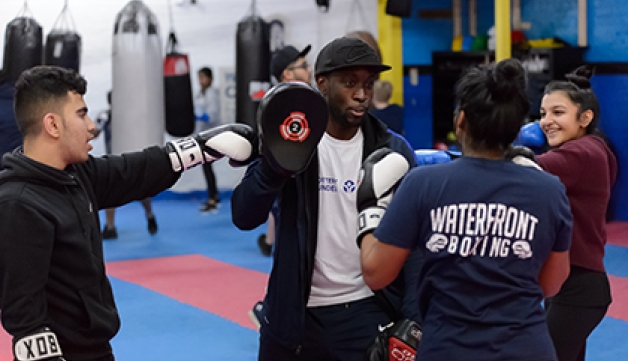
Many of the children and young people who walk through the doors of a boxing gym – like mine in Oldham, Greater Manchester – come from difficult backgrounds and have challenging lives. 

Having little or no access to opportunities and therefore a lack of agency in the world, may result in challenging behaviours. But not dealing with these pressures means they risk spilling out onto the streets and that’s where crime starts. 

Not because young people are 'bad', but because they have nowhere positive to pour their energy into. But boxing gyms can change that, as these spaces are built on discipline, respect, routine and team spirit.

Boxing gyms offer me the chance to inspire the next generation of boxers and anyone who walks through the gym door, to believe in themselves and choose a positive path in life.

You don’t just turn up to your gym whenever you feel like it. Instead, you’re expected to train on time, plus you have to listen to your coach, and you learn that effort leads to results and that shortcuts rarely work.

These lessons transfer directly into everyday life and children who understand discipline in a boxing gym are far less likely to make reckless decisions outside it.

Boxing also teaches emotional control, becasue contrary to what some may think, this sport helps a young person understand how to control their emotions, particularly aggression, and how to think and act under pressure.

I’ve seen it first hand – children who once lashed out can calm themselves because boxing gave them an outlet for their emotions and that allows them to thrive.

The many lessons of boxing

Boxing is a good metaphor for life and can help to develop those personal and social skills that people need, contributing to tackling deep seated worklessness and low aspirations.

The sport also fosters the development of positive character, self-esteem, self-discipline, courage, perseverance and resilience.

Instead of throwing punches on the street, they hit the pads, the bags and their coach or opponent inside the ring, but always with respect to the sport’s rules, under supervision and with a reason.

Boxing also teaches respect — for yourself and for others. You shake hands, you follow rules and you learn that real strength comes from self-control, not intimidation. These values reduce crime at its roots.

Another factor that's key is the sense of belonging among those practising the sport. A boxing gym offers identity and loyalty because, at a gym, you’re part of a team.

You train together, look out for each other and you wear the gym name with pride. That sense of identity can pull someone away from a path that leads to anti-social behaviour and crime.

I’ve seen boxing change lives in Oldham and Greater Manchester, where young people that were heading toward trouble now have focus and a reason to stay on the straight and narrow, and I’ve also seen young people who had no confidence, find self-belief.

Not all these children will become a champion boxer and that's okay.

Building better lives through sport

The real victories happen when a young person chooses to stay in school, can find a job or simply chooses not to commit a crime because they don’t want to let their gym or coach down.

At our newly refurbished Greater Manchester Boxing and Development Hub, we’ve been lucky enough to benefit from Sport England funding. 

To my mind, our investors aren’t just putting money into a boxing club and community gym. They’re investing in crime prevention and harm minimisation.

It costs less to fund a gym than it does to deal with the consequences of crime and anti-social behaviour policing, court cases, prison and reform  as recent estimates place the total economic and social cost of serious youth violence at £11 billion between 2009 and 2020.

For me, boxing is more than titles and trophies, it’s about giving people a chance.

Every time a young person chooses to walk into a gym and away from 'the road', I believe that’s crime prevention in action and that’s why boxing will always matter. 

As one of the 10 boroughs of Greater Manchester, Oldham forms part of Sport England’s Place Partnership with Greater Manchester Moving and other local bodies to implement Sport England's Uniting the Movement strategy for getting people active.

I’m proud of what boxing can do to change lives.

In the words of the iconic social activist, pacifist and politician, Nelson Mandela: “Sport can awaken hope where there was previously only despair.

Every day, I get to see the truth in these great words in action.
 

Opening the river

At Fulham Reach Boat Club (FRBC), we believe rivers should belong to everyone and this year we took an exciting step forward with the launch of our new accessible rowing programme on the Thames.

What began as a small pilot called Row the Rhythm for blind and visually impaired participants and supported by Love Rowing funding, has quickly grown into a powerful learning journey for our coaches, volunteers, partners and those travelling from across London to try rowing, many of them for the first time.

This is the story of how we’re opening up rowing, what we’ve learned along the way and where we hope to go next – a journey that starts before reaching the water, because one of the most meaningful parts of the programme wasn’t actually on the river, it was the journey from Hammersmith Station.

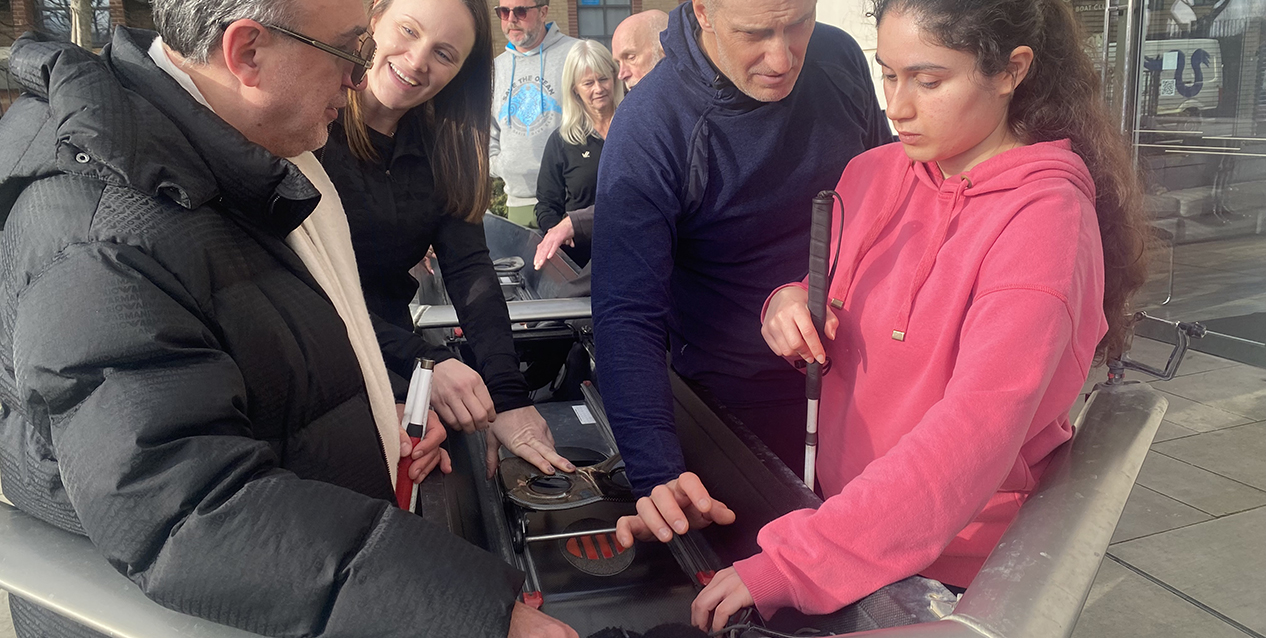
A blind girl and a blind man touch a boat during a rowing training session in the street.

We chose to meet participants at the station to guide them safely to our Boathouse, but it became far more than a practical step.

That short journey created space for honest conversation about the barriers disabled people face, about how few accessible sporting opportunities exist and about the courage it takes to try something new when the world isn’t designed with you in mind.

These walks helped build trust before a single stroke was taken and set the tone for the kind of programme we wanted to deliver – human, patient and centred on the individual.

Slowing down to go far

Rowing coaches are used to getting people onto the water quickly, but accessible rowing requires a different pace, which brought in our biggest challenge: slowing everyone down.

For safety and confidence, the first session had to take place entirely on land.

What began as a small pilot for blind and visually impaired participants has quickly grown into a powerful learning journey for our coaches, volunteers, partners and the people who travelled from across London to try rowing, many of them for the first time.

Participants learned about the layout of the site, boat handling, water safety and how rowing feels and works before ever stepping into a boat.

At first, some were disappointed not to get onto the Thames straight away, but by session two or three  the benefits were clear as starting slowly meant that once on the water, participants felt calm, informed and ready.

Their progress was extraordinary!

A growing community of rowers with complex needs

What surprised us the most was how working in this space naturally attracted more people with complex and varied needs, far beyond our original plans.

People travelled long distances across London, and in some cases far beyond, simply because accessible rowing doesn’t exist elsewhere. That willingness to travel underlined the scale of unmet demand.

Our local partners at Action on Disability and sight loss charity, VICTA helped us understand the huge range of disabilities and access needs in our community.

That is why we chose to start by focusing on just one area of need – visual impairment and blindness – building specialist expertise before widening out.

And the appetite is growing.

What we learned: coach the person

Across the programme, one principle kept resurfacing: empathy and understanding go a long way. See beyond the disability. Coach for the individual, not for the sport.

We learned to ask different questions, to describe space differently, to adjust our language, to use one voice in busy environments and to understand what independence looks like for each person.

We also learned that accessible rowing isn’t just about equipment – it’s about culture, about slowing down, about listening and about co-creating the experience.

Building a sustainable accessible rowing pathway

We’re proud of what Row the Rhythm achieved, but this is only the beginning.

Our long-term goal is to build a permanent, specialist accessible pathway at FRBC and to fully integrate disabled rowers into our wider club community.

To make this sustainable we're:

  • recruiting a disability advisory group to inform our programmes
  • improving the accessibility of our site, including new crew room layouts and an accessible ramp to the foreshore
  • co-creating future sessions with participants, ensuring their voices shape the programme
  • working with VICTA, Love Rowing, Action on Disability and other local partners to reach people who've never had the chance to try rowing
  • raising funds to support free-to-access programmes as well as offering self-funded opportunities.

Our vision is a sport where disabled people can learn, progress and row independently and where adaptive rowing blends seamlessly into our mainstream offer.

Looking ahead

This first year has shown us two powerful truths: there is a huge untapped demand for accessible rowing and that when you remove barriers, people thrive.

Participants told us the experience was “life-changing”, “freeing” and something they've never thought that they'd be able to do.

And for us, the learning has been just as transformative and rewarding.

We now know that accessible rowing is not a niche add-on – it is essential to creating a sport that truly belongs to everyone.

The river has room for all of us and at Fulham Reach Boat Club, we’re committed to making sure everyone who wants to row can find their place on the water.

Making physical activity fun for all

At Get Doncaster Moving (GDM) we have a mission: to support the youngest in our society and their families to be as active as possible, because the benefits of moving are something that will accompany them for the rest of their lives.

It is with that mission in mind that across Doncaster, partners within our network are working together to create the conditions to help children, young people and their families build healthier, more active lives.

Through a place-based approach, the network is enabling innovative programmes, unlocking new partnerships and supporting communities to develop sustainable activity habits.

This is something we’ve undertaken as a long-term mission.

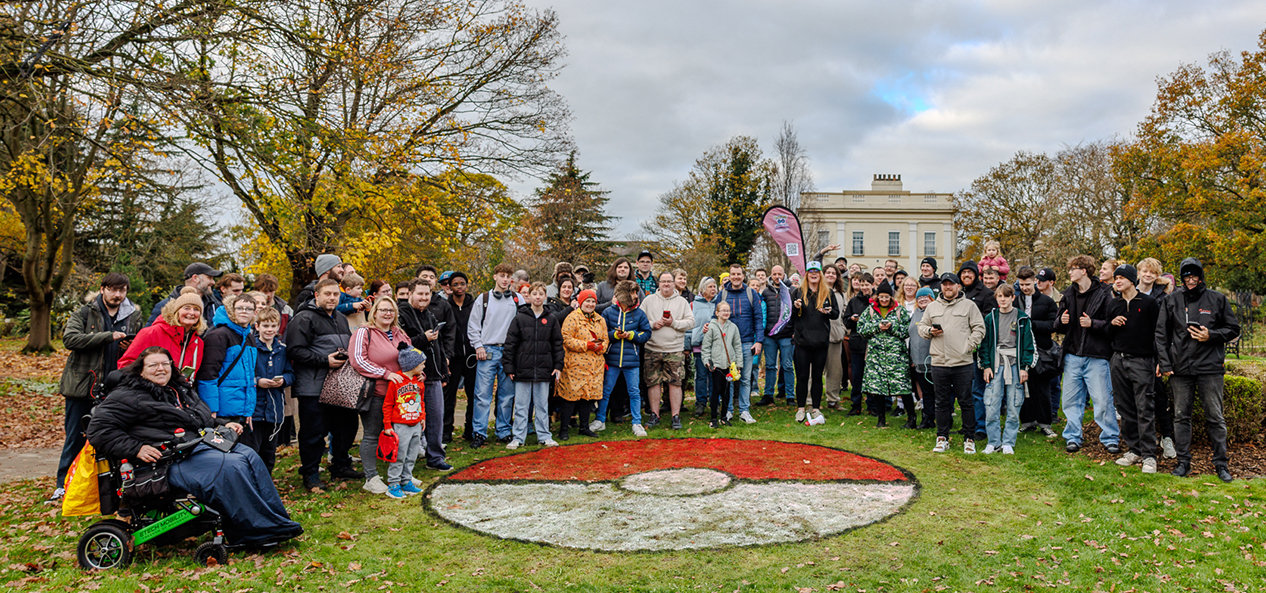
A group of poeple pose around a Pokemon ball that's been painted on park's floor.


Thinking outside the pitch

Reflecting on the past year, there are some stand out examples of how innovative partnerships have been the key driver behind GDM’s work to support children and young people – and their families – to move more.

Firstly, we’ve been developing new outdoor experiences to help children and families connect with local parks in different ways.

For example, GDM’s partnership with Enigma.Rooms introduced interactive digital trail games in parks across the city that engaged new and younger audiences through fun problem-solving and exploration.

The initiative was a success and contributed to Hexthorpe Park receiving the national ‘Green Space Innovation Award’ in 2025.

Then in November, and thanks to the efforts of the local Pokémon community, Doncaster was selected to host a Pokémon GO: Community Celebration event (the first place in Europe be chosen!), attracting thousands of local players and visitors.

The trails across two major parks showcased Doncaster’s green spaces while promoting movement through play.

Through a place-based approach, the network is enabling innovative programmes, unlocking new partnerships and supporting communities to develop sustainable activity habits.

GDM is continuing its work with local Pokémon Go group ‘Raiding Doncaster and beyond’ to grow this welcoming, inter-generational walking and gaming community, and encouraging new players to engage in this family-friendly activity, and to move more – particularly within Doncaster’s parks and green spaces.  

Trying something new

In sport, the ‘Free Park Tennis’ initiative started a couple of years ago in a local park to expand opportunities for children and families.

Resident volunteers have been trained as Free Park Tennis Activators to deliver free, weekly sessions to the community in two Doncaster parks, which led to one park being awarded ‘Park Venue of the Year’ by Yorkshire Tennis.

Our most recent park venue to host Free Park Tennis sessions, Haslam Park, which started in May this year, has already seen 369 attendances, with four local volunteers upskilled to deliver the weekly sessions.

This has been a fantastic opportunity for people to come along and 'have a go' at tennis in a relaxed and social setting, and it has been very popular with both children and families.

Doncaster’s place-based model played a key role in connecting partners and enabling the Active Start initiative, a programme designed for staff working with children aged 2–5.

Active Start is led by Yorkshire Sport Foundation, working in partnership with, and funded by, the South Yorkshire Integrated Care Board's Children and Young People’s Alliance. Their latest Impact Report: Giving children an Active Start is full of learnings and data.

This information is key to the training and resources they provide to early years professionals to help embed movement and active play throughout everyday learning.

This approach not only supports physical development but also communication efforts, social skills and school readiness, giving children the strongest start in life.

Doncaster’s Public Health and Early Years teams have trained as tutors, offering one-on-one support, continuing professional development opportunities and resources to nurseries, schools, childminders and all 12 family hubs, which are places for families to go within their communities to access groups and support.

Many settings have already taken part in centralised training and are now better equipped to encourage movement in class and at home.

But this is not all, because work will continue into the 2025/26 academic year as the programme develops further across South Yorkshire.          

Looking ahead, shifting the dial on children’s engagement in activity will require continued place-based collaboration.

Sustained shared learning, creativity and innovation – alongside a connected, empowered GDM network – will help Doncaster’s young people to move more, play more and thrive.

Find out more and connect with us

One dance step at a time

Silent Steppers is a joyful blend of walking, dancing and mindset coaching, all delivered outdoors through silent-disco headsets.

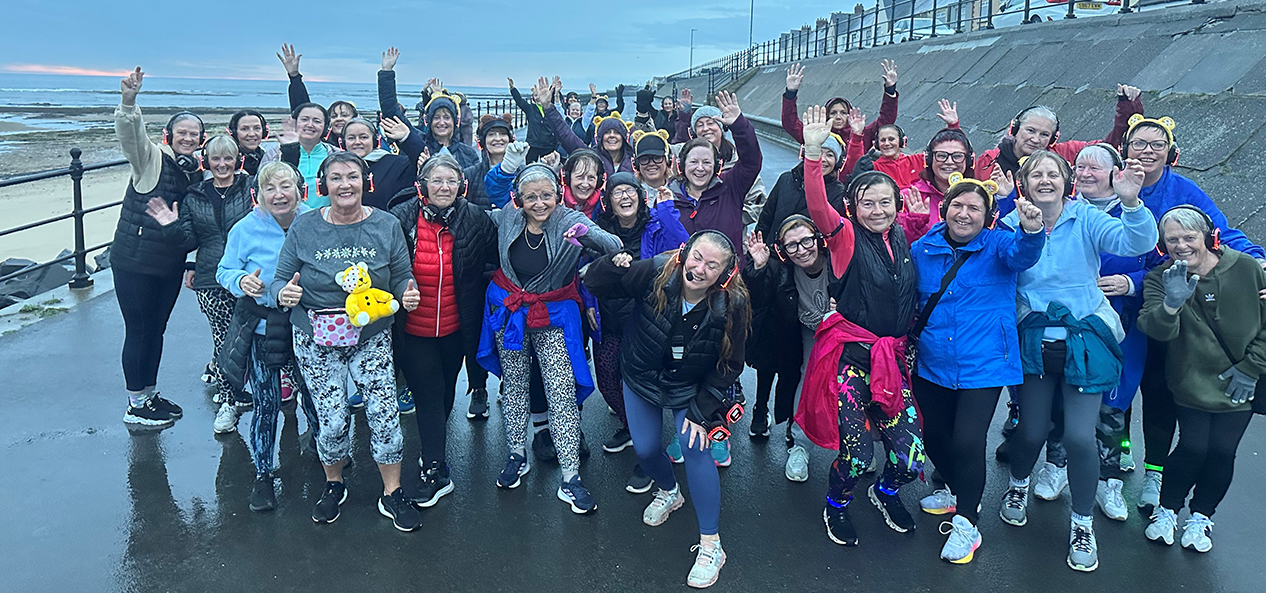
Picture a mixed group of around 50 people moving along seaside promenades, parks and coastal walkways – everyone listening to the same uplifting music while receiving real-time encouragement, positivity and coaching through their headphones.

It’s energetic, inclusive and completely different to traditional indoor exercise. And so much fun, too!

A group of Silent Steppers pose by the sea after one of their exercise sessions.

What began as a personal healing tool has evolved into a community movement that people across the UK now travel to to experience.

Often taking 10,000 steps in an hour or simply letting the music lift their mood, us Steppers leave the session feeling lighter, stronger and more connected to ourselves, and to each other.

How it all began

Silent Steppers actually started during one of the hardest chapters of my life. After suffering a trauma, I found myself walking outdoors to clear my mind.

On these walks, I’d listen to music and quickly realised how the world softened inside that musical bubble.

The lyrics felt more meaningful, my thoughts slowed down and, for a short time, I could switch off from everything I was carrying on my shoulders.
 

Picture a mixed group of around 50 people moving along seaside promenades, parks and coastal walkways – everyone listening to the same uplifting music while receiving real-time encouragement, positivity and coaching through their headphones.

With a background as a qualified dance teacher, senior mental health lead and life coach among others, and with over 25 years teaching trauma-informed approaches, I invited a few colleagues to join me for a music-assisted walk.

I chose songs that helped me heal, put on the headset mic and coached them through the session.

The effect was instant. The energy was electric. Silent Steppers was born! 

A community that keeps growing

Fast forward under a year and Silent Steppers now has hundreds of participants every week that include children, right through to our oldest Stepper aged 83.

We train in all weather – rain, wind, sun and/or coastal gales – and the tougher the conditions, the more bonded the group becomes.

Alongside our main sessions, we now run Steady Steppers, a slower-paced, mobility-friendly version designed for those with disabilities, injuries, chronic conditions or lower fitness levels.

These sessions offer the same music, the same mindset coaching and the same sense of achievement, just at a pace that feels safe and accessible for everyone involved.

The physical and mental impact across both groups has been extraordinary and participants have reported improvements of different kinds like weight loss, better fitness levels, plus better balance, coordination and confidence.

Others have mentioned being able to return to exercise after cancer treatment or joint replacements, a reduced reliance on mental health medication (always under GP guidance), stronger mobility and the ability to jog for the first time in years, and, overall, significant improvements in mood, stress levels and wellbeing.

And if all of that wasn’t enough, overwhelmingly, people describe Silent Steppers as their escape – an hour where they can lose themselves, breathe differently and feel part of something special.

The outdoors connection

Taking Silent Steppers into outdoor public spaces has created something truly magical.

We dance-walk along promenades, move through parks, train beside the sea and often stop people in their tracks who just smile when they see us.

Week after week, members of the public pause to watch us, cheer us on, take photos or even start dancing as we pass. People tell us we’ve made their day, how amazing we look or how we lift their mood. 

Many now recognise us and come back each week just to see us in action because our group's energy is infectious.

These interactions have become part of the heartbeat of Silent Steppers, and proof that movement and joy ripple far beyond the people wearing the headsets.

Challenges and what we’ve learned

I must admit, however, that with popularity comes challenges.

We only have 60 headsets, which means waiting lists of 25+ people are becoming common.

I’m also frequently asked to run sessions across the UK – and even internationally – but with existing commitments, it simply isn’t possible.

However, I’ve now excitedly trademarked licensing training that'll launch in the new year, which will create opportunities for Silent Steppers leaders in towns and cities nationwide.

There are other key lessons we’ve also learned:

  • When exercise is fun, people stick to it – many of our steppers are a year in and saying it’s the only thing they’ve ever stuck too.
  • Authenticity matters, as people connect with honesty and real stories.
  • Listening to the community and adapting accordingly is essential.
  • Music profoundly changes the movement experience.
  • Mindset coaching and Natural Language Processing (NLP) techniques amplify the emotional impact.

The future of Silent Steppers

The combination of music, scenery, encouragement and community creates an empowering, accessible and inclusive atmosphere that translates into a wellbeing experience unlike any other.

It fills me with pride that what started as a personal coping mechanism has now grown into a nationwide wellbeing model, supporting hundreds every week.

I also love that Silent Steppers is reshaping how people view exercise, mental health and community connection.

Silent Steppers is proving that exercise can be enjoyable at any age and ability. One dance step at a time.

My day, my rights

Two years ago I shared my first blog for World Children’s Day to raise awareness of children’s rights.

Whilst progress has been made in our sector, the words of a member of a newly formed Youth Advisory Group (YAG) on behalf of the Children’s Coaching Collaborative (CCC), proves there is still work to do.

He said that children’s rights are something that he heard about in primary school, but that he now only finds “in random news articles". This young man is now 16!

However, ensuring that young people have positive experiences of being active that are safe and fun, and that also respect their rights, is one of the areas we at Sport England, and a number of partners across the sector, have been advocating for in the past few years.

And there’s an article about children’s rights in sport by Liz Twyford, from UNICEF UK, that I think is key because it highlights the subtle but important change that means putting the child first to make a difference, and the impact that coaches have on those they work with.

Supporting young people to Play Their Way

Play Their Way exists precisely to champion children’s rights in sport and physical activity.

The campaign was launched in 2023 with the idea of taking a child-first approach to coaching, to ensure that their rights, needs and enjoyment are always prioritised, so they can have a positive experience of being active.

The campaign has been gaining supporters non-stop and in September this year we celebrated reaching a milestone of 10,000 registered members.
 

Ensuring that young people have positive experiences of being active that are safe and fun, and that also respect their rights, is one of the areas we at Sport England, and a number of partners across the sector, have been advocating for in the past few years.

In a recent blog by our head of children and young people, a survey was shared to understand the range of youth voice and resources used across the sector.

Thanks to those who contributed, it has confirmed that listening to children and young people is an established priority with many brilliant examples.

However, for some, more support is needed to ensure a meaningful and sustainable youth voice practice to ensure children and young people feel included and supported to shape decisions affecting them through ongoing opportunities.   

Welcoming the Youth Advisory Group

To keep engaging and embedding the voice of young people in a meaningful way into the work of the CCC, earlier this year young people were invited to apply to join a YAG for our sector.

The initiative was led by Streetgames and saw 12 young people aged 14-19 with a range of experiences and backgrounds being 'recruited'.

Over the summer they spent time getting to know each other and understanding the role they would play as part of the group.

Within their applications, they were asked why they felt young people participating in shaping sport and physical activity opportunities was so important.

I was impressed by their thoughtful, positive and passionate responses that took into consideration not just themselves, but their peers too.

Some comments that I found particularly insightful mentioned that hearing what young people had to say is important as it “ultimately allows more young people to be able to access sport” (Poppy, 18).

That being listened to, allowed young people to have “a sense of empowerment” that made them see they’re “in control of the future” (Tasnuva, 16).

And, ultimately, that speaking out allows them to shape their own opportunities by
“influencing the accessibility and culture of sport for years to come” (Isobel, 18).

The group will be encouraged to share their experiences, views and opinions on coaching to inform the ongoing work of the CCC and will receive support to develop their own understanding of their rights. 

There are also other organisations with great initiatives to put children and young people’s views first in the sector.

For instance, the Positive Experiences Collective are hosting a range of resources and support connections to inspire advocacy for physical literacy, to help children and young people develop a positive and meaningful relationship with being active.

And the Centre for Youth Voice recently relaunched to continue to amplify the voices of young people and their impact. I recommend you check out their free online training and events on their website.

The future is young

Next month we’ll be releasing the Active Lives Children and Young People survey, covering the 2024-25 academic year.

This time we’ve introduced a new question to help us understand to what extent young people are heard by the adults delivering activity to them, which will provide a baseline to shape our work moving forwards.

This has only been a snapshot of the work we know is happening within the sector for children and young people, but we will continue to raise awareness of their rights.

For now we can all do this by listening to their voices and working with them to design and provide more opportunities to support all children and young people to be active, so they can enjoy it and gain the benefits that movement can bring into their lives both now, and as they grow into adults.
 

In the picture

The concentrated focus of Black History Month provides an opportunity to gain new perspectives through events, articles and media programming that might otherwise be overlooked.

At its best, this month should stir our curiosity and resolve as we look back at the achievements and struggles of Black people, helping us gain a fuller understanding of Black histories to strengthen our grasp of the present.

This celebration (and the round-the-clock efforts by many through the year) should move us to action, reminding us that we don't have to accept the erasure of some people and communities as normal.

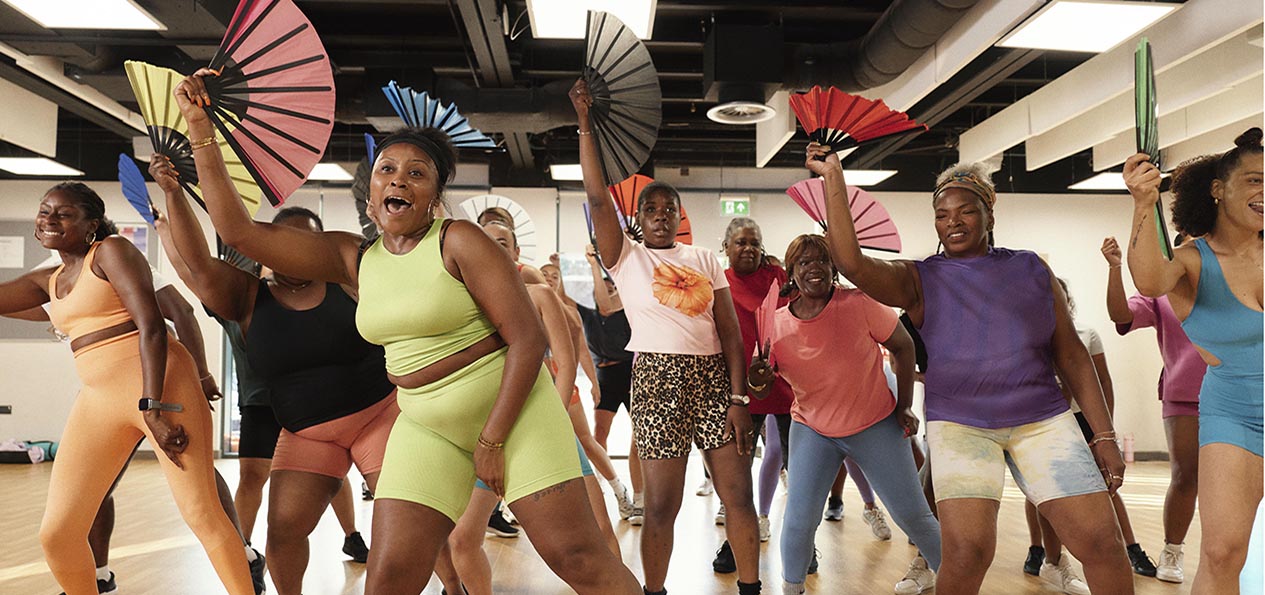
A group of dancers hold fans as part of their routine during a session on an indoors gym.

One of the best ways we can use this month is to harness new understandings to permanently build more inclusive platforms for Black achievement and wellbeing, so if you’ve missed our series of articles this month, please do look back.

These guest blogs are all great stories that highlight examples of community leadership that push back against the status quo of erasure.

It’s vital that we recognise and celebrate this work, which truly models more local and equitable practice, shaped by communities themselves.

But what about the models in the digital world?

Black History Month should move us to action, reminding us that we don't have to accept the erasure of some people and communities as normal.

As the usage of virtual spaces increases in all areas of our lives (including work, leisure or physical activity), it’s important to push for equity online too.

But with the backdrop of ongoing online abuse and discrimination, which inhibit participation in sport and physical activity, we’re rightly focused on the importance of creating safe virtual spaces too.

However, safety is only one side of the equation because we’ve also been asking ourselves how we can use technology to improve representation.

An example of this is We Like the Way You Move, the latest phase of our award-winning campaign, This Girl Can.

Technology for good

This phase has included a push for greater visibility of Black women – as well as other underrepresented groups of women – in imagery that promotes participation by sport and physical activity organisations.

This is how it’s worked: with the help of AI, we analysed publicly-available photos that came from parks, gyms, sports clubs, community centres, swimming pools and other leisure facilities across England and sourced via Google Maps, and confirmed that – alongside other minoritised groups of women – those who look like me have been virtually erased.

I’m excited that we’ve found a way to use the power of AI to drive better representation in our sector, because at a point when we’re all figuring out how to be more purposeful in how we use technology, finding insights that we can act on in real-time to contribute to change feels like a tangible win.

This push for greater visibility marks a positive shift that has come with our strategy’s focus on tackling inequalities as we’re working on reshaping our existing efforts to collaborate with different audiences and leaders through initiatives like TRARIIS.

Having celebrated the 10th anniversary of This Girl Can earlier this year, We Like the Way You Move has also used some powerful new imagery of women who have conventionally been excluded from the picture of sport and physical activity.

These are pictures full of joy and love for movement and, at times, I’d say you can almost hear the music they’re moving to.

These images are also a great reminder that women are creating their own platforms in communities, leading change and putting their unique stamp on activities and spaces.

We hope that they will help shift mindsets and that other organisations will follow suit.

On a personal note, it’s wonderful to see references to Caribbean culture, dance and movement in the mix.

It really does make a difference to my motivation and sense of belonging when I can see parts of my identity reflected back to me.

And I’m confident that the breadth of images and ways of moving captured in the campaign will have a similar impact on lots of other women that should have always been in the picture.

Leading with our hearts and minds

Today, on World Mental Health Day, I find myself reflecting not just as the new Head of the NSPCC’s Child Protection in Sport Unit (CPSU), but as a parent, a colleague and a lifelong advocate for the safety and wellbeing of children and young people.

Mental health is not a standalone issue. It's woven into the fabric of everything we do – how we parent, how we coach, how we educate and how we safeguard.

And in my new role at CPSU, I’m committed to making sure children’s wellbeing, their mental health and voices are instrumental in our work.

One of the most impactful ways we can help with mental health is through sport and physical activity as their benefits are well-documented and include movement boosting our mood, building resilience and fostering connection.

But sport and physical activity also offer something deeply human – it gives children a sense of belonging, a place to express themselves and a safe space to grow.

The power of communication

Whether it’s a kickabout in the park or through more structured team-training, movement can be a lifeline for young people – helping them navigate the complexities of growing up and it can also help them to cope with the world’s pressures.

But the act of playing sport or being physically active alone isn’t enough.

This week we are also celebrating Keeping Your Child Safe in Sport Week, and we think that sport and physical activity are key in highlighting that parents and carers play a crucial role in safeguarding their mental wellbeing.

This safeguarding starts with a conversation, because when we talk openly with our children about emotions, stress and support, we create a culture of trust and a safety net.

These conversations don’t have to be perfect – they just have to be real and, as parents, we have to listen.
 

Whether it’s a kickabout in the park or through more structured team-training, movement can be a lifeline for young people – helping them navigate the complexities of growing up and it can also help them to cope with the world’s pressures.

When children feel safe to open up, we strengthen the parent-child bond, we build relationships rooted in empathy and understanding and, in doing so, we lay the foundation for lifelong mental wellness.

So today I encourage every parent, coach and caregiver to take a moment and ask your child how they’re feeling, what support means to them, and what actions we can do as parents and carers to help them.

We also think that as well as listening, it’s important that you share your own experiences too and that you let them know they’re not alone.

At the CPSU we have new videos and conversations starters for parents, plus resources for sports organisations to help promote a culture of listening within their organisations.

Because safeguarding isn’t just about protection – it’s about connection.

Together, let’s make mental health a part of keeping our children safe. Not just today, but every day.
 

Find out more

World Mental Health Day

Why parents and carers matter

Safe and positive experiences for children and young people are one of the five big issues at the heart of Sport England’s long-term strategy, Uniting the Movement.

Sport England has supported the NSPCC’s Child Protection in Sport Unit since 2001 and continues to invest in keeping sport safe for children.

Early experiences with sport have the power to make or break a person’s lifelong relationship with physical activity, which can affect physical, mental and social health at every stage of their life: from childhood; to teenage years; to adulthood.  

Simply put, a negative experience could turn a child away from sport, causing them to disengage and miss out on the extraordinary benefits of an active life – from being able to concentrate better at school; to having fun with their friends; to reduced anxiety; to the sheer joy of moving.

Our social value research found that active children and young people generate a wellbeing value (the monetary value that can be placed on happiness, health and life satisfaction) of £4,100 a year (for an active adult, it’s £2,500).

This shows that active children gain more from movement than active adults.

It’s also so important for their development and happiness, and with childhood obesity rising and less than half of children meeting the Chief Medical Officers’ guidelines for physical activity, getting children active is more important than ever – and parents and carers have a vital role to play here.
 

Simply put, a negative experience could turn a child away from sport, causing them to disengage and miss out on the extraordinary benefits of an active life.

We are supporting the KYCSIS campaign by asking all those who work in the sector to call on parents and carers they interact with, to think about how to support children in sport and to have open conversations about what kind of encouragement helps young people thrive.

Why those in charge matter so much

There are different reasons why parents and carers are key in their life’s kids when it comes to sport:

  • Parents and carers shape how children feel about sport. Their behaviour, language and the support they offer can determine whether sport is a positive space for their child. 
  • They know what their child needs and what kind of support they respond to. Support looks different for every child. Some want loud cheering, while others may prefer quiet encouragement.
  • Parents and carers are best placed to know what their child needs. They can then share this with coaches and leaders.

Positive support from parents and carers helps children reach their goals. So whether that is winning, a personal best, being a good teammate or simply enjoying being active, positive support from parents and carers can build a positive relationship with sport and physical activity.

The TALK steps 

There are four simple steps every parent and carer can follow to ensure their kids enjoy sport in a secure and enjoyable way – it’s what we call the TALK steps and we’d love it if you could share these with those in your network.

  • Talk to the child; listen to the child: parents and carers should ask why their child plays and how they want to be supported. Parents can use their answers to guide how they show up at training and competitions.
  • Always show respect: we encourage parents to be good role models of sports values by supporting the whole team and treating coaches and officials with respect, even when they disagree.
  • Let’s speak out: if adults are shouting insults, criticising, focusing on weight, confronting officials aggressively or pushing children into competitions that are too advanced for them, parents and carers should raise it with the club’s welfare officer or match-day official.
  • Keep sport fun: we encourage parents and carers to praise effort and progress as well as results. Offering constructive encouragement when things go wrong can help children learn from setbacks.

What about if my child is in a competitive environment?

For many parents and carers, it’s brand-new territory when turning up at their child’s first sporting event – but they must be equipped and not afraid to ask about anything they feel unfamiliar with.

Here are five questions every parent/carer should ask before signing their child up to a competition:

  • What is the primary purpose of this competition for children at this age or level?
  • How are children supervised and safeguarded during the event?
  • What expectations will be placed on my child and what support is available if they find it stressful?
  • How are selection and team decisions made and communicated to participants and families?
  • Who is the designated welfare officer and how do I raise a concern on the day if needed?

Asking these types of questions before agreeing to children taking part makes it easier for parents to recognise when something is not right.

Spotting concerns and taking action

Parents and carers know what their child needs to be their best and should be empowered to challenge or call out behaviour that could harm their child’s wellbeing.

Adults shouting from the sidelines, personal criticism of children, pressure about weight or repeated, aggressive challenges to officials are all red flags.

Parents should report concerns the club’s welfare officer or the relevant match official immediately.

If you remain worried about anything that may cause harm, contact the NSPCC Helpline on 0808 800 5000 or email [email protected].

We all have a joint commitment to ensure children and young people feel safe when taking part in sport so let’s make sure, we support parents and carers to make this happen!
 

Running, representation and resilience

Movement has always been more than exercise for me.

My first motivation was staying healthy and trying to stave off hereditary diseases like hypertension and diabetes that run in my family (and, so far, I'm happy to say it has worked!).

But movement quickly became my outlet, my reminder that I am alive, capable and able to set goals.

The power of movement

When I lace up my trainers and step outside, I am not only moving my body. I am moving through history, community and identity, and I am claiming me. I do this for me.

This year the theme for Black History Month is ‘Standing Firm in Power and Pride’, highlighting the resilience and contributions of the Black community, and I am reminded that movement has long been a form of resistance, survival and celebration for Black people.

From dance to sport, movement has always been our way of claiming space, telling stories and showing strength and, for me, running is my chosen form of movement. It gives me freedom, resilience, and connection – three qualities that shape how I live and lead.

Growing up, I saw elite athletes who looked like me on TV, but I did not see everyday women like me running.

Running was not something I thought belonged to me as an adult (child me, yes, because children always run), but the first time I tried it outside as an adult, something shifted – it was not about speed or medals, it was about finding a rhythm that was mine.

Over the years, running has carried me through joy and pain.

It has helped me navigate life’s challenges, from grief and motherhood to menopause and leadership, and it has also changed how I see myself, not as the fastest or the best, but as someone who shows up, puts one foot in front of the other and keeps going.

This year the theme for Black History Month is ‘Standing Firm in Power and Pride’, highlighting the resilience and contributions of the Black community, and I am reminded that movement has long been a form of resistance, survival and celebration for Black people.

Running has also shown me how much representation matters.

There have been times I felt invisible at races or out of place in running communities, but when I began sharing my story and weaving my Jamaican heritage into my running, I discovered others felt the same and that, by stepping forward, I could help them feel seen.

Showing the real deal

That is why I am proud to be part of the advisory board for This Girl Can.

For the Phase Six of the campaign, we have focused on showing women as they truly are: sweaty, busy, imperfect and joyful.

Not polished versions of women exercising effortlessly, but showing real women making time for movement in the midst of their busy lives.

Being on the advisory board has given me the chance to share my perspective, especially around the barriers that Black women face in sport.

From worries about hair care, to feeling unsafe in certain spaces, to simply not seeing ourselves represented, these are real issues that stop many of us from moving freely.

Phase Six is about breaking those barriers down and telling a wider story of who belongs in movement.

This new stage of the campaign is also about making sure that when women see the campaign, they see someone who looks like them, lives like them and feels like them. Because when you can see yourself, you start to believe you belong.

From local to national

In 2019, I founded Black Girls Do Run UK.

What began as a small idea, creating space for a handful of Black women to run together, has grown into a nationwide community, because we are more than a running group. We are a family!

We celebrate milestones, we share struggles and, more than anything, we create spaces where Black women can move without judgement or stereotype.

Alongside leading the community, I hold both the Leadership in Running Fitness and Coaching in Running Fitness qualifications.

These have allowed me to support runners of all abilities, from beginners to those chasing big milestones, and to bring structured, safe and inclusive coaching into our spaces.

For us, running is not about chasing times, and all about creating a memory bank, not metrics.

It is about laughing mid-race, stopping for photos and supporting each other at the back of the pack. It is about belonging.

Together in strength

Black Girls Do Run UK exists because representation matters.

Too often, Black women are absent from the imagery of running, but by showing up in our kit at races and online, we are rewriting that narrative. We are saying we are here, we run and we belong!

For me, movement is freedom. It is the freedom to be myself, to take up space and to live well in my body and during Black History Month, that freedom feels especially powerful.

We honour the struggles of those before us, celebrate the present and move with hope for those who will come after because movement connects past, present and future.

It reminds us that while the barriers are real, so is our resilience, and it proves that when women move, communities move and change becomes possible.

So this Black History Month, I celebrate movement in all its forms: the steps, the strides, the miles and the memories. Movement has shaped me, and I will keep moving, for myself, for my community, and for the generations yet to come.

No-one left on the sidelines

People might not expect Hazel, who is blind and living with complex disabilities, to enjoy skiing – but it’s an activity she absolutely loves

Hazel is a lot of fun – she’s got an amazing imagination and the warmest smile. However, because she’s blind and disabled, there have been times in her life when Hazel has been isolated and hasn’t had any opportunities to join in activities.

Amongst the many barriers preventing people like Hazel from being active is the lack of knowledge within the sports workforce to ensure disabled people feel included in activities.

A key figure for disabled people 

The 2023-24 Annual Disability and Activity Survey by Activity Alliance shows that the number of disabled people agreeing that ‘The activity leader met my needs’ has continually decreased over the past four years.

The role of the coach is crucial to the experience that a participant has in sport and physical activity.

We know it’s challenging for any coach to ensure their session is engaging for everyone in their group, so imagine working with a group of participants with complex disabilities, like Hazel.

In addition to adapting to their skill level, a coach must also consider their level of vision and hearing, their mobility and their understanding of the task.

They must ensure that both the environment and their own approach are tailored so that each participant can actively participate in the activity.

This requires changes to how a coach prepares, communicates and interacts.
 

Amongst the many barriers preventing disabled people from being active is the lack of knowledge within the sports workforce to ensure disabled people feel included in activities.

It's also important to reflect on the idea of ‘active participation’.

Any coach can deliver an ‘off-the-shelf’ session but it takes real commitment, care and creativity to develop opportunities which ensure people with complex disabilities can engage meaningfully and appropriately – in a way which supports them to achieve all the outcomes they want to achieve by being active.

Whether it’s their physical, mental or social wellbeing they are trying to improve, it’s never been more important for a coach to ensure they are meeting their participant’s desired outcomes.

Sense’s Potential and Possibility research found that 26% of people with complex disabilities report their health as ‘bad’ or ‘very bad’, compared with 9% of the general population.

In response to this data, we are determined to ensure that no-one is left on the sidelines.

We believe that everyone, no matter how complex their disabilities, should have access to high-quality opportunities that help them achieve the outcomes they desire.

Our 'person-centred' approach

That’s why our recently launched Complex Disabilities in Sport training has been designed to help coaches understand the outcomes people want to achieve from sport and physical activity and design their sessions in a way which supports them to do so.

The training was developed following consultation with Sense’s own coaching networks, as well as the wider sport and physical activity sector, who identified training on ‘How to plan sessions which are person-centred’ and in a face-to-face format, as the most desirable learning scenario.

Following plenty of piloting and tweaking, we’re now in the process of delivering these three-hour, practical and theory-based workshops across the country, targeting sport and physical activity providers who have a real commitment to utilising their newly learnt skills with a complex disabilities audience.

And we’re really pleased with the results so far, with coaches reporting on average a 30% increase in their confidence in coaching people with complex disabilities, post-workshop.

It’s safe to say that Hazel’s positive experience with skiing would not have been possible, had instructor James not taken a person-centred approach to delivery.

By understanding Hazel’s need to take things slowly, allowing her to explore her surroundings and feel supported, James created an environment in which Hazel slowly started to feel more comfortable.

We hope that over the remainder of our Sport England funded ‘Active Lifestyles’ programme and beyond, we can continue to build the confidence of the coaching workforce, allowing more people, like Hazel, experience what her key worker Tracey describes as ‘a real sensory explosion’.
 

More than just another leadership programme

I recently joined the Oxford Women’s Leadership programme to give myself space to reflect with a group of peers to sharpen my professional impact.

In our first week, we spent time examining key experiences that have challenged, awoken and shaped us as leaders, and I found myself musing on some of the hardest, most confusing times in my life and my career, as well as on some of the positive and encouraging events.

The process has already helped me grow in self-awareness and draw on knowledge about what I bring to the table, something that had been present but dormant.

This experience has fuelled my excitement about Sport England’s refreshed leadership offer – the Leading the Movement programme.

Re-thinking leadership

Over the next four years, we’ve committed to invest £5 million of National Lottery funding to support leaders to prioritise tackling inequalities within sport and physical activity participation.

I believe that this investment into coaching, mentoring and training is one of the most important investments we can make into our sector.

And this is because what we need most, as leaders operating in an increasingly complex world, is the ability to hold up a mirror to ourselves and our organisations to see where we might be contributing to the structures that hold inequity in place.

Change has to start with us and we can’t change until we’ve taken time to sharpen our understanding of our strengths and areas of growth, and until we make some intentional changes to build on our existing body of experience.

But what do we mean by ‘leaders’?

Having worked in community-led settings, I’m acutely aware that at first glance, leadership as we know it can feel exclusive, but Leading the Movement is aiming to buck that trend.

What we need most, as leaders operating in an increasingly complex world, is the ability to hold up a mirror to ourselves and our organisations to see where we might be contributing to the structures that hold inequity in place.

We know that leaders can be found in communities, in organisations of varied scales and at all levels of responsibility, so we’re committed to supporting individuals from communities and backgrounds currently underrepresented in our sector.

The programme will bring together our previous national and place-based leadership work, building a network of leaders from different backgrounds and we hope that these leaders will enrich each other's experiences and trade knowledge and insight.

There’ll be a microsite full of content that is accessible to anyone who’s interested and we’ll also have targeted support for leaders within our funded portfolios.

Tackling the challenges

Our ambition is that this won’t be ‘just another leadership programme’. Instead, we want to see a significant shift in confidence, knowledge and impact.

We know from listening to people within our sector that, especially for leaders with an explicit responsibility for driving-inclusion exhaustion, discouragement and burnout are very real risks.

We want to tackle this by creating a supportive community which acknowledges the day to day challenges of leading on the frontline and equips leaders with the skills to create measurable shifts in culture and practice.

All of this is pointed at the primary aim of our long-term strategy, Uniting the Movement, opening up more opportunities for everyone in England to experience the benefits of an active life.

And we need an army of confident, impactful leaders to make this a reality!

If you want to be part of Leading the Movement, visit its new site and check how we can support you and your team in your leadership journey.

In the meantime, why not take some time to reflect on a moment or experience that has shaped you as a leader? What did you learn about yourself that might help you rise to a challenge you’re facing today?

Visit our new site and find out more

Leading the Movement

Levelling the playing field

It’s undeniable that the Lionesses’ recent triumphs and the professionalisation of the women’s game, the strong performance of the men’s team and the fact that the number of girls watching and playing football has doubled in recent years, has made the country proud.

We know that the scale of grassroots football in England means that the sport is well positioned to influence people and communities in tackling inequalities in sport and physical activity.

So because of all of these reasons, we thought that our case study with The Football Association (FA) would be a great way to close our series of blogs.

The FA is the National Governing Body for one of the country’s most popular sports and receives significant funding through Sport England’s system partner investment.

We know that the scale of grassroots football in England means that the sport is well positioned to influence people and communities in tackling inequalities in sport and physical activity.

This funding, while a small proportion of The FA’s overall turnover, drives initiatives aimed at tackling inequalities and increasing participation among under-represented groups.

What we've learnt from football 

There are different learnings we’ve achieved from these initiatives that are also contributing to Sport England's long-term strategy – Uniting the Movement

Efforts should be made to keep girls in the sport 

Recognising the common challenge of drop-off in girls’ sports participation during teenage years, The FA developed ‘Squad’– a programme that’s designed to be a fun, non-competitive initiative for girls aged 12-14.

This model, which could be replicated across other sports, prioritises enjoyment and social connection, and aims to retain girls in football while building their confidence and leadership skills.

In addition, they have developed a new talent ID programme called Discover My Talent, shifting the way they find and support talented footballers.

The FA’s learnings from this programme highlight that moving away from a traditional approach, focused on existing clubs and academies, enables them to identify potential "anywhere, anytime."

This approach aims to identify talented players across the country, within diverse groups and at any kind of football events and sessions to broadening opportunities across different communities, resulting in more diverse talent pathways for women and girls.

The FA reports that they are seeing positive results, with increased diversity in the top talent programmes.

Increasing opportunities for disabled players 

The FA is committed to growing para- and disability football and to closing the disability gap, partly through initiatives like ‘Comets’ – a recreational program for disabled children aged 5-11 that provides fun and accessible entry opportunities to the sport.

While aiming to expand Comets and the provision of disability football, The FA acknowledges challenges such as workforce training, confidence levels of local coaches to support disabled people and logistical barriers to attending sessions – like the time and financial costs of travel – for para-athletes.

In response, The FA are providing disability training and toolkits for clubs, called Journey to Inclusion, with the aim of proactively addressing these challenges.

The FA have identified potential for cross-sector collaboration and knowledge sharing with other system partners to continue to address these difficulties, as well as using football as a hook to engage disabled people and connect them with other sports.

Investing in the workforce to reflect the communities served

As many system partners have told us, local champions have an important role for creating local change.

Recognising the need for a diverse workforce to help diversify participation, The FA is actively working to increase the number of Black and Asian coaches in grassroots football.

And by targeting specific localities and offering more coaching opportunities, The FA aims to create a coaching landscape that reflects the communities it serves.

The role of local partnerships for building a stronger ecosystem

The FA is increasingly working locally, tailoring programmes to the unique needs of different communities.

Their experience is that partnerships with community groups and schools are key to reaching under-represented groups.

Ensuring safeguarding standards when partnering with non-accredited organisations is recognised as a challenge, so they are actively supporting community organisations in developing their safeguarding processes through training and qualifications.

Looking at what's to come

The new Learning Synthesis report based on the year two evaluation report will be published soon with more insights from the ongoing evaluation.

It will also include the collective contributions that partners are making to changing the sport and physical activity system.

We hope this series of blogs have been useful and if you have any comments or questions, we'd love to hear from you, so please get in touch.

Let’s talk about clean sport

I've always loved enjoying the outdoors, being active and healthy, and throughout my life sport has had a profound impact on me.

In my 20s I had a series of strokes that left me unable to walk, but keeping active helped me heal and gave me back my identity, so I believe that sport contributes to lots of people healing when suffering life-changing injuries or illnesses.

I've been in Paralympic sport since 2012 with athletics, triathlon and cycling, and I’ve also been involved in ultra-cycling, in which athletes' endurance is tested by cycling distances of at least 200 km/125 miles.

Mel Nicholls, paralympian and member of the UK anti-doping athlete commission member, pushes her chair on a race outdoors.

There have been many highlights across my career but for me, London 2012 was a huge moment and it always will be – it was my first Games and at home!

I remember being a relatively new athlete and new to international competitions and taking it all in.

My career in athletics, plus running London marathons and then triathlons, has taken me to some incredible events and I’ve seen some amazing places from racing on the streets of Swansea to Tasmania's coast.

Remember your 'why'

I remember so clearly during competing – however I performed, and whether I got the desired result or not – that I would see young people in the crowds cheering me on and that they would light up with magic when I came over to give them high fives.

When I’m speaking with school children I love hearing their stories of what sport they do and seeing the pride on their faces when they say “I want to be an Olympian or Paralympian”. That’s what makes sport special – the legacy it holds.

One thing that I would say to every athlete is remember your ‘why’. Look back at your journey and ask yourself, why do I love sport?

When I was young, it was the pure joy of being out with friends and playing sport that made me fall in love with it. At the time I didn’t even know how much of an impact sport would have on my journey.

As youngsters, you're taught in a playground, or with your siblings, that sport is about being fair and playing fair, not cheating. There's no reason it should be any different as you grow up.

When I’m speaking with school children I love hearing their stories of what sport they do and seeing the pride on their faces when they say "I want to be an Olympian or Paralympian". That’s what makes sport special – the legacy it holds.

For me, it’s about having faith in those values and understanding them clearly.

Everyone is participating at their very best ability, showing their respect of the sport, respect for themselves, for their teammates, for their competitors and always with integrity at the core, because clean sport is about playing fair.

Creating some positive noise 

This week is Clean Sport Week – a time for focused action and awareness, as well as positive noise around anti-doping, and about empowering athletes, support personnel, families and teachers.

We want everyone to know about clean sport, the importance of anti-doping education, awareness around things like medications, supplements and what testing involves.

All of this looks at enabling athletes to come away from Clean Sport Week with a toolkit of the knowledge they need.

Clean Sport should be a normal conversation in clubs, in schools, in the family, around the dinner table... whatever that might be.

So go ahead and use the knowledge you’ve learnt from Clean Sport Week to talk about clean sport and make it routine  just like brushing your teeth twice a day.

Find out more

Clean Sport Week

Safety can be simple

After a suicide bomber attacked concert goers at the Manchester Arena in 2017, it was plain that a change was needed in how we protected people visiting public spaces.

In particular, there was widespread agreement that security and safety wasn’t just a matter for the police and emergency services; event organisers and the venues they used had to have a larger role in prevention and planning.

That realisation led to the campaign for Martyn’s Law, which is currently going through Parliament.

Officially known as the Terrorism (Protection of Premises) Bill, it will place a duty on premises and events to have security procedures in place to reduce the risk of harm if there’s an attack.

Some larger events and premises would need documented measures to reduce their vulnerability but it may well be some time before it fully comes into force as organisations and premises will need time to prepare.

As explained on ProtectUK – the dedicated website of the Home Office on counter-terrorism security information, training and materials – it will only directly apply to larger events and premises.

Yet we know that the people who want to do harm are just as capable of targeting small venues and small organisations.

Attacks on high-profile events or locations are getting harder to pull off, so how can we ensure people are protected everywhere they play, compete or train?

Luckily, we’re a society where voluntary associations have always taken responsibility to look after their people.

UK sports clubs and teams are exemplars of good practice in introducing safety and safeguarding protocols, and doing it with only the goodwill of volunteers to draw on.
 

Attacks on high-profile events or locations are getting harder to pull off, so how can we ensure people are protected everywhere they play, compete or train?

At the National Counter Terrorism Security Office we have been developing simple and easy-to-follow tools that are intended to demystify the steps needed to make people safer.

As well as working with some of the country’s biggest sporting organisations with large security set-ups, we’re conscious that security and terrorism are often the last thing on the mind of a club secretary who has to organise coaches, book referees, sweet talk parents into overseeing the car park or finding someone to collect the weekly subs.

Few people probably want to worry about having a plan to stop an intruder with a knife or think through how to manage multiple casualties caused by a rogue vehicle, but they want to know that someone has thought about the risks and that there are procedures in place.

Those procedures may be as simple as making sure you know who is coming into the building, organising the car park to limit the risk of an attacker getting up speed in a vehicle or having a protocol for getting people to safety inside a clubhouse, the changing rooms or the equipment store.

Or they might just involve regular volunteers by asking them to do a short free online security-awareness course.

Working with security experts across Government, industry and a number of national bodies, we’ve built a number of free tools on the ProtectUK website that clubs and teams are welcome to use.

You’ll find advice and resources covering subjects including identifying risks, event safety and eLearning for staff and awareness posters.

And if you can’t find what you need on our website – please, tell us. If it means that people can go about their sport in safety, we’re listening.
 

Find out more

ProtectUK

Tools to close our sector’s work gap

When looking at creating inclusive opportunities for disabled people in our sector a lot of focus falls on participation, but fairness for this group of people applies to its workforce too.

For years our Annual Disability and Activity Survey has shown disabled people as underrepresented in our sector’s workforce. 

Understanding what needs to change 

The 2023-24 edition revealed that disabled people are half as likely to see ‘people like me’ working in sport and physical activity compared to their non-disabled peers, and that only 9% of disabled people agreed they have the opportunity to become a coach or take on a role in delivering sport or physical activity compared to 24% of non-disabled people.

Off the back of these concerning figures, we commissioned a research project to explore the barriers and enablers for disabled people to work in our sector.

The final report has now been published on our website and is fascinating reading for anyone working in sport and physical activity.

Initial findings showed that there are limited sources of data and that most of the insights were very high level, identifying barriers such as negative attitudes towards disabled people. 

However, the evidence to help understand these in more detail was limited and while national disability employment statistics delved into specific impairments, these were not broken down to reflect the reality in our sector.

When looking at creating inclusive opportunities for disabled people in our sector a lot of focus falls on participation, but fairness for this group of people applies to its workforce too.

Some research considered other marginalised groups in the sport and physical activity workforce, but did not take an intersectional perspective and treated each identity in isolation.

Coverage of enablers and barriers to disabled people’s participation in the sport workforce was limited, tending to offer a wider commentary reflecting statistics, rather than personal perspectives of disabled people. Only a handful of sources provided some insights, which helped us structure the primary research design and interview questions.

Two of these were Aspire’s EmployAbility Guides and ukactive’s Everyone Can initiative.

Based on initial findings we decided to carry out in-depth interviews to understand the barriers and enablers experienced by disabled people in the professional world, and to develop recommendations that would make a real difference.

Interviewees shared personal stories with examples of both good and bad practices, including a personal trainer who had to hear that the reasonable adjustments put in place to help them do their job were perceived as ‘unfair’ by a colleague.

The need for further change

Accessible application processes, upfront information about roles or inclusive approaches to interviews (for example, choice of video or in-person) made a real difference and gave many the opportunity to consider a role.

To truly understand the reality of employment for disabled people in sport and physical activity, the report should be viewed as a whole and organisations should take a person-centred approach to ensure people can apply and remain as part of our sector’s workforce.

We published three key headline recommendations:

  • Adopt a ‘flexible by default’ approach to job roles. Normalise adaptations and consider flexibility beyond whether the employee could choose their hours to include how adjustments could be made across the wider team. For example could the disabled employee do certain tasks while a non-disabled colleague picks up others?

  • Provide advice and guidance for employing disabled people. There is a clear need for an effective source of advice and guidance for employers to turn good intentions into action and organisations should aim to create a culture that values - and is informed by - diverse voices and experiences.

  • Proactively identify and remove barriers that exist at all stages of the 'work journey'.
    In our research we tried to break down this path into different stages to explore barriers and enablers at each point, but it became clear that many challenges recurred throughout. Employers need to provide clear information about their available role using diverse and suitable communication platforms. They need to learn continually and listen to their disabled staff continually. A good way to achieve this is employing disabled consultants to identify and remove barriers through an inclusive culture.

Organisations who were seen to be committed to inclusion appealed to participants, but the main conclusion to take from the report is clear: there is still a lot of work to be done in creating equal opportunities for all and there’s an urgent need for the sport and physical activity sector to address recruitment and retention strategies.

We hope that in highlighting real-life experiences we can shine a light on both the good, the bad and on the way forward.

There is undoubtedly a desire in the sector to ensure disabled people do not have to overcome barriers to enter the workforce and we firmly believe that this piece of research could be a key tool to unlocking those opportunities.

If you want to win, you'll need to lose

Our male weight loss programme celebrated its 10th birthday in 2024 – a key milestone in its support of men up and down the UK and beyond!

MAN v FAT currently has over 8,500 men of all ages participating in its more than 150 owned club locations in England, Scotland, Wales and Northern Ireland and has seen its members lose more than 750,000 lbs of weight combined.

This year the organisation started supporting those interested in rugby with MAN v FAT Rugby and football with MAN v FAT Football, and there’ll also be new 'MAN v FAT sports' in the coming years.

Men from the MAN V FAT programme celebrate a victory after an outdoors football game.

In the early days it was really difficult to get funders and partners on board due to our bold brand name, but we  believed in our vision.

The latest NHS figures from England estimate that slightly more men (67%) than women (60%) are above a healthy weight and, according to the National Institute of Health and Care Research, only 15% of those who get weight-loss support in the UK are male, so we knew something different had to be done.

Thankfully some early adopters like Sport England and a small number of councils supported trialling a different approach.

Sport England funded 20 new clubs in areas of high deprivation, high obesity levels and levels of inactivity in regions including Newcastle, Blackpool and Slough.

This funding was to the tune of £200,000 and played a big part in us stepping up our support for men.

What’s more, while some previous funders had requested modifications like name changes, Sport England believed in the programme, the brand and how it had been put together.

In the early days it was really difficult to get funders and partners on board due to our bold brand name, but we believed in our vision.

That support enabled MAN v FAT to stay true to its honest brand and integrate gamification and collective accountability into the weigh-ins and scoring system.

For instance, members can achieve a host of bonus goals for tracking food and drink consumption, week-to-week weight loss and hitting landmarks.

These aspects help them stay engaged and to keep on track while achieving these extra points, as they want to be able to support their team and teammates to win games.

There’s a real peer-to-peer accountability to make sure success happens for their group and these fundamentals have been integral to MAN v FAT players shedding pounds at an incredible rate. 

More than a weight-loss programme

We may offer the only football programme where losers win, as those who lose weight on the scales after a game can contribute to the overall match result with their weight-loss-related bonus goals.

But it’s not just weight-loss that is proving important and beneficial for our community and how our members feel.

Physical and mental health and wellbeing improvements, peer-to-peer support and the creation of a community network are all key parts of the programme’s success and something that the users mention and value.

Many of the MAN v FAT clubs have taken their community beyond the core membership offer that our programme provides, which includes access to an online gym and a mental health platform, along with the expert support of their coach, who either comes from a health and wellbeing background, has lived experience of obesity or has lost weight with the programme.

Those ‘extra-curricular’ activities include weekend coffee-clubs, mass participation in parkrun, or community project work across the regions.

They also include additional football, with the MAN v FAT XIs programme giving those men seeking to increase their physical activity the chance to test themselves even further.

When men first join MAN v FAT, being able to play even five minutes of football is an achievement, whereas the MAN v FAT XIs programme takes them from small to full-sized football pitches in 11-a-side matches that are 28 minutes long, to 11-a-side games that are 90 minutes long!

All these options and support have contributed to us experiencing phenomenal organic growth since we were born 10 years ago: from 80 guys in 2014, to over 8,500 these days.

MAN v FAT communities now include our members' families and a range of social events evolving around our weekly MAN v FAT sessions.

Our secret? To keep our eyes and ears open so we can continuously improve and develop our offer to men who need that support in the clubs around the country.

One great example of how MAN v FAT’s communities flourish is the Warrington branch, our 2023 MAN v FAT Club of the Year.

Each week, coach Dan Edwards and his team support over 100 guys with their weight loss and wellbeing.

This care includes a broad schedule of activities to keep them engaged while looking for new ways to keep participation growing.

And with global obesity continuing to be a major challenge for everybody, MAN v FAT are aiming to remain at the forefront of the support needed for the male population and last summer they took their award-winning programme to the US to pilot MAN v FAT Soccer.

We want men to feel comfortable in our communities and to be able to speak about their challenges.

If we can do that in more towns and cities in the coming year and beyond, we know that we can make a difference.

Find out more

MAN v FAT

Enabling disabled people to thrive at work

Disabled people face significant challenges in participating, volunteering and working in sport and physical activity due to financial, physical, psychological and structural barriers.

This data has inspired a partnership programme called Recover and Reinvent between Sport for Confidence (SfC) and Activity Alliance (AA) designed to promote roles enabling people with lived experience to work in the sector.

According to the Department for Work and Pensions, in 2023 the employment rate of disabled people was 53%, compared to 82% of non-disabled people – a gap representing a difference of over two million individuals.

And disability charity Scope says that disabled people are almost twice as likely to be unemployed, with jobseekers often facing barriers at every stage of the employment ladder.

Many employers have not seriously considered the inclusivity of their workplaces and, as a result, biases or misconceptions – such as believing it’s too difficult, risky or expensive to hire disabled individuals – remain widespread.

Sharing my experience

These attitudes impact disabled jobseekers’ ability to apply and get into work every day, plus they can also create inaccessible workplaces, so this problem needs to be addressed.

I am proud to contribute to the Recover and Reinvent partnership, which works to foster positive change because for many of us involved, discrimination is not theoretical – it is lived and deeply felt.
 

Disabled people face significant challenges in participating, volunteering and working in sport and physical activity due to financial, physical, psychological and structural barriers.

In my experience a failure to make reasonable adjustments meant my health constantly worsened – I would burn out, end up bed-bound or in hospital, recover and return, only for it to happen all over again.

The pressure to turn up to work every day despite the pain, fatigue, mental strain and sense of failure I felt was intense and overwhelming. 

This negative cycle eventually reduced my capacity to stay in long-term stable employment despite all the years of training and dedication to my profession, which ended in my career and purpose in life being taken away from me.

The lack of flexibility in many professions exacerbates these challenges, which have also been further amplified by the COVID-19 pandemic and cost-of-living crisis.

I was expected to use my planning and preparation time (which is time given to teachers to allow them time away from classroom delivery to do planning, preparation and assessment-based work each week) to attend hospital appointments and had to cancel many others because they didn’t ‘fit’ within the timetable and working hours.

As a result I missed treatments and my mental health spiralled, leading to a five-week hospital stay and recovery that meant I was unable to leave the house by myself for seven years let alone consider employment.

Finding solutions together 

So the solution is clear: workplaces must adapt to ensure equal opportunities for all current or future employees.

Change is needed across the board, making job advertisements, application processes and interview practices accessible to disabled individuals.

We need to support candidates through often rigid recruitment systems to foster experiences where people feel safe and supported.

For example, in my recent interview for the position on the Recovery and Reinvent Programme I felt much safer knowing that my lived experience would be considered a strength rather than a weakness or an obstacle to being able to do the job.

Potential employers may offer reasonable adjustments for application and interviews, but are these being communicated effectively to the 10 million working-age disabled people in the UK?

Simple measures can make a big difference.

For me, it was helpful to be able to bring my personal assistant to the interview without feeling self-conscious about it.

And for my personal assistant it was great having a place to wait and to be welcomed by the interview panel and provided with a drink.

This adjustment allowed me to focus on my interview with reduced anxiety levels.

Employers face challenges in integrating disabled people into the workplace, but these are not excuses.

Barriers like inaccessible environments, inadequate adjustments, biases and a lack of understanding must be addressed.

Talent assessment organisation Chally published an inclusion quote that I really relate to:

 “The workplace is one of the best scenarios where these differences can engage, support, challenge, and inspire curiosity. Championing diversity in an organisation leads to better outcomes and greater success for individuals and teams.”

Through our partnership we are collaborating with many national partners to reduce inequalities for disabled people to challenge organisations, partners, employers and individuals to bring about lasting societal change.

And we need to acknowledge and work against negative attitudes towards disability as these disempower individuals and fuel social exclusion.

Empowered by our lived experiences, occupational therapists and peer support workers working with the sport and physical activity sector are essential to the success of the programme.

Together, we aim to create a network of individuals who will enhance opportunities for disabled people to engage in physical activity, sports, volunteering  and employment.

If you share our passion and values, please get in touch and share your experiences (good or bad) because both will help us grow.

Let’s learn together, grow together and create opportunities that foster belonging among disabled people.
 

Advocating for inclusivity at work

I have a massive passion for sport.

In the past, I’ve had challenges when trying to take part in sport and have also experienced negative attitudes by some people, so I don’t want others to have to go through the same difficulties I've faced.

I became a sports coach with Arsenal football in the community so I could help others and, following this position, I was asked to tutor with an organisation called Advocacy on their Employment Ambassadors programme.

After that I was advised to apply for my current role with Mencap, co-tutoring their Learning Disability in Sport Workshop.

A programme for disabled people in sport

This programme aims to help clubs, coaches and providers of sport understand how to support people with a learning disability to access sporting opportunities in an inclusive environment.

As part of the workshop, which was first delivered 10 years ago, I talk about my experiences - including the barriers and the challenges I face on a regular basis.

This inspires people to think about their own delivery and gets them to reflect on what they need to consider when coaching and to make new pathways for disabled people in our sector.
 

In the past, I’ve had challenges when trying to take part in sport and have also experienced negative attitudes by some people, so I don’t want others to have to go through the same difficulties I've faced.

People sometimes wonder if this kind of workshop is necessary and I think it is, because activity must be inclusive for everyone.

Those with learning disabilities face a lot of barriers to taking part in sport and physical activity, but the workshop helps people and organisations to be aware of these and how to overcome them.

According to Sport England, people with learning disabilities are also less likely to take part in sport and physical activity, but that doesn't mean they don't want to be active - they just don’t have the same opportunities to participate.

But this workshop helps to improve understanding of how to help disabled people get active.

Since the pandemic we have delivered 58 workshops across the country reaching 989 people and we'll keep working to reach many more.

People have passed on great compliments about the course, too, including the following:

‘Thank you so much for explaining everything and for the amazing practical exercises, which clearly and practically made us understand what a person with learning difficulties needs to deal with on a daily basis, and how that can affect them and how those around them (coaches and helpers) that are giving the session need to adaptable.’

So what examples of practical things can be done to help coaches and helpers to design better sessions for people with disabilities?

Take time think about the language you use.

Language that some people use in their day-to-day lives can be hard to understand for others.

So as a coach, if you need to explain how to do a particular exercise, ask yourself: 'can someone with a learning disability understand what I'm saying?'

If they can’t, how do you think that makes them feel?

So use simple language and break information down into smaller chunks and, where needed, give people enough time to understand new information.

Some people don’t know there are pathways to global competitions for people with learning disabilities.

Find out what is out there for people with a learning disability and how they can get involved.

Inclusive recruitment in our sector

So as well as disabled people being active, how easy is it for disabled people to work in our sector? We need to ensure there are inclusive recruitment possibilities.

For me, inclusive recruitment looks like people with learning disabilities having an equal chance for jobs.

When you’re in employment, you’re included in different parts of the company and you’re seen as an equal, which means you don’t get excluded.

I also think that speaking to people and understanding their training or accessibility needs is important because that helps them feel included in their workplace and beyond.

In this sense, learning disability-focused training helps employers to understand things from the perspective of someone with a learning disability.

They can then make changes to the workplace to make it more inclusive, like communicating in different ways because for instance, some people may prefer voice notes rather than emailing.

The most important thing is knowing that each person is different and will have different needs, so if we can understand those differences we can then go about helping them.

The benefits of inclusive work environments

When I think of the benefits I bring to those I work with as a tutor with lived experience as a disabled person, I think of talking about my life experiences and sharing advice to help them be more inclusive in their coaching offers.

But what’s more important is that when people see me in a leadership role, it opens their eyes to a better understanding of how people with a learning disability can and must be employed.

As an employer you don’t want to tell people’s stories for them.

Instead, working to employ disabled people helps you to better understand them and letting them tell their own stories has a massive impact and something that I think is key is for employers to think of different ways to advertise job opportunities to people with learning disabilities.

This could be word-of-mouth, contacting or visiting local organisations to present the job opportunities, or providing easy-read information about the available positions.

The easier the better.

I feel that recruiters could have better ways of allowing people with learning disabilities to fill in applications, possibly with video applications.

They could also allow voice notes or online meetings, depending on the person and their individual needs, and it's important to give people the space to have comfortable conversations and to not make interviews an intimidating situation. 

Those in charge of recruiting could offer people the chance to have support during the interview if needed and, most importantly, they should chat to disabled people like regular people, because we are!

As a leader make sure you take action  rather than just talking  and don’t make empty promises.

Help inspire others to be the leaders they want to be in their life and in their community by helping them feel like they have a fair chance and equal opportunities to get the advertised job.

If you would like to find out more about the workshop, please get in touch.
 

Amplifying black culture through athletics

Since I was 14 years old, I’ve been a sprinter and student at Track Academy, an athletics, education and mentoring charity based in the London borough of Brent. 

Being here has enabled me to develop and mature into a disciplined and hardworking student athlete. The support I’ve received in the past seven years has been crucial in helping me get through high school and sixth form.

It gave me a space to hone my talents and meet inspiring athletes, while providing the means for me to do my study and homework. Now, I combine studying at university and working for Track Academy, providing fundraising and operations support. 

This Black History Month, I’ve thought about how Track Academy’s entire approach celebrates and amplifies black history and culture – not just for a single month but all year and in every aspect. 

Most of the staff, coaches, mentors, tutors and trustees reflect the demographic of people who attend. Many of our student athletes are of Afro-Caribbean descent (49%) and are conscious of the very high proportion of black athletes who represent countries within athletics. 

Young people posing with flags on an athletics track

Due to that, students are able to experience and learn more about black history through the staff, workshops and visitor athletes.

For example, foods and music are the most basic ways that Track Academy integrates black culture and history into its events and workshops.

Come to our Open Athletics Meet in July as an athlete or spectator: the community really comes together and we have over 200 athletes, an MC plus great music and food!

360-degree support

Brent is historically known for housing many of the Windrush generation, and immigrating cultures, so we’ve had the opportunity to work with a diaspora of student athletes who represent their culture.

Culture can be seen through the colloquial speech, traditions and norms in the community and weaving through the work. Track Academy does all it can to encourage the athletes to strive for the best, by running life-skills workshops on aiming high, being creative, staying disciplined and being positive.

Over the years I’ve made many friends through the academy and I’ve been able to see the lives of many of them change for the better. The staff have supported me in all areas of need, specifically with mentors, to whom I could talk about everything else going on in my life and have some sort of extra guidance.
 

Track Academy’s entire approach celebrates and amplifies black history and culture – not just for a single month but all year and in every aspect.

Track Academy is a community-led organisation and, by using sport for development, we’ve been able to reach the community in ways that shape the future.

Through the younger generation we can see the progression of society, and by helping them hone discipline and perseverance within sport, we can guide them to brighter futures.

The academy continually celebrates black lives. The people, events, guests and mentors that it brings on board to help the student athletes are representative of the lives they impact; all its workshops and events are influenced by or involve the black experience. 

Track Academy is as inclusive and diverse as it is supportive to its student athletes. My experience has been uplifting and positive, and I’ve loved the support provided.
 

Find out more

Track Academy

Reclaiming. Building. Thriving.

Getting to where you want to be in life is not always an easy ride.  

It hardly ever is, actually, and for me it came after many years of preparation, commitment, exams and travelling. 

This year’s Black History Month theme – ‘Reclaiming narratives’ – is something that I can totally relate to through my professional journey. 

It all started in 2008 with an email from a British Triathlon regional manager, containing information from the London Development Agency. 

They were looking to train Londoners to officiate at the 2012 Olympic and Paralympic Games with official London Sport funding, which meant committing to four years of training to be able to officiate at the Games. 

What was not to like about an offer like that?!   

Definitely not a sprint

However, getting on the then Level 1 Club/Assistant Referee course – we were not called Technical Officials (TOs) back then – and into the bursary process, was not what you’d call straightforward.  

Becoming a TO requires hours of commitment and there was a lot of travelling to triathlon events, shadowing qualified race referees and writing up detailed reports, plus this was all done on paper and emails with a lot of admin that took up a great chunk of time after every event.   

Moving up to a Level 2 (regional) seemed to be a much quicker process, though. 
 

This year’s Black History Month theme – ‘Reclaiming narratives’ – is something that I can totally relate to through my professional journey.

I thought I might be on track for the Olympics, but in order to get to the next stage (national technical official, NTO) I needed to complete two years of officiating at a specific number and type of events in various roles before I was able to apply for the relevant course and exam. 

Due to work I didn’t get on to a course on time, so I had to wait four years before the next opportunity became available.  

I finally qualified as an NTO in 2018 and then embarked on a number of TO roles (all self-funded) around the world, living amazing experiences and meeting some great colleagues, some of whom became good friends. 

But to become the continental technical official (CTO) I am now, I had to do two more years of officiating at specific events and finally I completed the course and its exam in 2022/23. 

So no, I didn't get to London 2012 as an official, but I was there as a ’Games Maker’ and that was an amazing experience! 

Remembering a particular sports event

As you can see, being a TO requires a lot of commitment over a long period of time, plus you need to have resources to get to events nationally and overseas.  

Of all the events I’ve officiated, I recall one in particular: the Blenheim Palace Triathlon when BADU Sports entered their first triathlon team.   

I got chatting to them when they arrived and explained my CTO role.  

One of the BADU team was extremely surprised that I had achieved such a title and was (in her words) “in charge” of other technical officials working at the event.  

However, what made me remember this event in particular was that when I returned to my car at the end of that day I heard one of the exhibitors comment that I must be part of the security team. 

That hurt, especially as the company they worked for was one of the major sponsors for British Triathlon. 

I know, and now you know, how much it takes to get to where I am today and it all got erased by one person’s assumption. It felt wrong. 

I don’t have anything against security professionals. They do an amazing job, and a difficult one too, but it’s just not my job. So why did that person think that it was?  

Helping make the change I want to see

As I mentioned before, this year’s Black History Month is about reclaiming our narrative and I’m using this opportunity to reclaim mine – the efforts and the years of my life I’ve invested in pursuing the place I’m at now.  

But I also want to highlight some positive changes I’ve witnessed since the start of my career, like the change in the face of triathlon in the UK since I first joined the sector.  

Back in 2006 I would be the only Black/Brown person at the event, but nowadays I see more people taking part from diverse backgrounds and cultures.   

However, when you look at the UK officiating team, the number from diverse backgrounds is low (1%) and I believe I know who they all are, too!    

I continue to officiate events and it would be great to see more diversity in my professional landscape. 

As well as supporting diversity in my job, I’ve been involved with equality, diversity and inclusion as a volunteer, as a representative of the Triathlon England Council and a participant of round-table talks. 

But, while for me it is important to reclaim my narrative, I’m here to also help others build theirs. 

There is a saying "you have to see it to be it" but I believe that "you have to be it for others to see it" because if we all waited for someone to inspire us, many people would still be waiting.  

But we’re done waiting. It’s all about reclaiming, building and thriving now.
 

Find out more

British Triathlon

All I see is gold

My first Olympic memory is sitting in front of a small television, locked-in, watching US sprint legend Michael Johnson secure the historic 200m and 400m double gold at Atlanta 1996 while wearing his iconic golden spikes.

I don’t know what it was that drew me in.

Was it his unique, almost action-hero-like running style? His laser focus? His healthy disrespect for what people said was impossible? Or maybe it was just the gold shoes?

The influence of Atlanta'96

The 1996 Games were a major catalyst for my personal journey through sport, and it was also the catalyst for the transformation of the British high-performance sport system for a very different reason.

Atlanta saw Great Britain's worst performance at a summer Games since 1952, finishing 36th in the medal table with a single gold medal.

But as a nine-year-old, I couldn’t care less about the medal table. I just saw a man do the impossible in golden shoes!

Since then, the Olympics have always been special to me and at this year’s Paris 2024 Olympic Games I had the privilege of being on the leadership squad for Team GB’s Olympic preparation camp in Saint-Germain-en-Laye.

My role was to lead on all things technical-training across our sport venues, working with team leaders, coaches, athletes and city partners to ensure that all the athletes representing Team GB had the best possible training block before heading onto the village to compete.

Building into the future

Lots has changed for me since Atlanta 1996 but funnily enough, it’s still not Great Britain’s position in the medal table that drives me.

In my opinion, if you work in sport – to quote Manchester United football legend Roy Keane –  when it comes to winning or the relentless pursuit of victory, “that’s your job”.

Medals and world records may come or not, after all there are many factors you cannot control, so it’s the pursuit (not the outcome) that you should focus on.

Having worked with Team GB over the last twelve months towards Paris, when it comes to the ‘pursuit’ all I saw was gold (like the shoes, not the medals).
 

Some of the gold I saw at the 2024 Paris Olympic Games (All images © Hannibal Morris 2024)

The leadership, the athletes, the coaching, the environments, the behaviours... the complete process has been unique, laser-focussed and with a healthy disrespect for what people say is impossible.

The outcome is a testament to a finely tuned sporting system that many great people have built over the last 30 years and that many great people will continue to build into the future.

And what is Sport England doing to ensure the future is brighter than the present?

Within the talent and performance team here at Sport England, there are two objectives that guide everything we do – to achieve progression and greater inclusion.

Progression by producing higher quality athletes at every stage of the pathway and greater inclusion because pathways should be accessible to everyone with the potential to succeed at the highest level.

Of course, these two concepts are inextricably linked – quite simply, a pathway must be diverse to produce the highest quality athletes.
 

Medals and world records may come or not, after all there are many factors you cannot control, so it’s the pursuit (not the outcome) that you should focus on.

These objectives must also be considered alongside the fact that, as a nation, we are increasingly reliant on Olympic debutants to win medals: 14% in Sydney 2000 up to 32% in Tokyo 2020.

This trend also extends to Paralympic sport: 31% in Sydney 2000 up to 59% in Tokyo 2020.

Therefore, we need to be doing everything we can to ensure that debutants attending an Olympic or Paralympic Games are as prepared as possible for their first Games.

The School Games National Finals 

This is one of the reasons why Sport England recently invested £2.8 million in the upcoming School Games National Finals – one of very few multi-sport competition experiences that developing athletes will have before attending their first Olympic or Paralympic Games.

Fun fact – 118 of the Olympic athletes that competed in Paris this summer also competed at the School Games National Finals when they were youngsters. They achieved a total of 7 gold, 8 silver and 16 bronze medals for Team GB.

The 2024 School Games National Finals start today at Loughborough University and run until Sunday, 1 September.

For the last 12 months we have been working closely with our delivery partner, the Youth Sport Trust, to redesign the event to ensure it supports our ambitions across both progression and inclusion.

A series of innovations aim to help these goals:

  • a holistic enrichment programme designed to support the development of attendees as people, athletes and performers
  • deeper selection pools to ensure more young athletes from diverse backgrounds can benefit from this great developmental experience
  • for the first time, Obstacle Course Racing will be on the competition programme for Modern Pentathlon and all athletes attending the event will be given the opportunity to engage in an Obstacle Course Experience. This opportunity will offer sports a mechanism beyond their individual technical events and existing profiling techniques to explore the inter-relationship of performance and potential
  • an ambitious qualitative research programme – ‘The Aspiring Athlete Innovators' – has been developed to understand who the aspiring athlete is today so that we can better design experiences, environments and talent pathways that ensure they thrive not only as athletes and performers, but also as people (spoiler alert, my next blog will probably be sharing what we find out).

I’d like to finish this piece by shouting out everybody that made the Team GB prep camp what it was this summer… there are too many to list but you know who you are. Legends.

With the Paralympic Games underway, this Paris chapter will soon come to an end but for the athletes competing at the School Games National Finals this week, the pursuit has only just begun and I’ll be there, looking for gold (like the shoes, not the medals).
 

Building active regions for everyone

Equity, Diversity, and Inclusion (EDI) has become a key focus over the past two years at Active Oxfordshire.

Our work in this area has helped to transform physical activity and sport in the region, creating inclusive opportunities for people in most need to be active.

Thanks to these efforts we are now able to reach over 16,000 residents that are at highest risk of inactivity and we are seeing significant results.

For example, we know that in the 2023-24 period, 60% of participants on our Move Together adult programme with long-term health conditions increased their activity levels by the equivalent of 4,500 steps per day.

Making EDI everybody's business

Our main approach is fostering collective responsibility for EDI across the team by truly embedding its principles throughout the organisation.

To achieve this we offer integrated online EDI training from day one for all new team members, plus annual refreshers.

This is just one of a series of opportunities. Others are: 

  • Monthly EDI meetings to discuss internal culture and ways to make physical activity more inclusive in our communities. These include a targeted, place-based approach to increasing activity levels in highest priority areas, ensuring that our programmes prioritise residents who are facing the biggest barriers to being active.
  • Training sessions based on lived experiences to provide authentic insights into the barriers to physical activity in Oxfordshire. Our partner, MyVision Oxfordshire, offered a Visual Impairment Awareness session linked to physical activity and sport that was delivered by team members with lived experience of visual impairment.
  • Inclusive communications assessing whether our messaging may unintentionally exclude people, making our language more accessible and working with local residents to shape our messaging. For example, as a team we made the decision to use the term Ethnically Diverse Communities rather than BAME (Black, Asian and Minority Ethnic). This move came from studying the research by Sporting Equals, which has lived experience at its heart. As well as this, based on feedback from local residents, we now also use the term ‘priority neighbourhoods’ rather than ‘areas of highest deprivation’.

It's also key that our chief executive and senior leadership team lead by example and we have also removed the EDI board champion role to emphasize that EDI is everyone’s responsibility, fostering collective ownership and integration of EDI work into all agendas.

Our EDI work has helped to transform physical activity and sport in the region, creating inclusive opportunities for people in most need to be active.

To support these efforts, we’ve invested in resources – including a part-time EDI role – and introduced recruitment principles that strengthen both our hiring processes and team culture.

Using lived experience to drive change

On top of these measures, we are also in the process of co-developing a lived experience engagement policy to support individuals and communities facing barriers to physical activity by listening to their challenges and using their input to drive meaningful change.

This will be available in early 2025, so watch this space!

Our data was also showing that men were less likely to engage in the Move Together pathway so we decided to hold male focus groups to better understand how we can adapt the programme to make it more accessible to this audience.

We've also edited some marketing materials to make them more relevant to men, plus we are monitoring data to assess their impact.

Transforming inclusion in the sport and activity sector

Our EDI initiatives are already making a difference across various programmes in Oxfordshire. Some of them are:

  • embedding disability inclusion training in the Young Leaders Programme to enhance future coaches' understanding of the topic
  • delivering inclusivity training to 54 participants from 21 organisations, helping young people with additional needs engage in physical activity
  • working closely with clubs such as Gosford All Blacks  who launched Oxfordshire’s first Inclusive Rugby Network to make rugby more accessible  and Barton United, who helped five girls to complete their football refereeing qualifications in the 2023-2024 period
  • we work with a group of volunteer active ambassadors, who have lived experience of facing barriers to activity and help to develop and shape our work. An example of this is Natasha, a resident from one of our highest priority areas who now works for our team two days a week on our Active Neighbourhood community funding programme
  • one of our biggest flagship activity programmes for families on low incomes – known as You Move  now has in excess of 10,000 residents engaged, compared to 6,208 residents in the 2022-2023 period. As a result of our focus on EDI and partnerships working across Oxfordshire, 28% of participants are from a background other than White British and 25% have a disability.

Learning from the community 

We're very proud of the results of our EDI efforts and that these extend beyond Active Oxfordshire, plus we’ve also taken steps to learn from others while sharing our insights, such as:

  • convening an EDI peer-to-peer group to bring local organisations together to discuss EDI topics and share ideas every two/three months
  • collaborating with partners to develop an Inclusive Communications Toolkit for wider use across the county. This will be updated in early 2025.

We understand that our EDI journey is ongoing, and we remain committed to evolving and working with others to share learnings and strive towards a truly inclusive world where everybody – regardless of their background or ability – is able to enjoy the many benefits of being active.

If you’d like to share insights or ask questions, please get in touch.

Find out more

Active Oxfordshire

You've viewed of items.