Skip to content

Taxonomy term

Content type

Health drives wealth: gyms, pools and leisure centres play a big part

January is a difficult month for many of us. It’s dark, cold, wet and the glow of the festive season feels a long time ago.

But it’s also a moment when millions of people make a conscious decision to reset – to move more and invest in their health.

That’s why January matters so much for gyms, swimming pools and leisure centres. It’s consistently their busiest month of the year and not just because of New Year’s resolutions.

But beyond the first month of the year, there is a growing understanding that physical activity is preventative medicine and that a healthy population drives a healthy economy.

The places we move are of critical importance.

Earlier this week, alongside ukactive, I visited three very different facilities in one day – across both the public and private sector.

What struck me was how similar the stories were.

Operators talked about strong footfall, rising memberships and people coming through the doors for more than just exercise.

They’re coming for health, of course – but also for confidence, connection, and support.

This feels vitally important in a time that is characterised by increasing isolation, screens and polarised views.

Spaces open to everybody

Another feature which stood out was the remarkable diversity of the people there – from teenagers arriving in their uniforms after school, to the group of retirees who had originally been referred by the next door hospital and now were coming four days a week (and spending as much time over lunch as in the class).

It was also fantastic to see the level of innovation and use of technology to bring health and leisure closer together – with sophisticated health checks, devising personalised programmes for each individual, linking to 'e-gyms' and other virtual support.

This is the preventative health agenda in action. It’s getting active from the ground up and it sits at the heart of our ambition at Sport England, working with our partners to help millions more people become active.

January brings this ambition to life, but the real story is what’s happening year-round.

The scale and growth of the gym and leisure sector are significant.

The UK Health & Fitness Market Report 2025 shows a record 11.5 million people are now members of a health or fitness club – up 6.1% on the previous year – with 616 million facility visits recorded, an increase of 8.2%.

These are not short-term spikes. Participation has been growing over consecutive years, supported by a unique infrastructure of public, private, large, medium and independent operators working across the country.
 

Beyond the first month of the year, there is a growing understanding that physical activity is preventative medicine, and that a healthy population drives a healthy economy.

Sport England’s Active Lives Adults survey 2023-24 reinforces this picture.

Fitness activities and swimming continue to be major drivers of physical activity behind walking, with 904,000 more adults taking part compared to the previous year.

Demand is being driven by what people value most.

Polling from ukactive shows that 77% of members join a gym or leisure facility primarily to improve their mental health and wellbeing.

People also cite better sleep, increased confidence, managing health conditions and making new friends. This is about quality of life, not just physical fitness.

We’re also seeing important shifts in who is taking part. Female participation continues to grow, particularly through group exercise and classes.

Projects like Safer Spaces to Move, delivered with This Girl Can, are helping to remove barriers and make facilities more welcoming and safer for women.

Key community assets

Our latest Moving Communities report shows participation in public leisure has increased for every age group over 45, while gym activity is rising among under-16s, over-65s and people living in the most deprived communities.

Since 2017, the number of children and young people taking part in gym and fitness activity has increased by more than 12%.

Standards matter too. Facilities are improving every year, driven by initiatives such as The Active Standard, Quest and FitCert, ensuring that quality, safety and inclusion keep pace with growing demand.

All of this sits squarely within the Government’s priorities for economic growth and improving the NHS through the 10-year plan.

Health drives wealth and the social value created by being active is immense.

The sector contributes £122.9 billion in social value each year, including £15.9 billion in healthcare savings and £106.9 billion in wellbeing value – the equivalent of £2,600 per active adult – and more than double that for people with long-term health conditions or disabilities.

We gain £6 billion in productivity, thanks to a healthier workforce that takes fewer sick days.

The sector creates £5.7 billion in revenue and supports hundreds of thousands of jobs, many for young people at the start of their working lives.

These are extraordinary numbers.

January is important. But the real opportunity lies beyond it.

Gyms and leisure centres are not just places we go at the start of the year; they – and the people that work in them – are essential community assets, powering healthier lives, stronger communities and a more resilient economy all year round.
 

Find out more

ukactive

A positive force in many ways

On 26 November the Chancellor will deliver a much-anticipated budget.

In her pre-budget video message, the Chancellor has described the pressure on the NHS and the challenge of increasing growth, but among all the uncertainty, one thing is clear – finding the right package of measures will not be easy.

Against this backdrop, it feels timely to be publishing an update to our social value of sport and physical activity work. 

The new and expanded information shows what a positive force community sport and physical activity are.

A great cure with many benefits

The health and wellbeing benefits of sport and physical activity are well rehearsed and the UK Chief Medical Officers have previously described physical activity as the closest thing to a “miracle cure”, but based on the information we’ve published today, even that high praise seems to sell its value short.

Here are a few of the headlines from our latest data:

  • Sport and physical activity are good for the nation’s wellbeing and health. In 2023/24, the wellbeing value of sport and physical activity was estimated at £107 billion, and it prevented over 3.3 million cases of non-communicable diseases or chronic health conditions ranging from depression to heart disease. 
  • A more active nation means a more productive workforce. In 2023/24, £5.8bn of productivity losses due to morbidity were avoided due to sport and physical activity. 
  • A more active nation saves the health care system money. In 2023/24, sport and physical activity saved £8bn in direct healthcare costs through disease prevention and reduced use of health services. 
  • Community sport and physical activity is a net contributor to the public finances. In 2023, our sector generated tax revenue of £14bn for central government, compared with £2bn of public sector funding. This means community sport and physical made a net fiscal contribution of £12bn.

Furthermore, we know that sport and physical activity is a significant part of the economy. In fact, the Department for Culture Media and Sport’s 2024 Sport Satellite Account for the UK show that the direct contribution of sport and physical activity the English economy was £47 billion of gross value added and supports one million jobs.

So, from a public policy perspective, what’s not to like?!
 

Physical activity has been described as the closest thing to a “miracle cure”, but based on the information we’ve published today, even that high praise seems to its value short.

The value of sport and physical activity is significant and wide-ranging but with the right support it could be even greater.

The information published today also includes our estimate of the social cost of inequality in sport and physical activity, that is the amount of social value we miss out on because some groups of people are less likely to be active than others.  

We estimate this to be £19.6bn a year.

Tackling inequality in sport and physical activity, and realising this value, is at the core of our long-term strategy, Uniting the Movement, so I’d like to end by paraphrasing the Chancellor: “I commend the value of sport and physical activity to the House.”

The power of our communities

Sport changed my life. I have vivid childhood memories of being driven all over North Yorkshire by my mum and dad.

We spent our Saturdays going from one brilliant and unique cricket ground to another, and I can still hear those echoes of leather on willow when I see them today.

Those weekends set off a lifelong love affair with cricket and the county I’m proud to call home, and even more proud to represent every day as a Mayor of York and North Yorkshire.

Everyone should have the same opportunities to get moving that I did, and that is why I am proud to launch the £2.75 million Movement, Activity and Sport fund.

Bringing the joy of movement to everybody

This is the first of the funds to be launched under my Moving Forward campaign and we are working closely with partners to make sure this investment targets support for those who need it most.

Beyond the health benefits, there aren’t many better ways provided by sport and physical activity to meet new people and build strong relationships in our local communities.

However, this is particularly key in our rural and coastal areas, where there are some pockets of real deprivation.

Too often families cannot get over the hurdle of costly cricket bats, football kits or transport to games, which means that those who would benefit the most aren’t able to get involved.

But by funding activities for those who might otherwise turn to anti-social behaviour, we can change lives and make our towns and villages a better place to live.
 

This is the first of the funds to be launched under my Moving Forward campaign and we are working closely with partners to make sure this investment targets support for those who need it most.

Our research tells us that over 30% of adults are classed as physically inactive, meaning they do less than 30 minutes of exercise a week, and that over 60% are overweight or obese, increasing the risk of long-term health conditions.

But this reality can be turned, and early intervention and prevention can make a big difference.

We can help that by making positive choices like introducing physical activity in our day to day, by considering more walking, wheeling and cycling for our working commute or to meet up with friends.

We are moving in the right direction, but there’s still so much more work to do!

After years of being ignored or minimised, women’s sport is getting the recognition it deserves with success after success for our national rugby and football teams, but girls still don’t get the same opportunity to get moving when compared to boys.

Moving forward together 

I have seen that first hand, because while my son had the pick of so many football clubs, we struggled to find one for our daughter. How can that be happening in 2025?

This plays out with so many families across the region and the UK every year, and it’s a big reason why girls are more likely to stop playing sport when they become teenagers. But we can also change that.

By enhancing skills development and training in the sector, alongside offering more inclusive activities, we will also tackle the barriers that people with disabilities face.

Disabled people are almost twice as likely to be physically inactive, but by working together with our partners we can start to improve those numbers and change lives.

My Moving Forward campaign is about backing people across our region to build the healthy and thriving communities they deserve. 

I believe in the power of our communities, the people and local organisations that keep them going.  

Our work is made so much easier thanks to the support of our strategic partners, including North Yorkshire Sport and the Place Universal Offer from Sport England and I’m truly excited about these, because together we can achieve so much more!

The best part of my job is seeing the huge impact that hard-working groups have on their neighbourhoods.

They know what they need, and we will work with them every step of the way as we continue Moving Forward together.
 

Our hidden health clubs

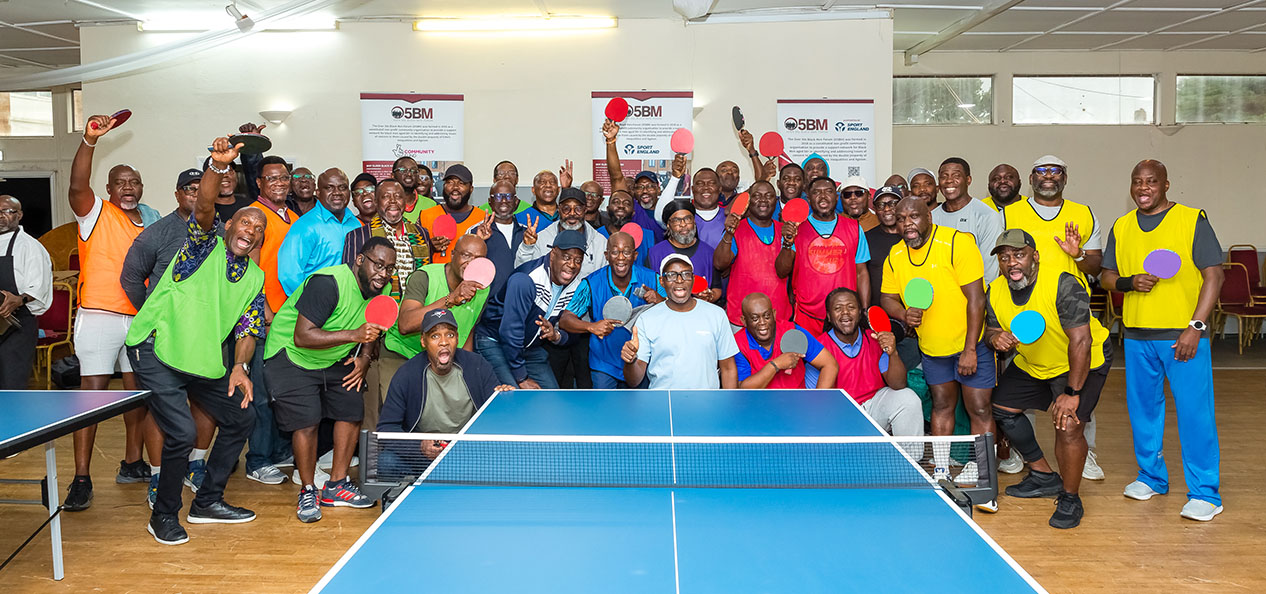
When most people picture senior Black men, they don’t immediately see us smashing forehand drives, diving for edge-of-the-table shots or celebrating doubles-wins with a triumphant chest bump (yes, it happens!).

But step inside an Over 50s Black Men Forum Table Tennis Centre and you’ll quickly realise that the sport is not just a pastime – it is medicine. It is therapy. And it is comedy.

A ping-pong ball, we often say, can travel faster than a GP appointment letter, making these centres our hidden health clubs.

But behind the rallies and the laughter, there is serious work underway.

A group of Black men pose during an Over 50s Black Men Forum Table Tennis session on an indoors centre.

Our hubs are what we call 'free health clubs in disguise' and alongside the games, we often run blood pressure checks, mental health workshops and health awareness sessions.

It is a Trojan horse approach: come for the table tennis, stay for the health education.

More than sport – a building-community exercise

Men who were once isolated are now part of a supportive network and those at risk of hypertension or diabetes are keeping active, informed and monitored.

The unexpected side effects? Friendships, resilience and a lot of good-natured bragging rights.

Some say that even when they hadn’t played table tennis in years the welcoming atmosphere makes it easy to return and that now they're used to the game, they can’t imagine their Tuesday evenings without it.

Others shared that while having lived in Luton for 15 years, never before had they made meaningful connections locally and that the group is a “real treasure, especially because of its focus on health and wellbeing”.
 

When most people picture senior Black men, they don’t immediately see us smashing forehand drives, diving for edge-of-the-table shots or celebrating doubles wins with a triumphant chest bump (yes, it happens!)

A man that had survived a stroke mentioned that, as well as camaraderie and encouragement, table tennis had helped him physically by helping him improve hand-eye coordination, building his confidence and combating post-stroke fatigue.

These voices remind us that this forum is more than sport. It is hope, dignity, recovery and community.

Rewriting the narrative

Black History Month is here and the importance of rewriting health inequality narratives becomes even clearer.

Too often older Black men are described as "hard to reach”, but our response is simple: “we are not hard to reach; we are not being seen”.

The reality is stark – Black men in the UK shoulder a disproportionate burden of chronic disease.

Rates of hypertension, cardiovascular disease (CVD) and type 2 diabetes remain consistently higher than those of their White counterparts.

And we can’t forget that Black men are also more at risk of prostate cancer, so it's always a good idea to use Prostate Cancer UK’s risk-checker.

These inequalities are deeply rooted and cannot be resolved overnight, yet the work of the Over 50s Black Men Forum shows what is possible when solutions are shaped by, and for, the community.

By creating culturally-relevant, community-led, spaces we have not only encouraged men to take part in sport, but also to engage in their own health and wellbeing.

They arrive for the table tennis, but they return with their friends and, together, they build something far greater than the game itself: a hidden health club where camaraderie, wellness and dignity thrive.

Our first regional competition

This September, we hosted the UK’s first Older Black Men Community Table Tennis Competition, bringing nearly 70 men together from Essex and Bedfordshire. The atmosphere was electric!

Chelmsford proudly lifted the singles trophy, while Luton triumphed in the doubles. There were cheers, groans and more than one disputed line call.

Even Westminster took notice and Sarah Owen, MP for Luton North, celebrated her local players with a shout-out in Parliament.

Table Tennis England joined us in the hall, the Mayor of Luton presented trophies and the Sport England logo stood proudly across the venue.

It was more than a competition; it was a statement that older Black men belong in the story of sport, health and community.

Serving the future

We are proud of what has been built so far, with seven hubs running and more on the way. But this is just the beginning.

Our vision is to embed these centres nationwide, creating a network where sport and health go hand-in-hand for older Black men.

And the best part? The model is replicable!

What works in Luton can work in Leeds and what works in Southend can work in Sheffield, because at its core, this is not just about table tennis.

It is about dignity, community and the belief that everyone deserves the chance to live longer, healthier and happier lives.
 

Running, representation and resilience

Movement has always been more than exercise for me.

My first motivation was staying healthy and trying to stave off hereditary diseases like hypertension and diabetes that run in my family (and, so far, I'm happy to say it has worked!).

But movement quickly became my outlet, my reminder that I am alive, capable and able to set goals.

The power of movement

When I lace up my trainers and step outside, I am not only moving my body. I am moving through history, community and identity, and I am claiming me. I do this for me.

This year the theme for Black History Month is ‘Standing Firm in Power and Pride’, highlighting the resilience and contributions of the Black community, and I am reminded that movement has long been a form of resistance, survival and celebration for Black people.

From dance to sport, movement has always been our way of claiming space, telling stories and showing strength and, for me, running is my chosen form of movement. It gives me freedom, resilience, and connection – three qualities that shape how I live and lead.

Growing up, I saw elite athletes who looked like me on TV, but I did not see everyday women like me running.

Running was not something I thought belonged to me as an adult (child me, yes, because children always run), but the first time I tried it outside as an adult, something shifted – it was not about speed or medals, it was about finding a rhythm that was mine.

Over the years, running has carried me through joy and pain.

It has helped me navigate life’s challenges, from grief and motherhood to menopause and leadership, and it has also changed how I see myself, not as the fastest or the best, but as someone who shows up, puts one foot in front of the other and keeps going.

This year the theme for Black History Month is ‘Standing Firm in Power and Pride’, highlighting the resilience and contributions of the Black community, and I am reminded that movement has long been a form of resistance, survival and celebration for Black people.

Running has also shown me how much representation matters.

There have been times I felt invisible at races or out of place in running communities, but when I began sharing my story and weaving my Jamaican heritage into my running, I discovered others felt the same and that, by stepping forward, I could help them feel seen.

Showing the real deal

That is why I am proud to be part of the advisory board for This Girl Can.

For the Phase Six of the campaign, we have focused on showing women as they truly are: sweaty, busy, imperfect and joyful.

Not polished versions of women exercising effortlessly, but showing real women making time for movement in the midst of their busy lives.

Being on the advisory board has given me the chance to share my perspective, especially around the barriers that Black women face in sport.

From worries about hair care, to feeling unsafe in certain spaces, to simply not seeing ourselves represented, these are real issues that stop many of us from moving freely.

Phase Six is about breaking those barriers down and telling a wider story of who belongs in movement.

This new stage of the campaign is also about making sure that when women see the campaign, they see someone who looks like them, lives like them and feels like them. Because when you can see yourself, you start to believe you belong.

From local to national

In 2019, I founded Black Girls Do Run UK.

What began as a small idea, creating space for a handful of Black women to run together, has grown into a nationwide community, because we are more than a running group. We are a family!

We celebrate milestones, we share struggles and, more than anything, we create spaces where Black women can move without judgement or stereotype.

Alongside leading the community, I hold both the Leadership in Running Fitness and Coaching in Running Fitness qualifications.

These have allowed me to support runners of all abilities, from beginners to those chasing big milestones, and to bring structured, safe and inclusive coaching into our spaces.

For us, running is not about chasing times, and all about creating a memory bank, not metrics.

It is about laughing mid-race, stopping for photos and supporting each other at the back of the pack. It is about belonging.

Together in strength

Black Girls Do Run UK exists because representation matters.

Too often, Black women are absent from the imagery of running, but by showing up in our kit at races and online, we are rewriting that narrative. We are saying we are here, we run and we belong!

For me, movement is freedom. It is the freedom to be myself, to take up space and to live well in my body and during Black History Month, that freedom feels especially powerful.

We honour the struggles of those before us, celebrate the present and move with hope for those who will come after because movement connects past, present and future.

It reminds us that while the barriers are real, so is our resilience, and it proves that when women move, communities move and change becomes possible.

So this Black History Month, I celebrate movement in all its forms: the steps, the strides, the miles and the memories. Movement has shaped me, and I will keep moving, for myself, for my community, and for the generations yet to come.

Routes to roots

At the heart of everything we do is fostering better integration and reducing isolation for culturally-diverse communities across the city of Exeter and beyond.

From our days during the pandemic delivering much-needed food parcels to South Asian and other culturally-diverse groups in our communities, our volunteer drivers became acutely aware of how many individuals felt socially isolated and inactive.

During these times, we worked with volunteers from several culturally-diverse communities – such as the Devon Bengali Association and the Exeter Hindu Cultural Centre – to arrange socially-distanced walks, giving many residents their only human contact and physical activity for months.

And those walks were just the beginning.

Fast-forward to today and many of our cultural events also include an element of physical activity within them.

With support from Live and Move, the Sport England Place Partnership in Exeter and Cranbrook, we have been able to run other activities, including zumba, women’s only yoga, badminton, volleyball and cricket.

Activities like these are very attractive to those from South Asian communities particularly.

From our days during the pandemic delivering much-needed food parcels to South Asian and other culturally-diverse groups in our communities, our volunteer drivers became acutely aware of how many individuals felt socially isolated and inactive.

Word-of-mouth spreads during Friday prayers at the Mosque and via our drop-in service, which supports residents with completing forms and accessing mainstream services, among other things.

And this approach is working.

The latest Live and Move local active lives survey data shows that levels of inactivity amongst culturally-diverse communities in Exeter have now almost decreased to pre-Covid levels.

Rates of inactivity

The success of this programme has enabled us to successfully apply for three years of funding from The National Lottery Community Fund to run our Better Connections project, enabling us to further support groups and individuals from South Asian and other communities.

With this funding, we are able to do so much more!

Our South Indian communities run an annual sports day, as does our Filipino community, plus the Devon Bengali Association put together a badminton tournament and a cricket tournament.

All these physical activities have become focal to our residents whether it’s fun games for children or a more competitive sports match, the aim is to ensure that everybody has fun and is a little bit active.

What’s vital and the reason it works is that we listen to our residents from a variety of ethnicities –  we learn what is important to them and what they were missing at the time and we try and plug the gap.

We’ve learned so much by engaging with different communities in this way.

We know that not all South Asian communities are the same. Each has their own cultural identity and it’s important that any organisation understands and appreciates these.

Culture, religion and food are important to many of the people that we work with. We focus events on these elements and slot physical activity in as appropriate.

Word-of-mouth is by far the most effective communication method.

Friday prayers at the mosque or our drop-in services and the women’s-only yoga sessions, all proved to be helpful ways of communication.

Sustainability comes about because of communities taking a certain amount of ownership over an activity. For instance, the yoga group quickly became ‘their’ yoga group, and as a result, participants have ensured its sustainability.

I’m proud that, through our activities, we are improving health and wellbeing, building cross-cultural understanding and strengthening community relationships in Exeter and across Devon.

I hope other places across England feel they can do the same.

Find out more

Inclusive Exeter

Unlocking the power of movement in the NHS

Imagine a world where physical activity behaviours are as routinely discussed within your NHS consultations as smoking, or 'prescribed' as routinely as medications.

One where your healthcare professional (HCP) helps connect you into ways of being active that work for you.

That’s the aim of the work we are doing with our health and physical activity partners, through our Uniting the Movement strategy, to strengthen the connections between sport and physical activity, and health and wellbeing.  

Through cross-sector collaboration we’re enabling the conditions for systemic change, the spread and scale of effective interventions and a coherent joined-up movement for change.

Working together for people's wellbeing

The NHS is one of the most trusted sources of physical activity advice for people with long-term health conditions and for disabled people who, according to our latest Active Lives Adult survey, are almost twice as likely to be inactive than those without health conditions or disability.

Modelling undertaken by our health team, using Active Lives data and the social value of sport and physical activity data, concluded that supporting the one in four people who say they would be more active if advised to do so by HCPs would mean 2.9 million fewer inactive adults and 550,000 fewer less-active children and young people in England, saving up to £0.9 billion from the healthcare system.

Through cross-sector collaboration we’re enabling the conditions for systemic change, the spread and scale of effective interventions and a coherent joined-up movement for change.

That is why we are so excited about the recent launch of NHS England’s four ways forward, which aim to empower and support NHS leaders, managers and HCPs to unlock the protective power of physical activity to improve patient care and deliver NHS priorities. 

Supporting the four ways forward 

Sport England, alongside the Office for Health Improvement and Disparities (OHID) and NHS Horizons, have supported NHS England in developing these as a route to going further and faster in integrating physical activity within and alongside routine NHS care.

This approach is built upon strong evidence and significant progress to date, blending local and national-led action to spread good practice across England.

Lots of our work with partners is already supporting the delivery of these four ways:

Empowering health and care professionals

  • We’ve supported training and education with the Physical Activity Clinical Champion Programme being accessed by over 56,000 HCPs; with 54,600 modules on physical activity completed on the British Medical Journal e-learning platform; with initiatives like This Mum Moves, which has trained 900 health and physical activity ambassadors who’ve then cascaded the training to colleagues and partners; and with the award-winning Moving Medicine platform, which has enabled over 308,000 HCPs to confidently discuss physical activity with patients.
  • Our work with partners has also facilitated change with The Active Hospital toolkit that has been developed to help NHS Hospital Trusts to integrate physical activity into secondary care pathways, and the We Are Undefeatable campaign that has been successfully changing the narrative on being active with long-term health conditions.

Integrating physical activity into clinical pathways

Supporting the NHS workforce to gain the benefits of physical activity

  • According to the latest data, 462 GP practices have received the Royal College of GPs Active Practice Charter accreditation in recognition of utilising physical activity to support staff and patient health and wellbeing.
  • Many sport and physical activity partners provide discounted membership rates to NHS colleagues, e.g. local authority leisure offers.

Supporting innovation and evaluation with partners 

This is achieved through collaboration between health and physical activity partners to influence the provision, access to and use of local assets and facilities.

  • The Sport for Confidence Prevention and Enablement model evaluation report concluded that the positive impact of their innovative approach to embedding physical activity into a whole-system approach to adult health and social care could deliver £58.72 of social value per pound invested.
  • Active Dorset are working with their integrated care system and public health partners to build physical activity into the county’s approach to integrated population health-data management.

Looking ahead

With physical activity’s brilliant infrastructure and a new NHS policy context, the publication of the NHS four ways forward enables us to accelerate cross-sector collaboration and spread good practice – particularly through place-based action between our sector (including active partnerships, local authorities, leisure providers and community sport) and integrated care boards, acute trusts, integrated neighbourhood teams, primary care networks and GP practices.

We have a prime opportunity to get this right – amplifying impact on the health and wealth of the nation and focusing support on those that would benefit the most.

Doing so will create an NHS fit for the future, empower communities and ensure physical activity is a must-have for all of us and for future generations.

What’s good for the nation and even better for you?

The answer to the riddle in the title is easy – sport and physical activity.

At Sport England we’re always talking about the benefits of being active, but for nerds like me, the past few months have provided a particular treasure trove of data about the social and economic value of sport and physical activity.

And then on 1 October 2024, DCMS published a new Sport Satellite Account for the UK.

The positive ripple effect of being active

This revealed that during 2021, the combined economic impact of sport (direct and supply chain – including the production of sports equipment and apparel, the construction and maintenance of sports facilities or their marketing services) was equivalent to £83.1 billion, or 4.1% of the UK’s productivity (gross value added).

The document also showed that every £1 invested in sport generates £1.55 as gross value added in the economy.

A few weeks later we published the results of our new research on the social value of community sport and physical activity, revealing that in 2022/23 the social value of sport and physical activity in England was £107.2b.

This value consists of the individual wellbeing benefits of sport and physical activity (both participation and volunteering) and the wider health benefits of a more active population.

However, the report also highlighted the £15.6b of social value that we are missing out on due to inequality in sport and physical activity, and how the value of being physically active is greater for some of those who are least likely to be active, like adults with a disability or living with a long-term health condition.

The past few months have provided a particular treasure trove of data about the social and economic value of sport and physical activity.

The conclusion from all this information is clear – tackling inequality is a challenge that we must address with all our energy and resources.

And it doesn't stop there.

In the past couple of weeks, we’ve also been able to provide two further reports about how the social value of adult participation in sport and physical activity is distributed between local areas, and an overall return on investment figure for the social and economic value of community sport and physical activity in England.

Local values range from £72 million in the small local authority area of Rutland, in the East Midlands, up to £1.6b in the large metropolitan area of Birmingham.

We’ve also found out that for every £1 spent on community sport and physical activity, £4.20 of social and economic value is created.

What these numbers really mean for people

But with clever economists producing all these impressive population-level figures, it’s easy to lose sight of the underlying truths they’re based on.

So here are just a few for you to think about:

  • People who are physically active are more satisfied with their lives than those who are inactive.
  • According to the brilliant guys at the State of life site and their Where’s WELLBY? poster, the individual wellbeing benefit of being physically active is nearly as high as that of being in a marriage or civil partnership. 
  • People who volunteer to support sport are more satisfied with their lives than those who don’t.
  • In 2022, more than three million cases of disease (ranging from coronary heart disease to dementia) were prevented by physical activity.
  • Being physically active reduces someone’s risk of developing Type 2 Diabetes by more than 25% and the risk of hip fractures amongst people aged 65 or over, by more than 50%.

So sure, sport and physical activity is good for our economy and society but, more importantly, it’s good for you!

And how often can you do something that’s both in the public and your own self-interest?

Unfortunately not very often, so do the right thing and get active – it’s good for the nation but it’s even better for you.

Tools to close our sector’s work gap

When looking at creating inclusive opportunities for disabled people in our sector a lot of focus falls on participation, but fairness for this group of people applies to its workforce too.

For years our Annual Disability and Activity Survey has shown disabled people as underrepresented in our sector’s workforce. 

Understanding what needs to change 

The 2023-24 edition revealed that disabled people are half as likely to see ‘people like me’ working in sport and physical activity compared to their non-disabled peers, and that only 9% of disabled people agreed they have the opportunity to become a coach or take on a role in delivering sport or physical activity compared to 24% of non-disabled people.

Off the back of these concerning figures, we commissioned a research project to explore the barriers and enablers for disabled people to work in our sector.

The final report has now been published on our website and is fascinating reading for anyone working in sport and physical activity.

Initial findings showed that there are limited sources of data and that most of the insights were very high level, identifying barriers such as negative attitudes towards disabled people. 

However, the evidence to help understand these in more detail was limited and while national disability employment statistics delved into specific impairments, these were not broken down to reflect the reality in our sector.

When looking at creating inclusive opportunities for disabled people in our sector a lot of focus falls on participation, but fairness for this group of people applies to its workforce too.

Some research considered other marginalised groups in the sport and physical activity workforce, but did not take an intersectional perspective and treated each identity in isolation.

Coverage of enablers and barriers to disabled people’s participation in the sport workforce was limited, tending to offer a wider commentary reflecting statistics, rather than personal perspectives of disabled people. Only a handful of sources provided some insights, which helped us structure the primary research design and interview questions.

Two of these were Aspire’s EmployAbility Guides and ukactive’s Everyone Can initiative.

Based on initial findings we decided to carry out in-depth interviews to understand the barriers and enablers experienced by disabled people in the professional world, and to develop recommendations that would make a real difference.

Interviewees shared personal stories with examples of both good and bad practices, including a personal trainer who had to hear that the reasonable adjustments put in place to help them do their job were perceived as ‘unfair’ by a colleague.

The need for further change

Accessible application processes, upfront information about roles or inclusive approaches to interviews (for example, choice of video or in-person) made a real difference and gave many the opportunity to consider a role.

To truly understand the reality of employment for disabled people in sport and physical activity, the report should be viewed as a whole and organisations should take a person-centred approach to ensure people can apply and remain as part of our sector’s workforce.

We published three key headline recommendations:

  • Adopt a ‘flexible by default’ approach to job roles. Normalise adaptations and consider flexibility beyond whether the employee could choose their hours to include how adjustments could be made across the wider team. For example could the disabled employee do certain tasks while a non-disabled colleague picks up others?

  • Provide advice and guidance for employing disabled people. There is a clear need for an effective source of advice and guidance for employers to turn good intentions into action and organisations should aim to create a culture that values - and is informed by - diverse voices and experiences.

  • Proactively identify and remove barriers that exist at all stages of the 'work journey'.
    In our research we tried to break down this path into different stages to explore barriers and enablers at each point, but it became clear that many challenges recurred throughout. Employers need to provide clear information about their available role using diverse and suitable communication platforms. They need to learn continually and listen to their disabled staff continually. A good way to achieve this is employing disabled consultants to identify and remove barriers through an inclusive culture.

Organisations who were seen to be committed to inclusion appealed to participants, but the main conclusion to take from the report is clear: there is still a lot of work to be done in creating equal opportunities for all and there’s an urgent need for the sport and physical activity sector to address recruitment and retention strategies.

We hope that in highlighting real-life experiences we can shine a light on both the good, the bad and on the way forward.

There is undoubtedly a desire in the sector to ensure disabled people do not have to overcome barriers to enter the workforce and we firmly believe that this piece of research could be a key tool to unlocking those opportunities.

The continued work for equity in our sector

The EmployAbility Leisure project was launched in 2022 to develop guidance and structure to inspire and support more disabled people to find a job in the sport, physical activity and leisure workforce.

This project was initially led by Aspire, funded by Sport England and supported by a coalition of national organisations (Activity Alliance, CIMSPA, Community Leisure UK, EMD UKukactive, UK Coaching) academics (Professor Brett Smith and Dr Juliette Stebbings) and disabled professionals (Michelle Felix, Lee Welch and Sam James).

The project is now taken forward by the coalition of partners and together we promote and support careers in the sector as an attractive and achievable option for disabled people.

A young man on a wheelchair coaches an older lady during a machine session in a gym.

I had the honour of chairing the strategic partners group that oversaw this project in 2024 and I am proud to share an update on our work.

Free guides and support

The first thing I should tell everyone about us is that the outcomes of our original project are still available and we’d love for you to use them!

Three free guides were created:

  • Guide A is called ‘Training and working in the fitness and leisure sector’ to support disabled people to start a career in the sector
  • Guide B is called ‘Training disabled learners in the fitness and leisure sector’ and it aims to help those delivering training
  • Guide C is called ‘Employing disabled people in the fitness and leisure sector’ and it provides guidance about inclusion and how to become a disability confident employer and recruit and develop more disabled staff.

Lessons learned

In my last meeting as group chair we had the chance to review the evaluation report of the original project and discuss its recommendations.

The report highlighted that there are many examples of extremely good practice of supporting disabled people into the workforce, showcasing the change highlighted in our guides.

This includes practices such as adjustments to staff meetings, changes to company imagery and branding around sport and physical activity in leisure centres or the fact that some organisations in our sector have inclusion policies as a live-working document that is open to staff to feed into on a regular basis.

The evaluation also highlights a greater awareness amongst some disabled people that the sport, physical activity and leisure sector is an area they can get a career in.

Our guides have been used by disabled people to research jobs in the sector, to increase confidence about discussing adjustments with prospective employers or for tips about creating a strong employment application, and how to disclose impairments and health conditions in a manner which shows life skills like resilience, time management or empathy. 
 

The report highlighted that there are many examples of extremely good practice of supporting disabled people into the workforce, showcasing the change highlighted in our guides.

We have also seen changes with training providers and employers who are adopting recruitment strategies – including outreach to disabled communities, schools and colleges, offering job-shadowing opportunities in their organisations, trial commute runs and ‘get-to-know-your-colleagues’ lunches – and inclusion policies and are actively collecting more demographic data about their employees.

However, while this good practice is happening, the report concluded that the sector is not yet doing enough to consistently promote and utilise the EmployAbility Leisure Guides and to support the training and employment of disabled people in a collaborative way.

Plus the results of the Annual Disability and Activity Survey (2023-24) by Activity Alliance says that disabled people are more than half as likely to ‘see people like me’ participating, working, and volunteering in sport and physical activity (17% disabled people vs. 43% non-disabled people).

So there's still work to be done.

Next steps

At present our group has made a commitment to keep working collaboratively to achieve sustainable change in the UK’s physical activity and leisure sector to get more disabled people into their workforce.

In the last 12 months we have developed a new Terms of Reference for the group with a new focus and have discussed the learning from the original project.

We are now putting together an action plan, using the learning from the past two years, to guide us – and the sector – forward.

The new aims the group include:

  • keep promoting careers in the sector as an attractive and achievable option for disabled people
  • building confidence and knowledge within the workforce with regards to working with disabled people as employees
  • developing more inclusive and accessible internal cultures across training, education and employer organisations.

I know that there is a lot of work that still needs to be done and I’m certain that, under the guidance of Activity Alliance (who’ll chair the group in 2025), our group will make great progress in the year ahead.

I invite anyone interested in this work to use the EmployAbility guides and to get in touch to be more involved on a strategic level.

We look forward to hearing from you, so please send us your questions or any interesting case study that you think we should be aware of.

Let's work together so the sport, physical activity and leisure sector improves its efforts to offer suitable work opportunities to everybody. 
 

Why integrate activity into health and care?

Health has never been higher on the nation’s agenda and if this was ever in doubt, the launch of the government’s consultation to build a health service fit for the future confirms this.

Their ambitions are clear and aim to move health care ‘from the hospital to community’ and for us at the Active Partnerships network, this is high on our agenda too. 

Unfortunately we also know that our health and care systems are under huge pressure.

According to the Richmond Group of Charities, more than 14 million adults in England live with two or more long-term health conditions. That’s one in four of us and as an ageing population this number is set to grow.

We believe that wealth will be built through health, as people leading active lives turbo-charge our wellbeing and help to prevent and manage illness, saving the NHS billions and thereby boosting economic growth.

Backing this statement is Sport England’s latest social value of sport and physical activity report, which found that being active relieves some of the NHS burden by preventing 1.3 million cases of depression, 600,000 cases of diabetes and 57,000 of dementia. 

Health has never been higher on the nation’s agenda and if this was ever in doubt, the launch of the Government’s consultation to build a health service fit for the future confirms this.

Further, their research found that leading active lives saves the NHS £540m on reduced GP visits and £780m on reduced mental health services usage.

It’s clear that supporting people to get active is the sustainable way to secure the future of our NHS and that this is key to creating healthy, active and long lives for everyone in England.

Physical activity and sport must therefore be at the heart of a prevention-first health system and, by default, integrating physical activity into our health and care systems will help achieve this. 

Local work for a national ambition

Across England, we are seeing more and more collaboration between physical activity and the health and care sectors, but we need to keep moving this forward and at pace. 

However, for this to work it must happen locally, starting at a community level. But what does this look like in practice? Let me share a couple of examples.

Take the work of wesport. The team there has brought the falls prevention programme – Fall-Proof – to communities across the West of England, including Bath, Bristol, parts of Somerset and South Gloucestershire. 

This strength-and-balance campaign consists of easy-to-follow guides, a series of Move to Improve self-help cards and classes to prevent falls.

By building simple exercises into people's everyday lives and routines, this helps to keep them steady, strong and able to get out and about, improving their quality of life and opportunities. 

The programme was made possible because of the system-wide advocacy and investment across the South West – from integrated care boards and from the voluntary and community sectors.

Elsewhere, Active Essex forged a strategic partnership with Essex County Council’s adult social care and community organisation, Sport For Confidence.

The aim is to create further opportunities for disabled people and for those living with long-term health conditions to be active and to engage in physical activity within their community in order to enable independence and to achieve wider outcomes.

The resulting Prevention and Enablement Model (PEM) was a range of system-led, co-designed and context-specific opportunities.

The programme also included an integrated falls-prevention programme, inclusive activity sessions in leisure centres and support for health and social care professionals to embed physical activity into their everyday practice.

Independent assessments of the programme by the University of Essex, found that the social value calculation was that for every £1 invested there was a £58 return of investment of social value.

And their insights revealed that people who accessed PEM services perceived themselves to have experienced benefits such as enhanced health, wellbeing, confidence, skills, independence and improved routine and structure to their days. 

The success of the programme speaks for itself as it is now being rolled out county-wide through Reconnect.

A goal best achieved together

Ours is a complex challenge where collaboration is key, which is why – thanks to funding from Sport England – our network is working with specialist physical activity consultancy Move Consulting on a 15-month project that will support people living with, or at risk of, long-term health conditions to be more active.
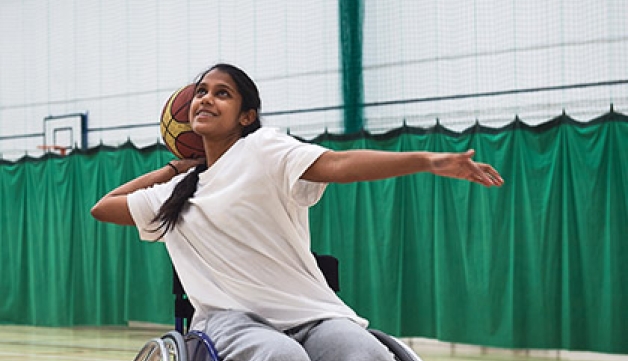
Our Integrating Physical Activity Pathways for Health project will provide consistent, quality-assured models of delivery trusted by health and care colleagues to offer better assistance for those communities in most need.

Together, we aim to develop a framework of support that includes information, guidance and resources and tools that can be applied and used locally to help improve access to community-based activity.

By working closely with the health and care sector – including our partners NHS Horizons, the Richmond Group of Charities and CIMSPA  and in a sustained and systemic way that allows understanding, listening and acting on the needs of our communities, physical activity can be delivered alongside routine care as a key intervention to support our health. 

So our mission is clear: working together to develop physical activity as a core component of our health and care systems and provide opportunities and programmes of support for those who need it most, so people feel empowered to lead more active, healthier and happier lives for longer.

We all want to play

Being left out of sport from a young age just because you’re disabled sounds like something out of a dystopian novel and yet, sadly, this isn’t fiction but the reality of too many disabled children in the United Kingdom today.

This can look like a local park without specialist play equipment, a school PE teacher who lacks the knowledge to adapt sport for disabled pupils or a sports centre without accessible sessions.

As we celebrate Disability History Month and the International Day of Persons with Disabilities, which took place earlier this week, I would like to consign this woeful state of affairs to history, where it belongs.

Guidance from the UK’s Chief Medical Officers says that disabled children and young people should be doing 20 minutes of daily exercise, as well as doing strength and balance activities three times a week. But how can they achieve this with the odds stacked so heavily against them?

Sport England’s own research reveals that disabled people are twice as likely to be physically inactive as non-disabled people. Hardly surprising given their lack of opportunities to get active.

Locking us all firmly in sport

The side-lining of disabled people from sport and physical activity goes to the heart of why I founded my charity.

It was while I was volunteering for a disability charity myself, that I noticed gaps in the provision for disabled people.
 

Being left out of sport from a young age just because you’re disabled sounds like something out of a dystopian novel and yet, sadly, this isn’t fiction but the reality of too many disabled children in the United Kingdom today.

Put simply, most schools, colleges and community groups were just not providing inclusive sports activities.

I wanted that to change, so I decided to create my own inclusive activity sessions, working with a range of organisations and teaching coaches how to run sports sessions so that no one was left out. 

My idea grew and 11 years ago I founded my own charity, Disability Sports Coach (DSC), running London-wide inclusive community sports clubs.

Without our clubs, members are locked out of sport.

Many cannot access gyms or leisure centres independently and it’s not just the physical barriers to participation – our members need a friendly, calm and accepting environment in which to exercise.

DSC also offers coaching and training services as it’s vital there are opportunities to play inclusive sport in schools, colleges and community groups.

That’s where our expert coaches come in – they go on site and teach the techniques of how to adapt sport for every impairment.

Our training courses help coaches and teachers to improve their knowledge of disability sport and how to deliver it.

Using my experiences as motivators

My work has been driven by my own personal challenges and experiences of being on the sidelines.

I have a severe stammer and dyslexia, which led me to experience bullying at school and in the workplace.

At one stage I was rejected at 39 interviews while looking for a job in sports development.

None of this has stopped me from pursuing my mission of levelling the playing field for disabled people in sport.

Now I’m proud to say that since DSC was founded, we have empowered more than 21,000 disabled people and their families through inclusive sport and physical activity.

We’ve also just introduced an exciting programme that is changing lives through sport – Inclusive Activity Leaders –  a free initiative in partnership with Nike to train disabled and non-disabled people side-by-side to qualify as sports coaches.

DSC has employed disabled programme graduates to coach in its community clubs with great success. Our graduated coaches get a paid job and become great role models for members. It’s a win-win!

The power of Paris

Forming partnerships is an effective way of broadening our reach.

We collaborate with national sports organisations and we link up with specialists when needed, such as delivering our first aid training.

This year it’s been great to see the Paris 2024 Paralympic Games shine a much-needed spotlight on disability sport.

ParalympicsGB is spearheading its #EqualPlay campaign to ensure that disabled children have the same access to PE at school as non-disabled children.

Their research reveals that just one in four disabled children say they take part in school sport.

As a society we need to ask the question ‘are we doing enough to ensure that sport and physical activity is accessible for disabled people?' And if the answer is no, we need to do more.

We must right the wrongs and ensure that disabled people are no longer left on the sidelines of sport.

History will be the judge of our efforts.

You've viewed of items.