Skip to content

Taxonomy term

Content type

Preventing crime from the ring

Boxing is my religion. Like all spiritual journeys it began with a moment of divine inspiration and my baptism was conducted whilst watching Muhammed Ali defeat George Foreman in “The Rumble In The Jungle”.

I grew up in boxing gyms with the sport giving me purpose, discipline and titles – including representing my country on numerous occasions.

These days it offers me the chance to inspire the next generation of boxers and to help anyone who walks through the gym door, to believe in themselves and choose a positive path in life. 

When people ask me why boxing matters so much to me, my answer is simple: it changes and saves lives.

A safe space for all

Of course, it also improves health and builds confidence, but boxing keeps people – especially young people – away from anti-social behaviour and crime, something that I can personally verify as a former Youth Justice Manager. 

With the number of proven offences committed by children seeing an increase of 4%change has never been so important and there are many ways boxing helps fight crime.

Firstly, boxing gives young people structure and boundaries.

Many of the children and young people who walk through the doors of a boxing gym – like mine in Oldham, Greater Manchester – come from difficult backgrounds and have challenging lives. 

Having little or no access to opportunities and therefore a lack of agency in the world, may result in challenging behaviours. But not dealing with these pressures means they risk spilling out onto the streets and that’s where crime starts. 

Not because young people are 'bad', but because they have nowhere positive to pour their energy into. But boxing gyms can change that, as these spaces are built on discipline, respect, routine and team spirit.

Boxing gyms offer me the chance to inspire the next generation of boxers and anyone who walks through the gym door, to believe in themselves and choose a positive path in life.

You don’t just turn up to your gym whenever you feel like it. Instead, you’re expected to train on time, plus you have to listen to your coach, and you learn that effort leads to results and that shortcuts rarely work.

These lessons transfer directly into everyday life and children who understand discipline in a boxing gym are far less likely to make reckless decisions outside it.

Boxing also teaches emotional control, becasue contrary to what some may think, this sport helps a young person understand how to control their emotions, particularly aggression, and how to think and act under pressure.

I’ve seen it first hand – children who once lashed out can calm themselves because boxing gave them an outlet for their emotions and that allows them to thrive.

The many lessons of boxing

Boxing is a good metaphor for life and can help to develop those personal and social skills that people need, contributing to tackling deep seated worklessness and low aspirations.

The sport also fosters the development of positive character, self-esteem, self-discipline, courage, perseverance and resilience.

Instead of throwing punches on the street, they hit the pads, the bags and their coach or opponent inside the ring, but always with respect to the sport’s rules, under supervision and with a reason.

Boxing also teaches respect — for yourself and for others. You shake hands, you follow rules and you learn that real strength comes from self-control, not intimidation. These values reduce crime at its roots.

Another factor that's key is the sense of belonging among those practising the sport. A boxing gym offers identity and loyalty because, at a gym, you’re part of a team.

You train together, look out for each other and you wear the gym name with pride. That sense of identity can pull someone away from a path that leads to anti-social behaviour and crime.

I’ve seen boxing change lives in Oldham and Greater Manchester, where young people that were heading toward trouble now have focus and a reason to stay on the straight and narrow, and I’ve also seen young people who had no confidence, find self-belief.

Not all these children will become a champion boxer and that's okay.

Building better lives through sport

The real victories happen when a young person chooses to stay in school, can find a job or simply chooses not to commit a crime because they don’t want to let their gym or coach down.

At our newly refurbished Greater Manchester Boxing and Development Hub, we’ve been lucky enough to benefit from Sport England funding. 

To my mind, our investors aren’t just putting money into a boxing club and community gym. They’re investing in crime prevention and harm minimisation.

It costs less to fund a gym than it does to deal with the consequences of crime and anti-social behaviour policing, court cases, prison and reform  as recent estimates place the total economic and social cost of serious youth violence at £11 billion between 2009 and 2020.

For me, boxing is more than titles and trophies, it’s about giving people a chance.

Every time a young person chooses to walk into a gym and away from 'the road', I believe that’s crime prevention in action and that’s why boxing will always matter. 

As one of the 10 boroughs of Greater Manchester, Oldham forms part of Sport England’s Place Partnership with Greater Manchester Moving and other local bodies to implement Sport England's Uniting the Movement strategy for getting people active.

I’m proud of what boxing can do to change lives.

In the words of the iconic social activist, pacifist and politician, Nelson Mandela: “Sport can awaken hope where there was previously only despair.

Every day, I get to see the truth in these great words in action.
 

Making winter sports accessible and inclusive

As the Milano Cortina 2026 Winter Olympic and Paralympic Games start we would like to extend our very best wishes to the athletes and the support team behind Team GB (and in the coming weeks ParalympicsGB) as the spotlight of Olympic and Paralympic sport shines upon them.

It is worth remembering that during the 2018-22 cycle the winter sports and athletes were particularly impacted by the resultant post-Brexit travel restrictions and also (how soon we forget!) by the Covid pandemic.

UK Sport and the British Olympic Association have an ambitious target this year and I think, and hope, that at this iteration of the ‘winters’ we will see our athletes and sports realise their aspirations as they showcase the rich and diverse sporting offer we have in England and across the UK.

Proudly supporting our talent

At Sport England we are extremely proud of the role that we play in supporting partners and thereby enabling aspiring athletes in winter sports to explore and fulfil their potential, but what does that support look like and why does it matter?

Starting with the second question first, let’s address the elephant in the room – why winter sports?

There is a rather lazy misconception that we don’t have winter sports facilities and that those sports are exclusively the pursuit of people from affluent backgrounds – the truth, like many things in life, is much more nuanced that that.

Starting with the sliding sports (bobsleigh, skeleton or luge to name a few) there is an established track record of athletes coming from the British Army - shout out at this point to our colleagues at British Army Sport which continues to be a key partner of and contributor to the UK High Performance System - or from track and field athletics.

These athletes often transition in to sliding sports (or should it be pushing sports!) through established UK Sport-led talent ID programmes such as Find Your Greatness, and those sports have brilliant pathways to take them all the way to the podium.
 

At Sport England we are extremely proud of the role that we play in supporting partners and thereby enabling aspiring athletes in winter sports to explore and fulfil their potential.

The skating sports are typically populated with athletes who started their careers at ice rinks and ice centres scattered across the major ‘second cities’ of England.

Funding centres across the country

The National Ice Centre in Nottingham has long since been the base for aspiring short track speed skaters and a great partnership between Sport England, Nottingham City Council and recently British Ice Skating, who received Sport England talent funding into their pathways.

Other English rinks feature prominently in the athletes’ biographies and it was great to see Sheffield hosting the recent Figure Skating European Championships as part of the build up to the Games.

English Snowsport athletes often start their careers at outdoor ‘dry’ (not so much in the rain!) ski slopes, which continue to be popular and affordable community sport facilities, enabling athletes such as the Summerhayes sisters or, for Milan-Cortina, veteran James ‘Woodsy’ Woods (who will compete at his fourth Olympic Winter Games) to progress from Sheffield Ski Village to the X-Games podium.  

Arguably Great Britain's most successful ever Alpine skier, Dave Ryding will contest his fifth Olympic Winter Games, having purportedly earned his stripes at a dry ski-facility up at Pendle Ski Club, a member-owned club located in the Ribble Valley, Lancashire.

Sport England investment supports the talent pathways in a range of winter sports to ensure that performance pathways in these sports are accessible and inclusive, well-led and managed, and that they offer the support needed to allow our aspiring young people to progress to the very highest level.

Through our funded partners, most prominently SportsAid, we also fund programmes such as Backing The Best and the TASS programme that collectively provide direct financial and athlete support services, such as strength and conditioning, physiotherapy and sports medicine services to enable our players to be fit, healthy and optimally prepared for graduation into high performance programmes and success at major events and games.

As an example, of the Team GB class of 2026 in Milan-Cortina, at least 10 athletes (including Dave ‘The Rocket’ Ryding) have received Sport England support through TASS - five of which are current TASS-supported athletes enabling them to be in the very best of health as they embark on one of the biggest events of their careers.

Finally, as we look ahead to the winter Paralympics, we could not be prouder of the English athletes who will represent PGB as the spotlight shines on them from 6 March, I am particularly looking forward to seeing trailblazing English wheelchair curlers: Yorkshire’s Jo Butterfield, Newcastle’s Jason Kean, Wigan’s Karen Aspey and Northumbria’s Stewart Pimblett.

Collectively, they will make history as the first English curlers ever to take to the ice at the ‘winters’.

Their inspirational journey (look them up, their stories are remarkable) was enabled through an innovative partnership with British Curling, which saw Sport England invest in performance pathways in the sport for the very first time.

Best of luck to all our athletes. No need to ask you to make us proud. We already are.
 

Find out more

Talent

The not-so-obvious benefits of being active for young men

Suicide prevention and increased employability among young men might not be the traditional aims of physical activity programmes, but at Rise – the leading North East health and wellbeing charity – we're showing how lives and communities can be transformed using the power of movement.

Rise is the active partnership for Tyne and Wear, Northumberland and County Durham, and we’re using physical activity as part of a pioneering approach to reduce inequalities and to boost physical and mental health.

As part of this work, we’ve undertaken a significant project in Berwick called Rise’s Healthy Minds for Healthy Livesworking directly with more than 100 men aged 16-30.

Understanding the issues faced by our young men

Like many communities in the North East, young people in Berwick face complex socio-economic problems including unemployment, poor health, relationship difficulties and issues surrounding debt, poverty and substance misuse.

These struggles have had a consequential effect on the mental health of young men in town.

Using data from referrals and initial interviews of the young men we worked with in Berwick, we found that:

  • 43% constantly considered suicide
  • 76% had diagnosed mental health disorders
  • 81% had substance abuse issues
  • 67% were unemployed
  • 43% faced significant debt.

Our work within the community in Berwick addresses the physical and psychological aspects of wellbeing but it goes beyond that, giving people practical skills as well.

This broad and comprehensive approach helps build stronger and resilient mental health, enhancing young people’s overall quality of life, and by working directly with people who need our help the most, we aim to improve their immediate health and wellbeing.

We also build on their ambitions, motivations and employability prospects, which helps them grow their confidence, improve their mental health and to strengthen their wellbeing through physical activity.

Deacon's story

One positive example from our work within the Berwick community is Deacon’s story.

A local resident of 29 years of age, Deacon had struggled with social issues including anxiety and depression from a young age.
 

Suicide prevention and increased employability among young men might not be the traditional aims of physical activity programmes, but we’re showing how lives and communities can be transformed using the power of movement.

Following a difficult living environment, Deacon moved away from his support network to Berwick with his father and that's when isolation set in.

Deacon said: “I needed to be more active and find solutions. I’d never filled in housing applications; I’d never filled in job applications. That help was there when I needed it and I’ve improved in every aspect of my life. I refer to Jaki as the woman who saved my life. She’s absolutely amazing, I cannot thank her enough.”

When Deacon came to see us, I could have scraped him off the floor – he had no sense of self-worth – and I think that had been destroyed by the environment that he had been in.

But then I was able to get him enrolled onto an outdoor equine and nature activity course followed by an employment and wellbeing course.

Fortunately the course providers paid for the transport, which took away that barrier of him getting in from where he lived and he even helped him secure a job out of it!

After gaining employment, Deacon was able to acquire a bike and that enabled him to cycle to and from work, which helped him improve his physical health.

A month after that, he was also offered a local authority flat. The smile on his face was immense. I’m proud of how Deacon has turned it around.

The power of physical activity

Our internal data reflects that since May 2021, Rise has supported 118 young men to improve their lives. Recent evaluations found that: 

  • 96% showed a reduced risk of anti-social behaviour
  • 76% had successfully applied for a job, training or further learning
  • 87% now take part in physical activity
  • 75% felt confident with themselves and felt they were making positive choices.

Rise’s Healthy Minds for Healthy Lives project was initially supported by the Northumbria Violence Reduction Unit and London North Eastern Railway and has subsequently been funded by the National Lottery to enable the work to continue.

Through working within communities, we've helped transform the lives of young men, demonstrating how physical activity has the power to enact positive change. 

Find out more

In the picture

The concentrated focus of Black History Month provides an opportunity to gain new perspectives through events, articles and media programming that might otherwise be overlooked.

At its best, this month should stir our curiosity and resolve as we look back at the achievements and struggles of Black people, helping us gain a fuller understanding of Black histories to strengthen our grasp of the present.

This celebration (and the round-the-clock efforts by many through the year) should move us to action, reminding us that we don't have to accept the erasure of some people and communities as normal.

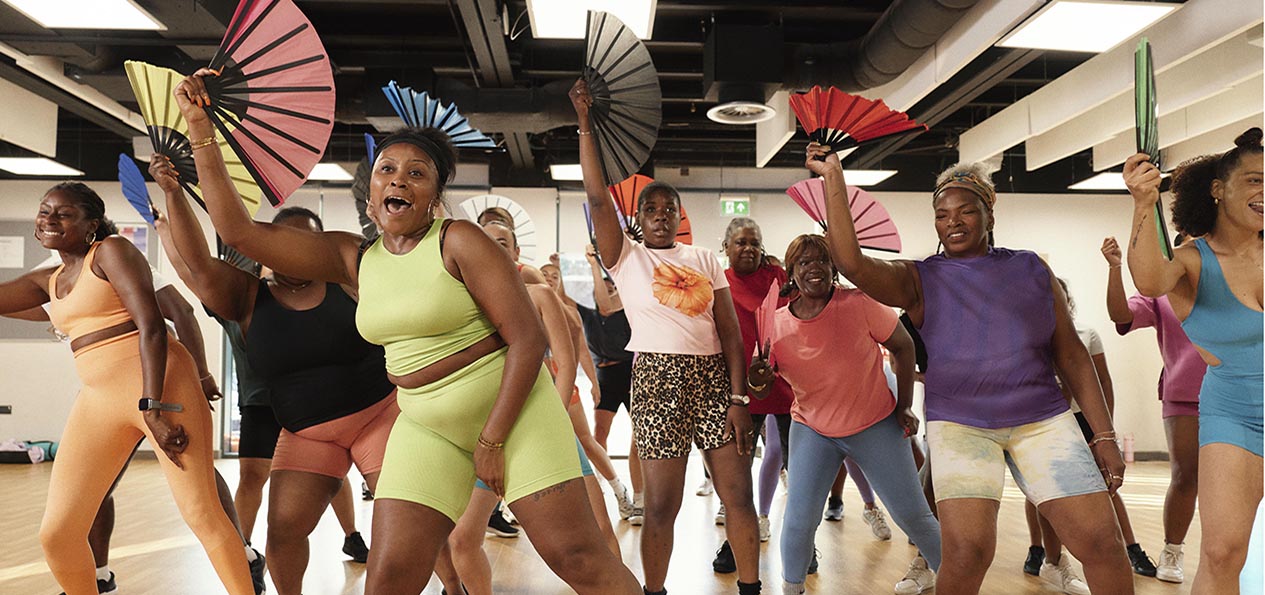
A group of dancers hold fans as part of their routine during a session on an indoors gym.

One of the best ways we can use this month is to harness new understandings to permanently build more inclusive platforms for Black achievement and wellbeing, so if you’ve missed our series of articles this month, please do look back.

These guest blogs are all great stories that highlight examples of community leadership that push back against the status quo of erasure.

It’s vital that we recognise and celebrate this work, which truly models more local and equitable practice, shaped by communities themselves.

But what about the models in the digital world?

Black History Month should move us to action, reminding us that we don't have to accept the erasure of some people and communities as normal.

As the usage of virtual spaces increases in all areas of our lives (including work, leisure or physical activity), it’s important to push for equity online too.

But with the backdrop of ongoing online abuse and discrimination, which inhibit participation in sport and physical activity, we’re rightly focused on the importance of creating safe virtual spaces too.

However, safety is only one side of the equation because we’ve also been asking ourselves how we can use technology to improve representation.

An example of this is We Like the Way You Move, the latest phase of our award-winning campaign, This Girl Can.

Technology for good

This phase has included a push for greater visibility of Black women – as well as other underrepresented groups of women – in imagery that promotes participation by sport and physical activity organisations.

This is how it’s worked: with the help of AI, we analysed publicly-available photos that came from parks, gyms, sports clubs, community centres, swimming pools and other leisure facilities across England and sourced via Google Maps, and confirmed that – alongside other minoritised groups of women – those who look like me have been virtually erased.

I’m excited that we’ve found a way to use the power of AI to drive better representation in our sector, because at a point when we’re all figuring out how to be more purposeful in how we use technology, finding insights that we can act on in real-time to contribute to change feels like a tangible win.

This push for greater visibility marks a positive shift that has come with our strategy’s focus on tackling inequalities as we’re working on reshaping our existing efforts to collaborate with different audiences and leaders through initiatives like TRARIIS.

Having celebrated the 10th anniversary of This Girl Can earlier this year, We Like the Way You Move has also used some powerful new imagery of women who have conventionally been excluded from the picture of sport and physical activity.

These are pictures full of joy and love for movement and, at times, I’d say you can almost hear the music they’re moving to.

These images are also a great reminder that women are creating their own platforms in communities, leading change and putting their unique stamp on activities and spaces.

We hope that they will help shift mindsets and that other organisations will follow suit.

On a personal note, it’s wonderful to see references to Caribbean culture, dance and movement in the mix.

It really does make a difference to my motivation and sense of belonging when I can see parts of my identity reflected back to me.

And I’m confident that the breadth of images and ways of moving captured in the campaign will have a similar impact on lots of other women that should have always been in the picture.

Beyond the water

‘Making the joy of swimming accessible to all’ is the slogan of Swimunity, a Community Interest Company based in West London that I have the privilege of co-directing since 2017.

Swimunity was founded in the wake of the Grenfell Tower fire, with the aim of providing a space for healing and resilience-building among local residents through their relationship with water, in the form of free swimming lessons, beach days and residential trips.

Several years on, we’ve had hundreds of local young people and women learning how to swim with us, with some of them even becoming swimming teachers themselves!

Many have also joined us for expeditions to the seaside and for residential trips around the UK (Cornwall, Dorset and Wales) to leave the busy streets of London behind in favour of new environments and experiences. 

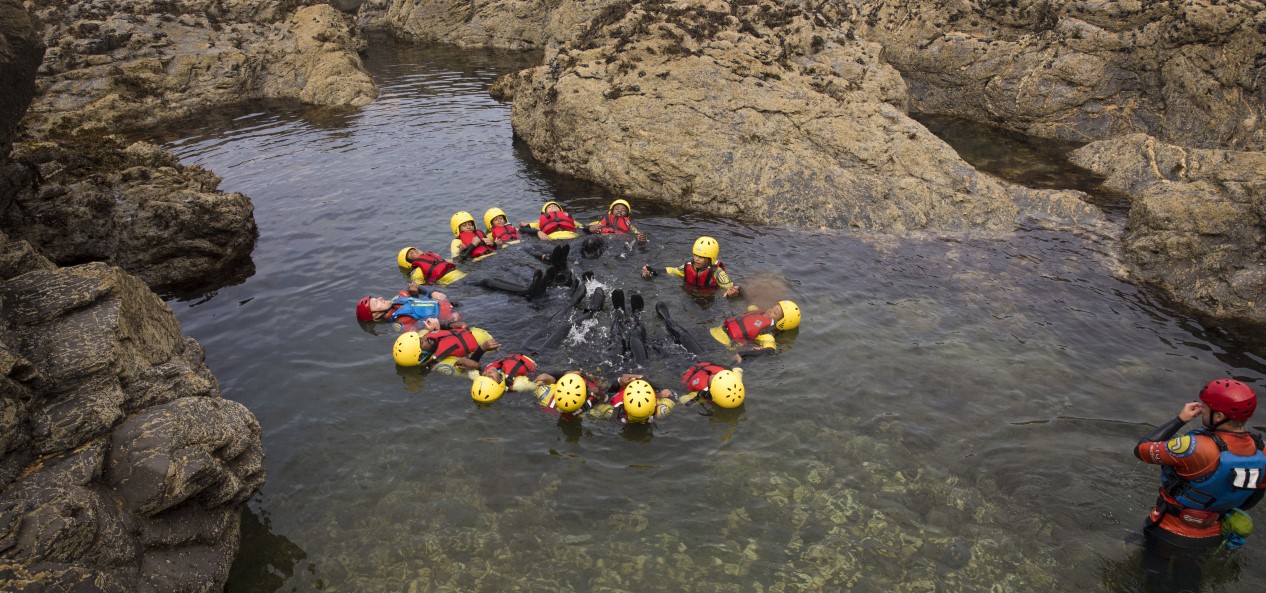
A group of people wearing helmets and buoyancy vests scull in a circle in some shallow sea water, surrounded by rocks.

Swimming has always been a deeply important part of my life and that of my co-director and founder of Swimunity, Sarraounia.

Growing up, however, we were acutely aware that very few people in swimming – whether participating or teaching – looked like us.

Sadly, this isn’t purely anecdotal.

The Value of Swimming report by Swim England found that 74% of children leave primary school unable to swim 25 metres unaided, with the figures even lower among Black (51%) and Asian (55%) pupils. 

Considering that swimming is an essential life skill, these statistics are alarming.

Socio-economic status also plays a major role on this data, with Sport England’s Active Lives report for 2022/23 revealing that only 47% of children and young people going to school in the most deprived areas of the country are able to swim 25 metres, compared to 69% in the least deprived areas.

There are a number of reasons behind these disparities: the ever-increasing cost of swimming lessons, the limited access to facilities, the fact that many children and young people come from a family of non-swimmers, plus cultural factors such as concerns about hair and skin care, including the persistent myth that Black people “sink” or have “heavy bones.”

Making aquatics more inclusive

Swimunity was born as a result of the belief that everyone deserves the chance to learn to swim, and that the pool should be more reflective of the community around us.  

Through our work, we strive to bridge the gaps between the non-swimming community and the sport – not only by providing free, high-quality and inclusive lessons and education about water safety and competency – but through representation too, by being teachers of colour on poolside ourselves. 

Swimunity has been fortunate to receive support from a range of funders, including Sport England, which has allowed us to sustain and expand our year-round programmes.

We’re also lucky enough to see incredible progress in our efforts, with children arriving to our lessons as complete beginners and leaving us as confident swimmers, competent across all four strokes. Some even go further in their swimming journey and join competitive clubs! 

Swimunity was born as a result of the belief that everyone deserves the chance to learn to swim, and that the pool should be more reflective of the community around us.

But for so many of our young people, the importance of swimming lessons goes beyond learning to how to swim. 

For them it’s a chance to develop a skill outside of school, an opportunity to make new friends and the possibility of challenging themselves in new environments. 

Every year we also take a group of young people on a residential trip in the summer holidays and this year we went to Wales. It was so much fun! 

For many of our members, who live in inner-city London, these experiences offer a rare chance to play freely, connect with nature and try water-based activities such as kayaking, surfing and coasteering.

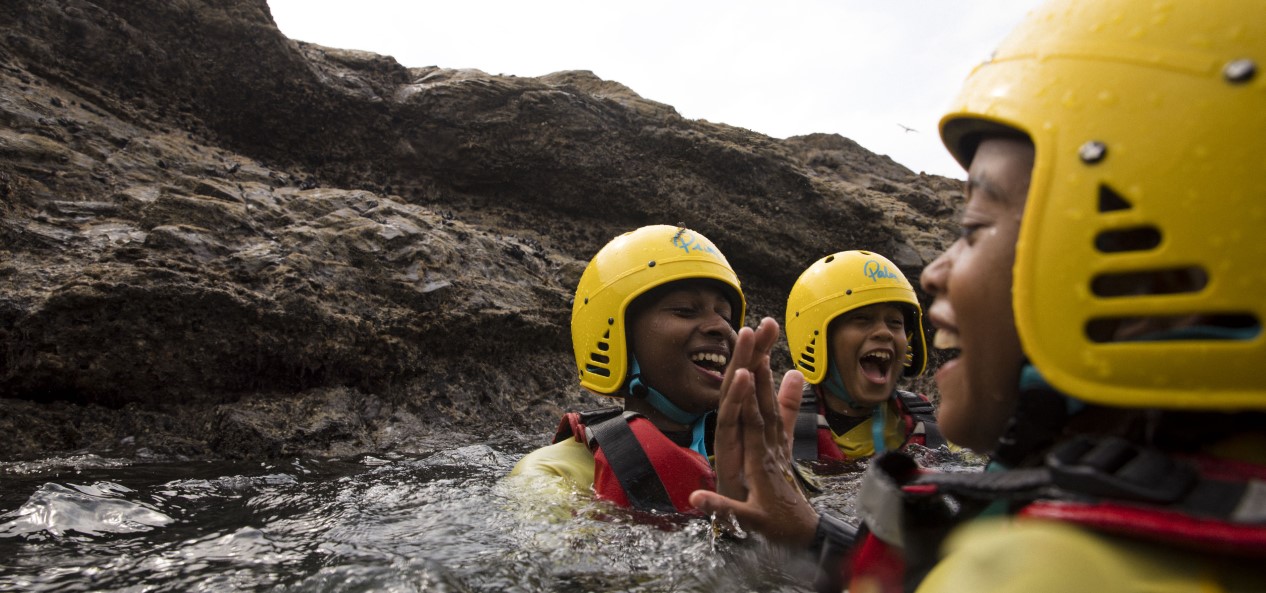
Three young people wearing helmets and buoyancy aids enjoy swimming in the sea.

Over time, we’ve built a truly special community – not only of swimmers, but of parents who now feel empowered and informed about their children’s learn-to-swim journeys.

We also work with them to help them understand the process better so they can best support their kids. 

Many parents and carers have mentioned how rewarding it is to see their children develop skills and confidence through weekly sessions. 

Through our lessons and trips, families get to connect with their local community too, meeting and getting to know others in the area, and many of our mothers have even joined our women’s-only sessions, discovering the joy of swimming for themselves. 

And whilst we are only a small drop in an ocean of meeting the unmet demand for lessons, we can see what a difference it makes and that helps us to keep going in our efforts so people in the Black community can enjoy the many benefits of swimming, both inside pool and beyond the water.

Find out more

Swimunity

The great (and inclusive) outdoors

For more than 10 years, I’ve had the privilege of being part of a partnership between Sport England and the National Trust that’s been quietly but powerfully changing lives.

This is more than just getting people outdoors – it’s about creating real, lasting opportunities for everyone, especially those who need it most, to connect with nature and feel the benefits of being active in green and blue spaces.

Being outdoors and connected to nature has demonstrable health and wellbeing benefits.

Studies have shown impact such as lowering stress levels and reducing cortisol and inflammation, which are increasingly seen as factors in depression, autoimmune diseases and cancer.

Our work at the National Trust is shifting towards a more ‘place-based’ approach, but what exactly do we mean by that?

Rather than parachuting in with one-size-fits-all solutions, we’re considering what’s already happening in local communities, at National Trust properties and on their land, and finding ways to make those spaces more accessible, more welcoming and more connected to the people who live nearby.
 

This is more than just getting people outdoors – it’s about creating real, lasting opportunities for everyone, especially those who need it most, to connect with nature and feel the benefits of being active in green and blue spaces.

Whilst we consider how to be more locally responsive, we continue to work at a national scale on initiatives such as improving navigational and orientation signage to ensure paths are easy to find and follow, and refining path-grading methodologies to better reflect the diversity of users.

This work focuses on describing the path itself rather than the person using it and it goes in line with the Equality, Diversity & Inclusion (EDI) principles and the Equality Act.

What I love about our work is that it’s about making meaningful connections between the land and the community.

It’s not just about trails or facilities – it’s about creating safe, natural, traffic-free environments where people can walk, cycle, run, paddle or simply be.

I’ve seen firsthand how many barriers can stand in the way of people accessing the outdoors.

Things like fear of getting lost, finding themselves in unfamiliar terrain, safety concerns, challenges around travelling to our places or just not knowing where to start.

We’ve worked hard to design experiences that support people who are new to the outdoors and it’s making a real difference.

For that we’ve been able to capitalise on the strength of the National Trust brand.

Our properties are trusted spaces, with essential facilities like cafés and toilets, which makes them perfect for families, groups or individuals who might be taking their first steps into nature.

The multi-use trails that have been developed are a great example. They’re accessible, enjoyable and range from three to 5km, which makes them ideal for walking, wheeling, running or cycling.

And the impact has been incredible!

We’ve seen a 23% rise in visits from people of ethnic backgrounds, which indicates we’re reaching new audiences and helping more people feel like they belong in these spaces.

This is fantastic news since we strive to improve the experience for communities that often find barriers to exploring the great outdoors.

I’ve also been inspired by the way this work helps those who may need deeper support.

Whether it’s supported paddling sessions, inclusive activities for families with SEN, or community-led cycling groups like the Muslim Cycle Sisters at Osterley, there’s a real commitment to inclusion.

And it’s not just about participation but about representation, too.

The Trust is working with partners to tackle underrepresentation in the outdoor workforce, for example through our walking leaders programme, which is such an important step toward long-term change.

Nature restoration and biodiversity play a big part in our work.

Our infrastructure developments are designed to improve visitor experience and get people active whilst protecting some of the most sensitive nature areas.

We are strengthening our knowledge and skills in designing experiences that deliver real, meaningful and lasting nature connection to inspire more people to care for nature and their local environment.

Looking ahead

As I reflect on the past decade, I feel proud of what we’ve achieved and even more hopeful about what’s to come.

Our partnership with Sport England shows that when we focus on people, place and purpose, we can create spaces that are not only beautiful, but truly inclusive and life-enhancing.

And that’s something worth building on.

Find out more

National Trust

Empowering women through group exercise

At EMD UK, we believe group exercise should be for everyone, but for many women – especially Muslim women – challenges to accessing group exercise still exist.

That’s why in 2024 we partnered with Active Together to launch support for women from ethnically diverse communities to become Level 2 Group Exercise Instructors.

The aim was to create a workforce that mirrored the communities it served by driving greater diversity and inclusion within the group exercise sector.

Giving back to their communities

We worked with Active Women, of Leicester City in the Community, to recruit women, to provide local support to build a community amongst the learners and to keep them motivated and engaged.

The goal was to provide a learning and training opportunity for the women that was safe, culturally aware and empowering.

In total, 12 women were enrolled.

They were aged between 25 and 54 and came from global majority communities, including Muslim, Hindu and those of no faith.

The programme offered a fully-funded Level 2 Group Exercise Instructor qualification through Drummond Education.

These women’s beliefs may have been different from each other, but they all brought with them a deep desire to give back to their communities.

Most had wanted to train for years but faced barriers like the costs involved, childcare needs or the lack of local opportunities.

But now they were able to join because the programme was tailored to them and because support was finally available.
 

The aim was to create a workforce that mirrored the communities it served by driving greater diversity and inclusion within the group exercise sector.

Confidence levels were moderate to high, but concerns remained as some feared failure and others worried about language, memory or balancing family-related responsibilities. And yet, despite everything, motivation was strong.

Many saw this as a way to serve their communities and especially other Muslim women, which aligned with the principle of Sadaqah: giving back without expecting anything in return.

One participant said she was excited to see how quickly she could pick up the lessons, while another mentioned the timing for her was perfect as she had just finished her master’s degree.

We also spent time asking what support they’d need after qualifying as it’s often at this stage that dropouts are most prevalent.

They asked for help with marketing, setting up classes and accessing venues and equipment.

They also wanted guidance on business development and networking, and this is where the EMD UK membership came into its own.

Along with the newly launched Reach Up programme, in collaboration with This Girl Can, our members also have access to over 400 support resources, CPD training and content to support their group exercise teaching.

Supporting our students beyond the classroom

We also asked what they wanted from us and the training provider as part of their involvement in the programme, and they requested prayer space, female-only sessions and options without music.

They also wanted their dress codes to be respected, local sessions and female tutors.

They reminded us that English wasn’t their first language and asked us to understand their personal circumstances, which were full of family commitments and cultural nuance.

We listened and we’re now committed to continuing that listening as time goes by.

At this point, having commenced in autumn 2024 with four in-person sessions (that was the delivery style they said they needed), nine learners have completed their practical assessment with the remaining finishing the course in 2025.

The successes of this project continue to emerge.

One standout achievement was the attendance of a learner as a presenter on the EMD UK stage at the International Fitness Showcase in Blackpool back in March.

This was her first experience of instructing group exercise and her presentation of Latin-inspired dance fitness for over 100 participants was an impressive debut to kick off her career.

All students now have access to the EMD UK membership and we are committed to supporting them long-term.

Feedback from the cohort on the support given, including its effectiveness and inclusivity, plus on the course as a whole, has been overwhelmingly positive.

They found the programme interesting, engaging, beneficial and welcoming, with the challenge it provided defined as “exciting and aspirational”.

Whilst many of them knew each other before the course started, they left the in-person sessions feeling “connected to each other” and their communities, and proud of themselves.  

What’s more, Active Together reported that the development and engagement of these local women as mentors was imperative to build community confidence in group exercise and that, while funding was critical, it was the community support role of Active Women that ensured this was a success.

Active Women reported this project demonstrated the clear need for these kinds of initiatives to upskill underrepresented communities and to help them continue their mission to “grown [their] own”.

Because this is more than a training programme.

It’s a step toward equity in fitness.

It’s about recognising the whole person.

And it’s about creating space for women who’ve been excluded for too long.

We’re proud to be part of that change and we’re just getting started.
 

Find out more

EMD UK

Tackling inactivity with digital inclusion

The fact that you are reading this blog means you have a good level of digital inclusion. You have access to a device (phone, laptop, tablet), connection to the internet and the skills and confidence to find this post.

Many people face barriers to getting online, experiencing what is known as ‘digital exclusion’.

But in a world where our smartphones can defrost the car from the comfort of our own home, a ring can track all of our health and activity data, and banks are operating solely online, digital connectivity is fundamental to how we now operate.

Not a ‘fixed state’

Digital exclusion is about not having the access, skills and/or confidence to use the internet and benefit fully from digital technology in everyday life.

This is a widespread issue, impacting millions of people across the UK and limiting the extent to which they’re able to participate in our ever-more digital society:

  • 6.8 million UK households (24%) report difficulty affording communications services
  • 1.5m of the adult population (3%) don’t have a smartphone, tablet or laptop
  • 2m young people in the UK (14%) don’t have access to a digital device for learning
  • 7.9m adults in the UK (15%) don’t have the eight foundational digital skills
  • 3.7m UK households with children (45%) don’t meet the Minimum Digital Living Standard

Interestingly, though, being digitally excluded is not a ‘fixed state’.

People may face one or more digital barriers, to different degrees, at different times and related to other vulnerabilities or life events, plus people may gain or lose access, skills and/or confidence to do things digitally. 

Digital inclusion and physical activity

As a sector we must ensure we not only keep pace with new digital developments and the exciting opportunities these provide, because we also need to ensure that no-one is left behind.

We recently commissioned Good Things Foundation to conduct some research into the topic of digital inclusion in order to better understand how digital exclusion might contribute to inequalities in people getting active.

In a world where our smartphones can defrost the car from the comfort of our own home, a ring can track all of our health and activity data, and banks are operating solely online, digital connectivity is fundamental to how we now operate.

Good Things Foundation also investigated the role that digital inclusion could play in increasing people’s activity levels and looked into the opportunities for Sport England to support digital inclusion across the sector.

The research confirmed our assumption: while many of us enjoy the convenience and connectivity of a digital world, digital exclusion disproportionately affects the audiences we most want to support to enjoy the benefits of a physically active life.

We really appreciate the great work that Good Things Foundation have done on this and we are pleased to be able to share our key findings as well as the full report.

What did we learn?

There is an extensive report from this initial desktop research, but a few valuable findings include:

  • sections of the population who are digitally excluded are very similar to those with the lowest activity levels and those facing health inequalities. This includes older adults, disabled people, people experiencing poverty and people living with long-term health conditions
  • digital access, skills and accessibility all shape people’s journeys to being physically active. Growing reliance on digital platforms for accessing leisure and sport services means it is increasingly difficult for those without digital connectivity, devices and/or skills to engage with these services  
  • we are investing in places where we need to consider digital inclusion and 84% of new Sport England's Place Expansion Partnerships are in areas where internet access is at its lowest.

Whilst digital exclusion isn’t the most influential factor in shaping people’s physical activity levels, it should still be a key consideration when designing new services to engage underserved audiences.

Otherwise, we could be inadvertently excluding people from getting active if we only use digital solutions to promote, design and provide access to sport and physical activity offers.

What next?

This is just the start of our understanding of digital inclusion and its role in tackling inequalities in sport and physical activity.

In the autumn we will be doing further research to deepen our understanding of the audiences most impacted, as well as partners’ experiences of addressing the challenge of digital exclusion in their work.

We would love to connect with a range of partners to understand how digital inclusion is being factored into their existing work as well as what the sector needs to ensure digital inclusion is considered when supporting people to get active.

So watch this space and please get in touch if you are interested in getting involved!
 

Active environments – more than ‘a nice to have’

“If physical activity were a drug, we would refer to it as a miracle cure.”

This was the joint statement of the Chief Medical Officers of the UK in 2019 when referring to the evidence that physical activity can prevent and help treat many illnesses, including cardiovascular disease, type 2 diabetes, depression, cancers and dementia.

However, we know from Sport England’s most recent Active Lives survey that a significant proportion of adults, children and young people in England are not active enough to reap these benefits and, worse, some are entirely inactive (undertaking fewer than 30 minutes of activity a week).

And this is because, for many people, the barriers to getting active are still too high.

Moving around should be fun, easy and safe

According to Sport England research, if you are less affluent or live in a less affluent place and/or if you have a disability or long-term health condition, you are much less likely to be active.

The report also highlights that women and girls' activity levels are still lower than men’s.

But whilst inclusive and accessible sports opportunities and facilities are vital, at the Town and Country Planning Association we believe that where people live and their opportunities for easy and daily activity are crucial in getting people to move more.

Because whether people have the genuine opportunity to walk, wheel or cycle in their lives to commute, run errands and for leisure is important, especially for the least active.

The built and natural environments in which people live, work and play need to be ‘active environments’; that is, surroundings that facilitate activity for physical, social and emotional purposes.

Moving about a village, neighbourhood or city must be easy and fun, plus people must feel safe and comfortable in them, as active environments make 'the active choice' to be 'the easy choice' for everyone.

But creating active environments is not only a question of design but also of power, policy and participation.

Whilst inclusive and accessible sports opportunities and facilities are vital, we believe that where people live and their opportunities for easy and daily activity are crucial in getting people to move more.

Decisions about where new homes are built, how streets are laid out and whether parks, pavements and public transport are prioritised, all play a role in shaping how active people can be in their daily lives.

Yet too often, physical activity is seen as a leisure issue, rather than a systemic one rooted in spatial planning, social justice and public health.

To effectively embed physical activity into our environments and daily routines must be a shared ambition across sectors and professions – from planning and transport, to health and housing, as well as for leisure and open-space management.

Want to go out to play?

For example, it is no use creating miles of cycle paths if we are creating homes and town centres without space for secure cycle storage, not providing opportunities for our children to learn to ride bikes through programmes like Bikeability, or addressing poor attitudes towards cycling and reducing traffic speeds so that people (especially parents and caregivers) feel it is safe to ride even short distances.

Equally, we cannot expect our children to play out, like many of us used to do back in the day, if their neighbourhood streets and doorstep places are full of parked cars (too often on pavements) and moving traffic.

Research shows that basic, free outdoor play has fallen to its lowest level ever, with now only one in four children playing outside regularly compared to their grandparents’ generation, where almost three-quarters played outside on a regular basis.

Too often when we think about play in neighbourhoods, we default to thinking about structured activity and providing spaces that are designated and equipped.

Whilst play parks are important assets for all neighbourhoods, the doorstep and immediate street is also critical, and importantly, a space for children to play on a daily basis.

Accessible, safe street space is the most inclusive step we could take to make places more active and friendly for children, meaning we need to grapple with car and parking-centric design.

All of this is why a systems approach is needed – one that listens to communities, addresses inequalities and prioritises long-term health outcomes in decisions about land usage and investment.

Active environments cannot be a ‘nice to have’; they must be seen as essential infrastructure for a healthier, more equitable future.

The Town and Country Planning Association works to make homes, places and communities in which everyone can thrive.

We work to influence and shape the planning system at the national and local level, but we recognise the multi-dimensional nature of place-making and how places and spaces are shaped by communities and can be ‘activated’ for activity.

For the last six years, in a partnership with Sport England, we have worked to create healthier, more active communities, building knowledge and capacity with partners and local authorities and advocating for health and activity to be embedded in planning policy.

Time to rethink the school uniform

National School Sports Week 2025 is here and schools across the UK are ready to celebrate the power of movement and play.

This year’s theme – Always Active – is more than a campaign. It’s a call to action for a mindset shift in how we think about physical activity in education.

The week, powered by Sports Direct x Under Armour, encourages all schools to help children reach the UK Chief Medical Officers’ recommended 60 active minutes a day through PE, sport, play and active learning.

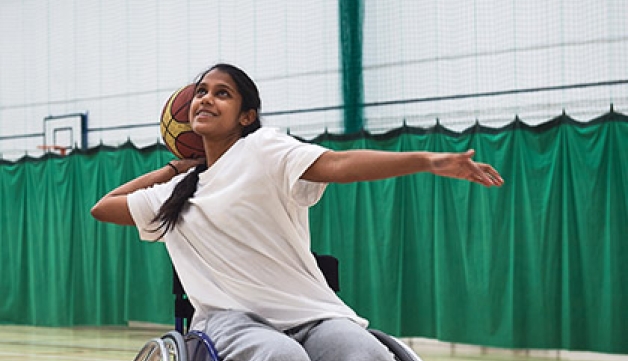
A blue banner is split into two - to the right, a girl on a wheelchair smiles and wears PE-style clothes and trainers, while on the left on the top there are three logos: Youth Sport Trust, Sports Direct and Under Armour's, followed by National Sport Week 2025, 16-22 June, always active and a series of four icons. From left to right a person on a wheel chair, a person jumping a rope, a person swimming and a person spreading legs and arms.

What is an Always Active Uniform?

The concept we're presenting is simple but transformative: a flexible, comfortable and durable school uniform that encourages movement throughout the school day.

It’s a small change with the potential for significant impact – helping children to be more physically active, more included, more focused and ready to learn.

Unlike traditional uniforms – often stiff, formal and impractical for physical activity – an Always Active Uniform is designed with movement in mind.

It supports children to be active in the spaces between lessons, during playtime, on the way to and from school, and throughout the wider curriculum.

It also removes the unnecessary friction of changing into PE kit, especially for younger children or those with additional needs.

The case for change

The need to help children move more has never been clearer.

According to Sport England’s latest Active Lives Children and Young People survey, only 47% of children in England meet the recommended daily activity levels.

At the same time, Youth Sport Trust’s own 2025 research with YouGov shows growing parental and teacher appetite for practical changes that make movement more accessible at school.

Our analysis shows that 74% of parents with children aged 4–11 and 67% of primary school teachers would support their children/students adopting an Always Active Uniform policy.

Plus, 63% of parents agree it would be beneficial for their child’s education and development.

The support is even greater among those most concerned about cost, inclusion and wellbeing.

And it’s not just about preference – it’s about impact.

Unlike traditional uniforms – often stiff, formal and impractical for physical activity – an Always Active Uniform is designed with movement in mind.

Research published by the University of Cambridge in 2024 found that traditional uniform policies can act as a barrier to physical activity, particularly for primary school-aged girls.

This is echoed in polling from the Active Uniform Alliance – a coalition we’re proud to co-found alongside OPAL, Play England, Play Scotland, the Centre for Young Lives and Learning through Landscapes.

Their findings reveal that:

  • 81% of the public believe being active during the school day improves children’s mood, focus and wellbeing.
  • 72% say an Always Active Uniform is more appropriate than a smart, office-style one.
  • 58% agree that skirts and dresses can discourage girls from participating in physical activity. 

The role of uniform in an active school day

One school already successfully trialling this approach is Dame Dorothy Primary School in Sunderland, with whom we've filmed a great case study.

Since introducing an Always Active Uniform, the school has experienced a significant rise in participation in sports and girls especially now feel more comfortable and able to use all the equipment.

The school headteacher, Iain Williamson, points out that school standards have not fallen. Instead, it's all about creating a generation of children who are healthy and well equipped on their journey to adulthood, with positive attitudes towards food and exercise that they will carry for the rest of their lives.

Parents are supportive of the idea, particularly those with children of sensory needs.

It’s interesting how clothing might seem secondary to education, but it has a profound influence on inclusion, identity and participation.

If we want to normalise 60 active minutes a day, we need to make movement a seamless part of school life – not a special event confined to a sports hall or a single PE lesson.

We also need to think about the children most at risk of missing out on physical activity: those with sensory needs (for whom formal school wear can be uncomfortable or distressing), girls who often feel less confident moving in traditional uniforms and families on low incomes, for whom buying separate PE kits and branded uniforms presents an additional barrier.

By removing the logistical and psychological obstacles to movement, an Always Active Uniform creates the conditions for children to move more, connect more and learn better.

Join the movement

This year we’re encouraging every school to use National School Sports Week as a moment to trial a new approach – whether that’s offering one day of active uniform as part of the week or consulting pupils and parents about what their school uniform could look like in future.

So let’s use this year’s campaign to imagine what’s possible when children are truly free to move.

Sign up now and join us in championing a future where every school day is an active one.

Make sure to follow National School Sports Week social activity by using #NSSW2025 on our social media platforms: X (formerly Twitter), LinkedInInstagram and/or Facebook.

Find out more and sign up

National School Sports Week

Taking the long view on volunteering

For many, the beginning of June is the unofficial start of the summer.

Holidays are on the horizon, Wimbledon and the Tour de France are getting closer and we get to celebrate volunteers in the best week of the year – Volunteers Week!

The latest data from our Active Lives Adult Survey Report shows that almost 10.5 million adults volunteered to support sport and physical activity across the 12-month period from mid-November 2023 to mid-November 2024.

This is an increase of 488,000 over the last 12 months and it shows a continued recovery of volunteering since the pandemic in 2020.

This huge contribution of people’s time, energy and skills in sport and physical activity is really something to celebrate, and everybody in Sport England wants to say a massive thank you to everyone who volunteers to keep the nation active. 

Volunteering not only enables participation opportunities for others, but it significantly boosts the wellbeing of volunteers themselves.

Our research into the social value of sport and physical activity demonstrated that adult volunteering in England is worth £8.2 billion annually in social value and these benefits to wellbeing are in addition to any value that comes from being physically active.

The present of volunteering

The recovery we’re seeing post-pandemic is positive and it demonstrates the resilience of sport volunteering, and that millions of people are still motivated to give their time.

However, there are also some more worrying trends that we need to take note of.

This huge contribution of people’s time, energy and skills in sport and physical activity is really something to celebrate and everybody in Sport England wants to say a massive thank you to everyone who volunteers to keep the nation active. 

Volunteering levels have been falling over the long-term and this was accelerated by the pandemic, plus we are yet to see volunteering return to pre-pandemic (November 2018-19) levels, as there are still 1.7m (4.8%) fewer volunteers compared to seven years ago (November 2016-17).

This decline is not unique to the sport and physical activity sector.

The Community Life Survey, which measures volunteering across sectors is also reporting that levels of formal volunteering have been in decline, suggesting that there are wider social and economic factors at play.

Our recent State of the Nation report points to some of the wider changes we’ve seen that provide interesting context for the data.  

There has also been little change in who volunteers.

Women, people with disabilities or a long-term health condition and those from lower socio-economic backgrounds continue to be underrepresented in volunteering, plus those with two or more characteristics of inequality are least likely to volunteer.

The data shows that, in many ways, volunteering mirrors the stubborn inequalities that we see in sport and physical activity participation.

As a result, community sports clubs and community groups continue to miss out on the valuable skills and experiences a more diverse volunteer base could bring.

It also means that the volunteers who help deliver sport and physical activity are not always representative of the communities they serve, which can pose challenges in staying relevant to the changing needs of diverse participants and communities.

Changing this is fundamental to creating a more inclusive and welcoming environment for everyone.  

Making a difference

A good starting point, and our focus in Uniting the Movement, is to focus on the volunteer experience; on changing culture and practices to enhance it, and on making it more inclusive and welcoming.

We recently commissioned Leeds Beckett University to complete an evidence and scoping review to understand the existing evidence and insights out there on the volunteer experience in sport and physical activity.

We’ll publish more details from this work as soon as we can, but it felt relevant here to share a snapshot of what the existing evidence tells us works to enhance the experience of volunteers, particularly those from underrepresented groups. These include:

  • supporting the development of feelings of connection to the purpose, values, work or people of the organisation
  • ensuring roles align with the individuals’ motivations to volunteer and that these roles are suited to their skills and experience
  • making sure volunteers feel able to manage role demands with their available personal resources and know where and how to access support
  • establishing an organisational culture that is welcoming, caring, safe and inclusive
  • creating environments volunteers feel seen, heard, known and valued throughout all stages of their volunteer journey
  • ensuring that organisations critically reflect on volunteer management, policies and practices
  • developing person-centred approaches that underpin the recruitment, development and retention of volunteers
  • providing a volunteer offer that is diversified and that's made easier through flexible, accessible and appealing roles
  • designing non-linear pathways to support the development and retention of volunteers and to address any skills gaps.

What about the future?

Imagine it’s 2035 and these principles and approaches have been embedded across sport and physical activity volunteering.

What changes would we see in the data about who volunteers?

Would there be an increase in volunteering with more people encouraged to give their time to support others to get active?

What we want is to see a future where volunteering in sport is uncomplicated, meaningful, well supported and easily integrated into people’s life.

And for this to be possible we need an inclusive, accessible, people-centric culture where volunteering is accessible and relevant to everyone.

We hope that, in the future, the volunteer workforce will reflect the diversity of the communities they serve, and that the experience of participants is richer and more positive within this inclusive environment.

I’m really looking forward to discussing and reflecting on these findings with our partners to understand how we might create these conditions in more of the clubs, groups and organisations to improve the experience of volunteers across the country.

In the meantime, I hope that this provides some inspiration for even small changes to help improve the experience of volunteers right now.

Find out more

Volunteer's Week

Levelling the playing field

It’s undeniable that the Lionesses’ recent triumphs and the professionalisation of the women’s game, the strong performance of the men’s team and the fact that the number of girls watching and playing football has doubled in recent years, has made the country proud.

We know that the scale of grassroots football in England means that the sport is well positioned to influence people and communities in tackling inequalities in sport and physical activity.

So because of all of these reasons, we thought that our case study with The Football Association (FA) would be a great way to close our series of blogs.

The FA is the National Governing Body for one of the country’s most popular sports and receives significant funding through Sport England’s system partner investment.

We know that the scale of grassroots football in England means that the sport is well positioned to influence people and communities in tackling inequalities in sport and physical activity.

This funding, while a small proportion of The FA’s overall turnover, drives initiatives aimed at tackling inequalities and increasing participation among under-represented groups.

What we've learnt from football 

There are different learnings we’ve achieved from these initiatives that are also contributing to Sport England's long-term strategy – Uniting the Movement

Efforts should be made to keep girls in the sport 

Recognising the common challenge of drop-off in girls’ sports participation during teenage years, The FA developed ‘Squad’– a programme that’s designed to be a fun, non-competitive initiative for girls aged 12-14.

This model, which could be replicated across other sports, prioritises enjoyment and social connection, and aims to retain girls in football while building their confidence and leadership skills.

In addition, they have developed a new talent ID programme called Discover My Talent, shifting the way they find and support talented footballers.

The FA’s learnings from this programme highlight that moving away from a traditional approach, focused on existing clubs and academies, enables them to identify potential "anywhere, anytime."

This approach aims to identify talented players across the country, within diverse groups and at any kind of football events and sessions to broadening opportunities across different communities, resulting in more diverse talent pathways for women and girls.

The FA reports that they are seeing positive results, with increased diversity in the top talent programmes.

Increasing opportunities for disabled players 

The FA is committed to growing para- and disability football and to closing the disability gap, partly through initiatives like ‘Comets’ – a recreational program for disabled children aged 5-11 that provides fun and accessible entry opportunities to the sport.

While aiming to expand Comets and the provision of disability football, The FA acknowledges challenges such as workforce training, confidence levels of local coaches to support disabled people and logistical barriers to attending sessions – like the time and financial costs of travel – for para-athletes.

In response, The FA are providing disability training and toolkits for clubs, called Journey to Inclusion, with the aim of proactively addressing these challenges.

The FA have identified potential for cross-sector collaboration and knowledge sharing with other system partners to continue to address these difficulties, as well as using football as a hook to engage disabled people and connect them with other sports.

Investing in the workforce to reflect the communities served

As many system partners have told us, local champions have an important role for creating local change.

Recognising the need for a diverse workforce to help diversify participation, The FA is actively working to increase the number of Black and Asian coaches in grassroots football.

And by targeting specific localities and offering more coaching opportunities, The FA aims to create a coaching landscape that reflects the communities it serves.

The role of local partnerships for building a stronger ecosystem

The FA is increasingly working locally, tailoring programmes to the unique needs of different communities.

Their experience is that partnerships with community groups and schools are key to reaching under-represented groups.

Ensuring safeguarding standards when partnering with non-accredited organisations is recognised as a challenge, so they are actively supporting community organisations in developing their safeguarding processes through training and qualifications.

Looking at what's to come

The new Learning Synthesis report based on the year two evaluation report will be published soon with more insights from the ongoing evaluation.

It will also include the collective contributions that partners are making to changing the sport and physical activity system.

We hope this series of blogs have been useful and if you have any comments or questions, we'd love to hear from you, so please get in touch.

Place support for children and young people’s activity levels

According to the results from Sport England's latest Active Lives Children and Young People Survey Report, more than half of all children and young people (52.2%) aged from five to 16 are not meeting the Chief Medical Officer’s guideline of taking part in an average of at least 60 minutes of sport or physical activity a day.

The results also show that significant inequalities remain in activity levels, with Black (42%) and Asian (43%) children and young people, and those from the least affluent families (45%), still less likely to play sport or be physically active than the average across all ethnicities and affluence groups.

The outcomes are, of course, concerning, not only for the current physical and mental health and wellbeing of our children and young people, but also for their future too – if people aren’t active when they are children, they are also less likely to be active as adults.

Starting young and local

However, seeing results like these, has led the APNO and Active Partnerships network – a group of 42 organisations who are immersed in their places and that work with local communities and local partners in different parts of the country to help everyone live a more active life – to underline their commitment to working with children and young people.

It’s why we’re more determined than ever to support this key group – especially those who face barriers to be active – and to help them develop a life-long love of sport, physical activity and movement.

This week, around 100 people from across the Active Partnerships network and Sport England will be coming together in Birmingham to explore how we can better support young people through our work in place, as evidence suggests that the place where a person is born and lives has a huge influence on how likely they are to be physically active.

According to the results from the latest Active Lives Children and Young People Survey Report, more than half of all children and young people (52.2%) aged from five to 16 are not meeting the Chief Medical Officer’s guideline of taking part in an average of at least 60 minutes of sport or physical activity a day.

Place work involves Active Partnerships, along with a multitude of partners, and it's supported by investment from Sport England to dig into the detail of the specific issues and challenges that are preventing people from being active in a particular area.

This kind of work also looks at the systems they are connected to (or influenced by) in the areas that they live, and to find how best to provide support and work together to try and find sustainable solutions.

We know this approach works thanks to existing Place Partnerships (previously known as local delivery pilots) like JU:MP in Bradford, which is funded by Sport England and is supported by the Yorkshire Sport Foundation.

Among other important cross-cutting themes that will be discussed and explored, the event in Birmingham will focus on how to embed positive experiences in sport and physical activity for children and young people, the role of active environments, youth justice and health, and how we continue embedding youth voice.

Supporting the future generations

Positive Experiences and Youth Voice are two interconnected approaches.

Youth Voice is about ensuring that young people get to choose how they move and it focuses on respecting their right to have their voices heard and acted upon.

Embedding youth voice is one of the key ways that we can keep making sure that children and young people have positive experiences, because when young people feel heard, they’re more likely to continue participating in sport and physical activity.

Youth Voice has been a particular focus of the Opening School Facilities (OSF) – a three-year programme where Active Partnerships and partners supported more than 330,000 children and young people (as well as nearly 120,000 community users) to take part in physical activity sessions in more than 1,600 schools across England.

In fact, one of our OSF consortium partners, Street Games, undertook a series of Youth Voice consultation sessions with students and this research helped to provide insight around the type of activities that young people want to take part in.

So, where else can Active Partnerships play a key role?

It was good to hear that the Government wants to create the happiest and healthiest generation of young people ever and movement, physical activity and sport can clearly play a crucial role in achieving this.

So, as well as continuing our work with partners in places across England, we’re also looking forward to finding out how we can play our part in achieving this mission, as we continue supporting all children and young people to live active lives.

You've viewed of items.