Skip to content

Taxonomy term

Content type

A call to keep pushing

International Women’s Day is a date that, contextually, makes me reflect on how far women’s sport has come.

From being excluded entirely to selling out stadiums and becoming Euro champions, women and girls have had to overcome barrier after barrier in the UK (and beyond).

There is so much to celebrate in that progress, yet we’re still a long way from a world where sport is genuinely accessible and inclusive for everyone, regardless of identity.

Recognising this inequality is what shifted the direction of my own life and it continues to be the driving force behind my commitment to creating change for others. 

'Give to Gain'

This year’s theme, 'Give to Gain', really resonates with me because it reflects much of my own experience.

A lot of my journey has involved giving time, energy and care to support women, girls, trans and non-binary people, often alongside my main role, without always knowing what that would lead to.

What I’ve gained in return has been confidence, perspective and a much clearer sense of why this work matters. 

Through my role as activities and opportunities officer at Leeds University Union, I’ve been involved in work linked to the Women’s+ Sports Participation Project.

This is a great initiative that focuses on understanding why women and marginalised genders engage, or don’t engage, in sport and what needs to change to support them better.

Giving time to this work has reinforced how important it is to listen properly in order to create welcoming environments and challenge assumptions about who sport is for.

A lot of my journey has involved giving time, energy and care to support women, girls, trans and non-binary people, often alongside my main role, without always knowing what that would lead to.

Seeing people feel more confident accessing sport and physical activity has been one of the most rewarding parts of what I do. 

Recently, I joined Sport England’s Co‑Design Group and took part in an introductory session.

While I’m still very new to the space, what stood out to me straight away was the emphasis on lived experience and learning from one another.

Women's leadership in our sector

Being in a room where people are encouraged to share honestly and where those experiences are treated as valuable, felt important.

At this stage, my role is very much about listening, learning and understanding how these spaces work, but even that feels meaningful.  

Alongside this, being part of Leading the Movement has helped me reflect on leadership and what it looks like for women in sport.

There are positive signs, for example, that more women are stepping into leadership positions and that progress deserves to be recognised.

But when you look more closely, the number of younger women in leadership roles is still relatively small and that gap matters because younger women bring different experiences, challenges and perspectives that aren’t always represented.  

This realisation has also made me think about how often society equates age with experience.

However, I’ve learned first‑hand that this isn’t true because passion can outweigh knowledge and when someone is genuinely committed to making change, they will learn with purpose.

So I want to challenge the assumption that leadership must come with age, because it overlooks the value, insight and drive that younger women bring.

The future of sport

That’s why I believe that creating space for that passion to be recognised is just as important as creating space for experience, which is what I feel Leading the Movement has really committed to. 

All of this reminds me that progress in women’s sport has never happened by accident.  

It has happened because people have been willing to give their time, their voice and their energy to push for something better.

All of this leads me to the conclussion that 'Give to Gain' isn’t just a theme, it's a necessity.

Because when we give space to people’s stories, we gain understanding. When we give opportunities to those who are overlooked, we gain stronger, more diverse leadership. And when we give our passion to a cause, we gain the possibility of real, lasting change. 

As we celebrate International Women’s Day, I feel hopeful about what comes next.

There is still a long way to go, but there is also a growing community of people of all ages, identities and experiences who are determined to reshape what sport can be.

I want to be part of that movement not just to open doors for others, but by challenging the assumptions that keep those doors closed in the first place.

If we continue to listen, to learn and to lead with purpose, then the future of sport will not only be more equal, but also more representative of everyone it’s meant to serve. 

Belonging, representation and change

This September marks another year that the UK officially honours East and Southeast Asian (ESEA) Heritage Month – a time to celebrate the rich cultural histories, achievements and resilience of our communities.

For me, though, it is more than a celebration – it’s a mirror, reminding me of where I started and why I continue to fight for change.

My journey began in the shadows of homelessness as a young person, feeling invisible and excluded from the very spaces where I longed to be.

At the same time I was training as a competitive bodybuilder and athlete, but I never saw anyone like me: a Southeast Asian LGBTQ athlete. Someone who shared my identity.

That absence cut deep and left me questioning whether sport had a place for me at all.

But that void became my spark, igniting the fire that drives me today as an athlete, an advocate, a keynote speaker and a global ambassador.

The power of heritage and representation

ESEA Heritage Month in the UK began in 2013 as a grassroots initiative led by passionate community advocates determined to give our stories space in the national conversation.

Today, it has grown into a powerful celebration of pride, resilience and belonging, because while sport has the power to unite and uplift, it can just as easily reinforce barriers and stereotypes.

Representation for East and Southeast Asian athletes in the UK remains scarce and with invisibility comes potential for damaging assumptions about who belongs in sport.

That is why this month is not only about honouring our culture but also about opening doors for others to step through.

Driving change with the Asian Sports Foundation

This is also why organisations like the Asian Sports Foundation (ASF) are so vital.

ASF works to tackle health inequalities and underrepresentation in sport, breaking down cultural, social and structural barriers that can hold Asian communities back.

Their approach is rooted in authenticity, education and respect, because we are not one homogenous group.

Instead we all acknowledge the rich diversity and recognise that no one story is the same.
 

East and Southeast Heritage Month in the UK began in 2013 as a grassroots initiative led by passionate community advocates determined to give our stories space in the national conversation.

Through campaigning, supporting grassroots delivery and strategic influence, ASF empowers communities to live healthier, more active and more connected lives.

From improving wellbeing to shaping sports programmes, ASF proves that sport is more than competition – it’s a catalyst for equity, resilience and social change.

My journey to advocacy

In 2024, I was deeply honoured to become a Southeast Asian athlete ambassador for ASF.

For me, this role is not about titles but about the responsibility it brings with it.

It is also about creating pathways where none existed before, amplifying voices that deserve to be heard and showing young athletes that representation is not symbolic, but transformational.

My journey has taken me from homelessness and the lonely days of training as a young bodybuilder – feeling invisible and excluded – to becoming one of the most recognised global LGBTQ sports advocates in the world.

Today, I am proud to be the only Asian LGBTQ athlete in history to hold ten international sports ambassador roles.

I have also been honoured by over 30 international organisations, served as the first Asian athlete ambassador for Pride House at the Paris 2024 Olympic Games and the Commonwealth Games in Birmingham, Athlete Ally and Stonewall

My global advocacy has been recognised by the State of Georgia for my community service and the non-profit LGBTQ advocacy organisation GLAAD, and I have had the privilege of advising governments, Fortune 500 companies, sports federations and even the White House on inclusion and diversity. 

And yet, at the heart of all these milestones, remains that young athlete who once looked in the mirror and felt unseen.

It is for them – and for all who still feel excluded – that I continue this work.

A call to action

Being an ally to East and Southeast Asian athletes begins with recognition.

It means listening to their voices, challenging stereotypes, amplifying our stories and supporting organisations like ASF.

But above all it means showing up not just in September, but every single day.

This Heritage Month, I ask you to celebrate and share stories with us and to go beyond!

Make a commitment to change and stand with us not just in words but in action through listening to our shared stories, learning histories and championing athletes to bring them out beyond the sidelines.

Imagine a sporting world where every child, including every Asian boy and girl, can step onto the field, the track or the pitch and see themselves not as outsiders, but as leaders, champions and changemakers.

That world is possible if we build it together.

Sport is more than competition. It is what unites us and what can build belonging, joy and community.

This ESEA Heritage Month, let’s commit to making sport a place where every athlete belongs.
 

Beyond the logo

Pride Month is an annual celebration of all identities that fall under the LGBTQ+ umbrella. It is about self-love, celebration of achievements, education, protest and allyship.

It’s important to remember that Pride’s history is steeped in rebellion against a society that did not accept a group of people, tried to limit their participation in society and to take away their right to be themselves.

Police raids on gay bars at the time were routine, but this time in June 1969 the police lost control of the situation and the Stonewall patrons fought back, with the action lasting several nights.

Although the Stonewall Riots were not the first incident in which the LGBTQ+ community had fought back against the police, they are still widely viewed as a pivotal point in the LGBTQ+ rights movement.

The first Pride march was the Christopher Street Liberation Day March in 1970 to commemorate the Stonewall uprising the year before.

Pride Month is an annual celebration of all identities that fall under the LGBTQ+ umbrella. It is about self-love, celebration of achievements, education, protest and allyship.

This year at Pride many people will be advocating for trans inclusion, particularly as we’ve seen hate crimes against trans people increase significantly in recent years.

In England and Wales, police recorded 858 transphobic hate crimes in 2015/2016, rising to 4,780 in 2023/2024. However, Government data shows that up to 90% of hate crimes against the communities go unreported.

Also, the proportion of people who characterise themselves as “not at all prejudiced” against trans people has fallen from 82% to 64% since 2019 in the UK.

Physical activity in the LGBTQ+ community

Research conducted by the National LGBT Partnership looks at participation in physical activity and highlights its impact on people's health. It shows that:

  • compared to 45% of women in the heterosexual population, 56% of LGBT women were not active enough to maintain good health
  • the same statistic for men was 55% of LGBT men compared to 33% of heterosexual men
  • 64% of LGBT+ people who identified as something other than male or female (e.g. genderfluid or genderqueer) were not active enough to maintain good health.

Dr Abby Barras’ research from March 2023 shows the impact sport can have on young trans individuals with 69% of young trans people saying that taking part in sport has improved their mental health, while 63% say that being excluded from sport has made their mental health worse and 41% say it’s made their physical health worse.

Everybody should have the right to physical activity

The need for Pride is as strong as it ever has been and the need for accessible and inclusive sporting environments is now more crucial than ever for the LGBTQ+ community.

To create LGBTQ+ inclusive physical activity environments, you must ensure the following:

  • take a zero-tolerance approach to homophobia, biphobia, transphobia etc. and challenge any incidents, myths or stereotypes
  • respect privacy and confidentiality, and adhere to data protection rules so that individuals feel safe
  • work with the LGBTQ+ community to understand their needs and co-collaborate so there’s a sense of ‘doing with’ rather than ‘doing to’
  • consider language, which includes challenging bias and microaggressions, and using individuals' correct names and affirmed pronouns
  • always consider the impact of your actions/programmes on the LGBTQ+ community. Collaborating with people from within the community will help you to be inclusive of all genders and sexual orientations.

Taking action this Pride (and beyond)

Changing logos to rainbow flags may look great but is not enough.

Instead, aim to listen to LGBTQ+ communities both externally and within your organisations, ensure your policies, procedures and guidance are LGBTQ+ inclusive, consider delivering training sessions which support LGBTQ+ inclusion, check in with colleagues and partners, and show allyship.  

And last, but not least, remember to celebrate success and happiness and to find positive moments, especially when times are tough.

Creating inclusive spaces in tennis

Sport has the power to transform lives.

It can offer a unique space where you can step onto the court, shut off from the noise of the world and bring your true self to the game without fear of judgment. 

As the great Billie Jean King – a true tennis legend – once said, "Don't let anyone define you. You define yourself."

Tennis has long been a pioneer in gender and LGBTQ+ inclusion, with trailblazing icons like King and Martina Navratilova paving the way for more LGBTQ+ athletes to participate authentically, and while challenges remain, I’m optimistic that there's a promising future on the horizon.

The LTA's commitment to inclusion

Pride month, celebrated in June, honours the LGBTQ+ community and commemorates the Stonewall Riots of 1969, a pivotal event in the fight for LGBTQ+ rights.

Nowadays, we use this opportunity to recognise the struggles and achievements of LGBTQ+ individuals, promote inclusion and advocate for equality.

A shot of a grass-court tennis match at the Lexus Surbiton Trophy, with the umpire's chair decorated in the colours of the Pride rainbow

Having worked in tennis for 12 years in various equality, diversity and inclusion (EDI) roles, I've recently taken up the position of the LTA’s EDI strategy manager. 

My role involves leading tactical projects to improve our culture and to engage with underrepresented groups across tennis in Britain, with a key focus of my work in engaging with LGBTQ+ communities.

In 2021, the LTA launched its first Inclusion Strategy, placing inclusion at the core of its vision of ‘Tennis Opened Up’ and building a culture of everyday inclusion.

We wanted to be bold and ambitious, showing that tennis can be relevant, accessible, welcoming, enjoyable and inspiring for all.

Listening to and learning from underrepresented communities

Our journey began by listening to and learning from our underrepresented communities. 

This led me to meet Ian Pearson-Brown – a player, coach, volunteer, and tennis enthusiast from the North East.

Ian was particularly interested in setting up a new LGBTQ+ tennis network, inspired by a similar initiative he had launched with Newcastle United Football Club.

With many connections and friendships within the LGBTQ+ tennis community, Ian felt the time was right – and so did we.

Ian Pearson speaks into a microphone on a lectern at an event

We hosted the launch of his new network, aptly named Pride in Tennis, at the National Tennis Centre during LGBT+ History Month in 2022. 

Partners such as Pride Sports, Sports Media LGBT+, Sky Sports, and Sport England supported the launch, engaging in meaningful conversations with our tennis community. 

The event was a roaring success and served as a launch pad for great things to come.

Building visibility and awareness

In summer 2022, our team and Pride in Tennis discussed key objectives and outcomes we wanted to achieve together. 

While other Grand Slam nations like Australia and the USA explored the possibility of hosting ‘Pride Days’ at their events, we approached the idea cautiously, ensuring our narrative was strong and genuine.

Once we solidified our position and plans to avoid ‘rainbow washing’, we launched a new LGBTQ+ awareness initiative called ‘Friday Pride Days’. 

These days, featured during the grass court season, act as triggers for deeper conversations while the world watches British tennis.

During these events, we continuously highlight powerful stories from the LGBTQ+ community, showcasing their achievements and challenges in society and tennis.

Pride in Tennis members pose for a photo in front of a colourful marquee at a tournament in Eastbourne

"We want to be bold and ambitious, showing that tennis can be relevant, accessible, welcoming, enjoyable and inspiring for all.

"Our commitment to building year-round engagement for LGBTQ+ communities with the tennis world ensures that tennis can be truly open to everyone, regardless of anyone’s sexuality or gender identity."

– Dave Hardman, EDI strategy manager, LTA

Expanding our reach

We enlisted the support of Leap Sport Scotland during the Davis Cup (men’s world cup) and Billie Jean King Cup (women’s world cup) finals to develop new LGBTQ+ tennis opportunities in Glasgow and neighbouring cities.

This collaboration led to additional workforce opportunities where a project team co-designed a new training module for Tennis County Associations, venues and workforce – ‘Rally Allies’.

In 2023, we piloted this programme with 50 individuals representing different stakeholders in tennis who received Rally Allies training.

Since that pilot, Pride in Tennis has received further investment from the LTA Tennis Foundation to scale up the training, reaching more workforce and venues to provide inclusive and LGBTQ+ specific tennis opportunities.

One of the many benefits of participants attending the training has been that those trainees now have strong ties with Pride in Tennis and our LTA EDI team who receive regular support and advice, with some even serving on the LTA’s Inclusion, Diversity, Equity, and Accessibility (IDEA) group.

Members of the LTA and Pride in Tennis pose for a photo

Looking ahead: 2024 and beyond

Fast forward to 2024, and Pride in Tennis has a presence at each grass-court event, promoting their work and highlighting the success of our collaboration. 

If you attend our events this June, especially on a Friday, we would love for you to show your support by splashing the stands with rainbow colours and demonstrating your allyship. 

Why not even swing by the LTA Tennis Foundation and say hello to the team!?

Our commitment to building year-round engagement for LGBTQ+ communities with the tennis world ensures that tennis can be truly open to everyone, regardless of anyone’s sexuality or gender identity.

We will be continuing to strive for a culture of inclusion, showing that tennis is a sport where everyone can belong. You can find me on LinkedIn if you want to connect.

We’re here, we’re queer. Can we play?

Every year, across the globe, LGBTQ+ communities and allies unite in June to mark Pride.

Whilst the celebration was created to commemorate the Stonewall riots in the early hours of 28 June 1969, Pride now spans June to September with cities, towns and whole countries celebrating their queer communities across the summer. 

Reflecting on Martha P. Johnston, who is widely remembered as the person who started the Pride movement, her wise words come to mind – “the more self-esteem you have, the more power you have” – and the profound impact sports and physical activity have had on my self esteem.

As a plus-sized, disabled, bisexual, non-binary, clumsy person growing up, I hated PE.

Existing as a self-conscious teenager was exhausting. Even writing that list of descriptors was exhausting!

I didn’t see myself in any sports role models and I wanted to hide. This went on until I was 22 years old.

I’d been diagnosed with a variety of health issues and felt that physical activity wasn’t something I deserved without a healthy dose of self-deprecation.

I was also intensely jealous of my friends, especially my brother and best friend as both of them played rugby – my favourite sport.

And then, my local team posted in a Facebook group about an open session to come and try rugby.
 

Reflecting on Martha P. Johnston, her wise words come to mind – "the more self-esteem you have, the more power you have” – and the profound impact sports and physical activity have had on my self-esteem.

Reader, I did it!

I picked up my bright pink running trainers, slapped a big fake smile on and went down to the local rugby pitch on a cold Thursday night.

It was the best night ever.

On that pitch I found myself surrounded by powerful women. A lot of them queer, no two bodies the same and other non-binary players.

I was assigned female at birth and don’t take any hormones, so “women's” sport made the most sense as a space for me, a space in which I was also welcomed.

The many benefits of physical activity 

Rugby and other physical activities since have been fantastic for my wellbeing, physical and mental.

Being surrounded by people who want to play brought me back a sense of joy and fun.

I had a social circle, time outside and space to get out of my head and learn how to connect with my body in a new way.

Sport saved me from a negative cycle of hurt and inactivity and it’s no surprise this happened.

Research has repeatedly shown the positive impacts of physical activity on our wellbeing, both physical and mental.

Specific research on group activity for LGBTQ+ people was conducted a few years ago by the University of Glasgow and published in the British Journal of Nursing and the conclusions were overwhelming.

Exercising with peers represents a healthier way to meet people and has a transformative impact on all aspects of LGBTQ+ people’s health.

With mental health issues so prevalent amongst the LGBTQ+ community (half of LGBTIQ+ people had experienced depression and three in five had experienced anxiety), we must create as many opportunities as possible for LGBTQ+ to engage in physical activity.

Whatever that looks like for you, the benefits are obvious for everybody.

For me, just being able to exist in my body without judgement and meet other queer people, without it being because of our queerness, has been life-changing. And I’m not just saying that.

So, this Pride month, I invite you to reflect on what you will say the next time someone comes to you and says, “I’m here, I’m queer. Can I play?”
 

Let’s jam! Designing to reduce inequality

What can a team of strangers achieve in 11 hours?

Every year the Innovation Unit partners with the Royal College of Art to host a ‘service design jam’ to address a different pressing social challenge.

This year we sponsored the jam and provided the brief for the session to explore new and novel ways to ensure that disabled people from a diverse range of backgrounds can be more active.

OK… but what exactly is a service design jam, I can hear you ask.

A service design jam is a two-day, high-paced, high-energy design sprint, where participants split into teams to design a service that addresses a real-world problem.

The aim is to apply user-centred design methods to complex systems, creating practical and innovative services or products to improve user experiences.

A group of women seat around a table on their computers discussing ideas to reduce inequality.

At the end of the second day ideas are presented to a panel and prizes are awarded to the winning design.

It is a great platform for collaborative problem-solving, a chance to develop new solutions and a way to grow design capabilities.

What was the brief?

Through Uniting the Movement we are committed to focussing our investment and energy on the people and communities who face the biggest barriers to being active.

We know that disabled people experience some of the biggest challenges and the more characteristics related to inequality a person has, the less likely they are to be active.

So we asked teams to choose between two disabled communities to focus on either disabled young people from culturally diverse communities or LGBTQ+ disabled adults.

The process

We introduced our brief and then teams were formed. The groups included Sport England staff, partners and students from the Innovation Unit Design Academy and Royal College of Art’s service design course.

Teams followed the double diamond structure – discover, define, develop and deliver.

Through Uniting the Movement we are committed to focussing our investment and energy on the people and communities who face the biggest barriers to being active.

Day one was about ensuring teams ‘design the right thing’ through the proper research and framing of the challenge.

Teams conducted desktop research and interviews with their target audience and users were placed at the front and centre of the design process.

Specialists from partner organisations Disability Rights UK, Mermaids, Activity Alliance, Street Games, Sport England colleagues and individuals with lived experience provided support, guidance and feedback to the teams (either online or in person).

Teams also took to the streets of London to speak to members of the public: from faith leaders at local mosques, to parents waiting for the school pick-up or at the park.

Day two was all about ensuring teams designed ‘the thing right’, generating ideas and creating prototypes to put the stakeholders to test, learn and adapt.

One team spoke to two PE teachers who were so impressed with the concept, they asked for it to be pitched to their headteacher!

Theories of change, user journeys and pitches were created ready to wow the judging panel.

The ideas

The jam culminated in presentations from all six teams hoping to hit the criteria the judges were looking for: beauty, brains, heart, magic, mastery and bravery; plus Sport England’s values of being innovative, collaborative, inclusive and ambitious.

A whole range of tools including Lego, Canva documents and even pipe cleaners were used to bring ideas to life, always with the user in mind.

Reflections

It is hard to capture the energy, creativity and power of design-thinking that I witnessed over the two days, but my biggest takeaways are:

  • Collaboration is key. It was brilliant to see the dynamics of the teams, with students working alongside professionals and service design experts, as well as individuals new to the subject, and all bringing a diverse range of lived experiences. It was this variety of backgrounds, working collaboratively on a shared brief, that created truly innovative magic.
  • The power of partnerships. The insights that teams gathered from our partners, in person and online, made a huge difference to really grounding the concepts to build upon.
  • The importance of freedom. From live user research, ideation, testing prototypes and forming presentations, it was truly remarkable what the teams achieved in just two days to tackle such complex system challenges when seeing barriers to innovation disappear.

What’s next?

These are truly exciting times!

We will be sharing more information and some of the brilliant ideas and concepts that came from the jam over the next few months, so keep an eye on our channels.

Thank you to all our partners and those who joined our efforts during the jam.

If you want to keep learning about innovation, we’d love to hear from you.

Why being counted, counts

Across the world, the summer months see lesbian, gay, bisexual, queer, trans, and non-binary people (and a whole host of others across the attraction and gender spectrums) observe that multi-faceted and incredible thing we call ‘Pride’.

‘Pride’ means something different to each of us.

The meaning can vary based on when and where we grew up, who (and how) we love, or how we might understand our gender.

Despite these variables, there’s usually some agreement that it’s a time to unashamedly acknowledge and celebrate our LGBTQ+ selves, regardless of whether you consider Pride to be a party or a protest.

Yet, being an LGBTQ+ person is becoming increasingly difficult.

In 2014, the United Kingdom was considered the number one place to be an LGBTQ+ person in Europe, out of some 49 countries included on the International Lesbian, Gay, Bisexual, Trans and Intersex Association (ILGA)’s annual Rainbow Map.

But in less than 10 years, the UK has plummeted to 17th place, as Malta now takes the top spot, closely followed by Denmark and Spain. 

But what has Pride got to do with sport? 

You are probably reading this because you have more than a passing interest in sport. You may even follow or play a sport (or two, or three) yourself.  

You might even describe yourself as a ‘sport-lover’ or a ‘superfan’ but even if your interest is purely professional, you’ll likely have heard the phrase ‘the power of sport’ before today.  

Globally, our sector loves to profess the amazing potential of the ‘power of sport’ to change and improve so many things in our lives.  

If you enter the phrase into an online search engine you’ll be told, relatively quickly, that sport has the power to change the world for the better.   

If that potential can be even partially realised, we share a collective responsibility to ensure that none of our LGBTQ+ siblings are left behind.
 

Globally, our sector loves to profess the amazing potential of the ‘power of sport’ to change and improve so many things in our lives.

That’s why we value the work of purposefully inclusive sports national governing bodies (NGBs) like Baseball Softball UK and why campaigns like This Girl Can shine a spotlight on non-binary people’s inclusion.

It’s also the reason that we’ve recently been sharing other grassroots examples of LGBTQ+ sport groups showcasing support within the community in cycling, allyship in football and diversity in rugby. All of these pieces, plus this one today, demonstrate the importance of inclusivity.  

LGBTQ+ inclusion in sport 

These are great and very welcome successes, but being included in sport isn’t just about the amount of time your wheels spent on the road or the total number of minutes you spent holding a bat.  

It’s about being included in the knowledge and insights that inform the sector, being fairly and rightly included within the policies that shape the sports we love, and it’s about having a seat in the boardrooms that define how our sports councils, NGBs and clubs operate. 

But if that is our working definition of LGBTQ+ inclusion, there is considerable room for improvement.

Yet being counted (and being seen to be counted) is an important step and it’s why I’m pleased that this year, for the first time, our Active Lives data includes lesbian, gay and bisexual people in it’s headline report.  

And it’s also why I’m excited to be collaborating with Sport England colleagues on making trans/non-binary people’s experiences more visible in our insight moving forwards. 

LGBTQ+ inclusion involves taking deliberate steps

Yet, having data that’s inclusive of LGBTQ+ people can only be an effective tool for advocacy if you choose to use it as such.

No doubt you’ll be aware that this week the Independent Commission for Equity in Cricket published a damning report into the experience of people from various minority backgrounds across all levels of the game.

The results are stark - among others, 68% of women, 87% of South Asian people, 75% of black people, 70% of disabled people and 73% of LGBTQ+ people reported experiences of discrimination in cricket in the last five years.

As a result, the commission has rightly made several recommendations on how the sport might seek to redress the ingrained racism, misogyny and elitism that is so clearly commonplace.

However, the numerous recommendations (p.275) make no explicit mention of the need for cricket to proactively address its problems relating to homophobia, biphobia or transphobia - nor the ingrained ableism that disabled people reported - despite nearly three-quarters of LGBTQ+ people experiencing discrimination.

In a report that is over 300 pages in length, the word ‘homophobia’ appeared only four times, compared to 206 mentions of racism.

Moving forward together and with pride

This isn’t a blog professing that discrimination against LGBTQ+ people trumps other forms of oppression - unlike a number of areas in sport, this isn’t a competition.

It’s a recognition that a sport sector that is only inclusive of some groups, isn’t inclusive at all.

Every day, LGBTQ+ people take risks by being visibly themselves in a society that would rather we didn’t exist.

When people stand up to be counted, we owe it to them to acknowledge and include them in whatever comes next.

By doing so, we might stand a chance of harnessing the power of sport in a way could benefits us all, without exception.

Hope you’ve had a happy Pride and here’s to next year's.
 

Zero tolerance for hate

I belong to a pioneeing rugby club that exists to break down barriers to LGBT+ participation and create a safe and welcoming environment for all.

Established in 1999, Manchester Village Spartans RUFC has evolved into a thriving community that welcomes all adults, regardless of gender identity, sexuality, rugby ability or experience. 

Having been a Spartan for over a decade myself, I’ve personally experienced the profound impact the club has on the lives of young LGBT+ players, many of whom had never even touched a rugby ball in their lives before joining.

Our mission has always been to provide a space where everyone can participate and enjoy learning and playing rugby, whatever background they may come from - breaking down stereotypes and embracing the core values of rugby union in a safe space with zero tolerance for hate. 
 

Manchester Village Spartans RUFC is a pioneeing rugby club that exists to break down barriers to LGBT+ participation and create a safe and welcoming environment for all.

Creating an environment where everyone can play the game they love, free from discrimination and prejudice, shouldn’t feel like rocket science. 

It impacts positively on lives well beyond the field, influencing the players and the broader community for the better. 

Sports clubs have the remarkable ability to create safe spaces where individuals can truly be themselves - and when it comes to LGBT+ individuals, this safe space is often particularly important.

It really shouldn’t be hard for a club to want to, or be able to, develop a supportive environment where players can express their true identities without fear of judgment or exclusion.

We provide a path to a healthier lifestyle for individuals who may not have considered team sports before.

Through comprehensive training sessions and regular competitive matches - including within our local rugby union league - we promote physical wellbeing and mental resilience.

Players become united by a shared love for the game and improving at a sport many may have felt they shouldn’t play ‘because they’re gay’. 

Inclusive rugby challenges stereotypes and breaks them down.

We challenge preconceived notions about who can participate and excel in the game and through our actions, we aim to inspire others and reshape perceptions.

By raising awareness, sharing our stories, and engaging with the wider public, we can challenge discrimination. 

Village Spartans Rugby Club players relax during a session in the park

The joke is that it wasn’t that long ago clubs would expect us to turn up to matches in stilletos and drag, but today no-one bats a proverbial eyelid when they play against us.

By getting out there, by simply ‘coming out to play’ this brilliant sport, we’ve somehow managed to change things. 

If a bunch of everyday, grassroots union and touch players can achieve this, then anyone can really!

Almost 25 years on since our first pioneering squad gathered together on Canal Street in Manchester to ‘Give Rugby a Try’, and as the world’s second oldest gay and inclusive rugby club, we’re as comitted today in our quest to lower the barriers to play for everyone as we were back then. 

We’re here to help organisations establish policies and initiatives that can foster an environment, indeed a society, of acceptance that celebrates diversity and gives everyone a chance to learn the values of sportsmanship, enjoyment, teamwork, discipline and respect.

We’ll continue to help grow the sport by getting out there –  going to Pride marches, helping to set up new clubs that we can play against in the Inclusive Gay Rugby UK League, and raising awareness and building social cohesion between people of different backgrounds, sexualities and gender-identities. 

As one of our players said to me recently, joining the Spartans felt like receiving a big welcoming hug that he didn’t even realise he needed and that stopped him feeling lost. 

If we can continue to do that for people, then we’re winning before we’ve even stepped foot on the field. 

Rugby, after all, and like all sports, really should be for all.
 

Football for everyone – our motto and salvation

I think it’s fair to say that these days you can’t count the number of LGBTQ+ sports clubs in London - there are so many!

Which is obviously great news, don’t get me wrong. While years ago Stonewall in North London stood alone, in 2023 every corner of the capital has representation as gay-friendly football flourishes. 

But there is one with a subtle and important difference in the south west of the city.

Pass the £7-a-pint pubs and Gail’s bakery, with their malted grain sandwich loafs to die for, and you’ll find Barnes Stormers FC

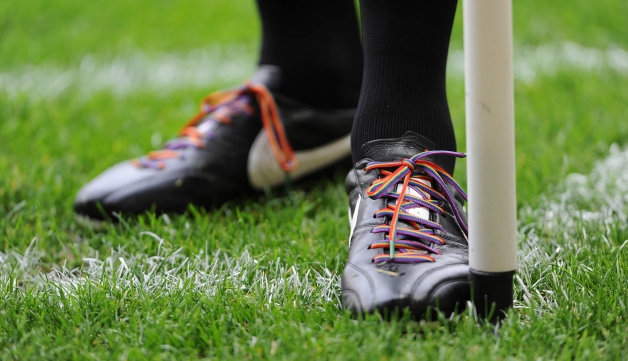
While you’ll see rainbow laces on boots everywhere you look, you won’t actually find more than a handful of gay players at a time. That’s because the club’s reach is a little different from the rest.

Allyship has always been the buzzword since Tom Jackson, our current club chairman, decided to pop along to play football with a bunch of lads in Raynes Park more than a decade ago.

Then after the game, while sharing some pints at the pub, found out that he had loads in common with many of those he had just met.
 

While you’ll see rainbow laces on boots everywhere you look, you won’t actually find more than a handful of gay players at a time. That’s because the club’s reach is a little different from the rest.

Welcomed in by the group and impressed by the team spirit, and their inclusive mantra to create a really fun football session, he kept coming back - and close friendships quickly formed with those players.

It was only later that Tom learnt of the LGBT+ roots of club and the foundation below their inclusive mantra.

But months later, the group was struggling to get enough players and some of the old guard were starting to drift away.

We all know what sport is like once your regulars get bogged down in adult life, and with a number of people hitting their bone-aching mid-30s a decision was made.

Tom put his hand up to keep things going - recruitment and progress becoming key elements of his strategy with Tom forging new partnerships across the LGBT+ community, including websites, charities such as Out For Sport and other LGBT+ clubs.

Bitten by the bug of that side of the beautiful game, things soon spiralled and months later some much better pitches opened up a couple of miles away.

A rebrand was needed to attract new members, so the group known purely as ‘Fives’ became the Barnes Stormers FC - and within a few years, it was also elevens! 

Before long, Barnes Stormers soon had not just a name, but a badge incorporating a bull on the club's crest (testament to our determination to stay afloat), a home ground and a real identity enabling us to give playing opportunities to many budding footballers who had been struggling to find them so far.

Team members of the Barnes Stormers FC pose together for a team picture on an outdoors football pitch.

This safe space gave members of the LGBT+ community opportunities to be themselves whilst playing football in West London and to do so in a competitive, predominantly straight league championship (as opposed to the popular LGBT+ football competitions), knowing they were playing with friends and allies.

But they also had something else that defined the mission for which we stood for on and off the pitch - our firm motto: 'football for everyone'. 

Welcoming players of all ages, sexuality, race, religion, creed and ability, soon there was not only five-a-side but a Sunday team too, with seven-a-side games also finding their way onto the schedule! 

Needless to say, a few years on, nine-a-side was also thrown in for good measure.

The team in the Southern Sunday Football League was competing and it wasn’t too long before a new side was sculpted together and players from all over London were being attracted. 

Remaining a fierce ally of the gay community continues to be at the heart of our club.

Critically, the social side still remains as strong as it was right at the start, because working closely and building friendships with clubs such as London Titans, Stonewall, Soho and Charlton Invicta is very important for us.

So I can say that we, Barnes Stormers, are eager and happy to be present at all the events - even when falling just short at some tournaments! 

Those at the club continue to keep in touch with the originals and, as one of them, it’s fair to say I would have surely waved goodbye to my mid-week fix of football without Tom taking the bull by the horns. 

Having myself been in the hot-seat of a club for a number of years, the task usually seems thankless with non-stop emails to respond to and no shortage of players who need to be picked up. Then there’s the chasing of money, begging for sponsorship, washing the kit... the list goes on.

And with Tom marrying girlfriend Charlotte next year, we’re about to see if he’s got staying power! 

But with the football club growing year-by-year, it’s clear that things are only just getting started and we’re tremendously happy and proud to be a part of the game.

Find out more

Barnes Stormers FC

Being there for each other in 'the new scene'

Out Velo is an inclusive LGBTQ+ led road cycling club, with a passion for Britain's wild spaces. But although we are LGBTQ+ led, we're open to those who don't identify as LGBTQ+ to join us and enjoy our adventures. 

We run weekends and day rides right across the UK, often in our National Parks and Areas of Outstanding Natural Beauty. We also organise trips abroad and meet in the online interactive training programme Zwift.

We're run by a group of experienced Ride Captains from across the UK's LGBTQ+ cycling clubs, who we work closely with, and we aim to bring everyone together for cycling adventures across all nations and regions of the UK, so that no-one is left out.

Why set up an LGBTQ+ cycling club? 

LGBTQ+ sport is really important, as people from this collective still face many challenges, with studies from the NHS and mental health charity Mind showing they are much more likely to struggle with mental health.

We aim to bring everyone together for cycling adventures across all nations and regions of the UK, so that no-one is left out.

Stonewall, a charity striving for equity, freedom and opportunities of the LGBTQ+ collective, published a report in 2018 with crude statistics including: “Half of LGBT people (52 per cent) experienced depression in the last year (2017)” and Sport England published a report on sport and physical activity participation by the community in 2016, highlighting challenges and inequalities for the collective.

But we are working to change that narrative.

The community support that was historically offered on the 'scene' in our big cities is now mostly found in LGBTQ+ sport and social clubs and we think there will always be a place for these, creating a space where people can relate to each other in a non-sexualised context beyond the apps and bars. 

The conversations at our events are noticeably different to those in a traditional cycling club, too.

A group of men on bikes and wearing helmets, gloves and other cycling gear cycle up a hill.

People talk about their relationships, work and other aspects of life in an open and inclusive environment, sharing what's not often shared and we talk openly about mental health and difficult life decisions.

This has become part of our culture in Out Velo, but it has always been present in our community. 

Of course we also talk about cycling, but we focus more on what bucket list adventures we're planning next than kit, power or pace.

This creates an environment that's especially welcoming for women, trans and non-binary cyclists. 

Why Out Velo?

As a team, we founded Out Velo in 2022, having known each other for over 10 years as part of various organisations including OutdoorLads, Pride Out, the Gay Outdoor Club and Cycle Out. We're run by a steering group of eight people, all used to running successful adventures in our wild spaces.  

In the UK, there has never been a dedicated LGBTQ+ road cycling club outside of London - something our community has been talking about changing for years!

With the growth in cycling as a sport, the availability of free and simple club management apps like Spond and Heylo, and the success of new clubs like the fantastic LDN Riders, we knew the time to launch had finally come.

Personally, Out Velo offers me a great way to enjoy bucket list cycling adventures with friends, having been on some amazing trips including the French Alps, the Dolomites and Stelvio Pass, the Scottish climb of Bealach na Ba and our regular pilgrimages to the Yorkshire Dales.

This has become a really important part of my life and the mental and physical health benefits have been incredible, plus I've also made an amazing network of friends all around the UK and abroad.

It really has been great in many different ways!

Geographic inclusivity

In LGBTQ+ cycling, our historic challenge has been a focus only on London.

This is despite other LGBTQ+ sports having a national network of independent but cohesively branded clubs, for example Frontrunners in running.

We hope that in time, Out Velo can act as a bridge and an informal network, helping others to grow and to seed independent local clubs in all our cities and regions.

To make this happen we aim to work closely with the other clubs that are out there, and it helps that most of our members are part of one or more of them. 

Going forward, recognising we're all part of one interconnected national community and putting that community first will be essential to the growth of LGBTQ+ cycling.

At the same time, digital changes have made it easier than ever to set up cycling clubs and sports clubs in general - and pick and choose events - so it's critical to embrace this more network-based approach to sports organising.

This will allow us to reach more people and more places, and be stronger together, as well as helping us in our quest to grow a national network of clubs.

The wider sport of cycling, and LGBTQ+ sport in general, is changing and growing and we are excited about the future! 
 

Find out more

Out Velo

Building our LGBTQ+ action plan

Last month, we published our latest Active Lives Adult Survey report that shines a light on physical activity levels in England.  

Covering the period from November 2020 to November 2021, the report highlights the continued impact coronavirus (Covid-19) had and how people reacted as restrictions designed to stop the spread of the disease were removed.  

We know that that certain groups – women, young people aged 16-34, over 75s, disabled people and people with long-term health conditions, those from Black, Asian and other culturally diverse communities and those living in the most deprived areas – were hardest hit by the pandemic. 

But what was the impact on the LGBTQ+ community? This blog explores the data a little further and outlines where work is needed to help this large group of people feel confident to take part in sport in physical activity and enjoy the benefits being active can bring.  

Opportunity

Gay men (25%) are less likely to feel they have the opportunity to be active as compared to the average for all men (36%).

Understanding activity levels in the LGBTQ+ community can be difficult as, whilst the Active Lives Survey is representative of the English population, capturing the sexual orientation or trans status of respondents is dependent upon their willingness to report this data.  

This, coupled with lower prevalence compared to cisgender (that is, not trans) and/or heterosexual adults, means sample sizes for these groups are lower and as such wider confidence intervals prevail - meaning greater differences are required to be reported within an acceptable margin of error. 

For instance, specific reporting on trans/non-binary people’s experiences is not currently viable due to the sample size.

Nevertheless, the data shows the number of cisgender people who describe themselves as lesbian, gay or bisexual who are meeting the Chief Medical Officer’s guidelines of taking part in an average of 150 minutes of physical activity per week.  

The report shows that:  

  • gay men (67%) are more likely to be active than the average for all men (63%), while 59% of bisexual men are reaching this threshold  
  • both lesbian (69%) and bisexual women (69%) are more likely to be active than the average for all women (60%). 

The data also shows that LGBTQ+ participation falls in line with all adults across the different age groups, with activity declining as people get older regardless of their sexual orientation.  

Enjoyment

Gay men are the least likely to enjoy being active (19%) and are less likely to enjoy being active compared to the number for men as a whole (37%).

Yet, while overall participation levels for this group are good, the report has found some areas that are concerning. 

While lesbian (43%) and bisexual women (39%) aged 16-54 are likely to feel they have the same ability to be active as compared to the average for all women (41%), gay (37%) and bisexual men (41%) are less likely to feel they have the ability to be active than the average for all men (50%) in the same age bracket. 

Gay men (25%) are less likely to feel they have the opportunity to be active as compared to the average for all men (36%). They are also the least likely to enjoy being active (19%) and are less likely to enjoy being active compared to the number for men as a whole (37%). 

Whilst it was not directly explored in Active Lives, existing research suggests that discrimination, often in the form of homophobia, biphobia or transphobia, is a common barrier to participation for LGBTQ+ people across a range of sports and sporting environments.

Active Lives also looks at experiences of loneliness and finds that while just 6% of all adults feel often or always lonely, the figure jumps to 15% amongst gay men and lesbian women and 21% for anyone who identified as bisexual.

However, we know from other studies that positive representation (e.g. seeing LGBTQ+ people succeeding in sport) and feelings of belonging and social connectivity (e.g. partaking in sport or group activities) can be predictors of improved resilience and wellbeing.

These gaps in opportunity, capability and enjoyment matter because:

  • when we feel confident in our ability to be active, we are more likely to stay active throughout our lives.
  • when we enjoy being active, we have more motivation to take part in sport and physical activity and to stay engaged in those activities.
  • when we experience loneliness, we are more vulnerable to a range of physical and mental health challenges, including anxiety, depression and cardiovascular diseases.
  • being active is connected to better self-esteem, reduced anxiety and a wide range of physical health benefits.

We believe that everybody, irrespective of gender identity or sexuality should feel welcome and able to be themselves while taking part in sport and physical activity, so that they can experience all the the benefits of being active. Our 10-year strategy, Uniting the Movement, puts tackling those deep-rooted inequalities throughout the sport and physical activity sector at its heart.

Our partners, such as Pride Sports, have some great resources that support sport and physical activity organisations to make their offerings appealing, welcoming and safe places for the LGBTQ+ community.

While there’s also an online resource to help you find your nearest LGBTQ+ (or LGBTQ+ friendly) sports clubs

Our plan

And to ensure that our commitment to challenging inequality is inclusive of LGBTQ+ people, we will develop an LGBTQ+ action plan as part of our wider Equality, Diversity and Inclusion strategy later this year. In order to achieve this, we will:

  • Meaningfully engage LGBTQ+ people at every stage of the work, including in leadership roles (‘nothing about us, without us’)
  • Consult widely with the communities and LGBTQ+ community organisations
  • Bridge the data gap by developing insight that is inclusive of all LGBTQ+ people, including trans/non-binary people
  • Apply an intersectional lens to our thinking to better understand people who may experience multiple barriers to participation (e.g. LGBTQ+ disabled people, LGBTQ+ people from culturally diverse communities).

A culturally competent LGBTQ+ action plan will enable us to better understand and better challenge the systemic barriers to participation that the communities face, will support the creation of effective tools for advocacy and allow us to affect positive change through our influence and investments. 

We believe that sport and physical activity is for everyone and will strive to foster a sector based on co-production and collaboration, so that all LGBTQ+ people can be active, feel safe, and be their whole selves.
 

Much to celebrate for LGBTQ+ inclusion in sport

Growing up, I channelled all my energy into playing sport.

Gaelic football, camogie, basketball, athletics, tennis – you name it, I did it.

Finding women’s rugby as a teen was game-changing because here was a sport that combined all of the things I loved – the outdoors, the teamwork, the camaraderie and the physicality – into one brilliant and enjoyable activity.

A Village Spartans Rugby Club training session

But finding women’s rugby also did something else for me  – it helped me to finally be me, and when I came out a few years after I started playing, it was a huge relief to see that it really was no big deal to my teammates or to anyone I knew in the sport.

Rugby has lots of challenges as a sport, and it is still on a journey when it comes to diversity and inclusion, but the progress it has made in relation to LGBTQ+ inclusion in particular is unrecognisable over the past decade or so.

Where once, women hid their sexuality for fear of turning people off what was already considered by many a sport unsuitable for women and girls, now it is wonderful to see players at every level happily discussing their partners, the men’s game embracing Pride events and broad support for those who speak up in the game about LGBTQ+ issues and themes.

It’s in rugby too where a large proportion of the discussion has been taking place about the inclusion of transwomen, and though that is a heated debate and often extremely challenging to be part of, the sport is at least having conversations publicly that many others are afraid to even consider.

I really enjoyed reading Jack Murley’s piece on the BBC – recognising the massive progress that has been made in sport in recent years and arguing, persuasively, that there has never been a better time to be LGBTQ+ in sport.

Our new strategy has a core theme – tackling the inequalities that make it harder for some people to be active over others and, within that, ensuring that the inequalities facing the LGBTQ+ community is a key part.

Though there is clearly a long way to go, I agree with that and when I reflect purely on the journey the sport that I am primarily involved in has made, I see huge positives in the direction of travel.

Sport England has a role to play in that.

Our long-term strategy has a core theme – tackling the inequalities that make it harder for some people to be active over others and, within that, ensuring that the inequalities facing the LGBTQ+ community is a key part.

When we were consulting in the lead-up to developing the strategy, we worked with a variety of LGBTQ+ people and organisations where a number of key themes and issues emerged.

One was the relatively lightweight presence of data of LGBTQ+ people involved in sport and physical activity. This is something we are seeking to address through a collaborative review of data, insight and learning needs within our sector.

Proactive

I’m confident we can make important strides in this area and do much more to use data and insight to inform our sector about what we know, and to help make the changes that ensure more LGBTQ+ people can be part of sport and physical activity in a safe and inclusive way.

The second common theme is that we should be much more proactive in championing all of the great work being done across sport and using our channels and influence to highlight all of the best practice that is making a huge difference already.

As part of Pride Month we’ve started to do this and we’ll be updating our website to point to some of the excellent resources out there to support LGBTQ+ inclusion, including highlighting case studies as well as tips and guidance and pointing to the great work of Pride Sports and others.

Another key area focused on the desire for us to be more front-footed on some of the more challenging issues facing LGBTQ+ inclusion and sport, and in particular on the issues facing transgender people.

To that end, Sport England is working with the other five sports councils of the UK (Sport Wales, sportscotland, Sport Northern Ireland and UK Sport) to update outdated guidance which related to transgender inclusion in sport. A wide-ranging consultation has concluded, and the information is being processed with a view to being published later this year. 

Ultimately, as we as an organisation continue to move towards our central mission in tackling inequalities and to applying a more values-based approach to our work, we have to ensure that we’re looking at where all inequalities are found and experienced, including those facing LGBTQ+ people, and in Pride Month it is timely to reflect that much more must be done, while recognising great progress.

To the 16-year-old me who found herself through rugby, that progress is simply incredible.

Pride Sports and support for the LGBT+ community

Pride Sports was established in Manchester in 2006. At the time, it was envisaged the sports development and inclusion organisation would solely provide support for local LGBTQ+ sports activation, which was being led by volunteers at the time.

However, within the space of two years Pride Sports was working across England.

This growth was the result both of the organisation’s own practice insight, as well as the publication of a report commissioned by the UK sports councils ‘A Literature Review on Sexual Orientation In Sport’ (Brackenridge, 2008).

A person waves the progress pride flag

This report found that ‘whilst there is a basic awareness among stakeholders that there are issues relating to lesbian, gay, bisexual and transsexual people that have to do with participation, discrimination and homophobia in sport, there is a lack of expertise – and in some cases desire – to do what is required to address them’. It also found that ‘lack of data and evidence means these issues can be ignored or remain hidden’.

Insight

Now in its 15th year of operation, Pride Sports is reflecting during LGBT+ History Month, on what has changed.

The introduction of the Equality Act 2010 and a focus on LGBTQ+ inclusion at the London 2012 Olympic and Paralympic Games led to the UK Government launching a ‘Charter for Action’ to tackle homophobia and transphobia in sport.

Whilst there was no actual enforcement of the commitments made by signatories, signing the Charter marked the first time that many stakeholders had considered issues of LGBTQ+ inclusion at all, or made visible their support for LGBTQ+ people.

In 2013, the Sports Council Equality Group published guidance on the participation of trans people in domestic competition in the UK. This resulted in many national governing bodies (NGBs) developing policies which have enabled trans people – one of the most excluded groups in the UK, with some of the poorest health outcomes – to better access organised sport.

Pride Sports’ report ‘Sport, Physical Activity and LGBT’, commissioned by Sport England in 2016, provided a much-needed overview of the sport and physical activity landscape for LGBTQ+ people in England.

Further insight commissioned by us has subsequently shown that LGBTQ+ people still prefer solitary, informal sport and physical activity to organised team sport and that this is likely to be linked to negative experiences of school sport. There is undoubtedly still work to be done in school sport and PE.

Action

In many ways, we now know more about LGBTQ+ participation in sport and physical activity than ever before. However, our sector still lacks valuable insight in some areas.

Unfortunately, many stakeholders are still not asking sexual orientation and gender identity questions in their background monitoring, even though this is now commonplace in other sectors.

We also see a lack of action on LGBTQ+ inclusion at board level. How many organisations are monitoring, publishing data and setting targets on the inclusion of LGBTQ+ people in their governance bodies?

One of the most encouraging recent examples of positive change has been the emergence of LGBTQ+ networks, which are providing forums to bring LGBTQ+ people together, to be visible, share experiences within their sports and support inclusive change.

These networks are already established in athletics, aquatics and horse racing, with further networks emerging this year. So, if these networks have the same impact as LGBTQ+ fan groups have had in professional football, we are about to witness a seismic change!

Some great work on LGBTQ+ inclusion has been undertaken by sports NGBs, whilst innovative initiatives focusing on the workforce are taking place at a local level, through active partnerships such as Energise Me in Hampshire and Living Sport in Cambridgeshire.

One of the most encouraging recent examples of positive change has been the emergence of LGBTQ+ networks.

At the same time, we have also seen an explosion in the LGBTQ+ sport and physical activity sector, with more than 220 sport and physical activity groups delivering week in, week out (pre-coronavirus) to LGBTQ+ communities around the UK.

Most recently, during lockdown, these groups have provided a lifeline for many members experiencing isolation.

We are facing new challenges in 2021, with a growth in LGBTQ+ hate crime over the past five years and an emerging anti-equality movement. The challenge now for the sport and physical activity sector is to build on the work undertaken since the Equality Act came into force and embed LGBTQ+ inclusion at all levels, to ensure greater understanding of barriers to participation and to be creative and targeted in our solutions

Pride Month 2020: How we're making sport more inclusive for the LGBT+ community

June marks Pride Month in the UK and across the world.

Taking place in the middle of a global pandemic of course means that marking Pride is going to be very different. Most Pride marches and demonstrations have been cancelled or postponed, while some will take place online.

The Pride flag flutters in the sky

But regardless of how it is marked, Pride is a time for all LGBT+ people and their friends and families to celebrate their identities and be themselves, and a time to remember the history of the LGBT+ rights movement

At Sport England, we’re marking the month by updating our logo across all our platforms to feature the inclusive LGBT+ rainbow flag, including blue, white and pink colours to represent transgender inclusion, and black and brown colours to represent LGBT+ people of colour.

This blog is an update on our work around LGBT+ inclusion in sport and physical activity.

What do we know?

We recently commissioned Pride Sports to undertake a 10-week study examining the levels of participation of LGBT+ people in sport.

The report investigates issues affecting take-up and the impact of projects currently out there that are successfully delivering more opportunities for LGBT+ people.

The study focused on:

  • Initiatives aimed at improving participation
  • Volunteering
  • Spectating.

We’ve also established a network for academics across the UK who are working on research in LGBT+ participation in sport. This helps us to keep right up to date with world-leading insight in this area. 

What are we doing?

For the last 18 months, we have worked with a range of partners and organisations to support our work to get more LGBT+ people more involved in sport and activity, because our vision is that everyone in England, regardless of background, feels able to participate.

One part of that work has been with Pride Sports and Gendered Intelligence which has covered a wide range of delivery, most notably the delivery of the Pride Sports Summit and the update of the LGBT+ sport club finder.

We’ve also funded a number of LGBT+-specific projects. These include a grant to Birmingham LGBT+ to deliver the Activate project and funding Trans Pride Brighton to be able to add a wider range of physical activities into the week-long programme

We’re also currently funding The Proud Trust through our small grants fund to deliver a project that will engage young people in Manchester and the surrounding area who’ve been put off from taking part in sport because of LGBT+ phobia in sport settings.

And through our Active Partnership innovation fund, we’re funding Energise Me to develop a ‘Pride in our Workforce’ model for LGBT+ inclusive coaching, as well as to recruit more LGBT+ people into the coaching network.

Elsewhere, we have been working very closely with the Youth Sport Trust and the network of governing bodies of sport based on campus at Loughborough University to develop a space for these organisations to talk more openly about how best to advance LGBT+ inclusion in sport.

What are we planning to do next?

Now that we have an established work programme in this area, we’re able to do more work on LGBT+ inclusion in sport and physical activity than ever before.

Our investments and partnerships across a range of projects will help us to identify “best practice” support and further insight around how to best support LGBT+ people to take part in sport and activity, and we continue to work with the government to help them to achieve their ambitions in the LGBT+ Action Plan.

We're also developing our new strategy for 2021 and beyond. We recently released a document that outlines the direction we'd like to head in, shaped by more than nine months of engagement with our colleagues and the community of organisations who care about sport and physical activity. 

You can review the document and let us know your feedback via this short survey.

Equality - our commitment

Why equality needs to be realised across the entire sporting landscape

Diversity in sport is one of the greatest shared challenges we face. Progress has been made, particularly in closing the gender gap for participation. But there is much more still to do.

Up and down the country, sport and physical activity remains skewed towards the white, the better off, and the non-disabled.

At clubs, white non-disabled men dominate coaching. In the workforce, people from ethnic backgrounds are under-represented.

In volunteering men outnumber women by a wide margin. And you’re much more likely to be inactive if you’re from a lower socioeconomic group.

Tackling these inequalities is at the heart of our Towards an Active Nation strategy for 2017-21.

But it’s not just about the participants and volunteers on the ground. Every part of the sporting landscape needs to change. And that includes us, our partners, our staff and those we invest in.

As the then prime minister said in his introduction to the Government’s strategy document Sporting Future, sport is good for us.

The benefits of being physically active – for the individual and society – are well proven. We should aspire to ensure that those benefits are being enjoyed by every sector of our society.

I was appalled to see the latest statistics showing that, out of 650 Board members across the sector, just six are from black, Asian or minority ethnic backgrounds. That’s worse than any other industry that I know.

But it’s not just at leadership level. We must foster diversity across the sector.

I’m making a personal commitment to ensure we make progress – especially where the most stubborn gaps exist. Not only is it the right thing to do, it also makes great business sense.

Organisations that attract and retain a diverse workforce make better decisions and are more likely to achieve their business goals.

In a perfect world, we wouldn’t need to push for equality. But our insight shows that we live in a world where barriers – both perceived and real – prevent people from all backgrounds joining the industry.

What we’re doing

Progress is being made, and I’m happy that Sport England is leading the ambition to make the sector more representative.

We’ve already achieved several milestones as we move towards equality. In October 2017, we were awarded Investors in Diversity accreditation for the second time and in 2019 for the first time Leaders in Diversity.

The Award places Sport England as one of the better institutions in the country for encouraging an all-encompassing culture of equality, diversity and inclusion.

This is based on a staff survey which asks questions about employees’ daily experiences and measures their grasp of equality issues, such as protected characteristics.

We’re also a Disability Confident Employer – with measures in place to recruit and retain disabled people or those with long term health conditions.

As for our own staff statistics, there are areas where we’re doing well and – of course – those we need to improve. On the positive side, 7% of employees report as LGBT+, which mirrors the national population average of 5-7%.

Furthermore, men and women are largely represented equally overall. However, there is further work to do to attract and retain those from black, Asian and minority ethnic and disability backgrounds.

We’re also nurturing close relationships with organisations that have an emphatic grasp of the groups they represent. 

The list doesn’t stop there – and you can look inside the Code for Sports Governance and our own action plan to see a full list of the actions we’re taking to further equality in the workplace. For example, we have five women on our 10-strong board – exceeding the 30% gender target by 6%. At present we have an equal number of men and women on the Board and 30% BAME. We will work hard to ensure that we achieve gender parity in the future. And we’re strongly committed to achieving greater diversity overall, including people from black, Asian and minority ethnic backgrounds and those with a disability.

But we can’t do this alone. Each body needs to take responsibility for achieving a more representative workforce. Every partner should commit to making a difference. That means taking an honest look at your own diversity statistics. Where are the inequalities greatest – and why? Are there issues specific to you, your sport or audience group that throws up challenges? You are unique, and your approach to tackling inequality needs to be based on the characteristics of your organisation.

Delivering change

My determination to address sport’s diversity problem is absolute. The Code is here to provide an advisory action plan – a blueprint, if you like – but we continue to review its effectiveness. It is a living, breathing document. If change doesn’t happen at the speed or scale needed, we’ll consider rolling out specific equality targets that are embedded in the way we fund partners in much the same way that we have for gender diversity.

The Code is not meant to be an exhaustive list of actions that funded bodies should take to engender diversity within their sports and organisations. For instance, although the gender target for boards is set at 30% there really is no reason why organisations should not be aspiring to have gender parity at Board level and throughout their senior management teams.

There is no shortage of goodwill. Every time I meet leaders from across the sector, awareness of the Code is high. But equality is only achieved when people in Boards and beyond understand, embrace and champion diversity.

LGBTQ+

We've outlined some of the key research into the physical actiivty levels of lesbian, gay, transgender and queer/questioning people people. LGBTQ+ Research

You've viewed of items.