Skip to content

Taxonomy term

Content type

A call to keep pushing

International Women’s Day is a date that, contextually, makes me reflect on how far women’s sport has come.

From being excluded entirely to selling out stadiums and becoming Euro champions, women and girls have had to overcome barrier after barrier in the UK (and beyond).

There is so much to celebrate in that progress, yet we’re still a long way from a world where sport is genuinely accessible and inclusive for everyone, regardless of identity.

Recognising this inequality is what shifted the direction of my own life and it continues to be the driving force behind my commitment to creating change for others. 

'Give to Gain'

This year’s theme, 'Give to Gain', really resonates with me because it reflects much of my own experience.

A lot of my journey has involved giving time, energy and care to support women, girls, trans and non-binary people, often alongside my main role, without always knowing what that would lead to.

What I’ve gained in return has been confidence, perspective and a much clearer sense of why this work matters. 

Through my role as activities and opportunities officer at Leeds University Union, I’ve been involved in work linked to the Women’s+ Sports Participation Project.

This is a great initiative that focuses on understanding why women and marginalised genders engage, or don’t engage, in sport and what needs to change to support them better.

Giving time to this work has reinforced how important it is to listen properly in order to create welcoming environments and challenge assumptions about who sport is for.

A lot of my journey has involved giving time, energy and care to support women, girls, trans and non-binary people, often alongside my main role, without always knowing what that would lead to.

Seeing people feel more confident accessing sport and physical activity has been one of the most rewarding parts of what I do. 

Recently, I joined Sport England’s Co‑Design Group and took part in an introductory session.

While I’m still very new to the space, what stood out to me straight away was the emphasis on lived experience and learning from one another.

Women's leadership in our sector

Being in a room where people are encouraged to share honestly and where those experiences are treated as valuable, felt important.

At this stage, my role is very much about listening, learning and understanding how these spaces work, but even that feels meaningful.  

Alongside this, being part of Leading the Movement has helped me reflect on leadership and what it looks like for women in sport.

There are positive signs, for example, that more women are stepping into leadership positions and that progress deserves to be recognised.

But when you look more closely, the number of younger women in leadership roles is still relatively small and that gap matters because younger women bring different experiences, challenges and perspectives that aren’t always represented.  

This realisation has also made me think about how often society equates age with experience.

However, I’ve learned first‑hand that this isn’t true because passion can outweigh knowledge and when someone is genuinely committed to making change, they will learn with purpose.

So I want to challenge the assumption that leadership must come with age, because it overlooks the value, insight and drive that younger women bring.

The future of sport

That’s why I believe that creating space for that passion to be recognised is just as important as creating space for experience, which is what I feel Leading the Movement has really committed to. 

All of this reminds me that progress in women’s sport has never happened by accident.  

It has happened because people have been willing to give their time, their voice and their energy to push for something better.

All of this leads me to the conclussion that 'Give to Gain' isn’t just a theme, it's a necessity.

Because when we give space to people’s stories, we gain understanding. When we give opportunities to those who are overlooked, we gain stronger, more diverse leadership. And when we give our passion to a cause, we gain the possibility of real, lasting change. 

As we celebrate International Women’s Day, I feel hopeful about what comes next.

There is still a long way to go, but there is also a growing community of people of all ages, identities and experiences who are determined to reshape what sport can be.

I want to be part of that movement not just to open doors for others, but by challenging the assumptions that keep those doors closed in the first place.

If we continue to listen, to learn and to lead with purpose, then the future of sport will not only be more equal, but also more representative of everyone it’s meant to serve. 

Running, representation and resilience

Movement has always been more than exercise for me.

My first motivation was staying healthy and trying to stave off hereditary diseases like hypertension and diabetes that run in my family (and, so far, I'm happy to say it has worked!).

But movement quickly became my outlet, my reminder that I am alive, capable and able to set goals.

The power of movement

When I lace up my trainers and step outside, I am not only moving my body. I am moving through history, community and identity, and I am claiming me. I do this for me.

This year the theme for Black History Month is ‘Standing Firm in Power and Pride’, highlighting the resilience and contributions of the Black community, and I am reminded that movement has long been a form of resistance, survival and celebration for Black people.

From dance to sport, movement has always been our way of claiming space, telling stories and showing strength and, for me, running is my chosen form of movement. It gives me freedom, resilience, and connection – three qualities that shape how I live and lead.

Growing up, I saw elite athletes who looked like me on TV, but I did not see everyday women like me running.

Running was not something I thought belonged to me as an adult (child me, yes, because children always run), but the first time I tried it outside as an adult, something shifted – it was not about speed or medals, it was about finding a rhythm that was mine.

Over the years, running has carried me through joy and pain.

It has helped me navigate life’s challenges, from grief and motherhood to menopause and leadership, and it has also changed how I see myself, not as the fastest or the best, but as someone who shows up, puts one foot in front of the other and keeps going.

This year the theme for Black History Month is ‘Standing Firm in Power and Pride’, highlighting the resilience and contributions of the Black community, and I am reminded that movement has long been a form of resistance, survival and celebration for Black people.

Running has also shown me how much representation matters.

There have been times I felt invisible at races or out of place in running communities, but when I began sharing my story and weaving my Jamaican heritage into my running, I discovered others felt the same and that, by stepping forward, I could help them feel seen.

Showing the real deal

That is why I am proud to be part of the advisory board for This Girl Can.

For the Phase Six of the campaign, we have focused on showing women as they truly are: sweaty, busy, imperfect and joyful.

Not polished versions of women exercising effortlessly, but showing real women making time for movement in the midst of their busy lives.

Being on the advisory board has given me the chance to share my perspective, especially around the barriers that Black women face in sport.

From worries about hair care, to feeling unsafe in certain spaces, to simply not seeing ourselves represented, these are real issues that stop many of us from moving freely.

Phase Six is about breaking those barriers down and telling a wider story of who belongs in movement.

This new stage of the campaign is also about making sure that when women see the campaign, they see someone who looks like them, lives like them and feels like them. Because when you can see yourself, you start to believe you belong.

From local to national

In 2019, I founded Black Girls Do Run UK.

What began as a small idea, creating space for a handful of Black women to run together, has grown into a nationwide community, because we are more than a running group. We are a family!

We celebrate milestones, we share struggles and, more than anything, we create spaces where Black women can move without judgement or stereotype.

Alongside leading the community, I hold both the Leadership in Running Fitness and Coaching in Running Fitness qualifications.

These have allowed me to support runners of all abilities, from beginners to those chasing big milestones, and to bring structured, safe and inclusive coaching into our spaces.

For us, running is not about chasing times, and all about creating a memory bank, not metrics.

It is about laughing mid-race, stopping for photos and supporting each other at the back of the pack. It is about belonging.

Together in strength

Black Girls Do Run UK exists because representation matters.

Too often, Black women are absent from the imagery of running, but by showing up in our kit at races and online, we are rewriting that narrative. We are saying we are here, we run and we belong!

For me, movement is freedom. It is the freedom to be myself, to take up space and to live well in my body and during Black History Month, that freedom feels especially powerful.

We honour the struggles of those before us, celebrate the present and move with hope for those who will come after because movement connects past, present and future.

It reminds us that while the barriers are real, so is our resilience, and it proves that when women move, communities move and change becomes possible.

So this Black History Month, I celebrate movement in all its forms: the steps, the strides, the miles and the memories. Movement has shaped me, and I will keep moving, for myself, for my community, and for the generations yet to come.

Empowering women through group exercise

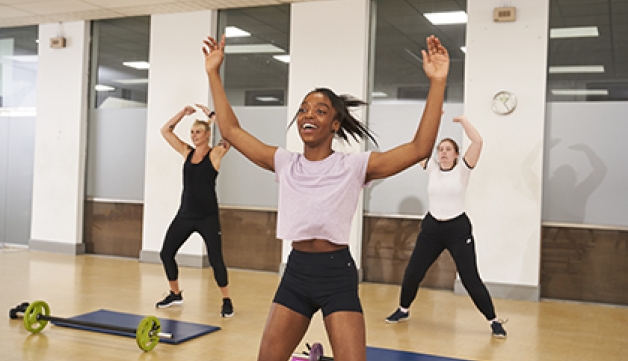
At EMD UK, we believe group exercise should be for everyone, but for many women – especially Muslim women – challenges to accessing group exercise still exist.

That’s why in 2024 we partnered with Active Together to launch support for women from ethnically diverse communities to become Level 2 Group Exercise Instructors.

The aim was to create a workforce that mirrored the communities it served by driving greater diversity and inclusion within the group exercise sector.

Giving back to their communities

We worked with Active Women, of Leicester City in the Community, to recruit women, to provide local support to build a community amongst the learners and to keep them motivated and engaged.

The goal was to provide a learning and training opportunity for the women that was safe, culturally aware and empowering.

In total, 12 women were enrolled.

They were aged between 25 and 54 and came from global majority communities, including Muslim, Hindu and those of no faith.

The programme offered a fully-funded Level 2 Group Exercise Instructor qualification through Drummond Education.

These women’s beliefs may have been different from each other, but they all brought with them a deep desire to give back to their communities.

Most had wanted to train for years but faced barriers like the costs involved, childcare needs or the lack of local opportunities.

But now they were able to join because the programme was tailored to them and because support was finally available.
 

The aim was to create a workforce that mirrored the communities it served by driving greater diversity and inclusion within the group exercise sector.

Confidence levels were moderate to high, but concerns remained as some feared failure and others worried about language, memory or balancing family-related responsibilities. And yet, despite everything, motivation was strong.

Many saw this as a way to serve their communities and especially other Muslim women, which aligned with the principle of Sadaqah: giving back without expecting anything in return.

One participant said she was excited to see how quickly she could pick up the lessons, while another mentioned the timing for her was perfect as she had just finished her master’s degree.

We also spent time asking what support they’d need after qualifying as it’s often at this stage that dropouts are most prevalent.

They asked for help with marketing, setting up classes and accessing venues and equipment.

They also wanted guidance on business development and networking, and this is where the EMD UK membership came into its own.

Along with the newly launched Reach Up programme, in collaboration with This Girl Can, our members also have access to over 400 support resources, CPD training and content to support their group exercise teaching.

Supporting our students beyond the classroom

We also asked what they wanted from us and the training provider as part of their involvement in the programme, and they requested prayer space, female-only sessions and options without music.

They also wanted their dress codes to be respected, local sessions and female tutors.

They reminded us that English wasn’t their first language and asked us to understand their personal circumstances, which were full of family commitments and cultural nuance.

We listened and we’re now committed to continuing that listening as time goes by.

At this point, having commenced in autumn 2024 with four in-person sessions (that was the delivery style they said they needed), nine learners have completed their practical assessment with the remaining finishing the course in 2025.

The successes of this project continue to emerge.

One standout achievement was the attendance of a learner as a presenter on the EMD UK stage at the International Fitness Showcase in Blackpool back in March.

This was her first experience of instructing group exercise and her presentation of Latin-inspired dance fitness for over 100 participants was an impressive debut to kick off her career.

All students now have access to the EMD UK membership and we are committed to supporting them long-term.

Feedback from the cohort on the support given, including its effectiveness and inclusivity, plus on the course as a whole, has been overwhelmingly positive.

They found the programme interesting, engaging, beneficial and welcoming, with the challenge it provided defined as “exciting and aspirational”.

Whilst many of them knew each other before the course started, they left the in-person sessions feeling “connected to each other” and their communities, and proud of themselves.  

What’s more, Active Together reported that the development and engagement of these local women as mentors was imperative to build community confidence in group exercise and that, while funding was critical, it was the community support role of Active Women that ensured this was a success.

Active Women reported this project demonstrated the clear need for these kinds of initiatives to upskill underrepresented communities and to help them continue their mission to “grown [their] own”.

Because this is more than a training programme.

It’s a step toward equity in fitness.

It’s about recognising the whole person.

And it’s about creating space for women who’ve been excluded for too long.

We’re proud to be part of that change and we’re just getting started.
 

Find out more

EMD UK

Taking the long view on volunteering

For many, the beginning of June is the unofficial start of the summer.

Holidays are on the horizon, Wimbledon and the Tour de France are getting closer and we get to celebrate volunteers in the best week of the year – Volunteers Week!

The latest data from our Active Lives Adult Survey Report shows that almost 10.5 million adults volunteered to support sport and physical activity across the 12-month period from mid-November 2023 to mid-November 2024.

This is an increase of 488,000 over the last 12 months and it shows a continued recovery of volunteering since the pandemic in 2020.

This huge contribution of people’s time, energy and skills in sport and physical activity is really something to celebrate, and everybody in Sport England wants to say a massive thank you to everyone who volunteers to keep the nation active. 

Volunteering not only enables participation opportunities for others, but it significantly boosts the wellbeing of volunteers themselves.

Our research into the social value of sport and physical activity demonstrated that adult volunteering in England is worth £8.2 billion annually in social value and these benefits to wellbeing are in addition to any value that comes from being physically active.

The present of volunteering

The recovery we’re seeing post-pandemic is positive and it demonstrates the resilience of sport volunteering, and that millions of people are still motivated to give their time.

However, there are also some more worrying trends that we need to take note of.

This huge contribution of people’s time, energy and skills in sport and physical activity is really something to celebrate and everybody in Sport England wants to say a massive thank you to everyone who volunteers to keep the nation active. 

Volunteering levels have been falling over the long-term and this was accelerated by the pandemic, plus we are yet to see volunteering return to pre-pandemic (November 2018-19) levels, as there are still 1.7m (4.8%) fewer volunteers compared to seven years ago (November 2016-17).

This decline is not unique to the sport and physical activity sector.

The Community Life Survey, which measures volunteering across sectors is also reporting that levels of formal volunteering have been in decline, suggesting that there are wider social and economic factors at play.

Our recent State of the Nation report points to some of the wider changes we’ve seen that provide interesting context for the data.  

There has also been little change in who volunteers.

Women, people with disabilities or a long-term health condition and those from lower socio-economic backgrounds continue to be underrepresented in volunteering, plus those with two or more characteristics of inequality are least likely to volunteer.

The data shows that, in many ways, volunteering mirrors the stubborn inequalities that we see in sport and physical activity participation.

As a result, community sports clubs and community groups continue to miss out on the valuable skills and experiences a more diverse volunteer base could bring.

It also means that the volunteers who help deliver sport and physical activity are not always representative of the communities they serve, which can pose challenges in staying relevant to the changing needs of diverse participants and communities.

Changing this is fundamental to creating a more inclusive and welcoming environment for everyone.  

Making a difference

A good starting point, and our focus in Uniting the Movement, is to focus on the volunteer experience; on changing culture and practices to enhance it, and on making it more inclusive and welcoming.

We recently commissioned Leeds Beckett University to complete an evidence and scoping review to understand the existing evidence and insights out there on the volunteer experience in sport and physical activity.

We’ll publish more details from this work as soon as we can, but it felt relevant here to share a snapshot of what the existing evidence tells us works to enhance the experience of volunteers, particularly those from underrepresented groups. These include:

  • supporting the development of feelings of connection to the purpose, values, work or people of the organisation
  • ensuring roles align with the individuals’ motivations to volunteer and that these roles are suited to their skills and experience
  • making sure volunteers feel able to manage role demands with their available personal resources and know where and how to access support
  • establishing an organisational culture that is welcoming, caring, safe and inclusive
  • creating environments volunteers feel seen, heard, known and valued throughout all stages of their volunteer journey
  • ensuring that organisations critically reflect on volunteer management, policies and practices
  • developing person-centred approaches that underpin the recruitment, development and retention of volunteers
  • providing a volunteer offer that is diversified and that's made easier through flexible, accessible and appealing roles
  • designing non-linear pathways to support the development and retention of volunteers and to address any skills gaps.

What about the future?

Imagine it’s 2035 and these principles and approaches have been embedded across sport and physical activity volunteering.

What changes would we see in the data about who volunteers?

Would there be an increase in volunteering with more people encouraged to give their time to support others to get active?

What we want is to see a future where volunteering in sport is uncomplicated, meaningful, well supported and easily integrated into people’s life.

And for this to be possible we need an inclusive, accessible, people-centric culture where volunteering is accessible and relevant to everyone.

We hope that, in the future, the volunteer workforce will reflect the diversity of the communities they serve, and that the experience of participants is richer and more positive within this inclusive environment.

I’m really looking forward to discussing and reflecting on these findings with our partners to understand how we might create these conditions in more of the clubs, groups and organisations to improve the experience of volunteers across the country.

In the meantime, I hope that this provides some inspiration for even small changes to help improve the experience of volunteers right now.

Find out more

Volunteer's Week

Levelling the playing field

It’s undeniable that the Lionesses’ recent triumphs and the professionalisation of the women’s game, the strong performance of the men’s team and the fact that the number of girls watching and playing football has doubled in recent years, has made the country proud.

We know that the scale of grassroots football in England means that the sport is well positioned to influence people and communities in tackling inequalities in sport and physical activity.

So because of all of these reasons, we thought that our case study with The Football Association (FA) would be a great way to close our series of blogs.

The FA is the National Governing Body for one of the country’s most popular sports and receives significant funding through Sport England’s system partner investment.

We know that the scale of grassroots football in England means that the sport is well positioned to influence people and communities in tackling inequalities in sport and physical activity.

This funding, while a small proportion of The FA’s overall turnover, drives initiatives aimed at tackling inequalities and increasing participation among under-represented groups.

What we've learnt from football 

There are different learnings we’ve achieved from these initiatives that are also contributing to Sport England's long-term strategy – Uniting the Movement

Efforts should be made to keep girls in the sport 

Recognising the common challenge of drop-off in girls’ sports participation during teenage years, The FA developed ‘Squad’– a programme that’s designed to be a fun, non-competitive initiative for girls aged 12-14.

This model, which could be replicated across other sports, prioritises enjoyment and social connection, and aims to retain girls in football while building their confidence and leadership skills.

In addition, they have developed a new talent ID programme called Discover My Talent, shifting the way they find and support talented footballers.

The FA’s learnings from this programme highlight that moving away from a traditional approach, focused on existing clubs and academies, enables them to identify potential "anywhere, anytime."

This approach aims to identify talented players across the country, within diverse groups and at any kind of football events and sessions to broadening opportunities across different communities, resulting in more diverse talent pathways for women and girls.

The FA reports that they are seeing positive results, with increased diversity in the top talent programmes.

Increasing opportunities for disabled players 

The FA is committed to growing para- and disability football and to closing the disability gap, partly through initiatives like ‘Comets’ – a recreational program for disabled children aged 5-11 that provides fun and accessible entry opportunities to the sport.

While aiming to expand Comets and the provision of disability football, The FA acknowledges challenges such as workforce training, confidence levels of local coaches to support disabled people and logistical barriers to attending sessions – like the time and financial costs of travel – for para-athletes.

In response, The FA are providing disability training and toolkits for clubs, called Journey to Inclusion, with the aim of proactively addressing these challenges.

The FA have identified potential for cross-sector collaboration and knowledge sharing with other system partners to continue to address these difficulties, as well as using football as a hook to engage disabled people and connect them with other sports.

Investing in the workforce to reflect the communities served

As many system partners have told us, local champions have an important role for creating local change.

Recognising the need for a diverse workforce to help diversify participation, The FA is actively working to increase the number of Black and Asian coaches in grassroots football.

And by targeting specific localities and offering more coaching opportunities, The FA aims to create a coaching landscape that reflects the communities it serves.

The role of local partnerships for building a stronger ecosystem

The FA is increasingly working locally, tailoring programmes to the unique needs of different communities.

Their experience is that partnerships with community groups and schools are key to reaching under-represented groups.

Ensuring safeguarding standards when partnering with non-accredited organisations is recognised as a challenge, so they are actively supporting community organisations in developing their safeguarding processes through training and qualifications.

Looking at what's to come

The new Learning Synthesis report based on the year two evaluation report will be published soon with more insights from the ongoing evaluation.

It will also include the collective contributions that partners are making to changing the sport and physical activity system.

We hope this series of blogs have been useful and if you have any comments or questions, we'd love to hear from you, so please get in touch.

The knicker-snap that changed everything

I remember exactly where I was when I was first told Sport England was going to invest National Lottery funds into a marketing campaign to help women get active.

“That sounds great!” – I thought – “But we won’t do it. We’re not that type of organisation.”

However, it turns out we did and we were!

A woman wearing a bikini and dripping water from a swimming pool arranges her hair and the copy "I swim because I love my body. Not because I hate it." appears in white letters over her. Under the copy we can see the This Girl Can logo written in white letters too.

Successfully, and over the last 10 years, This Girl Can's real, relatable and unfiltered stories, images, films, resources and partnerships have inspired 3.2 million women to get active, many of them getting back into it after a long break.

Targeting real women in the real world

The knicker-snap in that first ad changed everything.

We have given women reasons to move more that don’t mention their weight, size or the need to get ‘bikini-body ready’, because we think the best way to get 'bikini-body ready' is to firstly, get a bikini and to secondly, put it on.

We have understood how impossible physical activity can feel to those of us who hated sport at school or aren’t as good at it as we used to be.

We’ve also tackled the emotional barriers.

One woman told me she was “too fat to get fit”, another that she should be "spending time with her family" instead of exercising and a third that she just wasn’t "one of those sporty types".
 

We have given women reasons to move more that don’t mention their weight, size or the need to get ‘bikini-body ready’, because we think the best way to get 'bikini-body ready' is to firstly, get a bikini and to secondly, put it on.

We have shown what getting active looks like in reality: the sweat, the jiggles, the puffed-out faces with make-up streaking down the cheeks or with no make-up at all.

And we’ve also shown what real women’s bodies look like by showing cellulite, stomachs, thighs, bad hair days, three-days worn joggers, on our periods, giving birth, going through the menopause or having the audacity to age. How dare we?!

What This Girl Can has taught me 

We have also celebrated the women who don’t give a damn and clamored for change when they told us they didn’t feel safe exercising outside, so we can liberate women from the fear of judgement that stops so many of us taking part.

It’s been a joy and a privilege to run This Girl Can for so long – and I’ve learned a lot along the way, including:

Supporting women is a team sport

This Girl Can succeeded because so many women generously shared their stories, images and lives. We street-cast all of them – finding women getting active without giving a damn – in parks and at parkruns, in the pool, on the pitch and at the gym. But let me tell you, if they thought getting cast in a TV ad was going to be glam, they were wrong – they had to work out before the cameras started shooting and we put the results on giant billboards near their homes. But they did it to support other women, to show their daughters what we look like doesn’t matter and to prove that there is no reason sport should just belong to the boys. If you share a sweaty selfie, go for a walk, run to an exercise class with friends, or let your children see you prioritising your own activity, you are doing the same. Thank you!

Every problem has a solution that is often better than the original plan

This Girl Can was originally called Run/Jump/Throw Like a Girl. We signed off the name and literally the next day, Always released their campaign of the same name and it was brilliant! I sulked for a week but our brilliant creatives came up with This Girl Can. A name which suited our campaign objectives much better – a self-affirming mantra that can get you off the couch, up the hill, into the gym class or past that bunch of lads telling you to go faster.

Collaboration is king (that should probably be ‘queen’)

This Girl Can succeeded because so many partners and supporters got involved changing and shaping what they were doing to meet the needs of women we were engaging with. We haven’t always been the easiest brand to work with – I’ve had to learn to let go and I always wish there was more time – but when I see what universities, schools, national governing bodies, local authorities and active partnerships are doing I'm always blown away. So thank you too! I will always feel old though when someone I’ve just given a job to tells me they remember seeing the campaign in school. 

I can now be quite annoying

I have become one of those people who goes for a run on Christmas Day and I can’t stress enough how unlikely you would find this if you’d known me at school. Or in my twenties. Or thirties. But This Girl Can has changed my relationship with being active. I know that when I’m moving more I’m happier, calmer, more productive and, overall,  better company to be with.This is why – in addition to it being my job at Sport England – I believe so strongly that no woman should be left behind. We all deserve to feel that good. I’m proud that 50% of women recognise the campaign, but until the other 50% do too we’ll keep going.

The future of the campaign: Phase Six

Now, if you think after 10 years we’ve done everything that needed to be done, said everything that needed to be said or moved as much or as far as we needed to get to, you’re wrong my friend!

The next phase of the campaign – Phase Six – will focus on women from under-represented groups with the most to gain from just starting to move and I can’t wait to share the details of what we’re going to do from next month.

So I raise my water bottle as I wish happy birthday to This Girl Can.

Thank you to all my colleagues and to everyone who shared our content, supported us, bought a National Lottery ticket, created opportunities to be active, worked on the campaign or simply put on their trainers and went for a walk.

This Girl Can, because you did.

Find out more

This Girl Can

Blokes United

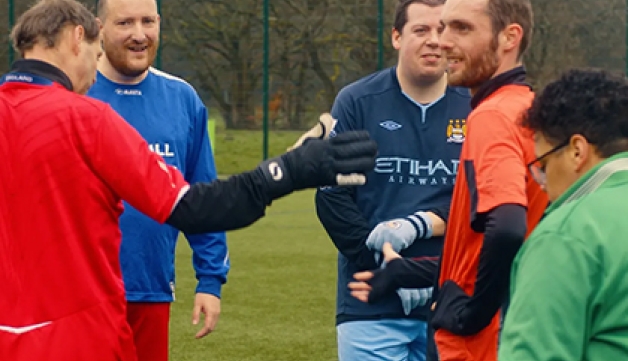
Members of Blokes United talk to each other on the pitch Blokes United is a social inclusion football session set up by the founders of Creative Football in Blackburn in 2017, to provide a support group for local men struggling with their mental health and wellbeing. Gender Health conditions
Driving female success in motorsport

The rise of women’s football is one of the true success stories in women’s sport in recent years.

Arsenal generating crowds of 60,000 at the Emirates Stadium, fans lining the side of the pitch desperate to get a glimpse of their heroes and big brands signing up the likes of Leah Williamson and Lucy Bronze for major campaigns are no longer cases of exception in the sport. They are becoming the norm.

Accepting that even with its current success there is still a long way to go in women’s football, those of us working in other sports still have a lot to thank it for.

Normalising the regular discussion and debate of women in sport benefits everyone and in motorsport we are also reaping some of these.

Putting women behind the winning wheel

A year ago, when I took on the role of CEO at More than Equal – an independent non-profit organisation dedicated to supporting talented female drivers and finding the first female Formula 1 world champion –  there were murmurings about the lack of women competing at all levels in motorsport, but those murmurings have now become a consistent debate and discussion.

Driven on by the progress of women in a range of other sports, a realisation is dawning in motorsport that as one of the world’s leading and only truly mixed-gender sports - ours is one of the few sports in which men and women can compete together - the lack of women on its grid is closing-off a world of opportunities to it.

But when the F1 Academy – a new all-female racing series – announced a partnership with global beauty brand Charlotte Tilbury last month, you could almost hear some pennies dropping about how motorsport could start to benefit commercially from having women competing at its higher levels.

Plus, motorsport has a growing female base.

F1 itself says that around 40% of its fans are women and girls, but when we asked that fanbase last year in a major piece of research what they thought about the sport’s efforts to support female drivers, we learned that they were largely dissatisfied.

So there’s now a greater motivation than ever to help grow this sport so that women and girls can play a fuller part.

Normalising the regular discussion and debate of women in sport benefits everyone and in motorsport we are also reaping some of these.

At More than Equal we are focusing on supporting young female drivers early on in their careers.

This is because our early research told us that the major barriers blocking the progress of women and girls in the sport remained as they started to climb the ranks.

But thanks to the work I was able to do on the amazing This Girl Can campaign while I was with Sport England, I realised when I took this job that we had to build a true understanding of the barriers facing female drivers, just as This Girl Can worked hard to understand what was behind lower activity levels for women and girls – the ‘gender activity gap’.

Planning the change

Our research showed us that while motorsport is a tough sport for anyone to progress in – not least because it is terrifically expensive – women and girls faced a range of additional challenges from their male counterparts.

Those barriers include the tiny pool of female participants and lack of support early in the career of female drivers, therefore our focus became to help remove some of these.

We’re offering a driver development programme for some of the world’s highest potential female drivers, a programme that is not only relevant to their age but that is truly build with their gender in mind.

This is something that is not on offer in motorsport currently for young female drivers and we’re working with a range of partners to deliver it, with a goal of helping those drivers progress up the ladder towards Formula 1 – where we have not seen a woman compete for almost 50 years!

That lack of representation in the world’s largest mixed-gender sport is not good enough. There's also a lack of women racing in other major motorsport series like Formula E, Indycar, Nascar and, as I write this, there’s only one female driver in Formula 3.

So while we watch the ongoing progress of women’s football in this country, we too are driving our progress and that's thanks, in part, to the path they are laying before us.

Find out more

More than Equal

A This Girl Can review of 2023

There’s nothing like seeing the end of the year approaching to reflect on the previous 12 months.

And what a year 2023 has been for This Girl Can, Sport England's campaign focusing on getting women and girls all over the country moving, no matter their ability, shape or size.

When I say this year has been eventful and impactful, it’s no exaggeration. Let me show you what I mean.  

Winter

Last February, we launched This Girl Can With You - our latest campaign across the sector and the foundation for all our work in 2023.

Our research showed that 2.4 million fewer women than men strongly agree they enjoy getting active – we call this ‘the enjoyment gap’ and it matters enormously, because enjoyment is one of the primary drivers of activity.

A group of women exercise outdoors wearing the This Girl Can range for Tesco

We focused on four key action areas that, if addressed, will help more women feel that getting active is a more satisfying, enjoyable experience.

Together, with those who make sport and physical activity happen, we’re working to ensure these experiences are more social, suitable, self-affirming and safe for women.

We also launched a new campaign hub, to house all the latest insight, tools and tips for organisations or individuals delivering on-the-ground experiences for women.

Spring

In April, we celebrated the success of Studio You winning the Active and Wellbeing Award at the prestigious Sport Industry Awards.

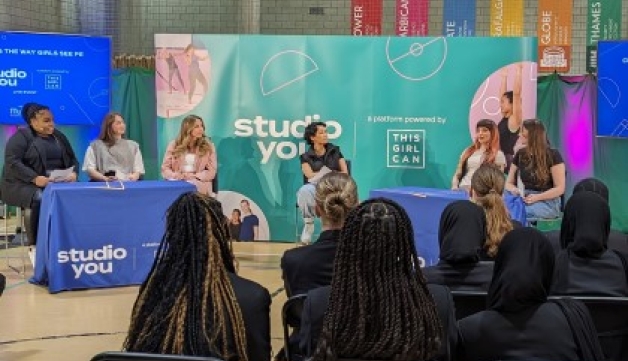
Studio You takes This Girl Can’s ethos and mission into schools as a streaming platform featuring more than 140 video PE lessons designed to appeal to the least active girls by widening the remit of traditional PE.
 

There’s nothing like seeing the end of the year approaching to reflect on the previous 12 months.

The following month, we launched our second industry guide, in partnership with ukactive, titled ‘‘How to make your spaces safer for women: A call to action from the 51%’’, to provide practical steps for facilities to help create an environment where women and girls feel safer and more confident being active.

Summer

At the start of the summer, we were determined to help women and girls get the most out of the warmer months with Make Your Summer Move – a PR campaign based on insight that nearly half of women were worried about showing their body while being active in the summer.

So we encouraged women to move in whatever way works for them, sharing tips on ways to help overcome some of the barriers to being active in the summer, plus case studies of amazing women getting active outdoors.

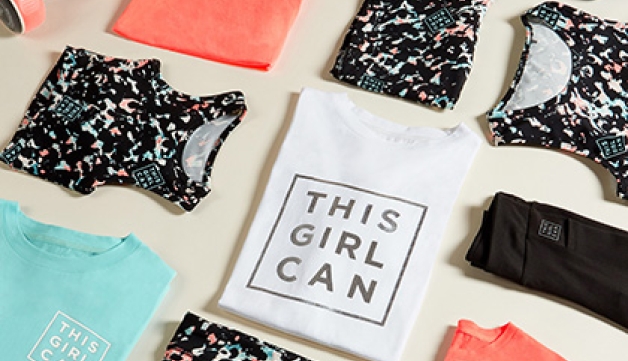
We launched an exciting new partnership with Tesco in July, with the release of an exclusive This Girl Can activewear range under the retailer’s in-house clothing brand F&F.

The partnership aimed to inspire women to enjoy an active life by providing a stylish and affordable clothing line, plus advice and opportunities to motivate them to start moving.

We also partnered with period care brand Bodyform to launch a period hub on the Studio You platform.

According to Youth Sport Trust, periods are the number one barrier to girls doing more sport and physical activity at school, so it was fitting to launch the first phase of the partnership with a television ad during the Women’s Euros using the tag line ‘no blood should hold us back’.

Autumn

In October, we hosted a parliamentary roundtable discussion on women’s safety when being active outdoors, to coincide with the clocks going back and the hours of darkness increasing, as 46% of women say they change their outdoor exercise routine due to less daylight during the autumn and winter months.

We brought together parliamentarians, advocates, academics and representatives from across the sport and physical activity sector to consider what can be done to create safer spaces for women whilst being active outdoors, as well as addressing the barriers to change.

But that wasn't all.

We also rallied women in a 5km run around Westminster and central London as part of our Let’s Lift the Curfew PR activation, to amplify women’s voices on how they feel about being active outdoors during the darker months and to highlight that many women feel restricted by a perceived ‘curfew’ when it starts to get dark. 

As you can see, it’s been a busy year!

We look forward to continuing to work with our partners throughout 2024 to keep closing the enjoyment gap by ensuring sport and physical activity is social, suitable, self-affirming and safe for all women, and, as ever, sharing the amazing and inspiring stories and experiences of women being active.
 

Female and inter faith connection through wrestling

Wrestling has undergone a remarkable transformation in recent years, with females making their mark and shattering stereotypes.

This development not only showcases the empowerment of women but it also offers a striking link to inter faith unity.

Because in a world marked by religious diversity and cultural differences, female wrestlers serve as powerful role models demonstrating that strength, resilience and shared passion can bridge the gaps of faith and belief.

Historically, wrestling was perceived as a male-dominated sport but this narrative has changed dramatically nowadays.

British Wrestling has made a commitment to working with clubs on a grassroots level to aid the shift and bring wrestling to a whole new demographic.

The Legacy Project

The formation in 2022 of The Legacy Project gave coaches and clubs the resources necessary to support and develop female wrestling in many communities across the country.

Delving into these disenfranchised groups allowed British Wrestling to see what we could do to better engage and make the sport more accessible to everyone, particularly those from ethnically diverse backgrounds.

Wrestling has strong ties to both culture and religion for many people from these communities, so projects like ours have created a space for people to connect not only with each other but also with themselves and their identities.
 

In a world marked by religious diversity and cultural differences, female wrestlers serve as powerful role models demonstrating that strength, resilience and shared passion can bridge the gaps of faith and belief.

This connection goes further than the sport and can really impact lives and spark a change in the perception of the discipline that is wrestling.

Meeting these women and learning their stories has shown us their perspectives and given us a better understanding of their hesitations and where we need to focus our energy to help them get through these barriers.

Some are Muslims, others are Christians and Sikhs, but we all come together, train and help each other in an environment that help us exercise and have a great time together.

Three main barriers that we aim to overcome with this project are:


The female workforce

A lack of female coaches means that we are unable to run classes in some areas and miss out on a wide range of potential athletes.

This issue was highlighted in the early stages of the project, but through our guidance, we have successfully qualified twelve coaches all over the country.

At British Wrestling, we believe that development is continuous so we have facilitated networking events, such as a focus group to share experiences and brainstorm plans for expanding our horizons.

A consistent level of communication has also been achieved between coaches to field any questions and concerns with the group so that the clubs can be better equipped.

Cultural setbacks

Female wrestlers from ethnically diverse communities in the UK face several cultural setbacks.

Traditional gender norms often discourage or limit female participation in sports - particularly wrestling and other combat sports - because cultural expectations around modesty, family responsibilities, and career choices can hinder culturally diverse women from pursuing wrestling.

Additionally, stereotypes and biases can create barriers in terms of acceptance and representation.

These setbacks highlight the need for cultural awareness, support and representation in the UK wrestling community to encourage inclusivity and provide opportunities for the culturally diverse female wrestler to thrive.

Misconceptions

There are a series of misconceptions that deter women from participating, such as wrestling considered an exclusively male sport, an idea perpetuated by historical gender biases and the lack of female representation.

Additionally the misconception that wrestling does not align with traditional notions of femininity, may deter women.

Addressing these misconceptions requires the promotion of inclusivity, the highlighting of physical benefits and showcasing successful female wrestlers who defy stereotypes. 

Working for the future generations

One of the pioneers for our project is Impact Fitness Academy's very own Coach Haniyah.

Her journey started as a volunteer but she later grew to be a core member of the team, spearheading the fierce female programme in Birmingham, taking on the role of the head coach and even expanding to help set up projects in other areas.

Another name to look out for is Coach Whabna. She is part of Bahja Initiative, an Islamic faith centre aiming to bring about a positive change in the Lancashire community of Accrington, by including wrestling as part of their mosque curriculum, making it easily accessible.

They have 75 girls participating on a weekly basis.

She is a true role model, working hard to help young girls from a range of ages and reaching some of the most deprived areas in the UK, with Accrington being ranked in the bottom 2% of neighbourhoods based on multiple deprivations. 

It's clear that wrestling permeates multiple areas of life and that it’s not just limited to the sporting sphere, but has the potential to penetrate religion also, evidenced by the incredibly successful Bahja Initiative.

So, with further exposure to wrestling for the general public by the work done by British Wrestling and The Legacy Project, we can squash these barriers and move towards a future where wrestling has a place in the lives of all.
 

Find out more

British Wrestling

Stop black women and girls missing out on sport

Recently, we at Women in Sport have been exploring the devastating statistics from Sport England's latest Active Lives' Surveys around black girls’ participation in and enjoyment of sport.

These numbers paint a depressing picture, as only 36% of black girls in England are meeting recommended activity levels, compared to 48% of white girls, and in the past five years the number of black girls saying they enjoyed taking part in sport and physical activity has plummeted from 50% to 39%.

This sudden and worrying decline in enjoyment amongst black girls is heart-breaking because for me, sport has been a real joy and backdrop to my life for as long as I can remember. 

Shereen poses with her team and friends outside the stadium

During my school years, my love of sport and exercise fueled me and taught me to manage my time and juggle it with my studies, a skill I’ve carried throughout my working career.

On top of that, sport has always provided me with a great sense of freedom and helped me to keep positive.

Different experiences

However, even before I went away to university, many of my female peers had stopped participating in sport so all the team experiences I'd once enjoyed became impossible, unlike for my brothers.

For them, weekly football practice and games were never questioned. These were almost a weekend ritual.

They didn’t need to justify why they wanted to play, worry that there weren’t going to be enough players for a team or about finding a suitable place to play that wasn’t already dominated by men’s five-a-side games.

I did keep running though.

At university, in a predominantly white community in the north of England, I was away from home and suddenly much more aware of my difference.

I was facing adversity and, in all this, I was also missing sport as my source of joy.
 

This sudden and worrying decline in enjoyment amongst black girls is heart-breaking because for me, sport has been a real joy and backdrop to my life for as long as I can remember. 

I looked for sport opportunities but I found sprinters were a rare breed and I didn’t feel like putting myself forward to be selected for the team sports as I was concerned I wouldn’t fit in.

I wonder how this experience might have been for my brothers - would they have felt so alienated? Or would the men's team sports have naturally swept them up as potential talent? I’ll never know.

But in my case, I was limited to gym-based activities and my motivation and passion started ebbing away.

During this challenging time I missed the sisterhood and the support network it provided – something that I now value deeply.

Thankfully, after university and several years away from sport, I decided to dip back into athletics and the feelings I had long missed just came flooding back.

Once again, I thrived on the sense of belonging, the socialising, the motivation, and the familiarity of those around me, plus the cold and rainy winter training sessions, which I can’t say I missed but were definitely character-building and a source of camaraderie.

Funnily enough, I remember telling my first athletics coach that I wasn’t sure how long I wanted to train for but then it went from a hobby to a habit of a lifetime.

Helping me to keep the joy

All my coaches have been supportive and empathetic as I navigated life as a teenager through to adulthood with various challenges, experiences and responsibilities along the way.

Struggling to balance their lives with being active is often a challenge for girls and why it is so important to ensure they have the right guidance and support to embrace activity and experience the joy that I have.  

Being an athlete is a lifestyle which requires time, energy and commitment, but it has taught me discipline and focus, and how to overcome failure and build resilience.

Through all of this I’ve learned to enjoy the journey and it’s formed a big part of my identity.

I have had the opportunity to travel and work with fantastic coaches, therapists and athletes representing my club and county, running at national competitions and in recent years, as a GB Masters athlete.

The opportunities are vast and that’s why no girl should ever be made to feel excluded.

I’m fortunate that my training environment has always been diverse and open to all, embracing people from all walks of life and abilities. My safe space.

But I know it isn’t that way for everyone.

Far too many women still face discrimination and negativity in sporting settings and this must change.

Sport has allowed me to celebrate some of the greatest achievements of my life and seeing so many inspiring and influential black women in sport and their contributions is empowering and shows what we are capable of.

And while Black history may seem like a thing of the past to some, it lives through us every day as the past connects the present and future.

It is important to recognise that all women need a voice and a chance to be represented by someone who looks like them - and Black History Month helps by providing a platform and celebrate these women.

I am truly fortunate to be surrounded by many beautiful and brilliant black women and I salute my sisters by celebrating our community.
 

Find out more

Women in Sport

You've got the right to play

Nobody should grow up thinking there’s something they can’t do. So why do girls in this country still think football can’t be for them?

Fair enough if you are a girl and you don’t like it. You may prefer another sport, or you may not like sport at all. And that’s absolutely fine, of course.

But what I hate to think is that there are girls out there who’d like to play football and don’t feel safe doing it. Or even worse, never thought they could even try!

That’s exactly why we created Squad Girls’ Football – to give girls aged 12-14 the chance to try football in a safe environment, where they feel free from judgement and pressure and where having fun (and not the score or her personal performance) is key.

More than football

We first launched the Squad Girls’ Football programme as part of the UEFA Women’s EURO 2022 tournament with 250 providers.

The idea is for girls to turn up and participate in the activities they choose. Always having a range of different fun games on offer during a session negates the worry that they may have to take part in something they don’t wish to.

What’s more, all the activities at Squad Girls’ Football sessions are designed to meet their needs and help develop core skills both on and off the pitch, such as building confidence.

Launching the programme after the England Senior Women’s team had won the UEFA Women’s EURO tournament meant we were targeting an audience that was incredibly excited about women’s and girls’ football.

The success of the tournament and the timing of the launch enabled the programme to thrive in the momentum of the team.

"What I hate to think is that there are girls out there who’d like to play football and don’t feel safe doing it. Or even worse, never thought they could even try!"

Those women provided the inspiration for many girls to start playing, but beyond that – they became true role models for a generation that is increasingly willing to try the game. And yet, the beauty of the programme goes beyond that.

We all know that in teenage years, friends become family and the importance of peers in their everyday lives’ skyrockets.

So, it’s great to see girls already enjoying the space that Squad Girls’ Football provides amd encouraging others to take part.

They support and cheer each other on during the sessions, offering another opportunity for them to see their friends, bond over a shared interest and spend valuable time together.

I also love to hear mums and dads proudly highlighting how their daughters have become more confident and resilient as a result of joining our sessions.

They’re learning valuable new skills and it’s clear to see that they love developing their abilities.

They like the structure and the social element of the programme (they can come with friends or meet new people there), they also thrive by having their voices heard and by the autonomy encouraged in each session.

Big kudos to our coaches and volunteers for being key in creating and promoting that environment.

Currently, this workforce is predominantly male, but all coaches and volunteers are trained to understand and help the girls, focusing on the specific challenges of the early teenage years, like the discomfort caused by periods while exercising.

What we want is to normalise that feeling by providing sanitary products and actively listening, so the girls feel safe to keep playing in the way they feel most comfortable.

But how do we get girls into the programme in the first place? There are different ways in which girls get to our Squad Girls’ Football programme - some come from our Weetabix Wildcats programme, others from our curriculum and extra-curriculum programmes within schools.

Some used to play but stopped because of the pandemic and some just want to try something new.

What we want for the future

Now, with the visibility provided by the FIFA Women’s World Cup this summer, we want to focus on those who’ve never played before.

The support from our partners is fundamental and Sport England has been key along the way - but the hard work doesn’t stop here.

We want to keep learning about what motivates girls around the country and what they like and need so we can get them to enjoy the sport as a way of getting healthier and happier.

We’re joining the 'party atmosphere' that big sports events can provide by supporting FIFA World Cup viewing parties nationwide, so people get together to watch the games and play.

Once again, it’s all about creating an environment where girls enjoy the sport as an element of their everyday lives, where they can have fun and are given the opportunity to get involved in football in a way that suits them.

A group of teenage girls gather in a huddle at an indoor football session

We want to recruit more Squad Girls’ Football providers, aiming to increase from 500 to 800 around the country.

Regardless of ability, disability, impairment, or any health conditions they may have, we want to encourage more and more girls to have the opportunity to play football.

We also want to improve our understanding and communications to reach all girls nationwide and encourage them to try the sport.

And we want to attract girls from all backgrounds and make the sessions accessible, so if they want to try, they can.

And what if a girl wants more?

If she feels comfortable playing in a more competitive environment, if she has talent or potential, we’ll also be there for her through our Discover My Talent programme.

This is aimed at 12-16-year-old girls all over the country who want to take their footballing abilities to the next level and have aspirations to be a Lioness of the future.

Some may become Lionesses, some won’t. The aim isn’t to make that happen, as every girl will be on a different part of their journey and have their own ambitions. But if they like football and if they possess some of our future Lioness characteristics (which include a love for learning and a love of the game), we’ll find them.

That’s the goal. Discover My Talent is about taking the opportunity to find talent because we know talent can be found anywhere.

Across both programmes, the purpose is clear: for girls to play football and to be given an opportunity to play at whatever level they feel comfortable at and in an environment that’s nurturing, supportive and safe.

I dream of the day when I pass by a park, and I see girls playing football among themselves or with boys, being active and having fun.

Because if that happens and no-one who wants to play is left behind, we will have succeeded.
 

Celebrating and being inspired by the women around me

Launching This Girl Can With You last week was a brilliant opportunity for me to do one of my favourite things: talking on the radio.

This time, however, I was slightly shamefaced, extolling all the benefits of getting active, telling women the hardest step was the first one, and to not give a flying fig what anyone else thought.

But I haven’t taken my own advice since well before Christmas. Work, and life, got busy; the weather cold and I lost motivation. An attempted reboot in January failed, and the least said about February, the better.

I decided 1 March would be my begin-again day, something that’s often harder than starting out – so much emotional baggage!

But the chat we had at the last Women’s Network meeting -  our organisation's staff network for women that meets once a month to provide a safe space to discuss any topics of interest - gave me that final, encouraging push into my trainers.

It may take a village to raise a child, but it takes a community to get me active – and we know from our research that I’m not alone.

So today I Invite you to read the stories of some of the amazing women I’m lucky enough to work with and be encouraged by:
 

Garnet Mackinder: team sports and zombies!

I recently retired from semi-professional rugby and have since struggled to really enjoy physical activity again.Coming from a team sport I found it difficult to exercise on my own.

I joined a netball team - really good fun, but only every other week - and also tried touch rugby, but found the difference to contact rugby frustrating and had to travel a fair distance to get there.

Then I discovered Zombies Run!

I like things to be gamified (probably because of my team sport background) and this app does just that. I put a playlist on, and then the app tells you a story, normally going to save someone or collect food/other items in an apocalypse.

For each chapter you can select how far/how long you want to run, and if you want “zombie chases” on, which means that if your pace slows down, a zombie starts to chase you and that makes you do a short burst of speed. I really like the thrill of this, plus the stories are really fun.

I still may not love running, but having Zombies Run gives helps me get out of the house. If you fancy something different give it a try!

Cat Clements: make activity work for YOU

In the last five years, lifting weights, sweating buckets in cardio and walking my gorgeous dog became my routine. But sport and physical activity (or any movement!) weren’t always part of my day. A fear of getting it wrong and doing more damage than good, made me think I was better off not exercising.

But working with an understanding yet challenging personal trainer was the beginning of my journey. Regular gym sessions are now my priority as they help me manage chronic pain and life and work stresses.

After-gym aches and pains still appear, but more if I miss the gym sessions or my walks.

During lockdown I only had limited gym equipment at home, so I challenged myself to Couch to 5k. I did it at my own pace and the sense of achievement, the feeling of moving independently and at a speed beyond the usual walk, was amazing.

It’s challenging to ignore others, but now I focus on my podcast and realise most feel the same, are barely awake or focussing on their own journey.

My message to other disabled folks is simple: if you’re keen, sport and movement can be for you, and you do belong in those spaces!

Alex Moore: celebrating women’s achievements!

Being active has always been part of me. I used to play tennis and run, but increasing time constraints meant I’ve focused on my running.

We’re a small group of women of different ages and backgrounds running different distances and speeds. We call ourselves the Sunday Service (as in transport) as we often have a detour, go out “as and when” and if you’re with us, you should expect delays and random stops.

Our runs are our catch ups, venting, sharing everything and celebrating each other's achievements. These may not be race wins, but about managing our longest distance, getting out as planned or tackling a task we’ve been putting off.

Running is good for our physical health, but that’s only why we started, not why we keep running together. We run because it's fun, social and good for our mental health.

And running as a group means no longer putting up with men shouting things at us. It’s discriminatory and wrong and our message is simple: no comment is a good comment.

Although I’ve not trained enough due to injury, I can’t wait for the next run. In my experience, make exercise social and fun and the habit will come.

Working at Sport England, it’s easy to forget that many of us may face the same barriers as our target audiences.

That, like Garnet, we need to find what works for us. Remind ourselves, like Cat did, that no matter our health history, we belong in a gym, in sport, in being active; and, like for Alex, exercises buddies may be exactly what we need to stay active at one point in our lives.

No matter who you are or what/why you do it, share your stories and struggles with other women, so we help each other get active and close our enjoyment gaps.  
 

Bringing the UK's Sikh community together through sport

In 2019 I walked into a Gurdwara (Sikh place of worship) and spoke to a group of mothers who were well-known to me about a great opportunity for them and their children to play cricket. "The training would be paid for!" I said; "the equipment would be given to us for free'", I added. "We would even have ten weeks of sports hall hire paid for".

Blank faces looked at me, until two mothers pulled me aside later that evening. "We know you want to create fun opportunities for our children, and we can try to bring them, but where will they ever play?"

And that was it -  they had planted the seed. And on my journey home I shouted to myself: "The Sikh  Games UK is where these kids will play!" 

An idea all the way from Australia

A concept I'd heard of my whole life from my family in Australia, who had been speaking about the Australian Sikh Games for the last 34 years, attracting 150-200,000 people, was now about to be adopted by the UK.

A series of images depicting sports and personalities of the Sikh community

From forming partnerships with the FA, ECB, Sporting Equals, England Squash, British Powerlifting, British Judo, The Gathka Federation UK, England Boxing, the Army, the Royal Navy, and the Royal Air Force, the team, our ambitions and strategy have grown from strength to strength. 

So, it gives me great pleasure presenting to you the UK's first Sikh Games, which will be hosted this summer at the University of Birmingham from Thursday 3 to Sunday 6 August.

Having used the 2011 census, we split the UK's Sikh Community into 35 areas and we aim to have at least 25 of those areas bringing in teams for the first Games.

In each area, we have a male and female representative that volunteers locally, to engage with all the local Gurdwaras, universities, and professional Sikh Societies to take responsibility for hosting and supporting a sport for their local community to train in.

From assistance with funding, to connecting them with experienced sports club leads for guidance on how to set up sports, and to engaging prospective athletes to sign up, the regional representatives are the go-to for leading their community into the first edition of The Sikh Games UK.

And that was it - they had planted the seed. And on my journey home I shouted to myself: "The UK's Sikh Games is where these kids will play!"

The Games are not only here to host a sporting tournament that brings the community from all over the UK together over a weekend, but to create a model that encourages community collaboration and sports involvement at a local level too. 

So, for the UK's first Sikh Games the competition sports are football, cricket, hockey, kabaddi, track, and powerlifting.

Some of the demonstration and interactive sports you'll get to see and experience are six para sports (football, cricket, hockey, kabaddi, athletics and powerlifting), plus gathka, netball, boxing, squash, judo, wrestling, MMA, e-sports, cue sports and yoga.

The competition will be a wonderful opportunity to not only showcase sporting excellence, but for the community to try out and hear talks by a variety of sport professionals.

We are most empowered when everyone is empowered 

Our mission is to bring people together and create a space where everyone feels welcome.

Within the community, for years the only dialogue about disability has been whether a wheelchair is allowed in a prayer hall, and if it is, where will it be situated?

But when have we ever stopped to think about what our responsibility is towards those with disabilities to make people feel included and to empower them to better their lifestyle through sport and community? When we don't intentionally include, we unintentionally exclude.

If we put everyone in a setting that is accessible, we will provide them with an environment that will allow them to thrive.

At The Sikh Games UK, the first sports you will come across are the para sports, there will be at least six different paralympic sports to experience and learn about during the three days of the Games.

We remain committed to increasing representation at all levels, which is a reflection of the Sikh Games' values.

So let's talk women.

We currently have female representation within all parts of the UK's Sikh Games - on the board, advisory board, ambassadors, sports leads, and regional leads.

The idea is to encourage women and young girls to feel like they have a part to play in the Games. And from their side, women have a responsibility to take part and compete - to showcase to the next generation all the opportunities that are available to them!

As we first build trust, then accountability, we won’t rest until we build those bridges into the disengaged communities and it is until then that we start taking steps into creating playing fields that are reflective of the multi-cultural society that we live in. 

We look forward to welcoming you to the first edition of The Sikh Games UK!

Dream Big Desi Women - ensuring diversity in cricket

In November 2018, Sport England and the England and Wales Cricket Board (ECB) announced a new partnership to inspire 2,000 British South Asian women to ‘Dream Big’ through cricket.

This joint investment from the National Lottery Community Fund and the ECB created opportunities for South Asian communities to volunteer and engage with cricket at every level - from community coaches to being employed by the ECB.

Dream Big Desi Women was formed to create a community which was inspirational and aspirational to Desi Women (those with south Asian heritage), with a focus on positive values and enjoyment.

We wanted every Desi woman to feel comfortable and safe in our programmes. By listening and adapting our approach, we were able to build an ever-growing and trusted community for them.

A group of female volunteers laugh as they interact with children on an outdoors playground

Fast-forward four years and the Dream Big Desi Women programme has grown to more than 2,000 women volunteering their time, passion and skills as activators.

Under their guidance, thousands of children have had fun, taking part in cricket sessions in non-traditional environments such as community centres, Temples, Mosques and Gurdwaras. And the new activators have created an amazing force of positivity, innovation and learning.

They have shared improved wellbeing, new friendships, skills development and a sense of pride and belonging, as well as a new - or renewed - passion for cricket!

My own story

Cricket had always been a huge part of my life, but up until volunteering with the Dream Big programme I didn’t think there was a place for me in the game.

At 16 I was diagnosed with a long-term degenerative condition which crushed my dreams of being in the RAF and when I began my journey into health and fitness, I quickly learned that this was greatly misaligned to cultural and religious norms in my community.
 

Dream Big was formed to create a community which was inspirational and aspirational to Desi Women, with a focus on positive values and enjoyment.

Wanting to change that perception, I stood against these barriers and focussed on helping fight health inequalities for the other women around me. 

This is when I came across the Dream Big programme, so I started as a volunteer supporting other women lead cricket sessions for the local community. Now in my role, I have been fortunate to be a part of leading the change within the national organisation and bringing even more women into Dream Big.

Challenges and key learnings

Dream Big Desi Women has been a hugely successful initiative, but it is even more powerful considering the two years of disruption and uncertainty due to the Covid-19 pandemic.

This is also set against a wider landscape of falling volunteer numbers within sport and physical activity, with over 3 million fewer volunteers giving their time in November 2020-21 than during the previous 12 months.

Recent data shows that volunteers remain under-pressure and at risk of burnout, so what has made Dream Big so inspiring for women to get involved?

A defining moment for me in the programme was the design and creation of hijabs and modest apparel for volunteers.

Having designed a modest fitness wear line previously, I knew the value this brings.

This addition helped to not only broaden the reach of the programme, but also to increase its inclusivity and create a new sense of belonging for volunteers within the game.

Insight shows the experience of volunteering is key, so it’s important to create a volunteering journey that is accessible.

By adapting the training and its environment, and by providing opportunities for development, volunteers can be motivated to come back and spread the news about the programme.

This then allows this volunteer opportunity to become community-led and an engine for positive social change.

The three key lessons from the programme for me have been:

  1. Understanding the true value behind listening and implementing change. Taking the time to understand the barriers, challenges and initiatives that volunteers want to see will help you reach more people.
     
  2. Adapt, adapt and adapt! Never stop innovating, and don’t be afraid to try something new. For instance: modest apparel, virtual coffee mornings and training events and festivals celebrating the diversity of your volunteer base.
     
  3. Celebrate your volunteers – reward and recognition has been the key tenet behind the success of keeping our volunteers engaged in the game. 

Dream Big is a great example of the work Sport England is doing in its partnership with Vision for Volunteering - a movement of volunteer-involving organisations and volunteers, working together to create and support amazing volunteer experiences.

So all I can say is here's to many more years or working together and making each other - and those around us - better.  
 

Find out more

Dream Big Desi Women

Making an impact

Impact Fitness is here to make a difference in people’s lives through combat sports like freestyle wrestling and boxing.

Our aim is to make these sports accessible to everyone in the community and equip and develop our students' abilities into other life skills.

Our passion began on our doorstep, within the heart of Birmingham, in 2017. We offer a means of developing discipline, self-confidence and self-belief through our classes and programmes. 

We’ve successfully engaged countless local communities, reaching out and connecting with disenfranchised children and young people, aged from five to 17, and their families – particularly from black and minority ethnic communities, areas of high unemployment and areas with high health disparities. 

And we’ve opened our doors to over 600 children and young people, of which 200 have continued to competitive sport progression.

We’ve seen great success. Our young people have won 95 medals at national competitions, and five students have been selected to compete in an international competition in Estonia 2023.

We are breaking down the stereotypes of who takes part in contact sports from the grassroots up – we have the first qualified female Muslim wrestling coach in the UK and will soon start a female-only wrestling programme here in Birmingham.
 

Our aim is to make these sports accessible to everyone in the community and equip and develop our students' abilities into other life skills.

But it’s not just about medals. Impact is a space for everyone, regardless of ability.

Community is so important for us. We help teach kids ideas of respect and discipline from a young age.

By providing this safe and inclusive space for them, we ensure they’re on the right track to live active, healthy and safe lives in the future.

Children have come in with little-to-no experience and we’ve trained and nurtured them, to the point where we see them competing and winning medals while being good and respectful human beings. It’s so inspiring to see. 

The biggest success for us is that all these sporting achievements are from children, young people and adults from culturally diverse groups and communities living in inner-city wards of Birmingham who don’t have the same opportunities as many other people.

There are lots of barriers in their way and they face inequality on a daily basis. 

For example, Arslan Shah is a 24-year-old member at Impact Fitness that lives with spina bifida and we've worked with him to provide the best possible environment for him to practise and grow as a person.

"The coaches have helped me overcome my disability and I can match up with pretty much anyone else," he told me recently. "Everyone has really helped me a lot. It’s helped me with my confidence, my self-esteem and so much more. It’s the best thing I’ve ever done."

Adapting and growing

Even during the lockdown, we didn't stop supporting our students. All our programmes were transferred online, with lessons taught six times a week from coach Farid’s living room, focusing on the student’s mental and physical capabilities.

A challenging time like this meant students needed an outlet more than ever, and this ensured they stayed focused. 

The training and discipline of wrestling and martial arts helps them develop as healthy young people and encourages a positive mental attitude that will help them to get the best out of themselves.

Our programmes focus on being active, healthy, developing skills, as well as confidence, resilience and determination. 

We prepare our students for greatness, by supporting them to fall in love with sports and getting active. Helping them to express themselves and their emotions through sport means their lives are being transformed.

As they increase their fitness and skills, and begin seeing what they are capable of, they start believing in themselves. 

Our impact is also going far beyond just our central space and aims to reach people in different communities across the West Midlands.

Impact work with children in schools and after-school clubs to help tackle obesity rates, while making wrestling more accessible and fun.

These programmes take place in youth centres and wellbeing centres too, tackling antisocial behaviour in those often hardest to reach. 

With the extra funding from Sport England, we are investing in our facility and the ways we can help children and young people in Birmingham. 

We have a few punching bags and some mats already – but with the funding, we have been able to complete some building refurbishments, purchased wrestling mats and weight training equipment to help develop the children's strength and conditioning abilities.

We’ve also purchased a boxing ring for the young people to get a better feel of what it’s like to be in the boxing ring. 

Without investment from people like Sport England, groups like us wouldn’t be able to expand, offer more classes and reach even more people in our community. 
 

You've viewed of items.