Skip to content

Taxonomy term

Content type

Communities on the edge

Coastal communities are some of the most beautiful places in England and many of the country’s wealthiest spots are on the coast.

But it is also true in England that a disproportionate number of the places suffering the most deprivation, worst physical and mental health outcomes and lowest healthy life expectancy are on the coast too.

All this may read contradictory, but coastal communities haven’t ended up in this position by accident.

Many were once thriving seaside economies, built on tourism and seasonal work, but as those patterns changed, they left behind communities with deep roots but with fewer opportunities than those in urban and rural communities.

This deteriorating state of coastal living standards is driven by deprivation and the complex and challenging issues around housing, transport and employment, which together lead to disproportionate lower levels of physical activity.

As Sport England highlight with their sustainability strategy, Every Move, adding to these challenges is that those facing the greatest inequalities are often the least active and the most affected by climate change.

Plus, coastal communities are facing significant climate effects through coastal erosion, flooding and the fact that industries on the coast are the ones producing the majority of the UK’s carbon emissions.

So how can we turn the tide on physical inactivity on the coast?

Can you define ‘coast’?

It is amazing that whilst we are an island, there is no agreed government definition for the term ‘coast’, unlike clear definitions for urban and rural areas.

This leads to the coast often being lost in talks around deprivation as the debate revolves around those in urban and rural areas.
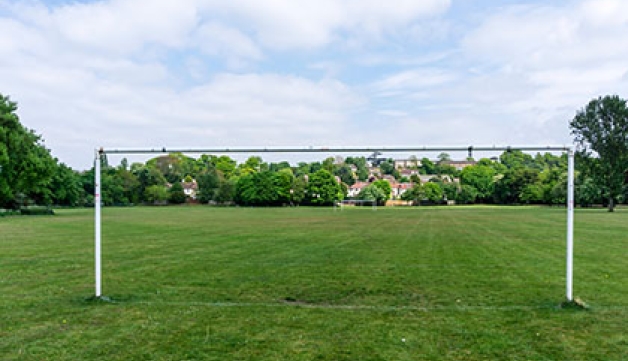
The deteriorating state of coastal living standards is driven by deprivation and the complex and challenging issues around housing, transport and employment, which together lead to disproportionate lower levels of physical activity.

The Coastal Navigators Network, which tackles health inequalities on the coast, has identified that whilst coastal communities are often small individual places, when considered together, they are as large and significant as a national population group (19%) and the near equivalent of the entire North West and North East regions combined.

So with this in mind, what inequalities do people living in coastal areas face in terms of access to sport and physical activity?

The most obvious one is that for coastal communities half their catchment area is in the sea!

Away games are often long car journeys to the far away urban areas for at least half of their season and let's not forget about those extra carbon emissions!

However, it is the opposite for their urban colleagues, who consider their fixture in the season on the coast as going to the seaside for the day!

Sport and physical activity has come late to the policy work across England about improving opportunities for coastal communities, but is now beginning to build the partnerships with organisations like the Coastal Communities Alliance, OneCoast, the Coastal Navigators Network, and the Coastal Cultural Network.

In fact, in February 2026, the APPG Coastal Communities have scheduled a briefing session on the Culture, Creative & Sport Sector in coastal communities. (Please note that while no final information is available yet, the Coastal Community Alliance is currently organising this with the APPG, so check their sites and socials for more information.)

Where is the good work happening?

Five years on from its launch, Active Withernsea is making a real difference in creating physical activity opportunities and lifestyles and transforming its local community.

Local data by Sport England-funded Active Withernsea highlights that while in 2018, 44% of people in Withernsea were inactive (that is doing under 30 minutes of exercise a week), this number has gone down to 15 % of residents being inactive in 2024.

Further, the percentage of residents who are now active increased from 44% to 62% over this time period.

Happiness and satisfaction with life have also improved and anxiety amongst Withernsea residents has decreased, while activity for those with a disability has seen the biggest increase.

A Physical Activity and Community Engagement (PACE) network has been established to lead physical activity projects going forward and ensure that the work continues with more than 100 residents, groups and partners now directing the next steps to continue to deliver physical activity for the people of Withernsea.

What Active Withernsea has shown is that when national policy makers do focus on coastal communities, significant change can help increase physical activity levels. 

What is also clear is that Sport England place-based funding has begun to turn the tide for coastal communities and that, together, we will keep working to improve the lives of those living by the sea.

Find out more

Active Humber

Now is the time

This week is National Inclusion Week, an initiative started by our friends at Inclusive Employers to celebrate inclusion and to make changes that build workplaces where everyone can thrive.

This year the theme is 'Now is the time', but what does this mean exactly?

Basically, that there’s no moment like the present to take action and to make those practical steps in your organisations that embed inclusion and create a sense of belonging.

This really is one of my favourite weeks of the year!

‘Being inclusive’ is one of the guiding values for the work we do at Sport England and it highlights a collective commitment to Equality, Diversity and Inclusion (EDI) in sport and physical activity.

But we don't approach our commitment to EDI alone, because Moving to Inclusion is an initiative by all the home nations sports councils.

Its purpose is to provide resources and support for physical activity and sport organisations moving towards a more diverse, inclusive and socially responsible sector.

These commitments include an opportunity for self-reflection and continual improvement, which is key in our compromise to keep progressing and living by the values we want to promote.

A bit of history

The Moving to inclusion Framework was created to replace the former ‘Equality Standard - A Framework for Sport’ following a review and consultation with the sport and physical activity sector back in 2021, and it was later soft-launched in Autumn 2023.
 

This week is National Inclusion Week, an initiative started by our friends at Inclusive Employers to celebrate inclusion and to make changes that build workplaces where everyone can thrive.

The Framework guides organisations on developing inclusive practice through self-reflection and continuous improvement using the Moving to Inclusion Diagnostic Toolkit.

Through this self-reflection tool, our aim is simple: to embed equality, diversity and inclusion through incorporating action planning, implementation and review into an organisation’s everyday work.

It is important to note that the diagnostic tool is not mandatory to complete, or part of any performance management for partner-organisations' funding conditions in England. 

Benefits for everybody

In any case, and whichever way you choose to start your inclusivity journey, we believe there are benefits to joining our Moving to Inclusion community:

  • This framework enables your organisation to break down the areas around inclusion to make it more manageable and realistically achievable to embed change.
  • The process is broken down into five pillars: Culture, Leadership, Experience, Relationship and Communication.
  • The self-diagnostic tool within the Moving to Inclusion Framework will help you assess where your organisation is now on its EDI journey and consider where you might need to focus effort and make further improvements.
  • The Framework provides practical suggestions and resources to help you drive continuous improvement in your organisation. The reason for this is that a greater focus on EDI will benefit the whole business, including staff satisfaction and retention, reputation, diversity of workforce and thought, growth in participation and membership, innovation, better resilience and increased business opportunities.
  • Partners who are funded by Sport England may be able to access mentor support upon completing their diagnostic.  
  • As Moving to Inclusion evolves, it will create a learning culture and community to be part of.

Any organisation (either inside the sport sector or outside) can undertake the self-reflection process and benefit from the online resources that support it.

To get an idea of the impact it is currently having, check out this infographic for April 2024-March 2025.

Leading change on EDI in our sector

Sport England (and UK Sport) have introduced Diversity and Inclusion Action Plans (DIAPs) as a mandatory requirement of the Code for Sports Governance.

DIAPs set out the ambitions and practical steps that organisations in the sport and physical activity sector will take to achieve greater diversity and create inclusive cultures.  

The plans are applicable to Tier 3 organisations, with the aim to improve representation and inclusion on boards, in senior leadership teams and throughout the wider organisation. 

To date, Sport England and UK Sport have signed off 116 DIAPs that are now with partners to deliver on the actions within their plans and to improve diversity within their organisations and beyond.  

Organisations funded by Sport England will find that Moving to Inclusion provides additional, complementary and enduring support for their DIAP processes.

The themed pillars within Moving to Inclusion will help those organisations refresh their DIAPs and they may choose to incorporate the actions arising from their self-assessment within their own plans.

This National Inclusion Week (and every other week in the calendar, if you ask me) we all have a role to play in changing our behaviour, championing inclusive practices and challenging discrimination.

Collectively, we can create the conditions that support a kind, welcoming and nurturing environment for everyone to lead healthier and happier lives and we hope Moving to Inclusion can help you in that journey.
 

Together to Inspire

It’s only been a few weeks since I completed my first year as CEO of BAFA and I’ve been reflecting on the journey we’ve taken.

It’s been over 12 months of learning, growth and of laying foundations for the future of American football in the UK and this week I’m proud to share Together to Inspire – our new three-year strategy to inspire the next generation of British American football players, coaches, officials and volunteers by bringing the Britball (British American Football) community together alongside its partners and supporters.

Since securing our initial investment by Sport England we’ve made strong strides as a national governing body.

One of our first priorities was to reset the National Flag Football League under BAFA’s direct management, while reconnecting with clubs and players and also fostering a more inclusive, development-focused culture.

The support from the investment has allowed for some immediate short-term participation growth, but we now have a big opportunity in this space to grow the sport as we build towards the Olympic and Paralympic Games in Los Angeles in 2028.

We’ve also invested in our digital infrastructure – recognising that sound systems and processes are critical for long-term sustainability.

Platforms like JustGo are being enhanced to capture better data, helping us understand who’s playing and how to support them.

And in the meantime, our team continues to balance the efforts of our incredible volunteers with the consistency brought by skilled staff and contractors that then align into our chair and board members.

It hasn’t always been easy, but we think all these efforts are vital to our future.

Leading for now and what’s next

A key lesson this year was balancing ‘the urgent and important’ with the long-term priorities.

There’s always something pressing – a complaint to attend to, another scheduling to fix or a new opportunity for growth to be pursued.

But for me it’s been key to be able to step back away from the day-to-day business and connect with members across the game to ask them about the kind of sport we want to build.

That’s what our new long-term strategy aims to answer.

The support from the investment has allowed for some immediate short-term participation growth, but we now have a big opportunity in this space to grow the sport as we build towards the Olympic and Paralympic Games in Los Angeles in 2028.

With Together to Inspire we’re not just solving today’s problems – we’re building tomorrow’s potential.

And we’re doing so in continuing our alignment with Sport England’s long-term strategy, Uniting the Movement, by creating a sport that’s inclusive, connected and sustainable.

Whether it’s supporting clubs, widening access or growing the workforce, we’re proud to be part of that mission and the work we have delivered in year one.

Listening, learning and leading with community

The biggest insights in our strategy have come from conversations.

Hearing from coaches, volunteers, officials and players has shaped our understanding of what’s needed, but this is an ongoing activity.

Through National Flag League resets, youth competitions and GB performance camps, we’re creating more spaces for meaningful dialogue – not just consultation, but connection with our community.

U19 regional 11v11 pilot

In 2024, we piloted a regional 11v11 league for under-19 players – removing barriers while offering meaningful development.

It reached 400 players across 12 camps and six fixtures, and it led to 80 additional GB trial invites.

The result? A boost of 16% in under-19 registrations!

The pilot also developed new coaches, several of whom now contribute to GB performance teams.

This model reflects the Uniting the Movement’s focus on youth engagement and inclusive talent pathways.

Strengthening safeguarding

This year, we implemented MyConcern – a secure case management platform powered by First Advantage.

It streamlines case-tracking and integrates DBS checks via JustGo to streamline the process and make it easy and secure for the user.

We’re also working with CPSU and NSPCC to ensure our policies reflect best practice, by furthering a safe and trusted environment for all.

Looking ahead

There’s a lot to be excited about, including:

  • reimagining our participation pyramid around accessibility and values
  • building a flag-performance system for LA28 and beyond – backed by uksport
  • strengthening clubs, empowering volunteers and investing in coaches and officials.

The Los Angeles 2028 Olympic and Paralympic Games present a huge opportunity for us, not just for visibility, but for exciting partnerships with the likes of the NFL UK and BUCS that’ll aid long-term growth together.

We look at these games as the beginning, rather than the end.

Looking back, I’m proud of how far we’ve come – and even more excited about what’s next.

We’ll keep working with our clubs, volunteers and partners to build a thriving future for contact and flag football in the UK.

Together to Inspire is more than a strategy – it’s a goal to work with our partners to create a sport that is values-driven, to make a difference for our clubs, workforce and athletes.

Find out more

Together to Inspire

Making the outdoors work for everybody

I’ve lost count of the times people assume better inclusion means compromise or something that’s expensive, difficult or time-consuming. It doesn’t.

What it really means is changing how we think and design spaces, activities and experiences so they are built with everybody in mind.

It also means not asking large parts of society to work around barriers that shouldn't be there in the first place, because 24% of the population are part of the disabled community and, what many don’t realise, is that any one of us could join them at any point in our lives.

At the heart of Accessible Outdoors Month is a simple message: being active outdoors should be for everybody, in whatever way works for each person.

That could mean simply stretching in a quiet garden and moving through a local park, or taking on something more high-energy like skateboarding or climbing.

The campaign returns this July for its second year as part of ParalympicsGB’s Every Body Moves, powered by Toyota.

Closing the gap for an accessible outdoors

Too often disabled people are left out of the picture when it comes to getting active, particularly outdoors.

There are different reasons for this: the terrain’s wrong, the facilities don’t meet the community’s needs, signposting isn’t accessible or access just wasn’t a consideration. 

When access isn’t considered, people are excluded. Not because of their ability, but because the environment wasn’t built with them in mind.

According to Activity Alliance's research, only 44% of disabled people say it’s easy to access outdoor spaces, compared with 78% of non-disabled people.

And yet, around three-quarters of disabled people want to be more active and many of them want to do that outdoors: on beaches, in parks or through forests or towpaths, to name just a few.

So the demand is real but it’s not always being met.

Accessible Outdoors Month is our way of showing how, together, we can start to close that gap between demand, provision and uptake.

It’s a social media-led campaign platforming real people and real experiences that launched in 2024 with community-led content showing accessible beach days, inland water sports, inclusive cycling, adaptive mountain biking and all-terrain wheelchair walks.

We didn't use glossy ads on our campaign, but simply honest, joyful stories rooted in lived experience.

When access isn’t considered, people are excluded. Not because of their ability, but because the environment wasn’t built with them in mind.

We saw standout examples right across the UK along with moments of challenge and connection with people saying: “Let’s try to make this work for everybody.”

We saw people refusing to ignore the problem and we saw movement in every sense of the word.

Together, those short clips reached over 240,000 people and generated more than 4,000 meaningful engagements.

The need for collective action

This year we’re attempting to go even further by shining a light on more inclusive ways to get active outdoors.

That part’s a given and this time it’ll include urban parks, coastlines and more examples of the disabled community choosing to move in whatever way works for them across our great outdoors.

We now want even more of you to get involved and embrace the idea of a truly accessible outdoors.

At the heart of the campaign is the social model of disability, which tells us that it’s the environment, not the individual, that disables people, so meaningful progress relies on collective action and everyone (designers, organisers, providers, funders etc) has a role to play.

The outdoors shouldn’t be a privilege.

It should be welcoming with everybody in mind, so we’re encouraging organisations, community groups, clubs and disabled people to join the conversation and we want you to share what’s happening in your area.

Post about your experiences and help grow visibility using the hashtag #AccessibleOutdoors, all in the spirit of celebrating the great examples we know are out there and that crucially encourage change, so more and more of our outdoor spaces are available to everybody.

Throughout July, we’ll be curating and sharing those stories through our social media channels with @EveryBodyMoves and on our website.

We’ve also launched the ‘Every Body Moves Club' on Strava to help more people connect, so please follow along and join the conversation with like-minded people.

Every Body Moves is co-produced with disabled people and exists to transform how sport and physical activity are delivered, represented and accessed across the UK.

Campaigns like #AccessibleOutdoors help shift public perception, influence design decisions and create ripple effects that stretch far beyond a hashtag.

There’s still a way to go, but the more people taking part or spreading the message, the closer we can get and I hope you’ll be part of it.

Follow #AccessibleOutdoors Month or join us on social media by searching @EveryBodyMoves on X (formerly Twitter), Facebook, Instagram, Threads, TikTokYouTube and LinkedIn.

You've viewed of items.