Skip to content

Taxonomy term

Content type

What’s good for the nation and even better for you?

The answer to the riddle in the title is easy – sport and physical activity.

At Sport England we’re always talking about the benefits of being active, but for nerds like me, the past few months have provided a particular treasure trove of data about the social and economic value of sport and physical activity.

And then on 1 October 2024, DCMS published a new Sport Satellite Account for the UK.

The positive ripple effect of being active

This revealed that during 2021, the combined economic impact of sport (direct and supply chain – including the production of sports equipment and apparel, the construction and maintenance of sports facilities or their marketing services) was equivalent to £83.1 billion, or 4.1% of the UK’s productivity (gross value added).

The document also showed that every £1 invested in sport generates £1.55 as gross value added in the economy.

A few weeks later we published the results of our new research on the social value of community sport and physical activity, revealing that in 2022/23 the social value of sport and physical activity in England was £107.2b.

This value consists of the individual wellbeing benefits of sport and physical activity (both participation and volunteering) and the wider health benefits of a more active population.

However, the report also highlighted the £15.6b of social value that we are missing out on due to inequality in sport and physical activity, and how the value of being physically active is greater for some of those who are least likely to be active, like adults with a disability or living with a long-term health condition.

The past few months have provided a particular treasure trove of data about the social and economic value of sport and physical activity.

The conclusion from all this information is clear – tackling inequality is a challenge that we must address with all our energy and resources.

And it doesn't stop there.

In the past couple of weeks, we’ve also been able to provide two further reports about how the social value of adult participation in sport and physical activity is distributed between local areas, and an overall return on investment figure for the social and economic value of community sport and physical activity in England.

Local values range from £72 million in the small local authority area of Rutland, in the East Midlands, up to £1.6b in the large metropolitan area of Birmingham.

We’ve also found out that for every £1 spent on community sport and physical activity, £4.20 of social and economic value is created.

What these numbers really mean for people

But with clever economists producing all these impressive population-level figures, it’s easy to lose sight of the underlying truths they’re based on.

So here are just a few for you to think about:

  • People who are physically active are more satisfied with their lives than those who are inactive.
  • According to the brilliant guys at the State of life site and their Where’s WELLBY? poster, the individual wellbeing benefit of being physically active is nearly as high as that of being in a marriage or civil partnership. 
  • People who volunteer to support sport are more satisfied with their lives than those who don’t.
  • In 2022, more than three million cases of disease (ranging from coronary heart disease to dementia) were prevented by physical activity.
  • Being physically active reduces someone’s risk of developing Type 2 Diabetes by more than 25% and the risk of hip fractures amongst people aged 65 or over, by more than 50%.

So sure, sport and physical activity is good for our economy and society but, more importantly, it’s good for you!

And how often can you do something that’s both in the public and your own self-interest?

Unfortunately not very often, so do the right thing and get active – it’s good for the nation but it’s even better for you.

Listening to disabled people to help them become more active

At Sport England we're lucky to have the leading voice for disabled people in sport and activity as a key strategic partner.

I'm talking about the national charity Activity Alliance, a vital organisation full of knowledge and passion that's working with us to achieve our long-term strategy - Uniting the Movement.

This month sees the release of the fourth Activity Alliance Annual Disability and Activity Survey.  

The report has warned that the rising cost of living and its wider impact are having a negative effect on disabled people’s levels of activity and wellbeing. 

It's also said there has been no improvement in the proportion of disabled people who feel they are being given the opportunity to be as active as they want. 
 

Activity Alliance has warned that the rising cost of living and its wider impact are having a negative effect on disabled people’s activity and wellbeing.

This year, Activity Alliance spoke to almost 2,000 disabled and non-disabled adults to help track disabled people’s perceptions and experiences of sport and activity.  

Their survey helps us all understand this audience better than we’ve ever done before and has proven the fact that a greater insight is needed if we are ever going to close the activity gap.

Some stats for you 

According to our Active Lives Adult Survey, disabled people are much more likely to be inactive compared to non-disabled people and they continue to remain as one of the least active groups in society.  

Before Covid-19 we saw some of the highest activity levels by disabled people ever, thanks to some great work done by partners in the sector. The pandemic destroyed those hard-fought gains.  

We've also seen that taking part in activity is less common for adults with a disability or long-term health condition (47%), than those without (68%). 

But there are some positives as well, as adults with a disability or long-term health condition have seen activity levels recover over the past 12 months. 

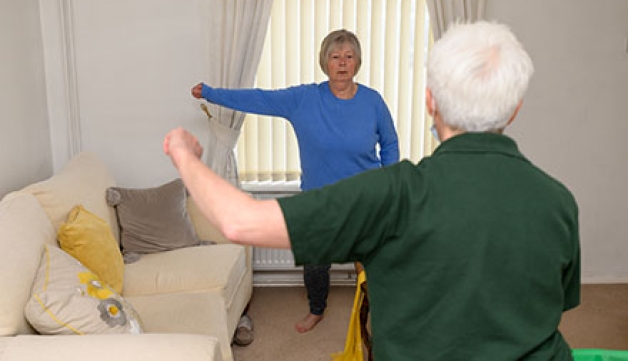
A group of senior men and women stretch with the help of some elastic bands on an indoor gym.

Plus, after the decline seen during the pandemic, both groups have returned to November 2018-19 levels, so there are now 3.8% more adults from this group who are active than in November 2015-16 when Active Lives started. 

What else do we know?

Interestingly, in the 2021 census, 18% of all disabled adults were aged 16-34, up from 9% in 2011 census. However, those aged 35+ still dominate the overall figures and drive the trends. 

Disabled people over 55 are responsible for the increase in activity levels and there is long-term growth. 

Our insight suggests that a key activity contributing to pre-pandemic recovery is walking for leisure.

Change is not seen across all impairment groups, however, as we have not seen increases in activity levels for people with dexterity, mental health, breathing or behavioural conditions, when compared to baseline (November 2015-16).

We can see, as always, that inactivity sharply increases after 75 and the more impairments a person has, the less likely they are to be active.   

Back to the story…

We all know that the past few years have proven to be hugely difficult for everyone, but they have been significantly worse and disproportionately more impactful for disabled people. 

The findings from this year’s Activity Alliance survey support this.

We’ve learned that:

  • the cost-of-living crisis is reducing the chance of being active
  • the levels of loneliness felt among disabled people are increasing but that being active could help them feel less lonely
  • disabled people are less likely to have positive attitudes and tend to see less improvement in their view of things, which considerably affects their mental health and wellbeing. 

Crucially, we also now know there is still an ongoing unmet need: disabled people were more likely to say they wanted to be more active compared to non-disabled people (77% vs 54%).

This 'activity gap' has remained consistent with previous years.

What can the sector do?

Activity Alliance’s report helpfully details some actions that we, in the sector, can take to support disabled people, which are based around the seven themes explored in the survey.

We also need to think about what we might put in place to combat the major challenges identified around cost of living and tackling loneliness.

And so it urges leaders and organisations to look at what changes they can make - both short and long term - and explores the ways we can build on some of the great practice already seen in the sector. 

One important element to bear in mind is that too often the people with the most to gain from being active are the least able to take part. 

That’s why we’re on a mission to address this injustice and work with an array of partners to ensure disabled people are heard, understood and included. 

We have seen great progress recently from organisations who are determined to make a difference for disabled people’s inclusion in sport and activity.

Therefore, we need to harness that enthusiasm and understand that together we all have a role to play to continuously shape and adapt our activity offers to disabled people.

Only by working together, collaboratively and collectively, will we ever be able to effectively unite the movement and close the disability activity gap.
 

The 'wonder drug' to improve your mental health

Our mental health is our most valuable asset and moving regularly is proven to help us to look after it as well as our general wellbeing, which is key to leading a happy, healthy and fulfilling life.

The benefits of physical activity are well evidenced, playing a role in both protecting us from ill-health and in managing and alleviating mental health struggles and, for this reason, physical activity is often described as a ‘wonder drug’.

However, it remains as one of the most under-utilised public health interventions.

Whilst anyone can experience a mental health challenge at any point in their life, we know some are more at risk than others, and challenges such as the Covid-19 pandemic and the cost of living crisis are also contributing negatively.

Being active can significantly support those with mental health conditions but the symptoms associated with mental health problems such as low mood, fatigue, lack of motivation and anxiety – the focus of this year’s Mental Health Awareness Week – make it even harder to do so.

It really can be a vicious circle that many people find difficult to break, and that’s because it’s not as easy as ‘just doing it’ or ‘telling’ someone to move more. If only!
 

Our mental health is our most valuable asset and moving regularly is proven to help us to look after it as well as our general wellbeing.

We don’t always consider how the various barriers towards being active can be too significant to overcome for some, and that these many need greater support to get started.

For this reason, Uniting the Movement focuses on supporting people on their journey to living a healthier and more active lifestyle by helping remove barriers and scaling up the enablers that will address these inequalities.

What we'll do

We know that mental health challenges start young – half are established by the age of 14 and three quarters by the age of 24 – and that’s why, as a foundational step into children and young people’s mental health we will be conducting an evidence review.

The aim is to establish the evidence for the role of sport and physical activity in the treatment of diagnosed mental health challenges for this segment of the population, and to identify what works and where the gaps are to inform future investment.

Through our adult funds, we will continue to explore how we can better connect sport and physical activity provision with local NHS Talking Therapy services so more people have the opportunity and support to access physical activity as a treatment.

Plus we will be exploring the impact this has on clinical outcomes and comparing against standard talking therapy.

We will also work with partners to develop a series of support resources to make it easier for mental health services to understand how to go about embedding physical activity into routine care, plus we will keep building on our existing work with Rethink Mental Illness.

There's currently a lack of studies that focus on the role of physical activity on those affected by severe mental illness, so in order to tackle this shortage of knowledge we'll explore how physical activity can play a major role in improving physical and mental health, as well as social and overall wellbeing in Tower Hamlets and North East Lancashire

Working in local health systems, these trailblazing projects will aim to improve the support to those from culturally diverse communities and deprived communities.

This will require understanding the determinants (barriers and enablers) to physical activity for people severely affected by mental illness, while specifically exploring how local systems can better support people living with severe mental illness.

But that’s not it!

Our long-term relationship with mental health charity Mind, will focus on helping community-based sport and physical activity organisations to support the mental health of people experiencing inequalities, with a focus on young people aged 11+ (especially those experiencing trauma), people from ethnic minority groups (who are both disproportionately impacted by mental health problems and inactivity) and people from the most deprived socio-economic groups.

We'll also continue to advocate to national and local policy makers the role of physical activity as a helpful population health tool and a driver for supporting the nation's mental health and wellbeing.

While we know the coming months and years won't be without their challenges, we have one simple ask of you today (and every day, actually) - when things get a little difficult or stressful, get up and move.

Keep moving while you make that cuppa.

Get yourself outdoors and take notice of nature.

Turn that Teams meeting into a walking meeting.

Your mind and your body will thank you for it.
 

Want your kids (and you and the planet) to feel better?

Walking is one of the easiest ways for people of all ages to keep healthy and spend time with friends and family but less than half of primary school children walk to school in England today, compared with 70% in the 1970s.

So, each year Living Streets runs Walk to School Week to help reverse this decline.

Walk To School Week sees us motivate families to swap the school run for a school walk and celebrate the many benefits of walking to school.

Families are encouraged to walk, wheel, cycle, scoot or ‘Park and Stride’ for the week to see the big differences that come from small steps - from healthier and happier children to fewer cars outside the school gates.

Our fun and engaging week-long activity packs for primary schools are designed to teach pupils about the importance of this simple activity.

Last year, more than 200,000 pupils across the UK took part in our Walk to School Week challenge, and we’re hoping that this year will be bigger than ever. 

This year's theme, Walk with Wildlife, encourages children to travel actively to school every day of the week.

With a different animal for each day of the school week, kids can learn about the important reasons to walk and the difference it can make for individuals, communities and the planet.
 

Walking is one of the easiest ways for people of all ages to keep healthy and spend time with friends and family, but less than half of primary school children walk to school in England today compared with 70% in the 1970s.

Because while, according to Sport England's Active Lives Children and Young People Survey, children and young people’s activity levels overall have recovered to pre-pandemic levels (47% are exercising for 60 minutes or more each day), which is definitely good news, there are many more kids who could – and should – be enjoying a regular walk.

Walking to school helps contribute to the 60 active minutes a day recommended by health experts to keep children healthy and happy.

Being active helps to prevent long-term chronic health conditions such as certain cancers, type 2 diabetes and heart disease, and the potential mental health benefits of walking to school from a young age are also significant.

Walking stimulates the release of neurotransmitters and brain chemicals, including endorphins, oxytocin and serotonin. These trigger positive and happy feelings, help improve mental wellbeing and reduce stress and anxiety.

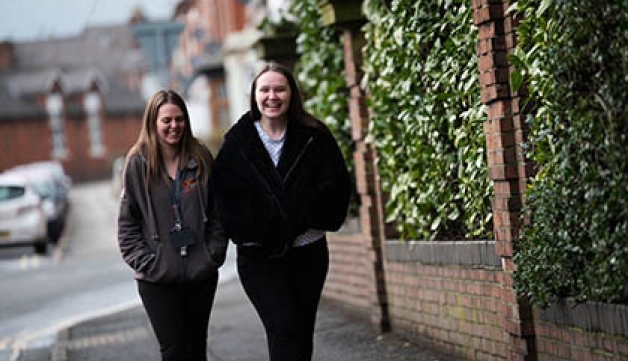
A boy and a girl walk side by side towards their school.

An active lifestyle can tackle more serious forms of mental health issues, including depression and social withdrawal, too.

Encouraging children to move is a great way to balance out screen time and regular walks can improve sleep cycles, as well as the quality of their rest.

Walking with your kids also provides quality time together as a family and is a chance for children to spend time with their friends and peers outside of school.

But there's more - getting children into walking from a young age creates healthy habits for life, promotes independence and freedom, and teaches road awareness.

And let’s not forget that walking can protect the planet too!

In the UK, the school run is responsible for half a million tonnes of CO2 emissions each year, but swapping driving for walking reduces harmful emissions and improves the quality of the air we breathe.

In schools taking part in WOW, the walk to school challenge campaign from Living Streets, we see a 30% drop in cars driving all the way to the school gates, and this stops a massive 190kg of CO2 per participating school each year. 

It is never too early or late to start walking to school, so if you have a child going to school this week, give walking a go and you’ll soon notice the difference in how you all feel!
 

Find out more about Walk to School 2023

Walk with Wildlife

A new era for English basketball

Never in my wildest dreams did I think the Birmingham 2022 Commonwealth Games would end like that for England’s 3x3 teams.

I knew we could achieve something great, but for my team to win gold and for the women's team to win silver at a home Games, in the inaugural 3x3 competition and in front of our friends and families, plus millions watching at home, is Hollywood!

It's incredible. I'm still trying to figure out the words to put it together.

The Team England 3x3 basketball team with their gold medals at Birmingham 2022 Commonwealth Games

Life’s all about moments, so when Australia’s Daniel Johnson’s two-pointer rolled inside the rim I was ready to take the loss on the chin.

Then Orlan Jackman tipped me the rebound and I paused before I took my shot.

In that moment, I felt confident in my ability to win gold for England, for my brothers on the court: Orlan, Jamell and Kayne and to make my city proud.

I didn’t realise the seismic reaction that game winner would have for basketball in this country.

I'm going to carry this moment with me for the rest of my life. It was a two-year process; we worked so hard as a four in the two months prior to competition.

We beat Australia, one of the best teams around, after such a short time together. Just imagine what we can do if we can push this now.

We received mainstream and regional news coverage, across TV, radio and print, as well as hundreds of thousands of interactions with fans via social media – people who knew nothing about basketball, nor its popularity in this country, were reaching out to us to tell us how much they enjoyed watching us play and about their newfound interest in basketball.

I didn’t realise the seismic reaction that game winner would have for basketball in this country.

As a professional and international player for England and GB, I used to hear from those removed from the game that basketball isn’t big in our country.

Statistically, basketball is the joint-second most played sport in England after football.

From our exploits in Birmingham, I think people are sitting up and noticing that English and British basketball is thriving – and is played here with a dynamism, grit and poise.

Characteristics that people can get behind.

News of a basketball legacy plan, backed with financial investment from Sport England and the National Lottery, Basketball England and Birmingham City Council, in my home city makes all the blood, sweat and tears my teammates and I put into our Birmingham 2022 campaign even more worthwhile.

I am from Birmingham, so this means so much.

Ultimately, grassroots basketball is where the love for the game - and physical activity - is sown. It’s also the first stage to creating and moulding champions.

I played basketball in every corner of this city, from playing in my yard with my brothers to using Birmingham’s indoor and outdoor courts to grow my skills and improve.

From there, I moved to play for clubs City of Birmingham Rockets and Birmingham As before embarking on a professional career and now, winning medals for my country. 

We have inspired thousands of children and young people, and adults through our 3x3 performances and a high-level of interest in basketball is set to peak now the Commonwealth Games have come to an end.

It’s right we leave the next generation not only with great memories but high-quality basketball facilities to enjoy.
 

Find out more about basketball and how you can get involved.

Basketball England

People and places, an introduction to our story

Most of you will have heard of the phrase ‘building the plane as you fly it’.

They say real change takes place in real work, and for the last few years the experience of working with our local delivery pilots has certainly felt like this.

Yet it is very easy as you are going along, immersed in the challenges of the moment, to forget the learning and insight that you pick up along the way – what went well, what didn’t really work and how to confront and use that.

Before you know it, you’ve worked with others to build something different and you have to work hard at remembering the journey.

Today, we are publishing the story of the local delivery pilots, ‘People and Places: The story of doing it differently’, in order to capture and share the collective learning to date. Covering the period from concept in 2017 through to the vivid realities of the current pandemic, I hope our collective story will resonate with anyone who is wrestling with the challenge of tackling inequalities through ‘system change’ in places.
 

This isn’t a simple step-by-step manual of instructions on ‘how to do it’, but it will explore the ‘how’ and ‘why’ of the approach, the amazing people and places that have shaped the change, and where we think this journey could take us next.

The fundamental question was to understand how working with, and in, places, we could address the stubborn inequalities that exist among the least active through community-led solutions.

We wanted to explore how the social and physical environment we live in, the organisations that serve us and how local and national policies could join up to help communities to be active and thrive.

What we've learnt

Through this work we now understand that, while people’s motivations and attitudes are part of the picture, what’s happening in our lives day-to-day in the places we live and work, and the extraordinary community assets that exist, are much bigger factors.

I’m convinced the best chance for success is a more integrated and holistic approach to increasing physical activity based around the places and spaces where people spend their time.

It’s in communities where the ‘jigsaw pieces’ can best come together. To get to this point was hard. We looked for willing partners with an appetite to explore a different and ‘messier’ more iterative style of working.

We ourselves had to change and embrace new behaviours as a funder. This different approach required us to start with people and place, to be needs-led and framed within the challenges and opportunities, as opposed to any pre-judgement of interventions.

The fundamental question was to understand how working with, and in, places, we could address the stubborn inequalities that exist among the least active through community-led solutions.

On reflection, I think there was a degree of expectation that one of the pilots would create a single innovative breakthrough – a silver bullet – that could then be scaled up or just done everywhere. We soon came to realise that this was a mirage.

In fact, the real change was in changing how we work and an emerging set of ‘ingredients’ that has shown impact, value and progress. All the theory in the world won’t help change the system if you don’t have the right people, mindset and values in place. 

Benefits have come from a more bottom-up approach to our work and investment. Working with – not doing things to – communities and helping those affected to play a role in what happens in their neighbourhood and how it gets done.

We have seen the true nature and power of collaboration.

Looking ahead, we need to ensure we work in collaboration with places – the people within them and the organisations relevant and trusted by them. No lesson has been learned more from our collective work with the pilots.

Please do take some time to have a read of our story and feel free to share what it provokes in you.

People and Places: The story of doing it differently.

Find out more

2020 - the year of data and insight

In a year that felt like nobody knew anything for sure anymore and public health numbers dictated our lives, we’ve depended on data and insight like never before.

I can’t be the only one who’s scrutinised the daily coronavirus (Covid-19) case rates to second guess what might happen next – feeling reassured when the ‘seven-day average’ line points down, alarmed when it shoots up.

At a national level, data, evidence and insight has played a critical role in helping us make sense of things, directing decision-making and guiding investment.

A man runs alone on Broadstairs beach, Kent

At Sport England, we’ve had to rapidly respond to a sector in urgent need of support. Together with our stakeholders, we’ve had to keep the nation active when much of what we knew about sport and physical activity no longer applied.

What would happen when some of the nation’s major activities, such as swimming, football and elements of fitness weren’t possible at times? How would the nation’s behaviour change and who’d find it hardest to adapt? Who needed the most support? Where did they need it? And what did they need?

We needed answers. We needed data and insight!

In the last nine months we’ve commissioned several pieces of research (1), consulted with the sector and reviewed secondary sources from our partners and beyond. We’ve applied behavioural theory to explore how people might behave in these unprecedented circumstances and to inform our approach (and that of our partners) to addressing their needs.

Together with our stakeholders, we’ve had to keep the nation active when much of what we knew about sport and physical activity no longer applied

It hasn’t always been easy conducting research in a global pandemic (whilst adapting to remote working, home schooling children, baking banana bread and of course doing PE with Joe Wicks) but it’s been a great time for data and insight.

Here are some highlights and headlines from what we’ve learnt – to find out more, take a look at our research page.

Physical activity behaviours have been highly disrupted

  • Although national activity levels fell by 7% in the first few weeks of full lockdown (March-May), for many people the importance of being active was more salient and relevant than ever and lockdown was perceived as an opportunity to experiment and try new things (2).
  • As a result, cycling for leisure and sport, outdoor running and jogging, and home activities such as dance and garden trampolining all saw thousands more participating than ‘usual’ in lockdown (3).
  • Despite the vast majority (more than nine in 10) of children doing something to stay active , the amount they have done has been impacted by the restrictions, and declined for many in lockdown (March-May) with some recovery back to ‘normal’ levels on the return to school in September (4).

While many stayed resolutely active, some found it harder than others

  • Disrupted routines, financial stress, lack of support for informal carers and anxiety around catching coronavirus all contributed to lower activity levels for many (5).

In an otherwise challenging year, some have found their experience of sport and physical activity in the 'new normal' better than 'normal'

  • Some children told us they were not only more active than usual but they were enjoying being active more than usual and, interestingly, it was those typically under-represented groups (girls, children from Black or Asian backgrounds) who were most likely to say so (6).

  • Many people (adults and children) have recognised for themselves, for the first time, the benefits of being active and have particularly appreciated the social component of exercising with others (7).

  • Taking part as a family (usually going for a walk) has been key to keeping adults and children active and ensuring their enjoyment (7).

Things can only get better...

...but we need to look out for those who need more support than others

Our new strategy, to be published in January, will place tackling inequalities at its heart. So, watch this space.

References

  1. Savanta ComRes Covid-19 Physical Activity tracker and Join the Movement evaluation; Childwise BUZZ Omnibus May 2020; EdComs’ qualitative research to understand children’s experiences; Family Kids and Youth Insight panel September 2020; In collaboration with the Richmond Group, RDSi We Are Undefeatable qual communities and DJs We Are Undefeatable quantitative tracking
  2. EdComs qualitative research of 62 children aged 5-16 and Join the Movement evaluation
  3. Childwise Buzz Omnibus May 2020 and Parent data from Savanta ComRes activity tracker
  4. Childwise Buzz Omnibus, May 2020 and Family Kids and Youth Insight panel September 2020
  5. Join the Movement evaluation
  6. Childwise BUZZ omnibus, May 2020, EdComs’ qualitative research of 62 children aged 5-16
  7. Savanta ComRes Covid-19 activity tracker 2020, EdComs’ qualitative research

Questions, questions and more questions

As we came to the end of spring, around the country leisure centres, swimming pools, gyms, sports clubs and community centres were starting to think about reopening.

But there was lots of uncertainty and lots of questions.

Will we be able to reopen and when? What will the restrictions and rules be? What does a ‘covid-secure environment’ mean and what does it look like for my sport or venue? Will people want to come back if things look and feels different? And importantly, with different rules and social distancing, will my venue or activity be financially viable?

A closed playground with netting over the bottom of a slide

We, at Sport England, set up our Return to play (RTP) working group in May 2020 to focus on understanding the emerging issues for the reopening of community sport and activity, identify where support was needed and, crucially, get answers to the questions.

We also set out to support the sector to develop guidance for their own specific environments or sports and to help government produce guidance that was applicable to the grassroots sector.

The RTP ‘mailbox’ was also set up to capture questions, queries and information – and there were lots!

Coming from all angles, including local authorities, leisure operators, national governing bodies (NGBs), charities and community organisations. The questions weren’t just about what activity would look like but about the workforce, training and competition structures, travel to other areas, spectators, and sport taking place alongside other activities.

The RTP page was set up on our website and launched in June, becoming the hub for all our shared information, including the all-important FAQs and links to the latest government guidance which have been revised time and time again to reflect the changing, new situations and regulations which have emerged.

The hub quickly developed to include everything from guidance on legal risks and duties of care in returning to play, to hygiene guidance for facilities – and everything else in between.

How people felt

In August we carried out an RTP survey which, alongside our conversations with delivery partners, helped bring greater clarity to how people were feeling about getting back to activity.

The findings showed that, although many people were keen to get back to their activities in clubs or groups, they had some concerns:

  • Hygiene, cleanliness of the activity or facility
  • The impact of restrictions on their experience – a modified version of the activity might not work for everyone
  • How well other participants stick to the rules around hygiene and social distancing.

Those feeling most anxious about returning to activity, unsurprisingly, were people with long-term health conditions or a disability, women and older people.

Successfully returning

One of the key characteristics of organisations getting back up and running successfully, in re-assuring participants and in building their confidence, has been good communication.

Here’s how people did it:

  • Telling and showing customers what measures had been put in place before they came back.
  • Outlining to them what to expect when they arrived for activities and explaining the rules.
  • Reminding them, on a regular basis, in a friendly way.

There was lots of uncertainty and lots of questions

We’ve seen so many organisations do this well over the last few months as they work to rebuild their activities, and our sister website Club Matters has produced a series of videos with Peterborough Town Sport Club to show how they’ve done it.

Learning from experience

A return to play after the first lockdown felt like a huge challenge for everyone.

The initial development of the ‘frameworks’ for different types of activities to be ‘covid-secure’ e.g. outdoor team sports, understanding how leisure centres, gyms and swimming pools could operate and keep everyone safe. Then the practical understanding and implementation of that by the volunteers and paid staff who make it happen on a daily basis.  

The second return to play after the national restrictions in November was more straightforward in some ways as everyone had got to grips (to an extent) with all the regulations but we now had the tiered structure which added a layer of complexity.

It’s not over yet

The emergence of tier 4 brings the latest review of our RTP FAQs and another check through the guidance and resources to make sure everything is still accurate, relevant and helpful.

We recognise that return to play hasn’t happened for everyone yet and that there are still organisations who are struggling to work out how they go forwards in these challenging times.

And there’ll be more to think about in the New Year as we continue to develop our understanding of how clubs, community groups, leisure providers and event deliverers are coping, adapting and planning to get back to activity.

Tearing up plans and making new ones

I’d planned to celebrate the year I turned 50 with lots of (undoubtedly cliched) firsts – roller skating lessons in Hyde Park, walking up the UK’s highest mountains (not in the same weekend), an Olympic-distance triathlon and a tattoo.

I was still compiling the list when it became clear 2020 had other ideas – my year of firsts replaced by a year at home; an unprecedented nine months (and counting) that generated new experiences, all of which (perhaps naively) I didn’t have the wit to conjure up. Even as we were sent home in March, I couldn’t believe we’d still be here now.

A mother and daughter exercise in their garden, using garden tools as weights

Back in March, as it became clear the pandemic would force some restrictions on our movements for a few weeks at least, at Sport England we considered how we could help people stay active. Although our primary role is to support the sport sector, in recent years our campaigns – This Girl Can and We Are Undefeatable – talked directly to groups of consumers who found it harder to get active.

Both campaigns have large and diverse target audiences, but as the whole country faced the pandemic together, could we successfully talk to everyone at the same time? And should we? With intensive care units filling and the lockdown being announced, weren’t there more important things than sport and exercise for people to focus on?

Keeping the nation active

At Sport England we always believed that sport and physical activity are important and, as normal life stopped, that importance was heightened. It mattered for all the reasons it always did, supporting our long and short-term physical mental health, personal development and social connections. But there were new reasons too – keeping us healthy, supporting our immune systems and helping us manage the stress, anxiety and fear caused by the virus itself, as well as isolation, home-schooling, working from home, not working at all and so on. Slumping on the sofa for the duration (even when we thought it might only be a few weeks) was tantalising but unhelpful.

Our Join the Movement campaign and online activity hub countered this – and it worked. When the campaign was in full swing, we could see activity levels rising (compared to the beginning of lockdown) and our evaluation showed 49% of the adults who recognised the campaign said it prompted them to take action.

We also worked with local and national partners to help them keep their communities active – gaining intelligence, providing clarity on the guidance, involving them in campaign creation and developing toolkits that help them tailor messages to meet local needs.

My year of firsts replaced by a year at home; an unprecedented nine months (and counting)

But the job is not done. Motivation was harder to find during the second period of national restrictions – bad weather and boredom blending into a dreary cocktail of tedium that could become more potent as we move into a January that may offer more same old, same old, than new year, new beginnings.

And while Strava recorded a very welcome record amount of activity in 2020, particularly from younger women, we know that not every demographic group has been able to get active.

Not surprisingly, our population-wide Active Lives survey shows falls in both the numbers of men and women getting active, especially those aged 55 and over. While our coronavirus activity tracker shows that older audiences, those on lower incomes and from Black, Asian and minority ethnic backgrounds are more likely to be inactive.

The pandemic has reinforced existing inequalities and that must change. We all, collectively, must change that.

This too shall pass

As we prepare to return and reinvent in 2021, there is an opportunity for change.

This year has been too terrible to talk about positives, but the disruption and dislocation have opened up established routines, attitudes and behaviours. The need for daily exercise and fresh air is widely discussed along with its link to mental health. We’ve all got better at asking each other if we’re ok and saying if we’re not. We’ve validated activities that may not look like traditional exercise – walking has been big this year – which makes it possible for more people with all abilities to see that regular activity is feasible for them. And many of us have found or rediscovered our local areas.

All of this needs to be nurtured as we move, eventually, into recovery so that more and more people can benefit from regular movement by finding what works for them – and this has to be done in collaboration with the partners who helped us respond so quickly.  

The start of that recovery may coincide with my 51st birthday. I’m not making any lists yet, but I will get that tattoo. It was always going to be the Persian adage my mum said to me when I was full of angst about, well, whatever: This too shall pass. It’s more apposite than ever. This will be over one day and we must plan now how we are going to take the lessons we’ve learned with us.

Innovating in the middle of a pandemic

It’s been just over a year since we launched our organisational values of ambition, inclusivity, collaboration and innovation.

Each of these hold equal weighting for us as an organisation, and they can’t just be words on a piece of paper – our values define who we are as an organisation and highlight what we do to go the extra mile to set us apart.

But innovation has particularly come into its own this year, in terms of how we want to be and how we can help our partners and the people we work with to view this pandemic as a chance to create opportunities for growth.

The unpredictable nine months we’ve just come through have provided an accelerated opportunity for us, and the sport and physical activity sector as a whole, to put our talk about innovation into action.

2020 - a year to innovate

For so many, it’s been a terrible year and has presented challenges for sport and physical activity like no other. Survival has been paramount for many businesses in our sector, yet without the headspace to consider adapting and innovating. For others, with the normal rules thrown out the window, 2020 presented an opportunity for change and great ideas to get people moving in different ways.

According to Be the Business, British businesses had to do three years’ worth of innovation in three months to keep their businesses going during the first national lockdown, with over half a million businesses (37%) in the UK changing their operating model to find new ways to meet customers’ needs – our sector was no different.

When we were told we had to stay at home we switched our gym classes, 5-a-side football matches and socialising with other households for Instagram fitness challenges and Zoom quizzes. Face-to-face sport and physical activity ceased to exist overnight and the traditional ways we deliver and reach our audiences didn’t fit the new world order – we all had to improvise and adapt.

But innovation means different things to different people. We’ve been thinking about what innovation means to us and come up with some starting principles. This isn’t the final list, and we’re exploring this further, but for something to be considered innovative it we think it:

  • is driven by, and connected to, the needs of the community that it’s trying to serve
  • addresses a specific consumer problem rather than just being a light bulb idea in the night.

How did we respond?

Like everyone else, the pandemic challenged us do things differently. As part of our overall coronavirus (Covid-19) response, we ensured £5 million was dedicated to innovation - particularly for those who the pandemic’s affecting the hardest.

Our research showed the major inequalities causing some audiences to miss out on opportunities, were being widened. And we believed that now was the time to find out more about who was out there working on innovative solutions to support key audiences like women, people on lower incomes, older adults, people from Black, Asian and minority ethnic backgrounds, disabled people or people living with long-term health conditions. 

Our first offering was our first ever ‘Open Call for Innovative Solutions’, which was deliberately different to our more traditional funds and looked to address widening inequalities. Its aim was to find solutions that are using innovative methods to tackle the very real problems that certain communities were facing. We discovered, and are in the process of supporting, 27 organisations.

Now the journey's started, there's no turning back

Ali Donnelly

There are some brilliant projects in here, from Slow Ways – who are recruiting volunteers to help create a network of 7,000 walking routes across the UK, connecting towns, cities and villages to encourage more walking – to Dance Centred CIC, who are using physical postcards with accessible movement tasks to motivate and encourage individuals who are either shielding or digitally excluded.

840

The innovation open call received 840 submissions

While the open call was about existing solutions that needed support, we also want to support new ideas that address some of the problems that have never been tackled before. We knew we couldn't do that on our own, so we’ve partnered with the Design Council – a recognised leader in design thinking and innovation, and we’ll be announcing the detail of this exciting partnership in the new year. 

As inequalities in activity levels continue to persist, we believe there’s an amazing opportunity for innovative ideas to support those finding it harder to be regularly active. And we must recognise the realities of life at the moment. We’d encourage innovators out there to understand the barriers facing the less active audiences and solve for these as that’s where we’re most focused and where the focus for our new strategy, out next year, will be.

The Open Call for Innovative Solutions and partnering with Design Council are just the beginning for us and our work to truly deliver on our innovative value.

Now the journey’s started, there’s no turning back.

While we have lots to learn about what innovation is and looks like when addressing inequalities in sport and physical activity, we’re excited about the potential it brings. We’ll be sharing our learning openly and honestly in the hope it motivates and inspires others to do the same. And our hope for our next strategy is to shine a light on the role of innovation and how it can be a catalyst for truly relevant and inclusive sport and physical activity in the future.

Find out more about the 27 organisations we're supporting.

Innovation open call

Youth voice can be a game changer

Before coronavirus (Covid-19), more than half of 5-16-year-olds were not active enough to get the associated health, social and educational benefits.

The single biggest driver of activity for young people is enjoyment, but too often the current system doesn’t deliver this. In order to change this, we need to listen more to children and young people and involve them in decision-making to create the type of experiences young people want.

By embracing youth voice and allowing young people to have a say in shaping sport and physical activity, we can help to make opportunities more relevant, more fun, and enable young people to support their peers to be more active.

A group of boys at a Volunteer it Yourself project, building a clubhouse, throw footballs at the camera

It can also help us better understand and address some of the barriers young people face, from confidence to take part or issues like body image or sexism. We’ve seen this demonstrated by our Potentials Fund projects.

It’s about creating opportunities for the ideas, opinions, knowledge and experiences of young people, in all their diversity, to inform and shape decisions and what you do as an organisation.

Youth voice has the potential to be a game changer for sport and physical activity.

What works?

Every day, thousands of young people are supporting others to get active and experience the benefits and #iwill week is a great time to celebrate this. But embedding youth voice goes beyond just having a programme or project to engage young people.

So, here are some of the key ingredients behind some of the successful approaches to embedding youth voice in sport.

It's got to be genuine

It’s not enough to just have young people in the room where decisions are taken, there needs to be a genuine openness to listening to their views and commitment to taking action in response. Without this, it can feel tokenistic and organisations miss out on the benefits of the ideas, skills and experience young people can bring.

This requires buy-in and commitment to youth voice across the organisation, and an understanding that part of this commitment requires giving young people the support and training they need to feel confident going into new contexts and articulating their views in spaces like a board meeting.

It must be inclusive

Creating accessible opportunities for young people from diverse backgrounds is a key priority for many sports and something we need to build on.

There’s a significant gap in participation between low-income young people and their wealthier peers, and we see a similar inequality in activity levels – with 54% of children from the most affluent families considered active, compared to 42% from the least affluent families.

Before coronavirus

More than half of 5-16-year-olds weren't active enough

It’s therefore crucial we provide accessible opportunities and tackle the barriers low income young people face to getting involved. This can include addressing practical barriers such as providing expenses for travel to events or meetings for all young people, or making it possible to join meetings online or remotely. Scheduling meetings and opportunities that fit in around work, studying or caring responsibilities can also make it easier to join in.

Making adverts for roles or communications about getting involved feel accessible and relevant is also important. For example, using social media to share adverts for roles or allowing video applications.

Why not collaborate more, too? Working in partnership with organisations that young people trust and relate to can be an effective way of reaching out to new audiences, or a way to seek expert guidance on how to improve access to opportunities.

Remember that young people know how to do this better than you

This perhaps should be obvious! But sometimes it’s easy to forget that young people are experts in what works for them, or for us to not give the views of young people enough weight in our decision-making when we’re looking through the lens of our role as professionals, or indeed as adults.

We often think it’s up to us to find the solutions, but in this mindset we fail to really embrace the value young people can bring and we take a familiar path.

54%

of children from the most affluent families were considered active, compared to 42% from the least affluent

What came across from some of the examples shared with us is that if we truly embrace young people’s ideas, imagination, creativity and skills, and are brave enough to try something new, it often delivers a much better solution than we could ever have come up with.

Why not ask a young person to work with you to reflect on the mindset and culture of your organisation and look at your decision-making processes to helping you enable more of this to happen?

It's a journey

Embedding youth voice doesn’t happen overnight. It takes time and resource, and so it’s important to plan and invest in the longer term.

The ultimate ambition for many in the sport sector is to get to a place where consulting with young people is not an afterthought, but instead is embedded at all levels throughout their sport.

England Golf shared with us the journey they’d been on with their Young Ambassadors, developed in partnership with the Golf Foundation. It took time, but they’re now in a place where young people are actively involved in key decisions and the Young Ambassadors are finding their feet in leading the development of the game – helping to make the sport feel relevant to young people and sharing their passion to help challenge stereotypes about the sport they love. They produced this film to do just that.

What next?

Our role as a match funder in the #iwill Fund, a joint investment from The National Lottery Community Fund and the Department for Digital, Culture and Media and Sport, was an important step on the journey for us and our Potentials Fund has helped us learn more about how to put youth-led social action at the heart of sport and physical activity.

Other funders are also considering how they can do more, like the National Lottery Community Fund and their Young People in the Lead advisory panel.

Considering how effectively we involve young people in our work will continue to be important as we move to implementing our new strategy next year, with positive experiences of children and young people an important priority for us.

Equality is about support, opportunities and listening to what people have to say

It may sound overly simple, and it is – I appreciate the issue of racial inequality in all walks of life is incredibly complex – but one way to help people is just to say 'yes' a bit more.

Saying 'yes' to people, regardless of their race, gives people opportunities to show what they’re capable of.

I lived in Bristol until I was 11, when we moved to Tanzania for five years. In 2012 we returned to Bristol, I was in my teens, naïve and thought that if I can’t play football, I don’t know what I’m going to do.

Bristol Flyers basketball player Greg Streete shoots a freethrow

But with the help of others who had a better understanding of it all and who said 'yes', I understood that life wasn’t just football.

It wasn’t a smooth journey to get to that point, though. Equality is about support, opportunities, chances and listening to what people have to say – which hasn’t always been what I’ve experienced.

Barriers to progress

When I was in college I didn’t get the support I felt I needed. After coming back from Africa, my twin brother and I went to a college and the learning aspect was fine. But when it came to sport and PE and opportunities and chances and yesses – we didn’t get any of those.

I was focused on football at the time and I’d go to a trial for the college team and we didn’t get the opportunities others did.

Saying 'yes' to people, regardless of their race, gives people opportunities to show what they’re capable of

I don’t harbour any ill will towards anyone who got in ahead of me and my brother, but there would be guys who would join months after us and they were automatically given the chance to progress and show what they could do.

I’m not envious of others’ ability, some people are better, but we didn’t even get a chance.

The way we were spoken to, looking down their noses at us, the kissing of the teeth, the air of disapproval, the body language when addressing us, was all very negative.

I did ask for opportunities and they would just say 'come to the next session, come to the next session' – but there would be no progress despite the effort we put in.

A chance to shine

But I love sport so much, I didn’t want to use those experiences as a negative and to start hating it.

So, in the summer of 2014 my brother and I went to Hillfields Youth Centre in Bristol, were introduced to the staff and became part time workers there.

As we were a bit older, we started coaching the youths. We spoke to them, listened to them, heard what they said and offered support and coaching in any way we could, at whatever level it was.

I enjoyed it all, coaching, listening, meeting new people. The kids were showing off and it was great to see – I wanted to encourage that enthusiasm for physical activity.

That same summer I met Greg Streete, at the time he was the captain of the Bristol Flyers basketball team. He was doing basketball coaching at Hillfields and before I knew it, he thought he saw something in me – even though I’d always been focused on football

I love sport so much, I didn’t want to use those experiences as a negative and to start hating it

I thought he was insane, I didn’t have any skills! But he convinced me to keep trying and told me to come along to a couple of other open sessions he was running.

He said I didn’t have to pay anything, said that if I needed help with transport then the centre could help provide it and so he made it hard for me to say 'no'.

He even said that if I changed colleges, to one where he coached, I could bring my work so I didn’t have to start again.

He was so positive and before I knew it, the basketball community in Bristol just opened up to me.

Going to City Academy gave me so many more opportunities. The academic side of things was still good, and in terms of the actual sport, I was all in. I got opportunities, not only to join the team but to play in games.

That might seem like something little but I never got that in football, I never got that in the previous college, or academies, or clubs I tried to join.

I thrived on that and I brought that energy and motivation back to the youth centre and wanted to volunteer and do more for them.

University and Coach Core

University may not have worked out for me. I seemed to do OK with the academic side of things, but the pressures of the student life in general really got to me.

It built up so much depression in me and I eventually found that uni wasn’t doing me any good, I was in a dark place.

But even during that time I’d still found basketball to be a great release for me, and my tutor had highlighted that I seemed to enjoy coaching and teaching – passing on knowledge.

That stuck with me and when I left uni, I went back to Bristol and was looking around for jobs – looking everywhere – my friend eventually found an advert for Coach Core that sounded perfect for me.

Right from the introduction session it felt right.

My mentor, David Smith, made it such an easy and supportive transition for me to become a part of Coach Core.

He helped me a lot and regardless of everything else, he made sure we all got an equal opportunity – it was a really positive experience for me.

I don’t have a single negative thing to say about Coach Core, they gave everyone a chance and I’m now an assistant manager for Shine – a job I got straight after completing my apprenticeship because I was on placement there – because of their desire to give everyone a chance.

That’s why we need more things like Coach Core, why we need Sport England to continue to support things like this that allow people the opportunity to find out that there’s more to life than hearing 'no'.

Shine employs qualified coaches to deliver sport and physical activity sessions at state, private and special schools across the south west. And Coach Core is an apprenticeship scheme giving young people aged 16-24 the chance to become the next generation of inspirational coaches.

Active Together

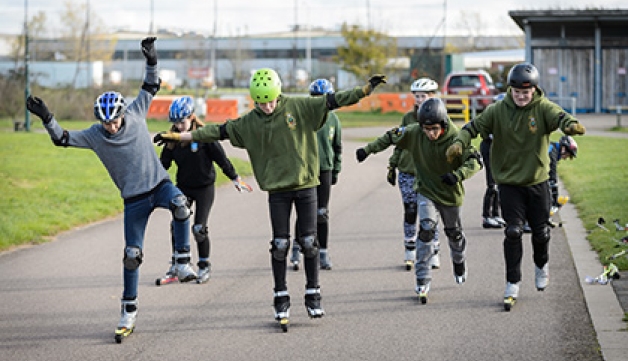
Teenagers try out Nordic skiing, on roller skis A £7.5 million fund, with up to £10,000 in match funding, as part of a support package to help clubs and organisations set up and run crowdfunding campaigns related to the ongoing impact of Covid-19, as well as the emerging energy, cost of living or other local crises - such as adverse weather. Active Nation Funding

I’m not doing this just for fun... I’m doing it to do something with my life

Sport’s had a big impact on my life. When I was growing up, all I thought about was sport.

Once you’re on that pitch then there’s nothing else on your mind, all your problems disappear and the only focus is on the ball, nothing else.

I believe that it brings a lot of people together. You can all speak different languages, but you communicate through the ball and that’s all that matters in that moment.

Black football referee Uriah Rennie, officiating a Football League match

I was born in Guinea-Bissau, West Africa, I grew up in Portugal and moved to London eight years ago, aged 14.

I’ve not personally experienced overt racism while playing sport – you’ll always hear some unkind words, that’s part of sport sometimes, but it’s not been racist with the people I’ve played with.

That’s not to say it doesn’t exist in football, or sport in general, though. We know it does – you can see it on TV happening to players like Mario Balotelli and Raheem Sterling.

There used to be a belief for Black people that if we became professional footballers, that racism wouldn’t be directed at you.

But when you see it so openly on TV, with monkey chants and gestures from the crowd, it shows that whether you’re rich or not, whether you’re a great player or not, it’s still going to happen to you.

It shows that people aren’t abusing you because you maybe live in a poorer area than them, it’s just about your skin colour, and that is really painful.

I try not to think about it often, but it is there and sometimes you can’t avoid it.

ARCA Generation

I had a lot of free time in college and I didn’t have a job, so instead of hanging around doing the wrong things, a friend told me to come and play futsal with him at ARCA.

When I arrived, I met a lot of new people and started coming here more often – it felt like a family.

I’m now part of their workforce diversity project and four months ago I became a youth leader – it’s given me an opportunity to learn as an employee.

I try not to think about it [racism] often, but it is there and sometimes you can’t avoid it

I just graduated from university and they’ve given me some training in how to present myself in interviews. I’m also mentoring people now and I’m adding skills to my CV that can be useful for me.

I’ve been a part of ARCA for five years and I’m part of the family. I believe they’ve helped me to mature and become more aware of my actions.

I used to be very impulsive. I think that was due to my environment and the difficulties I’ve faced in my life. But they’ve taught me to approach things differently and to interact with people in a positive way.

Battling preconceptions

My life could have gone the wrong way, with a couple of different decisions. Where I studied, in Tottenham, it was very easy to go in the wrong direction.

Where I was, we all had similar thoughts. We’d never met people who’d experienced different things in life. I didn’t know about ARCA or anything like it, me going there was just down to my friend. He brought me into a different situation. That got me out of the mindset I was in and I can’t thank him enough for it.

I believe the lack of opportunities for me at that time were a combination of both my race and the area in which I lived. There were White people there as well and they shared the same mentality as some Black people.

If you grow up in one place and all you see is violence, violence, violence, you get accustomed to it and you believe there are no better ways to fix things than by reacting through violence – because that’s what settles disputes all the time.

What leads to this being the case in the first place is a complicated mix of things. A Black person is often portrayed as someone who doesn’t show weakness or emotion, so for you to stand up for yourself in a group you need to show that you’re not afraid of anything.

If someone approaches you and challenges you, the only solution to that problem is through violence, otherwise that person will never leave you alone.

Generally, depending on the area you come from, I believe that this affects a lot of Black people. And, as a result, people don’t believe you’re capable of doing something else.

Forging a new path

At ARCA there’s a whole mix of people. The only thing we share is that we live in a community that’s often discriminated against by other people, so we all face the same challenges. It’s not all about being Black, it’s about helping people from economically disadvantaged backgrounds.

They’re giving me the opportunity to do an FA refereeing qualification. I believe there aren’t enough Black referees in football – I don’t think there’s a single Black referee in the Premier League at the minute.

So, I’m trying to make changes myself. My journey on that path is just about to start. I’m preparing for it now but I hope I can change the perspective of some other Black people.

In reality, very few Black people chase a coaching or refereeing qualification, they only go for the playing side of things. So I believe if I chase this, and we get more numbers doing similar things, then eventually there will be more Black representation in other areas of football, and other sports, other than playing on the pitch.

In football specifically, we need more support from large organisations, big teams, the FA itself, so people can get qualifications and believe that they can become a referee or a coach.

I’m not doing this just for fun, or to run away from problems, I’m doing it to do something with my life and hopefully show others that they can do the same.

ARCA Generation is a non-profit organisation using sport, recreation and educational activities to help develop the skills of young people – enabling them to build a bright future for themselves and contribute to the growth of their own community and generation.

Working to keep the nation active

Earlier this year, as lockdown closed the entirety of the sport and physical activity sector and confined people largely to their homes, we refocused our work to concentrate on a small number of short to medium term priorities. 

One of these priorities focuses on our work to ‘keep the nation active’ and from a working group which I have been chairing, several important actions have emerged – including a campaign to help people to get and keep fit at home called Join the Movement, and investments into helping people who were finding it most difficult to be active, like our partnership with Demos on 10 Today which supports older people.

Underpinning all of this has been our work, through insight and research, to really get to grips with how people are feeling about sport and activity and what is happening to activity levels. So, today we are setting out what our insight has told us are the three strongest themes that could impact people’s return to sport and physical activity.  

A gym in Manchester reopens with signs up on how to social distance and use equipment safely

Through weekly tracking during lockdown, by working with Savanta Comres, we were able to understand the picture of what was happening to activity levels and say that while lots of people were finding new ways to be active – such as discovering great fitness at home products or taking up running or cycling – many others were having a much more difficult time, particularly young people for whom the absence of school settings had a particular impact.  

In recent weeks we have concentrated on understanding how people feel about sport and activity reopening and about how their lives have changed. And we want to share that insight today to help everyone involved to understand and adapt, so people continue to feel they have the choice and ability to be active in ways that work for them in this new era.  

We have identified three specific consumer groups and themes – combining our work with Savanta Comres, the qualitative evaluation of our Join the Movement campaign and through leaning on other data sources – and the slides attached further down this page give additional depth to this insight.  

These themes are important because if not well understood by everyone involved in delivering sport and physical activity, levels of activity across the country could be seriously hampered and fewer people will stand to access the enormous physical and mental wellbeing benefits that being active brings. 

1) People who feel worried or anxious about contracting coronavirus for a prolonged period 

Coronavirus has had a profound effect on people’s psychological wellbeing. People have experienced fear and uncertainty, and personal circumstances including work stress and the fear of illnesses and the reality of bereavements has been extremely difficult to manage. Some people still feel afraid to go out. 

In many cases the burden of these demands has inadvertently diverted attention away from the importance of physical activity and exercise. 

There are, however, short-term opportunities to support people who feel like this. One opportunity includes the gradual reopening of sport and activity and the gradual return to workplaces. 

However, a threat that we are already seeing happen is that as the sector opens up, many do not return for an extended period of time and levels of worry and anxiety about whether it is safe to attend persist.  

Providers should consider simple and accessible ways to manage anxiety as they reopen and restart.  

That will require ongoing reassurance around issues like hygiene, proximity to others, policing behavior and so on. Providing videos and clear ‘in-advance’ messaging and imagery would be a major benefit to support people’s concerns. 

Worry and anxiety might also mean that many might avoid public transport as a means of travel. This presents an opportunity to encourage more active travel – walking and cycling in particular – rather than only considering car use.

Audiences mostly affected: Those with longstanding physical or mental health conditions, disabled people, those who are/have been shielding, Black, Asian and minority ethnic (BAME) people and older adults said they are most likely to feel worried or anxious about contracting coronavirus. 

2) People disproportionately affected financially as a result of coronavirus 

The financial uncertainty as a result of coronavirus has had a profound impact, particularly among those already on low incomes, as well as young people, and we know that this has had a knock-on impact on their ability to be active.    

When facilities were closed, money was a major barrier for people put off by the price of buying their own equipment – although lots of people have found cheap and accessible ways to get fit, including free online resources.  

There are both opportunities and risks to help with financial concerns to grow or maintain activity levels.   

The reduction in disposable income may lead to a reduction in memberships of clubs or organisations and this will be further impacted as the furlough scheme ends, and as perhaps more people lose their jobs. This means that activities that are free / low cost / provide good value for money are becoming more and more appealing and providers need to consider hybrid models to maintain their audiences in the short term.   

There are opportunities here too around the increase in domestic holidays and outdoor providers should consider where they can have the biggest impact. We are currently exploring partnerships in this space ourselves.  

Audiences mostly affected: Women, people under the age of 25, people from lower socio-economic groups, disabled people, BAME people and unpaid carers said they are most likely to be disproportionately affected financially. 

3) People experiencing a greater burden of care because of coronavirus 

People with caring responsibilities remain very concerned about going outside or being around groups of people, but there are significant short-term opportunities/risks for this group, especially the gradual return to workplaces and children returning to school.  

Many people who were looking after children during lockdown were able to embrace being active as a family and this may be lost as this context changes once more. But there is an opportunity that an increase in time (for some) may enable more time for physical activity.   

At-home opportunities remain important for this group and our own campaigns, especially This Girl Can, which targets women, and Join the Movement, which helps people find ways to be active around the home, and we are working hard to continue to find more innovative ways than ever to activate our audiences through these channels. As restrictions ease, those in this group tell us they are also more likely to actively seek opportunities to be active and spend time with those they care for – especially outdoors.

Audiences mostly affected: Women, families with children and carers (paid or unpaid) said they are most likely to be experiencing a greater burden of care. 

We hope presenting this insight is useful to help those who are finding it hardest to be active and to ensure those who deliver sport and physical activity understand the wide-ranging issues facing possible consumers and participants.

We will continue to share our insight and research on our website, and you can read more about the topics I've covered today in the above customer insights document.

Please do reflect on this with your Sport England lead contacts and talk to us if you want to discuss how we could align more closely to these audiences.

Why it's vital we get parkrun up and running as soon as possible

In March this year, the UK went into lockdown as coronavirus (Covid-19) cases rapidly increased and the severity of the pandemic became clear.

All sport and physical activity events, from mass participation to small local gatherings, were stopped with immediate effect, and exercise was limited to within your home or, if outside, no more than once per day and only alongside the people you lived with.

This represented a level of restriction that none of us could have imagined just a few weeks before.

People taking part in a park run before the coronavirus crisis

Over the following weeks, as we began to come to terms with what was happening, it became clear that each of us was experiencing the situation in a very different way.

Some people had more time on their hands, time that could be spent being active with close family members, or getting out running, or cycling. It was great to see people becoming more active, particularly where it was families getting out for a daily walk or play in the park.

Sadly though, for many other people, lockdown meant exclusion from their local community, the removal of their support networks, and huge reductions in physical activity levels.

Fuelled by constant bad news and tightening restrictions prohibiting their ability to meet with other people, many found themselves more isolated and inactive than ever before.

At parkrun, we’ve always seen our events as local support networks, helping people to feel part of their community and giving them the motivation and inspiration to get outside and be active, together.

Right when people needed that the most, as the coronavirus took hold, we closed our events. A profound moment for us all, and, again, something we never imagined would happen.

Over the last five months, it’s become clear that coronavirus and the associated lockdown has impacted disadvantaged communities more than more affluent ones.

Inequalities in physical activity have increased, and whilst social media is full of Strava PBs and Zwift victories, huge numbers of people have become inactive, lonely, and isolated.

As we look forward, it’s clear that outdoor sport and physical activity events have a huge role to play. They bring people together, they give people purpose, they enhance community cohesion, and they get people moving.

It’s become clear that coronavirus and the associated lockdown has impacted disadvantaged communities more than more affluent ones

Tom Williams

parkrun's global chief operating officer

We’re often asked why parkrun is so successful, and our answer is that we believe all human beings have an innate need to be active, social, and outdoors.

We believe that these are fundamental building blocks of health and happiness, and that without any one of them, regardless of steps counted or calories burned, our health deteriorates.

It is critical then, that as we look toward the future of sport and physical activity, we hold on to the human interaction that makes people healthier and happier, and that we continue to remove barriers to participation.

A future where events are more complicated and costly to deliver, and therefore harder to access, will only serve to further increase inequalities in health and happiness. We must strive to make outdoor events as simple, sustainable, and accessible as possible, and we must do everything in our power to engage those most in need.

Importantly, it is becoming increasingly apparent that outdoor environments present far less risk of transmission than indoor settings.

And as autumn approaches, with winter right behind it, understanding that difference, and supporting appropriate interventions, becomes more and more critical.

Not only do outdoor events have the ability to increase people’s activity levels, provide them with focus, structure, and the pride of achievement, but they also have the ability to move people out of indoor environments where the risk of infection is much greater.

The seasonality of coronavirus is not yet fully understood, however as the weather deteriorates and people move indoors, the more we can do to get people active, social, and outdoors, the better.

As part of this process we have recently commissioned a formal review of the evidence regarding the risks of coronavirus transmission in outdoor environments.

If, as we believe to be the case, gathering outdoors is shown to present an incredibly low risk of transmission, then we must do all we can to open up our streets, parks, and open spaces to everyone from mass participation providers to local volunteer groups.

Being active, outdoors, and social, improving our health and happiness, and getting off the couch, has never been so important as it is right now.

You've viewed of items.