Skip to content

Taxonomy term

Content type

One dance step at a time

Silent Steppers is a joyful blend of walking, dancing and mindset coaching, all delivered outdoors through silent-disco headsets.

Picture a mixed group of around 50 people moving along seaside promenades, parks and coastal walkways – everyone listening to the same uplifting music while receiving real-time encouragement, positivity and coaching through their headphones.

It’s energetic, inclusive and completely different to traditional indoor exercise. And so much fun, too!

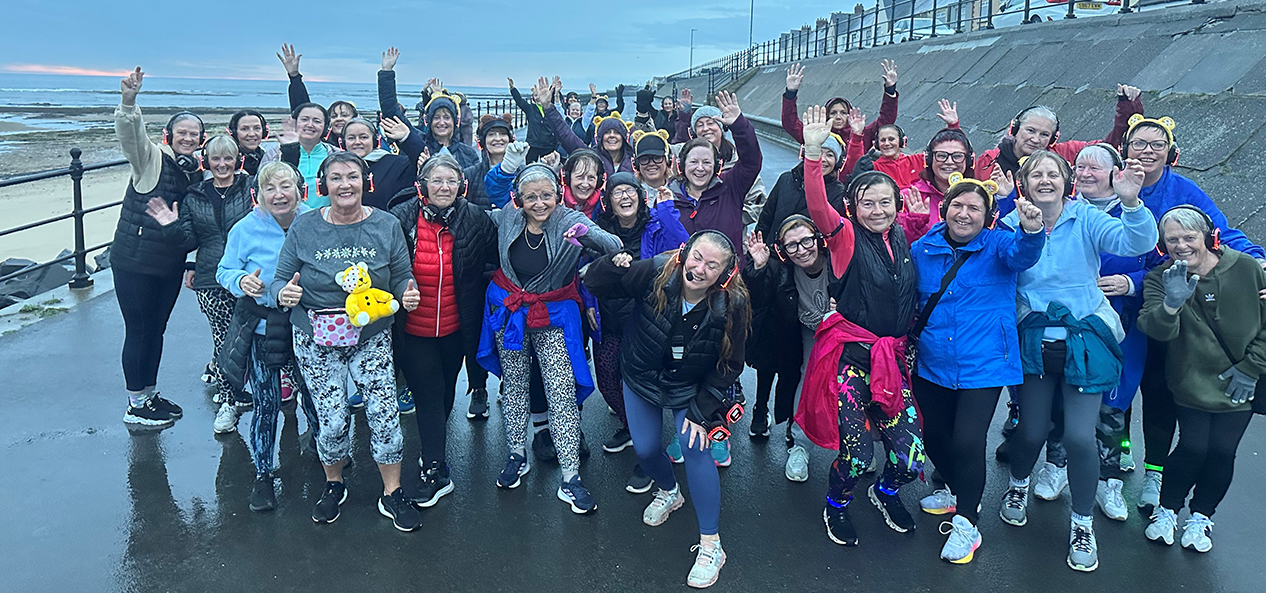
A group of Silent Steppers pose by the sea after one of their exercise sessions.

What began as a personal healing tool has evolved into a community movement that people across the UK now travel to to experience.

Often taking 10,000 steps in an hour or simply letting the music lift their mood, us Steppers leave the session feeling lighter, stronger and more connected to ourselves, and to each other.

How it all began

Silent Steppers actually started during one of the hardest chapters of my life. After suffering a trauma, I found myself walking outdoors to clear my mind.

On these walks, I’d listen to music and quickly realised how the world softened inside that musical bubble.

The lyrics felt more meaningful, my thoughts slowed down and, for a short time, I could switch off from everything I was carrying on my shoulders.
 

Picture a mixed group of around 50 people moving along seaside promenades, parks and coastal walkways – everyone listening to the same uplifting music while receiving real-time encouragement, positivity and coaching through their headphones.

With a background as a qualified dance teacher, senior mental health lead and life coach among others, and with over 25 years teaching trauma-informed approaches, I invited a few colleagues to join me for a music-assisted walk.

I chose songs that helped me heal, put on the headset mic and coached them through the session.

The effect was instant. The energy was electric. Silent Steppers was born! 

A community that keeps growing

Fast forward under a year and Silent Steppers now has hundreds of participants every week that include children, right through to our oldest Stepper aged 83.

We train in all weather – rain, wind, sun and/or coastal gales – and the tougher the conditions, the more bonded the group becomes.

Alongside our main sessions, we now run Steady Steppers, a slower-paced, mobility-friendly version designed for those with disabilities, injuries, chronic conditions or lower fitness levels.

These sessions offer the same music, the same mindset coaching and the same sense of achievement, just at a pace that feels safe and accessible for everyone involved.

The physical and mental impact across both groups has been extraordinary and participants have reported improvements of different kinds like weight loss, better fitness levels, plus better balance, coordination and confidence.

Others have mentioned being able to return to exercise after cancer treatment or joint replacements, a reduced reliance on mental health medication (always under GP guidance), stronger mobility and the ability to jog for the first time in years, and, overall, significant improvements in mood, stress levels and wellbeing.

And if all of that wasn’t enough, overwhelmingly, people describe Silent Steppers as their escape – an hour where they can lose themselves, breathe differently and feel part of something special.

The outdoors connection

Taking Silent Steppers into outdoor public spaces has created something truly magical.

We dance-walk along promenades, move through parks, train beside the sea and often stop people in their tracks who just smile when they see us.

Week after week, members of the public pause to watch us, cheer us on, take photos or even start dancing as we pass. People tell us we’ve made their day, how amazing we look or how we lift their mood. 

Many now recognise us and come back each week just to see us in action because our group's energy is infectious.

These interactions have become part of the heartbeat of Silent Steppers, and proof that movement and joy ripple far beyond the people wearing the headsets.

Challenges and what we’ve learned

I must admit, however, that with popularity comes challenges.

We only have 60 headsets, which means waiting lists of 25+ people are becoming common.

I’m also frequently asked to run sessions across the UK – and even internationally – but with existing commitments, it simply isn’t possible.

However, I’ve now excitedly trademarked licensing training that'll launch in the new year, which will create opportunities for Silent Steppers leaders in towns and cities nationwide.

There are other key lessons we’ve also learned:

  • When exercise is fun, people stick to it – many of our steppers are a year in and saying it’s the only thing they’ve ever stuck too.
  • Authenticity matters, as people connect with honesty and real stories.
  • Listening to the community and adapting accordingly is essential.
  • Music profoundly changes the movement experience.
  • Mindset coaching and Natural Language Processing (NLP) techniques amplify the emotional impact.

The future of Silent Steppers

The combination of music, scenery, encouragement and community creates an empowering, accessible and inclusive atmosphere that translates into a wellbeing experience unlike any other.

It fills me with pride that what started as a personal coping mechanism has now grown into a nationwide wellbeing model, supporting hundreds every week.

I also love that Silent Steppers is reshaping how people view exercise, mental health and community connection.

Silent Steppers is proving that exercise can be enjoyable at any age and ability. One dance step at a time.

Running, representation and resilience

Movement has always been more than exercise for me.

My first motivation was staying healthy and trying to stave off hereditary diseases like hypertension and diabetes that run in my family (and, so far, I'm happy to say it has worked!).

But movement quickly became my outlet, my reminder that I am alive, capable and able to set goals.

The power of movement

When I lace up my trainers and step outside, I am not only moving my body. I am moving through history, community and identity, and I am claiming me. I do this for me.

This year the theme for Black History Month is ‘Standing Firm in Power and Pride’, highlighting the resilience and contributions of the Black community, and I am reminded that movement has long been a form of resistance, survival and celebration for Black people.

From dance to sport, movement has always been our way of claiming space, telling stories and showing strength and, for me, running is my chosen form of movement. It gives me freedom, resilience, and connection – three qualities that shape how I live and lead.

Growing up, I saw elite athletes who looked like me on TV, but I did not see everyday women like me running.

Running was not something I thought belonged to me as an adult (child me, yes, because children always run), but the first time I tried it outside as an adult, something shifted – it was not about speed or medals, it was about finding a rhythm that was mine.

Over the years, running has carried me through joy and pain.

It has helped me navigate life’s challenges, from grief and motherhood to menopause and leadership, and it has also changed how I see myself, not as the fastest or the best, but as someone who shows up, puts one foot in front of the other and keeps going.

This year the theme for Black History Month is ‘Standing Firm in Power and Pride’, highlighting the resilience and contributions of the Black community, and I am reminded that movement has long been a form of resistance, survival and celebration for Black people.

Running has also shown me how much representation matters.

There have been times I felt invisible at races or out of place in running communities, but when I began sharing my story and weaving my Jamaican heritage into my running, I discovered others felt the same and that, by stepping forward, I could help them feel seen.

Showing the real deal

That is why I am proud to be part of the advisory board for This Girl Can.

For the Phase Six of the campaign, we have focused on showing women as they truly are: sweaty, busy, imperfect and joyful.

Not polished versions of women exercising effortlessly, but showing real women making time for movement in the midst of their busy lives.

Being on the advisory board has given me the chance to share my perspective, especially around the barriers that Black women face in sport.

From worries about hair care, to feeling unsafe in certain spaces, to simply not seeing ourselves represented, these are real issues that stop many of us from moving freely.

Phase Six is about breaking those barriers down and telling a wider story of who belongs in movement.

This new stage of the campaign is also about making sure that when women see the campaign, they see someone who looks like them, lives like them and feels like them. Because when you can see yourself, you start to believe you belong.

From local to national

In 2019, I founded Black Girls Do Run UK.

What began as a small idea, creating space for a handful of Black women to run together, has grown into a nationwide community, because we are more than a running group. We are a family!

We celebrate milestones, we share struggles and, more than anything, we create spaces where Black women can move without judgement or stereotype.

Alongside leading the community, I hold both the Leadership in Running Fitness and Coaching in Running Fitness qualifications.

These have allowed me to support runners of all abilities, from beginners to those chasing big milestones, and to bring structured, safe and inclusive coaching into our spaces.

For us, running is not about chasing times, and all about creating a memory bank, not metrics.

It is about laughing mid-race, stopping for photos and supporting each other at the back of the pack. It is about belonging.

Together in strength

Black Girls Do Run UK exists because representation matters.

Too often, Black women are absent from the imagery of running, but by showing up in our kit at races and online, we are rewriting that narrative. We are saying we are here, we run and we belong!

For me, movement is freedom. It is the freedom to be myself, to take up space and to live well in my body and during Black History Month, that freedom feels especially powerful.

We honour the struggles of those before us, celebrate the present and move with hope for those who will come after because movement connects past, present and future.

It reminds us that while the barriers are real, so is our resilience, and it proves that when women move, communities move and change becomes possible.

So this Black History Month, I celebrate movement in all its forms: the steps, the strides, the miles and the memories. Movement has shaped me, and I will keep moving, for myself, for my community, and for the generations yet to come.

Powered by you

National Fitness Day is a wonderful celebration of the joy of movement, but also a rallying call – a reminder that if more people, from every walk of life, are moving more often, the benefits ripple far beyond the individual.  

Sport England’s central mission is for everyone to enjoy the life-changing benefits of sport and physical activity.

And those benefits are profound; being active prevents 1.3 million cases of depression, 900,000 cases of back pain, 600,000 cases of type 2 diabetes, 150,000 cases of coronary heart disease and 100,000 strokes each year.

Active lives boost the economy too, saving £10.5bn a year in health and care costs and reducing pressure on our overburdened NHS. 

But behind the numbers are real people. Active children are happier, more confident, and perform better academically.

Active adults take 27% fewer sick days, leading healthier, more productive lives.

For those living with mental health conditions, the impact of exercise is especially striking: ukactive’s new Mental Health in Motion report shows that 72% say being active helps them stay in work and avoid sickness absence. 

Yet we still face an inactivity crisis.

A quarter of the population in England does fewer than 30 minutes of physical activity a week.
 

Sport England’s central mission is for everyone to enjoy the life-changing benefits of sport and physical activity.

The evidence above demonstrates that is not just a health issue – it’s a social and economic one as well.

With 2.5 million people out of work due to poor health, the cost to the UK economy is over £100 billion a year. So, the challenge is huge – but so is the opportunity. 

National Fitness Day is about meeting that challenge head-on, by showing people that being active can fit into their lives, whatever their age, background or ability.

From spin classes to swimming, from walking football to yoga, there’s something for everyone.  

It’s also a chance to celebrate the people who make these experiences possible: the instructors, coaches, lifeguards, volunteers and staff who open the doors of their facilities to millions every week.

In 2024 alone, there were over 600 million visits to gyms, pools and fitness clubs across the UK – and a record 11.5 million people are now members.  

At Sport England, we’re proud to back National Fitness Day.

The words Powered by you, on a yellow background, with NFD, standing for National Fitness Day, in a speech bubble to the bottom right of the main text

Through our strategy Uniting the Movement, we’re working with more than 150 partners to break down barriers, close the inequality gap in activity (worth £15.6 billion a year to the economy on its own if it can be addressed), and target investment where it can have the greatest impact. 

That means supporting grassroots facilities; putting movement at the heart of every school day, because habits built in childhood last a lifetime; and embedding physical activity across government policy – from prevention-first healthcare to workplace wellbeing. 

And crucially, it means ensuring that the fitness and leisure sector – the backbone of National Fitness Day – continues to thrive.

We know the pressures the sector faces but we also know the immense value it creates, and therefore Sport England will continue to work with ukactive and its members to ensure that gyms, pools, clubs and community fitness spaces remain central to the nation’s health and wellbeing. 

These facilities are lifelines for our communities, facilitating social connection and bringing people together to boost their physical and mental health 

As I’ve stepped into this role, what has struck me perhaps more than anything else is that none of what we do is achieved by one organisation alone.

National Fitness Day shows what’s possible when we come together as a movement, powered by the organisations and people who believe in the vision of a healthier and happier life for all – regardless of background, bank balance or postcode.  

So, whether you’re hosting a free gym class, joining a taster session, having a dip at the pool, cheering on your child at their dance class, or simply going for a walk – you are part of something bigger.

You are helping to build a healthier, happier, more resilient nation. 
 

Find out more

National Fitness Day

The great (and inclusive) outdoors

For more than 10 years, I’ve had the privilege of being part of a partnership between Sport England and the National Trust that’s been quietly but powerfully changing lives.

This is more than just getting people outdoors – it’s about creating real, lasting opportunities for everyone, especially those who need it most, to connect with nature and feel the benefits of being active in green and blue spaces.

Being outdoors and connected to nature has demonstrable health and wellbeing benefits.

Studies have shown impact such as lowering stress levels and reducing cortisol and inflammation, which are increasingly seen as factors in depression, autoimmune diseases and cancer.

Our work at the National Trust is shifting towards a more ‘place-based’ approach, but what exactly do we mean by that?

Rather than parachuting in with one-size-fits-all solutions, we’re considering what’s already happening in local communities, at National Trust properties and on their land, and finding ways to make those spaces more accessible, more welcoming and more connected to the people who live nearby.
 

This is more than just getting people outdoors – it’s about creating real, lasting opportunities for everyone, especially those who need it most, to connect with nature and feel the benefits of being active in green and blue spaces.

Whilst we consider how to be more locally responsive, we continue to work at a national scale on initiatives such as improving navigational and orientation signage to ensure paths are easy to find and follow, and refining path-grading methodologies to better reflect the diversity of users.

This work focuses on describing the path itself rather than the person using it and it goes in line with the Equality, Diversity & Inclusion (EDI) principles and the Equality Act.

What I love about our work is that it’s about making meaningful connections between the land and the community.

It’s not just about trails or facilities – it’s about creating safe, natural, traffic-free environments where people can walk, cycle, run, paddle or simply be.

I’ve seen firsthand how many barriers can stand in the way of people accessing the outdoors.

Things like fear of getting lost, finding themselves in unfamiliar terrain, safety concerns, challenges around travelling to our places or just not knowing where to start.

We’ve worked hard to design experiences that support people who are new to the outdoors and it’s making a real difference.

For that we’ve been able to capitalise on the strength of the National Trust brand.

Our properties are trusted spaces, with essential facilities like cafés and toilets, which makes them perfect for families, groups or individuals who might be taking their first steps into nature.

The multi-use trails that have been developed are a great example. They’re accessible, enjoyable and range from three to 5km, which makes them ideal for walking, wheeling, running or cycling.

And the impact has been incredible!

We’ve seen a 23% rise in visits from people of ethnic backgrounds, which indicates we’re reaching new audiences and helping more people feel like they belong in these spaces.

This is fantastic news since we strive to improve the experience for communities that often find barriers to exploring the great outdoors.

I’ve also been inspired by the way this work helps those who may need deeper support.

Whether it’s supported paddling sessions, inclusive activities for families with SEN, or community-led cycling groups like the Muslim Cycle Sisters at Osterley, there’s a real commitment to inclusion.

And it’s not just about participation but about representation, too.

The Trust is working with partners to tackle underrepresentation in the outdoor workforce, for example through our walking leaders programme, which is such an important step toward long-term change.

Nature restoration and biodiversity play a big part in our work.

Our infrastructure developments are designed to improve visitor experience and get people active whilst protecting some of the most sensitive nature areas.

We are strengthening our knowledge and skills in designing experiences that deliver real, meaningful and lasting nature connection to inspire more people to care for nature and their local environment.

Looking ahead

As I reflect on the past decade, I feel proud of what we’ve achieved and even more hopeful about what’s to come.

Our partnership with Sport England shows that when we focus on people, place and purpose, we can create spaces that are not only beautiful, but truly inclusive and life-enhancing.

And that’s something worth building on.

Find out more

National Trust

Cricket opening doors

There has never been more opportunity for young people with a disability to access and thrive in cricket.

In my short time as Chair of Lord’s Taverners, I’ve been privileged to witness the transformative power of our disability cricket programmes, not just for the young people who take part, but for their families, schools, and communities.

These experiences aren’t just inspirational, they are life-changing.

The need for our work has never been greater. That’s why I’m proud to be leading an organisation committed to making cricket the UK’s most inclusive team sport. And few moments capture that ambition more powerfully than the recent Disability Cricket Day at Lord’s.

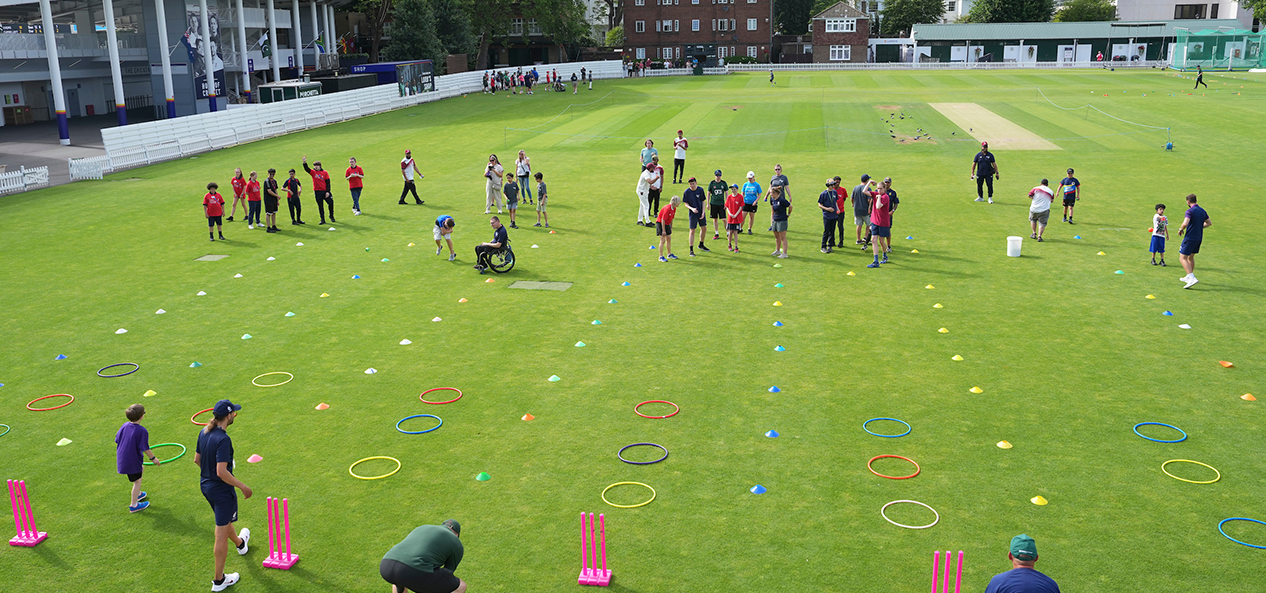
Young people take part in cricket drills during the Disability Cricket Day at Lord's.

This landmark event, delivered in partnership with the England and Wales Cricket Board (ECB) and Marylebone Cricket Club (MCC), and with the support of Sport England, was far more than a celebration of cricket. It was a bold statement of inclusion.

Together, we opened not just the gates of the Home of Cricket, but doors for thousands of young people across the country – offering a glimpse of what is possible when barriers are removed, and potential is given room to grow.

From grassroots to elite, the day showcased the full spectrum of disability cricket. This was the largest celebration of its kind and a testament to what can be achieved when organisations unite with a shared purpose.

Stakeholders from across the sporting landscape, disability advocates, educators and representatives from international cricketing nations gathered to witness and discuss how we can continue to evolve and grow the game.

There were moments of pride and passion throughout, not least in the conference sessions exploring inclusion across junior, recreational and elite levels. We heard directly from young people whose lives have been transformed through cricket. Their voices – often underrepresented – helped underline why inclusive sport isn’t a luxury or a bonus. It’s a necessity.

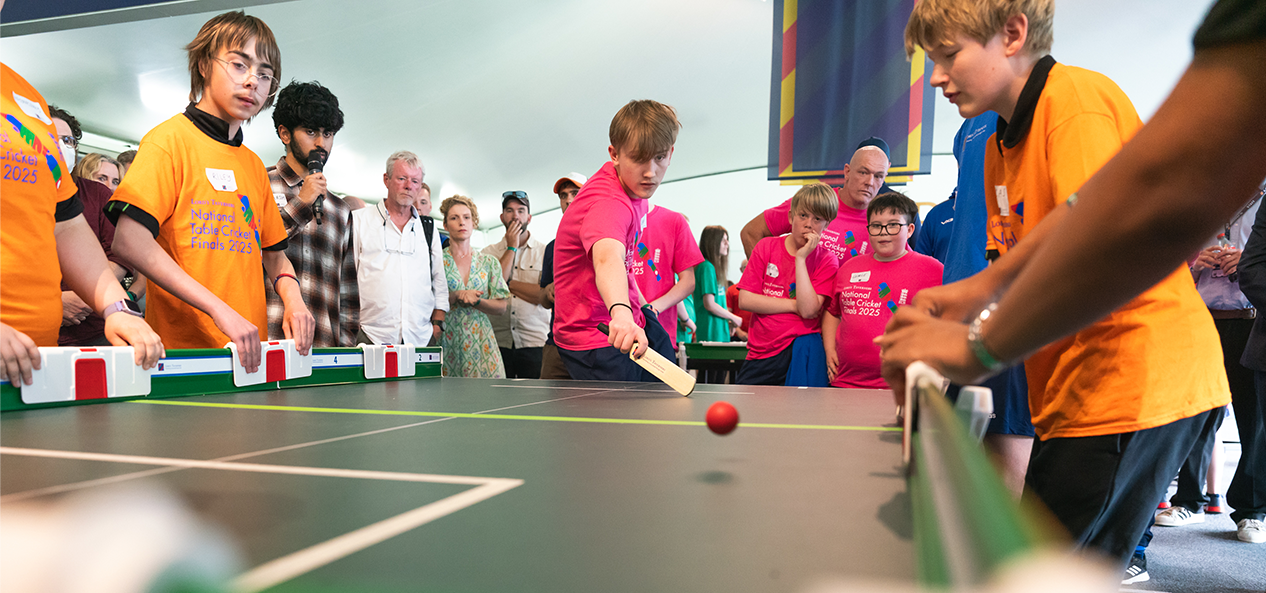
Young people take part in a mini cricket game on a table during the Disability Cricket Day at Lord's.

One of the day’s highlights was our own Lord’s Taverners’ National Table Cricket Finals, where 12 regional champions competed at Lord’s after a nationwide series involving hundreds of special educational needs and disabilities (SEND) schools from across the UK during the previous six months.

Table Cricket – a brilliantly adapted, fully inclusive version of the game – opens up a world of opportunity for young people with a wide range of learning and physical disabilities. It helps build confidence, foster independence and teach vital teamwork and leadership skills – all within the joy and discipline of sport.

To see these young athletes compete on the same day and at the same venue as their elite counterparts was incredibly powerful.
 

Together, we opened not just the gates of the Home of Cricket, but doors for thousands of young people across the country – offering a glimpse of what is possible when barriers are removed, and potential is given room to grow.

The event closed with history being made: the first ever international disability cricket fixture played on the main ground at Lord’s, a mixed-disability T20 between England and India. It was a moment that united grassroots passion with elite aspiration, showing every young person in attendance what’s possible.

This remarkable alignment – national youth competition and elite international showcase, side-by-side – is a beacon for what sport can be when inclusion is placed at its heart. It’s a demonstration of the pathway that exists and is strengthening year-on-year for cricketers with a disability, and a reminder of the importance of representation. Because when young people see others like themselves competing at the highest level, they begin to believe: this is for me, too.

The success of the day was only possible because of the strong partnership between the ECB, MCC, and the Lord’s Taverners – a spirit that reflects Sport England’s Uniting the Movement strategy. Together, we’re not only creating unforgettable moments; we’re laying the foundations for long-term change.

Cricket – like all sport – holds the power to change lives. But that power is only realised when it’s accessible to all. Too many young people with a disability still face barriers: lack of opportunities, inaccessible environments, or simply not seeing themselves reflected on the field. The message they hear can all too often be: this isn’t for you.

At the Lord’s Taverners, we are here to change that.

And thanks to events like Disability Cricket Day – and the partnerships that make them possible – we’re showing that our sport can lead the way in making inclusion not just a principle, but a reality.
 

Find out more

Lord's Taverners

10 Year Health Plan – opportunities for physical activity

It’s been just over a month since the 10 Year Health Plan was published – a key milestone in the government’s commitment to create an NHS fit for the future.  

It’s taken me time to navigate the headline ambitions, shifts in language, structural implications and, critically, what this all means for physical activity. There are 160 pages to get through, after all… 

There’s lots to unpick and this post from the Medical Consulting Group includes a visual that usefully summarises the key points.

For patients, it’s a positive and empowering tone, underpinned by a digital revolution and receiving care closer to home.  

With Neighbourhood Health a cornerstone of the Plan and elected mayors playing a greater role in prevention, combined with Local Government Reorganisation and Devolution, this all presents big opportunities to align with Sport England’s investment into communities that need it most.
 

To what extent does physical activity play a role?

Well, there were multiple references, including: 

Since publication, much commentary has reflected that the Plan could have gone further in utilising physical activity’s preventative powers.

It’s true: the evidence and opportunity for impact at scale are significant. I have two glass-half-full thoughts on this:

  1. This Plan feels like it goes further on physical activity than any previous national NHS/health strategy. Whilst we can go (much) further, this is progress to build upon.
     
  2. Rather than considering ‘potential’ purely through physical activity’s reference, there are numerous levers throughout the Plan to capitalise upon. We’ve learned that framing physical activity’s role in supporting wider, shared outcomes is key – whether that be tackling health inequalities, preventing and managing multi-morbidity, falls/frailty or social isolation… the list goes on.
     

So, what next?

Below are five opportunities that could deliver significant impact, particularly for those who do little or no activity (where health and economic gains are the greatest), those at risk of or living with long-term health conditions and those out of work due to poor health (including the NHS workforce).

As with any emergent thinking, I’m also holding questions... 

1. A core part of Neighbourhood Health

An excellent opportunity to connect people with local physical activity that works for their holistic needs.

Whilst finding ways to move is about more than structured or organised activity, there’s a diverse asset and activity offer in almost every neighbourhood to connect with, build trust in and enable frictionless access into.

Work co-led by the Faculty of Sport and Exercise Medicine alongside the Active Partnership National Organisation can help make this a reality.

Additionally, could co-located services, often including leisure provision alongside GP practices, become neighbourhood health centres?

2. Support embedded within the ‘doctor in our pocket’

Physical activity must be embedded within the evolving NHS app – leaning into behavioural science and AI to ensure people get the level of support they need.

There’s lots of great work to build upon – for example, the ORCHA-accredited We Are Undefeatable app.

3. Maximising health and care data systems

Interoperability of data systems can help target the least active, empower decision-making and better understand local opportunities and demonstrate impact.

The Open Data Institute’s recent white paper makes the case for better use of physical activity data.

4. Wraparound provision of obesity and mental health support

Increased use of anti-obesity medicines (such as GLP-1) provide opportunities for physical activity’s complementary role in muscle maintenance/gain, strength and maintaining a sustainable healthy weight.

For mental health, particularly in children and young people, physical activity can intervene and support early, including within expanded school mental health support teams and new Young Futures Hubs.

5. Building upon what’s already working

And much is working, led locally by our network of Active Partnerships alongside wider place, leisure and system partners.

Learning and effective practice must spread and approaches should be rooted in lived experience and considered in the context of community need – underpinned by strong system leadership, applied proportionate universalism and applying consistent impact/return on investment measures (i.e. the WELLBY).

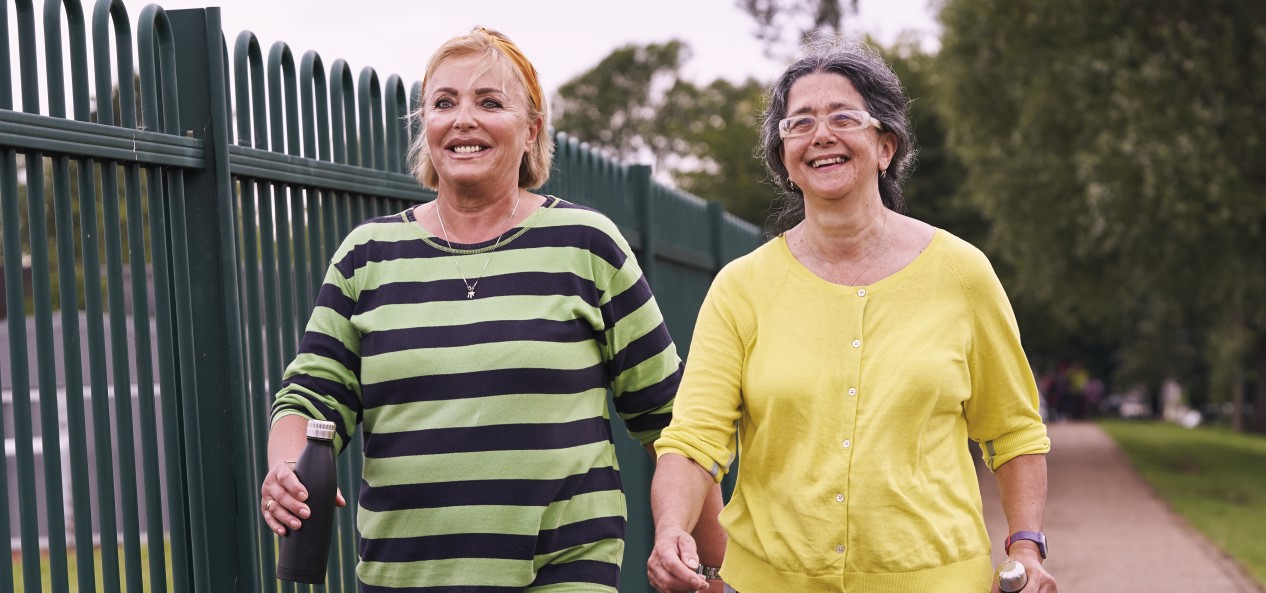
Two women walking in a park with water bottles

Five questions

  1. What does a coordinated physical activity response look and feel like?
    How do we ensure we’re coherent and consistent in our narrative, messages and offer? Is more support required for our wonderful frontline activity workforce?
     
  2. How do we maintain relationships and momentum throughout complex change?
    People are at the heart of this change – compassionate and supportive leadership is critical. 
     
  3. How can we capitalise on levers to support NHS England’s ambitions to harness the benefits of physical activity?
    A real milestone in our collective ambitions to integrate physical activity into routine healthcare. Perhaps this is an opportunity in itself! 
     
  4. How can we develop healthcare professionals’ confidence to promote activity, when mandated training is being reduced?
    The Physical Activity Clinical Champion programme is delivering brilliant impact and evolving the offer to support place-based working. 
     
  5. Are we still missing certain types of evidence?
    We’re not short on ‘why’ physical activity, but do we have enough around the ‘how’ we enable it in different contexts? 

So, could the Plan have gone further on physical activity? Of course. But are there opportunities throughout the Plan to capitalise on? Absolutely.

Yes, we’re still holding lots of questions, but let’s not dwell on what could have been and instead focus on the collaborative opportunities in front of us.  
 

Introducing our This Girl Can advisory panels

At the heart of our campaign are our women, and our mission is to tackle the gender activity gap by getting more women and girls moving in ways that work for them.

In order to achieve this, it’s key to listen to all women and girls, keeping their views and needs as our North Star.

It’s this insight that tells us about the range of barriers that many women face to being active.

The power of working together

Women from underrepresented communities face a disproportionate number of obstacles because they can experience systemic, social, structural, cultural and financial inequalities – barriers that cannot simply be overcome through personal motivation alone.

So the next phase of This Girl Can is unapologetically focused on tackling inequalities and supporting women from underrepresented backgrounds to get active and to achieve this, we know a collective effort is essential.

We want to work in a truly collaborative way to make sure we’re developing inclusive, representative work and that we’re continually learning from the many different organisations who are already embedded in reducing inequalities.

In order to achieve our mission, it’s key to listen to all women and girls, keeping their views and needs as our North Star.

That’s why we’re dedicated to partnering with women who have invaluable knowledge and are already making strides in this arena – women whom other women trust and who are true role models for guidance, support and mentorship.

At the start of this year, we established two advisory panels, a Black women’s advisory panel and a South Asian Muslim women’s advisory panel to help us shape, support and steer the next phase of This Girl Can.

Promoting a true sense of belonging

By working with experts in their field, our aim is to ensure the voices of our women are front and centre of the campaign and that the campaign meaningfully connects with Black women and South Asian Muslim women.

I’m delighted to introduce our This Girl Can advisory panel members:

Black women’s advisory panel

South Asian Muslim women’s advisory panel

  • Asma Ajaz-Ali, Head of participation and communities, Muslim Sports Foundation
  • Asia Asghar, Active wellbeing officer and Campaign officer, Nottingham Muslim Women Network
  • Yashmin Harun, Founder and Chair of Muslimah Sports Association and Frenfords and MSA WFC
  • Sabeha Miah, Project manager, Cycle Sisters
  • Farkhanda Muneer, Chair, An-Nisa Women’s Group
  • Khadija Patel, Chairman of KRIMMZ Girls Youth Club 

The panels form part of the broader goals for the next phase of This Girl Can, which sees a concerted effort to reach all women, including those from underrepresented backgrounds, to get active.

This Girl Can’s new phase –  ‘Belonging Starts with Inclusion’ – seeks to reduce the barriers that exclude women from exercise by showing how women like them are getting active.

Only when our women are seen, heard and included can they genuinely feel a sense of belonging within the world of physical activity.

We want the campaign to deliver behaviour-change by celebrating all women and by working collaboratively with the organisations providing opportunities for women to get active, to ensure that we are collectively providing the conditions that women need to feel they belong in physical activity.

It’s together that we can create even more spaces and opportunities for our women to move in ways that are right for them and, ultimately, build a world of activity where every woman feels like they belong.  

Place-making for young people

We only get one childhood and there was a time when being a child meant playing out, spending time with friends in person, exploring, joining teams, falling out, making up and everything in between.

Sadly, this is not the case for most young people nowadays, but why?

On the one hand, our research indicates that at least one in four young people feel they don’t ‘belong’ at school.

And Sport England's latest Active Lives Children and Young People report tells us that almost 50% of young people are not meeting the Chief Medical Officers' guidelines of having 60 minutes of physical activity a day, and that young people are spending more time interacting with screens than with their peers.

A Black boy wearing a blue t-shirt with a white Youth Sport Trust logo stands on an outdoors football pitch pointing at something with his right hand while holding a yellow football with the other one. A group of three kids is seen behind him.

But what are the underlying reasons for these worrying statistics?

Young people’s opportunities to be active depend on systemic issues including their postcode, their social and physical environment and the cultural norms they live by.

This is why at Youth Sport Trust we’ve taken a place-based approach to understand and tackle these stubborn inequalities.

We want to do things ‘with’ people, rather than ‘to’ or ‘for’ them.

Why Place-making?

In 2023 we launched Inspiring changemakers, building belonging – our new strategy to reach more young people and the communities we serve with a renewed focus on starting locally and building momentum.

We started in three places with three schools that are in the top 5%-10% of deprivation in England: The Prescot School in Knowsley (Merseyside), Prince Albert High School in Perry Barr (Birmingham), and Mulberry Stepney Green Mathematics Computing and Science College (Tower Hamlets, London).

These three places face huge economic and cultural challenges, and their physical environments have been neglected, meaning that the ‘civic infrastructure’ (areas such as youth clubs, community centres or places and spaces to play) have been removed over time.

Young people’s opportunities to be active depend of systemic issues including their postcode, their social and physical environment and the cultural norms they live by

People here are used to being told what’s wrong but through hope, community spirit and ambition we wanted to focus on ‘what’s strong; not what’s wrong’, using a place-making approach.

Note we talk about an ‘approach’ rather than a ‘plan’ and this is because we’re following a set of principles, instead of rules.

Joining the dots

Place-making is a fluid and dynamic way of working that’s context-focussed, rather than project-focussed.

We wanted to put schools back at the heart of these communities for them to act as catalysts for social change.

However we had also heard stories of persistent absenteeism among students and of the struggle to recruit and retain teachers.

There were also descriptions of pupils' bad behaviour and lack self-regulation, which in many occasions resulted in a lack of aspiration and a rise in apathy.

That all needed to change, so for over 18 months we worked in these places, spent time there, built relationships, listened, learnt and tried to put wind in the sails of the educators and people who know these places better than anyone.

We wanted to listen to the people living, working and playing in these places, but with a listen-to-understand rather than a listen-to-respond attitude, and in order to achieve that we created a new role in schools: the place-maker.

Place-makers are members of staff that live in the community (or have strong connections to it) and who can help activate young people’s talents.

This small group of changemakers have been incredibly effective at joining the dots with local stakeholders including youth services, policing, transport, health and housing.

And there’s more!

We’ve also created the 'Communities of Place’, a series of safe and brave spaces where people are encouraged to raise important issues and work out solutions together.

The importance of trust

In Perry Barr, for instance, girls were not accessing opportunities at the same rate as boys, so the school made a connection to Saathi House, which is a vibrant local community hub specifically designed for women and girls.

Together, they listened to understand the community needs and, as a result, enabled an NFL Flag Football project to provide a safe, diverse and inclusive space for young girls to learn, play and grow together that was managed by a group of female mentors promoting physical fitness, teamwork, confidence and leadership.

Through our approach to Youth Voice, we've also discovered an appetite for Youth Leadership, so the schools invited students to apply to become a young place-maker.

They received 109 applications and there are now 35 young place-makers in Tower Hamlets and The Prescot School, proving the desire for young people to be the change they want to see in their community.

Our place-based work is built on shared values and purpose, because we:

  • spend time with people in their places
  • build reciprocal relationships and see what we can give rather than extract
  • understand by truly listening
  • focus on strengths rather than deficits or weaknesses
  • are transparent and have tough conversations.

If you take the first letter of these values, you get the most important component of what we do: trust.

Trust is fundamental to us because we’ve learned that progress travels at the speed of trust and that trust is also the hardest thing to earn and the easiest to lose.

And while we are also aware that we don’t have all the answers, we believe that the people in these places do and that part of our collective role is help them to unlock them.

Find out more

Youth Sport Trust

What’s good for the nation and even better for you?

The answer to the riddle in the title is easy – sport and physical activity.

At Sport England we’re always talking about the benefits of being active, but for nerds like me, the past few months have provided a particular treasure trove of data about the social and economic value of sport and physical activity.

And then on 1 October 2024, DCMS published a new Sport Satellite Account for the UK.

The positive ripple effect of being active

This revealed that during 2021, the combined economic impact of sport (direct and supply chain – including the production of sports equipment and apparel, the construction and maintenance of sports facilities or their marketing services) was equivalent to £83.1 billion, or 4.1% of the UK’s productivity (gross value added).

The document also showed that every £1 invested in sport generates £1.55 as gross value added in the economy.

A few weeks later we published the results of our new research on the social value of community sport and physical activity, revealing that in 2022/23 the social value of sport and physical activity in England was £107.2b.

This value consists of the individual wellbeing benefits of sport and physical activity (both participation and volunteering) and the wider health benefits of a more active population.

However, the report also highlighted the £15.6b of social value that we are missing out on due to inequality in sport and physical activity, and how the value of being physically active is greater for some of those who are least likely to be active, like adults with a disability or living with a long-term health condition.

The past few months have provided a particular treasure trove of data about the social and economic value of sport and physical activity.

The conclusion from all this information is clear – tackling inequality is a challenge that we must address with all our energy and resources.

And it doesn't stop there.

In the past couple of weeks, we’ve also been able to provide two further reports about how the social value of adult participation in sport and physical activity is distributed between local areas, and an overall return on investment figure for the social and economic value of community sport and physical activity in England.

Local values range from £72 million in the small local authority area of Rutland, in the East Midlands, up to £1.6b in the large metropolitan area of Birmingham.

We’ve also found out that for every £1 spent on community sport and physical activity, £4.20 of social and economic value is created.

What these numbers really mean for people

But with clever economists producing all these impressive population-level figures, it’s easy to lose sight of the underlying truths they’re based on.

So here are just a few for you to think about:

  • People who are physically active are more satisfied with their lives than those who are inactive.
  • According to the brilliant guys at the State of life site and their Where’s WELLBY? poster, the individual wellbeing benefit of being physically active is nearly as high as that of being in a marriage or civil partnership. 
  • People who volunteer to support sport are more satisfied with their lives than those who don’t.
  • In 2022, more than three million cases of disease (ranging from coronary heart disease to dementia) were prevented by physical activity.
  • Being physically active reduces someone’s risk of developing Type 2 Diabetes by more than 25% and the risk of hip fractures amongst people aged 65 or over, by more than 50%.

So sure, sport and physical activity is good for our economy and society but, more importantly, it’s good for you!

And how often can you do something that’s both in the public and your own self-interest?

Unfortunately not very often, so do the right thing and get active – it’s good for the nation but it’s even better for you.

An integrated approach to increase activity and wellbeing

The first time the importance of spatial planning in creating population-level increases in physical activity was articulated was through the You’ve Got This (YGT) programme – the Sport England-funded Place Partnership in South Tees.

Sport England has worked on different approaches to capacity and hosting when taking a place-based, whole-systems perspective to work and I'm happy to have contributed to the latest set of resources published by the organisation.

YGT adopted the socio-ecological approach to systemic change, where policy and the physical environment appear as key components of the wider determinants of health. 

These aspects are recognised as carrying a high weighting in this framework – difficult to influence but once achieved, the changes are highly impactful over the medium and long-term.

The need for cooperation and understanding

These considerations resulted in the creation of my role.

My post looks at improving collaboration between public health, transport planning, and planning departments across South Tees to promote health, well-being, and physical activity through the Local Plan, the wider policy framework, and innovative new programmes.

My job looks at improving the collaboration between public health, transport planning and planning departments across South Tees to promote physical activity through the Local Plan and the wider policy framework for local healthcare services in a number of community wards and venues across Middlesbrough, Redcar and Cleveland, and Hambleton and Richmondshire.

Previous attempts to enhance collaboration across South Tees had faltered due to time constraints and heavy workloads.

Recognising this, YGT facilitated initial meetings where urban planners, transport planners and public health practitioners could gather away from the office environment.

This process revealed issues such as a limited understanding of each other's roles and decision-making processes, alongside a shared commitment to creating healthier environments and a strong desire to collaborate.

You've Got This has adopted the socio-ecological approach to systemic change, where policy and the physical environment appear as key components of the wider determinants of health.

Over the course of a year, three additional workshop sessions were convened to further explore these issues.

Simultaneously, through Sport England's partnership with the Town and Country Planning Association (TCPA), YGT established a new relationship with one of their experts, Gemma Hyde, who played a pivotal role in charting a path forward.

The culmination of these efforts brought together senior planners, transport planners and public health practitioners supported by Sport England, the TCPA and The Royal Town Planning Institute (RTPI).

Despite initial slow progress, participants valued the time for reflection and identified key issues like capacity and staff training.

Collectively, it was agreed that there were specific challenges related to coordinating the work and addressing the need for knowledge and training among staff and elected members.

To support the process, YGT agreed to fund a position initially for a period of two years and that this role would encompass the whole of South Tees, with Middlesbrough Council (MC) serving as the employer.

This is where I join the story.

Reflecting on progress to date

My background as a behavioural scientist and public health spatial planner definitely came together on this project, as behavioural science studies the patterns, motivations, and factors that influence human behaviour across different contexts, using scientific methods to understand why people make the decisions they do and how behaviour can be modified or improved at individual and societal levels.

Our boroughs, MC and Redcar and Cleveland Borough Council (RCBC) are currently at different stages of the Local Plan cycle.

In the emerging Local Plan for MC, I contributed to the Health and Wellbeing Policy and successfully secured an agreement to require Health Impact Assessments (HIAs) for all residential developments that exceed 100 dwellings.

I also devised an additional HIA screening process based on health and open-space ­deprivation on a ward-by-ward basis to be conducted for all major development across town.

There was also the completion of a Health in All Policies (HiAP) assessment of the emerging plan (Regulation 18).

Productive discussions with colleagues in RCBC have centred on the potential for a similar approach in the future review of the Local Plan.

I've also facilitated, with colleagues across public health and spatial planning and other stakeholders, the creation of MC’s first HIA toolkit, which has physical activity at its heart and taking as our primary model the well-respected HIA materials created by John Wilcox and colleagues at Wakefield City Council.

Public Health South Tees recently completed our Joint Strategic Needs Assessments (JSNAs), to which I also contributed, ensuring that the JSNA is integrated into MC's emerging local plan for health and wellbeing policy.

Once adopted in late 2025 or early 2026, this will provide developers with clear baseline information about our communities and our priority goals for health and wellbeing across the borough.

Looking ahead

The foundational changes we're beginning to implement in South Tees represent a significant shift in how we integrate public health, planning and transport policies to promote physical activity and wellbeing.

However, we face significant challenges ahead.

We'll need to secure sustained funding beyond the post's initial two-year period, maintain momentum across different planning cycles between our boroughs and ensure consistent implementation of our new policies.

Looking to the future, our next steps of sharing best practices through Sport England's expansion process and deepening collaboration with the Tees Valley Combined Authority are crucial for scaling our innovations.

If we succeed, we could contribute to a new standard for how local authorities approach integrated planning for health and physical activity, potentially influencing national strategy and contributing to more active, healthier communities across England.

If you want to win, you'll need to lose

Our male weight loss programme celebrated its 10th birthday in 2024 – a key milestone in its support of men up and down the UK and beyond!

MAN v FAT currently has over 8,500 men of all ages participating in its more than 150 owned club locations in England, Scotland, Wales and Northern Ireland and has seen its members lose more than 750,000 lbs of weight combined.

This year the organisation started supporting those interested in rugby with MAN v FAT Rugby and football with MAN v FAT Football, and there’ll also be new 'MAN v FAT sports' in the coming years.

Men from the MAN V FAT programme celebrate a victory after an outdoors football game.

In the early days it was really difficult to get funders and partners on board due to our bold brand name, but we  believed in our vision.

The latest NHS figures from England estimate that slightly more men (67%) than women (60%) are above a healthy weight and, according to the National Institute of Health and Care Research, only 15% of those who get weight-loss support in the UK are male, so we knew something different had to be done.

Thankfully some early adopters like Sport England and a small number of councils supported trialling a different approach.

Sport England funded 20 new clubs in areas of high deprivation, high obesity levels and levels of inactivity in regions including Newcastle, Blackpool and Slough.

This funding was to the tune of £200,000 and played a big part in us stepping up our support for men.

What’s more, while some previous funders had requested modifications like name changes, Sport England believed in the programme, the brand and how it had been put together.

In the early days it was really difficult to get funders and partners on board due to our bold brand name, but we believed in our vision.

That support enabled MAN v FAT to stay true to its honest brand and integrate gamification and collective accountability into the weigh-ins and scoring system.

For instance, members can achieve a host of bonus goals for tracking food and drink consumption, week-to-week weight loss and hitting landmarks.

These aspects help them stay engaged and to keep on track while achieving these extra points, as they want to be able to support their team and teammates to win games.

There’s a real peer-to-peer accountability to make sure success happens for their group and these fundamentals have been integral to MAN v FAT players shedding pounds at an incredible rate. 

More than a weight-loss programme

We may offer the only football programme where losers win, as those who lose weight on the scales after a game can contribute to the overall match result with their weight-loss-related bonus goals.

But it’s not just weight-loss that is proving important and beneficial for our community and how our members feel.

Physical and mental health and wellbeing improvements, peer-to-peer support and the creation of a community network are all key parts of the programme’s success and something that the users mention and value.

Many of the MAN v FAT clubs have taken their community beyond the core membership offer that our programme provides, which includes access to an online gym and a mental health platform, along with the expert support of their coach, who either comes from a health and wellbeing background, has lived experience of obesity or has lost weight with the programme.

Those ‘extra-curricular’ activities include weekend coffee-clubs, mass participation in parkrun, or community project work across the regions.

They also include additional football, with the MAN v FAT XIs programme giving those men seeking to increase their physical activity the chance to test themselves even further.

When men first join MAN v FAT, being able to play even five minutes of football is an achievement, whereas the MAN v FAT XIs programme takes them from small to full-sized football pitches in 11-a-side matches that are 28 minutes long, to 11-a-side games that are 90 minutes long!

All these options and support have contributed to us experiencing phenomenal organic growth since we were born 10 years ago: from 80 guys in 2014, to over 8,500 these days.

MAN v FAT communities now include our members' families and a range of social events evolving around our weekly MAN v FAT sessions.

Our secret? To keep our eyes and ears open so we can continuously improve and develop our offer to men who need that support in the clubs around the country.

One great example of how MAN v FAT’s communities flourish is the Warrington branch, our 2023 MAN v FAT Club of the Year.

Each week, coach Dan Edwards and his team support over 100 guys with their weight loss and wellbeing.

This care includes a broad schedule of activities to keep them engaged while looking for new ways to keep participation growing.

And with global obesity continuing to be a major challenge for everybody, MAN v FAT are aiming to remain at the forefront of the support needed for the male population and last summer they took their award-winning programme to the US to pilot MAN v FAT Soccer.

We want men to feel comfortable in our communities and to be able to speak about their challenges.

If we can do that in more towns and cities in the coming year and beyond, we know that we can make a difference.

Find out more

MAN v FAT

You've viewed of items.