Skip to content

Taxonomy term

Content type

Leading the next phase of We Are Undefeatable

What better way to start the new year than with an exciting new role to get your teeth into?

In January, I joined the Richmond Group of Charities as the new programme director leading the We Are Undefeatable physical activity programme following a significant stint running behaviour change programmes in the active travel sector.

With Sport England funding recently confirmed up to March 2028, it was a great time to join the team and get cracking.

A busy year from the start

We Are Undefeatable is a game-changing programme, bringing together an impactful behaviour change campaign with thought-leading policy, and influencing work to support and encourage people with long-term health conditions to be active in ways that work for them.

Throw in a new strand of place-based pilot work starting later this year, plus lived experience voices underpinning all we do, and we’ve got a huge amount to offer the sector and our key audiences.

So, unsurprisingly, this year is shaping up to be an exciting one already.

To kick us off in January we launched our new place-based approach, inviting expressions of interest from a range of areas, all of whom are already connected to the Sport England place expansion work.

Our place-based work will build on our experiences so far working with Blackburn with Darwen and Lancashire on local versions of the We Are Undefeatable campaign to support places to embed systems change, increase opportunities for movement and frictionless pathways to physical activity for those with long-term health conditions. We look forward to announcing our new partnerships in the spring.

Earlier in February, we held our inaugural Lived Experience Network session.

This group will be pivotal as we move into the next phases of the programme, ensuring we are keeping the experiences and perspectives of our key audiences at the heart of our deliverables.

It’s also already proving valuable to our partners (including the Faculty of Sport and Exercise Medicine and the Active Partnerships National Organisation on the Moving Together programme), tapping into key expertise as meaningful contributors to work in development.

We’ll be lining up more opportunities for this collaborative working over the year and will continue to demonstrate to our network the impacts of their involvement.
In January we launched our new place-based approach, inviting expressions of interest from a range of areas, all of whom are already connected to the Sport England place expansion work.

The power of storytelling feeds through to our marketing efforts, with a social media influencer campaign and summer activation in development.

For it, we’ll be building on our previous successes with one in five people taking action having seen the campaign, 64% of people finding our advertising relatable and 66% agreeing that the campaign stands out from other advertising. Our insight hub offers more details about the response to the campaign.

And, while more details will come in due course, keep an eye out for a summer campaign and how you, and your networks, can get behind it.

Evaluating past efforts and looking ahead

While a lot of our lobbying and influencing work goes on behind the scenes, we’re particularly excited to kick start work on a follow up to our impactful Millions More Moving report from 2024 to see progress made against the policy shifts we set out to influence.

This time we’ll be going into it with greater depth on how and why to get millions more moving.

We’re also proud of our continued work on shaping the implementation of the 10 Year Health Plan, which will provide a focus for our lobbying and influencing work.

Our Lived Experience Insights Dashboard helps to inform our influencing work, so we’re delighted that this resource continues to be freely available for anyone who wants to access it as it now spans several years’ worth of data from 13,000 respondents with long-term conditions.

And finally (yep, there’s still more!), we’re heading into year two of having our very own app, which we’re about to get the first 12-month evaluation back from (thanks to GoodBoost and London Metropolitan University for working with us on that).

A sneak peek shows increases in physical activity for those engaging with the app and increases in personal motivation to be more active, which we’re thrilled to see.

With over 13,000 users registered already, this is a promising start to a fundamental part of the behaviour change journey for our audiences.

With such a busy year ahead there’s great cause for optimism that in 12 months' time we’ll have taken huge strides to achieving our goals within our role as a system partner and across our wider sector.    

Find out more

We Are Undefeatable

The closer the problem, the nearer its solution

Oxfordshire is one of ten early testers for Place Universal Offer (PUO) funding in England and we’ve used this support to turbo-charge our community-driven work to tackle systemic inequalities and to get more people moving.

With Oxfordshire becoming a Marmot Place, proportionate universalism is writ large in our work as a system.

PUO investment gives us a practical opportunity to provide a universal offer of leadership training, supporting work in culturally-competent ways, upscaling what works and sharing learning; all whilst, simultaneously, focusing more intensely on where needs are greatest and inequalities are most stark.

The role of Community Anchor Organisations

Our belief is that the closer we are to the challenges, the nearer we are to finding their solutions too.

PUO work is more than simply starting from scratch or creating new projects or programmes.

Instead, it’s about identifying community leaders in priority areas who already understand their barriers and have trust within their own communities.

PUO is also about working with and through them to create the biggest impact, and it’s about listening far more than talking and being ready to learn and shift the way that we work to optimise processes and results.

That’s why we have made a deliberate choice to work with a small number of Community Anchor Organisations in our priority neighbourhoods, including Oxford Community Action.

By working in this way, we can put lived experiences at the front and centre in the creation of solutions.

What difference is being made so far?

Whilst it is early days for our PUO journey, we are seeing some positive early signs that reinforce how it’s possible to enable both short-term action and long-term systemic shifts.
 

PUO is about identifying community leaders in priority areas who already understand their barriers and have trust within their own communities.

Communities can’t wait years for change, and they shouldn’t have to, but PUO funding has enabled us to start creating the environments needed for long-term change to empower action now.

The conditions defining these new environments are:

  • an increase in referrals from communities in priority areas into sport and physical activity interventions, which have proven to decrease inactivity and to improve wellbeing
  • regular dialogue with community leaders, which has strengthened our organisational knowledge and our understanding of community matters
  • direct community feedback and collaborative work with national governing bodies and their constituent clubs, which has resulted in the creation of new provisions, especially Sunnah activities
  • placing community needs at the front and centre of physical activity opportunities, which has resulted in five grassroots organisations receiving support to sustain these activities by Oxford Community Action
  • more upstream, systemic conversations taking place about how community groups can access leisure, sport and activity more easily.

Key learnings so far

So how has all this work helped us grow?

These are the key learnings that we’d like to share in case they can help others too:

  • Community leaders are not just vehicles through which communities can be reached and physical activity delivered. They are strategic trailblazers and face the same challenges as any other leads. In fact, the stakes on them are arguably higher as they live, work and play in the communities they serve.
  • Community work is a 24/7 job for community leaders. Organisationally, they need to be prepared to work differently. As one community leader told us: “For us, this is our live". We need to demonstrate that we truly care and want to make a difference to successfully build trust to undertake place-based work.
  • We need to be ready to step out of our comfort zone and be prepared to really listen to understand and speak honestly with each other.
  • We aim to blur the line between organisations, so there’s no more “us and them” and the system and communities see each other as part of the same team.
  • By working through Community Anchor Organisations, our network and reach naturally grow to include people and organisations we may not have met otherwise. This allows for the rapid growth of movement, as each person and organisation in turn introduces more people and organisations to this way of working.

We are six months into our three-year PUO journey and are really excited by early learnings and future potential.

This is a system-wide effort, with organisations like Oxford Community Action at the heart of change and, together, we are working to create healthier futures for the residents of Oxfordshire.
 

Preventing crime from the ring

Boxing is my religion. Like all spiritual journeys it began with a moment of divine inspiration and my baptism was conducted whilst watching Muhammed Ali defeat George Foreman in “The Rumble In The Jungle”.

I grew up in boxing gyms with the sport giving me purpose, discipline and titles – including representing my country on numerous occasions.

These days it offers me the chance to inspire the next generation of boxers and to help anyone who walks through the gym door, to believe in themselves and choose a positive path in life. 

When people ask me why boxing matters so much to me, my answer is simple: it changes and saves lives.

A safe space for all

Of course, it also improves health and builds confidence, but boxing keeps people – especially young people – away from anti-social behaviour and crime, something that I can personally verify as a former Youth Justice Manager. 

With the number of proven offences committed by children seeing an increase of 4%change has never been so important and there are many ways boxing helps fight crime.

Firstly, boxing gives young people structure and boundaries.

Many of the children and young people who walk through the doors of a boxing gym – like mine in Oldham, Greater Manchester – come from difficult backgrounds and have challenging lives. 

Having little or no access to opportunities and therefore a lack of agency in the world, may result in challenging behaviours. But not dealing with these pressures means they risk spilling out onto the streets and that’s where crime starts. 

Not because young people are 'bad', but because they have nowhere positive to pour their energy into. But boxing gyms can change that, as these spaces are built on discipline, respect, routine and team spirit.

Boxing gyms offer me the chance to inspire the next generation of boxers and anyone who walks through the gym door, to believe in themselves and choose a positive path in life.

You don’t just turn up to your gym whenever you feel like it. Instead, you’re expected to train on time, plus you have to listen to your coach, and you learn that effort leads to results and that shortcuts rarely work.

These lessons transfer directly into everyday life and children who understand discipline in a boxing gym are far less likely to make reckless decisions outside it.

Boxing also teaches emotional control, becasue contrary to what some may think, this sport helps a young person understand how to control their emotions, particularly aggression, and how to think and act under pressure.

I’ve seen it first hand – children who once lashed out can calm themselves because boxing gave them an outlet for their emotions and that allows them to thrive.

The many lessons of boxing

Boxing is a good metaphor for life and can help to develop those personal and social skills that people need, contributing to tackling deep seated worklessness and low aspirations.

The sport also fosters the development of positive character, self-esteem, self-discipline, courage, perseverance and resilience.

Instead of throwing punches on the street, they hit the pads, the bags and their coach or opponent inside the ring, but always with respect to the sport’s rules, under supervision and with a reason.

Boxing also teaches respect — for yourself and for others. You shake hands, you follow rules and you learn that real strength comes from self-control, not intimidation. These values reduce crime at its roots.

Another factor that's key is the sense of belonging among those practising the sport. A boxing gym offers identity and loyalty because, at a gym, you’re part of a team.

You train together, look out for each other and you wear the gym name with pride. That sense of identity can pull someone away from a path that leads to anti-social behaviour and crime.

I’ve seen boxing change lives in Oldham and Greater Manchester, where young people that were heading toward trouble now have focus and a reason to stay on the straight and narrow, and I’ve also seen young people who had no confidence, find self-belief.

Not all these children will become a champion boxer and that's okay.

Building better lives through sport

The real victories happen when a young person chooses to stay in school, can find a job or simply chooses not to commit a crime because they don’t want to let their gym or coach down.

At our newly refurbished Greater Manchester Boxing and Development Hub, we’ve been lucky enough to benefit from Sport England funding. 

To my mind, our investors aren’t just putting money into a boxing club and community gym. They’re investing in crime prevention and harm minimisation.

It costs less to fund a gym than it does to deal with the consequences of crime and anti-social behaviour policing, court cases, prison and reform  as recent estimates place the total economic and social cost of serious youth violence at £11 billion between 2009 and 2020.

For me, boxing is more than titles and trophies, it’s about giving people a chance.

Every time a young person chooses to walk into a gym and away from 'the road', I believe that’s crime prevention in action and that’s why boxing will always matter. 

As one of the 10 boroughs of Greater Manchester, Oldham forms part of Sport England’s Place Partnership with Greater Manchester Moving and other local bodies to implement Sport England's Uniting the Movement strategy for getting people active.

I’m proud of what boxing can do to change lives.

In the words of the iconic social activist, pacifist and politician, Nelson Mandela: “Sport can awaken hope where there was previously only despair.

Every day, I get to see the truth in these great words in action.
 

Making winter sports accessible and inclusive

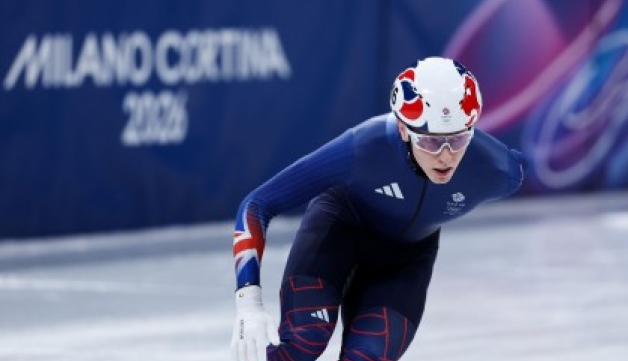
As the Milano Cortina 2026 Winter Olympic and Paralympic Games start we would like to extend our very best wishes to the athletes and the support team behind Team GB (and in the coming weeks ParalympicsGB) as the spotlight of Olympic and Paralympic sport shines upon them.

It is worth remembering that during the 2018-22 cycle the winter sports and athletes were particularly impacted by the resultant post-Brexit travel restrictions and also (how soon we forget!) by the Covid pandemic.

UK Sport and the British Olympic Association have an ambitious target this year and I think, and hope, that at this iteration of the ‘winters’ we will see our athletes and sports realise their aspirations as they showcase the rich and diverse sporting offer we have in England and across the UK.

Proudly supporting our talent

At Sport England we are extremely proud of the role that we play in supporting partners and thereby enabling aspiring athletes in winter sports to explore and fulfil their potential, but what does that support look like and why does it matter?

Starting with the second question first, let’s address the elephant in the room – why winter sports?

There is a rather lazy misconception that we don’t have winter sports facilities and that those sports are exclusively the pursuit of people from affluent backgrounds – the truth, like many things in life, is much more nuanced that that.

Starting with the sliding sports (bobsleigh, skeleton or luge to name a few) there is an established track record of athletes coming from the British Army - shout out at this point to our colleagues at British Army Sport which continues to be a key partner of and contributor to the UK High Performance System - or from track and field athletics.

These athletes often transition in to sliding sports (or should it be pushing sports!) through established UK Sport-led talent ID programmes such as Find Your Greatness, and those sports have brilliant pathways to take them all the way to the podium.
 

At Sport England we are extremely proud of the role that we play in supporting partners and thereby enabling aspiring athletes in winter sports to explore and fulfil their potential.

The skating sports are typically populated with athletes who started their careers at ice rinks and ice centres scattered across the major ‘second cities’ of England.

Funding centres across the country

The National Ice Centre in Nottingham has long since been the base for aspiring short track speed skaters and a great partnership between Sport England, Nottingham City Council and recently British Ice Skating, who received Sport England talent funding into their pathways.

Other English rinks feature prominently in the athletes’ biographies and it was great to see Sheffield hosting the recent Figure Skating European Championships as part of the build up to the Games.

English Snowsport athletes often start their careers at outdoor ‘dry’ (not so much in the rain!) ski slopes, which continue to be popular and affordable community sport facilities, enabling athletes such as the Summerhayes sisters or, for Milan-Cortina, veteran James ‘Woodsy’ Woods (who will compete at his fourth Olympic Winter Games) to progress from Sheffield Ski Village to the X-Games podium.  

Arguably Great Britain's most successful ever Alpine skier, Dave Ryding will contest his fifth Olympic Winter Games, having purportedly earned his stripes at a dry ski-facility up at Pendle Ski Club, a member-owned club located in the Ribble Valley, Lancashire.

Sport England investment supports the talent pathways in a range of winter sports to ensure that performance pathways in these sports are accessible and inclusive, well-led and managed, and that they offer the support needed to allow our aspiring young people to progress to the very highest level.

Through our funded partners, most prominently SportsAid, we also fund programmes such as Backing The Best and the TASS programme that collectively provide direct financial and athlete support services, such as strength and conditioning, physiotherapy and sports medicine services to enable our players to be fit, healthy and optimally prepared for graduation into high performance programmes and success at major events and games.

As an example, of the Team GB class of 2026 in Milan-Cortina, at least 10 athletes (including Dave ‘The Rocket’ Ryding) have received Sport England support through TASS - five of which are current TASS-supported athletes enabling them to be in the very best of health as they embark on one of the biggest events of their careers.

Finally, as we look ahead to the winter Paralympics, we could not be prouder of the English athletes who will represent PGB as the spotlight shines on them from 6 March, I am particularly looking forward to seeing trailblazing English wheelchair curlers: Yorkshire’s Jo Butterfield, Newcastle’s Jason Kean, Wigan’s Karen Aspey and Northumbria’s Stewart Pimblett.

Collectively, they will make history as the first English curlers ever to take to the ice at the ‘winters’.

Their inspirational journey (look them up, their stories are remarkable) was enabled through an innovative partnership with British Curling, which saw Sport England invest in performance pathways in the sport for the very first time.

Best of luck to all our athletes. No need to ask you to make us proud. We already are.
 

Find out more

Talent

Consents

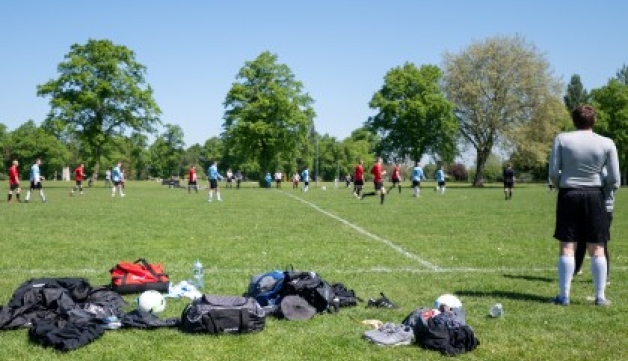
A football coach stands beside equipment bags on the sideline of a football match on a playing field on a summer's day, with mature trees in the background. Information on consents required for projects or activities funded by us, including restrictions or charges registered at the Land Registry. Funding Governance
Let’s make 2026 the year every child is active

Children and young people today are creative, passionate, and full of potential.

Their energy and ambition feel hopeful in a world that often feels uncertain and unstable.

But they’re also facing new challenges: social media addiction, rising mental health concerns, climate anxiety.

In 2025, parents, teachers, and leaders across the country voiced concerns about a growing disconnect between online and offline life.

School absence is rising; wellbeing is worsening. And physical inactivity remains a stubborn problem: more than half of children aren’t active enough.

The inequalities are stark. Children from less affluent families are far less likely to be active than wealthier peers.

Girls remain less active than boys, and Black and Asian children are less likely to be active than White children.

If these trends continue at pace, we could be heading for a children’s health crisis within a decade.

The Youth Sport Trust’s (YST) Class of 2035 report warns that without robust action, we’ll see soaring screen time, rising obesity, disengagement from education, and more children diagnosed with diseases like Type 2 diabetes – a condition once almost exclusive to adulthood.

But this isn’t a story of despair, it’s a call to action.

And the good news? We are making progress - and 2025 was testament to this.

Promising Signs of Progress

In December 2025, Sport England data shows children’s activity levels are now at their highest since the first Active Lives Survey in 2018.

Half a million more children are meeting the UK Chief Medical Officers’ guideline of 60 minutes of activity a day compared to seven years ago.

That’s thanks to the incredible work of schools, clubs, and community organisations and the people that run them.

Government action has also been integral.

The National Youth Strategy can be a landmark moment, creating more opportunities for young people to connect offline - and sport has a huge role to play.

Its emphasis on being shaped by young people is vital: policy done with young people, not to them.

The commitment to halt the decline in PE and ensure at least two hours of reimagined PE each week is another big step forward, as is the ambition to increase access to enrichment activities.
 

If these trends continue at pace, we could be heading for a children’s health crisis within a decade.

The new PE and School Sport Partnerships Network can build on past progress.

Campaigns like Let’s Move from the Department for Culture, Media and Sport (DCMS) and YST’s Inclusion 2028 programme (funded by the Department for Education) show what’s possible when national leadership meets local delivery.

Let’s Move is inspiring families to get active together.

Inclusion 2028 is empowering children with special educational needs and disabilities (SEND) to thrive through PE, school sport, and physical activity.

These initiatives prove that inclusive change is possible - and it’s already happening.

All this is happening against the backdrop Sport England’s £250m investment in place-based partnerships across more than 90 communities.

Why Movement Matters and Our Vision for 2026

Physical activity is often called the 'miracle cure' by medical experts - and for excellent reason.

It boosts physical and mental health, reduces stress and improves mood. And it’s a social salve too, helping to forge friendships and build connection across communities in the face of the polarising online world.

It’s also fantastic for people and the public purse; every £1 invested in community sport and activity generates over £4 for the economy and society.

School and community sport aren’t 'nice to have'; they’re essential for healthy development.

Research consistently shows us that active children are happier, more resilient and perform better at school.

And building good activity habits young is key for our country’s future health and wealth: active children are more likely to become active adults who enjoy better health, greater productivity and place less strain on the NHS.

That’s why we need to make movement easy and normal everywhere: in schools, communities, families, parks, and urban spaces.

This means working with partners beyond education, like UK Youth and community sport organisations, to embed activity into where young people live and socialise.

Sport England’s place partnerships have some fantastic examples of this happening from the ground up – from JU:MP in Braford to Move Together Blackpool.

Young people must be at the heart of this change. They want experiences that are fun and engaging; not just minutes of activity to be ticked off to hit targets.

Here’s what we think just some of the opportunities to achieve getting every child active in 2026 are:

  • a return to longer school breaks to give children more time to move and play.
  • increasing uptake of Always Active Uniform, building on new national guidance and making being active easier and more comfortable – particularly for girls and children with SEND.
  • greater restrictions on social media use for children, to free up time and attention for real-world play.
  • protecting the real-world places and spaces that children get active and play in
  • advocate for child-first coaching: supporting coaches to give children and young people voice and choice in physical activity. The Play their Way campaign is a fantastic example of child-first coaching in action.  

By rethinking existing policy and being bold, we can create system-wide changes that deliver a healthier, happier future for every child.

Our Mission and Call to Action

Our mission is clear: to inspire a generation that loves to move by making physical activity and everyday movement a normal part of life - giving every child 60 minutes of PE, sport, and play every day.

This is a cornerstone of Youth Sport Trust’s Inspiring Changemakers, Building Belonging strategy and Sport England’s next phase of Uniting the Movement. Working with schools, communities and families, we will redouble our efforts to create experiences that build the foundations for an active life.

Together, we can create a future where every child and young person has the opportunity to move, connect and thrive through sport and physical activity.
 

Find out more

Youth Sport Trust

Beyond the water

‘Making the joy of swimming accessible to all’ is the slogan of Swimunity, a Community Interest Company based in West London that I have the privilege of co-directing since 2017.

Swimunity was founded in the wake of the Grenfell Tower fire, with the aim of providing a space for healing and resilience-building among local residents through their relationship with water, in the form of free swimming lessons, beach days and residential trips.

Several years on, we’ve had hundreds of local young people and women learning how to swim with us, with some of them even becoming swimming teachers themselves!

Many have also joined us for expeditions to the seaside and for residential trips around the UK (Cornwall, Dorset and Wales) to leave the busy streets of London behind in favour of new environments and experiences. 

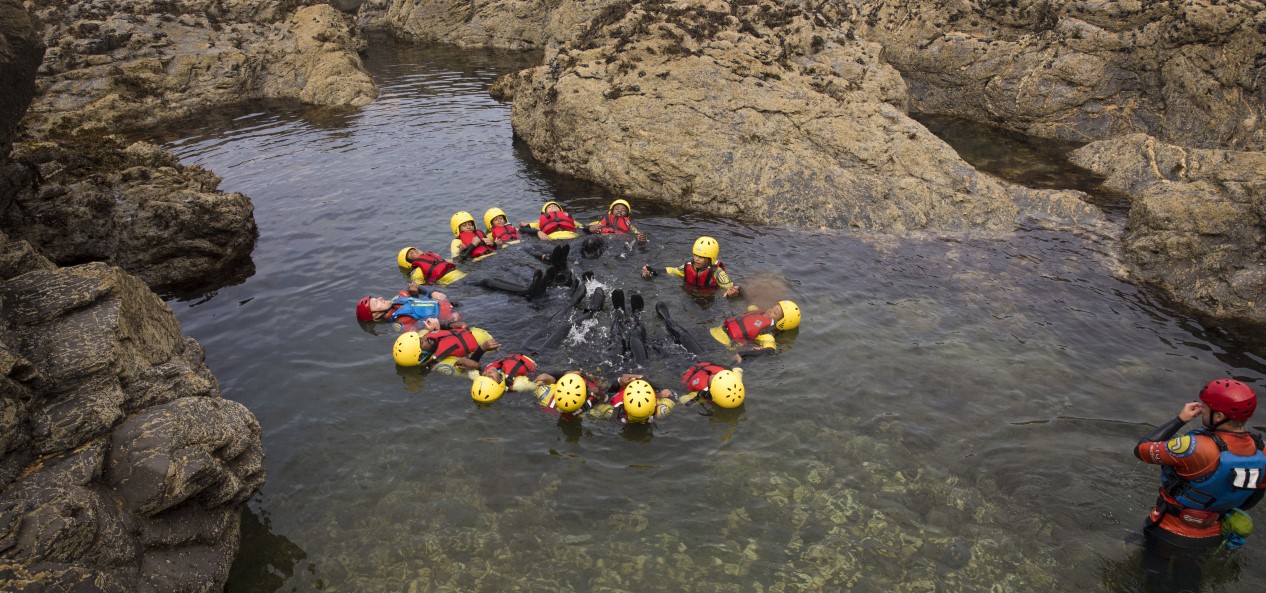
A group of people wearing helmets and buoyancy vests scull in a circle in some shallow sea water, surrounded by rocks.

Swimming has always been a deeply important part of my life and that of my co-director and founder of Swimunity, Sarraounia.

Growing up, however, we were acutely aware that very few people in swimming – whether participating or teaching – looked like us.

Sadly, this isn’t purely anecdotal.

The Value of Swimming report by Swim England found that 74% of children leave primary school unable to swim 25 metres unaided, with the figures even lower among Black (51%) and Asian (55%) pupils. 

Considering that swimming is an essential life skill, these statistics are alarming.

Socio-economic status also plays a major role on this data, with Sport England’s Active Lives report for 2022/23 revealing that only 47% of children and young people going to school in the most deprived areas of the country are able to swim 25 metres, compared to 69% in the least deprived areas.

There are a number of reasons behind these disparities: the ever-increasing cost of swimming lessons, the limited access to facilities, the fact that many children and young people come from a family of non-swimmers, plus cultural factors such as concerns about hair and skin care, including the persistent myth that Black people “sink” or have “heavy bones.”

Making aquatics more inclusive

Swimunity was born as a result of the belief that everyone deserves the chance to learn to swim, and that the pool should be more reflective of the community around us.  

Through our work, we strive to bridge the gaps between the non-swimming community and the sport – not only by providing free, high-quality and inclusive lessons and education about water safety and competency – but through representation too, by being teachers of colour on poolside ourselves. 

Swimunity has been fortunate to receive support from a range of funders, including Sport England, which has allowed us to sustain and expand our year-round programmes.

We’re also lucky enough to see incredible progress in our efforts, with children arriving to our lessons as complete beginners and leaving us as confident swimmers, competent across all four strokes. Some even go further in their swimming journey and join competitive clubs! 

Swimunity was born as a result of the belief that everyone deserves the chance to learn to swim, and that the pool should be more reflective of the community around us.

But for so many of our young people, the importance of swimming lessons goes beyond learning to how to swim. 

For them it’s a chance to develop a skill outside of school, an opportunity to make new friends and the possibility of challenging themselves in new environments. 

Every year we also take a group of young people on a residential trip in the summer holidays and this year we went to Wales. It was so much fun! 

For many of our members, who live in inner-city London, these experiences offer a rare chance to play freely, connect with nature and try water-based activities such as kayaking, surfing and coasteering.

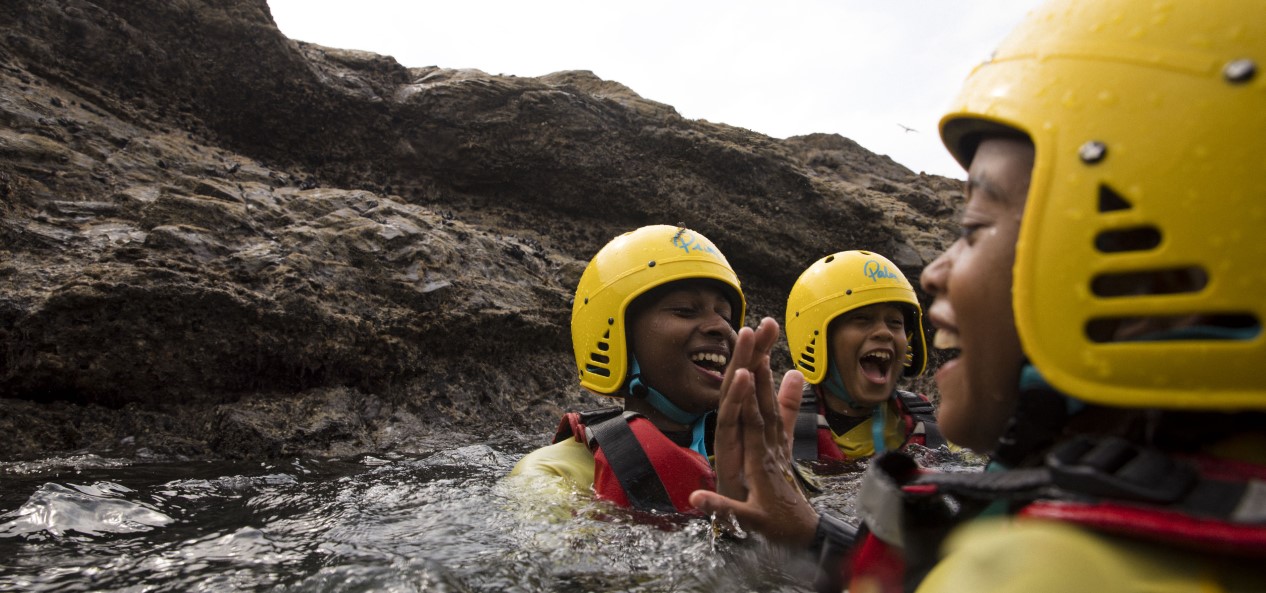
Three young people wearing helmets and buoyancy aids enjoy swimming in the sea.

Over time, we’ve built a truly special community – not only of swimmers, but of parents who now feel empowered and informed about their children’s learn-to-swim journeys.

We also work with them to help them understand the process better so they can best support their kids. 

Many parents and carers have mentioned how rewarding it is to see their children develop skills and confidence through weekly sessions. 

Through our lessons and trips, families get to connect with their local community too, meeting and getting to know others in the area, and many of our mothers have even joined our women’s-only sessions, discovering the joy of swimming for themselves. 

And whilst we are only a small drop in an ocean of meeting the unmet demand for lessons, we can see what a difference it makes and that helps us to keep going in our efforts so people in the Black community can enjoy the many benefits of swimming, both inside pool and beyond the water.

Find out more

Swimunity

The power of our communities

Sport changed my life. I have vivid childhood memories of being driven all over North Yorkshire by my mum and dad.

We spent our Saturdays going from one brilliant and unique cricket ground to another, and I can still hear those echoes of leather on willow when I see them today.

Those weekends set off a lifelong love affair with cricket and the county I’m proud to call home, and even more proud to represent every day as a Mayor of York and North Yorkshire.

Everyone should have the same opportunities to get moving that I did, and that is why I am proud to launch the £2.75 million Movement, Activity and Sport fund.

Bringing the joy of movement to everybody

This is the first of the funds to be launched under my Moving Forward campaign and we are working closely with partners to make sure this investment targets support for those who need it most.

Beyond the health benefits, there aren’t many better ways provided by sport and physical activity to meet new people and build strong relationships in our local communities.

However, this is particularly key in our rural and coastal areas, where there are some pockets of real deprivation.

Too often families cannot get over the hurdle of costly cricket bats, football kits or transport to games, which means that those who would benefit the most aren’t able to get involved.

But by funding activities for those who might otherwise turn to anti-social behaviour, we can change lives and make our towns and villages a better place to live.
 

This is the first of the funds to be launched under my Moving Forward campaign and we are working closely with partners to make sure this investment targets support for those who need it most.

Our research tells us that over 30% of adults are classed as physically inactive, meaning they do less than 30 minutes of exercise a week, and that over 60% are overweight or obese, increasing the risk of long-term health conditions.

But this reality can be turned, and early intervention and prevention can make a big difference.

We can help that by making positive choices like introducing physical activity in our day to day, by considering more walking, wheeling and cycling for our working commute or to meet up with friends.

We are moving in the right direction, but there’s still so much more work to do!

After years of being ignored or minimised, women’s sport is getting the recognition it deserves with success after success for our national rugby and football teams, but girls still don’t get the same opportunity to get moving when compared to boys.

Moving forward together 

I have seen that first hand, because while my son had the pick of so many football clubs, we struggled to find one for our daughter. How can that be happening in 2025?

This plays out with so many families across the region and the UK every year, and it’s a big reason why girls are more likely to stop playing sport when they become teenagers. But we can also change that.

By enhancing skills development and training in the sector, alongside offering more inclusive activities, we will also tackle the barriers that people with disabilities face.

Disabled people are almost twice as likely to be physically inactive, but by working together with our partners we can start to improve those numbers and change lives.

My Moving Forward campaign is about backing people across our region to build the healthy and thriving communities they deserve. 

I believe in the power of our communities, the people and local organisations that keep them going.  

Our work is made so much easier thanks to the support of our strategic partners, including North Yorkshire Sport and the Place Universal Offer from Sport England and I’m truly excited about these, because together we can achieve so much more!

The best part of my job is seeing the huge impact that hard-working groups have on their neighbourhoods.

They know what they need, and we will work with them every step of the way as we continue Moving Forward together.
 

Staying out of lane

Bristol Stepping Sistas is more than a walking group – it’s my walking group. Mine and that of the amazing women who've walked with me since 2021.

Together we are an award-winning walking group that enables us to reach out to other women in the Bristol area and encourage them to thrive in open spaces through the simple (yet powerful) activity of walking.

At the core, we are a grassroots group of Black women and women of colour who are passionate about walking and who want to share their identity and their lived experience.

We started to apply for funding so the group could carry on as it offers a well-needed support and it was great when Sport England was able to help us.

We regularly organise walks and we aim to cover different distances to keep our activities interesting for everybody, whether you want to stay close to home or you fancy venturing further. 

In any case, our aim is to help motivate women of colour to visit places they would not have ventured to otherwise, including rural areas around Bristol and further afield in the South-West; routes, all of them, that can be of interest for our women beyond the city borders.

Why we do what we do

Historically, women of colour have not always been up for exploring new, unfamiliar spaces where they feel they could be exposed, judged and/or remarked upon.

This has led to the feeling that we have to 'stay within our lanes', but at Bristol Stepping Sistas we want our women to break any limitation and stay out any of those lanes, so we can all thrive in the new experiences that come with that change of scenery.

We want to encourage women to step across these boundaries (physical and non-physical) and push their limits but, at the same time, to do so in the safety and the company of others who may have had similar experiences of discrimination and disadvantage.
 

Our aim is to help motivate women of colour to visit places they would not have ventured to visit otherwise, including rural areas around Bristol and further afield in the South-West.

Ultimately, we want to enable the activity of walking to be fun, uplifting and enriching to the lives of women of colour, regardless of their walking experience.

Because, for us, walking is more than putting a foot in front of the other and we're definitely not here to cover distances within a set time.

We couldn't care less about that!

At its core, the group is about walking but we use it as an excuse and an opportunity to chat, to reflect and to thrive in nature.

We use the enjoyment and appreciation of open spaces and environments to help address issues of mental health, which I can see have been on the increase in the last few years.

More than walking

So when we meet, we walk and talk about ourselves, our cultures, our favourite dishes and ingredients.

We mention recommendations of new places to go on holidays, other groups we may know and love, and we do all of that while enjoying the fresh perspective that only nature can give us.

So, basically, we talk and we walk, and then we walk and we talk some more. It’s brilliant!

There’s been some excellent feedback from the members that mention how Bristol Stepping Sistas has been a positive, life-changing experience for them.

Our typical walking day is always about fun and there are so many smiles and so much laughter coming from our women, plus our sessions also allow us to meet new members in the group.

There has been a lot to learn in the last four years, but organising the walks is super exciting and every time we go out I look forward to seeing our walkers enjoying and embracing the environment and, of course, improving their wellbeing.

At the end of the day we may end up in a cosy country pub for a well-deserved recovery lunch to get some energy back. It really is great!

As well as creating Bristol Stepping Sisters, I have also provided the first aid outdoor training for 24 women from the group, from which I’m happy to say we’ve all passed!

I’ve also provided the walk leader training for six other women from the group.

My dream is that, together, we keep walking and enjoying every step we take, breaking any fear or boundaries that dare stay in our way.
 

Find out more

Bristol Steppin Sistas

Our hidden health clubs

When most people picture senior Black men, they don’t immediately see us smashing forehand drives, diving for edge-of-the-table shots or celebrating doubles-wins with a triumphant chest bump (yes, it happens!).

But step inside an Over 50s Black Men Forum Table Tennis Centre and you’ll quickly realise that the sport is not just a pastime – it is medicine. It is therapy. And it is comedy.

A ping-pong ball, we often say, can travel faster than a GP appointment letter, making these centres our hidden health clubs.

But behind the rallies and the laughter, there is serious work underway.

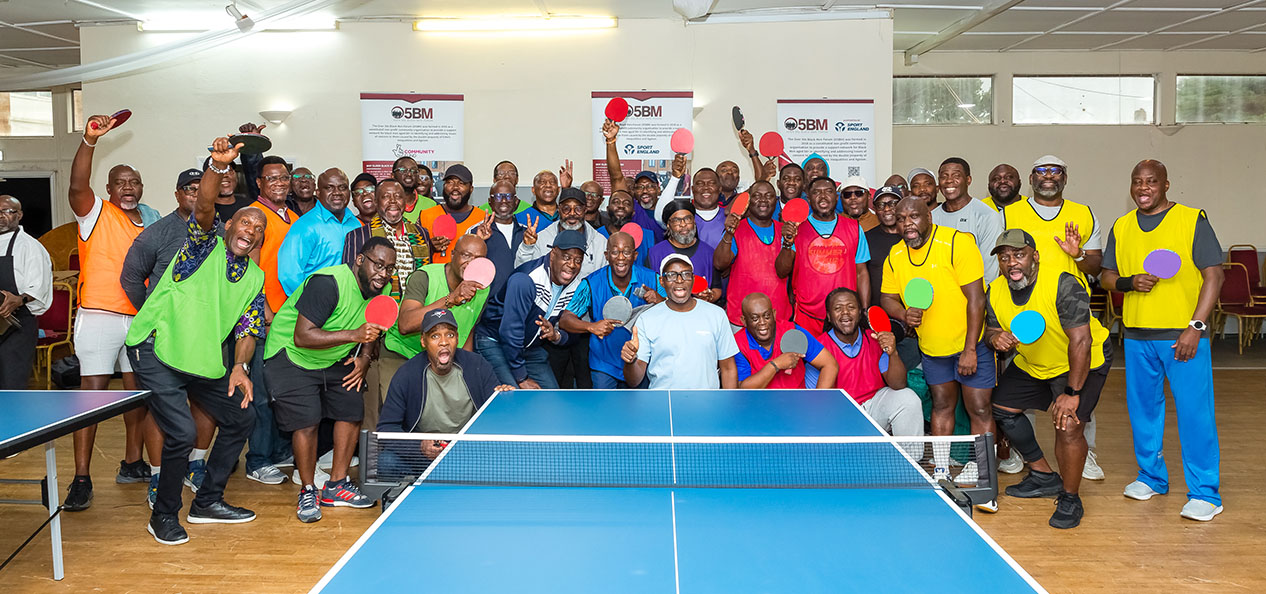
A group of Black men pose during an Over 50s Black Men Forum Table Tennis session on an indoors centre.

Our hubs are what we call 'free health clubs in disguise' and alongside the games, we often run blood pressure checks, mental health workshops and health awareness sessions.

It is a Trojan horse approach: come for the table tennis, stay for the health education.

More than sport – a building-community exercise

Men who were once isolated are now part of a supportive network and those at risk of hypertension or diabetes are keeping active, informed and monitored.

The unexpected side effects? Friendships, resilience and a lot of good-natured bragging rights.

Some say that even when they hadn’t played table tennis in years the welcoming atmosphere makes it easy to return and that now they're used to the game, they can’t imagine their Tuesday evenings without it.

Others shared that while having lived in Luton for 15 years, never before had they made meaningful connections locally and that the group is a “real treasure, especially because of its focus on health and wellbeing”.
 

When most people picture senior Black men, they don’t immediately see us smashing forehand drives, diving for edge-of-the-table shots or celebrating doubles wins with a triumphant chest bump (yes, it happens!)

A man that had survived a stroke mentioned that, as well as camaraderie and encouragement, table tennis had helped him physically by helping him improve hand-eye coordination, building his confidence and combating post-stroke fatigue.

These voices remind us that this forum is more than sport. It is hope, dignity, recovery and community.

Rewriting the narrative

Black History Month is here and the importance of rewriting health inequality narratives becomes even clearer.

Too often older Black men are described as "hard to reach”, but our response is simple: “we are not hard to reach; we are not being seen”.

The reality is stark – Black men in the UK shoulder a disproportionate burden of chronic disease.

Rates of hypertension, cardiovascular disease (CVD) and type 2 diabetes remain consistently higher than those of their White counterparts.

And we can’t forget that Black men are also more at risk of prostate cancer, so it's always a good idea to use Prostate Cancer UK’s risk-checker.

These inequalities are deeply rooted and cannot be resolved overnight, yet the work of the Over 50s Black Men Forum shows what is possible when solutions are shaped by, and for, the community.

By creating culturally-relevant, community-led, spaces we have not only encouraged men to take part in sport, but also to engage in their own health and wellbeing.

They arrive for the table tennis, but they return with their friends and, together, they build something far greater than the game itself: a hidden health club where camaraderie, wellness and dignity thrive.

Our first regional competition

This September, we hosted the UK’s first Older Black Men Community Table Tennis Competition, bringing nearly 70 men together from Essex and Bedfordshire. The atmosphere was electric!

Chelmsford proudly lifted the singles trophy, while Luton triumphed in the doubles. There were cheers, groans and more than one disputed line call.

Even Westminster took notice and Sarah Owen, MP for Luton North, celebrated her local players with a shout-out in Parliament.

Table Tennis England joined us in the hall, the Mayor of Luton presented trophies and the Sport England logo stood proudly across the venue.

It was more than a competition; it was a statement that older Black men belong in the story of sport, health and community.

Serving the future

We are proud of what has been built so far, with seven hubs running and more on the way. But this is just the beginning.

Our vision is to embed these centres nationwide, creating a network where sport and health go hand-in-hand for older Black men.

And the best part? The model is replicable!

What works in Luton can work in Leeds and what works in Southend can work in Sheffield, because at its core, this is not just about table tennis.

It is about dignity, community and the belief that everyone deserves the chance to live longer, healthier and happier lives.
 

Communities on the edge

Coastal communities are some of the most beautiful places in England and many of the country’s wealthiest spots are on the coast.

But it is also true in England that a disproportionate number of the places suffering the most deprivation, worst physical and mental health outcomes and lowest healthy life expectancy are on the coast too.

All this may read contradictory, but coastal communities haven’t ended up in this position by accident.

Many were once thriving seaside economies, built on tourism and seasonal work, but as those patterns changed, they left behind communities with deep roots but with fewer opportunities than those in urban and rural communities.

This deteriorating state of coastal living standards is driven by deprivation and the complex and challenging issues around housing, transport and employment, which together lead to disproportionate lower levels of physical activity.

As Sport England highlight with their sustainability strategy, Every Move, adding to these challenges is that those facing the greatest inequalities are often the least active and the most affected by climate change.

Plus, coastal communities are facing significant climate effects through coastal erosion, flooding and the fact that industries on the coast are the ones producing the majority of the UK’s carbon emissions.

So how can we turn the tide on physical inactivity on the coast?

Can you define ‘coast’?

It is amazing that whilst we are an island, there is no agreed government definition for the term ‘coast’, unlike clear definitions for urban and rural areas.

This leads to the coast often being lost in talks around deprivation as the debate revolves around those in urban and rural areas.

The deteriorating state of coastal living standards is driven by deprivation and the complex and challenging issues around housing, transport and employment, which together lead to disproportionate lower levels of physical activity.

The Coastal Navigators Network, which tackles health inequalities on the coast, has identified that whilst coastal communities are often small individual places, when considered together, they are as large and significant as a national population group (19%) and the near equivalent of the entire North West and North East regions combined.

So with this in mind, what inequalities do people living in coastal areas face in terms of access to sport and physical activity?

The most obvious one is that for coastal communities half their catchment area is in the sea!

Away games are often long car journeys to the far away urban areas for at least half of their season and let's not forget about those extra carbon emissions!

However, it is the opposite for their urban colleagues, who consider their fixture in the season on the coast as going to the seaside for the day!

Sport and physical activity has come late to the policy work across England about improving opportunities for coastal communities, but is now beginning to build the partnerships with organisations like the Coastal Communities Alliance, OneCoast, the Coastal Navigators Network, and the Coastal Cultural Network.

In fact, in February 2026, the APPG Coastal Communities have scheduled a briefing session on the Culture, Creative & Sport Sector in coastal communities. (Please note that while no final information is available yet, the Coastal Community Alliance is currently organising this with the APPG, so check their sites and socials for more information.)

Where is the good work happening?

Five years on from its launch, Active Withernsea is making a real difference in creating physical activity opportunities and lifestyles and transforming its local community.

Local data by Sport England-funded Active Withernsea highlights that while in 2018, 44% of people in Withernsea were inactive (that is doing under 30 minutes of exercise a week), this number has gone down to 15 % of residents being inactive in 2024.

Further, the percentage of residents who are now active increased from 44% to 62% over this time period.

Happiness and satisfaction with life have also improved and anxiety amongst Withernsea residents has decreased, while activity for those with a disability has seen the biggest increase.

A Physical Activity and Community Engagement (PACE) network has been established to lead physical activity projects going forward and ensure that the work continues with more than 100 residents, groups and partners now directing the next steps to continue to deliver physical activity for the people of Withernsea.

What Active Withernsea has shown is that when national policy makers do focus on coastal communities, significant change can help increase physical activity levels. 

What is also clear is that Sport England place-based funding has begun to turn the tide for coastal communities and that, together, we will keep working to improve the lives of those living by the sea.

Find out more

Active Humber

Routes to roots

At the heart of everything we do is fostering better integration and reducing isolation for culturally-diverse communities across the city of Exeter and beyond.

From our days during the pandemic delivering much-needed food parcels to South Asian and other culturally-diverse groups in our communities, our volunteer drivers became acutely aware of how many individuals felt socially isolated and inactive.

During these times, we worked with volunteers from several culturally-diverse communities – such as the Devon Bengali Association and the Exeter Hindu Cultural Centre – to arrange socially-distanced walks, giving many residents their only human contact and physical activity for months.

And those walks were just the beginning.

Fast-forward to today and many of our cultural events also include an element of physical activity within them.

With support from Live and Move, the Sport England Place Partnership in Exeter and Cranbrook, we have been able to run other activities, including zumba, women’s only yoga, badminton, volleyball and cricket.

Activities like these are very attractive to those from South Asian communities particularly.

From our days during the pandemic delivering much-needed food parcels to South Asian and other culturally-diverse groups in our communities, our volunteer drivers became acutely aware of how many individuals felt socially isolated and inactive.

Word-of-mouth spreads during Friday prayers at the Mosque and via our drop-in service, which supports residents with completing forms and accessing mainstream services, among other things.

And this approach is working.

The latest Live and Move local active lives survey data shows that levels of inactivity amongst culturally-diverse communities in Exeter have now almost decreased to pre-Covid levels.

Rates of inactivity

The success of this programme has enabled us to successfully apply for three years of funding from The National Lottery Community Fund to run our Better Connections project, enabling us to further support groups and individuals from South Asian and other communities.

With this funding, we are able to do so much more!

Our South Indian communities run an annual sports day, as does our Filipino community, plus the Devon Bengali Association put together a badminton tournament and a cricket tournament.

All these physical activities have become focal to our residents whether it’s fun games for children or a more competitive sports match, the aim is to ensure that everybody has fun and is a little bit active.

What’s vital and the reason it works is that we listen to our residents from a variety of ethnicities –  we learn what is important to them and what they were missing at the time and we try and plug the gap.

We’ve learned so much by engaging with different communities in this way.

We know that not all South Asian communities are the same. Each has their own cultural identity and it’s important that any organisation understands and appreciates these.

Culture, religion and food are important to many of the people that we work with. We focus events on these elements and slot physical activity in as appropriate.

Word-of-mouth is by far the most effective communication method.

Friday prayers at the mosque or our drop-in services and the women’s-only yoga sessions, all proved to be helpful ways of communication.

Sustainability comes about because of communities taking a certain amount of ownership over an activity. For instance, the yoga group quickly became ‘their’ yoga group, and as a result, participants have ensured its sustainability.

I’m proud that, through our activities, we are improving health and wellbeing, building cross-cultural understanding and strengthening community relationships in Exeter and across Devon.

I hope other places across England feel they can do the same.

Find out more

Inclusive Exeter

Together to Inspire

It’s only been a few weeks since I completed my first year as CEO of BAFA and I’ve been reflecting on the journey we’ve taken.

It’s been over 12 months of learning, growth and of laying foundations for the future of American football in the UK and this week I’m proud to share Together to Inspire – our new three-year strategy to inspire the next generation of British American football players, coaches, officials and volunteers by bringing the Britball (British American Football) community together alongside its partners and supporters.

Since securing our initial investment by Sport England we’ve made strong strides as a national governing body.

One of our first priorities was to reset the National Flag Football League under BAFA’s direct management, while reconnecting with clubs and players and also fostering a more inclusive, development-focused culture.

The support from the investment has allowed for some immediate short-term participation growth, but we now have a big opportunity in this space to grow the sport as we build towards the Olympic and Paralympic Games in Los Angeles in 2028.

We’ve also invested in our digital infrastructure – recognising that sound systems and processes are critical for long-term sustainability.

Platforms like JustGo are being enhanced to capture better data, helping us understand who’s playing and how to support them.

And in the meantime, our team continues to balance the efforts of our incredible volunteers with the consistency brought by skilled staff and contractors that then align into our chair and board members.

It hasn’t always been easy, but we think all these efforts are vital to our future.

Leading for now and what’s next

A key lesson this year was balancing ‘the urgent and important’ with the long-term priorities.

There’s always something pressing – a complaint to attend to, another scheduling to fix or a new opportunity for growth to be pursued.

But for me it’s been key to be able to step back away from the day-to-day business and connect with members across the game to ask them about the kind of sport we want to build.

That’s what our new long-term strategy aims to answer.

The support from the investment has allowed for some immediate short-term participation growth, but we now have a big opportunity in this space to grow the sport as we build towards the Olympic and Paralympic Games in Los Angeles in 2028.

With Together to Inspire we’re not just solving today’s problems – we’re building tomorrow’s potential.

And we’re doing so in continuing our alignment with Sport England’s long-term strategy, Uniting the Movement, by creating a sport that’s inclusive, connected and sustainable.

Whether it’s supporting clubs, widening access or growing the workforce, we’re proud to be part of that mission and the work we have delivered in year one.

Listening, learning and leading with community

The biggest insights in our strategy have come from conversations.

Hearing from coaches, volunteers, officials and players has shaped our understanding of what’s needed, but this is an ongoing activity.

Through National Flag League resets, youth competitions and GB performance camps, we’re creating more spaces for meaningful dialogue – not just consultation, but connection with our community.

U19 regional 11v11 pilot

In 2024, we piloted a regional 11v11 league for under-19 players – removing barriers while offering meaningful development.

It reached 400 players across 12 camps and six fixtures, and it led to 80 additional GB trial invites.

The result? A boost of 16% in under-19 registrations!

The pilot also developed new coaches, several of whom now contribute to GB performance teams.

This model reflects the Uniting the Movement’s focus on youth engagement and inclusive talent pathways.

Strengthening safeguarding

This year, we implemented MyConcern – a secure case management platform powered by First Advantage.

It streamlines case-tracking and integrates DBS checks via JustGo to streamline the process and make it easy and secure for the user.

We’re also working with CPSU and NSPCC to ensure our policies reflect best practice, by furthering a safe and trusted environment for all.

Looking ahead

There’s a lot to be excited about, including:

  • reimagining our participation pyramid around accessibility and values
  • building a flag-performance system for LA28 and beyond – backed by uksport
  • strengthening clubs, empowering volunteers and investing in coaches and officials.

The Los Angeles 2028 Olympic and Paralympic Games present a huge opportunity for us, not just for visibility, but for exciting partnerships with the likes of the NFL UK and BUCS that’ll aid long-term growth together.

We look at these games as the beginning, rather than the end.

Looking back, I’m proud of how far we’ve come – and even more excited about what’s next.

We’ll keep working with our clubs, volunteers and partners to build a thriving future for contact and flag football in the UK.

Together to Inspire is more than a strategy – it’s a goal to work with our partners to create a sport that is values-driven, to make a difference for our clubs, workforce and athletes.

Find out more

Together to Inspire

Levelling the playing field

It’s undeniable that the Lionesses’ recent triumphs and the professionalisation of the women’s game, the strong performance of the men’s team and the fact that the number of girls watching and playing football has doubled in recent years, has made the country proud.

We know that the scale of grassroots football in England means that the sport is well positioned to influence people and communities in tackling inequalities in sport and physical activity.

So because of all of these reasons, we thought that our case study with The Football Association (FA) would be a great way to close our series of blogs.

The FA is the National Governing Body for one of the country’s most popular sports and receives significant funding through Sport England’s system partner investment.

We know that the scale of grassroots football in England means that the sport is well positioned to influence people and communities in tackling inequalities in sport and physical activity.

This funding, while a small proportion of The FA’s overall turnover, drives initiatives aimed at tackling inequalities and increasing participation among under-represented groups.

What we've learnt from football 

There are different learnings we’ve achieved from these initiatives that are also contributing to Sport England's long-term strategy – Uniting the Movement

Efforts should be made to keep girls in the sport 

Recognising the common challenge of drop-off in girls’ sports participation during teenage years, The FA developed ‘Squad’– a programme that’s designed to be a fun, non-competitive initiative for girls aged 12-14.

This model, which could be replicated across other sports, prioritises enjoyment and social connection, and aims to retain girls in football while building their confidence and leadership skills.

In addition, they have developed a new talent ID programme called Discover My Talent, shifting the way they find and support talented footballers.

The FA’s learnings from this programme highlight that moving away from a traditional approach, focused on existing clubs and academies, enables them to identify potential "anywhere, anytime."

This approach aims to identify talented players across the country, within diverse groups and at any kind of football events and sessions to broadening opportunities across different communities, resulting in more diverse talent pathways for women and girls.

The FA reports that they are seeing positive results, with increased diversity in the top talent programmes.

Increasing opportunities for disabled players 

The FA is committed to growing para- and disability football and to closing the disability gap, partly through initiatives like ‘Comets’ – a recreational program for disabled children aged 5-11 that provides fun and accessible entry opportunities to the sport.

While aiming to expand Comets and the provision of disability football, The FA acknowledges challenges such as workforce training, confidence levels of local coaches to support disabled people and logistical barriers to attending sessions – like the time and financial costs of travel – for para-athletes.

In response, The FA are providing disability training and toolkits for clubs, called Journey to Inclusion, with the aim of proactively addressing these challenges.

The FA have identified potential for cross-sector collaboration and knowledge sharing with other system partners to continue to address these difficulties, as well as using football as a hook to engage disabled people and connect them with other sports.

Investing in the workforce to reflect the communities served

As many system partners have told us, local champions have an important role for creating local change.

Recognising the need for a diverse workforce to help diversify participation, The FA is actively working to increase the number of Black and Asian coaches in grassroots football.

And by targeting specific localities and offering more coaching opportunities, The FA aims to create a coaching landscape that reflects the communities it serves.

The role of local partnerships for building a stronger ecosystem

The FA is increasingly working locally, tailoring programmes to the unique needs of different communities.

Their experience is that partnerships with community groups and schools are key to reaching under-represented groups.

Ensuring safeguarding standards when partnering with non-accredited organisations is recognised as a challenge, so they are actively supporting community organisations in developing their safeguarding processes through training and qualifications.

Looking at what's to come

The new Learning Synthesis report based on the year two evaluation report will be published soon with more insights from the ongoing evaluation.

It will also include the collective contributions that partners are making to changing the sport and physical activity system.

We hope this series of blogs have been useful and if you have any comments or questions, we'd love to hear from you, so please get in touch.

Using local insight to influence data-driven change

Ipsos, in partnership with NPC and Sheffield Hallam University, are working with Sport England on an evaluation of their investment into system partners. 

This blog, the second in our series, provides an opportunity for us to explore how this new approach to funding by Sport England is ‘building a movement for change’, by looking in depth at the work of a sample of system partners.

Our case study with Intelligent Health highlights what they are learning about influencing systemic change while also delivering programmes on the ground.

Intelligent Health was established in 2010 to provide opportunities for people to improve their health. 

Their flagship programme is Beat the Street (BTS) – an interactive game that aims for people to increase their levels of physical activity and engage with green spaces. 

When running BTS campaigns, Intelligent Health build partnerships with local councils and community-based organisations, involving people across health, transport, education and leisure to create an integrated and locally-owned initiative.

Since 2022 they have been funded through Sport England’s long-term system partner portfolio

This funding aims to enable Intelligent Health to both deliver their place-based programmes and to act in a new and wider systemic role, connecting and influencing others in the system nationally to tackle inequalities through sport and physical activity.

We were interested in considering whether, and how, a wider-reaching systemic role is making a difference to the work of different system partners.

There are two points that particularly stand out for us about how Intelligent Health are operating as a system partner:

There is power in using local-level data as evidence to national policy-makers.

The mass engagement generated through the different local Beat the Street interventions generates a wealth of data on population health, physical activity behaviour, rural accessibility and social isolation among specific groups.

Intelligent Health use the data gathered from various Beat the Street programmes to inform national discussions to advocate for policies that support wider implementation of successful approaches. 

We also bring their knowledge of the national policy context back into their development of local interventions and partnerships, illustrating the mutual benefits of having local delivery and wider system-facing roles working together.

Genuine collaboration is essential for local ownership, but is not always easy.

Running Beat the Street campaigns in different locations relies on securing matched-funding from local authorities, which is challenging in the current economic climate. 

Intelligent Health also have to navigate the long-standing silos between organisations that work across the health and wellbeing agenda, and engage with organisations with different levels of maturity or readiness to engage in system-change approaches.

However, Intelligent Health’s experience suggests that, when there is genuine collaboration and commitment from different partners, there are ripple effects on local system strategies that support improvements to community health and wellbeing.

We believe the learning from Intelligent Health illustrates how Sport England’s system partners are able to use data as an instrument for change. 

Our ongoing evaluation and learning activities seek to explore further the collective contributions that partners are making to changing the sport and physical activity system.

Our next blog will explore how data and insight on inequalities in sport participation are prompting system partners to develop more targeted interventions.

Get in touch

Please let us know if you have any comments or questions.

Contact Ipsos

You've viewed of items.