Skip to content

Taxonomy term

Content type

Who's who in the System Partner investment universe

Sport England’s system partner investment has committed over £500 million, since 2022, to more than 130 partners in support of the organisation's Uniting the Movement strategy. 

This long-term funding provides up to five years of financial security and stability for organisations to focus on addressing the systemic changes needed to tackle the inequalities stopping individuals and communities from being physically active.

Moving forward together 

The latest findings from the evaluation of the System Partner portfolio, based on insights gathered throughout 2025, matures the understanding of how partners’ collective efforts are creating change.

It also shines a light on four distinct, yet interconnected, roles that System Partners play to influence change.

It’s important to say that while many organisations naturally combine these roles, understanding them helps us to be more strategic and effective.

Whether you are funded through the System Partner investment or from elsewhere, we encourage you to reflect on the roles your organisation play.

We hope this insight can prompt you to consider how you can strengthen your collaborations and benefit from the expertise and reach of others as part of your work towards addressing inequalities and increasing physical activity.

The four roles identified are:

  • The Improver. This role is the foundation of a safe and professional sector. Improvers focus on raising standards in governance, safeguarding, and equality, diversity and inclusion. They not only enhance their own practices but also support other organisations to do the same. An example is The Angling Trust, which – in response to a surge in demand for angling for wellbeing – introduced a 21-point checklist and new training to ensure its delivery partners met high standards for safety and quality.
  • The Influencer. Influencers work to shape the conversations and conditions that make it easier for people to get active. They advocate for policy change and champion the needs of specific communities. The Richmond Group of Charities, a coalition of health charities, exemplifies this role. By acting as a collective, they have achieved greater reach and successfully embedded physical activity resources into the healthcare system.
  • The Deliverer. This is where strategies are translated into opportunities for people to be more active. Deliverers create and adapt on-the-ground programmes for people to participate in sport and physical activity, with a focus on reaching under-represented communities. Chance to Shine’s ‘Street’ cricket programme illustrates this. By targeting deprived areas, recruiting local coaches and empowering young leaders, they have grown a programme that is youth-led and community-driven.
  • The Connector. Connectors bring people and organisations together at a local level. They use their understanding of a place to guide funding and activities where they are most needed. Active Partnerships such as the Yorkshire Sport Foundation demonstrate this role. They bring people and policies together to link regional policy and community action, using formal agreements and data-driven insights to translate high-level strategy into targeted, grassroots support.

The latest findings from the evaluation of the System Partner portfolio, based on insights gathered throughout 2025, matures our understanding of how partners’ collective efforts are creating change.

The insights emerging from the evaluation suggest that the benefits of these roles stem from how they connect as no partner plays just one role.

The magic of collaborative work

The System Partner investment has given organisations the opportunity to think beyond their primary function, build stronger relationships and adopt more collaborative, system-focused approaches.

We are sharing this emerging learning, and our revised theory of change, so that these insights can be used as a tool for conversation.

By understanding the unique contributions and how they fit together, we hope this evaluation is helping Sport England and others to better understand its place in the system.

Preventing crime from the ring

Boxing is my religion. Like all spiritual journeys it began with a moment of divine inspiration and my baptism was conducted whilst watching Muhammed Ali defeat George Foreman in “The Rumble In The Jungle”.

I grew up in boxing gyms with the sport giving me purpose, discipline and titles – including representing my country on numerous occasions.

These days it offers me the chance to inspire the next generation of boxers and to help anyone who walks through the gym door, to believe in themselves and choose a positive path in life. 

When people ask me why boxing matters so much to me, my answer is simple: it changes and saves lives.

A safe space for all

Of course, it also improves health and builds confidence, but boxing keeps people – especially young people – away from anti-social behaviour and crime, something that I can personally verify as a former Youth Justice Manager. 

With the number of proven offences committed by children seeing an increase of 4%change has never been so important and there are many ways boxing helps fight crime.

Firstly, boxing gives young people structure and boundaries.

Many of the children and young people who walk through the doors of a boxing gym – like mine in Oldham, Greater Manchester – come from difficult backgrounds and have challenging lives. 

Having little or no access to opportunities and therefore a lack of agency in the world, may result in challenging behaviours. But not dealing with these pressures means they risk spilling out onto the streets and that’s where crime starts. 

Not because young people are 'bad', but because they have nowhere positive to pour their energy into. But boxing gyms can change that, as these spaces are built on discipline, respect, routine and team spirit.

Boxing gyms offer me the chance to inspire the next generation of boxers and anyone who walks through the gym door, to believe in themselves and choose a positive path in life.

You don’t just turn up to your gym whenever you feel like it. Instead, you’re expected to train on time, plus you have to listen to your coach, and you learn that effort leads to results and that shortcuts rarely work.

These lessons transfer directly into everyday life and children who understand discipline in a boxing gym are far less likely to make reckless decisions outside it.

Boxing also teaches emotional control, becasue contrary to what some may think, this sport helps a young person understand how to control their emotions, particularly aggression, and how to think and act under pressure.

I’ve seen it first hand – children who once lashed out can calm themselves because boxing gave them an outlet for their emotions and that allows them to thrive.

The many lessons of boxing

Boxing is a good metaphor for life and can help to develop those personal and social skills that people need, contributing to tackling deep seated worklessness and low aspirations.

The sport also fosters the development of positive character, self-esteem, self-discipline, courage, perseverance and resilience.

Instead of throwing punches on the street, they hit the pads, the bags and their coach or opponent inside the ring, but always with respect to the sport’s rules, under supervision and with a reason.

Boxing also teaches respect — for yourself and for others. You shake hands, you follow rules and you learn that real strength comes from self-control, not intimidation. These values reduce crime at its roots.

Another factor that's key is the sense of belonging among those practising the sport. A boxing gym offers identity and loyalty because, at a gym, you’re part of a team.

You train together, look out for each other and you wear the gym name with pride. That sense of identity can pull someone away from a path that leads to anti-social behaviour and crime.

I’ve seen boxing change lives in Oldham and Greater Manchester, where young people that were heading toward trouble now have focus and a reason to stay on the straight and narrow, and I’ve also seen young people who had no confidence, find self-belief.

Not all these children will become a champion boxer and that's okay.

Building better lives through sport

The real victories happen when a young person chooses to stay in school, can find a job or simply chooses not to commit a crime because they don’t want to let their gym or coach down.

At our newly refurbished Greater Manchester Boxing and Development Hub, we’ve been lucky enough to benefit from Sport England funding. 

To my mind, our investors aren’t just putting money into a boxing club and community gym. They’re investing in crime prevention and harm minimisation.

It costs less to fund a gym than it does to deal with the consequences of crime and anti-social behaviour policing, court cases, prison and reform  as recent estimates place the total economic and social cost of serious youth violence at £11 billion between 2009 and 2020.

For me, boxing is more than titles and trophies, it’s about giving people a chance.

Every time a young person chooses to walk into a gym and away from 'the road', I believe that’s crime prevention in action and that’s why boxing will always matter. 

As one of the 10 boroughs of Greater Manchester, Oldham forms part of Sport England’s Place Partnership with Greater Manchester Moving and other local bodies to implement Sport England's Uniting the Movement strategy for getting people active.

I’m proud of what boxing can do to change lives.

In the words of the iconic social activist, pacifist and politician, Nelson Mandela: “Sport can awaken hope where there was previously only despair.

Every day, I get to see the truth in these great words in action.
 

Health drives wealth: gyms, pools and leisure centres play a big part

January is a difficult month for many of us. It’s dark, cold, wet and the glow of the festive season feels a long time ago.

But it’s also a moment when millions of people make a conscious decision to reset – to move more and invest in their health.

That’s why January matters so much for gyms, swimming pools and leisure centres. It’s consistently their busiest month of the year and not just because of New Year’s resolutions.

But beyond the first month of the year, there is a growing understanding that physical activity is preventative medicine and that a healthy population drives a healthy economy.

The places we move are of critical importance.

Earlier this week, alongside ukactive, I visited three very different facilities in one day – across both the public and private sector.

What struck me was how similar the stories were.

Operators talked about strong footfall, rising memberships and people coming through the doors for more than just exercise.

They’re coming for health, of course – but also for confidence, connection, and support.

This feels vitally important in a time that is characterised by increasing isolation, screens and polarised views.

Spaces open to everybody

Another feature which stood out was the remarkable diversity of the people there – from teenagers arriving in their uniforms after school, to the group of retirees who had originally been referred by the next door hospital and now were coming four days a week (and spending as much time over lunch as in the class).

It was also fantastic to see the level of innovation and use of technology to bring health and leisure closer together – with sophisticated health checks, devising personalised programmes for each individual, linking to 'e-gyms' and other virtual support.

This is the preventative health agenda in action. It’s getting active from the ground up and it sits at the heart of our ambition at Sport England, working with our partners to help millions more people become active.

January brings this ambition to life, but the real story is what’s happening year-round.

The scale and growth of the gym and leisure sector are significant.

The UK Health & Fitness Market Report 2025 shows a record 11.5 million people are now members of a health or fitness club – up 6.1% on the previous year – with 616 million facility visits recorded, an increase of 8.2%.

These are not short-term spikes. Participation has been growing over consecutive years, supported by a unique infrastructure of public, private, large, medium and independent operators working across the country.
 

Beyond the first month of the year, there is a growing understanding that physical activity is preventative medicine, and that a healthy population drives a healthy economy.

Sport England’s Active Lives Adults survey 2023-24 reinforces this picture.

Fitness activities and swimming continue to be major drivers of physical activity behind walking, with 904,000 more adults taking part compared to the previous year.

Demand is being driven by what people value most.

Polling from ukactive shows that 77% of members join a gym or leisure facility primarily to improve their mental health and wellbeing.

People also cite better sleep, increased confidence, managing health conditions and making new friends. This is about quality of life, not just physical fitness.

We’re also seeing important shifts in who is taking part. Female participation continues to grow, particularly through group exercise and classes.

Projects like Safer Spaces to Move, delivered with This Girl Can, are helping to remove barriers and make facilities more welcoming and safer for women.

Key community assets

Our latest Moving Communities report shows participation in public leisure has increased for every age group over 45, while gym activity is rising among under-16s, over-65s and people living in the most deprived communities.

Since 2017, the number of children and young people taking part in gym and fitness activity has increased by more than 12%.

Standards matter too. Facilities are improving every year, driven by initiatives such as The Active Standard, Quest and FitCert, ensuring that quality, safety and inclusion keep pace with growing demand.

All of this sits squarely within the Government’s priorities for economic growth and improving the NHS through the 10-year plan.

Health drives wealth and the social value created by being active is immense.

The sector contributes £122.9 billion in social value each year, including £15.9 billion in healthcare savings and £106.9 billion in wellbeing value – the equivalent of £2,600 per active adult – and more than double that for people with long-term health conditions or disabilities.

We gain £6 billion in productivity, thanks to a healthier workforce that takes fewer sick days.

The sector creates £5.7 billion in revenue and supports hundreds of thousands of jobs, many for young people at the start of their working lives.

These are extraordinary numbers.

January is important. But the real opportunity lies beyond it.

Gyms and leisure centres are not just places we go at the start of the year; they – and the people that work in them – are essential community assets, powering healthier lives, stronger communities and a more resilient economy all year round.
 

Find out more

ukactive

Let’s make 2026 the year every child is active

Children and young people today are creative, passionate, and full of potential.

Their energy and ambition feel hopeful in a world that often feels uncertain and unstable.

But they’re also facing new challenges: social media addiction, rising mental health concerns, climate anxiety.

In 2025, parents, teachers, and leaders across the country voiced concerns about a growing disconnect between online and offline life.

School absence is rising; wellbeing is worsening. And physical inactivity remains a stubborn problem: more than half of children aren’t active enough.

The inequalities are stark. Children from less affluent families are far less likely to be active than wealthier peers.

Girls remain less active than boys, and Black and Asian children are less likely to be active than White children.

If these trends continue at pace, we could be heading for a children’s health crisis within a decade.

The Youth Sport Trust’s (YST) Class of 2035 report warns that without robust action, we’ll see soaring screen time, rising obesity, disengagement from education, and more children diagnosed with diseases like Type 2 diabetes – a condition once almost exclusive to adulthood.

But this isn’t a story of despair, it’s a call to action.

And the good news? We are making progress - and 2025 was testament to this.

Promising Signs of Progress

In December 2025, Sport England data shows children’s activity levels are now at their highest since the first Active Lives Survey in 2018.

Half a million more children are meeting the UK Chief Medical Officers’ guideline of 60 minutes of activity a day compared to seven years ago.

That’s thanks to the incredible work of schools, clubs, and community organisations and the people that run them.

Government action has also been integral.

The National Youth Strategy can be a landmark moment, creating more opportunities for young people to connect offline - and sport has a huge role to play.

Its emphasis on being shaped by young people is vital: policy done with young people, not to them.

The commitment to halt the decline in PE and ensure at least two hours of reimagined PE each week is another big step forward, as is the ambition to increase access to enrichment activities.
 

If these trends continue at pace, we could be heading for a children’s health crisis within a decade.

The new PE and School Sport Partnerships Network can build on past progress.

Campaigns like Let’s Move from the Department for Culture, Media and Sport (DCMS) and YST’s Inclusion 2028 programme (funded by the Department for Education) show what’s possible when national leadership meets local delivery.

Let’s Move is inspiring families to get active together.

Inclusion 2028 is empowering children with special educational needs and disabilities (SEND) to thrive through PE, school sport, and physical activity.

These initiatives prove that inclusive change is possible - and it’s already happening.

All this is happening against the backdrop Sport England’s £250m investment in place-based partnerships across more than 90 communities.

Why Movement Matters and Our Vision for 2026

Physical activity is often called the 'miracle cure' by medical experts - and for excellent reason.

It boosts physical and mental health, reduces stress and improves mood. And it’s a social salve too, helping to forge friendships and build connection across communities in the face of the polarising online world.

It’s also fantastic for people and the public purse; every £1 invested in community sport and activity generates over £4 for the economy and society.

School and community sport aren’t 'nice to have'; they’re essential for healthy development.

Research consistently shows us that active children are happier, more resilient and perform better at school.

And building good activity habits young is key for our country’s future health and wealth: active children are more likely to become active adults who enjoy better health, greater productivity and place less strain on the NHS.

That’s why we need to make movement easy and normal everywhere: in schools, communities, families, parks, and urban spaces.

This means working with partners beyond education, like UK Youth and community sport organisations, to embed activity into where young people live and socialise.

Sport England’s place partnerships have some fantastic examples of this happening from the ground up – from JU:MP in Braford to Move Together Blackpool.

Young people must be at the heart of this change. They want experiences that are fun and engaging; not just minutes of activity to be ticked off to hit targets.

Here’s what we think just some of the opportunities to achieve getting every child active in 2026 are:

  • a return to longer school breaks to give children more time to move and play.
  • increasing uptake of Always Active Uniform, building on new national guidance and making being active easier and more comfortable – particularly for girls and children with SEND.
  • greater restrictions on social media use for children, to free up time and attention for real-world play.
  • protecting the real-world places and spaces that children get active and play in
  • advocate for child-first coaching: supporting coaches to give children and young people voice and choice in physical activity. The Play their Way campaign is a fantastic example of child-first coaching in action.  

By rethinking existing policy and being bold, we can create system-wide changes that deliver a healthier, happier future for every child.

Our Mission and Call to Action

Our mission is clear: to inspire a generation that loves to move by making physical activity and everyday movement a normal part of life - giving every child 60 minutes of PE, sport, and play every day.

This is a cornerstone of Youth Sport Trust’s Inspiring Changemakers, Building Belonging strategy and Sport England’s next phase of Uniting the Movement. Working with schools, communities and families, we will redouble our efforts to create experiences that build the foundations for an active life.

Together, we can create a future where every child and young person has the opportunity to move, connect and thrive through sport and physical activity.
 

Find out more

Youth Sport Trust

Changing the game

At Sport England, we want to make physical activity and sport a normal part of life for everyone, as movement is not only great for everybody's mental and physical health, but because it also brings communities together, develops skills and confidence, and even contributes to boosting our economy.

However, we know that when it comes to being active, it’s not a level playing field across the country and some groups in our communities face additional barriers due to their background, gender, postcode, culture and/or disability (amongst others).

That’s why our focus on Equity, Diversity and Inclusion (ED&I) runs through everything we do and aims to tackle some of these systemic challenges, because for us it’s not about ticking boxes, but about making the world better for everyone.

As part of our long-term organisational strategy, Uniting the Movement, and our ED&I ambition to tackle inequalities, we have a specific focus on disability.

Our latest Active Lives data shows that one in five people in England have a long-standing limiting disability or illness, and that disabled people are almost twice as likely to be physically inactive.

We also know that an estimated 15% of the UK population are neurodivergent and that the more barriers people face, the less likely they are to be active.

On the other hand, we believe in the social model of disability – which means that people are disabled by society, not by their impairment – so we want to change the systemic and practical barriers they have to face as these, and not the person, are the real problem. 

Historically, societal systems and sporting traditions have (often invisibly) excluded neurodivergent people and that's why at Sport England we're so excited to be working with Neurodiverse Sport and Autism Action. Together we want to begin to address these issues and drive more inclusive practice.

We are all included

Everyone is neurodiverse because everyone’s brains are different, but 'neurodivergence' refers to the cases when cognitive profiles differ further from the statistical norm, as happens with autism, Attention Deficit Hyperactivity Disorder (ADHD), dyslexia or dyspraxia.

As with everything, neurodivergence is different for each individual and some experience greater challenges than others.

We believe in the social model of disability – which means that people are disabled by society, not by their impairment – so we want to change the systemic and practical barriers they have to face as these, and not the person, are the real problem.

A person’s experience depends on how their unique strengths and challenges interact with their environment – so designing better environments is key to better outcomes.

Not everyone sees neurodivergence as a disability and this often links to whether they align with the social or medical model of disability, which sees the disability as the problem.

But as a disabled person, this makes sense to me – I don’t see myself as disabled if I use the medical model, yet I do under the social model.

Being disabled doesn’t stop anyone from having significant strengths, experiences or ambitions. 

In fact, it definitely doesn’t stop those wanting to be involved in sport and activity, from grassroots through to elite (Paralympics, anyone?).

So what we want to see, and what our partnership with Neurodiverse Sport and Autism Action will help us progress with, is a more inclusive and skilled sector for neurodivergent people.

The investment will focus on increasing awareness, upskilling the workforce, creating health and wellbeing partnerships, and building best practice and innovation for change.

Additionally, it will develop a 'Blueprint to Inclusion' to develop, pilot and replicate neuroinclusive practices across the sport and physical activity sector that will equip it with tools and resources to change understanding and practice.

The document will be co-produced with people with lived experience and it'll focused on people's strengths, promoting practical and reasonable adjustments as standard, and considering both performance and wellbeing.

More information about how this work is developing will be shared in the new year.

Bringing barriers down 

In spite of our best efforts and Uniting the Movement, it’s clear that there are deep-rooted inequalities in sport and physical activity that mean many people feel excluded.

We want to reduce this for neurodivergent people by working together to understand the barriers some are facing, finding solutions and supporting the sector to take this forward.

But we can’t do this alone – not even with the extensive networks of our partners. So if you want to be involved and are curious and ambitious in how we can collectively make the world better, please get in touch. We’d love to hear from you.

Find out more

Moving to Inclusion

Why parents and carers matter

Safe and positive experiences for children and young people are one of the five big issues at the heart of Sport England’s long-term strategy, Uniting the Movement.

Sport England has supported the NSPCC’s Child Protection in Sport Unit since 2001 and continues to invest in keeping sport safe for children.

Early experiences with sport have the power to make or break a person’s lifelong relationship with physical activity, which can affect physical, mental and social health at every stage of their life: from childhood; to teenage years; to adulthood.  

Simply put, a negative experience could turn a child away from sport, causing them to disengage and miss out on the extraordinary benefits of an active life – from being able to concentrate better at school; to having fun with their friends; to reduced anxiety; to the sheer joy of moving.

Our social value research found that active children and young people generate a wellbeing value (the monetary value that can be placed on happiness, health and life satisfaction) of £4,100 a year (for an active adult, it’s £2,500).

This shows that active children gain more from movement than active adults.

It’s also so important for their development and happiness, and with childhood obesity rising and less than half of children meeting the Chief Medical Officers’ guidelines for physical activity, getting children active is more important than ever – and parents and carers have a vital role to play here.
 

Simply put, a negative experience could turn a child away from sport, causing them to disengage and miss out on the extraordinary benefits of an active life.

We are supporting the KYCSIS campaign by asking all those who work in the sector to call on parents and carers they interact with, to think about how to support children in sport and to have open conversations about what kind of encouragement helps young people thrive.

Why those in charge matter so much

There are different reasons why parents and carers are key in their life’s kids when it comes to sport:

  • Parents and carers shape how children feel about sport. Their behaviour, language and the support they offer can determine whether sport is a positive space for their child. 
  • They know what their child needs and what kind of support they respond to. Support looks different for every child. Some want loud cheering, while others may prefer quiet encouragement.
  • Parents and carers are best placed to know what their child needs. They can then share this with coaches and leaders.

Positive support from parents and carers helps children reach their goals. So whether that is winning, a personal best, being a good teammate or simply enjoying being active, positive support from parents and carers can build a positive relationship with sport and physical activity.

The TALK steps 

There are four simple steps every parent and carer can follow to ensure their kids enjoy sport in a secure and enjoyable way – it’s what we call the TALK steps and we’d love it if you could share these with those in your network.

  • Talk to the child; listen to the child: parents and carers should ask why their child plays and how they want to be supported. Parents can use their answers to guide how they show up at training and competitions.
  • Always show respect: we encourage parents to be good role models of sports values by supporting the whole team and treating coaches and officials with respect, even when they disagree.
  • Let’s speak out: if adults are shouting insults, criticising, focusing on weight, confronting officials aggressively or pushing children into competitions that are too advanced for them, parents and carers should raise it with the club’s welfare officer or match-day official.
  • Keep sport fun: we encourage parents and carers to praise effort and progress as well as results. Offering constructive encouragement when things go wrong can help children learn from setbacks.

What about if my child is in a competitive environment?

For many parents and carers, it’s brand-new territory when turning up at their child’s first sporting event – but they must be equipped and not afraid to ask about anything they feel unfamiliar with.

Here are five questions every parent/carer should ask before signing their child up to a competition:

  • What is the primary purpose of this competition for children at this age or level?
  • How are children supervised and safeguarded during the event?
  • What expectations will be placed on my child and what support is available if they find it stressful?
  • How are selection and team decisions made and communicated to participants and families?
  • Who is the designated welfare officer and how do I raise a concern on the day if needed?

Asking these types of questions before agreeing to children taking part makes it easier for parents to recognise when something is not right.

Spotting concerns and taking action

Parents and carers know what their child needs to be their best and should be empowered to challenge or call out behaviour that could harm their child’s wellbeing.

Adults shouting from the sidelines, personal criticism of children, pressure about weight or repeated, aggressive challenges to officials are all red flags.

Parents should report concerns the club’s welfare officer or the relevant match official immediately.

If you remain worried about anything that may cause harm, contact the NSPCC Helpline on 0808 800 5000 or email [email protected].

We all have a joint commitment to ensure children and young people feel safe when taking part in sport so let’s make sure, we support parents and carers to make this happen!
 

Powered by you

National Fitness Day is a wonderful celebration of the joy of movement, but also a rallying call – a reminder that if more people, from every walk of life, are moving more often, the benefits ripple far beyond the individual.  

Sport England’s central mission is for everyone to enjoy the life-changing benefits of sport and physical activity.

And those benefits are profound; being active prevents 1.3 million cases of depression, 900,000 cases of back pain, 600,000 cases of type 2 diabetes, 150,000 cases of coronary heart disease and 100,000 strokes each year.

Active lives boost the economy too, saving £10.5bn a year in health and care costs and reducing pressure on our overburdened NHS. 

But behind the numbers are real people. Active children are happier, more confident, and perform better academically.

Active adults take 27% fewer sick days, leading healthier, more productive lives.

For those living with mental health conditions, the impact of exercise is especially striking: ukactive’s new Mental Health in Motion report shows that 72% say being active helps them stay in work and avoid sickness absence. 

Yet we still face an inactivity crisis.

A quarter of the population in England does fewer than 30 minutes of physical activity a week.
 

Sport England’s central mission is for everyone to enjoy the life-changing benefits of sport and physical activity.

The evidence above demonstrates that is not just a health issue – it’s a social and economic one as well.

With 2.5 million people out of work due to poor health, the cost to the UK economy is over £100 billion a year. So, the challenge is huge – but so is the opportunity. 

National Fitness Day is about meeting that challenge head-on, by showing people that being active can fit into their lives, whatever their age, background or ability.

From spin classes to swimming, from walking football to yoga, there’s something for everyone.  

It’s also a chance to celebrate the people who make these experiences possible: the instructors, coaches, lifeguards, volunteers and staff who open the doors of their facilities to millions every week.

In 2024 alone, there were over 600 million visits to gyms, pools and fitness clubs across the UK – and a record 11.5 million people are now members.  

At Sport England, we’re proud to back National Fitness Day.

The words Powered by you, on a yellow background, with NFD, standing for National Fitness Day, in a speech bubble to the bottom right of the main text

Through our strategy Uniting the Movement, we’re working with more than 150 partners to break down barriers, close the inequality gap in activity (worth £15.6 billion a year to the economy on its own if it can be addressed), and target investment where it can have the greatest impact. 

That means supporting grassroots facilities; putting movement at the heart of every school day, because habits built in childhood last a lifetime; and embedding physical activity across government policy – from prevention-first healthcare to workplace wellbeing. 

And crucially, it means ensuring that the fitness and leisure sector – the backbone of National Fitness Day – continues to thrive.

We know the pressures the sector faces but we also know the immense value it creates, and therefore Sport England will continue to work with ukactive and its members to ensure that gyms, pools, clubs and community fitness spaces remain central to the nation’s health and wellbeing. 

These facilities are lifelines for our communities, facilitating social connection and bringing people together to boost their physical and mental health 

As I’ve stepped into this role, what has struck me perhaps more than anything else is that none of what we do is achieved by one organisation alone.

National Fitness Day shows what’s possible when we come together as a movement, powered by the organisations and people who believe in the vision of a healthier and happier life for all – regardless of background, bank balance or postcode.  

So, whether you’re hosting a free gym class, joining a taster session, having a dip at the pool, cheering on your child at their dance class, or simply going for a walk – you are part of something bigger.

You are helping to build a healthier, happier, more resilient nation. 
 

Find out more

National Fitness Day

Building on what we’re learning

In February I wrote a blog sharing our first Learning Synthesis Report, which gave a snapshot of how Sport England's System Partner investment is helping organisations across the country tackle inequalities and transform how people access sport and physical activity.

That initial report, produced by Ipsos, NPC and Sheffield Hallam University, highlighted different aspects within the sector and Sport England:

  • There is an ongoing shift from transactional relationships to more open, trusting partnerships with a more diverse range of stakeholders.
  • Identifying and engaging local champions can accelerate system change as these often hold the keys to unlocking new opportunities and relationships.
  • There are ongoing challenges where qualitative data is not valued as it is difficult to track and evaluate over time.
  • It is challenging to embed evaluation and learning into our work, and barriers like language, staff turnover, strategic planning and the complexity of demonstrating impact are very real.

Why this matters

As we reach the half-way point of our long-term strategy, Uniting the Movement, it’s vital that we reflect honestly on what’s working, where progress is happening and what barriers still stand in our way.

That’s why we’re sharing this second round of learning, which is based on extensive interviews, workshops and feedback from more than 130 system partners.

How this new report builds on the first

The original synthesis captured the foundations: diverse partners, new ways of working and the initial cultural shift towards greater collaboration and shared purpose.

This new report, which you can download below, shows how those ideas are taking root and where more focus is needed.

It also provides a clearer picture of how different organisations are playing unique roles – as connectors, deliverers, influencers or governance improvers – all contributing to system change.

As we reach the halfway point of our long-term strategy, Uniting the Movement, it’s vital that we reflect honestly on what’s working, where progress is happening and what barriers still stand in our way.

What are we learning?

There are different lessons that have come up from our research:

  • A diverse portfolio of partners playing different roles: No single organisation can change the system alone. System Partners are taking on roles such as improving governance and Equality, Diversity and Inclusion (EDI), influencing policy and local decisions, delivering programmes to underrepresented communities and connecting local networks – all working together to drive system-wide change.
  • Capacity remains a key challenge: many System Partners, especially smaller organisations, are telling us that their staff and volunteers' capacity is stretched. This can limit their ability to collaborate, deliver on compliance requirements and influence wider system change. Building stronger partnerships and investing in people is helping tackle this but it will need ongoing focus.
  • Delivery funding pressures are real: even with Sport England’s investment, partners face funding constraints that limit their ability to deliver activities in communities. Rising costs, limited local authority budgets and competing priorities mean that generating strong evidence and insights to influence other funders is becoming increasingly important.
  • Culture change takes time: shifting mindsets and ways of working to fully realise the vision of Uniting the Movement isn’t quick. System Partners are seeing the benefits of having time and space to innovate and build the right skills but changes in politics and performance expectations can slow their progress. That’s why ongoing support for organisations to recruit, develop and embed new ways of working is vital.
  • Consistency and coordination matter: partners report that inconsistent ways of working across Sport England teams can lead to duplication, extra workload and missed opportunities for collaboration. Clearer, more joined-up processes will help everyone work better together and make the most of Sport England investments.

Looking ahead and building on our learnings

The report contains recommendations for Sport England and questions for System Partners (overall and with different roles influencing, delivery, connector).

Sport England should commit to improving consistency, supporting partners in their distinct roles and keeping the focus on long-term, systemic change.

Over three years into our five-year, more than £600million investment in System Partners, we’re seeing the difference this collective effort can make across the system.

And here’s what we’ll do next:

  • Keep listening and adapting by using insight from the evaluation to refine how we support, fund and connect partners.
  • Back system enablers by investing in people and organisations that help others collaborate, learn and grow.
  • Improve how we convene by making our events, communications and shared spaces more purposeful and coordinated.
  • Act on feedback by being open about where we can do better and using your insights to improve our role.
  • Stay focused on system-wide impact by keeping the long-term view in mind as we plan for the next funding cycle and beyond.

Some considerations for partners are:

  • We ask all partners to continue sharing evidence of impact especially where it aligns with Uniting the Movement through their evaluation and reporting. This will be vital as our ability to demonstrate the value of working in this way and having compelling evidence and insight to support our shared mission and vision continues to be key.
  • Encourage partner-led collaboration  we ask all partners to create new, and continue existing, collaboration and to deepen the way they work with others, creating shared spaces and goals on the things that matter most and sharing their learnings around with other partners.

Why this matters to us all

Together, these insights reinforce the belief that transforming access to sport and physical activity isn’t just about delivery – it’s about culture, partnerships and everyone playing their part in the system.

We hope this report prompts reflection, sparks ideas and encourages all of us to keep challenging ourselves to do better for the communities we serve.

If you’d like to read more or share your thoughts, please get in touch.

We’d love to hear from you.
 

Find out more

Current evaluations

The great (and inclusive) outdoors

For more than 10 years, I’ve had the privilege of being part of a partnership between Sport England and the National Trust that’s been quietly but powerfully changing lives.

This is more than just getting people outdoors – it’s about creating real, lasting opportunities for everyone, especially those who need it most, to connect with nature and feel the benefits of being active in green and blue spaces.

Being outdoors and connected to nature has demonstrable health and wellbeing benefits.

Studies have shown impact such as lowering stress levels and reducing cortisol and inflammation, which are increasingly seen as factors in depression, autoimmune diseases and cancer.

Our work at the National Trust is shifting towards a more ‘place-based’ approach, but what exactly do we mean by that?

Rather than parachuting in with one-size-fits-all solutions, we’re considering what’s already happening in local communities, at National Trust properties and on their land, and finding ways to make those spaces more accessible, more welcoming and more connected to the people who live nearby.
 

This is more than just getting people outdoors – it’s about creating real, lasting opportunities for everyone, especially those who need it most, to connect with nature and feel the benefits of being active in green and blue spaces.

Whilst we consider how to be more locally responsive, we continue to work at a national scale on initiatives such as improving navigational and orientation signage to ensure paths are easy to find and follow, and refining path-grading methodologies to better reflect the diversity of users.

This work focuses on describing the path itself rather than the person using it and it goes in line with the Equality, Diversity & Inclusion (EDI) principles and the Equality Act.

What I love about our work is that it’s about making meaningful connections between the land and the community.

It’s not just about trails or facilities – it’s about creating safe, natural, traffic-free environments where people can walk, cycle, run, paddle or simply be.

I’ve seen firsthand how many barriers can stand in the way of people accessing the outdoors.

Things like fear of getting lost, finding themselves in unfamiliar terrain, safety concerns, challenges around travelling to our places or just not knowing where to start.

We’ve worked hard to design experiences that support people who are new to the outdoors and it’s making a real difference.

For that we’ve been able to capitalise on the strength of the National Trust brand.

Our properties are trusted spaces, with essential facilities like cafés and toilets, which makes them perfect for families, groups or individuals who might be taking their first steps into nature.

The multi-use trails that have been developed are a great example. They’re accessible, enjoyable and range from three to 5km, which makes them ideal for walking, wheeling, running or cycling.

And the impact has been incredible!

We’ve seen a 23% rise in visits from people of ethnic backgrounds, which indicates we’re reaching new audiences and helping more people feel like they belong in these spaces.

This is fantastic news since we strive to improve the experience for communities that often find barriers to exploring the great outdoors.

I’ve also been inspired by the way this work helps those who may need deeper support.

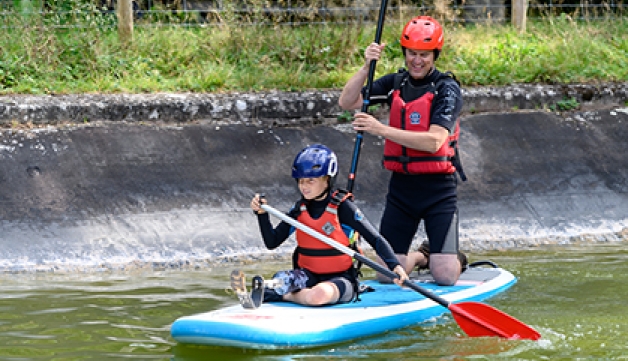
Whether it’s supported paddling sessions, inclusive activities for families with SEN, or community-led cycling groups like the Muslim Cycle Sisters at Osterley, there’s a real commitment to inclusion.

And it’s not just about participation but about representation, too.

The Trust is working with partners to tackle underrepresentation in the outdoor workforce, for example through our walking leaders programme, which is such an important step toward long-term change.

Nature restoration and biodiversity play a big part in our work.

Our infrastructure developments are designed to improve visitor experience and get people active whilst protecting some of the most sensitive nature areas.

We are strengthening our knowledge and skills in designing experiences that deliver real, meaningful and lasting nature connection to inspire more people to care for nature and their local environment.

Looking ahead

As I reflect on the past decade, I feel proud of what we’ve achieved and even more hopeful about what’s to come.

Our partnership with Sport England shows that when we focus on people, place and purpose, we can create spaces that are not only beautiful, but truly inclusive and life-enhancing.

And that’s something worth building on.

Find out more

National Trust

Cricket opening doors

There has never been more opportunity for young people with a disability to access and thrive in cricket.

In my short time as Chair of Lord’s Taverners, I’ve been privileged to witness the transformative power of our disability cricket programmes, not just for the young people who take part, but for their families, schools, and communities.

These experiences aren’t just inspirational, they are life-changing.

The need for our work has never been greater. That’s why I’m proud to be leading an organisation committed to making cricket the UK’s most inclusive team sport. And few moments capture that ambition more powerfully than the recent Disability Cricket Day at Lord’s.

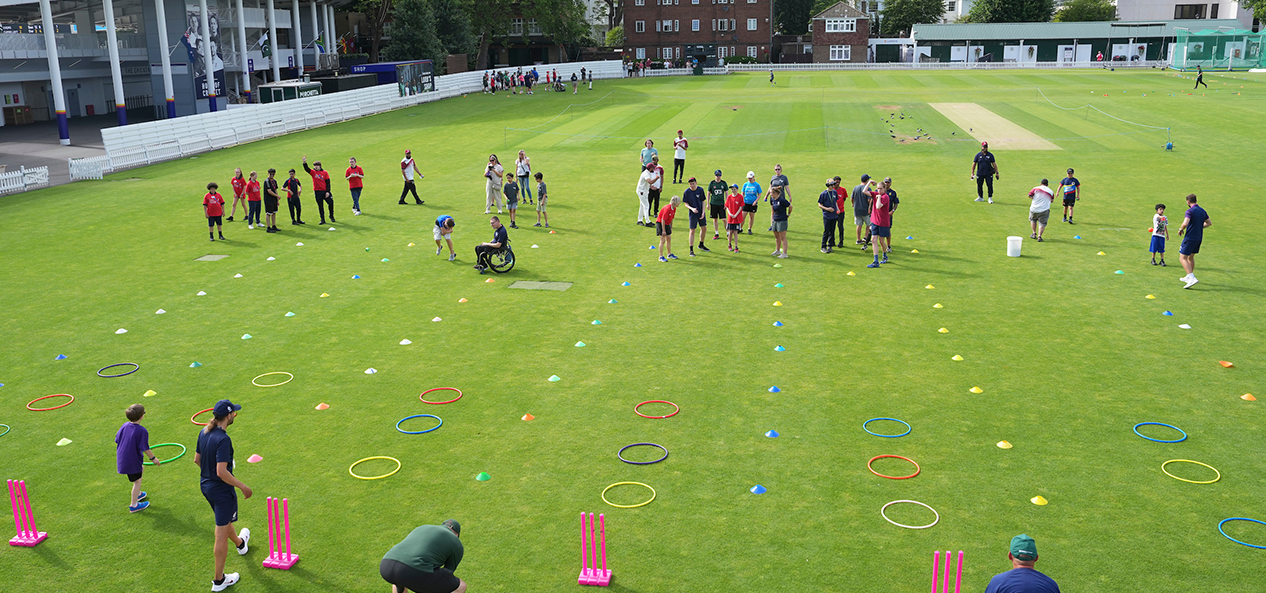
Young people take part in cricket drills during the Disability Cricket Day at Lord's.

This landmark event, delivered in partnership with the England and Wales Cricket Board (ECB) and Marylebone Cricket Club (MCC), and with the support of Sport England, was far more than a celebration of cricket. It was a bold statement of inclusion.

Together, we opened not just the gates of the Home of Cricket, but doors for thousands of young people across the country – offering a glimpse of what is possible when barriers are removed, and potential is given room to grow.

From grassroots to elite, the day showcased the full spectrum of disability cricket. This was the largest celebration of its kind and a testament to what can be achieved when organisations unite with a shared purpose.

Stakeholders from across the sporting landscape, disability advocates, educators and representatives from international cricketing nations gathered to witness and discuss how we can continue to evolve and grow the game.

There were moments of pride and passion throughout, not least in the conference sessions exploring inclusion across junior, recreational and elite levels. We heard directly from young people whose lives have been transformed through cricket. Their voices – often underrepresented – helped underline why inclusive sport isn’t a luxury or a bonus. It’s a necessity.

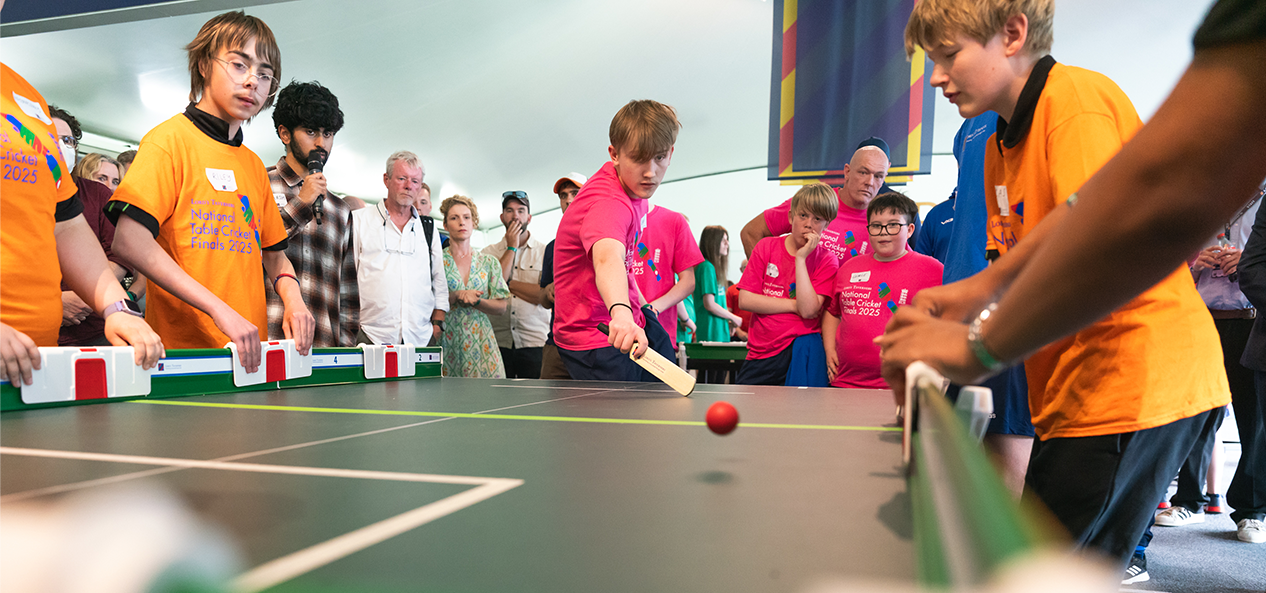
Young people take part in a mini cricket game on a table during the Disability Cricket Day at Lord's.

One of the day’s highlights was our own Lord’s Taverners’ National Table Cricket Finals, where 12 regional champions competed at Lord’s after a nationwide series involving hundreds of special educational needs and disabilities (SEND) schools from across the UK during the previous six months.

Table Cricket – a brilliantly adapted, fully inclusive version of the game – opens up a world of opportunity for young people with a wide range of learning and physical disabilities. It helps build confidence, foster independence and teach vital teamwork and leadership skills – all within the joy and discipline of sport.

To see these young athletes compete on the same day and at the same venue as their elite counterparts was incredibly powerful.
 

Together, we opened not just the gates of the Home of Cricket, but doors for thousands of young people across the country – offering a glimpse of what is possible when barriers are removed, and potential is given room to grow.

The event closed with history being made: the first ever international disability cricket fixture played on the main ground at Lord’s, a mixed-disability T20 between England and India. It was a moment that united grassroots passion with elite aspiration, showing every young person in attendance what’s possible.

This remarkable alignment – national youth competition and elite international showcase, side-by-side – is a beacon for what sport can be when inclusion is placed at its heart. It’s a demonstration of the pathway that exists and is strengthening year-on-year for cricketers with a disability, and a reminder of the importance of representation. Because when young people see others like themselves competing at the highest level, they begin to believe: this is for me, too.

The success of the day was only possible because of the strong partnership between the ECB, MCC, and the Lord’s Taverners – a spirit that reflects Sport England’s Uniting the Movement strategy. Together, we’re not only creating unforgettable moments; we’re laying the foundations for long-term change.

Cricket – like all sport – holds the power to change lives. But that power is only realised when it’s accessible to all. Too many young people with a disability still face barriers: lack of opportunities, inaccessible environments, or simply not seeing themselves reflected on the field. The message they hear can all too often be: this isn’t for you.

At the Lord’s Taverners, we are here to change that.

And thanks to events like Disability Cricket Day – and the partnerships that make them possible – we’re showing that our sport can lead the way in making inclusion not just a principle, but a reality.
 

Find out more

Lord's Taverners

Our new diversity and inclusion action plan

We’re pleased to announce the launch of our latest Diversity and Inclusion Action Plan (DIAP), which sets out our renewed commitment to creating a more diverse, inclusive and supportive workplace.

The new plan builds on the progress we’ve already made and reflects feedback from colleagues across the organisation, while setting out the priorities and the practical steps we’ll be taking over the short, medium and long term too. 

The DIAP meets the standards of our own Code for Sports Governance and our Public Sector Equality Duties, which require us to publish our equality objectives and report on progress.

Our vision

Sport England’s vision for sport and physical activity is at the front and centre of Uniting the Movement, our 10-year strategy.

Through it and our day-to-day actions, we’re determined to help people in England live happier, healthier and more fulfilling lives, and we are deeply committed to delivering the real and lasting change needed to achieve that. 

Our approach to equity, diversity and inclusion (EDI) (or to Equality Objectives, using the terminology of the Public Sector Equality Duties) is embedded in all areas of our work, both nationally and locally, because everyone deserves a positive experience when they are playing sport or being physically active, although this is not always what they feel.

How we will work

‘We are Inclusive’ is one of Sport England’s core values and because we have to practice what we preach, we firmly believe that we are at our best when everyone feels included.

We encourage every colleague to set an individual goal for themselves about being inclusive and we also want our teams to model inclusive behaviours in every interaction and decision.

These need to be everyday actions like respectful conversations, fair decision-making or real opportunities for development and progression.
 

Through Uniting the Movement and our day-to-day actions, we’re determined to help people in England live happier, healthier and more fulfilling lives, and we are deeply committed to delivering the real and lasting change needed to achieve that. 

Plus, we try to always to speak up, challenge non-inclusive behaviours and celebrate the diversity and strengths of our people.

But this plan goes well beyond any individual, internal goals for Sport England.

Uniting the Movement means we need to lead the sport and activity industry with intent and create national impact in a way that surpasses positive changes within our own organisation.

Our Tackling Inequalities Roadmap and Inclusion by Design work are examples of our leading from the front.

We’re committed to sharing our learnings with partners, in order to help spread good practice, and to deliver meaningful change.

A focus on equality, inclusion and belonging is our standard, and not as an added extra because, particularly when all the people taking part feel valued and supported, sport and activity have the ability to change lives.

Our equality objectives

Our latest Diversity and Inclusion Action Plan highlights four new equality objectives that have been developed in partnership with colleagues and are based on evidence and insight. 

These equality objectives are:

  • To take proactive steps to build and sustain a workforce that reflects the diversity of wider society and the communities that we work with.
  • To develop the awareness, confidence and skills of the Sport England workforce to drive forward our ambition to provide leadership to the sporting sector on inclusion.
  • To promote a culture of inclusivity across Sport England by prioritising actions that create meaningful engagement with the ambitions and actions in the Diversity and Inclusion Action Plan at every level across the organisation.
  • To act on new upcoming legislation, ensuring all our policies and practices align with evolving equality and inclusion legislation.

These goals will guide our actions over the next four years and everyone in our organisation has a role to play in our success.

Together we will remove barriers, measure progress with published targets and build a culture that supports equality at every level.
 

Harnessing the true power of sport and activity

We're here to champion the life-changing impact of being active and ensure everyone across the nation can benefit from it.

So opens Uniting the Movement – Sport England’s 10-year vision for change for the sport and physical activity sector. 

We published the strategy towards the end of January 2021. In the teeth of the third Covid-19 lockdown. A fully online launch, brilliantly brought together by my team that, at one stage, clocked over 5,000 attendees.  

It felt like a huge moment – but also one that couldn’t afford to be just a moment in time.

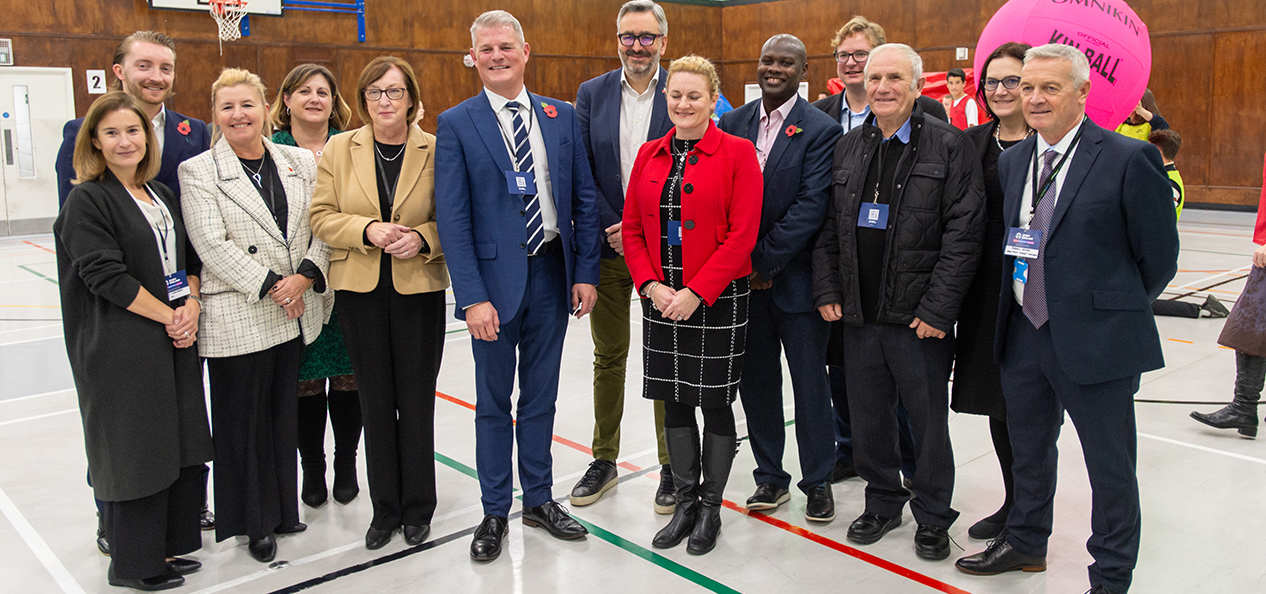
Tim Hollingsworth, Sport England's chief executive, poses with other representatives of our sector at the Place expansion launch event in November 2023.

Looking back with pride

Uniting the Movement was, and is, meant to be more than one organisation’s strategic ambition. Rather, it is a vision for change across a sector that should result in positive and permanent impact on society and help build happier and healthier lives.   

One too that understands the stuff that matters to create change, the need to tackle the stubborn inequalities that exist and how best to work together to deliver it. 

It was devised and written as we experienced the full force of Covid-19. How it ravaged lives and families put unbelievable strain on public services and changed utterly how we lived our daily lives.

It is easy to post-rationalise behaviour now, but at the time what I remember most was the complete uncertainty of it all. 

Which is why our response as Sport England – whether it was the Sport Survival Package for professional sport; the National Leisure Recovery Fund for local authority leisure centres; the Community Emergency Fund we created to support thousands of clubs and community groups to stay alive across the country; or the Join the Movement campaign devised to help us all stay active – is one of my proudest reflections now. 

We moved quickly and with purpose, both to support and work together with the sector, to make sure we removed as much jeopardy as possible. 

And understood very early on that only by working together could we get to those who needed help most.

It was these two elements – tackling inequality and working together – that became Uniting the Movement’s driving force. Together with a third prong: a determination to change our traditional top-down investment approach to a more collaborative, systemic way of using our resources.

So, while there are many other things to reflect on and be proud of during my tenure – for example the significant move we have made now to investing up to £250m in place-based working; the understanding of the role of facilities in driving participation; creating a safer sport environment through direct action and intervention; and working more closely than ever before with the other Home Country Sports Councils and UK Sport to be more unified around our common ambitions – and while I know I leave with Active Lives showing record levels of overall activity among adults (with two thirds of the nation – that’s 30 million people – doing at least two-and-a-half hours a week) – it is the triple force of the pandemic response, Uniting the Movement and more collaborative ways of working, to which I continue to return.
 

We moved quickly and with purpose, both to support and work together with the sector, to make sure we removed as much jeopardy as possible. And understood very early on that only by working together could we get to those who needed help most.

It is also the central mission of Uniting the Movement, born of that extraordinary time, that remains for me the greatest element still to be delivered.

Whilst we have done much together to set the conditions and change the language used across grassroots sport and activity, we have not yet meaningfully moved the dial.  

The challenges ahead

Action is now needed truly to start to close the gaps that exist – for the near-quarter of the population that still do fewer than 30 mins of activity a week; and in particular those from historically marginalised parts of the country and communities who have previously been less well served.

We need to do more to align being active with the provision of public health and recognise that the power that a more preventative approach can take.  

We need to continue to protect our playing fields and the places and spaces where people can play.  

More than anything, we need to make sure that as a nation we prioritise provision and opportunity for our children and young people so that they can build the physical and mental resilience and sense of purpose and agency that we know sport can provide.

All of this will mean being ever more effective and efficient in a world where resources are scarce and demands on the public purse remain huge.

The future health of The National Lottery is vital here – two thirds of Sport England’s funding is received via its returns to good causes. Sport England itself will need to change to become better and slicker in its delivery and use of data and digital services.

Ultimately though, it will depend on a sector’s willingness and ability to collaborate effectively. Truly to understand the communities in which we are seeking to deliver and how best to serve them.

In the words of a man called Majid Hussain, from Clemency House in Oldham, whom I met on my very first visit in the role, to strive everyday to ensure we “don’t make us more like you”.

It has been the greatest of privileges for the past seven years to lead Sport England.

With a fantastic Chair in Chris Boardman, a great new CEO in Simon Hayes and a wonderful team of people in place, I have no doubt that the next stage of its delivery and the collective journey of Uniting the Movement will achieve amazing things.    

The health and happiness of a nation depends on it.
 

Tim Hollingsworth leaves Sport England

Read the full story

Together to Inspire

It’s only been a few weeks since I completed my first year as CEO of BAFA and I’ve been reflecting on the journey we’ve taken.

It’s been over 12 months of learning, growth and of laying foundations for the future of American football in the UK and this week I’m proud to share Together to Inspire – our new three-year strategy to inspire the next generation of British American football players, coaches, officials and volunteers by bringing the Britball (British American Football) community together alongside its partners and supporters.

Since securing our initial investment by Sport England we’ve made strong strides as a national governing body.

One of our first priorities was to reset the National Flag Football League under BAFA’s direct management, while reconnecting with clubs and players and also fostering a more inclusive, development-focused culture.

The support from the investment has allowed for some immediate short-term participation growth, but we now have a big opportunity in this space to grow the sport as we build towards the Olympic and Paralympic Games in Los Angeles in 2028.

We’ve also invested in our digital infrastructure – recognising that sound systems and processes are critical for long-term sustainability.

Platforms like JustGo are being enhanced to capture better data, helping us understand who’s playing and how to support them.

And in the meantime, our team continues to balance the efforts of our incredible volunteers with the consistency brought by skilled staff and contractors that then align into our chair and board members.

It hasn’t always been easy, but we think all these efforts are vital to our future.

Leading for now and what’s next

A key lesson this year was balancing ‘the urgent and important’ with the long-term priorities.

There’s always something pressing – a complaint to attend to, another scheduling to fix or a new opportunity for growth to be pursued.

But for me it’s been key to be able to step back away from the day-to-day business and connect with members across the game to ask them about the kind of sport we want to build.

That’s what our new long-term strategy aims to answer.

The support from the investment has allowed for some immediate short-term participation growth, but we now have a big opportunity in this space to grow the sport as we build towards the Olympic and Paralympic Games in Los Angeles in 2028.

With Together to Inspire we’re not just solving today’s problems – we’re building tomorrow’s potential.

And we’re doing so in continuing our alignment with Sport England’s long-term strategy, Uniting the Movement, by creating a sport that’s inclusive, connected and sustainable.

Whether it’s supporting clubs, widening access or growing the workforce, we’re proud to be part of that mission and the work we have delivered in year one.

Listening, learning and leading with community

The biggest insights in our strategy have come from conversations.

Hearing from coaches, volunteers, officials and players has shaped our understanding of what’s needed, but this is an ongoing activity.

Through National Flag League resets, youth competitions and GB performance camps, we’re creating more spaces for meaningful dialogue – not just consultation, but connection with our community.

U19 regional 11v11 pilot

In 2024, we piloted a regional 11v11 league for under-19 players – removing barriers while offering meaningful development.

It reached 400 players across 12 camps and six fixtures, and it led to 80 additional GB trial invites.

The result? A boost of 16% in under-19 registrations!

The pilot also developed new coaches, several of whom now contribute to GB performance teams.

This model reflects the Uniting the Movement’s focus on youth engagement and inclusive talent pathways.

Strengthening safeguarding

This year, we implemented MyConcern – a secure case management platform powered by First Advantage.

It streamlines case-tracking and integrates DBS checks via JustGo to streamline the process and make it easy and secure for the user.

We’re also working with CPSU and NSPCC to ensure our policies reflect best practice, by furthering a safe and trusted environment for all.

Looking ahead

There’s a lot to be excited about, including:

  • reimagining our participation pyramid around accessibility and values
  • building a flag-performance system for LA28 and beyond – backed by uksport
  • strengthening clubs, empowering volunteers and investing in coaches and officials.

The Los Angeles 2028 Olympic and Paralympic Games present a huge opportunity for us, not just for visibility, but for exciting partnerships with the likes of the NFL UK and BUCS that’ll aid long-term growth together.

We look at these games as the beginning, rather than the end.

Looking back, I’m proud of how far we’ve come – and even more excited about what’s next.

We’ll keep working with our clubs, volunteers and partners to build a thriving future for contact and flag football in the UK.

Together to Inspire is more than a strategy – it’s a goal to work with our partners to create a sport that is values-driven, to make a difference for our clubs, workforce and athletes.

Find out more

Together to Inspire

More than just another leadership programme

I recently joined the Oxford Women’s Leadership programme to give myself space to reflect with a group of peers to sharpen my professional impact.

In our first week, we spent time examining key experiences that have challenged, awoken and shaped us as leaders, and I found myself musing on some of the hardest, most confusing times in my life and my career, as well as on some of the positive and encouraging events.

The process has already helped me grow in self-awareness and draw on knowledge about what I bring to the table, something that had been present but dormant.

This experience has fuelled my excitement about Sport England’s refreshed leadership offer – the Leading the Movement programme.

Re-thinking leadership

Over the next four years, we’ve committed to invest £5 million of National Lottery funding to support leaders to prioritise tackling inequalities within sport and physical activity participation.

I believe that this investment into coaching, mentoring and training is one of the most important investments we can make into our sector.

And this is because what we need most, as leaders operating in an increasingly complex world, is the ability to hold up a mirror to ourselves and our organisations to see where we might be contributing to the structures that hold inequity in place.

Change has to start with us and we can’t change until we’ve taken time to sharpen our understanding of our strengths and areas of growth, and until we make some intentional changes to build on our existing body of experience.

But what do we mean by ‘leaders’?

Having worked in community-led settings, I’m acutely aware that at first glance, leadership as we know it can feel exclusive, but Leading the Movement is aiming to buck that trend.

What we need most, as leaders operating in an increasingly complex world, is the ability to hold up a mirror to ourselves and our organisations to see where we might be contributing to the structures that hold inequity in place.

We know that leaders can be found in communities, in organisations of varied scales and at all levels of responsibility, so we’re committed to supporting individuals from communities and backgrounds currently underrepresented in our sector.

The programme will bring together our previous national and place-based leadership work, building a network of leaders from different backgrounds and we hope that these leaders will enrich each other's experiences and trade knowledge and insight.

There’ll be a microsite full of content that is accessible to anyone who’s interested and we’ll also have targeted support for leaders within our funded portfolios.

Tackling the challenges

Our ambition is that this won’t be ‘just another leadership programme’. Instead, we want to see a significant shift in confidence, knowledge and impact.

We know from listening to people within our sector that, especially for leaders with an explicit responsibility for driving-inclusion exhaustion, discouragement and burnout are very real risks.

We want to tackle this by creating a supportive community which acknowledges the day to day challenges of leading on the frontline and equips leaders with the skills to create measurable shifts in culture and practice.

All of this is pointed at the primary aim of our long-term strategy, Uniting the Movement, opening up more opportunities for everyone in England to experience the benefits of an active life.

And we need an army of confident, impactful leaders to make this a reality!

If you want to be part of Leading the Movement, visit its new site and check how we can support you and your team in your leadership journey.

In the meantime, why not take some time to reflect on a moment or experience that has shaped you as a leader? What did you learn about yourself that might help you rise to a challenge you’re facing today?

Visit our new site and find out more

Leading the Movement

A new step in tackling inequalities

At Sport England, our mission, which we call Uniting the Movement, is clear: to ensure that sport and physical activity are accessible to everyone, particularly those who need it most.

As part of this commitment, we are excited to launch the Place Need Assessments.

These are a collection of key resources designed to help organisations better understand the specific needs of different communities and where (and how) to target efforts in tackling inequalities, so everyone is able to be active.

The new assessments demonstrate how our Inequalities Metric and Place Need Classification can enable us and our partners to make more informed and data-driven decisions.

But what exactly are the Inequalities Metric and Place Need Classification?

The Inequalities Metric is a tool that identifies the key characteristics that have the most impact on people's minutes of activity.

It shows that those with two or more characteristics of inequality (for instance, someone with a disability and who is also over 65 years old) are significantly less active than those without these attributes helping us focus our support where it’s needed most.

On the other hand, the Place Need Classification highlights the areas with the greatest need by combining data on physical activity levels and wider social information, including the Index of Multiple Deprivation and Community Need Index.  

The new assessments demonstrate how our Inequalities Metric and Place Need Classification can enable us and our partners to make more informed, data-driven decisions.

This classification helps us and our partners target investment and action in the areas where it will have the most impact.

These tools have been instrumental in shaping our work and informing investment decisions..

The importance of intersectionality

A key message from the Inequalities Metric is that intersectionality has an impact on activity levels.

If we're to level the field so everyone is able to be active, we need to do more to cater for people with multiple characteristics of inequality.

The numbers are clear:

  • 75% of adults with no inequality characteristic meet activity guidelines, compared to 44% for those with two or more.
  • 51% of children with no inequality characteristics meet activity guidelines, compared to 39% for those with two or more.

These figures prove that if adults with one, two or more characteristics of inequality were active at the same levels as those with zero characteristics of inequality, there would be over four million more active adults and an estimated £15.6 billion more annual social value created by sport and physical activity.

Therefore, the good news is that there is an opportunity to be more focused and tailored to those whose behaviour we’re trying to influence and where (which places).

This doesn't mean we should solely focus on people with two or more characteristics of inequality, or that there aren't other groups who experience inequalities in participation or who experience discrimination. 

What it means is that where we're applying the Inequalities Metric (and Place Need Classification, of which the Inequalities Metric is a component), we're using the data to inform (not restrict) our decisions, and we'd expect the same from our partners and other organisations.

How the Place Need Assessments work

The Place Need Assessments are designed specifically to support other organisations to use the Inequalities Metric and the Place Need Classification to support localised decision-making.

These two tools provide a structured approach to identifying and understanding inequalities in sport and physical activity at local and neighbourhood levels. 

Using national and local data, organisations can:

  • identify priority areas and groups where interventions can have the greatest impact
  • assess both sporting needs (where people are less active and inequalities in participation are high) and social needs (where health, wellbeing and economic outcomes are poorer, meaning that increased activity could have the greatest benefits)
  • tailor interventions and programmes to address local characteristics effectively.

The assessments are an example of how to take a data-driven approach to guide decision-making and ensure that investment, support and interventions are directed towards, and tailored to, the communities where they can create the most meaningful change. 

Thanks to our Place evaluation we know that this type of analysis is an important foundation for locally productive partnerships.

And we also know that partners collaborating on an approach like this can help build shared understanding and purpose, increasing the likelihood that combined actions are aligned and effective.

They are not an exhaustive approach and, within them, we highlight where different types of data (e.g. local, national, qualitative – including lived experience – and quantitative) can play a role.

They are intended to provide a framework where organisations might need support but, of course, there are other datasets and other means of analysis that can achieve similar outcomes.

Next steps and how to get involved

We've developed a range of resources to support organisations to use the Place Need Assessments. These are:

  • What you need to know: a summary highlighting the insights you'll gain from carrying out a Place Need Assessment.
  • A Step-by-Step Guide: a document outlining how to conduct a Place Need Assessment.
  • Real-World Examples: three assessments to serve as examples demonstrating how need differs from place to place and how to draw conclusions from the data.
  • Supporting data files: the data needed to conduct a Place Need Assessment, following the approach outlined in the Step-by-Step Guide.

By using these resources, you'll be able to better target interventions, ensuring that sport and physical activity reach those who need them most.

If you’d like to learn more, please visit our new webpages or get in touch to discuss how the assessments can support your work.

Let’s continue working together to tackle inequalities and to create more opportunities for everyone to be active.

Find out more

Place Need Assessments

Taking the long view on volunteering

For many, the beginning of June is the unofficial start of the summer.

Holidays are on the horizon, Wimbledon and the Tour de France are getting closer and we get to celebrate volunteers in the best week of the year – Volunteers Week!

The latest data from our Active Lives Adult Survey Report shows that almost 10.5 million adults volunteered to support sport and physical activity across the 12-month period from mid-November 2023 to mid-November 2024.

This is an increase of 488,000 over the last 12 months and it shows a continued recovery of volunteering since the pandemic in 2020.

This huge contribution of people’s time, energy and skills in sport and physical activity is really something to celebrate, and everybody in Sport England wants to say a massive thank you to everyone who volunteers to keep the nation active. 

Volunteering not only enables participation opportunities for others, but it significantly boosts the wellbeing of volunteers themselves.

Our research into the social value of sport and physical activity demonstrated that adult volunteering in England is worth £8.2 billion annually in social value and these benefits to wellbeing are in addition to any value that comes from being physically active.

The present of volunteering

The recovery we’re seeing post-pandemic is positive and it demonstrates the resilience of sport volunteering, and that millions of people are still motivated to give their time.

However, there are also some more worrying trends that we need to take note of.

This huge contribution of people’s time, energy and skills in sport and physical activity is really something to celebrate and everybody in Sport England wants to say a massive thank you to everyone who volunteers to keep the nation active. 

Volunteering levels have been falling over the long-term and this was accelerated by the pandemic, plus we are yet to see volunteering return to pre-pandemic (November 2018-19) levels, as there are still 1.7m (4.8%) fewer volunteers compared to seven years ago (November 2016-17).

This decline is not unique to the sport and physical activity sector.

The Community Life Survey, which measures volunteering across sectors is also reporting that levels of formal volunteering have been in decline, suggesting that there are wider social and economic factors at play.

Our recent State of the Nation report points to some of the wider changes we’ve seen that provide interesting context for the data.  

There has also been little change in who volunteers.

Women, people with disabilities or a long-term health condition and those from lower socio-economic backgrounds continue to be underrepresented in volunteering, plus those with two or more characteristics of inequality are least likely to volunteer.

The data shows that, in many ways, volunteering mirrors the stubborn inequalities that we see in sport and physical activity participation.

As a result, community sports clubs and community groups continue to miss out on the valuable skills and experiences a more diverse volunteer base could bring.

It also means that the volunteers who help deliver sport and physical activity are not always representative of the communities they serve, which can pose challenges in staying relevant to the changing needs of diverse participants and communities.

Changing this is fundamental to creating a more inclusive and welcoming environment for everyone.  

Making a difference

A good starting point, and our focus in Uniting the Movement, is to focus on the volunteer experience; on changing culture and practices to enhance it, and on making it more inclusive and welcoming.

We recently commissioned Leeds Beckett University to complete an evidence and scoping review to understand the existing evidence and insights out there on the volunteer experience in sport and physical activity.

We’ll publish more details from this work as soon as we can, but it felt relevant here to share a snapshot of what the existing evidence tells us works to enhance the experience of volunteers, particularly those from underrepresented groups. These include:

  • supporting the development of feelings of connection to the purpose, values, work or people of the organisation
  • ensuring roles align with the individuals’ motivations to volunteer and that these roles are suited to their skills and experience
  • making sure volunteers feel able to manage role demands with their available personal resources and know where and how to access support
  • establishing an organisational culture that is welcoming, caring, safe and inclusive
  • creating environments volunteers feel seen, heard, known and valued throughout all stages of their volunteer journey
  • ensuring that organisations critically reflect on volunteer management, policies and practices
  • developing person-centred approaches that underpin the recruitment, development and retention of volunteers
  • providing a volunteer offer that is diversified and that's made easier through flexible, accessible and appealing roles
  • designing non-linear pathways to support the development and retention of volunteers and to address any skills gaps.

What about the future?

Imagine it’s 2035 and these principles and approaches have been embedded across sport and physical activity volunteering.

What changes would we see in the data about who volunteers?

Would there be an increase in volunteering with more people encouraged to give their time to support others to get active?

What we want is to see a future where volunteering in sport is uncomplicated, meaningful, well supported and easily integrated into people’s life.

And for this to be possible we need an inclusive, accessible, people-centric culture where volunteering is accessible and relevant to everyone.

We hope that, in the future, the volunteer workforce will reflect the diversity of the communities they serve, and that the experience of participants is richer and more positive within this inclusive environment.

I’m really looking forward to discussing and reflecting on these findings with our partners to understand how we might create these conditions in more of the clubs, groups and organisations to improve the experience of volunteers across the country.

In the meantime, I hope that this provides some inspiration for even small changes to help improve the experience of volunteers right now.

Find out more

Volunteer's Week

Levelling the playing field

It’s undeniable that the Lionesses’ recent triumphs and the professionalisation of the women’s game, the strong performance of the men’s team and the fact that the number of girls watching and playing football has doubled in recent years, has made the country proud.

We know that the scale of grassroots football in England means that the sport is well positioned to influence people and communities in tackling inequalities in sport and physical activity.

So because of all of these reasons, we thought that our case study with The Football Association (FA) would be a great way to close our series of blogs.

The FA is the National Governing Body for one of the country’s most popular sports and receives significant funding through Sport England’s system partner investment.

We know that the scale of grassroots football in England means that the sport is well positioned to influence people and communities in tackling inequalities in sport and physical activity.

This funding, while a small proportion of The FA’s overall turnover, drives initiatives aimed at tackling inequalities and increasing participation among under-represented groups.

What we've learnt from football 

There are different learnings we’ve achieved from these initiatives that are also contributing to Sport England's long-term strategy – Uniting the Movement

Efforts should be made to keep girls in the sport 

Recognising the common challenge of drop-off in girls’ sports participation during teenage years, The FA developed ‘Squad’– a programme that’s designed to be a fun, non-competitive initiative for girls aged 12-14.

This model, which could be replicated across other sports, prioritises enjoyment and social connection, and aims to retain girls in football while building their confidence and leadership skills.

In addition, they have developed a new talent ID programme called Discover My Talent, shifting the way they find and support talented footballers.

The FA’s learnings from this programme highlight that moving away from a traditional approach, focused on existing clubs and academies, enables them to identify potential "anywhere, anytime."

This approach aims to identify talented players across the country, within diverse groups and at any kind of football events and sessions to broadening opportunities across different communities, resulting in more diverse talent pathways for women and girls.

The FA reports that they are seeing positive results, with increased diversity in the top talent programmes.

Increasing opportunities for disabled players 

The FA is committed to growing para- and disability football and to closing the disability gap, partly through initiatives like ‘Comets’ – a recreational program for disabled children aged 5-11 that provides fun and accessible entry opportunities to the sport.

While aiming to expand Comets and the provision of disability football, The FA acknowledges challenges such as workforce training, confidence levels of local coaches to support disabled people and logistical barriers to attending sessions – like the time and financial costs of travel – for para-athletes.

In response, The FA are providing disability training and toolkits for clubs, called Journey to Inclusion, with the aim of proactively addressing these challenges.

The FA have identified potential for cross-sector collaboration and knowledge sharing with other system partners to continue to address these difficulties, as well as using football as a hook to engage disabled people and connect them with other sports.

Investing in the workforce to reflect the communities served

As many system partners have told us, local champions have an important role for creating local change.

Recognising the need for a diverse workforce to help diversify participation, The FA is actively working to increase the number of Black and Asian coaches in grassroots football.

And by targeting specific localities and offering more coaching opportunities, The FA aims to create a coaching landscape that reflects the communities it serves.

The role of local partnerships for building a stronger ecosystem

The FA is increasingly working locally, tailoring programmes to the unique needs of different communities.

Their experience is that partnerships with community groups and schools are key to reaching under-represented groups.

Ensuring safeguarding standards when partnering with non-accredited organisations is recognised as a challenge, so they are actively supporting community organisations in developing their safeguarding processes through training and qualifications.

Looking at what's to come

The new Learning Synthesis report based on the year two evaluation report will be published soon with more insights from the ongoing evaluation.

It will also include the collective contributions that partners are making to changing the sport and physical activity system.

We hope this series of blogs have been useful and if you have any comments or questions, we'd love to hear from you, so please get in touch.

A question of talent

Recently, the sports headlines have been full of stories about diversity and inclusion. 

Earlier this month, Maro Itoje was announced the first black man to captain the British and Irish Lions and Zhao Xintong became the first player from China to be the world snooker champion. Also this May the Gaelic Games is voting on whether women can play in shorts or skirts.

These are great news, but isn't it weird that to date, the only male professional footballer who felt able to come out as gay was Blackpool’s Jake Daniels, back in May 2022?  

Group photo of the members of the Talent Inclusion Advisory Group and Sport England representatives


These stories tell us something about sport being for everyone and yet, sometimes, how it really isn’t.

The importance of representation

Sport England works hard to broaden the appeal of sport for people just playing for fun and to create the conditions where anyone feels they can belong.

But is the talent system different though? Isn’t talent and performance sport about just being the best?

Sport England thinks it should be.

Performance sport should be the ultimate meritocracy, where our representative teams and top athletes are the very best of us.

But if this was already the case, would 33% of Team GB medallists in Paris 2024 have been privately educated, compared to 7% of the population

Or would there be only 21 British Asian male cricket professionals when more than 30% of all cricketers in England are Asian?

These are just examples of a wider problem of representation in sport in this country and that’s why this is an area in which Sport England works hard to support the change that is needed.

Why does this matter?

Some will say stories of professional sport are not in the Sport England remit, but they matter for the same reason that our long-term strategy – Uniting the Movement – has inclusion and diversity as its central theme.

Performance sport should be the ultimate meritocracy, where our representative teams and top athletes are the very best of us.

We know that playing sport can have a profound positive impact on individuals' lives and on our communities. That when we move, we are stronger.

But more than that in performance sport, don’t we want to see England and GB teams that look and sound like the nation we are?

We are already proud of all our teams, of players and athletes that have got where they are through their talent and dedication.

England and GB over-achieves already, thanks to a talent system that produces winning teams and great champions.

I say this because only the super powers of USA and China have won more medals than Great Britain in the last four Olympic and Paralympic Games, while England and GB teams have won numerous World and European titles in a wide range of sports.

But we think that we can be even better and win even more, if we choose from the biggest squad possible.

That means removing barriers, giving opportunities to everybody in our society, spotting any possible biases and levelling the playing field so everybody with talent has a chance.

What is the Talent Inclusion Advisory Group?

We care about representation and inclusivity, but not only when the calendar says there’s a particular date we must respond to.

Our job means we tackle inequality all year around and our new Talent Inclusion Advisory Group is born to hold us accountable to this compromise and to our principles and mission. The group has come together to help us do exactly that by bringing experience and expertise from several industries and walks of life.

Together they’ll produce a ‘playbook’ containing research, stories, insights and investment ideas that the sport industry can use to create change, and to win.

The group is advising the Sport England talent team, led by Olympian Diane Edwards, who started and led her own foundation to give Manchester young people opportunities in sport.

Chaired by Dr Tunde Okinwale, an award-winning barrister and social entrepreneur who grew up on a Hackney council estate, the group contains expert individuals from education, media, psychology and finance. They are:

  • Alice Dearing – co-founder, the Black Swimming Association
  • Ade Ahmadu – certified program director and senior program manager, Prince 2
  • Andrew Isama – economics teacher, Eton College
  • Carly Tait – diversity and inclusion business partner, JD Group
  • Helen Williams – Equality Advisory Group (independent), Football Association Wales
  • Kevin Analuwa – non-executive director, British Wheelchair Basketball
  • Rozana Green – diversity and inclusion outreach lead, BBC Employer Brand
  • Tim Lawler – MBE, CEO of Sports Aid and chair of the LTA Tennis Foundation.

So what does success look like for our group?

In the last decade we’ve witnessed women’s football soar in popularity, but many may not know that it was banned for 50 years!

I’m very proud to say that Sport England’s effort and investment has supported and fuelled that change.

And it’s also worth saying that in 2017 there were very few women, culturally diverse individuals or disabled people on sport boards.

In our system partners, thanks to Sport England’s work, these numbers are over 40%, over 15% and over 16% respectively.

So change is possible.

The addition of new people, with different backgrounds and experiences, has made sport more representative, more relevant and stronger.

We aim to do the same for our future GB and England teams.

If we are successful, they will look and sound like all of us and they will win even more.

We want it all and we’ll keep working for it

Today we’ve published our Active Lives Adult Survey Report, which looks at the results from November 2023 to November 2024, so let's dig beneath the surface to understand a little more about what the data is telling us and why that matters.

As a reminder, activity levels are up and inactivity levels are down since we started the survey in 2015.

In fact, levels of activity in England are at their highest since the survey began – with 2.4m more people active since 2015.

That growth is coming from a number of different places, with really big gains coming from fitness activities like yoga and pilates.

More people have also been visiting leisure centres and gyms in the last couple of years, and more and older people are getting and staying active, suggesting some fundamental changes in how people are choosing to engage in physical activity.

There’s also really positive news for sports like football, netball, cricket and swimming, with increases across the board since the pandemic, meaning that team sports have recovered from the huge and lasting impact of lockdowns and restrictions.

At Sport England we’ve been working closely with partners across all these sports to help support new and different ways to reach people and break down barriers to participation.

A great example of this is the revolution seen in women’s football, which continues its long-term growth.

It’s also really satisfying to see levels of enjoyment of sport rising faster for those that have typically enjoyed it the least – evidence, we think, that our collective work to make sport more open, welcoming and accessible to everyone is starting to show its impact.

At Sport England, we’ve been working closely with partners across all these sports to help support new and different ways to reach people and break down barriers to participation.

Of course, the picture isn’t perfect – there are still too many people who don’t feel like sport is for them, especially those people who share two or more characteristics of inequality.

We make no apologies for disproportionately targeting our work and our investment to better support those groups to get active.

But I also wanted to share why this is so important.

We know that current activity levels save the NHS £10bn a year, add £87bn to the economy every year and increase people’s wellbeing in a way that’s valued at £107bn annually. You can find all these stats on our website.

What that means is that if we can close the gap between those that are active and those that aren’t, we can further reduce costs to government, boost the economy and improve wellbeing even more than we do right now.

Lastly, I want to say thanks to the thousands of organisations and millions of individuals that have joined us in our vision to make sport and physical activity accessible to everyone – we haven’t finished the job, but the story so far looks like a positive one.

Download the report

Click on the link below to read our report – if embedded links in the PDF do not function correctly in Google Chrome, please use another browser, or open the report in a dedicated PDF viewer: 

Unlocking the power of movement in the NHS

Imagine a world where physical activity behaviours are as routinely discussed within your NHS consultations as smoking, or 'prescribed' as routinely as medications.

One where your healthcare professional (HCP) helps connect you into ways of being active that work for you.

That’s the aim of the work we are doing with our health and physical activity partners, through our Uniting the Movement strategy, to strengthen the connections between sport and physical activity, and health and wellbeing.  

Through cross-sector collaboration we’re enabling the conditions for systemic change, the spread and scale of effective interventions and a coherent joined-up movement for change.

Working together for people's wellbeing

The NHS is one of the most trusted sources of physical activity advice for people with long-term health conditions and for disabled people who, according to our latest Active Lives Adult survey, are almost twice as likely to be inactive than those without health conditions or disability.

Modelling undertaken by our health team, using Active Lives data and the social value of sport and physical activity data, concluded that supporting the one in four people who say they would be more active if advised to do so by HCPs would mean 2.9 million fewer inactive adults and 550,000 fewer less-active children and young people in England, saving up to £0.9 billion from the healthcare system.

Through cross-sector collaboration we’re enabling the conditions for systemic change, the spread and scale of effective interventions and a coherent joined-up movement for change.

That is why we are so excited about the recent launch of NHS England’s four ways forward, which aim to empower and support NHS leaders, managers and HCPs to unlock the protective power of physical activity to improve patient care and deliver NHS priorities. 

Supporting the four ways forward 

Sport England, alongside the Office for Health Improvement and Disparities (OHID) and NHS Horizons, have supported NHS England in developing these as a route to going further and faster in integrating physical activity within and alongside routine NHS care.

This approach is built upon strong evidence and significant progress to date, blending local and national-led action to spread good practice across England.

Lots of our work with partners is already supporting the delivery of these four ways:

Empowering health and care professionals

  • We’ve supported training and education with the Physical Activity Clinical Champion Programme being accessed by over 56,000 HCPs; with 54,600 modules on physical activity completed on the British Medical Journal e-learning platform; with initiatives like This Mum Moves, which has trained 900 health and physical activity ambassadors who’ve then cascaded the training to colleagues and partners; and with the award-winning Moving Medicine platform, which has enabled over 308,000 HCPs to confidently discuss physical activity with patients.
  • Our work with partners has also facilitated change with The Active Hospital toolkit that has been developed to help NHS Hospital Trusts to integrate physical activity into secondary care pathways, and the We Are Undefeatable campaign that has been successfully changing the narrative on being active with long-term health conditions.

Integrating physical activity into clinical pathways

Supporting the NHS workforce to gain the benefits of physical activity

  • According to the latest data, 462 GP practices have received the Royal College of GPs Active Practice Charter accreditation in recognition of utilising physical activity to support staff and patient health and wellbeing.
  • Many sport and physical activity partners provide discounted membership rates to NHS colleagues, e.g. local authority leisure offers.

Supporting innovation and evaluation with partners 

This is achieved through collaboration between health and physical activity partners to influence the provision, access to and use of local assets and facilities.

  • The Sport for Confidence Prevention and Enablement model evaluation report concluded that the positive impact of their innovative approach to embedding physical activity into a whole-system approach to adult health and social care could deliver £58.72 of social value per pound invested.
  • Active Dorset are working with their integrated care system and public health partners to build physical activity into the county’s approach to integrated population health-data management.

Looking ahead

With physical activity’s brilliant infrastructure and a new NHS policy context, the publication of the NHS four ways forward enables us to accelerate cross-sector collaboration and spread good practice – particularly through place-based action between our sector (including active partnerships, local authorities, leisure providers and community sport) and integrated care boards, acute trusts, integrated neighbourhood teams, primary care networks and GP practices.

We have a prime opportunity to get this right – amplifying impact on the health and wealth of the nation and focusing support on those that would benefit the most.

Doing so will create an NHS fit for the future, empower communities and ensure physical activity is a must-have for all of us and for future generations.

Listening to young voices

“Our voices were the most important thing in the room.”

This comment – part of the feedback from one of the 16 amazing young people that took part in the Youth Voice Design Jam in August 2024 – made me smile.

The Jam was a collaborative, joyful and intense three days where young people teamed up with Sport England and a range of sector partners.

The hands of young people are seen working on some papers on a table where there's also some grapes, a bag of crisps, a pair of scissors, glasses and colour pens.

Together, we worked through a double-diamond design process to explore, co-create and present four brilliant ideas focused on embedding young voices within our own work and across the sport and physical activity sector.

This is something that’s close to my heart; an aim I’ve been living and breathing, both during my day job and as a volunteer coach in grassroots girls’ football.

It’s a goal that’s born out of the imperative to respect young people’s right to have their voices heard and acted upon in all matters affecting them, particularly when they are being active.

We know that doing this is a key enabler for creating positive experiences one of the ‘big issues’ identified in our Uniting the Movement strategy  where our ambition is to put young people’s needs, expectations and safety first in the design and delivery of activity, particularly for those from underserved communities.

The Youth Voice Innovation Storybook

The Youth Voice Design Jam was the culmination of months of learning and co-design through our partnership with the Innovation Unit that had started in October 2023 with three key questions:

  • What is the role of youth voice within Sport England?
  • What is the role of Sport England in embedding youth voice across the sector?
  • What works and doesn’t – in building the innovation skills, knowledge and confidence of Sport England colleagues?

We’re now pleased to be able to share our Youth Voice Innovation Storybook

This document charts our journey exploring the three questions above, plus what we learnt from our partners and how we went about delivering the Youth Voice Design Jam.

It’s a goal that’s born out of the imperative to respect young people’s right to have their voices heard and acted upon in all matters affecting them.

The storybook is packed with practical tools, activities and top tips for organisations seeking to engage young people in meaningful co-design, and it builds on the first phase of our work with Innovation Unit, which culminated in the development of Sport England’s Innovation Playbook.

This includes a set of tried-and-tested tools and eight key practices to embed innovation in our daily work.

A work for and inspired by the young

Our work on youth voice tested putting these into practice, learning from young people, colleagues and partners.

We didn’t start this process from a position of expertise. But that’s OK, because owning this and working openly has proved to be a real strength.

We were inspired by this start point and were able to learn so much from a wide range of brilliant colleagues, partners and young people, including:

  • understanding what matters most to young people when co-creating
  • understanding the biggest problems partners face when trying to embed young people's voices into their work
  • the opportunities and readiness of Sport England colleagues to embed youth voice across our work and the sector.

We’ve got so much energy from young people through this work!

I’ve been amazed, but not surprised at the speed that they’ve understood the context of our sector, and the creativity in the ideas and solutions they’ve developed.

More importantly, we know that young people have gained lots from this process, whether that’s building confidence, learning new skills or meeting with peers.

This was all summed up brilliantly by one young person when they said that being part of this process enabled them to learn so much about themselves that they felt they could now work with anyone and achieve things that before they didn’t think they could. Isn't that amazing?

What’s next

Whilst the Youth Voice Design Jam was a significant step for us, it certainly doesn’t signal the end of the road.

Instead we’re going to continue to learn and build expertise in this area, advocate for young people’s right to be heard and work with partners and young people to explore how our ideas can be progressed.

There are already lots of things happening, including a new question on youth voice as part of the Active Lives Children and Young People survey and working with colleagues to explore where youth voice sits across a range of projects and campaigns, like an exciting new Studio You partnership, the Play Their Way campaign and the work of the Positive Experiences Collective.

National Youth Strategy

Young people are also at the heart of shaping the Government’s National Youth Strategy via Deliver You.

This is a national listening exercise that’ll open to young people this spring to have their say on the services, facilities and opportunities they need to benefit their lives and futures.

We hope that you find the Youth Voice Innovation Storybook useful and we encourage you to use and share it if you’re interested in making sure that young people’s voices are the most important thing in the room.

Building a movement for change

At Sport England, collaboration and learning are at the heart of what we do.

That’s why we’re excited to share the highlights from the recent interim evaluation of our investment into system partners – the Learning Synthesis report – a document that offers valuable insights and lessons for organisations tackling inequalities through system change.

In short, our system partner investment is a new approach that’s aligned with our Uniting the Movement strategy by committing over £500 million since 2022 to more than 120 partners. 

This long-term funding provides up to five years of financial security and stability for organisations to focus on addressing the systemic changes needed to tackle the inequalities stopping individuals and communities from being physically active.

Learning together – why this report matters

It’s important to highlight that this investment by Sport England is about more than funding. It’s about building a movement for change and the Learning Synthesis report is key in this mission.

The report was conducted by Ipsos, New Philanthropy Capital (NPC) and Sheffield Hallam University, and it sheds light on what’s working and where challenges remain within the sector.

But it goes beyond that by posing questions – and presenting answers – about how we can work together to tackle inequalities so everyone can enjoy the benefits of being active.

What we’ve learned so far

The result? Insights that are key for our work at Sport England and for critical points of reflection to anyone striving to make a difference through systemic change at local or national level.

Some of the main findings of the report are:

Overcoming challenges to collaboration is key

System partners build partnerships with diverse stakeholders – from local councils to schools and community groups – that create a more cohesive and integrated approach to system change.

We know that Uniting the Movement has provided a framework for building trust and encouraging alignment and shared goals, but we also know that collaborative working takes time, and that this is often hindered by financial constraints, recruitment challenges and cultural barriers.

These obstacles are further exacerbated by political and leadership changes, which can disrupt momentum and require the continual rebuilding and realignment of relationships.

Change champions make a difference 

System partners have found that identifying and engaging local champions can accelerate system change as these often hold the keys to unlocking new opportunities and relationships.

It is important for us and our system partners to think strategically about how we can influence the system, through engaging with these individuals and groups moving forwards, and how we can best identify them within our communities, places and/or organisations.

Quantitative and qualitative data together tell the full story

While numbers are important, stories and case studies provide rich context for understanding our impact and uncovering learnings about why things work, for whom and in what context.

We need to tackle the ongoing challenges within the system, where qualitative data is not valued as it is difficult to track and evaluate over time.

Learning from challenges

System partners recognise that system change isn’t easy. Barriers like language, staff turnover, strategic planning and the complexity of demonstrating impact are very real. But recognising these hurdles allows us to address them head-on with a mindset of learning and growth.

Looking ahead – building on these learnings

As an organisation, Sport England is on a journey to reshape its relationship with its partners and develop a more relational approach to working together to tackle inequalities in physical activity.

It’s important to highlight that this investment by Sport England is about more than funding. It’s about building a movement for change and the Learning Synthesis report is key in this mission.

Our evaluation to understand the impact of this ‘new way of working’ is therefore very complex and it's represented in an evolving theory of change.

This hypothesis sets out how and why we think change will happen over the short, medium and long-term, and guides our evaluation accordingly.

The interim evaluation findings we’re sharing today provide a foundation for reflection and learning on our progress so far.

The conclusions and the improvements achieved by our partners, plus the challenges these partners and also us at Sport England still need to face, underscore the importance of adaptability, transparency and a long-term perspective in driving system change.

As we move forward, we think it will be essential to:

  • continue sharing what works and what doesn’t work when addressing the challenges that arise through our collaboration between our partners and colleagues
  • use our successes and our innate value in our work with system partners to continue to build new partnerships and engage with diverse stakeholders, whilst nurturing those we’ve already established
  • focus on sustainable approaches to evaluation, learning and insight that balance the immediate need to demonstrate impact, whilst recognising that true systemic change is a long-term impact.

Join the conversation

We're already working closely with our system partners to share and act on these findings through our capability and capacity-building sessions, and our learning and knowledge exchange work.

We also think the findings have wider value to anyone who’s part of a complex system and exploring how to reduce inequalities. Is this you?

If that’s the case, we’d love to hear your thoughts on these findings, what resonates most with your work or what lessons we can learn together.

And if you have any questions, reflections or feedback on this report or any other element on this blog, please get in touch.

Find out more and get involved

Are we there yet?

When we are travelling it is easy to get impatient and start wondering how long we’ll still have to go before we reach our destination.

And this edginess often appears even more so when we are on a long journey – like our quest for sustainability in the sport and physical activity sector.

But it is not just sustainable sports centres (to name one example) that we’re after.

We also want more sustainable homes, more sustainable businesses and more sustainable communities – so we are in for a long ride!

Looking back as we celebrate

And just to finish with the journey metaphor, it’s true that sometimes a trip can take you through breathtaking and inspiring places, while other times it drags on with no apparent progress being made.

The efforts around the sustainability journey are no different.

Cynics amongst us may say we are not making any progress with our sustainability efforts but I’d like to disagree.

At Sport England sustainability is a key part of our work, so I thought that as we celebrate the fourth anniversary of our long-term strategy, Uniting the Movement, it’d also be a great moment to reflect on the steps we’ve made so far and how we can keep moving ahead while ensuring we make the most of our natural resources without damaging or limiting our environment.

In 2022, we committed to ‘stepping up on environmental sustainability’.

Back then we highlighted three key points:

  • We recognised there was considerable work to do not only to reduce our negative impact on the environment but also to prepare our sector for a changing climate.
  • We committed to being clear on what actions we needed to take and to improving Sport England’s own environmental performance.
  • We said we’d collaborate with other organisations to make these things happen across the sector.

So, can we say we are nearly there? I’m afraid not quite, but we we’ve taken our first steps and we’re not alone, so we can’t stop now.

Plus we’ve done what we said and more. Much more!
 

Cynics amongst us may say we are not making any progress with our sustainability efforts but I’d like to disagree.

We listened to our partners and our internal teams and produced an environmental sustainability strategy and action plan, which we called Every Move.

We have a small team to deliver the action plan and embed sustainability across all our work but we can see people across the sector getting constantly involved with our efforts, like when almost 200 organisations signed our Going for Green Pledge last summer after our our Chair Chris Boardman cycled for eight days from Manchester to Paris to inspire action for climate change.

But perhaps the biggest change I’ve noticed is the cultural attitude to sustainability across the sport sector.

Our partners have embraced sustainability and a sign of this is that the language around sustainable development is dropped into everyday conversations.

As a collective we’re really beginning to understand the inter-connection between climate change, inequalities, participation in sport and our role in tackling that.

Environmental social governance is now included in the Code for Sports Governance, setting out levels of transparency and integrity for our funded partners.

Working together for everybody's future

In addition, many of our partners have developed, or are developing, their own sustainability action plans and these recognise the importance of tackling climate justice - addressing the unequal impacts of climate change on disadvantaged communities.

There are shining examples of projects across the country which reduce emissions, increase biodiversity, improve the sustainability of the things they buy and improve the accessibility and quality of our natural environment.

Projects include recycling, second-hand buying or looking at repairing broken items before buying brand new ones, using LED flood-lighting and solar panels on facilities, improving access to natural environments, purchasing goods without plastic packaging and medals made from bamboo, re-distributing good quality kit, cleaning up our natural surroundings or sowing wildflower gardens around cricket pitches.

These initiatives invariably make sport more accessible and appealing to a wider audience by creating inviting natural environments, reducing utility costs or providing the kit to enable sport to happen, plus these are ventures most of us can get involved with.

In England there’s over 75,000 sports and physical activity centres and, according to our latest Active Lives Adult Survey, our sector is powered by 10 million volunteers.

These numbers show that we have the perfect vehicle to spread the word around sustainable action being able to improve the quality of everyone’s life.

The journey ahead looks exciting but it looks tough too as, let’s face it, we still have a long way to go!

The focus must now be on delivery and ensuring we talk about it and share good work practices.

We need to make sure that we tackle sustainability at place-level, underpinning our actions with sustainable approaches.

Sustainability is inextricably connected to deprivation and will become even more so as our climate continues to change.

We must prepare for the future ensuring the places where we are active do not overheat or flood, have clean air and clean water, and are welcoming and accessible for all.

We also need to ensure energy security for our communities, building confidence in the ability to budget and plan.

So no, we’re not there yet, but will we ever get there? I believe the answer is yes.

Happy fourth anniversary, Uniting the Movement. Let's keep working to ensure we have even more to celebrate for your fifth!
 

We're Disability Confident – are you?

I am proud to announce that last month Sport England achieved the Disability Confident Leader level, the highest level in the Department for Work and Pensions’ Disability Confident Scheme.

This recognition highlights our ongoing commitment to creating an inclusive workplace for all employees, an effort that firmly links our way of operating with our long-term strategy Uniting the Movement and with tackling inequalities.

We’ve been working consistently on one cultural element and that’s ‘sharing’.  

Being there for those who need it

Openness around sharing a hidden disability or long-term condition can be challenging to measure, plus we understand that not everyone will choose to share for a number of reasons and that’s absolutely fine.

It’s more about knowing that if you choose to ‘share’ – whether that’s now or in the future, when you decide – that’s okay.  

For us it’s been about raising confidence and building trust through various initiatives that we hope are enhancing employee satisfaction, engagement and inclusion.

Openness around sharing a hidden disability or long-term condition can be challenging to measure, plus we understand that not everyone will choose to share for a number of reasons.

By becoming a Disability Confident Leader, we are not only aiming to lead by example within our industry.

We also want to support other organisations in their journey to build inclusive practices.  

We are delighted that our inclusive hiring practices and workplace activities have earned us the recognition as a Disability Confident Leader.

This was very much a collaborative project across a number of functions, and I was especially pleased to have representation from our staff disability Network, STRIDE, and our recognised staff trade union, PCS.

Our work involved a level of challenge, with insights gained as part of the process.  

All in all, the journey to becoming a Disability Confident Leader has involved:

  • evidencing our approach to attract, recruit and retain disabled people
  • building an inclusive workplace culture, including disability awareness equality training and policy development
  • guiding staff to information and advice on mental health conditions
  • collaborating with external partners to ensure that our workplace practices align with inclusion
  • through our procurement, encouraging our suppliers to be Disability Confident
  • a commitment to publicly reporting the percentage of staff who consider themselves a disabled person or are living with a long-term health condition
  • providing networks for staff, valuing their feedback and providing occupational health services if required
  • providing human resources staff with specific Disability Confident training.

Our work continues

Sport England has now joined a growing list of organisations recognised as Disability Confident Leaders and we’re truly happy and proud of all the work we’ve done to get to where we are.

We look forward to our ongoing commitments and to continuing our work to ensure that everyone can thrive in a truly inclusive environment.

We’ll be working through recommendations and guidance from our validator – the Business Disability Forum – and ensuring improvements continue to be made through regular assessments.  

This accreditation signals our core values – we are ambitious, we are collaborative, we are inclusive and we are innovative – and demonstrates a forward-looking commitment to maintaining the scheme and evolving practices.

We will be voluntarily reporting about our Disability Confident work in the coming 12 months, as part of our commitment to being a Disability Confident Leader, because we are happy to grow and we want all our employees to be able to contribute, participate and benefit from that growth.

Breaking barriers and building bridges

It is with deep pride and excitement that I step into the role of chair of Sport England’s Talent Inclusion Advisory Group (TIAG).

For me, this appointment represents much more than a professional milestone – it embodies a lifelong commitment to breaking down barriers, creating opportunities and harnessing the power of sport to inspire and unite communities.

All of this, because I believe sport has a unique ability to transcend differences, bring people together and build a future where potential is realised, no matter where it comes from.

A personal journey rooted in passion

Sport has always been part of my story.

Growing up in Hackney, I dreamt of becoming a professional athlete and I wasn't too far from making that dream a reality!

But while life eventually led me into the courtroom rather than onto the track, my passion for sport never faded.

Sport also taught me some invaluable lessons like discipline, resilience and the belief that no goal is out of reach if you’re willing to work for it.

These are learnings I carried with me as I pursued a career in law, determined to fight for justice and equality for those whose voices too often go unheard.

For me, this appointment represents much more than a professional milestone – it embodies a lifelong commitment to breaking down barriers, creating opportunities and harnessing the power of sport to inspire and unite communities.

As a barrister, I’ve had the privilege of overturning wrongful convictions and representing clients whose stories needed to be told, but my drive for equality and inclusion didn’t stop at the courtroom doors.

Through Urban Lawyers – an organisation I founded to demystify the legal profession for marginalised communities – I’ve mentored thousands of young people, empowering them to pursue careers in law that once seemed beyond their reach.

The work we do is transformative and I believe the same is true for sport.

Sport as a great balancing force

Sport, much like the law, can be a powerful equaliser.

It gives people from all walks of life the chance to excel, to belong and to inspire others.

Some people when they think of sport, they think of competitions, but for me it’s much more than that.

I believe sport is a vehicle for social change and, as I take on this new role with TIAG, my mission is clear: to ensure that sport’s immense potential to transform lives is accessible to everyone, no matter anybody's background or circumstances.

And for that I am thrilled to be working alongside Sport England, to make this vision and the organisation’s long-term strategy, Uniting the Movement, a reality.

I’ve long admired Sport England's commitment to inclusion and this role will allow me to bring my passion for social justice into a new arena – one in which every young person, regardless of where they come from, has the opportunity to fulfil their potential.

The power of collaboration

One of the most exciting aspects of this role is the chance to work alongside Diane Modahl, a true legend in the world of sport.

Her extraordinary achievements as an Olympian and her relentless dedication to giving back through the Diane Modahl Sports Foundation (DMSF) are nothing short of inspiring.

Diane’s work has shown that sport is not just about winning medals – it’s about creating opportunities for young people to thrive, no matter the obstacles they face.

Having supported Diane’s foundation in the past, I’ve seen first-hand the impact that sport can have on young lives.

Together, we will work to challenge the status quo and create an inclusive sporting environment where talent from all corners of society is nurtured and celebrated.

Diane’s leadership and unwavering commitment to opening doors for young people will be instrumental as we push forward with this mission.

Building a legacy of opportunity

Throughout my career, I have always believed in the power of opportunity.

Whether through my legal work or my efforts to support young people through Urban Lawyers, my focus has always been on creating pathways to success for those who need them most.

In 2016, I was honoured to receive an MBE for my services to youth and community and earlier this year I was awarded an OBE for my contributions to social mobility and criminal justice.

These honours reflect a lifetime of dedication to equality and they also serve as a reminder that there is still much work to be done.

At TIAG, we have the chance to create something truly special – a system that ensures every young person with talent, drive and passion has the opportunity to succeed, no matter the odds.

We’re not just building athletes. We’re building leaders, role models and future change-makers.

Looking ahead – a call to action

And so, as I take on this new challenge, I am filled with hope and optimism for what lies ahead.

Sport has the power to change lives and I am committed to ensuring that force is felt by every young person who dreams of greatness.

Together with Sport England, Diane Modahl and an incredible team at TIAG, I believe we can create a legacy of opportunity, where no dream is too big and no barrier too high.

So let’s build a future where talent is recognised, nurtured and celebrated regardless of where it comes from.

The journey has just begun and I am excited for the impact we will make together.

Find out more

Talent inclusion

What’s talent got to do with it?

If given the choice between talent and potential, which would you go for? Think about it. We’ll come back to this later.

Most of us might be able to recall a fellow pupil, teammate or athlete who appears to subdue the opponent just by their mere presence, maybe because of their previous performance or perhaps because of a preconceived perception.

I remember taking part in school competitions and over hearing hushed whispers, pupils from other schools saying "the Black girl will win".

I was the only Black girl in the competition and hearing others talking about me like that felt strange.

Not because of the pressure of the assumption, but because of the pointing out that I was different. 

Because it’s not until it’s pointed out to you, either deliberately or via an innocent remark, whether about ethnicity, race, gender or disability, for example, that your sense of belonging to a group, a collective or a sport can come crashing down.  

The comment didn’t make sense to me at the time but it’s something that I have never forgotten and often recall when working on our talent pathway.

Breaking barriers and assumptions

I consider that assumptions on someone’s ability, based on their belonging to a particular background, should be eradicated.

Even if – like in my case – they predicted a positive outcome (they thought I was going to win!) these kinds of predictions are false.

And this falsehood is something that we want to eradicate so we can be successful in supporting national governing bodies (NGBs) and our partners in identifying and recruiting talent from under-represented groups in the UK by understanding their barriers and ultimately broaden the potential pool of talent.
 

It’s not until it’s pointed out to you, either deliberately or via an innocent remark, whether about ethnicity, race, gender or disability, for example, that your sense of belonging to a group, a collective or a sport can come crashing down.  

Talent can often be misunderstood with the assumption that a commitment to work hard is not required, the need to be disciplined unnecessary and the element of resilience, irrelevant.

Usain Bolt, otherwise known as the greatest sprinter of all time having won eight Olympic gold medals, summed it up flawlessly when he said "hard work beats talent when talent doesn’t work hard”, reinforcing the importance of dedication and perseverance in achieving success.

Our talent inclusion programme

This is because whilst hard work may count for an element of the talent pathway, so does, for example, economics, geography and fundamentally the opportunity to take part in sport in the first place. 

And so our seven guiding principles were designed to provide a strong foundation on which to build our talent inclusion strategic intent.

A system that confines itself solely to the identification of talent based on current performances (such as winners of junior competitions) will not necessarily pick up those with the most long-term potential. 

So, what do we mean when we talk about talent inclusion? 

Maybe a better place to start is what we don’t mean.

Inclusion in talent doesn't mean we have to forfeit winning medals or creating a high-performing environment, but it does mean a renewed emphasis on the culture and environment created within talent pathways so athletes feel comfortable being open about themselves.  

For example, during Ramadan, sports settings may need to adapt the training demands of athletes who are fasting, or need to pray, with conversations about how to best accommodate these religious schedule of prayers.

Inclusion in talent doesn't mean NGBs having to match the UK/England demographics of age, gender, race, religion, sexual orientation, disability and gender identity to the exact percentage.

Inclusion in talent does mean NGBs and partners should know who’s in their talent pathway and know who their wider participants are so they can understand barriers that prevent people progressing into the talent system. 

This knowledge will help our partners attract participants, develop athletes in our talent system and increase NGBs' talent pools.

I'll repeat: a system that confines itself solely to the identification of talent based on current performances (such as winners of junior competitions) will not necessarily pick up those with the most long-term potential. 

In summary, we risk missing out on potentially talented athletes and coaches unless we take a broader and more long-term view.

So talent or hard work?

And so back to the question we opened with – if given the choice between talent and potential and you can only choose one, which would you go for? 

Perhaps both, because talent by itself won’t win you first places, but hard work will.

And because talent and hard work don’t just belong in a particular protected community.

They can be found everywhere and we’ll work hard to make sure we find it.
 

A methodical approach towards equity

Today we've launched our brand new Accessible and inclusive sports facilities (AISF) guidance.

It is aimed at anyone who is involved in designing, updating or operating sports and leisure facilities in England.

The guidance is available on our site as a suite of screen-reader-friendly, accessible PDFs and is soon to be available in easy-read format.

An essential tool for our long-term strategy Uniting the Movement, AISF signals a step change in our standards for designing and maintaining the sector’s built environments.

Our 10-year strategy imagines “a nation of more equal, inclusive and connected communities” in which everyone can enjoy the benefits of being active.

Yet for far too many people, the places and spaces designed to support physical activity are the very barriers that prevent them from taking part. For example, we know that:

  • almost half of disabled people (49%) say they lack suitable options for taking part in sports or physical activity in their local area
  • only 8% of disabled people would choose to be active at a sport-specific facility (e.g. a football, tennis or cricket club, climbing centres, etc.) compared to 15% of non-disabled people.

What’s different about AISF?

In the past, we’ve produced guidance that focused solely on meeting people’s physical access needs and, rightly, AISF continues to set the industry standard for accessibility.

For far too many people, the places and spaces designed to support physical activity are the very barriers that prevent them from taking part.

Our new guidance includes information that supports the needs of people living with a wider range of impairments and/or long-term health conditions.

The document takes both physical and mental health needs into consideration, as well as neuro or cognitive differences.

Beyond accessibility, AISF also calls for an approach to inclusion that meets a broader range of needs across our communities, because we know that:

To succeed in Uniting the Movement, we know our facilities must be accessible and that they must also be safe, inclusive and genuinely welcoming of everyone, regardless of their age, bank balance, culture, faith, gender, sex or sexuality. 

Equality versus equity

A crucial concept to bear in mind when talking about AISF is the difference between equality and equity, because lots of people use these interchangeably but they have two very different meanings.

'Equality' means that everyone is treated the same way, regardless of their individual needs, whereas 'equity' recognises that people have unique needs, which must be met to ensure that everyone has a fair and equal opportunity to participate.  

This cartoon from the Interaction Institute for Social Change illustrates these differences well.  

Bearing this important distinction in mind, the AISF guidance supports an equitable approach to creating and maintaining facilities.

Its use will enable designers, owners and operators to go beyond minimum statutory requirements and move away from one-size-fits-all solutions.

AISF guides users toward an approach that is proactive, supporting design that can meet the specific needs of unique and diverse local communities.

How was AISF developed?

AISF is a comprehensive blend of legal and industry standards, current best practices and consultation with key stakeholders, who contributed a vital range of professional and lived-experience expertise throughout the development process.

The guidance was also created in line with the following principles of inclusive design:

  • placing people at the heart of the design process to reflect the needs of the community
  • acknowledging diversity and difference to help make everyone feel welcome, safe and at ease
  • offering choice where a single design solution cannot accommodate all users
  • providing for flexibility in use
  • providing convenient and enjoyable environments for everyone.

It’s often assumed that inclusive practice is more of an art than a science, but I disagree.

A methodical approach to engagement and decision-making can ensure that inclusive practice is quite literally designed into the environments around us.

A framework of technical information

Everything from the size of the doors, the colour or texture of the flooring, down to the leaflets in the foyer are the result of a deliberate choice.

They’re also signals of who is welcome in that space (and who is not).

I’m excited to see AISF published because it provides the framework and technical information needed to ensure that those choices are inclusive ones.

To support our nation to be more active, our facilities must be practical and welcoming environments, where anyone can feel that they truly belong and AISF will be a key tool for making this a reality.

Addressing inactivity through place-based working

Inactivity is inequality and being inactive is not just about personal choice. It also comes from a lack of opportunities.

Often, people in low-income communities simply don’t have the access to the same facilities or opportunities as those in wealthier areas. And it’s exactly these places that would benefit the most from living more active lives. 

Understanding inactivity at a local level

Being able to be physically active in our communities and opening these up with streets, parks and spaces where everybody can live happier, healthier and more fulfilled lives are all key factors to being active.

But right now, we don’t all have the same opportunities to get involved in physical activity or sport close to home, work or education.

While some people can be inspired and empowered by their surroundings, others feel trapped or restricted by them and through our long-term strategy, Uniting the Movement, Sport England is determined to level the playing field.  

That’s why we have begun expanding our Place Partnerships to the communities who need the most support to live more active lives.

Inactivity is inequality and being inactive is not just about personal choice. It also comes from a lack of opportunities.

In its first phase and through a new set of resources for partners working in local settings, we’re updating and enhancing our support to 53 places across the country.  

Key to this is our partner network of Active Partnerships.

As our local system partners that span across every corner of the country, Active Partnerships are working closely with key stakeholders in places who need the most support to activate their communities.

Because by growing relationships with local community organisations that people know and trust, we can collectively improve our understanding around what people want to see for their community, build on the valuable things and people that are already there, and address the gaps in support or knowledge that stand in the way of people benefiting from active lives.  

In my role as executive director of Place at Sport England, over the last 18 months I have had the privilege of visiting many of our current Place Partnerships and have seen first-hand this approach in action.

I am completely convinced that, together, we can find the right support and solutions to get each community moving.  

Looking for answers together

Key to this is a new kind of leadership, with leaders that listen, collaborate, devolve decisions and lead with empathy and bravery.

When leaders across all parts of the system are willing and able to change, the key conditions and ways of working will become embedded and long-lasting, allowing for transformational change within communities to be achieved. 

Whether it's senior leaders, those who are working directly with people and communities or even those working behind the scenes in back-office functions, everyone has a role to play in creating (and sustaining) the conditions for enabling successful place-based systemic working.   

We still don’t have all the answers – but that’s the whole point.

Because when it comes to the needs and aspirations of a community, nobody will ever know better than the brilliant, dedicated people who have made their lives there. 

But by listening, collaborating and harnessing the enthusiasm and expertise at the heart of each community, we can build better places across England. 

Places people love to live, move in and thrive.  

Learnings from the Workforce Diversity Fund

This year marks three years of Uniting the Movement and, while as a sector we’re moving towards more open and equal access to physical activity, tackling inequalities remains a central part of our work.

The volunteering workforce – a key group for many clubs and sports and physical activity organisations up and down the country, and for the sector in general – is key in this endeavour and that’s why we’re so excited to release the report from the Workforce Diversity Fund.

The document covers the learnings from the fund and acts as a handbook for projects looking to reach new communities and increase the diversity of their volunteer teams.

Over the last four years we have worked closely with 19 funded projects and one learning partner to explore and address barriers faced by women and those from ethnically diverse communities when trying to get started in coaching and volunteering.

The report was produced by CFE Research and outlines the actions projects can take to reach new communities, along with real life examples from the funded projects.

The learnings are presented in line with Sport England’s innovation principles and we hope this structure will make action easier and more accessible for everyone.

The funded projects, such as like Vandyke Upper School in Bedfordshire, ranged from small to large organisations.
 

The Workforce Diversity Fund covers the learnings from the fund and acts as a handbook for projects looking to reach new communities and increase the diversity of their volunteer teams.

The centre worked with their local Active Partnership to engage 40 mums as volunteers at the school gate.

Another example is England Boxing, who supported the implementation of a new workforce diversity strategy with a new development qualification with the Open University.

This variety of projects means the report covers a wide range of topics and is universally applicable over the entire sports and physical activity sector.

To produce this report, we worked with independent and not-for-profit research company CFE Research to review project reports from the Workforce Diversity Fund and compile key learnings.

Learnings for all

The report has had a great impact on everyone involved.

The CFE team highlighted how being able to talk to those behind the projects made it possible to bring their work to life, which allowed for the report to be written in a relatable voice.

They also said that hearing about the impacts on participants and the commitment to social change and diversity in sports was inspiring, and that this experience has helped them to get insights and realistic recommendations for other projects and organisations. 

They even share our hope that the report will find an audience among people who might otherwise shy away from a traditional research report, or who feel daunted at the thought of tackling workforce diversity. 

The launch of this report marks a key moment for our volunteering insight and we look forward to working with more partners and projects in the future as we continue to deliver Uniting the Movement.
 

We want to hear from you

If you would like to find out more about the report or have any questions, please get in touch using the button below.

Get in touch

Improving how we evaluate, step by step

I’ve been part of Sport England’s evaluation team for many years and multiple strategies, but the dawn of Uniting the Movement marked a real step-change for how we evaluate and learn from our work.

Following an extensive consultation with partners and colleagues, our approach and action plan set out a shared vision for how evaluation and learning could support our long-term strategy.

This included ambitions to improve how we embed, conduct and use evaluation and learning and the actions that would help us achieve them.

Stepping back to reflect

A year and a half on from publishing this plan, I wanted to reflect on the steps we’ve taken whether big, small, forwards, backwards or indeed sideways.

In short, I can say we’ve done a lot (though not as much as we’d hoped) and often in different ways to what we expected – a good learning in itself!

Some of the highlights include:

  • Evaluation and learning has a stronger internal profile, meaning greater desire from senior leaders to evaluate our major investments, so we’re investing more time and resources into evaluations of greater depth and breadth than ever before.
  • Evaluation and learning is better integrated into Sport England’s internal performance reporting with evidence from our evaluations directly feeding into our performance framework. We also talk about evaluation and learning more and more honestly with senior external stakeholders including the government.
  • We’ve experimented with new and developmental evaluation methods that fit the context and values of Uniting the Movement. This includes co-designing an impact and learning model with System Partners, pioneering the emerging configurational comparative analysis to evaluate our Place investments, and trialling ripple effects mapping in the evaluation team itself to evaluate our work.
  • We’ve updated our webpages, including a new tab with details of our current evaluations and a report library that houses over 50 publications.
  • We’ve improved how the team operates, including team accessibility training, changing how we run team meetings, a skills-development audit and updating our day-to-day processes.

Following extensive consultation with partners and colleagues, our approach and action plan set out a shared vision for how evaluation and learning could support our long-term strategy.

Stepping up to the challenges

Despite all the positives, it’s in my nature and the team’s to also notice the things that haven’t gone so well too – we are evaluators after all!

Some of the difficulties and challenges we’ve faced include:

  • Finding time for the action plan whilst managing our daily work and all the major evaluations. We care about the plan but too often it’s had to give way to higher priorities.
  • We’ve sometimes struggled with the complexity and scale of the work. It’s an ambitious improvement plan containing many interconnected actions and objectives, set against the backdrop of a sector-wide strategy to reduce inequalities. The context is anything but simple and knowing how best to make progress hasn’t always been straight forward, obvious or easy.
  • The tailored, context-driven nature of our work made it difficult to communicate our overall priorities for evaluation and learning in a clear and simple way. Our research and evaluation lead, Tim Fitches, reflected on this with a LinkedIn post last year.
  • Some discussions with senior decision-makers have felt too narrowly focused on accountability, thus limiting opportunities for learning and improvement.
  • We know there’s lots more we can do to share, interpret and act on what we’re learning from our evaluations, in a way that’s more visible, accessible and useful to the people and organisations who can use them.

Taking learning steps

These challenges, as well as contextual changes within Sport England, our partners and the sector, have shaped how and what we’ve delivered through the action plan.

We’ve learned that it’s ok to change course when we need to and to see changes as windows of opportunity.

Other things we’ve learned include:

  • moving away from seeing the action plan as a list of standalone tasks to be ticked off. Instead the plan is seen as a connected, ongoing and long-term effort to live our principles by and realise our ambitions. In other words, we’re tying the action plan more closely to our wider work programme, delivering it within our major evaluations rather than separately
  • using a more pragmatic and disciplined way of managing the action plan, like Microsoft Planner to organise our work, allocate tasks and log updates, plus regular structured team meetings to make decisions, reflect on progress and move things on together.

Next steps

We still firmly believe that the ambitions and areas of work in our approach and action plan are the right ones but the last 18 months have taught us that we need to change how we go about it.

We’ll continue to learn from the plan and adapt how we deliver it in response to changing circumstances, but always with our long-term ambitions in mind.

We hope this update sparks ideas and starts conversations, firstly because we think our experiences are likely to be echoed elsewhere and secondly because we know we can only achieve our ambitions and realise the true value of evaluation and learning for Uniting the Movement by working together.

We’ll get there. Step by step.

And if you’re interested in finding out more and working with us, then we would love to hear from you so make sure you get in touch.

Movement Fund Charter

A man uses a chest press machine in the gym Our charter commits us to supporting and inspiring active communities by simplifying funding, promoting inclusivity, fostering collaboration, and driving innovation in community sports and physical activities. Funding Uniting the Movement
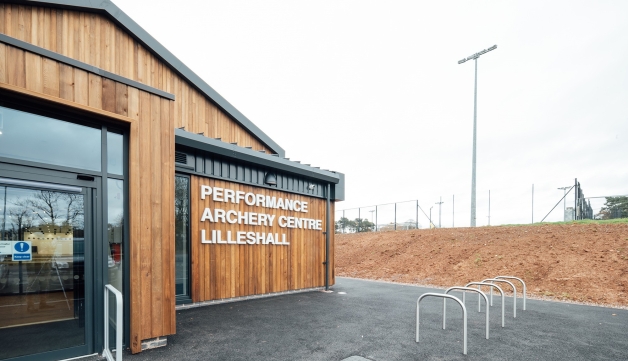
Bridging the gap to being active

How good does it feel to be active?

Because it doesn’t matter who you are, your ability for sports or even whether you have any physical condition – moving is good for everybody.

Last summer, TV personality Gok Wan partnered with We Are Undefeatable – a movement supporting people with a range of long-term health conditions to be more physically active in ways that work for them.

Through this collaboration, Wan – who has asthma – created and featured on easy-to-follow videos for various moods and abilities to highlight two important elements that influence people with long-term conditions when trying to become active: motivation and the need to find right physical activity for each person.

And this is because We Are Undefeatable is a movement supporting people with a range of long-term health conditions to be more physically active in ways that work for them.

The campaign is supported by us with National Lottery funding and it is led by The Richmond Group of Charities (RGC) – a coalition of 12 health and social care charities who work together to help people living with long-term multiple or complex health needs to live well and thrive.  

Together as a collective voice they have the ability to better influence policy and practice with the aim to improve care and support.

The Group also works in collaboration with leading UK charities Mind, the MS Society and Parkinson’s UK.

Fast forward from last summer and in April this year we saw the launch of the latest We Are Undefeatable report, based on the Big Talk public consultation.

This discussion took place last year and gathered input from over 2,000 people, including those living with health conditions, their carers, friends and families, plus those with a professional interest in this area.

Providing the best opportunities for being active

The objective was to inform future campaign resources and initiatives that were put together in one document under the title Bridging the gap: Understanding how to support people with long-term health conditions to become more physically active.

We urge all those with an interest in supporting people with these circumstances to review the important insights it contains. Some that I consider key are:

  • almost all the participants (98%) agreed that physical activity is important for managing or preventing long-term health conditions
  • the NHS is considered the most trusted source of physical activity advice
  • pain and physical limitations are significant barriers to exercise
  • health charities play a critical role in supporting people to be active and 86% think it is a priority
  • people with long-term health conditions want activities and inspiration to reflect their capabilities and constraints.

One of the testimonies from the report which I find particularly relevant by an anonymous contributor said:

“I feel that with the right support in place – and the opportunity to meet with others facing similar challenges – it would encourage others like myself to find fun ways in which to be more physically active.”

The principle of We are Undefeatable to support those with long-term health conditions to be more physically active is consistent with the pillar supporting our long-term strategy Uniting the Movement that the right range of sport and physical activity opportunities and support should be available for everyone, irrespective of circumstances.

The data and insight captured through the different strands of the Big Talk project enhances our understanding of the barriers faced by people living with long-term health conditions in accessing opportunities to be active.

These also complement the sector’s broader research, such as Sport England and Sheffield Hallam University’s Easier to be Active report.

According to this report, one in three of us in England live with a health condition.

This group is twice as likely to be amongst the least physically active, yet we know that being active can help to manage these health conditions and increase our quality and length of life.

The principle of We are Undefeatable to support those with long-term health conditions to be more physically active is consistent with the pillar supporting our long-term strategy Uniting the Movement.

The document also presents us with an important question – if we know that being active can help the most vulnerable, how can the sector help this group to move more?

Easier to be Active highlights fours areas for the health and sport and physical activity sectors to focus on: support, access to activities, strengthening the system and communication.

At Sport England we’re working with a range of strategic partners (alongside the RGC) to enable this, such as the Office for Health Improvement and Disparities, NHS HorizonsActive Partnerships, the Faculty of Sport and Exercise Medicine, Intelligent Health and the Royal College of General Practitioners.

Finally, the report also identifies five key characteristics of a positive physical activity experience for those with long-term health conditions (The '5 I’s Framework’) a list of five themes – Individualised, Integrated, Influencers, Inclusive and Informed – that affect the experience of being active among those living with long-term health conditions.

Working together – the key to success

Going back to the Big Talk consultation, its insight tells us not only how We Are Undefeatable can continue to enhance its valuable resources, but how we can continue to collaborate to ensure that everyone inspired to be active has access to the right opportunities and feels supported to do so.

Excitingly, the RGC are also working with others to consider what policy changes might help address the challenges highlighted in the Bridging the Gap report.

Because we know that no one organisation can achieve this alone, we must work systemically together across physical activity and health sectors to ensure pathways into activity are attractive, easy and well supported.

So for me the ask is simple – let’s work together to bring this insight to life.

This will allow us to have the right information and resources at the right time and to help more people living with long-term health conditions to lead active, happy and healthy lives.
 

OpenActive is a marathon, not a sprint

Earlier this month I was watching the London Marathon as runners navigated the streets of the city.

This is an inspiring event that always makes me think of the saying ‘Life is a marathon not a sprint’ and it's also a brilliant description of how I feel when reflecting on the journey that OpenActive has been on since we announced our partnership with the Open Data Institute (ODI) back in November 2016.

Our ambition – to make it easier for people in local communities to find the physical activity that works for them – hasn’t changed.

And that’s because we keep hearing – whether through our local delivery work, our campaigns, or speaking to health partners – that people can’t find the activities they want to do online.

This is a very real barrier and one of the main reasons why people don’t get active.

The most common solution I hear in response is "just build a single website that everyone can use!”

But having tried (and failed) to develop a single website as part of the London 2012 Olympic legacy (who remembers Spogo?!) it became clear that we needed to look at this problem differently.

This led us to open data, and our relationship with the ODI.

We keep hearing – whether through our local delivery work, our campaigns, or speaking to health partners – that people can’t find the activities they want to do online.

Through this work we have focused on supporting our sector to improve the quality of the data they have about physical activity opportunities (where, when, how much, and what these are) and making it openly available for anyone to access, use and share.

Open data requires different strategies

When we started OpenActive, we acknowledged that this was one of the first risky digital investments that Sport England would support.

But the problem was too important and we needed to be ambitious, so we decided to keep learning about the challenges and benefits of open data, through working with lots of organisations across the sector.

But ours isn’t a simple sector.

Instead we’re made up of lots of moving parts and layers, and helping people find the sport or activity that works for them will require quite significant change in how we all operate.

This might mean investment in research and development for the improved systems or skills to keep data up to date, having conversations about who takes payments, bookings etc.

Navigating these challenges, alongside surviving a pandemic, has made this a longer race than we first envisaged.

Making great strides…

But despite these challenges, we have made great progress as a community, having grown from eight sport sector organisations in 2016, to sharing data from over 5,000 activity providers in 2024.

This means we’ve increased the number of sport and physical activity opportunities for people to find from 76,000 in 2017 to over 2 million in 2024.

This progress is largely down to the dedication and unpaid hours that many in the community have dedicated to solving this problem together.

I thank you from the bottom of my heart for that because it means we have a strong foundation and a growing bank of evidence that proves we are on the right path.

We really want to achieve the ambition we set out to in 2016, which is why Sport England has awarded further funding of £985k to the ODI to keep supporting the sector in the usage of data to help people get active in their local area.

… but this year is a critical one!

Just as every marathon runner requires a different strategy, we continue to adjust our focus for OpenActive based on what we learn.

For the next six months, we will be focused on creating and finding funding for an independent organisation who can look after and evolve the data infrastructure that has been created.

We will speak to the government and other funders to help us do this, with a view to seeing OpenActive acknowledged as part of the national data infrastructure for the UK.

And we will continue to work from the grassroots up, demonstrating value and collaborating locally to prove the positive impact that having good quality data and data standards can bring. This includes:

  • learning alongside London Sport as they support local authorities with free, OpenActive-compliant search on their websites
  • collaborating with Open Referral UK to reduce duplication as local authorities seek to use both data standards
  • continuing to enable the delivery of local and national campaigns such as Everybody Moves and Manchester Active.

How different is OpenActive from Moving Communities?

It’s important to remember that OpenActive is different to Moving Communities.

Both are critical for addressing the Big Issues we identified in Uniting the Movement, but they are also complementary and designed to solve different problems.

Moving Communities is helping the sector to understand who is getting active to help us to adapt what is provided locally; while OpenActive is making it easier for people to find relevant local opportunities, so that we can grow the number of people who are getting active.

Tell us what you need

Sport England encourages all our partners to consider how you can use or support OpenActive to increase your impact and the ODI team are ready to help, whether you are publishing data or considering how to use it.

If you would like to get involved or have ideas or connections that could help us use open data to deliver against Uniting the Movement, please contact our team or the OpenActive team and let’s finish this marathon.

We want to hear from you

Get in touch

Eating an elephant and our sustainability strategy

As someone that has worked on the sustainability agenda since the 1990s but is new to the sports sector, I was heartened to learn from our sector consultation on environmental sustainability that 82% of the sector want to do more for the environment and climate change.

Understandably, it’s often difficult to know what to do to help as there seem to be so many different things to consider.

Should I fit solar panels? Do I recycle enough? Where’s the best place to plant a wildflower meadow? What meals should I cook to eat less meat?

These are just some of the questions which crop up when we start talking about becoming more sustainable.

Some actions are hard to do like switching to low-carbon travel, some are expensive such as installing solar panels and some just don’t sit right with some of us such as avoiding meat altogether.

I’d like to say that I have tackled all these things and live a sustainable life – but I haven’t!

A walker walks along a trail in the woods, away from the camera

Instead, I understand how hard it can be when faced with conflicting priorities and a ‘to-do’ list that is never complete.

It’s so easy to feel overwhelmed!

Desmond Tutu once said “there is only one way to eat an elephant: a bit at a time” and I think that doing our bit for the environment is like eating an elephant.

Because when faced with a complex problem in my life (whether at work or my personal life), I remind myself just to take a couple of bites.

These then turn into small changes that end up leading to bigger results.

Coming up with Every Move

This approach is not so different from the concept of ‘marginal gains’, developed by British Cycling, and that we use in Every Move – Sport England’s sustainability strategy that we launched today.

Every Move sets out what we’re going to do to ‘get our own house in order’ and how we plan to work with and support the sector to become more sustainable.

The strategy is ambitious - the list of things to tackle doesn’t feel so much like one elephant but more like a herd!

We want to ensure the switch to a more sustainable sports sector is a ‘fair transition’ – one that reduces inequalities while promoting inclusion and participation.

We want to support the sector to reduce emissions, particularly from transport and facilities.

We also aim to support the circular economy in sport developing schemes for sharing, reusing, repairing and recycling to ensure materials and products exist for as long as possible.
 

I understand how hard it can be when faced with conflicting priorities and a ‘to-do’ list that is never complete. It’s so easy to feel overwhelmed!

Looking after our natural environment is another key focus for us, reducing waste, microplastics and improving air-quality as well as increasing biodiversity.

The final important area is to build resilience to a climate that will continue to change so we can adapt our sports and activities to cope with changing conditions.

This all may look like a lot, but fortunately we are not alone.

There are already some great examples of working together.

Take the recently formed ‘Clean Water Alliance’ – a coalition of seven water-based sports organisations who want to tackle poor water quality in our natural world to achieve healthy and nature-rich blue spaces across the UK for everyone to enjoy.

This is only one example but across the country there are many clubs and organisations that are already nibbling away the big elephant of sustainability and if we all work together, we’ll make our way through the whole herd.

So how will we help?

We will continue to build the resources available to help clubs and organisations, recognising that many clubs are small and run by volunteers and few have someone dedicated to improving sustainability.

We’re pleased to be funding initiatives which benefit sustainability and activity and we’re working with other sectors to ensure joined up thinking, because while we may not be experts in wildlife and biodiversity, we know people who are!

We also know that across the country so many actions are already being taken and we want to share the wonderful things you do, big and small.

Still not sure what to do?

Don’t have a sustainability strategy? No worries.

We can all start taking action. We can all take small bites.

For instance, make sure the next thing you buy has some green credentials, because whether it’s made from recycled material or from a supplier that uses renewable energy, it all makes a difference.

Choose coconut fibre pan scrubs and a refillable washing up liquid in the kitchen – it’s a visible message to others to take action.

Make sure there are bike racks and electric vehicle charging points at your facilities, and if you’re planning bigger changes to your site then make them sustainable by following the ideas and suggestions on our website and on Buddle.

So, remember the elephant! Don’t try to eat it all at once.

Find out more about Every Move

See the news story

Let’s move more for our mental health

Nelson Mandela famously expressed the power of physical activity to keep his mind calm while imprisoned on Robben Island when he said: "Exercise is key not only to physical health but to peace of mind too."

The expression 'peace of mind' is used here as another way to describe good mental health.

It refers to what psychologists call 'the regulated state’ – a feeling of safety and connection between our body and mind when they're not hijacked by our ‘fight, flight or freeze’ response.

Move more, feel better

It’s a state in which we are able to experience a range of emotions without being overwhelmed by them and, as it turns out, moving our bodies is one of the most important tools we have for bringing us back into that sense of safety.

Reducing both the time and intensity of periods when we are overwhelmed by our emotions is key to preventing the onset of longer-term mental health struggles and recovering from them.

As Mental Health Awareness Week kicks off, we are proud to be partnering with Sport England for this year’s campaign – ‘Movement: moving more for our mental health’. 

The week’s aim is to start a national conversation about the benefits of moving for mental health but also about the barriers to movement.

Banner for Mental Health Awareness Week split diagonally so the top half is orange and the bottom one is purple. The words Find your moments for movement are written in white in the middle. The logo of Mental Health Awareness Week is on the bottom-right corner and #MomentsForMovement is written on the bottom-left corner.

Our research shows that only 25% of us are happy with the amount of physical activity we do in a typical week.   

This data is especially relevant if we consider that, more than in any other time in human history, we can survive, work, engage in hobbies and see our friends and family without doing any physical movement at all. 

As a colleague said to me recently, 'we don’t even have to take away our takeaways'!  

This lack for the need movement is a sign of the huge challenge modern life in 2024 represents for us.

Following the research and sharing our own

Because although we are living longer, many of us struggle to build movement into our daily lives and our physical and mental health are suffering as a result.

And this is in spite of knowing the health benefits of movement for some time.

A 20-year study in Stanford in the 1980s, called Reduced Disability and Mortality among Runners, compared the health outcomes of two groups of non-smokers around the age of 50 – one that jogged regularly and another one that didn’t. 
 

Reducing both the time and intensity of periods when we are overwhelmed by our emotions is key to preventing the onset of longer-term mental health struggles and recovering from them.

Researchers found a 50% reduced risk of a life-limiting disability (health span) for those that were physically active and a 20% reduced risk of survival (life span) among those who were not physically active.

But what about the positive impact of movement on our mental health? This area of study has often been overlooked.  

As little as 15 minutes of movement a day has been shown to positively impact mental health (although the more often we move, the bigger the benefit).

Positive effects of physical activity range from improved mood, reduced anxiety, lowered inflammation and stress, better memory and concentration, boosts in confidence, improved sleep and even increased social connectedness.

Moving more also reduces the risk of long-term physical health conditions, which – in turn – also lowers the risk of poor mental health.

Considering the many benefits of moving, I wonder what other single thing could have the same mental health benefits on us.   

Movement is one of the few proven routes to prevent poor mental health and that is why it is referred to by many as as 'a miracle cure’, due to the great many illnesses it can prevent and help treat.

This Mental Health Awareness Week, we will be looking to engage people from every community to consider how they can find their moment for movement.

We want to reclaim movement from being seen as something reserved for fitness fanatics, to something that is for all members of society.

But what is stopping us moving? 

Our research found that while 82% of UK adults knew that movement was important for their mental health, only 25% were happy with the amount of physical activity they did. 

Too many of us do not believe that physical activity is for us and, as a result, we are struggling to overcome psychological, environmental or physical barriers.

Issues like poor weather, stress, low confidence, associated costs or lack of time are keeping us from moving more. 

Our research also showed us that these barriers are higher for those with a disability, for parents and for young people. 

Naming these issues is an important first step, but we want to use the week to explore how to lower them.

The power of kindness

We also want to ask how we can support each other to build movement into our lives and we will be taking our message to the Parliaments across the UK during the week to remind our politicians of their role to create more opportunities for movement. 

And there’s more!

We'll also be using these days to empower people to get the most mental health benefits from the movement they do. 

Movement itself is not a magic wand for our minds, but being kind to ourselves while we are active will be better for our mental health than moving with a critical mindset.  

Similarly, setting realistic goals and connecting with nature or friends can increase movement’s psychological benefits. 

So, join us as we find our #MomentsForMovement and experience that coveted peace of mind we all need so much in this busy world of ours.
 

Introducing the Movement Fund

Following months of work with a group of brilliant colleagues and partners, the end of April saw the launch of the Movement Fund – a new funding service offering crowdfunding pledges, grants and resources to enhance physical activity opportunities for individuals and communities in need.

The main target of this fund is to help organisations – from small grassroots clubs to larger groups – with projects that align with our objectives.

Successful organisations will receive support of up to £15,000 to cover a wide array of costs and items to deliver positive change in local communities.

In line with our long-term strategy Uniting The Movement, which sets out our commitment to tackling inequalities in sport and physical activity, we’re particularly interested in projects that provide opportunities for people and communities facing the biggest barriers to being physically active.

Going a step further

The Movement Fund replaces our previous Small Grants and the Active Together funds.

In the past, these funds were instrumental in addressing specific needs and promoting community engagement in physical activity and sport.

But with the Movement Fund we now take the knowledge gained so far and take it a step further by simplifying the application process and enhancing our ability to support impactful projects across England.

For me, a particularly exciting element of the Movement Fund is the expanded role of crowdfunding investment.

Crowdfunding is not the same as traditional grant funding and it does require work to set up and successfully run a campaign, but it has many benefits that make all this extra work so worth it.
 

The main target of this fund is to help organisations – from a small grassroots club to larger groups – with projects that align with our objectives.

Because as well as what organisations achieve financially, those running these kinds of campaigns have seen increased numbers of new members, sponsorship from local businesses, a greater sense of place within the community and the development of new skills in social media, marketing and communications.

Crowdfunding offers a matched investment of up to £15,000 and organisations also receive a range of tools, support and guidance to help them crowdfund successfully – a really exciting investment option.

I’m also really happy that we’re taking a 'service' approach to the Movement Fund.

Whilst that might just sound like the latest Whitehall jargon, the principles of user needs being central to the approach has made the fund simpler and easier to use.

Plus, frequently reviewing and improving things based on the user feedback is key to developing an approach that works.

Building a collaborative approach

So, whilst last month's launch delivered some really exciting changes, we’re just as thrilled about where the Movement Fund will go in the coming months and years.

In fact, we’re already working to establish a network of Movement Fund Partners with the aim of teaming up with passionate organisations who can support community groups applying for funding.

In the last few months we have spoken with over 100 partners and community organisations to understand the hurdles they face during the funding application process.

They've told us they need more support and we've also learnt that many aren't even aware of funding opportunities, and that the ones that are often find it a daunting process - requiring support and assistance at every stage.

That's why we want to establish a network of Movement Fund Partners who can help bridge the gap between these groups and the resources they need to thrive.

Because to be truly inclusive of underserved people and organisations we need to go to them, rather than expecting them to come to us.

Experience shows this means working closely with a network of trusted partners who are passionate about tackling inequalities and have the knowledge, expertise and experience of working with the people and communities we most want to support. 

So if you're passionate about making a difference and think you could support organisations that do brilliant work and have brilliant ideas but struggle to access the investment they need to thrive, we want to hear from you!

Join our Movement Fund Partner mailing list or sign up for our webinar on 16 May to find out more.
 

You've viewed of items.