Skip to content

Taxonomy term

Content type

Safer Spaces to Move

International Women’s Day is almost here and while it’s always a time to celebrate progress, it should also be a moment to consider what’s still holding women back from being active.

For the This Girl Can team that means confronting the barriers that continue to drive the gender activity gap. A few years ago, one of those obstacles became impossible to ignore. 

Facing the unacceptable 

In 2021, through This Girl Can’s partnership with ukactive, I started looking more closely at women’s experiences in gyms and leisure centres. What we found was uncomfortable reading. That was the start of Safer Spaces to Move

A significant proportion of women told us they had experienced some form of sexual harassment in these spaces and for younger women aged 16–24, those incidences were even higher.

Gyms and leisure centres are spaces designed for health, confidence and empowerment yet, for many women, they come with an extra layer of vigilance.

That doesn’t sit comfortably with the ambition of This Girl Can, which has always been about creating environments where women feel free to move in whatever way works for them without judgement.

And while feeling judged is one thing, feeling unsafe is something entirely different and unacceptable.
 

International Women’s Day is almost here and while it’s always a time to celebrate progress, it should also be a moment to consider what’s still holding women back from being active.

The research forced us to confront something important: if women don’t feel safe, they won’t feel free; and if they don’t feel free, their participation will always be limited.

When we spoke to operators across the sector, there was no denial of the issue. To our delight, there was a huge amount of willingness to act, although there was also some uncertainty on how to do it.

Because how do you tackle something as serious as sexual harassment in a way that is meaningful, proportionate and practical? How do you communicate about safety without inadvertently making people feel more anxious?

That tension became the starting point for Safer Spaces to Move.

I want to make something very clear – this was never about calling out the sector, instead it was about supporting it.

We worked with organisations like CIMSPA and Women’s Aid to make sure any guidance we developed was grounded in expertise, legally robust, survivor-informed and realistic for busy gym environments.

One of the biggest lessons that we learnt along the way was that policies alone don’t change experiences. Culture does.

Helping positive change

You can have all the right procedures written down, but if the members of your staff don’t feel confident using them, or members don’t know they exist, their impact is significantly limited.

That’s why the most recent phase of the project, which we've launched earlier this week, has focused heavily on communication and culture, which made us consider questions like: how is safety talked about in our gyms, clubs and sport and physical activity centres? How are expectations set in these environments? Do members understand how to report an incident and trust that it will be taken seriously? And how are staff trained to respond?

We also tested messaging with women who use gyms and then sense-checked it with operators on the ground.

We went back and forth, refining language and practical steps so that what we produced didn’t feel alarmist or theoretical, but usable and reassuring. This is because our work isn’t about amplifying fear. It’s about building confidence.

On International Women’s Day, we often talk about breaking barriers.

Sometimes those barriers are structural; sometimes social and sometimes they’re the quiet assessment and security checks women make in their heads when entering a new physical activity space: "Is anyone watching me too closely? Are there other women around here? Can I do this exercise without feeling on display? Will staff step in if something happens?"

I think if we’re truly serious about closing the gender activity gap, we have to address all of these.

Safer Spaces to Move is part of our response to these barriers and sits alongside everything This Girl Can stands for: visibility, confidence and the right to take up space. Not just in theory, but in practice as well.

Because progress for our sector isn’t just about encouraging more women through the door.

It’s about making sure that when they walk in, they feel they belong there – fully and safely, and that’s something worth committing to this International Women’s Day and every day, before or after.
 

Find out more

Safer Spaces to Move

Health drives wealth: gyms, pools and leisure centres play a big part

January is a difficult month for many of us. It’s dark, cold, wet and the glow of the festive season feels a long time ago.

But it’s also a moment when millions of people make a conscious decision to reset – to move more and invest in their health.

That’s why January matters so much for gyms, swimming pools and leisure centres. It’s consistently their busiest month of the year and not just because of New Year’s resolutions.

But beyond the first month of the year, there is a growing understanding that physical activity is preventative medicine and that a healthy population drives a healthy economy.

The places we move are of critical importance.

Earlier this week, alongside ukactive, I visited three very different facilities in one day – across both the public and private sector.

What struck me was how similar the stories were.

Operators talked about strong footfall, rising memberships and people coming through the doors for more than just exercise.

They’re coming for health, of course – but also for confidence, connection, and support.

This feels vitally important in a time that is characterised by increasing isolation, screens and polarised views.

Spaces open to everybody

Another feature which stood out was the remarkable diversity of the people there – from teenagers arriving in their uniforms after school, to the group of retirees who had originally been referred by the next door hospital and now were coming four days a week (and spending as much time over lunch as in the class).

It was also fantastic to see the level of innovation and use of technology to bring health and leisure closer together – with sophisticated health checks, devising personalised programmes for each individual, linking to 'e-gyms' and other virtual support.

This is the preventative health agenda in action. It’s getting active from the ground up and it sits at the heart of our ambition at Sport England, working with our partners to help millions more people become active.

January brings this ambition to life, but the real story is what’s happening year-round.

The scale and growth of the gym and leisure sector are significant.

The UK Health & Fitness Market Report 2025 shows a record 11.5 million people are now members of a health or fitness club – up 6.1% on the previous year – with 616 million facility visits recorded, an increase of 8.2%.

These are not short-term spikes. Participation has been growing over consecutive years, supported by a unique infrastructure of public, private, large, medium and independent operators working across the country.
 

Beyond the first month of the year, there is a growing understanding that physical activity is preventative medicine, and that a healthy population drives a healthy economy.

Sport England’s Active Lives Adults survey 2023-24 reinforces this picture.

Fitness activities and swimming continue to be major drivers of physical activity behind walking, with 904,000 more adults taking part compared to the previous year.

Demand is being driven by what people value most.

Polling from ukactive shows that 77% of members join a gym or leisure facility primarily to improve their mental health and wellbeing.

People also cite better sleep, increased confidence, managing health conditions and making new friends. This is about quality of life, not just physical fitness.

We’re also seeing important shifts in who is taking part. Female participation continues to grow, particularly through group exercise and classes.

Projects like Safer Spaces to Move, delivered with This Girl Can, are helping to remove barriers and make facilities more welcoming and safer for women.

Key community assets

Our latest Moving Communities report shows participation in public leisure has increased for every age group over 45, while gym activity is rising among under-16s, over-65s and people living in the most deprived communities.

Since 2017, the number of children and young people taking part in gym and fitness activity has increased by more than 12%.

Standards matter too. Facilities are improving every year, driven by initiatives such as The Active Standard, Quest and FitCert, ensuring that quality, safety and inclusion keep pace with growing demand.

All of this sits squarely within the Government’s priorities for economic growth and improving the NHS through the 10-year plan.

Health drives wealth and the social value created by being active is immense.

The sector contributes £122.9 billion in social value each year, including £15.9 billion in healthcare savings and £106.9 billion in wellbeing value – the equivalent of £2,600 per active adult – and more than double that for people with long-term health conditions or disabilities.

We gain £6 billion in productivity, thanks to a healthier workforce that takes fewer sick days.

The sector creates £5.7 billion in revenue and supports hundreds of thousands of jobs, many for young people at the start of their working lives.

These are extraordinary numbers.

January is important. But the real opportunity lies beyond it.

Gyms and leisure centres are not just places we go at the start of the year; they – and the people that work in them – are essential community assets, powering healthier lives, stronger communities and a more resilient economy all year round.
 

Find out more

ukactive

In the picture

The concentrated focus of Black History Month provides an opportunity to gain new perspectives through events, articles and media programming that might otherwise be overlooked.

At its best, this month should stir our curiosity and resolve as we look back at the achievements and struggles of Black people, helping us gain a fuller understanding of Black histories to strengthen our grasp of the present.

This celebration (and the round-the-clock efforts by many through the year) should move us to action, reminding us that we don't have to accept the erasure of some people and communities as normal.

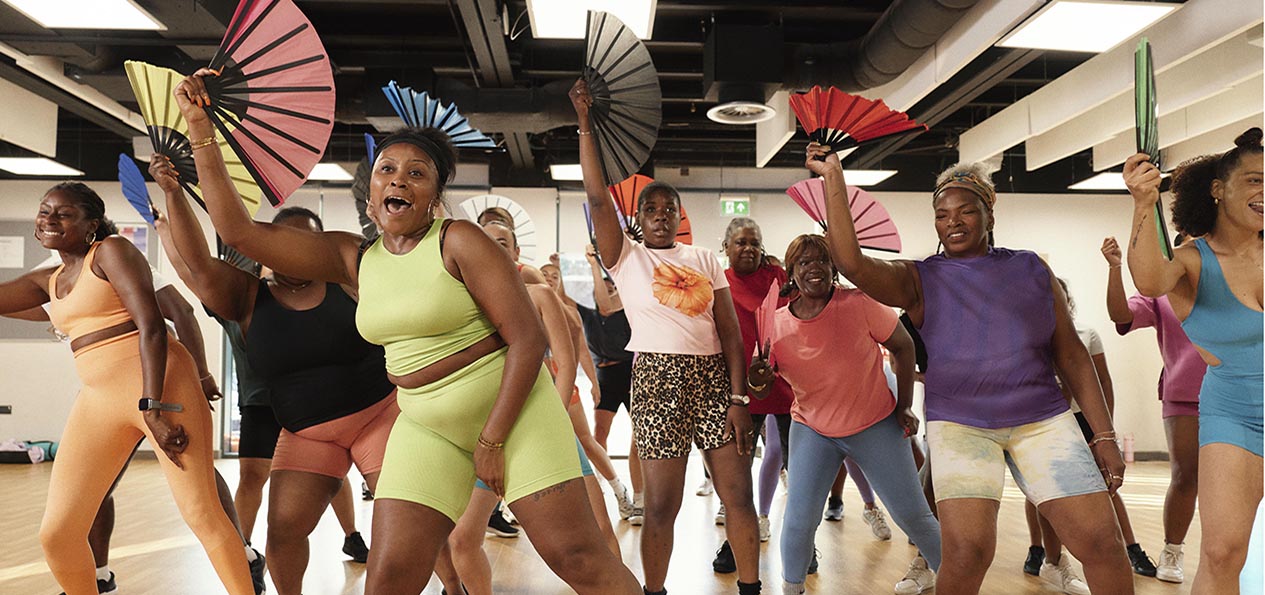
A group of dancers hold fans as part of their routine during a session on an indoors gym.

One of the best ways we can use this month is to harness new understandings to permanently build more inclusive platforms for Black achievement and wellbeing, so if you’ve missed our series of articles this month, please do look back.

These guest blogs are all great stories that highlight examples of community leadership that push back against the status quo of erasure.

It’s vital that we recognise and celebrate this work, which truly models more local and equitable practice, shaped by communities themselves.

But what about the models in the digital world?

Black History Month should move us to action, reminding us that we don't have to accept the erasure of some people and communities as normal.

As the usage of virtual spaces increases in all areas of our lives (including work, leisure or physical activity), it’s important to push for equity online too.

But with the backdrop of ongoing online abuse and discrimination, which inhibit participation in sport and physical activity, we’re rightly focused on the importance of creating safe virtual spaces too.

However, safety is only one side of the equation because we’ve also been asking ourselves how we can use technology to improve representation.

An example of this is We Like the Way You Move, the latest phase of our award-winning campaign, This Girl Can.

Technology for good

This phase has included a push for greater visibility of Black women – as well as other underrepresented groups of women – in imagery that promotes participation by sport and physical activity organisations.

This is how it’s worked: with the help of AI, we analysed publicly-available photos that came from parks, gyms, sports clubs, community centres, swimming pools and other leisure facilities across England and sourced via Google Maps, and confirmed that – alongside other minoritised groups of women – those who look like me have been virtually erased.

I’m excited that we’ve found a way to use the power of AI to drive better representation in our sector, because at a point when we’re all figuring out how to be more purposeful in how we use technology, finding insights that we can act on in real-time to contribute to change feels like a tangible win.

This push for greater visibility marks a positive shift that has come with our strategy’s focus on tackling inequalities as we’re working on reshaping our existing efforts to collaborate with different audiences and leaders through initiatives like TRARIIS.

Having celebrated the 10th anniversary of This Girl Can earlier this year, We Like the Way You Move has also used some powerful new imagery of women who have conventionally been excluded from the picture of sport and physical activity.

These are pictures full of joy and love for movement and, at times, I’d say you can almost hear the music they’re moving to.

These images are also a great reminder that women are creating their own platforms in communities, leading change and putting their unique stamp on activities and spaces.

We hope that they will help shift mindsets and that other organisations will follow suit.

On a personal note, it’s wonderful to see references to Caribbean culture, dance and movement in the mix.

It really does make a difference to my motivation and sense of belonging when I can see parts of my identity reflected back to me.

And I’m confident that the breadth of images and ways of moving captured in the campaign will have a similar impact on lots of other women that should have always been in the picture.

Running, representation and resilience

Movement has always been more than exercise for me.

My first motivation was staying healthy and trying to stave off hereditary diseases like hypertension and diabetes that run in my family (and, so far, I'm happy to say it has worked!).

But movement quickly became my outlet, my reminder that I am alive, capable and able to set goals.

The power of movement

When I lace up my trainers and step outside, I am not only moving my body. I am moving through history, community and identity, and I am claiming me. I do this for me.

This year the theme for Black History Month is ‘Standing Firm in Power and Pride’, highlighting the resilience and contributions of the Black community, and I am reminded that movement has long been a form of resistance, survival and celebration for Black people.

From dance to sport, movement has always been our way of claiming space, telling stories and showing strength and, for me, running is my chosen form of movement. It gives me freedom, resilience, and connection – three qualities that shape how I live and lead.

Growing up, I saw elite athletes who looked like me on TV, but I did not see everyday women like me running.

Running was not something I thought belonged to me as an adult (child me, yes, because children always run), but the first time I tried it outside as an adult, something shifted – it was not about speed or medals, it was about finding a rhythm that was mine.

Over the years, running has carried me through joy and pain.

It has helped me navigate life’s challenges, from grief and motherhood to menopause and leadership, and it has also changed how I see myself, not as the fastest or the best, but as someone who shows up, puts one foot in front of the other and keeps going.

This year the theme for Black History Month is ‘Standing Firm in Power and Pride’, highlighting the resilience and contributions of the Black community, and I am reminded that movement has long been a form of resistance, survival and celebration for Black people.

Running has also shown me how much representation matters.

There have been times I felt invisible at races or out of place in running communities, but when I began sharing my story and weaving my Jamaican heritage into my running, I discovered others felt the same and that, by stepping forward, I could help them feel seen.

Showing the real deal

That is why I am proud to be part of the advisory board for This Girl Can.

For the Phase Six of the campaign, we have focused on showing women as they truly are: sweaty, busy, imperfect and joyful.

Not polished versions of women exercising effortlessly, but showing real women making time for movement in the midst of their busy lives.

Being on the advisory board has given me the chance to share my perspective, especially around the barriers that Black women face in sport.

From worries about hair care, to feeling unsafe in certain spaces, to simply not seeing ourselves represented, these are real issues that stop many of us from moving freely.

Phase Six is about breaking those barriers down and telling a wider story of who belongs in movement.

This new stage of the campaign is also about making sure that when women see the campaign, they see someone who looks like them, lives like them and feels like them. Because when you can see yourself, you start to believe you belong.

From local to national

In 2019, I founded Black Girls Do Run UK.

What began as a small idea, creating space for a handful of Black women to run together, has grown into a nationwide community, because we are more than a running group. We are a family!

We celebrate milestones, we share struggles and, more than anything, we create spaces where Black women can move without judgement or stereotype.

Alongside leading the community, I hold both the Leadership in Running Fitness and Coaching in Running Fitness qualifications.

These have allowed me to support runners of all abilities, from beginners to those chasing big milestones, and to bring structured, safe and inclusive coaching into our spaces.

For us, running is not about chasing times, and all about creating a memory bank, not metrics.

It is about laughing mid-race, stopping for photos and supporting each other at the back of the pack. It is about belonging.

Together in strength

Black Girls Do Run UK exists because representation matters.

Too often, Black women are absent from the imagery of running, but by showing up in our kit at races and online, we are rewriting that narrative. We are saying we are here, we run and we belong!

For me, movement is freedom. It is the freedom to be myself, to take up space and to live well in my body and during Black History Month, that freedom feels especially powerful.

We honour the struggles of those before us, celebrate the present and move with hope for those who will come after because movement connects past, present and future.

It reminds us that while the barriers are real, so is our resilience, and it proves that when women move, communities move and change becomes possible.

So this Black History Month, I celebrate movement in all its forms: the steps, the strides, the miles and the memories. Movement has shaped me, and I will keep moving, for myself, for my community, and for the generations yet to come.

Celebrating children and young people

There are nearly 15 million young people in the UK under the age of 18. That’s more than a fifth of our entire population. So with almost 30% of us under the age of 24, that’s why it’s so relevant to highlight that today we get to celebrate International Youth Day.

Today is a day that highlights the challenges and opportunities faced by young people and, perhaps more importantly, it's a day that honours their contributions to society and that raises awareness of how meaningful youth engagement can build a better future.

This is something that we are passionate about, and collectively championing and advocating for across the sport and physical activity sector.

We want to encourage and support organisations across the sector to put young people first and to incorporate their voices into their practice – not just as beneficiaries or recipients, but as active, empowered agents of change.

Young people have a right to have their voices heard and acted upon in all matters affecting them – this is the starting point to creating positive experiences of being active and of building a positive, meaningful lifelong relationship with movement.

Celebrating young people’s contribution

So, in the spirit of celebrating young people’s contributions, I wanted to take this opportunity to mark their day by sharing just some of the many examples of great work happening across the sector where young people are being supported to lead the way.

As part of the Go! London Fund – set up to reduce barriers to being active that young people in the capital face and to tackle social and economic inequalities – Sport England have worked in partnership with the Mayor of London, London Marathon Foundation, London Sport, London Marathon Events and the School for Social Entrepreneurs to support two cohorts of young entrepreneurs to grow their own sport and physical activity-based enterprises.

These cover fitness, swimming, football, cycling dance and more – all making a difference to young people in their communities.

Young people have a right to have their voices heard and acted upon in all matters affecting them – this is the starting point to creating positive experiences of being active and of building a positive, meaningful lifelong relationship with movement.

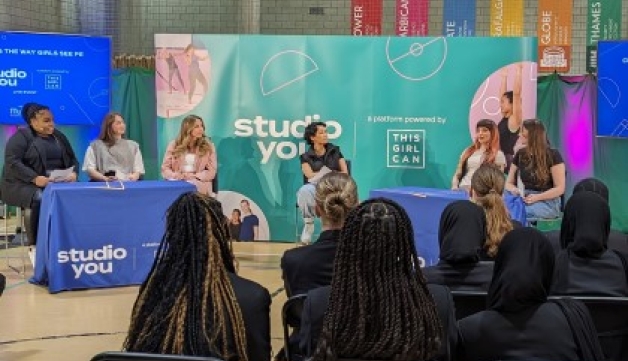
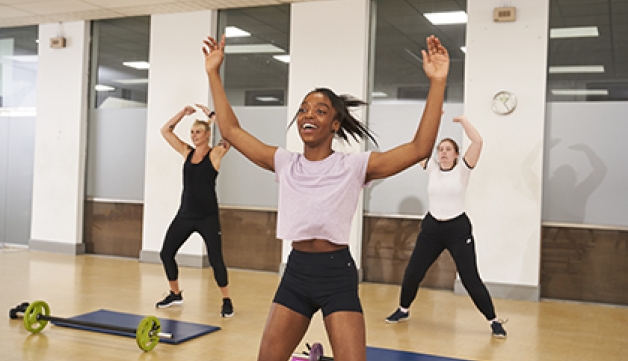
Teenage girls have also been central to co-creating the new Studio You x Nike hub – a series of inclusive new video content for school PE lessons, teaching a variety of non-competitive activities like yoga, dance and strength training to ensure no girl is left behind in PE. 

Through in-person co-creation and online focus groups, girls chose everything from lesson duration and visual design, to their instructors.

One of the young people involved in the co-design process said that it felt “really good” to know that her voice was being heard and that it felt as if she was doing a service for the teenage girls who struggle with confidence and participation in PE. 

Also, through our Place Partnerships, there are some great examples of young people playing an active role in shaping the direction of work in their communities.

In Southampton, young people have created an evidence-informed model for embedding youth voice into decision-making processes; in Hull, young people have been sharing their views on barriers, perceptions and the future of physical activity; and in Bradford, young people have been leading the way to shape the development of their green spaces.

I’d also recommend taking a look at the Voice Opportunity Power toolkit if you’re interested in ways to involve young people in the design of their neighbourhoods.

To support the development of the government’s National Youth Strategy, a listening and co-design programme called Deliver You was launched in March this year.

It gathered views, feedback and ideas from more than 20,000 young people across England and we look forward to the publication of the strategy later in the year, which will set out a long-term vision for youth policy.

Some ways to get involved

Through the Play Their Way campaign, partners across the Children’s Coaching Collaborative (CCC) are working to create a movement of child-first coaches that put young people’s rights and voices at the heart of their thinking.

In fact, through the CCC, StreetGames are currently leading work to improve understanding of the range of youth voice work and resources available across the sector.

This is all with a view to maximising youth voice activity and supporting meaningful change across the sector.

They’d love to hear from partners working on youth voice activity and you’re invited to complete this short survey by the end of August.

Positive Experiences Collective – Patchwork Programme

Finally, if you’re interested in putting young people’s needs at the heart of your work and the principles of physical literacy into practice (a key and to-the-point explainer from the Youth Sport Trust), you can find out more about the Positive Experiences Collective and the Patchwork Programme.

The Positive Experiences Collective is open to all and exists to inspire more positive, meaningful experiences of movement for children and young people, embedding youth voice as a key enabler to help them build a lifelong relationship with physical activity.

At the centre of the Collective is the Patchwork Programme – a nine-month learning and leadership journey for 12 interdisciplinary teams.

The initiative is part accelerator and part leadership development, and it’s designed to embed physical literacy as a driving force for system change.

The next cohort of the Patchwork Programme is now open for applications until 5 September.

Final word to young people

I’d like to leave the final word to a young person who we heard from at the Sporting Communities Youth Innovation Conference in April this year, where we asked young people to tell us what is most important for us to share back with the sector to make sure that young people’s voices are heard.

They said: “Young people have the ability to speak out. Most don’t because they don’t think they have the authority to. That needs to change and be shown to young people.”

Let’s help them change that.

Find out more

International Youth Day

Introducing our This Girl Can advisory panels

At the heart of our campaign are our women, and our mission is to tackle the gender activity gap by getting more women and girls moving in ways that work for them.

In order to achieve this, it’s key to listen to all women and girls, keeping their views and needs as our North Star.

It’s this insight that tells us about the range of barriers that many women face to being active.

The power of working together

Women from underrepresented communities face a disproportionate number of obstacles because they can experience systemic, social, structural, cultural and financial inequalities – barriers that cannot simply be overcome through personal motivation alone.

So the next phase of This Girl Can is unapologetically focused on tackling inequalities and supporting women from underrepresented backgrounds to get active and to achieve this, we know a collective effort is essential.

We want to work in a truly collaborative way to make sure we’re developing inclusive, representative work and that we’re continually learning from the many different organisations who are already embedded in reducing inequalities.

In order to achieve our mission, it’s key to listen to all women and girls, keeping their views and needs as our North Star.

That’s why we’re dedicated to partnering with women who have invaluable knowledge and are already making strides in this arena – women whom other women trust and who are true role models for guidance, support and mentorship.

At the start of this year, we established two advisory panels, a Black women’s advisory panel and a South Asian Muslim women’s advisory panel to help us shape, support and steer the next phase of This Girl Can.

Promoting a true sense of belonging

By working with experts in their field, our aim is to ensure the voices of our women are front and centre of the campaign and that the campaign meaningfully connects with Black women and South Asian Muslim women.

I’m delighted to introduce our This Girl Can advisory panel members:

Black women’s advisory panel

South Asian Muslim women’s advisory panel

  • Asma Ajaz-Ali, Head of participation and communities, Muslim Sports Foundation
  • Asia Asghar, Active wellbeing officer and Campaign officer, Nottingham Muslim Women Network
  • Yashmin Harun, Founder and Chair of Muslimah Sports Association and Frenfords and MSA WFC
  • Sabeha Miah, Project manager, Cycle Sisters
  • Farkhanda Muneer, Chair, An-Nisa Women’s Group
  • Khadija Patel, Chairman of KRIMMZ Girls Youth Club 

The panels form part of the broader goals for the next phase of This Girl Can, which sees a concerted effort to reach all women, including those from underrepresented backgrounds, to get active.

This Girl Can’s new phase –  ‘Belonging Starts with Inclusion’ – seeks to reduce the barriers that exclude women from exercise by showing how women like them are getting active.

Only when our women are seen, heard and included can they genuinely feel a sense of belonging within the world of physical activity.

We want the campaign to deliver behaviour-change by celebrating all women and by working collaboratively with the organisations providing opportunities for women to get active, to ensure that we are collectively providing the conditions that women need to feel they belong in physical activity.

It’s together that we can create even more spaces and opportunities for our women to move in ways that are right for them and, ultimately, build a world of activity where every woman feels like they belong.  

Calling all women!

It’s hard to believe that just a decade ago, seeing real women – sweaty, jiggly, unfiltered, and unapologetically themselves – moving their bodies in whatever way worked for them would be such a defining moment in advertising.

But that’s exactly what This Girl Can did.

The creative campaign smashed through airbrushed ideals, rewrote the rules of aspiration and told women they were already enough.

Aerial view of a group of women on a colourful pitch with the This Girl can logo in white in the middle.

That flick of the bikini bottom spoke louder than words and, in doing so, it sparked something powerful.

Over the last 10 years, it has inspired over four million more women to get active, proving that when you create campaigns that genuinely reflect women’s realities, they don’t just engage – they act.

Empowering women through movement

This Girl Can was more than just an advert – it became a cultural force to be reckoned with.

One that not only got women moving but also got them talking, challenging and pushing for change, because we didn’t just launch campaigns; we started campaigning.

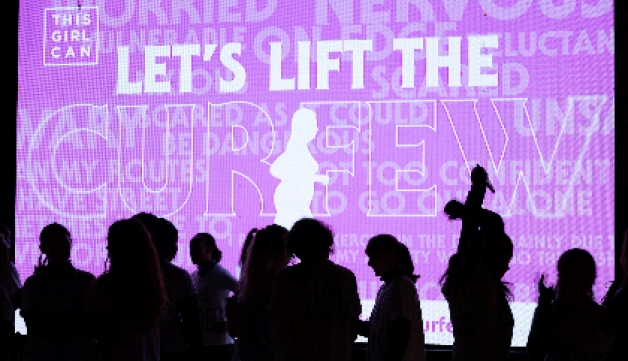
In 2023 Let’s Lift the Curfew was a pivotal moment, shining a light on the very real fears women have about exercising after dark and demanding safer spaces.

The campaign gave voice to what so many women always felt but had never seen reflected at them.

This Girl Can has also broken taboos, from periods and menopause to mental health, showing that movement isn’t just about fitness – it’s about building confidence, feeling comfortable in your own skin and rejecting the pressure to conform to unrealistic expectations.

And when it comes to social media, today #ThisGirlCan is more than a hashtag – it’s a shorthand for self-belief, a rallying cry for thousands of women every single day.

This Girl Can was more than just an advert – it became a cultural force to be reckoned with.

Fast forward to 2025 and the barriers have shifted again.

The cost-of-living crisis is hitting women hard and those from lower-income backgrounds are being disproportionately affected.

Tackling new barriers to exercising

Our latest research, which we’ll be publishing at the end of the month, reveals a shocking reality - only one in ten women from lower-income households feel like they completely belong in the world of physical activity.

And for those from underrepresented communities – including Black women, Asian Muslim women, pregnant women, new mums and older women – that sense of exclusion is even more profound.

But the problem isn’t just money and time – it’s confidence, culture, representation and feeling like movement spaces weren’t made for them.

And while brands once scrambled to embrace diversity, we’re now seeing a roll-back of diversity, equality and inclusion programmes, with less investment in the work that actually shifts the dial.

That’s why the next phase of This Girl Can – Belonging Starts with Inclusion – is laser-focused on ensuring no woman is left behind.

It’s about reaching those who feel the furthest from sport and movement and making sure cost, confidence, social, structural or cultural barriers don’t stand in the way.

So we’re shifting the conversation once again. This time making sure that every woman, no matter her income, background or life stage, can see getting active as something for her.

This Girl Can has changed the game for the last decade, not just for advertising but for how brands talk to and represent women.

The campaign has set the benchmark, forcing the industry to rip up old marketing playbooks and to rewrite the rules on representation.

But now is not the time to slow down.

Despite the challenges in the cultural landscape, This Girl Can has a unique opportunity to be an influential voice, connecting with women who need it most and ensuring they feel seen, supported and inspired to move in a way that works for them.

This Girl Can isn’t just a campaign. It’s a movement. And as we step into the next decade, our mission is clear: if we want every woman to belong, inclusion must come first.

The knicker-snap that changed everything

I remember exactly where I was when I was first told Sport England was going to invest National Lottery funds into a marketing campaign to help women get active.

“That sounds great!” – I thought – “But we won’t do it. We’re not that type of organisation.”

However, it turns out we did and we were!

A woman wearing a bikini and dripping water from a swimming pool arranges her hair and the copy "I swim because I love my body. Not because I hate it." appears in white letters over her. Under the copy we can see the This Girl Can logo written in white letters too.

Successfully, and over the last 10 years, This Girl Can's real, relatable and unfiltered stories, images, films, resources and partnerships have inspired 3.2 million women to get active, many of them getting back into it after a long break.

Targeting real women in the real world

The knicker-snap in that first ad changed everything.

We have given women reasons to move more that don’t mention their weight, size or the need to get ‘bikini-body ready’, because we think the best way to get 'bikini-body ready' is to firstly, get a bikini and to secondly, put it on.

We have understood how impossible physical activity can feel to those of us who hated sport at school or aren’t as good at it as we used to be.

We’ve also tackled the emotional barriers.

One woman told me she was “too fat to get fit”, another that she should be "spending time with her family" instead of exercising and a third that she just wasn’t "one of those sporty types".
 

We have given women reasons to move more that don’t mention their weight, size or the need to get ‘bikini-body ready’, because we think the best way to get 'bikini-body ready' is to firstly, get a bikini and to secondly, put it on.

We have shown what getting active looks like in reality: the sweat, the jiggles, the puffed-out faces with make-up streaking down the cheeks or with no make-up at all.

And we’ve also shown what real women’s bodies look like by showing cellulite, stomachs, thighs, bad hair days, three-days worn joggers, on our periods, giving birth, going through the menopause or having the audacity to age. How dare we?!

What This Girl Can has taught me 

We have also celebrated the women who don’t give a damn and clamored for change when they told us they didn’t feel safe exercising outside, so we can liberate women from the fear of judgement that stops so many of us taking part.

It’s been a joy and a privilege to run This Girl Can for so long – and I’ve learned a lot along the way, including:

Supporting women is a team sport

This Girl Can succeeded because so many women generously shared their stories, images and lives. We street-cast all of them – finding women getting active without giving a damn – in parks and at parkruns, in the pool, on the pitch and at the gym. But let me tell you, if they thought getting cast in a TV ad was going to be glam, they were wrong – they had to work out before the cameras started shooting and we put the results on giant billboards near their homes. But they did it to support other women, to show their daughters what we look like doesn’t matter and to prove that there is no reason sport should just belong to the boys. If you share a sweaty selfie, go for a walk, run to an exercise class with friends, or let your children see you prioritising your own activity, you are doing the same. Thank you!

Every problem has a solution that is often better than the original plan

This Girl Can was originally called Run/Jump/Throw Like a Girl. We signed off the name and literally the next day, Always released their campaign of the same name and it was brilliant! I sulked for a week but our brilliant creatives came up with This Girl Can. A name which suited our campaign objectives much better – a self-affirming mantra that can get you off the couch, up the hill, into the gym class or past that bunch of lads telling you to go faster.

Collaboration is king (that should probably be ‘queen’)

This Girl Can succeeded because so many partners and supporters got involved changing and shaping what they were doing to meet the needs of women we were engaging with. We haven’t always been the easiest brand to work with – I’ve had to learn to let go and I always wish there was more time – but when I see what universities, schools, national governing bodies, local authorities and active partnerships are doing I'm always blown away. So thank you too! I will always feel old though when someone I’ve just given a job to tells me they remember seeing the campaign in school. 

I can now be quite annoying

I have become one of those people who goes for a run on Christmas Day and I can’t stress enough how unlikely you would find this if you’d known me at school. Or in my twenties. Or thirties. But This Girl Can has changed my relationship with being active. I know that when I’m moving more I’m happier, calmer, more productive and, overall,  better company to be with.This is why – in addition to it being my job at Sport England – I believe so strongly that no woman should be left behind. We all deserve to feel that good. I’m proud that 50% of women recognise the campaign, but until the other 50% do too we’ll keep going.

The future of the campaign: Phase Six

Now, if you think after 10 years we’ve done everything that needed to be done, said everything that needed to be said or moved as much or as far as we needed to get to, you’re wrong my friend!

The next phase of the campaign – Phase Six – will focus on women from under-represented groups with the most to gain from just starting to move and I can’t wait to share the details of what we’re going to do from next month.

So I raise my water bottle as I wish happy birthday to This Girl Can.

Thank you to all my colleagues and to everyone who shared our content, supported us, bought a National Lottery ticket, created opportunities to be active, worked on the campaign or simply put on their trainers and went for a walk.

This Girl Can, because you did.

Find out more

This Girl Can

Driving female success in motorsport

The rise of women’s football is one of the true success stories in women’s sport in recent years.

Arsenal generating crowds of 60,000 at the Emirates Stadium, fans lining the side of the pitch desperate to get a glimpse of their heroes and big brands signing up the likes of Leah Williamson and Lucy Bronze for major campaigns are no longer cases of exception in the sport. They are becoming the norm.

Accepting that even with its current success there is still a long way to go in women’s football, those of us working in other sports still have a lot to thank it for.

Normalising the regular discussion and debate of women in sport benefits everyone and in motorsport we are also reaping some of these.

Putting women behind the winning wheel

A year ago, when I took on the role of CEO at More than Equal – an independent non-profit organisation dedicated to supporting talented female drivers and finding the first female Formula 1 world champion –  there were murmurings about the lack of women competing at all levels in motorsport, but those murmurings have now become a consistent debate and discussion.

Driven on by the progress of women in a range of other sports, a realisation is dawning in motorsport that as one of the world’s leading and only truly mixed-gender sports - ours is one of the few sports in which men and women can compete together - the lack of women on its grid is closing-off a world of opportunities to it.

But when the F1 Academy – a new all-female racing series – announced a partnership with global beauty brand Charlotte Tilbury last month, you could almost hear some pennies dropping about how motorsport could start to benefit commercially from having women competing at its higher levels.

Plus, motorsport has a growing female base.

F1 itself says that around 40% of its fans are women and girls, but when we asked that fanbase last year in a major piece of research what they thought about the sport’s efforts to support female drivers, we learned that they were largely dissatisfied.

So there’s now a greater motivation than ever to help grow this sport so that women and girls can play a fuller part.

Normalising the regular discussion and debate of women in sport benefits everyone and in motorsport we are also reaping some of these.

At More than Equal we are focusing on supporting young female drivers early on in their careers.

This is because our early research told us that the major barriers blocking the progress of women and girls in the sport remained as they started to climb the ranks.

But thanks to the work I was able to do on the amazing This Girl Can campaign while I was with Sport England, I realised when I took this job that we had to build a true understanding of the barriers facing female drivers, just as This Girl Can worked hard to understand what was behind lower activity levels for women and girls – the ‘gender activity gap’.

Planning the change

Our research showed us that while motorsport is a tough sport for anyone to progress in – not least because it is terrifically expensive – women and girls faced a range of additional challenges from their male counterparts.

Those barriers include the tiny pool of female participants and lack of support early in the career of female drivers, therefore our focus became to help remove some of these.

We’re offering a driver development programme for some of the world’s highest potential female drivers, a programme that is not only relevant to their age but that is truly build with their gender in mind.

This is something that is not on offer in motorsport currently for young female drivers and we’re working with a range of partners to deliver it, with a goal of helping those drivers progress up the ladder towards Formula 1 – where we have not seen a woman compete for almost 50 years!

That lack of representation in the world’s largest mixed-gender sport is not good enough. There's also a lack of women racing in other major motorsport series like Formula E, Indycar, Nascar and, as I write this, there’s only one female driver in Formula 3.

So while we watch the ongoing progress of women’s football in this country, we too are driving our progress and that's thanks, in part, to the path they are laying before us.

Find out more

More than Equal

A This Girl Can review of 2023

There’s nothing like seeing the end of the year approaching to reflect on the previous 12 months.

And what a year 2023 has been for This Girl Can, Sport England's campaign focusing on getting women and girls all over the country moving, no matter their ability, shape or size.

When I say this year has been eventful and impactful, it’s no exaggeration. Let me show you what I mean.  

Winter

Last February, we launched This Girl Can With You - our latest campaign across the sector and the foundation for all our work in 2023.

Our research showed that 2.4 million fewer women than men strongly agree they enjoy getting active – we call this ‘the enjoyment gap’ and it matters enormously, because enjoyment is one of the primary drivers of activity.

A group of women exercise outdoors wearing the This Girl Can range for Tesco

We focused on four key action areas that, if addressed, will help more women feel that getting active is a more satisfying, enjoyable experience.

Together, with those who make sport and physical activity happen, we’re working to ensure these experiences are more social, suitable, self-affirming and safe for women.

We also launched a new campaign hub, to house all the latest insight, tools and tips for organisations or individuals delivering on-the-ground experiences for women.

Spring

In April, we celebrated the success of Studio You winning the Active and Wellbeing Award at the prestigious Sport Industry Awards.

Studio You takes This Girl Can’s ethos and mission into schools as a streaming platform featuring more than 140 video PE lessons designed to appeal to the least active girls by widening the remit of traditional PE.
 

There’s nothing like seeing the end of the year approaching to reflect on the previous 12 months.

The following month, we launched our second industry guide, in partnership with ukactive, titled ‘‘How to make your spaces safer for women: A call to action from the 51%’’, to provide practical steps for facilities to help create an environment where women and girls feel safer and more confident being active.

Summer

At the start of the summer, we were determined to help women and girls get the most out of the warmer months with Make Your Summer Move – a PR campaign based on insight that nearly half of women were worried about showing their body while being active in the summer.

So we encouraged women to move in whatever way works for them, sharing tips on ways to help overcome some of the barriers to being active in the summer, plus case studies of amazing women getting active outdoors.

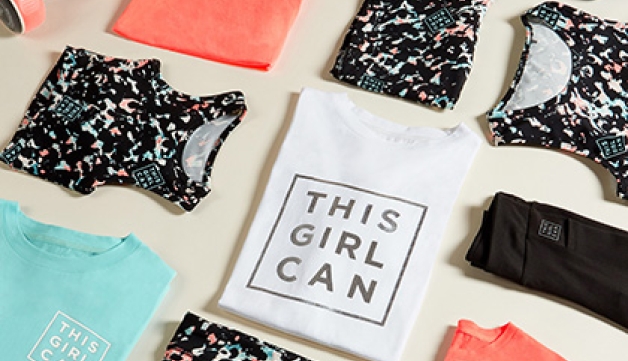
We launched an exciting new partnership with Tesco in July, with the release of an exclusive This Girl Can activewear range under the retailer’s in-house clothing brand F&F.

The partnership aimed to inspire women to enjoy an active life by providing a stylish and affordable clothing line, plus advice and opportunities to motivate them to start moving.

We also partnered with period care brand Bodyform to launch a period hub on the Studio You platform.

According to Youth Sport Trust, periods are the number one barrier to girls doing more sport and physical activity at school, so it was fitting to launch the first phase of the partnership with a television ad during the Women’s Euros using the tag line ‘no blood should hold us back’.

Autumn

In October, we hosted a parliamentary roundtable discussion on women’s safety when being active outdoors, to coincide with the clocks going back and the hours of darkness increasing, as 46% of women say they change their outdoor exercise routine due to less daylight during the autumn and winter months.

We brought together parliamentarians, advocates, academics and representatives from across the sport and physical activity sector to consider what can be done to create safer spaces for women whilst being active outdoors, as well as addressing the barriers to change.

But that wasn't all.

We also rallied women in a 5km run around Westminster and central London as part of our Let’s Lift the Curfew PR activation, to amplify women’s voices on how they feel about being active outdoors during the darker months and to highlight that many women feel restricted by a perceived ‘curfew’ when it starts to get dark. 

As you can see, it’s been a busy year!

We look forward to continuing to work with our partners throughout 2024 to keep closing the enjoyment gap by ensuring sport and physical activity is social, suitable, self-affirming and safe for all women, and, as ever, sharing the amazing and inspiring stories and experiences of women being active.
 

Celebrating and being inspired by the women around me

Launching This Girl Can With You last week was a brilliant opportunity for me to do one of my favourite things: talking on the radio.

This time, however, I was slightly shamefaced, extolling all the benefits of getting active, telling women the hardest step was the first one, and to not give a flying fig what anyone else thought.

But I haven’t taken my own advice since well before Christmas. Work, and life, got busy; the weather cold and I lost motivation. An attempted reboot in January failed, and the least said about February, the better.

I decided 1 March would be my begin-again day, something that’s often harder than starting out – so much emotional baggage!

But the chat we had at the last Women’s Network meeting -  our organisation's staff network for women that meets once a month to provide a safe space to discuss any topics of interest - gave me that final, encouraging push into my trainers.

It may take a village to raise a child, but it takes a community to get me active – and we know from our research that I’m not alone.

So today I Invite you to read the stories of some of the amazing women I’m lucky enough to work with and be encouraged by:
 

Garnet Mackinder: team sports and zombies!

I recently retired from semi-professional rugby and have since struggled to really enjoy physical activity again.Coming from a team sport I found it difficult to exercise on my own.

I joined a netball team - really good fun, but only every other week - and also tried touch rugby, but found the difference to contact rugby frustrating and had to travel a fair distance to get there.

Then I discovered Zombies Run!

I like things to be gamified (probably because of my team sport background) and this app does just that. I put a playlist on, and then the app tells you a story, normally going to save someone or collect food/other items in an apocalypse.

For each chapter you can select how far/how long you want to run, and if you want “zombie chases” on, which means that if your pace slows down, a zombie starts to chase you and that makes you do a short burst of speed. I really like the thrill of this, plus the stories are really fun.

I still may not love running, but having Zombies Run gives helps me get out of the house. If you fancy something different give it a try!

Cat Clements: make activity work for YOU

In the last five years, lifting weights, sweating buckets in cardio and walking my gorgeous dog became my routine. But sport and physical activity (or any movement!) weren’t always part of my day. A fear of getting it wrong and doing more damage than good, made me think I was better off not exercising.

But working with an understanding yet challenging personal trainer was the beginning of my journey. Regular gym sessions are now my priority as they help me manage chronic pain and life and work stresses.

After-gym aches and pains still appear, but more if I miss the gym sessions or my walks.

During lockdown I only had limited gym equipment at home, so I challenged myself to Couch to 5k. I did it at my own pace and the sense of achievement, the feeling of moving independently and at a speed beyond the usual walk, was amazing.

It’s challenging to ignore others, but now I focus on my podcast and realise most feel the same, are barely awake or focussing on their own journey.

My message to other disabled folks is simple: if you’re keen, sport and movement can be for you, and you do belong in those spaces!

Alex Moore: celebrating women’s achievements!

Being active has always been part of me. I used to play tennis and run, but increasing time constraints meant I’ve focused on my running.

We’re a small group of women of different ages and backgrounds running different distances and speeds. We call ourselves the Sunday Service (as in transport) as we often have a detour, go out “as and when” and if you’re with us, you should expect delays and random stops.

Our runs are our catch ups, venting, sharing everything and celebrating each other's achievements. These may not be race wins, but about managing our longest distance, getting out as planned or tackling a task we’ve been putting off.

Running is good for our physical health, but that’s only why we started, not why we keep running together. We run because it's fun, social and good for our mental health.

And running as a group means no longer putting up with men shouting things at us. It’s discriminatory and wrong and our message is simple: no comment is a good comment.

Although I’ve not trained enough due to injury, I can’t wait for the next run. In my experience, make exercise social and fun and the habit will come.

Working at Sport England, it’s easy to forget that many of us may face the same barriers as our target audiences.

That, like Garnet, we need to find what works for us. Remind ourselves, like Cat did, that no matter our health history, we belong in a gym, in sport, in being active; and, like for Alex, exercises buddies may be exactly what we need to stay active at one point in our lives.

No matter who you are or what/why you do it, share your stories and struggles with other women, so we help each other get active and close our enjoyment gaps.