Skip to content

Taxonomy term

Content type

Preventing crime from the ring

Boxing is my religion. Like all spiritual journeys it began with a moment of divine inspiration and my baptism was conducted whilst watching Muhammed Ali defeat George Foreman in “The Rumble In The Jungle”.

I grew up in boxing gyms with the sport giving me purpose, discipline and titles – including representing my country on numerous occasions.

These days it offers me the chance to inspire the next generation of boxers and to help anyone who walks through the gym door, to believe in themselves and choose a positive path in life. 

When people ask me why boxing matters so much to me, my answer is simple: it changes and saves lives.

A safe space for all

Of course, it also improves health and builds confidence, but boxing keeps people – especially young people – away from anti-social behaviour and crime, something that I can personally verify as a former Youth Justice Manager. 

With the number of proven offences committed by children seeing an increase of 4%change has never been so important and there are many ways boxing helps fight crime.

Firstly, boxing gives young people structure and boundaries.

Many of the children and young people who walk through the doors of a boxing gym – like mine in Oldham, Greater Manchester – come from difficult backgrounds and have challenging lives. 

Having little or no access to opportunities and therefore a lack of agency in the world, may result in challenging behaviours. But not dealing with these pressures means they risk spilling out onto the streets and that’s where crime starts. 

Not because young people are 'bad', but because they have nowhere positive to pour their energy into. But boxing gyms can change that, as these spaces are built on discipline, respect, routine and team spirit.
Boxing gyms offer me the chance to inspire the next generation of boxers and anyone who walks through the gym door, to believe in themselves and choose a positive path in life.

You don’t just turn up to your gym whenever you feel like it. Instead, you’re expected to train on time, plus you have to listen to your coach, and you learn that effort leads to results and that shortcuts rarely work.

These lessons transfer directly into everyday life and children who understand discipline in a boxing gym are far less likely to make reckless decisions outside it.

Boxing also teaches emotional control, becasue contrary to what some may think, this sport helps a young person understand how to control their emotions, particularly aggression, and how to think and act under pressure.

I’ve seen it first hand – children who once lashed out can calm themselves because boxing gave them an outlet for their emotions and that allows them to thrive.

The many lessons of boxing

Boxing is a good metaphor for life and can help to develop those personal and social skills that people need, contributing to tackling deep seated worklessness and low aspirations.

The sport also fosters the development of positive character, self-esteem, self-discipline, courage, perseverance and resilience.

Instead of throwing punches on the street, they hit the pads, the bags and their coach or opponent inside the ring, but always with respect to the sport’s rules, under supervision and with a reason.

Boxing also teaches respect — for yourself and for others. You shake hands, you follow rules and you learn that real strength comes from self-control, not intimidation. These values reduce crime at its roots.

Another factor that's key is the sense of belonging among those practising the sport. A boxing gym offers identity and loyalty because, at a gym, you’re part of a team.

You train together, look out for each other and you wear the gym name with pride. That sense of identity can pull someone away from a path that leads to anti-social behaviour and crime.

I’ve seen boxing change lives in Oldham and Greater Manchester, where young people that were heading toward trouble now have focus and a reason to stay on the straight and narrow, and I’ve also seen young people who had no confidence, find self-belief.

Not all these children will become a champion boxer and that's okay.

Building better lives through sport

The real victories happen when a young person chooses to stay in school, can find a job or simply chooses not to commit a crime because they don’t want to let their gym or coach down.

At our newly refurbished Greater Manchester Boxing and Development Hub, we’ve been lucky enough to benefit from Sport England funding. 

To my mind, our investors aren’t just putting money into a boxing club and community gym. They’re investing in crime prevention and harm minimisation.

It costs less to fund a gym than it does to deal with the consequences of crime and anti-social behaviour policing, court cases, prison and reform  as recent estimates place the total economic and social cost of serious youth violence at £11 billion between 2009 and 2020.

For me, boxing is more than titles and trophies, it’s about giving people a chance.

Every time a young person chooses to walk into a gym and away from 'the road', I believe that’s crime prevention in action and that’s why boxing will always matter. 

As one of the 10 boroughs of Greater Manchester, Oldham forms part of Sport England’s Place Partnership with Greater Manchester Moving and other local bodies to implement Sport England's Uniting the Movement strategy for getting people active.

I’m proud of what boxing can do to change lives.

In the words of the iconic social activist, pacifist and politician, Nelson Mandela: “Sport can awaken hope where there was previously only despair.

Every day, I get to see the truth in these great words in action.
 

Health drives wealth: gyms, pools and leisure centres play a big part

January is a difficult month for many of us. It’s dark, cold, wet and the glow of the festive season feels a long time ago.

But it’s also a moment when millions of people make a conscious decision to reset – to move more and invest in their health.

That’s why January matters so much for gyms, swimming pools and leisure centres. It’s consistently their busiest month of the year and not just because of New Year’s resolutions.

But beyond the first month of the year, there is a growing understanding that physical activity is preventative medicine and that a healthy population drives a healthy economy.

The places we move are of critical importance.

Earlier this week, alongside ukactive, I visited three very different facilities in one day – across both the public and private sector.

What struck me was how similar the stories were.

Operators talked about strong footfall, rising memberships and people coming through the doors for more than just exercise.

They’re coming for health, of course – but also for confidence, connection, and support.

This feels vitally important in a time that is characterised by increasing isolation, screens and polarised views.

Spaces open to everybody

Another feature which stood out was the remarkable diversity of the people there – from teenagers arriving in their uniforms after school, to the group of retirees who had originally been referred by the next door hospital and now were coming four days a week (and spending as much time over lunch as in the class).

It was also fantastic to see the level of innovation and use of technology to bring health and leisure closer together – with sophisticated health checks, devising personalised programmes for each individual, linking to 'e-gyms' and other virtual support.

This is the preventative health agenda in action. It’s getting active from the ground up and it sits at the heart of our ambition at Sport England, working with our partners to help millions more people become active.

January brings this ambition to life, but the real story is what’s happening year-round.

The scale and growth of the gym and leisure sector are significant.

The UK Health & Fitness Market Report 2025 shows a record 11.5 million people are now members of a health or fitness club – up 6.1% on the previous year – with 616 million facility visits recorded, an increase of 8.2%.

These are not short-term spikes. Participation has been growing over consecutive years, supported by a unique infrastructure of public, private, large, medium and independent operators working across the country.
 

Beyond the first month of the year, there is a growing understanding that physical activity is preventative medicine, and that a healthy population drives a healthy economy.

Sport England’s Active Lives Adults survey 2023-24 reinforces this picture.

Fitness activities and swimming continue to be major drivers of physical activity behind walking, with 904,000 more adults taking part compared to the previous year.

Demand is being driven by what people value most.

Polling from ukactive shows that 77% of members join a gym or leisure facility primarily to improve their mental health and wellbeing.

People also cite better sleep, increased confidence, managing health conditions and making new friends. This is about quality of life, not just physical fitness.

We’re also seeing important shifts in who is taking part. Female participation continues to grow, particularly through group exercise and classes.

Projects like Safer Spaces to Move, delivered with This Girl Can, are helping to remove barriers and make facilities more welcoming and safer for women.

Key community assets

Our latest Moving Communities report shows participation in public leisure has increased for every age group over 45, while gym activity is rising among under-16s, over-65s and people living in the most deprived communities.

Since 2017, the number of children and young people taking part in gym and fitness activity has increased by more than 12%.

Standards matter too. Facilities are improving every year, driven by initiatives such as The Active Standard, Quest and FitCert, ensuring that quality, safety and inclusion keep pace with growing demand.

All of this sits squarely within the Government’s priorities for economic growth and improving the NHS through the 10-year plan.

Health drives wealth and the social value created by being active is immense.

The sector contributes £122.9 billion in social value each year, including £15.9 billion in healthcare savings and £106.9 billion in wellbeing value – the equivalent of £2,600 per active adult – and more than double that for people with long-term health conditions or disabilities.

We gain £6 billion in productivity, thanks to a healthier workforce that takes fewer sick days.

The sector creates £5.7 billion in revenue and supports hundreds of thousands of jobs, many for young people at the start of their working lives.

These are extraordinary numbers.

January is important. But the real opportunity lies beyond it.

Gyms and leisure centres are not just places we go at the start of the year; they – and the people that work in them – are essential community assets, powering healthier lives, stronger communities and a more resilient economy all year round.
 

Find out more

ukactive

Opening the river

At Fulham Reach Boat Club (FRBC), we believe rivers should belong to everyone and this year we took an exciting step forward with the launch of our new accessible rowing programme on the Thames.

What began as a small pilot called Row the Rhythm for blind and visually impaired participants and supported by Love Rowing funding, has quickly grown into a powerful learning journey for our coaches, volunteers, partners and those travelling from across London to try rowing, many of them for the first time.

This is the story of how we’re opening up rowing, what we’ve learned along the way and where we hope to go next – a journey that starts before reaching the water, because one of the most meaningful parts of the programme wasn’t actually on the river, it was the journey from Hammersmith Station.

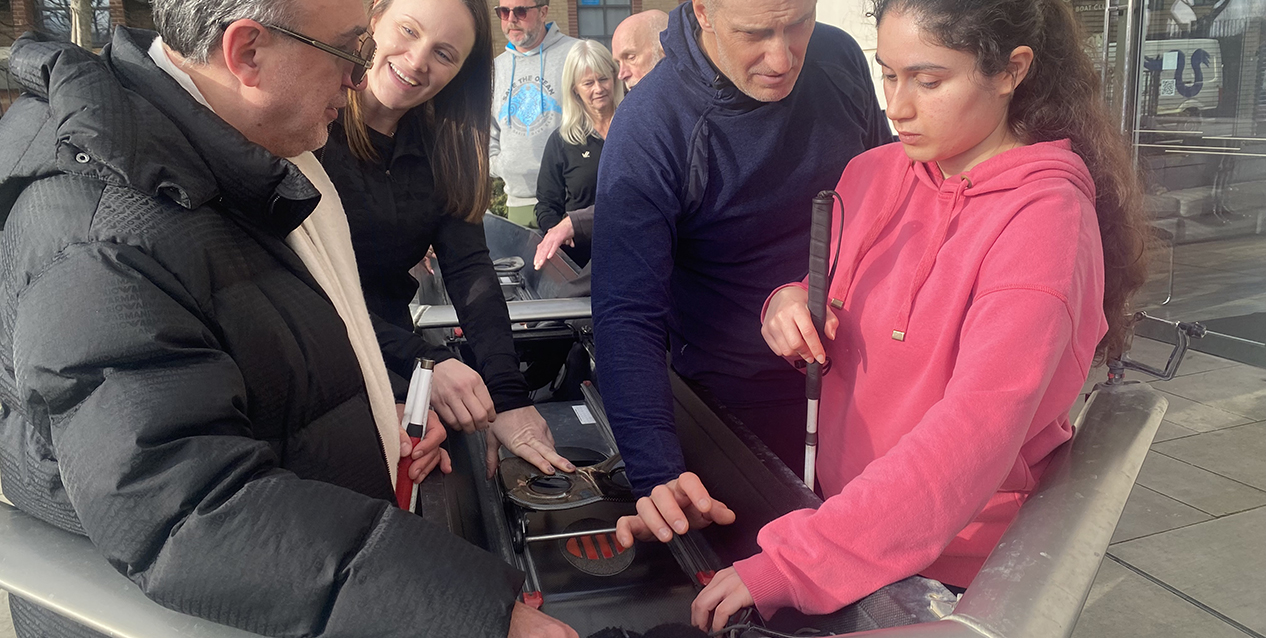
A blind girl and a blind man touch a boat during a rowing training session in the street.

We chose to meet participants at the station to guide them safely to our Boathouse, but it became far more than a practical step.

That short journey created space for honest conversation about the barriers disabled people face, about how few accessible sporting opportunities exist and about the courage it takes to try something new when the world isn’t designed with you in mind.

These walks helped build trust before a single stroke was taken and set the tone for the kind of programme we wanted to deliver – human, patient and centred on the individual.

Slowing down to go far

Rowing coaches are used to getting people onto the water quickly, but accessible rowing requires a different pace, which brought in our biggest challenge: slowing everyone down.

For safety and confidence, the first session had to take place entirely on land.

What began as a small pilot for blind and visually impaired participants has quickly grown into a powerful learning journey for our coaches, volunteers, partners and the people who travelled from across London to try rowing, many of them for the first time.

Participants learned about the layout of the site, boat handling, water safety and how rowing feels and works before ever stepping into a boat.

At first, some were disappointed not to get onto the Thames straight away, but by session two or three  the benefits were clear as starting slowly meant that once on the water, participants felt calm, informed and ready.

Their progress was extraordinary!

A growing community of rowers with complex needs

What surprised us the most was how working in this space naturally attracted more people with complex and varied needs, far beyond our original plans.

People travelled long distances across London, and in some cases far beyond, simply because accessible rowing doesn’t exist elsewhere. That willingness to travel underlined the scale of unmet demand.

Our local partners at Action on Disability and sight loss charity, VICTA helped us understand the huge range of disabilities and access needs in our community.

That is why we chose to start by focusing on just one area of need – visual impairment and blindness – building specialist expertise before widening out.

And the appetite is growing.

What we learned: coach the person

Across the programme, one principle kept resurfacing: empathy and understanding go a long way. See beyond the disability. Coach for the individual, not for the sport.

We learned to ask different questions, to describe space differently, to adjust our language, to use one voice in busy environments and to understand what independence looks like for each person.

We also learned that accessible rowing isn’t just about equipment – it’s about culture, about slowing down, about listening and about co-creating the experience.

Building a sustainable accessible rowing pathway

We’re proud of what Row the Rhythm achieved, but this is only the beginning.

Our long-term goal is to build a permanent, specialist accessible pathway at FRBC and to fully integrate disabled rowers into our wider club community.

To make this sustainable we're:

  • recruiting a disability advisory group to inform our programmes
  • improving the accessibility of our site, including new crew room layouts and an accessible ramp to the foreshore
  • co-creating future sessions with participants, ensuring their voices shape the programme
  • working with VICTA, Love Rowing, Action on Disability and other local partners to reach people who've never had the chance to try rowing
  • raising funds to support free-to-access programmes as well as offering self-funded opportunities.

Our vision is a sport where disabled people can learn, progress and row independently and where adaptive rowing blends seamlessly into our mainstream offer.

Looking ahead

This first year has shown us two powerful truths: there is a huge untapped demand for accessible rowing and that when you remove barriers, people thrive.

Participants told us the experience was “life-changing”, “freeing” and something they've never thought that they'd be able to do.

And for us, the learning has been just as transformative and rewarding.

We now know that accessible rowing is not a niche add-on – it is essential to creating a sport that truly belongs to everyone.

The river has room for all of us and at Fulham Reach Boat Club, we’re committed to making sure everyone who wants to row can find their place on the water.

Making physical activity fun for all

At Get Doncaster Moving (GDM) we have a mission: to support the youngest in our society and their families to be as active as possible, because the benefits of moving are something that will accompany them for the rest of their lives.

It is with that mission in mind that across Doncaster, partners within our network are working together to create the conditions to help children, young people and their families build healthier, more active lives.

Through a place-based approach, the network is enabling innovative programmes, unlocking new partnerships and supporting communities to develop sustainable activity habits.

This is something we’ve undertaken as a long-term mission.

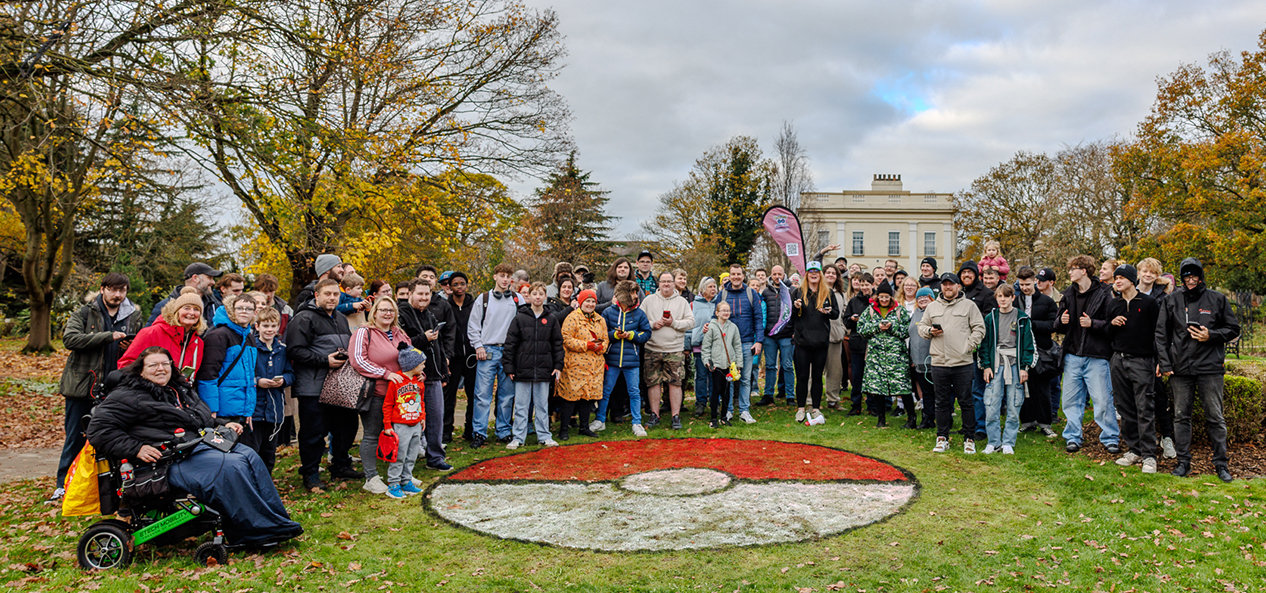
A group of poeple pose around a Pokemon ball that's been painted on park's floor.


Thinking outside the pitch

Reflecting on the past year, there are some stand out examples of how innovative partnerships have been the key driver behind GDM’s work to support children and young people – and their families – to move more.

Firstly, we’ve been developing new outdoor experiences to help children and families connect with local parks in different ways.

For example, GDM’s partnership with Enigma.Rooms introduced interactive digital trail games in parks across the city that engaged new and younger audiences through fun problem-solving and exploration.

The initiative was a success and contributed to Hexthorpe Park receiving the national ‘Green Space Innovation Award’ in 2025.

Then in November, and thanks to the efforts of the local Pokémon community, Doncaster was selected to host a Pokémon GO: Community Celebration event (the first place in Europe be chosen!), attracting thousands of local players and visitors.

The trails across two major parks showcased Doncaster’s green spaces while promoting movement through play.

Through a place-based approach, the network is enabling innovative programmes, unlocking new partnerships and supporting communities to develop sustainable activity habits.

GDM is continuing its work with local Pokémon Go group ‘Raiding Doncaster and beyond’ to grow this welcoming, inter-generational walking and gaming community, and encouraging new players to engage in this family-friendly activity, and to move more – particularly within Doncaster’s parks and green spaces.  

Trying something new

In sport, the ‘Free Park Tennis’ initiative started a couple of years ago in a local park to expand opportunities for children and families.

Resident volunteers have been trained as Free Park Tennis Activators to deliver free, weekly sessions to the community in two Doncaster parks, which led to one park being awarded ‘Park Venue of the Year’ by Yorkshire Tennis.

Our most recent park venue to host Free Park Tennis sessions, Haslam Park, which started in May this year, has already seen 369 attendances, with four local volunteers upskilled to deliver the weekly sessions.

This has been a fantastic opportunity for people to come along and 'have a go' at tennis in a relaxed and social setting, and it has been very popular with both children and families.

Doncaster’s place-based model played a key role in connecting partners and enabling the Active Start initiative, a programme designed for staff working with children aged 2–5.

Active Start is led by Yorkshire Sport Foundation, working in partnership with, and funded by, the South Yorkshire Integrated Care Board's Children and Young People’s Alliance. Their latest Impact Report: Giving children an Active Start is full of learnings and data.

This information is key to the training and resources they provide to early years professionals to help embed movement and active play throughout everyday learning.

This approach not only supports physical development but also communication efforts, social skills and school readiness, giving children the strongest start in life.

Doncaster’s Public Health and Early Years teams have trained as tutors, offering one-on-one support, continuing professional development opportunities and resources to nurseries, schools, childminders and all 12 family hubs, which are places for families to go within their communities to access groups and support.

Many settings have already taken part in centralised training and are now better equipped to encourage movement in class and at home.

But this is not all, because work will continue into the 2025/26 academic year as the programme develops further across South Yorkshire.          

Looking ahead, shifting the dial on children’s engagement in activity will require continued place-based collaboration.

Sustained shared learning, creativity and innovation – alongside a connected, empowered GDM network – will help Doncaster’s young people to move more, play more and thrive.

Find out more and connect with us

In the picture

The concentrated focus of Black History Month provides an opportunity to gain new perspectives through events, articles and media programming that might otherwise be overlooked.

At its best, this month should stir our curiosity and resolve as we look back at the achievements and struggles of Black people, helping us gain a fuller understanding of Black histories to strengthen our grasp of the present.

This celebration (and the round-the-clock efforts by many through the year) should move us to action, reminding us that we don't have to accept the erasure of some people and communities as normal.

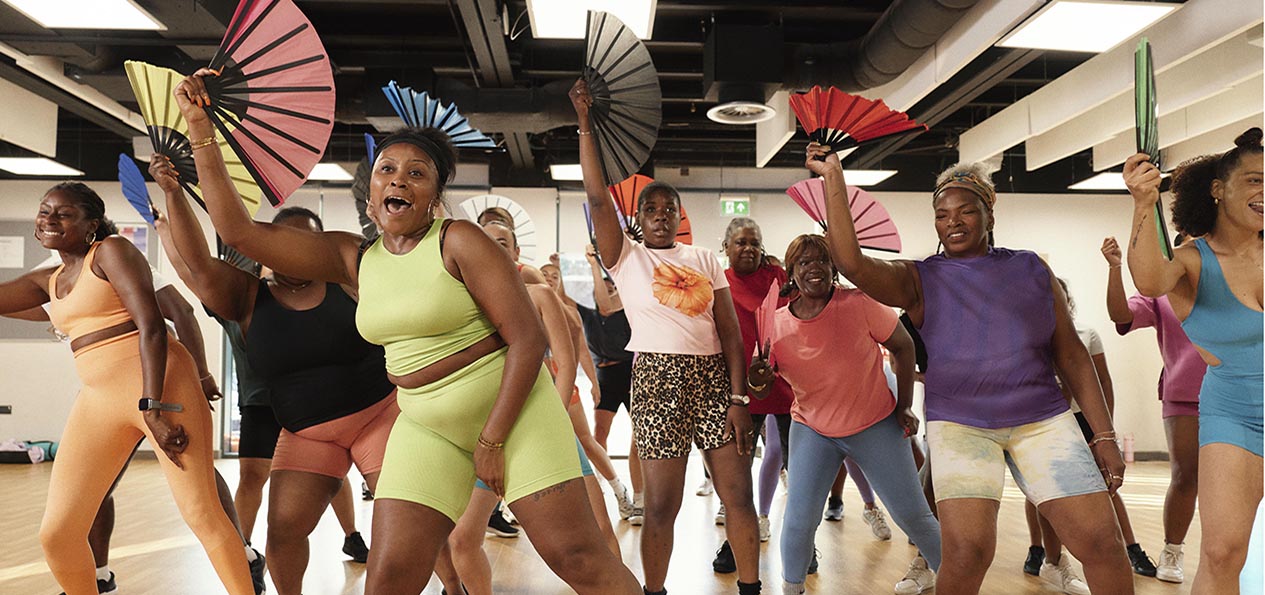
A group of dancers hold fans as part of their routine during a session on an indoors gym.

One of the best ways we can use this month is to harness new understandings to permanently build more inclusive platforms for Black achievement and wellbeing, so if you’ve missed our series of articles this month, please do look back.

These guest blogs are all great stories that highlight examples of community leadership that push back against the status quo of erasure.

It’s vital that we recognise and celebrate this work, which truly models more local and equitable practice, shaped by communities themselves.

But what about the models in the digital world?

Black History Month should move us to action, reminding us that we don't have to accept the erasure of some people and communities as normal.

As the usage of virtual spaces increases in all areas of our lives (including work, leisure or physical activity), it’s important to push for equity online too.

But with the backdrop of ongoing online abuse and discrimination, which inhibit participation in sport and physical activity, we’re rightly focused on the importance of creating safe virtual spaces too.

However, safety is only one side of the equation because we’ve also been asking ourselves how we can use technology to improve representation.

An example of this is We Like the Way You Move, the latest phase of our award-winning campaign, This Girl Can.

Technology for good

This phase has included a push for greater visibility of Black women – as well as other underrepresented groups of women – in imagery that promotes participation by sport and physical activity organisations.

This is how it’s worked: with the help of AI, we analysed publicly-available photos that came from parks, gyms, sports clubs, community centres, swimming pools and other leisure facilities across England and sourced via Google Maps, and confirmed that – alongside other minoritised groups of women – those who look like me have been virtually erased.

I’m excited that we’ve found a way to use the power of AI to drive better representation in our sector, because at a point when we’re all figuring out how to be more purposeful in how we use technology, finding insights that we can act on in real-time to contribute to change feels like a tangible win.

This push for greater visibility marks a positive shift that has come with our strategy’s focus on tackling inequalities as we’re working on reshaping our existing efforts to collaborate with different audiences and leaders through initiatives like TRARIIS.

Having celebrated the 10th anniversary of This Girl Can earlier this year, We Like the Way You Move has also used some powerful new imagery of women who have conventionally been excluded from the picture of sport and physical activity.

These are pictures full of joy and love for movement and, at times, I’d say you can almost hear the music they’re moving to.

These images are also a great reminder that women are creating their own platforms in communities, leading change and putting their unique stamp on activities and spaces.

We hope that they will help shift mindsets and that other organisations will follow suit.

On a personal note, it’s wonderful to see references to Caribbean culture, dance and movement in the mix.

It really does make a difference to my motivation and sense of belonging when I can see parts of my identity reflected back to me.

And I’m confident that the breadth of images and ways of moving captured in the campaign will have a similar impact on lots of other women that should have always been in the picture.

The power of our communities

Sport changed my life. I have vivid childhood memories of being driven all over North Yorkshire by my mum and dad.

We spent our Saturdays going from one brilliant and unique cricket ground to another, and I can still hear those echoes of leather on willow when I see them today.

Those weekends set off a lifelong love affair with cricket and the county I’m proud to call home, and even more proud to represent every day as a Mayor of York and North Yorkshire.

Everyone should have the same opportunities to get moving that I did, and that is why I am proud to launch the £2.75 million Movement, Activity and Sport fund.

Bringing the joy of movement to everybody

This is the first of the funds to be launched under my Moving Forward campaign and we are working closely with partners to make sure this investment targets support for those who need it most.

Beyond the health benefits, there aren’t many better ways provided by sport and physical activity to meet new people and build strong relationships in our local communities.

However, this is particularly key in our rural and coastal areas, where there are some pockets of real deprivation.

Too often families cannot get over the hurdle of costly cricket bats, football kits or transport to games, which means that those who would benefit the most aren’t able to get involved.

But by funding activities for those who might otherwise turn to anti-social behaviour, we can change lives and make our towns and villages a better place to live.
 

This is the first of the funds to be launched under my Moving Forward campaign and we are working closely with partners to make sure this investment targets support for those who need it most.

Our research tells us that over 30% of adults are classed as physically inactive, meaning they do less than 30 minutes of exercise a week, and that over 60% are overweight or obese, increasing the risk of long-term health conditions.

But this reality can be turned, and early intervention and prevention can make a big difference.

We can help that by making positive choices like introducing physical activity in our day to day, by considering more walking, wheeling and cycling for our working commute or to meet up with friends.

We are moving in the right direction, but there’s still so much more work to do!

After years of being ignored or minimised, women’s sport is getting the recognition it deserves with success after success for our national rugby and football teams, but girls still don’t get the same opportunity to get moving when compared to boys.

Moving forward together 

I have seen that first hand, because while my son had the pick of so many football clubs, we struggled to find one for our daughter. How can that be happening in 2025?

This plays out with so many families across the region and the UK every year, and it’s a big reason why girls are more likely to stop playing sport when they become teenagers. But we can also change that.

By enhancing skills development and training in the sector, alongside offering more inclusive activities, we will also tackle the barriers that people with disabilities face.

Disabled people are almost twice as likely to be physically inactive, but by working together with our partners we can start to improve those numbers and change lives.

My Moving Forward campaign is about backing people across our region to build the healthy and thriving communities they deserve. 

I believe in the power of our communities, the people and local organisations that keep them going.  

Our work is made so much easier thanks to the support of our strategic partners, including North Yorkshire Sport and the Place Universal Offer from Sport England and I’m truly excited about these, because together we can achieve so much more!

The best part of my job is seeing the huge impact that hard-working groups have on their neighbourhoods.

They know what they need, and we will work with them every step of the way as we continue Moving Forward together.
 

Why parents and carers matter

Safe and positive experiences for children and young people are one of the five big issues at the heart of Sport England’s long-term strategy, Uniting the Movement.

Sport England has supported the NSPCC’s Child Protection in Sport Unit since 2001 and continues to invest in keeping sport safe for children.

Early experiences with sport have the power to make or break a person’s lifelong relationship with physical activity, which can affect physical, mental and social health at every stage of their life: from childhood; to teenage years; to adulthood.  

Simply put, a negative experience could turn a child away from sport, causing them to disengage and miss out on the extraordinary benefits of an active life – from being able to concentrate better at school; to having fun with their friends; to reduced anxiety; to the sheer joy of moving.

Our social value research found that active children and young people generate a wellbeing value (the monetary value that can be placed on happiness, health and life satisfaction) of £4,100 a year (for an active adult, it’s £2,500).

This shows that active children gain more from movement than active adults.

It’s also so important for their development and happiness, and with childhood obesity rising and less than half of children meeting the Chief Medical Officers’ guidelines for physical activity, getting children active is more important than ever – and parents and carers have a vital role to play here.
 

Simply put, a negative experience could turn a child away from sport, causing them to disengage and miss out on the extraordinary benefits of an active life.

We are supporting the KYCSIS campaign by asking all those who work in the sector to call on parents and carers they interact with, to think about how to support children in sport and to have open conversations about what kind of encouragement helps young people thrive.

Why those in charge matter so much

There are different reasons why parents and carers are key in their life’s kids when it comes to sport:

  • Parents and carers shape how children feel about sport. Their behaviour, language and the support they offer can determine whether sport is a positive space for their child. 
  • They know what their child needs and what kind of support they respond to. Support looks different for every child. Some want loud cheering, while others may prefer quiet encouragement.
  • Parents and carers are best placed to know what their child needs. They can then share this with coaches and leaders.

Positive support from parents and carers helps children reach their goals. So whether that is winning, a personal best, being a good teammate or simply enjoying being active, positive support from parents and carers can build a positive relationship with sport and physical activity.

The TALK steps 

There are four simple steps every parent and carer can follow to ensure their kids enjoy sport in a secure and enjoyable way – it’s what we call the TALK steps and we’d love it if you could share these with those in your network.

  • Talk to the child; listen to the child: parents and carers should ask why their child plays and how they want to be supported. Parents can use their answers to guide how they show up at training and competitions.
  • Always show respect: we encourage parents to be good role models of sports values by supporting the whole team and treating coaches and officials with respect, even when they disagree.
  • Let’s speak out: if adults are shouting insults, criticising, focusing on weight, confronting officials aggressively or pushing children into competitions that are too advanced for them, parents and carers should raise it with the club’s welfare officer or match-day official.
  • Keep sport fun: we encourage parents and carers to praise effort and progress as well as results. Offering constructive encouragement when things go wrong can help children learn from setbacks.

What about if my child is in a competitive environment?

For many parents and carers, it’s brand-new territory when turning up at their child’s first sporting event – but they must be equipped and not afraid to ask about anything they feel unfamiliar with.

Here are five questions every parent/carer should ask before signing their child up to a competition:

  • What is the primary purpose of this competition for children at this age or level?
  • How are children supervised and safeguarded during the event?
  • What expectations will be placed on my child and what support is available if they find it stressful?
  • How are selection and team decisions made and communicated to participants and families?
  • Who is the designated welfare officer and how do I raise a concern on the day if needed?

Asking these types of questions before agreeing to children taking part makes it easier for parents to recognise when something is not right.

Spotting concerns and taking action

Parents and carers know what their child needs to be their best and should be empowered to challenge or call out behaviour that could harm their child’s wellbeing.

Adults shouting from the sidelines, personal criticism of children, pressure about weight or repeated, aggressive challenges to officials are all red flags.

Parents should report concerns the club’s welfare officer or the relevant match official immediately.

If you remain worried about anything that may cause harm, contact the NSPCC Helpline on 0808 800 5000 or email [email protected].

We all have a joint commitment to ensure children and young people feel safe when taking part in sport so let’s make sure, we support parents and carers to make this happen!
 

Our hidden health clubs

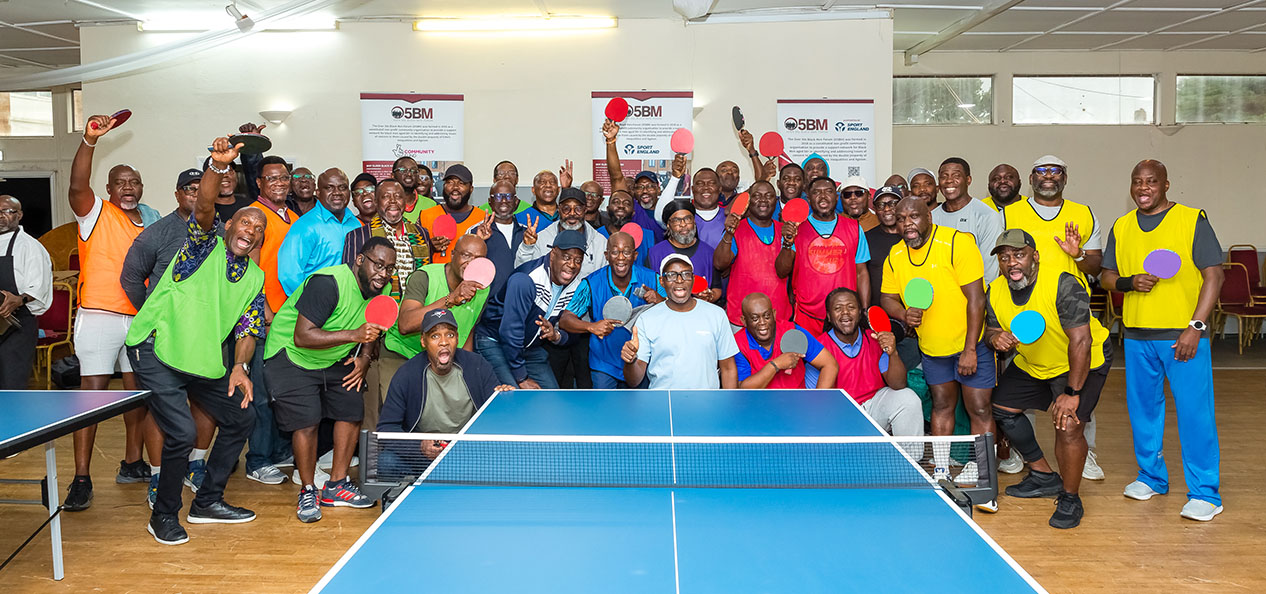
When most people picture senior Black men, they don’t immediately see us smashing forehand drives, diving for edge-of-the-table shots or celebrating doubles-wins with a triumphant chest bump (yes, it happens!).

But step inside an Over 50s Black Men Forum Table Tennis Centre and you’ll quickly realise that the sport is not just a pastime – it is medicine. It is therapy. And it is comedy.

A ping-pong ball, we often say, can travel faster than a GP appointment letter, making these centres our hidden health clubs.

But behind the rallies and the laughter, there is serious work underway.

A group of Black men pose during an Over 50s Black Men Forum Table Tennis session on an indoors centre.

Our hubs are what we call 'free health clubs in disguise' and alongside the games, we often run blood pressure checks, mental health workshops and health awareness sessions.

It is a Trojan horse approach: come for the table tennis, stay for the health education.

More than sport – a building-community exercise

Men who were once isolated are now part of a supportive network and those at risk of hypertension or diabetes are keeping active, informed and monitored.

The unexpected side effects? Friendships, resilience and a lot of good-natured bragging rights.

Some say that even when they hadn’t played table tennis in years the welcoming atmosphere makes it easy to return and that now they're used to the game, they can’t imagine their Tuesday evenings without it.

Others shared that while having lived in Luton for 15 years, never before had they made meaningful connections locally and that the group is a “real treasure, especially because of its focus on health and wellbeing”.
 

When most people picture senior Black men, they don’t immediately see us smashing forehand drives, diving for edge-of-the-table shots or celebrating doubles wins with a triumphant chest bump (yes, it happens!)

A man that had survived a stroke mentioned that, as well as camaraderie and encouragement, table tennis had helped him physically by helping him improve hand-eye coordination, building his confidence and combating post-stroke fatigue.

These voices remind us that this forum is more than sport. It is hope, dignity, recovery and community.

Rewriting the narrative

Black History Month is here and the importance of rewriting health inequality narratives becomes even clearer.

Too often older Black men are described as "hard to reach”, but our response is simple: “we are not hard to reach; we are not being seen”.

The reality is stark – Black men in the UK shoulder a disproportionate burden of chronic disease.

Rates of hypertension, cardiovascular disease (CVD) and type 2 diabetes remain consistently higher than those of their White counterparts.

And we can’t forget that Black men are also more at risk of prostate cancer, so it's always a good idea to use Prostate Cancer UK’s risk-checker.

These inequalities are deeply rooted and cannot be resolved overnight, yet the work of the Over 50s Black Men Forum shows what is possible when solutions are shaped by, and for, the community.

By creating culturally-relevant, community-led, spaces we have not only encouraged men to take part in sport, but also to engage in their own health and wellbeing.

They arrive for the table tennis, but they return with their friends and, together, they build something far greater than the game itself: a hidden health club where camaraderie, wellness and dignity thrive.

Our first regional competition

This September, we hosted the UK’s first Older Black Men Community Table Tennis Competition, bringing nearly 70 men together from Essex and Bedfordshire. The atmosphere was electric!

Chelmsford proudly lifted the singles trophy, while Luton triumphed in the doubles. There were cheers, groans and more than one disputed line call.

Even Westminster took notice and Sarah Owen, MP for Luton North, celebrated her local players with a shout-out in Parliament.

Table Tennis England joined us in the hall, the Mayor of Luton presented trophies and the Sport England logo stood proudly across the venue.

It was more than a competition; it was a statement that older Black men belong in the story of sport, health and community.

Serving the future

We are proud of what has been built so far, with seven hubs running and more on the way. But this is just the beginning.

Our vision is to embed these centres nationwide, creating a network where sport and health go hand-in-hand for older Black men.

And the best part? The model is replicable!

What works in Luton can work in Leeds and what works in Southend can work in Sheffield, because at its core, this is not just about table tennis.

It is about dignity, community and the belief that everyone deserves the chance to live longer, healthier and happier lives.
 

Running, representation and resilience

Movement has always been more than exercise for me.

My first motivation was staying healthy and trying to stave off hereditary diseases like hypertension and diabetes that run in my family (and, so far, I'm happy to say it has worked!).

But movement quickly became my outlet, my reminder that I am alive, capable and able to set goals.

The power of movement

When I lace up my trainers and step outside, I am not only moving my body. I am moving through history, community and identity, and I am claiming me. I do this for me.

This year the theme for Black History Month is ‘Standing Firm in Power and Pride’, highlighting the resilience and contributions of the Black community, and I am reminded that movement has long been a form of resistance, survival and celebration for Black people.

From dance to sport, movement has always been our way of claiming space, telling stories and showing strength and, for me, running is my chosen form of movement. It gives me freedom, resilience, and connection – three qualities that shape how I live and lead.

Growing up, I saw elite athletes who looked like me on TV, but I did not see everyday women like me running.

Running was not something I thought belonged to me as an adult (child me, yes, because children always run), but the first time I tried it outside as an adult, something shifted – it was not about speed or medals, it was about finding a rhythm that was mine.

Over the years, running has carried me through joy and pain.

It has helped me navigate life’s challenges, from grief and motherhood to menopause and leadership, and it has also changed how I see myself, not as the fastest or the best, but as someone who shows up, puts one foot in front of the other and keeps going.

This year the theme for Black History Month is ‘Standing Firm in Power and Pride’, highlighting the resilience and contributions of the Black community, and I am reminded that movement has long been a form of resistance, survival and celebration for Black people.

Running has also shown me how much representation matters.

There have been times I felt invisible at races or out of place in running communities, but when I began sharing my story and weaving my Jamaican heritage into my running, I discovered others felt the same and that, by stepping forward, I could help them feel seen.

Showing the real deal

That is why I am proud to be part of the advisory board for This Girl Can.

For the Phase Six of the campaign, we have focused on showing women as they truly are: sweaty, busy, imperfect and joyful.

Not polished versions of women exercising effortlessly, but showing real women making time for movement in the midst of their busy lives.

Being on the advisory board has given me the chance to share my perspective, especially around the barriers that Black women face in sport.

From worries about hair care, to feeling unsafe in certain spaces, to simply not seeing ourselves represented, these are real issues that stop many of us from moving freely.

Phase Six is about breaking those barriers down and telling a wider story of who belongs in movement.

This new stage of the campaign is also about making sure that when women see the campaign, they see someone who looks like them, lives like them and feels like them. Because when you can see yourself, you start to believe you belong.

From local to national

In 2019, I founded Black Girls Do Run UK.

What began as a small idea, creating space for a handful of Black women to run together, has grown into a nationwide community, because we are more than a running group. We are a family!

We celebrate milestones, we share struggles and, more than anything, we create spaces where Black women can move without judgement or stereotype.

Alongside leading the community, I hold both the Leadership in Running Fitness and Coaching in Running Fitness qualifications.

These have allowed me to support runners of all abilities, from beginners to those chasing big milestones, and to bring structured, safe and inclusive coaching into our spaces.

For us, running is not about chasing times, and all about creating a memory bank, not metrics.

It is about laughing mid-race, stopping for photos and supporting each other at the back of the pack. It is about belonging.

Together in strength

Black Girls Do Run UK exists because representation matters.

Too often, Black women are absent from the imagery of running, but by showing up in our kit at races and online, we are rewriting that narrative. We are saying we are here, we run and we belong!

For me, movement is freedom. It is the freedom to be myself, to take up space and to live well in my body and during Black History Month, that freedom feels especially powerful.

We honour the struggles of those before us, celebrate the present and move with hope for those who will come after because movement connects past, present and future.

It reminds us that while the barriers are real, so is our resilience, and it proves that when women move, communities move and change becomes possible.

So this Black History Month, I celebrate movement in all its forms: the steps, the strides, the miles and the memories. Movement has shaped me, and I will keep moving, for myself, for my community, and for the generations yet to come.

Now is the time

This week is National Inclusion Week, an initiative started by our friends at Inclusive Employers to celebrate inclusion and to make changes that build workplaces where everyone can thrive.

This year the theme is 'Now is the time', but what does this mean exactly?

Basically, that there’s no moment like the present to take action and to make those practical steps in your organisations that embed inclusion and create a sense of belonging.

This really is one of my favourite weeks of the year!

‘Being inclusive’ is one of the guiding values for the work we do at Sport England and it highlights a collective commitment to Equality, Diversity and Inclusion (EDI) in sport and physical activity.

But we don't approach our commitment to EDI alone, because Moving to Inclusion is an initiative by all the home nations sports councils.

Its purpose is to provide resources and support for physical activity and sport organisations moving towards a more diverse, inclusive and socially responsible sector.

These commitments include an opportunity for self-reflection and continual improvement, which is key in our compromise to keep progressing and living by the values we want to promote.

A bit of history

The Moving to inclusion Framework was created to replace the former ‘Equality Standard - A Framework for Sport’ following a review and consultation with the sport and physical activity sector back in 2021, and it was later soft-launched in Autumn 2023.
 

This week is National Inclusion Week, an initiative started by our friends at Inclusive Employers to celebrate inclusion and to make changes that build workplaces where everyone can thrive.

The Framework guides organisations on developing inclusive practice through self-reflection and continuous improvement using the Moving to Inclusion Diagnostic Toolkit.

Through this self-reflection tool, our aim is simple: to embed equality, diversity and inclusion through incorporating action planning, implementation and review into an organisation’s everyday work.

It is important to note that the diagnostic tool is not mandatory to complete, or part of any performance management for partner-organisations' funding conditions in England. 

Benefits for everybody

In any case, and whichever way you choose to start your inclusivity journey, we believe there are benefits to joining our Moving to Inclusion community:

  • This framework enables your organisation to break down the areas around inclusion to make it more manageable and realistically achievable to embed change.
  • The process is broken down into five pillars: Culture, Leadership, Experience, Relationship and Communication.
  • The self-diagnostic tool within the Moving to Inclusion Framework will help you assess where your organisation is now on its EDI journey and consider where you might need to focus effort and make further improvements.
  • The Framework provides practical suggestions and resources to help you drive continuous improvement in your organisation. The reason for this is that a greater focus on EDI will benefit the whole business, including staff satisfaction and retention, reputation, diversity of workforce and thought, growth in participation and membership, innovation, better resilience and increased business opportunities.
  • Partners who are funded by Sport England may be able to access mentor support upon completing their diagnostic.  
  • As Moving to Inclusion evolves, it will create a learning culture and community to be part of.

Any organisation (either inside the sport sector or outside) can undertake the self-reflection process and benefit from the online resources that support it.

To get an idea of the impact it is currently having, check out this infographic for April 2024-March 2025.

Leading change on EDI in our sector

Sport England (and UK Sport) have introduced Diversity and Inclusion Action Plans (DIAPs) as a mandatory requirement of the Code for Sports Governance.

DIAPs set out the ambitions and practical steps that organisations in the sport and physical activity sector will take to achieve greater diversity and create inclusive cultures.  

The plans are applicable to Tier 3 organisations, with the aim to improve representation and inclusion on boards, in senior leadership teams and throughout the wider organisation. 

To date, Sport England and UK Sport have signed off 116 DIAPs that are now with partners to deliver on the actions within their plans and to improve diversity within their organisations and beyond.  

Organisations funded by Sport England will find that Moving to Inclusion provides additional, complementary and enduring support for their DIAP processes.

The themed pillars within Moving to Inclusion will help those organisations refresh their DIAPs and they may choose to incorporate the actions arising from their self-assessment within their own plans.

This National Inclusion Week (and every other week in the calendar, if you ask me) we all have a role to play in changing our behaviour, championing inclusive practices and challenging discrimination.

Collectively, we can create the conditions that support a kind, welcoming and nurturing environment for everyone to lead healthier and happier lives and we hope Moving to Inclusion can help you in that journey.
 

Rising Stars FC '74

My roots are Gloucestershire through and through.

As a grandchild of the early Muslim elders who established a home here and growing up as a rural Muslim, the vast environment surrounding me profoundly shaped my identity and experiences.

For more than 10 years, I've had the privilege of working within social change, funding and the charity sector.

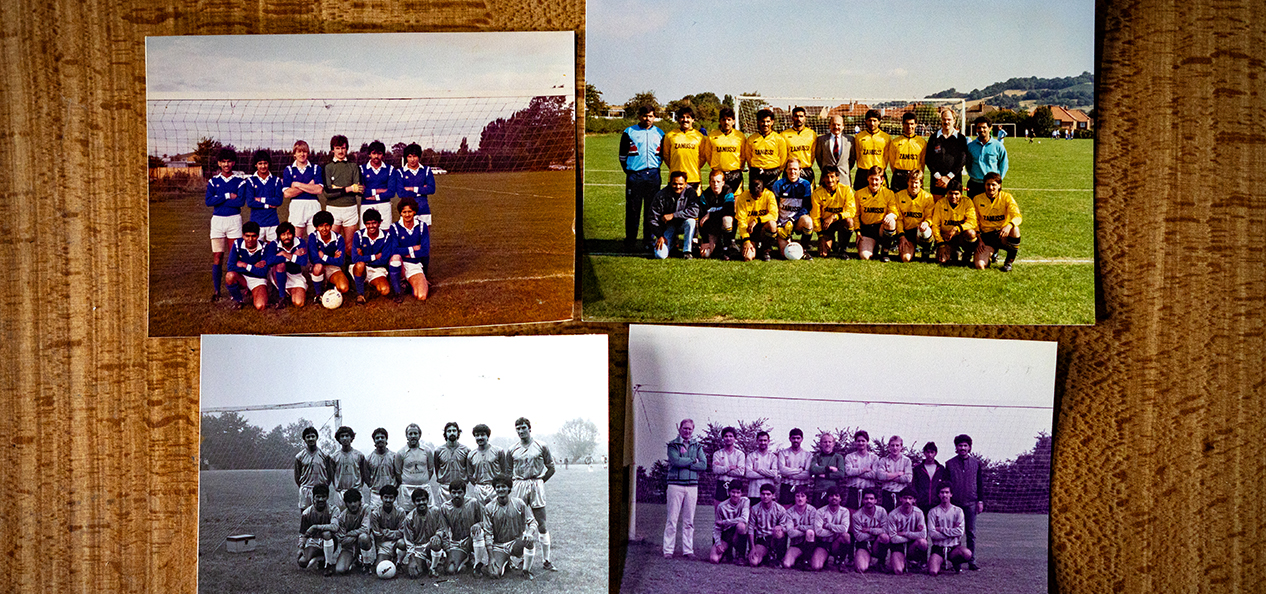
Four photographs of Rising Starts FC'74 teams through the years are placed on a table.

Thanks to incredible leaders, elders and changemakers around me, my education and life have been enriched, fuelling the intersectional work I now do as an Imam, strategist and learning and development facilitator.

Observing our family, who migrated in the early 1950s, and seeing the need to create a space in welcoming others from the sub-continent for better futures, influenced what we now call home.

For some I may seem like a leader but, for me, leadership is not something you choose to do but something you must do – a responsibility that’s entrusted upon you.

This very story shows exactly that it’s creating spaces and the selfless pursuit in opening hearts and homes for communities that will outlive our own.

Unreflected Reflections (UR) emerged during the Covid-19 pandemic as a creative platform dedicated to fostering reflection on history, stories and identities, particularly of those often overlooked or unaddressed.

Its core intention is to provide a voice for 'unheard and non-institutional voices', that is the voices of everyday individuals who may feel their stories lack value or contribution to society.

Origin and philosophy

UR was born out of a period of global pause and reflection during the pandemic, prompting a re-evaluation of identity and narrative.
 

Unreflected Reflections emerged during the Covid-19 pandemic as a creative platform dedicated to fostering reflection on history, stories and identities, particularly of those often overlooked or unaddressed.

It intentionally seeks to explore internal universes and personal faith identities, especially for those with South Asian heritage, encouraging collective exploration.

UR operates on the principle that heritage and history are discussed differently in rural settings, where opportunities and exposure might be harder to achieve and silence can become the norm.

Key achievements and impact

Since 2022, the initiative has achieved significant milestones by producing three documentaries (Gloucester Glory, Pioneering Glimpses and Rising Stars FC ’74) and two photography exhibitions.

In total, we’ve engaged with over 3,500 individuals from schools, film festivals, institutions and communities by providing an in-person experience through storytelling, identity exploration and food.

Rising Stars FC '74

UR's latest documentary, Rising Stars FC '74, exemplifies its work.

This film chronicles the journey of a few teenage Muslims in the 1970s who dreamt of playing football and joining the Sunday league set-up.

There are some key aspects of this piece:

  • Whilst football was central, the initiative was a movement for young people to drive change, build bridges between communities and root their efforts in faith identity and South Asian heritage.
  • What began as a moment, evolved into a significant movement for growth, opportunity and institution-building, focusing on placemaking and integrating health and wellbeing. The club has now celebrated half a century of existence.
  • The club has expanded to include multiple adult and youth teams and boasts an ascending coaching developmental programme.
  • The journey was fraught with challenges, including a lack of role models, an absence of funding and the persistent ‘dark hostility of racism’, but the resilience and determination of its founders became a testament to enduring change.

Approach to engagement and partnerships

This documentary emphasises creating spaces where faith, community and stories are intentionally woven together, leading to authentic, undiluted engagement rooted in personal identity rather than just project-focused interactions.

The platform actively questions whether partnerships are open to diverse engagement styles, culturally informed in relationship-building and equitable in allowing communities to contribute their say, reflecting faith and culture.

What are we up to now?

We have now partnered with Hartpury University to provide a fully funded studentship to undertake a Masters by Research (MRes) and we’re also working with the Gloucestershire Muslim community to generate data on current experiences around health and wellbeing.

This will be a research collaboration designed by the student and the community in facilitating insights for rural needs where faith, culture and identity are intentional.

On a concluding note, I leave you with a quote from a participant that has really stayed with me: “You must know your history to know your future.” 

If you are interested in our work in exploring faith, culture and identity within your workspace or want to screen any of the films as a learning experience, then connect with us through our website, or on LinkedInInstagram or Facebook, where we share updates and events.
 

More than just another leadership programme

I recently joined the Oxford Women’s Leadership programme to give myself space to reflect with a group of peers to sharpen my professional impact.

In our first week, we spent time examining key experiences that have challenged, awoken and shaped us as leaders, and I found myself musing on some of the hardest, most confusing times in my life and my career, as well as on some of the positive and encouraging events.

The process has already helped me grow in self-awareness and draw on knowledge about what I bring to the table, something that had been present but dormant.

This experience has fuelled my excitement about Sport England’s refreshed leadership offer – the Leading the Movement programme.

Re-thinking leadership

Over the next four years, we’ve committed to invest £5 million of National Lottery funding to support leaders to prioritise tackling inequalities within sport and physical activity participation.

I believe that this investment into coaching, mentoring and training is one of the most important investments we can make into our sector.

And this is because what we need most, as leaders operating in an increasingly complex world, is the ability to hold up a mirror to ourselves and our organisations to see where we might be contributing to the structures that hold inequity in place.

Change has to start with us and we can’t change until we’ve taken time to sharpen our understanding of our strengths and areas of growth, and until we make some intentional changes to build on our existing body of experience.

But what do we mean by ‘leaders’?

Having worked in community-led settings, I’m acutely aware that at first glance, leadership as we know it can feel exclusive, but Leading the Movement is aiming to buck that trend.

What we need most, as leaders operating in an increasingly complex world, is the ability to hold up a mirror to ourselves and our organisations to see where we might be contributing to the structures that hold inequity in place.

We know that leaders can be found in communities, in organisations of varied scales and at all levels of responsibility, so we’re committed to supporting individuals from communities and backgrounds currently underrepresented in our sector.

The programme will bring together our previous national and place-based leadership work, building a network of leaders from different backgrounds and we hope that these leaders will enrich each other's experiences and trade knowledge and insight.

There’ll be a microsite full of content that is accessible to anyone who’s interested and we’ll also have targeted support for leaders within our funded portfolios.

Tackling the challenges

Our ambition is that this won’t be ‘just another leadership programme’. Instead, we want to see a significant shift in confidence, knowledge and impact.

We know from listening to people within our sector that, especially for leaders with an explicit responsibility for driving-inclusion exhaustion, discouragement and burnout are very real risks.

We want to tackle this by creating a supportive community which acknowledges the day to day challenges of leading on the frontline and equips leaders with the skills to create measurable shifts in culture and practice.

All of this is pointed at the primary aim of our long-term strategy, Uniting the Movement, opening up more opportunities for everyone in England to experience the benefits of an active life.

And we need an army of confident, impactful leaders to make this a reality!

If you want to be part of Leading the Movement, visit its new site and check how we can support you and your team in your leadership journey.

In the meantime, why not take some time to reflect on a moment or experience that has shaped you as a leader? What did you learn about yourself that might help you rise to a challenge you’re facing today?

Visit our new site and find out more

Leading the Movement

Running with pride

It all started with a marathon I wasn’t ready for.

I signed up on a whim for the 2014 Brighton Marathon and with less than two months to train. I had no idea what I was doing, but something about the challenge – the movement, the solitude, the sheer madness – stuck with me.

In time, running became more than a personal escape. It became the thing that led me to one of the most important communities of my life: a place where I could be queer, be myself and still be called a runner.

I was always interested in sport growing up but struggled to match my enthusiasm with ability when it came to team games.

Finding my place in sport

Although I wasn’t consciously questioning my sexuality at the time, looking back I’m sure part of that stemmed from the changing room anxiety that will be familiar to many LGBTQ+ people.

I came out – to myself and to others – relatively late in life and even then, I found it hard to fit in.

There were gay people in my life, but they were individuals rather than a network, and I was still searching for a sense of community.

Despite what I now realise was foolish naivety, I completed that first race in a time I couldn’t have dreamed of.

The following year I ran it again, that time fundraising for Stonewall. Running that race in one of Europe’s queerest cities was a tremendous rush.

I can still hear the slightly louder cheers from the local LGBTQ+ community as I shuffled past in my bespoke Stonewall vest, but despite this newfound pride, running was still a solitary activity.

I’d heard of London Frontrunners – an LGBTQ+ running club – but hadn’t worked up the courage to go.

Eventually, I turned up one Monday evening in Waterloo, where I found myself surrounded by over 100 runners who all seemed to know each other and were completely at ease laughing, stretching and chatting like old friends.

In time, running became more than a personal escape. It became the thing that led me to one of the most important communities of my life: a place where I could be queer, be myself and still be called a runner.

I was too nervous to even announce myself as a newcomer and tried my best to blend into the background.

On the run itself, I went off too fast and got hopelessly lost, so by the time I returned to the changing rooms, everyone had gone.

Feeling chastened, I didn’t return for a few months until eventually I did. Then I went again and again.

Gradually, I started to relax – I even spoke to people!

Soon I was going to the post-run socials and signing up for races – this time proudly wearing a Frontrunners vest –  and I’ve never looked back.

Over the next few years, I formed some of the most special and enduring friendships of my life, took part in my first Pride marches and, for the first time, I felt part of a community.

I moved to Manchester in early 2021, and one of the first things I did post-lockdown was joining Manchester Frontrunners.

Barely knowing anyone in the city, the club became a crucial social lifeline.

Creating a new and space for the LGBTQ+ community

When Manchester didn’t work out and I moved to Bristol in 2022, I immediately looked to see if there was a local Frontrunners. There wasn’t.

“Set one up!” my friends said and while it felt daunting, it was also exciting so after a couple of months of procrastination, I decided to take the plunge but only to find someone had just beaten me to it, so I joined straight away and offered to help.

Slowly, we started to grow from two or three people to a much larger, enthusiastic community.

Many were like me: new to the city and looking to make friends.

It’s taken time and patience, but we now feel part of the LGBTQ+ community in Bristol.

One of the best outcomes has been connecting with other local LGBTQ+ sports clubs and we regularly organise joint socials to bring even more people together.

It’s also been incredible watching some of our runners take part in their first-ever races – including this year’s Bristol Half Marathon – proudly wearing their Bristol Frontrunners t-shirts.

This summer we’ll be marching at Bristol Pride for the first time and we’ll do so loudly, proudly and with open arms for anyone who wants to join.

We’re especially keen to speak to people who don’t think running is “for them”, because it is!

It’s an incredibly challenging time for the LGBTQ+ community, both here in the UK and around the world as trans people, in particular, are reporting increasing hostility and barriers to participation in sport.

That’s why it’s more important than ever that clubs like ours do everything we can to counteract that – by providing support, solidarity and safety.

Frontrunners is – and always will be – for everyone, so we stand and run together.

Discovering running – and the global Frontrunners community – has been life-changing for me and for so many others who were once bullied in school, sidelined in sport and made to feel like they didn’t belong.

So it doesn’t matter whether someone is training for an ultramarathon or just joining us for a Wednesday jog and a chat.

What matters is that they’re part of something. In this case, one big, proud, welcoming community who runs together in pride.

I recommend you checking the Pride Sports LGBT+ club finder to find something community-led local to you.

And if you want to follow us on social media, we’re on Instagram, Strava and on Run Together.

Read the case study

Bristol Frontrunners

Celebrating our communities

The Mental Health Foundation is the home of Mental Health Awareness Week and has been setting the theme for more than 20 years.  

The campaign runs every May and it's designed to engage the public in discussion, education and positive action to support and nurture good mental health.

This year, the theme for the week is focused on the power of community to support good mental health and wellbeing.

Reconnecting through sport

Recently I saw firsthand the power of community in action as people danced, pushed, cheered, ran, walked, marshalled and waved along the 26.2-mile route of the TCS London Marathon.  

I laughed, cried, lost my voice and apologised to the people standing next to me that they would undoubtedly hear my voice in their sleep that night.  

But my favourite moment was seeing a friend who I’d not seen for four years, running past and then taking thirty seconds to give me the biggest hug!  

What a big sweaty moment of joy as we briefly reconnected!

Occasions like this truly showcase the incredible ways in which sport and moving our bodies bring us together as a community.  

This statement is supported by the latest Active Lives data, which was published last month, and it shows the positive association between activity and the life satisfaction levels, as those who are more active also achieve higher life-satisfaction scores.

Recently I saw firsthand the power of community in action as people danced, pushed, cheered, ran, walked, marshalled and waved along the 26.2mile route of the TCS London Marathon.  

The survey also demonstrates that those who are lonelier, have less social trust and feel less integrated and included, report lower life-satisfaction scores.

But when it comes to being active, it’s not all about grand marathon events, because special moments happen all year around, and up and down the country, in gyms, swimming pools, parks, courts, pitches or greens, to name but just a few.  

Coming together as a group for a shared common purpose, to connect, to be ourselves, to feel safe and to have purpose is good for our mental health, and sport and physical activity offer fantastic opportunities to foster community.

Creating inclusive environments where everyone belongs

Whether participating or cheering on our local teams, people come together to have fun, move their bodies, boost their mental health and wellbeing to celebrate or commiserate.

Movement brings incredible benefits for both mental and physical wellbeing and everyone should have the chance to experience them.

From players and umpires to volunteers, spectators, families, friends – and even our dogs! – everyone has a role to play in creating welcoming spaces.

Clubhouses, cricket greens, parks, and sports halls can be vibrant, inclusive environments where people feel encouraged to participate, connect and enjoy themselves.

The sport and physical activity community is filled with wisdom, experience and creativity, and there are so many ways to get involved.

Here are just a few practical ideas to bring this vision to life:

  • invite a friend or colleague to join you on a walk – you don’t have to walk a marathon, think of short, pleasurable distances at least to start with
  • as an organisation, maybe add an extra low-key activity before or after your weekly training or game to provide time for connecting as a community – maybe open up the clubhouse and invite people to have a cup of tea and cake
  • open up a club session to include family members and friends, perhaps have a fun introduction to the game that is accessible and suitable for those you want to attract
  • organise a volunteering activity which benefits the club or local community and  bring people together to help meet a need, such as painting the club house, organising the store cupboard that hasn’t been sorted since 1974, or hosting an afternoon tea party for a residential home.  

The key thing is to think about those who may feel isolated or going through a low point in their lives and to let them know they’re not by themselves – that they’re part of something bigger, a community that moves, in which there’s space for everybody and that shouldn't let anyone behind.

Safety can be simple

After a suicide bomber attacked concert goers at the Manchester Arena in 2017, it was plain that a change was needed in how we protected people visiting public spaces.

In particular, there was widespread agreement that security and safety wasn’t just a matter for the police and emergency services; event organisers and the venues they used had to have a larger role in prevention and planning.

That realisation led to the campaign for Martyn’s Law, which is currently going through Parliament.

Officially known as the Terrorism (Protection of Premises) Bill, it will place a duty on premises and events to have security procedures in place to reduce the risk of harm if there’s an attack.

Some larger events and premises would need documented measures to reduce their vulnerability but it may well be some time before it fully comes into force as organisations and premises will need time to prepare.

As explained on ProtectUK – the dedicated website of the Home Office on counter-terrorism security information, training and materials – it will only directly apply to larger events and premises.

Yet we know that the people who want to do harm are just as capable of targeting small venues and small organisations.

Attacks on high-profile events or locations are getting harder to pull off, so how can we ensure people are protected everywhere they play, compete or train?

Luckily, we’re a society where voluntary associations have always taken responsibility to look after their people.

UK sports clubs and teams are exemplars of good practice in introducing safety and safeguarding protocols, and doing it with only the goodwill of volunteers to draw on.
 

Attacks on high-profile events or locations are getting harder to pull off, so how can we ensure people are protected everywhere they play, compete or train?

At the National Counter Terrorism Security Office we have been developing simple and easy-to-follow tools that are intended to demystify the steps needed to make people safer.

As well as working with some of the country’s biggest sporting organisations with large security set-ups, we’re conscious that security and terrorism are often the last thing on the mind of a club secretary who has to organise coaches, book referees, sweet talk parents into overseeing the car park or finding someone to collect the weekly subs.

Few people probably want to worry about having a plan to stop an intruder with a knife or think through how to manage multiple casualties caused by a rogue vehicle, but they want to know that someone has thought about the risks and that there are procedures in place.

Those procedures may be as simple as making sure you know who is coming into the building, organising the car park to limit the risk of an attacker getting up speed in a vehicle or having a protocol for getting people to safety inside a clubhouse, the changing rooms or the equipment store.

Or they might just involve regular volunteers by asking them to do a short free online security-awareness course.

Working with security experts across Government, industry and a number of national bodies, we’ve built a number of free tools on the ProtectUK website that clubs and teams are welcome to use.

You’ll find advice and resources covering subjects including identifying risks, event safety and eLearning for staff and awareness posters.

And if you can’t find what you need on our website – please, tell us. If it means that people can go about their sport in safety, we’re listening.
 

Find out more

ProtectUK

Are we there yet?

When we are travelling it is easy to get impatient and start wondering how long we’ll still have to go before we reach our destination.

And this edginess often appears even more so when we are on a long journey – like our quest for sustainability in the sport and physical activity sector.

But it is not just sustainable sports centres (to name one example) that we’re after.

We also want more sustainable homes, more sustainable businesses and more sustainable communities – so we are in for a long ride!

Looking back as we celebrate

And just to finish with the journey metaphor, it’s true that sometimes a trip can take you through breathtaking and inspiring places, while other times it drags on with no apparent progress being made.

The efforts around the sustainability journey are no different.

Cynics amongst us may say we are not making any progress with our sustainability efforts but I’d like to disagree.

At Sport England sustainability is a key part of our work, so I thought that as we celebrate the fourth anniversary of our long-term strategy, Uniting the Movement, it’d also be a great moment to reflect on the steps we’ve made so far and how we can keep moving ahead while ensuring we make the most of our natural resources without damaging or limiting our environment.

In 2022, we committed to ‘stepping up on environmental sustainability’.

Back then we highlighted three key points:

  • We recognised there was considerable work to do not only to reduce our negative impact on the environment but also to prepare our sector for a changing climate.
  • We committed to being clear on what actions we needed to take and to improving Sport England’s own environmental performance.
  • We said we’d collaborate with other organisations to make these things happen across the sector.

So, can we say we are nearly there? I’m afraid not quite, but we we’ve taken our first steps and we’re not alone, so we can’t stop now.

Plus we’ve done what we said and more. Much more!
 

Cynics amongst us may say we are not making any progress with our sustainability efforts but I’d like to disagree.

We listened to our partners and our internal teams and produced an environmental sustainability strategy and action plan, which we called Every Move.

We have a small team to deliver the action plan and embed sustainability across all our work but we can see people across the sector getting constantly involved with our efforts, like when almost 200 organisations signed our Going for Green Pledge last summer after our our Chair Chris Boardman cycled for eight days from Manchester to Paris to inspire action for climate change.

But perhaps the biggest change I’ve noticed is the cultural attitude to sustainability across the sport sector.

Our partners have embraced sustainability and a sign of this is that the language around sustainable development is dropped into everyday conversations.

As a collective we’re really beginning to understand the inter-connection between climate change, inequalities, participation in sport and our role in tackling that.

Environmental social governance is now included in the Code for Sports Governance, setting out levels of transparency and integrity for our funded partners.

Working together for everybody's future

In addition, many of our partners have developed, or are developing, their own sustainability action plans and these recognise the importance of tackling climate justice - addressing the unequal impacts of climate change on disadvantaged communities.

There are shining examples of projects across the country which reduce emissions, increase biodiversity, improve the sustainability of the things they buy and improve the accessibility and quality of our natural environment.

Projects include recycling, second-hand buying or looking at repairing broken items before buying brand new ones, using LED flood-lighting and solar panels on facilities, improving access to natural environments, purchasing goods without plastic packaging and medals made from bamboo, re-distributing good quality kit, cleaning up our natural surroundings or sowing wildflower gardens around cricket pitches.

These initiatives invariably make sport more accessible and appealing to a wider audience by creating inviting natural environments, reducing utility costs or providing the kit to enable sport to happen, plus these are ventures most of us can get involved with.

In England there’s over 75,000 sports and physical activity centres and, according to our latest Active Lives Adult Survey, our sector is powered by 10 million volunteers.

These numbers show that we have the perfect vehicle to spread the word around sustainable action being able to improve the quality of everyone’s life.

The journey ahead looks exciting but it looks tough too as, let’s face it, we still have a long way to go!

The focus must now be on delivery and ensuring we talk about it and share good work practices.

We need to make sure that we tackle sustainability at place-level, underpinning our actions with sustainable approaches.

Sustainability is inextricably connected to deprivation and will become even more so as our climate continues to change.

We must prepare for the future ensuring the places where we are active do not overheat or flood, have clean air and clean water, and are welcoming and accessible for all.

We also need to ensure energy security for our communities, building confidence in the ability to budget and plan.

So no, we’re not there yet, but will we ever get there? I believe the answer is yes.

Happy fourth anniversary, Uniting the Movement. Let's keep working to ensure we have even more to celebrate for your fifth!
 

If you want to win, you'll need to lose

Our male weight loss programme celebrated its 10th birthday in 2024 – a key milestone in its support of men up and down the UK and beyond!

MAN v FAT currently has over 8,500 men of all ages participating in its more than 150 owned club locations in England, Scotland, Wales and Northern Ireland and has seen its members lose more than 750,000 lbs of weight combined.

This year the organisation started supporting those interested in rugby with MAN v FAT Rugby and football with MAN v FAT Football, and there’ll also be new 'MAN v FAT sports' in the coming years.

Men from the MAN V FAT programme celebrate a victory after an outdoors football game.

In the early days it was really difficult to get funders and partners on board due to our bold brand name, but we  believed in our vision.

The latest NHS figures from England estimate that slightly more men (67%) than women (60%) are above a healthy weight and, according to the National Institute of Health and Care Research, only 15% of those who get weight-loss support in the UK are male, so we knew something different had to be done.

Thankfully some early adopters like Sport England and a small number of councils supported trialling a different approach.

Sport England funded 20 new clubs in areas of high deprivation, high obesity levels and levels of inactivity in regions including Newcastle, Blackpool and Slough.

This funding was to the tune of £200,000 and played a big part in us stepping up our support for men.

What’s more, while some previous funders had requested modifications like name changes, Sport England believed in the programme, the brand and how it had been put together.

In the early days it was really difficult to get funders and partners on board due to our bold brand name, but we believed in our vision.

That support enabled MAN v FAT to stay true to its honest brand and integrate gamification and collective accountability into the weigh-ins and scoring system.

For instance, members can achieve a host of bonus goals for tracking food and drink consumption, week-to-week weight loss and hitting landmarks.

These aspects help them stay engaged and to keep on track while achieving these extra points, as they want to be able to support their team and teammates to win games.

There’s a real peer-to-peer accountability to make sure success happens for their group and these fundamentals have been integral to MAN v FAT players shedding pounds at an incredible rate. 

More than a weight-loss programme

We may offer the only football programme where losers win, as those who lose weight on the scales after a game can contribute to the overall match result with their weight-loss-related bonus goals.

But it’s not just weight-loss that is proving important and beneficial for our community and how our members feel.

Physical and mental health and wellbeing improvements, peer-to-peer support and the creation of a community network are all key parts of the programme’s success and something that the users mention and value.

Many of the MAN v FAT clubs have taken their community beyond the core membership offer that our programme provides, which includes access to an online gym and a mental health platform, along with the expert support of their coach, who either comes from a health and wellbeing background, has lived experience of obesity or has lost weight with the programme.

Those ‘extra-curricular’ activities include weekend coffee-clubs, mass participation in parkrun, or community project work across the regions.

They also include additional football, with the MAN v FAT XIs programme giving those men seeking to increase their physical activity the chance to test themselves even further.

When men first join MAN v FAT, being able to play even five minutes of football is an achievement, whereas the MAN v FAT XIs programme takes them from small to full-sized football pitches in 11-a-side matches that are 28 minutes long, to 11-a-side games that are 90 minutes long!

All these options and support have contributed to us experiencing phenomenal organic growth since we were born 10 years ago: from 80 guys in 2014, to over 8,500 these days.

MAN v FAT communities now include our members' families and a range of social events evolving around our weekly MAN v FAT sessions.

Our secret? To keep our eyes and ears open so we can continuously improve and develop our offer to men who need that support in the clubs around the country.

One great example of how MAN v FAT’s communities flourish is the Warrington branch, our 2023 MAN v FAT Club of the Year.

Each week, coach Dan Edwards and his team support over 100 guys with their weight loss and wellbeing.

This care includes a broad schedule of activities to keep them engaged while looking for new ways to keep participation growing.

And with global obesity continuing to be a major challenge for everybody, MAN v FAT are aiming to remain at the forefront of the support needed for the male population and last summer they took their award-winning programme to the US to pilot MAN v FAT Soccer.

We want men to feel comfortable in our communities and to be able to speak about their challenges.

If we can do that in more towns and cities in the coming year and beyond, we know that we can make a difference.

Find out more

MAN v FAT

We all want to play

Being left out of sport from a young age just because you’re disabled sounds like something out of a dystopian novel and yet, sadly, this isn’t fiction but the reality of too many disabled children in the United Kingdom today.

This can look like a local park without specialist play equipment, a school PE teacher who lacks the knowledge to adapt sport for disabled pupils or a sports centre without accessible sessions.

As we celebrate Disability History Month and the International Day of Persons with Disabilities, which took place earlier this week, I would like to consign this woeful state of affairs to history, where it belongs.

Guidance from the UK’s Chief Medical Officers says that disabled children and young people should be doing 20 minutes of daily exercise, as well as doing strength and balance activities three times a week. But how can they achieve this with the odds stacked so heavily against them?

Sport England’s own research reveals that disabled people are twice as likely to be physically inactive as non-disabled people. Hardly surprising given their lack of opportunities to get active.

Locking us all firmly in sport

The side-lining of disabled people from sport and physical activity goes to the heart of why I founded my charity.

It was while I was volunteering for a disability charity myself, that I noticed gaps in the provision for disabled people.
 

Being left out of sport from a young age just because you’re disabled sounds like something out of a dystopian novel and yet, sadly, this isn’t fiction but the reality of too many disabled children in the United Kingdom today.

Put simply, most schools, colleges and community groups were just not providing inclusive sports activities.

I wanted that to change, so I decided to create my own inclusive activity sessions, working with a range of organisations and teaching coaches how to run sports sessions so that no one was left out. 

My idea grew and 11 years ago I founded my own charity, Disability Sports Coach (DSC), running London-wide inclusive community sports clubs.

Without our clubs, members are locked out of sport.

Many cannot access gyms or leisure centres independently and it’s not just the physical barriers to participation – our members need a friendly, calm and accepting environment in which to exercise.

DSC also offers coaching and training services as it’s vital there are opportunities to play inclusive sport in schools, colleges and community groups.

That’s where our expert coaches come in – they go on site and teach the techniques of how to adapt sport for every impairment.

Our training courses help coaches and teachers to improve their knowledge of disability sport and how to deliver it.

Using my experiences as motivators

My work has been driven by my own personal challenges and experiences of being on the sidelines.

I have a severe stammer and dyslexia, which led me to experience bullying at school and in the workplace.

At one stage I was rejected at 39 interviews while looking for a job in sports development.

None of this has stopped me from pursuing my mission of levelling the playing field for disabled people in sport.

Now I’m proud to say that since DSC was founded, we have empowered more than 21,000 disabled people and their families through inclusive sport and physical activity.

We’ve also just introduced an exciting programme that is changing lives through sport – Inclusive Activity Leaders –  a free initiative in partnership with Nike to train disabled and non-disabled people side-by-side to qualify as sports coaches.

DSC has employed disabled programme graduates to coach in its community clubs with great success. Our graduated coaches get a paid job and become great role models for members. It’s a win-win!

The power of Paris

Forming partnerships is an effective way of broadening our reach.

We collaborate with national sports organisations and we link up with specialists when needed, such as delivering our first aid training.

This year it’s been great to see the Paris 2024 Paralympic Games shine a much-needed spotlight on disability sport.

ParalympicsGB is spearheading its #EqualPlay campaign to ensure that disabled children have the same access to PE at school as non-disabled children.

Their research reveals that just one in four disabled children say they take part in school sport.

As a society we need to ask the question ‘are we doing enough to ensure that sport and physical activity is accessible for disabled people?' And if the answer is no, we need to do more.

We must right the wrongs and ensure that disabled people are no longer left on the sidelines of sport.

History will be the judge of our efforts.

Happy first birthday, Buddle!

Today Buddle is celebrating its first anniversary and there's a lot to be happy and excited about.

And this is because in the last 12 months, Buddle  The National Lottery funded programme that replaced Club Matters one year ago  has reached lots of new clubs, groups, networks, volunteers and organisations, and this has translated into a 300% increase in website visits. 

With over 58,000 website views since its launch, Buddle keeps paving the way for free learning and resources to support grassroots organisations and those who work with them.

The image shows the buddle logo but with the message Happy Birthday right on top of the word buddle. Each letter of the word 'buddle' has a different colour in the following order: burgundy, navy blue, green, mustard, red and light blue. On top of the light blue 'e' there's a birthday hat and after the letter there's a dot in black. There's white copy over a burgundy background under it and it says: "Your place to experience the wonders of community sport and physical activity".

This is the ambition of Buddle: to provide an engaging programme where any volunteer or community group, club or collective can find the support they need.

From my point of view, it’s been amazing to see the impact over the past year and I look forward to continuing to build on this.

For the past 12 months, Buddle has successfully delivered over 200 workshops, plus our team has created a range of new webpages, guidance notes, animations and videos to meet the sector's needs and priorities.

They continue to foster and build on relationships across the sector, so thank you for supporting Buddle!
 

In the last 12 months, Buddle has reached lots of new clubs, groups, networks, volunteers and organisations, and this has translated into a 300% increase in website visits.

Because, in the end, we are nothing without the clubs and community organisations we serve and that’s why I was really proud to hear one of our users – Annie Dunham, the Bowls Development Alliance's club and community development officer – reflect on the last year and the positive impact Buddle has had on her organisation.

"A huge congratulations to Buddle on their 1st Birthday! In 2024, we have worked together to bring 15 workshops on a range of topics to 184 bowls club members," said Annie.

"We are really looking forward to continuing to work together to educate and upskill the volunteers who are the foundation of our sport!”

This is brilliant and I – like her – can't wait to continuing to collaborate to support this and many other sports.

Here's to the next year 

As we look ahead to Buddle's second year, we plan to continue with the following goals:

  • listening to partner, user and sector feedback to inform the support available
  • creating and promoting accessible and trusted tools, resources and advice for sport and physical activity clubs and organisations
  • equipping community clubs and groups with the support and guidance they need to thrive and operate safely and inclusively
  • hosting workshops to upskill and inform volunteers and the professional workforce that support them
  • signposting to sector experts and trusted stakeholders
  • sharing relevant news and developments from across the sector.

Among the many messages we received from Buddle's friends and colleagues, I was delighted by the words of Sophie Bartup, the chairwoman for Barton Inclusive FC praised Buddle (thank you Sophie) as she mentioned how proud they are to have contributed to our journey. 

"Buddle has been an invaluable resource, empowering our committee with the tools and guidance needed to enhance our governance and sustainability," said Sophie.

"Their support has been essential to us as volunteers ourselves, allowing us to focus on creating a positive, inclusive environment for everyone involved… Congratulations to Buddle on your first birthday!

"We’re so proud to have contributed to your journey and look forward to seeing you continue as a vital resource, championing inclusion and empowerment across the sport sector.”

You help Buddle improve and your feedback is invaluable to us, and as the platform celebrates its first birthday, I feel proud of the work Buddle does and look forward to the great opportunities and challenges ahead of us.

It really is a happy day. Thank you all.
 

Find out more

Buddle

The National Lottery Open Week – join the celebration

As The National Lottery celebrates its 30th birthday, it’s amazing to think about how many communities across the UK have benefited from three decades of funding.

In particular, grassroots sport is one of the areas to have felt a big impact.

In recent years we've seen how sport brings people together, builds resilience and fosters a sense of community, and we’re proud that our funding has helped local clubs, cutting-edge facilities and innovative programmes to flourish.

Now, as part of  The National Lottery Open Week 2025, we want to invite sports clubs and organisations nationwide to join in, show appreciation to National Lottery players and make an even greater impact on local communities.

What is The National Lottery Open Week?

Running from 15 to 23 March 2025, The National Lottery Open Week is an opportunity for The National Lottery-funded venues, projects and clubs to thank players for the £30 million raised weekly for good causes.

By offering free entry, discounts, taster sessions or special events, these organisations can give back to the players whose ticket purchases make their work possible.

In 2024, over 500 funded venues across the UK participated in Open Week including Wembley stadium, who offered a discount on their stadium tours, and this year even more are encouraged to join!

For grassroots sports clubs, Open Week is also a chance to showcase their work and strengthen their connection with the community.

How to get involved

Getting involved in The National Lottery Open Week is easy – start by identifying an activity that best showcases what your club or project offers.

Consider hosting a 'come-and-try' session, offering an introductory lesson or even arranging a meet-and-greet with elite athletes that have a connection to your club or organisation.

Perhaps they played or trained with you at start of their career? Nothing better than for the community to know they share a space with someone who's made it to the top!

In recent years, we've seen how sport brings people together, builds resilience and fosters a sense of community, and we’re proud that our funding has helped local clubs, cutting-edge facilities and innovative programmes to flourish.

So if your club is connected to an athlete funded by The National Lottery, consider inviting them to participate.

For attendees, meeting a successful athlete can be incredibly inspiring, highlighting how The National Lottery funding supports athletes from grassroots to international levels.

Clubs representing all sports and activities – whether rugby, netball, gymnastics or judo, to name a few – are invited to participate.

This week is all about encouraging people to try something new and experience the benefits of joining a local sports community.

This initiative can also help clubs and organisations meet their own goals of expanding their reach and attracting new members, because if visitors enjoy their experience during Open Week, we think they’re more likely to consider returning as regular participants.

Be part of a national campaign

As part of The National Lottery Open Week, we’ll be launching a media campaign in February and March 2025 to promote participating clubs, venues and projects.

This push will target national, regional and digital media, increasing visibility for your club both locally and nationally so by participating, your club will become part of a nationwide celebration of The National Lottery funding impact on the sports sector.

At its core, The National Lottery Open Week is about connection and gratitude but as we’ve mentioned it’s also a valuable opportunity to attract new members, foster community bonds and celebrate the power of local sports to bring people together – a true win-win for both sport organisations and the communities they serve.

So join us for your club to become part of a movement that champions the value of grassroots sport across the country and its positive effect on the local communities.

How to register

Taking part in The National Lottery Open Week is so easy!

You can register online, where you’ll also find additional details, examples and inspiration to help your club make the most of this opportunity.

And if you have questions, feel free to reach out.

We can’t wait to celebrate Open Week with you and thank you to for the constant support from players across the country.

No Mind Left Behind

We’re in the middle of a mental health crisis.

Two million people are currently stuck on waiting lists for NHS mental health services and, on top of this, the stigma associated with mental health is still a significant issue that sees real people with mental health problems being left behind by a broken mental health system.

They need support now. Not in six months’ time. Not in a year. Now. So this World Mental Health Day, we’re asking you to join the fight for mental health.

A united front for mental health

At Mind – and across our network of over 100 local Minds (independent charities in local communities across England and Wales)  we provide a range of services and support for people experiencing mental health problems.

On our own we can’t reach everyone – the scale of the challenge is huge – but with political and systemic change, we can create a future where no mind is left behind, and that's why we've chosen this as the title this year's campaign.

Given the strength of evidence the role sport and physical activity can play in the treatment of many mental health problems, this sector can be part of the solution alongside medication, talking therapies and peer support.

Energised by the Mental Health Charter for Sport and Recreation and Uniting the Movement, along with campaigns such as We Are Undefeatable, the sector is already delivering programmes across the whole of the mental health spectrum – from prevention to recovery – with the potential to do more.

But for the sport and physical activity sector to be able to support the increased demand for mental health services, it needs to show it is safe and effective.

Not just physically, but psychologically too, with the mental health and wellbeing of everyone involved being front and centre.
 

Given the strength of evidence of the role sport and physical activity can play in the treatment of many mental health problems, the sport and physical activity sector can be part of the solution alongside medication, talking therapies and peer support.

There are many examples from clubs on how to do this well, with informal support such as check-ins and peer networks for deliverers, or more formal support such as values-based recruitment, regular supervision and peer reflection.

But this isn’t consistent everywhere.

There are examples where physical activity deliverers don’t have the skills, knowledge, confidence or help from their organisations to safely and effectively support mental health.

We want to support the whole sector to embed the very best practices and learn from one another, so that the strong skills, knowledge and confidence to safely and effectively support the mental health of both the workforce and participants is the norm.

Sadly, mental health problems are more prevalent in the sector’s workforce than the wider working population, with studies showing approximately one in four  or even as much as 44% of the sector are experiencing mental health problems  compared to one in six people in the wider working population.

To help organisations better support their workforce, we are co-designing guidance on how to safely and effectively support the mental health of both participants and the workforce across sport, physical activity and movement settings.

We hope this will contribute to strengthening the trust and connection between mental health services and community sport and physical activity.

What we’re doing

We’ve taken practical steps to make this endeavour come true and have brought together stakeholders to explore current practices.

People with lived experience of mental health problems are at the heart of this (both adults and young people) along with frontline coaches and deliverers.

Over 44 sport sector organisations and 36 mental health organisations have taken part so far.

We’ve hosted focus groups, workshops and interviews to understand what good practice looks like and what support is available to participants and the workforce in:

  • community open sessions (e.g. sessions in leisure centres, parks and community settings)
  • community targeted ‘mental health’ sessions (e.g. walk & talk sessions, mental wellbeing football)
  • primary care sessions (e.g. targeted ‘mental health’ social prescribing activities or physical activity delivered alongside NHS Talking Therapies)
  • secondary care sessions (e.g. community and inpatient physical activity sessions).

What’s coming next?

We’re in the process of playing back what we’ve heard through the co-design process and refining the guidance based on feedback.

We’re also working with colleagues in the health sector to understand how this guidance fits with their own policy and practices, and we plan to launch the recommendations and supporting resources in 2025.

We’re also working with organisations such as the Chartered Institute for Sport and Physical Activity (CIMSPA) and Sport England to identify how we can support the sector to adopt this guidance.

With increasing demands on mental health services, physical activity and movement could help ease the pressure on the NHS, but it can only work if it’s safe and effective for everybody – not just for the people accessing the activities, but also for those delivering it.

Please feel free to reach out if you want to hear more about this or any other of our projects.

Find out more

No Mind Left Behind

Building active regions for everyone

Equity, Diversity, and Inclusion (EDI) has become a key focus over the past two years at Active Oxfordshire.

Our work in this area has helped to transform physical activity and sport in the region, creating inclusive opportunities for people in most need to be active.

Thanks to these efforts we are now able to reach over 16,000 residents that are at highest risk of inactivity and we are seeing significant results.

For example, we know that in the 2023-24 period, 60% of participants on our Move Together adult programme with long-term health conditions increased their activity levels by the equivalent of 4,500 steps per day.

Making EDI everybody's business

Our main approach is fostering collective responsibility for EDI across the team by truly embedding its principles throughout the organisation.

To achieve this we offer integrated online EDI training from day one for all new team members, plus annual refreshers.

This is just one of a series of opportunities. Others are: 

  • Monthly EDI meetings to discuss internal culture and ways to make physical activity more inclusive in our communities. These include a targeted, place-based approach to increasing activity levels in highest priority areas, ensuring that our programmes prioritise residents who are facing the biggest barriers to being active.
  • Training sessions based on lived experiences to provide authentic insights into the barriers to physical activity in Oxfordshire. Our partner, MyVision Oxfordshire, offered a Visual Impairment Awareness session linked to physical activity and sport that was delivered by team members with lived experience of visual impairment.
  • Inclusive communications assessing whether our messaging may unintentionally exclude people, making our language more accessible and working with local residents to shape our messaging. For example, as a team we made the decision to use the term Ethnically Diverse Communities rather than BAME (Black, Asian and Minority Ethnic). This move came from studying the research by Sporting Equals, which has lived experience at its heart. As well as this, based on feedback from local residents, we now also use the term ‘priority neighbourhoods’ rather than ‘areas of highest deprivation’.

It's also key that our chief executive and senior leadership team lead by example and we have also removed the EDI board champion role to emphasize that EDI is everyone’s responsibility, fostering collective ownership and integration of EDI work into all agendas.

Our EDI work has helped to transform physical activity and sport in the region, creating inclusive opportunities for people in most need to be active.

To support these efforts, we’ve invested in resources – including a part-time EDI role – and introduced recruitment principles that strengthen both our hiring processes and team culture.

Using lived experience to drive change

On top of these measures, we are also in the process of co-developing a lived experience engagement policy to support individuals and communities facing barriers to physical activity by listening to their challenges and using their input to drive meaningful change.

This will be available in early 2025, so watch this space!

Our data was also showing that men were less likely to engage in the Move Together pathway so we decided to hold male focus groups to better understand how we can adapt the programme to make it more accessible to this audience.

We've also edited some marketing materials to make them more relevant to men, plus we are monitoring data to assess their impact.

Transforming inclusion in the sport and activity sector

Our EDI initiatives are already making a difference across various programmes in Oxfordshire. Some of them are:

  • embedding disability inclusion training in the Young Leaders Programme to enhance future coaches' understanding of the topic
  • delivering inclusivity training to 54 participants from 21 organisations, helping young people with additional needs engage in physical activity
  • working closely with clubs such as Gosford All Blacks  who launched Oxfordshire’s first Inclusive Rugby Network to make rugby more accessible  and Barton United, who helped five girls to complete their football refereeing qualifications in the 2023-2024 period
  • we work with a group of volunteer active ambassadors, who have lived experience of facing barriers to activity and help to develop and shape our work. An example of this is Natasha, a resident from one of our highest priority areas who now works for our team two days a week on our Active Neighbourhood community funding programme
  • one of our biggest flagship activity programmes for families on low incomes – known as You Move  now has in excess of 10,000 residents engaged, compared to 6,208 residents in the 2022-2023 period. As a result of our focus on EDI and partnerships working across Oxfordshire, 28% of participants are from a background other than White British and 25% have a disability.

Learning from the community 

We're very proud of the results of our EDI efforts and that these extend beyond Active Oxfordshire, plus we’ve also taken steps to learn from others while sharing our insights, such as:

  • convening an EDI peer-to-peer group to bring local organisations together to discuss EDI topics and share ideas every two/three months
  • collaborating with partners to develop an Inclusive Communications Toolkit for wider use across the county. This will be updated in early 2025.

We understand that our EDI journey is ongoing, and we remain committed to evolving and working with others to share learnings and strive towards a truly inclusive world where everybody – regardless of their background or ability – is able to enjoy the many benefits of being active.

If you’d like to share insights or ask questions, please get in touch.

Find out more

Active Oxfordshire

How mixed ability sport changed my life

My name is Ahsan and I want to share my story because I want more people to join Mixed Ability sports and be active, especially Asian people.

I was born and live in Bradford. I went to a mainstream school where they said I have a learning disability. I’m also partially deaf with mild cerebral palsy, which affects my balance sometimes.

When I left school, I went to a local college but couldn’t find any work and ended up staying at home every day.

Opening doors for my community

In 2008 I attended an adult class to learn about social skills and I found out about an opportunity to do sport with the Mixed Ability rugby team at a local rugby club.

My mum started to give me lifts there and take me to the training, but after a while I learned to travel independently to the ground.

I was the first Asian player with a learning disability and the first Asian playing rugby union in my community.

Two men play mixed ability rugby on an outdoors pitch on a sunny day.

Mixed Ability rugby is the same as normal rugby, apart from the fact that we don’t push each other in the scrum.

The best thing is that anybody can play.

Players have all sorts of disabilities, or none at all, and we are all teammates. It’s a real mixture of people that sometimes includes friends and family.

Since I started playing, my friend Ahmar – who initially came there to support me – has also started to play and after that, my nephew Sufiyan joined the sport too.

When I started playing Mixed Ability rugby, it was my first time playing any sport and I was a bit nervous and scared.

I was the first Asian player with a learning disability and the first Asian playing rugby union in my community.

I didn’t like getting muddy and all of that, but now I am perfectly fine with it, plus I meet new people.

My health wasn’t good when I first started playing, but I’m fitter and healthier now and I have new skills, I know what I’m doing on a rugby pitch and I have a set routine.

I led my team – the Bumble Bee Barbarians – as a club captain to the first Mixed Ability Rugby World Cup final in Bradford in 2015.

The Bumbles got to the final with my help. I even came up with the name the Bumble Bees to keep the association with the mainstream team, the Bees.

I have been on many tours including France, Spain, Wales, Scotland or Ireland, but I can’t tell you much about this, because ‘what goes on tour stays on tour’.

Taking the sport beyond the pitch

I was asked to join International Mixed Ability Sports (IMAS) as a trainer and expert by experience starting as a volunteer, but then eventually I started to be paid for my work. 

At IMAS we prepare and deliver presentations initially to different rugby clubs but now loads of new sports have started Mixed Ability teams and we now go to colleges, universities and we even train doctors.

For example, we host placements for students, we go into GP practices and train social workers, so they can help people be healthier playing sport.

I also helped make a guidebook for new clubs starting upwhich also included videos plus other easy read documents and I went to Holland to train their rugby national governing body and did a bit of coaching.

At that time, I was also learning to be a coach with White Rose Rugby Coaching.

I wanted to help people by working with people and I also wanted to have a qualification to work in rugby.

When lockdown came, I did a series of videos with IMAS to share easy ways to do exercise outside in the garden to keep fit and healthy, especially for people with a disability or long-term conditions like diabetes. 

I managed to stay connected with the audience and move the training online and Pandemic Positivity was born.

When it came to do the exams for my coaching qualification I got a scribe and extra time. I was very proud when I passed and this is my highest ever qualification.

White Rose are very pleased with me and now I have a paid job.

I am a qualified coach and can deliver multi-sports to primary and secondary schools, summer camps and sports clubs all over Yorkshire. I have even delivered a few sessions in a prison!

Being a coach makes me feel excited, it’s brilliant and I’m happy with what I’m doing plus I’m more active.

My family is proud of me and my sister and my mum are both very pleased, especially when I won the Coach Core Graduate of the Year Apprenticeship Award.

I want everyone like me to just come and try out Mixed Ability sports because there’s nothing to be scared of.

People at the clubs always welcome you, you meet different people of all abilities, plus it’s fun, you go out socially and make a lot of friends.

I also invite you to follow IMAS on social media – we’re on Facebook, Instagram and on X (formerly Twitter) – to find out what we do and get involved.

A methodical approach towards equity

Today we've launched our brand new Accessible and inclusive sports facilities (AISF) guidance.

It is aimed at anyone who is involved in designing, updating or operating sports and leisure facilities in England.

The guidance is available on our site as a suite of screen-reader-friendly, accessible PDFs and is soon to be available in easy-read format.

An essential tool for our long-term strategy Uniting the Movement, AISF signals a step change in our standards for designing and maintaining the sector’s built environments.

Our 10-year strategy imagines “a nation of more equal, inclusive and connected communities” in which everyone can enjoy the benefits of being active.

Yet for far too many people, the places and spaces designed to support physical activity are the very barriers that prevent them from taking part. For example, we know that:

  • almost half of disabled people (49%) say they lack suitable options for taking part in sports or physical activity in their local area
  • only 8% of disabled people would choose to be active at a sport-specific facility (e.g. a football, tennis or cricket club, climbing centres, etc.) compared to 15% of non-disabled people.

What’s different about AISF?

In the past, we’ve produced guidance that focused solely on meeting people’s physical access needs and, rightly, AISF continues to set the industry standard for accessibility.

For far too many people, the places and spaces designed to support physical activity are the very barriers that prevent them from taking part.

Our new guidance includes information that supports the needs of people living with a wider range of impairments and/or long-term health conditions.

The document takes both physical and mental health needs into consideration, as well as neuro or cognitive differences.

Beyond accessibility, AISF also calls for an approach to inclusion that meets a broader range of needs across our communities, because we know that:

To succeed in Uniting the Movement, we know our facilities must be accessible and that they must also be safe, inclusive and genuinely welcoming of everyone, regardless of their age, bank balance, culture, faith, gender, sex or sexuality. 

Equality versus equity

A crucial concept to bear in mind when talking about AISF is the difference between equality and equity, because lots of people use these interchangeably but they have two very different meanings.

'Equality' means that everyone is treated the same way, regardless of their individual needs, whereas 'equity' recognises that people have unique needs, which must be met to ensure that everyone has a fair and equal opportunity to participate.  

This cartoon from the Interaction Institute for Social Change illustrates these differences well.  

Bearing this important distinction in mind, the AISF guidance supports an equitable approach to creating and maintaining facilities.

Its use will enable designers, owners and operators to go beyond minimum statutory requirements and move away from one-size-fits-all solutions.

AISF guides users toward an approach that is proactive, supporting design that can meet the specific needs of unique and diverse local communities.

How was AISF developed?

AISF is a comprehensive blend of legal and industry standards, current best practices and consultation with key stakeholders, who contributed a vital range of professional and lived-experience expertise throughout the development process.

The guidance was also created in line with the following principles of inclusive design:

  • placing people at the heart of the design process to reflect the needs of the community
  • acknowledging diversity and difference to help make everyone feel welcome, safe and at ease
  • offering choice where a single design solution cannot accommodate all users
  • providing for flexibility in use
  • providing convenient and enjoyable environments for everyone.

It’s often assumed that inclusive practice is more of an art than a science, but I disagree.

A methodical approach to engagement and decision-making can ensure that inclusive practice is quite literally designed into the environments around us.

A framework of technical information

Everything from the size of the doors, the colour or texture of the flooring, down to the leaflets in the foyer are the result of a deliberate choice.

They’re also signals of who is welcome in that space (and who is not).

I’m excited to see AISF published because it provides the framework and technical information needed to ensure that those choices are inclusive ones.

To support our nation to be more active, our facilities must be practical and welcoming environments, where anyone can feel that they truly belong and AISF will be a key tool for making this a reality.

Sport for good starts at grassroots

Grassroots groups are one of the engines of our communities. They help getting people of all ages active, but they’re more than that.

They’re also social spaces where young and old get to know one other and share experiences, and where the natter between parents forges bonds that extend beyond a club’s night.

They transform lives and can even save them.

And this is because they’re a potent channel for improving our mental and physical health, especially for our youth.

They’re truly a force for good, reducing crime and anti-social behaviour through developing positive role models and building safe spaces.

Sport for good

Grassroot groups can also lower truancy and educational disruption with programmes that cut the attainment gap, contributing massively to community cohesion in our most deprived areas.

Widening inclusion to everything from archery to yachting among the under-represented sections of society is yet another of their superpowers.

That’s why at Sported Foundation, we think that grassroot sport  is not “just” sport. “It’s sport for development. Sport for good.”

Sported is a charity and the UK's largest network of community groups.

Each year we help around 5,000 grassroots organisations across 100 different sports and activities through our programmes and our nationwide team of regional managers – an army of 300 volunteer consultants that inject business experience and skills.

A member of Sportsed Foundation talks to some kids during a rugby session.

But what do grassroots community groups need?

They mostly require practical assistance with governance, financial support (including fundraising) and forward-planning.

Every group is different, with varied shapes and sizes and a range of structures, but the majority are game-changers in underserved communities and for diverse audiences.

Some are members of national governing bodies but many – for a variety of reasons – are not.

We’ve put together a series of illustrations on our website to better explain who we are, what we do and how we do it.

The first image gives us a clear view of our our community groups, like the fact that half of our network operates with, and in, culturally diverse communities and that many work with disabled participants.

Enabling positive transformations

These groups deliver more than physical activity – they improve community cohesion, youngsters' mental health and challenge existing inequalities.

For over a decade, Sported’s mission has been to deliver the help that allows these clubs to become more resilient, ensuring they can continue to serve their communities throughout challenging times.

We also use insight from our members to inform our priorities and advocate on their behalf to local, regional and national governments.
 

Widening inclusion to everything from archery to yachting among the under-represented sections of society is yet another of these groups' superpowers.

Since becoming a System Partner of Sport England in 2022, our network has grown and we continue to sharpen our core offer – how and what we deliver and to whom.

The second illustration on our site explains this impact and highlights the 13% growth in members, which meant overachieving by 76% on reaching our target audience.  

The table also demonstrates how we're retaining the groups that continue to tackle the inequalities in our communities.

Plus we're also supporting other System Partners to help them achieve their goals and Sport England’s ambition of Uniting the Movement.

The third illustration highlights projects and interventions that we're engaged with or that are currently being developed with NGBs and the Active Partnerships.

It also demonstrates that there is so much more potential to grow support through our core offer, helping them overcome capacity and skills pressures.

Through our insight work (Pulse Survey) we know that organisations within our network are often unconnected to others within the system.

Our role, therefore, is to facilitate a change by:

  • connecting clubs and organisations to relevant support, to each other and the wider sector
  • widening the reach of NGBs and teaching them how to engage diverse communities, supporting change to their projects and programmes, supporting field teams in evolving their clubs and programmes to remove the unseen barriers to engagement
  • connecting Active Partnerships to the grassroots and vice versa.

Since becoming a System Partner, Sported has attracted £3.5 million into the sector from corporate funders, delivering projects and distributing grants - a net gain for everyone!

Our added value can be seen on the fourth illustration.

A great example of this is our work with the Barclays Community Football Fund which, to date, has funded nearly 2,000 community groups - often sitting outside of the traditional structures and NGBs.

Our support around the grants helped clubs grow in confidence to apply elsewhere. 

We also created a participatory grant model that saw black leaders design, implement and distribute a grant fund specifically for black-led groups.

We develop, grow and learn whilst supporting others within the system and we aim to be an effective and tireless partner in helping clubs, NGBs, or any others, achieve their strategic goals.

In the spirit of Uniting the Movement we must ensure that, collectively, we tackle the inequalities that exist for communities in accessing sport and physical activity.

We must provide support to those groups that are there for individuals and communities traditionally left behind, ensuring participants move more and helping transform lives for the better.
 

Find out more

Sported Foundation

#ListenActChange

As we start Race Equality Week, it's important that we take a moment to reflect on the significance of addressing barriers to race equality.

Nelson Mandela once said: "No-one is born hating another person because of the colour of his skin, or his background or his religion."

This belief is central to our mission at the Muslim Sports Foundation (MSF), as we consider that individuals are a product of their environment and that they become exactly what they surround themselves with.  

We feel that it is important not to hide the issue of race inequality but to talk openly about it, and so we make a lasting promise to work towards eliminating it for a more equitable and inclusive society. 

This commitment is reflected in our diverse workforce, which resonates with the communities we serve and is reflective of their views and needs.

The shared lived experiences of our team members provide invaluable insights into cultural, religious and socio-economic influences on sports participation, making our approach authentic and effective.

At MSF, we are dedicated to empowering British Muslims through inclusive sport and physical activity and our vision – RIPE (reach, inspire, promote, empower) – drives us to champion inclusivity and diversity in these areas.

We aim to reach every British Muslim, inspire an active lifestyle, promote physical activity within British Muslim communities and empower grassroots communities with equal access and opportunities in sport and recreation.

A diverse but relatable organisation

The theme to this year's Race Equality Week - #ListenActChange - resonates deeply with the work we do.  

MSF is distinguished by its workforce, which is composed of individuals from multicultural backgrounds but with similar lived experiences to those we serve.

A group of women wearing veils play indoors badminton.

This shared experience is the backbone of our authenticity and effectiveness.

Our team members, having grown up in Muslim communities themselves, bring invaluable insights into the different elements that influence sports participation. 

Our commitment to listening is reflected in our extensive national community participant survey, which received over 5,000 responses.

We have a robust network of mosques and madrassahs, plus partnerships with national governing bodies, Active Partnerships and local authorities.

Our approach is rooted in the lived experience of our team members and their deep connections with family and social networks, so we act collaboratively and through empathy and understanding.

Our actions are reflective of community views and needs, based on learning, campaigns, insights and data collection focused on equity, equality, diversity and inclusion.
 

The shared lived experiences of our team members provide invaluable insights into cultural, religious and socio-economic influences on sports participation, making our approach authentic and effective.

We strive to make sure our organisation is a safe, happy and fulfilling place for our colleagues to work and benefit from a diverse culture and leadership.  

And in this environment, it becomes the responsibility of all colleagues within the organisation to help bring and implement change. 

Everyone has a part to play regardless of role or position, so we empower everyone in our organisation, regardless of their ethnicity or background, to have equal access and realise their full potential. 

More than looks

We acknowledge and appreciate racial differences, recognising and valuing differences both within and between races. 

It is important to acknowledge, however, that when we talk about racial diversity at work, we are not just talking about diversity of skin colour or physical characteristics, but differences of all kinds.

In addition, diversity incorporates various viewpoints, values and concepts.

Our mission is to unite British Muslim communities, break barriers and thrive together, ensuring equality and opportunity. 

As a fairly new organisation (we were founded in 2020), we acknowledge that race equality in the workplace is crucial and we have started to put in measures to attract a wider, more diverse talent pool to reflect the community we serve and our wider audience, by acknowledging cultural holidays, mixing up our teams and ensuring fair opportunities and equal pay.

We have identified levels of ethnic diversity within our workforce to establish any cultural barriers, which may be contributing to workplace inequalities, and so try to avoid generalisations such as ‘BAME’ and ‘South Asian’.

Instead, we refer to 'ethnic minorities' and are mindful of the usage of language and terminology in relation to race equality and wider diversity and inclusion.   

We also ensure that race equality is embedded into our vision, mission, values, strategy and business plans, plus we have ideas on what we can do to improve inclusivity in the workplace, including the aim to create a new equality and diversity policy that embraces fairness, respect and equal opportunity.  

We will ensure that we proactively train in equality, diversity and unconscious bias and have zero-tolerance of incidences of bullying, discrimination or racism towards people we work with or elsewhere.

Creating safe spaces for our workforce to speak about race, discrimination and lack of inclusion is at the front and centre of what we do and who we are.

As MSF continues its journey, we aspire to have a louder voice upstream, with more honest co-production and collaboration.

Our aim is not just to be a part of the chorus, but to play a lead role in this crucial movement towards race equality in sports and beyond.

With #ListenActChange as our guiding principle, we are committed to making a meaningful difference to the lives of our workforce and of the wider British Muslim community and to contributing to a more equitable and inclusive society.

Bye Club Matters. Hello Buddle!

Happy new year! As we start 2024, we're are excited to share the launch of Buddle, Sport England’s National Lottery funded new-look programme replacing Club Matters to provide volunteers and professionals working in community sport and physical activity, the support and resources they need.

In short, Buddle is the artist formerly known as Club Matters.

Following extensive consultation with stakeholders across the sector, the rebrand, which took place at the end last year, aims to broaden the reach of our support to a wider range of volunteers - a vital group to achieving the ambitions of our long-term strategy, Uniting The Movement

A group of women smile and exercise in a gym while holding small weights.

We know that not all volunteers see themselves as being part of a ‘sports club’ and the old name had been a barrier to engage by many of them.

So Buddle is for all volunteers delivering sport and physical activity, regardless of what their gang is called and how they do it!

The rebrand programme and the building of the new website was carried out over three phases, with a great deal of information coming out of each phase of the project - some gave us new insights and some backed up things that we already knew -  but it all helped us understand our stakeholders better.

Phase one: understanding our current performance

This first step helped us realise who used the Club Matters site and how they used it. Thanks to this research we learnt that:

  • a wide range of clubs and group volunteers used Club Matters, usually people in leadership roles with multiple areas of responsibility
  • in general, the quality and depth of resources was praised as well as the quality of our workshops
  • they use it as a resource hub – solving problems as they crop up rather than for ongoing learning.
  • Club Matters wasn’t easy for everyone to navigate and lack of search function was a big detractor
  • lack of awareness of the site and difficulty finding the resources or then being unengaging were the main negatives.
     

We know that not all volunteers see themselves as being part of a ‘sports club’, and the old name has been a barrier to engage by many of them.

Phase two: understanding users and non-users

One of the things that really stood out in this phase was that, regardless of the type of organisation, motivation, focus or activity delivered, most community organisations wanted help in the same areas – finances, volunteers and participants.

For both users and non-users of Club Matters, signposting to resources and support from a trusted organisation was key, so we realised how essential it was that the new site continued to be promoted in this way.

Phase three: branding and placement

Our conversations made us realise that not all community organisations see themselves as a ‘club’ or a 'sport deliverer', as for many, providing sport and physical activity is just part of what they do and that made the name “Club Matters” unsuitable for many.

This led us to learn we needed three things:

  • a better emotional connection with volunteers and community organisers rather than just jumping straight to tasks and solutions
  • focusing on the organiser (not the organisation) in order to have a broader appeal
  • to focus on the commonality that all volunteers and community organisations have – the joy of being active and being connected to others, and the joy of giving something back to their community.

So how is Buddle different?

Buddle as a brand name is a declaration of intentions: an amalgamation of "buddy” – the role Sport England seeks to play to the organisations we support – and "huddle” – in reference to embracing each other, coming together and the collaboration required to run a club or community group.

It’s short, memorable, bold and deliberately different, and it comes with an exciting new website that has a clean and fresh look that feels a lot more fun and is easier to navigate.

And whilst it has a lot of the same great content Club Matters had, we have added in a new sections like 'Your Stories'.

This is a space to celebrate the fantastic things that organisers/volunteers do - from little wins to big projects in order to shine a light on clubs and groups, regardless of the activity they deliver.

We now also have a dedicated section on inclusion, plus we’re stitching messages on inclusion, diversity and equity into all the resources.

Plus we have been creating more content on culture and values, linking them to other topics like decision-making, recruiting volunteers and generating income.

And we’ve also added in a section on environmental sustainability.

As well as it being a big issue for us, we know many community organisations want help with this topic.

We hope you like the new site, so please have a look around and let us know what you think.

And please join us in promoting this resource to volunteers and community organisers that you work with and support.

It's very important for us to keep the conversation going, so if you want to discuss any topics or issues for inclusion on the site, or if want to share stories of the amazing volunteers you work with, please, get in touch.
 

Find out more

Visit Buddle

Working towards environmental sustainability

To say that the weather is changing is an understatement.

We have all noticed and experienced shifts in our lives because of more extreme temperatures and rainfall, but what is being done to stop this worrying trend?

The United Nations COP28, which started yesterday in Dubai and that will last until 12 December, will take stock of the progress made since 2015 on the Paris Agreement.

The central aim then was to strengthen the global response to the threat of climate change by keeping the global temperature rise this century well below 2°C above pre-industrial levels.

What can be done?

Much has been achieved since the United Nations began its Environment Programme in 1972, including fixing the hole in the ozone layer over Antarctica, but there is still a more lot to do.

Global temperatures are still rising and this trend will continue for many years to come.

We know from the consultation carried out earlier this year, that individuals and clubs across the sport and physical activity sector are aware of this and are wondering what they can do to help.
 

We have all noticed and experienced shifts in our lives because of more extreme temperatures and rainfall, but what is being done to stop this worrying trend?

Here at Sport England, we’ve been asking ourselves the same question.

We invest in sport and physical activity so it becomes a normal part of life for everyone in England, regardless of background, location and many other factors that may influence the possibility of a person being physically active.

But we know that not only does a changing climate threaten people’s ability and opportunity to be active, but in the process of taking part in sport that we are also negatively affecting the very environment we rely on.

We also know that climate change and poor environmental conditions disproportionately affect disadvantaged communities, not only in other countries across the world, but here in the UK too.

Some of these groups experience poor air quality, higher temperatures during heatwaves due to the urban heat-island effect, and terrible floodings.

The Government’s research on the future of sport and physical activity shows that these same communities are less likely to take part in sport and physical activity.

And that’s why we’re determined to take action to become more environmentally sustainable.

Our objectives

We aim to realise a vision of a positive and regenerative sport and physical activity sector that champions environmental sustainability with every move and that will help us deliver our long-term strategy, Uniting the Movement.

We are setting out our approach to sustainability in our strategy which you’ll be able to read in the new year.

But in the meantime, we are already starting to take action by providing training and building on the already available resources so that clubs across the country know what their next steps are and how to take them.

In the coming months and years we will continue to advocate for system change and ensure that sustainability is considered in all our funding decisions.

We aim to build capacity across the sector to take action, focusing on biodiversity and highlighting the need to build resilience to a changing climate across the sector.

COP28 is helping focus minds on what each and every one of us can do in clubs and groups across the country, so that together we make a difference.
 

You've viewed of items.