Skip to content

Taxonomy term

Content type

The future of inclusive sport

From the bloodandthunder drama of para ice hockey (I challenge anyone to watch a match and not feel exhausted) to the debut of mixed doubles curling, the Milano Cortina 2026 Paralympics Winter Games delivered far more than sporting excellence.

We’ve witnessed what human potential looks like when barriers are removed and inclusion is real, but climate change is shifting and rebuilding those barriers – making them higher, harder and, for some, insurmountable.

This is because climate change exacerbates inequality, threatening the hard-won gains made by disability activists over decades and, while progress has been huge, the extreme change in our weather and its effects on Earth are a stark reminder of how fragile that advancement is.

We even saw the impact of climate change at the Games, with some athletes voicing concerns that the March schedule for the event is now too late in the year and that competition conditions were being impacted by warm 'spring-like' weather.

The lesser known dangers of climate change 

Evidence submitted to Parliament is unequivocal: disabled people are more negatively affected by the health and social impacts of climate change than the general population – not primarily because of their impairments – but because systems already fail to meet their basic needs.

People living with disabilities – who are already twice as likely to be inactive according to our research, but who gain the most for their wellbeing from being able to take part in sport and physical activity – are disproportionately affected by rising heat, greater flooding risk and disruptions to accessible transport.

Sport England’s mission is to enable more people take part in sport and activity, but extreme weather is already making that harder.

From washed-out pitches to heatwaves that make outdoor sport unsafe, extreme weather has already prevented three in five adults in England from being active.

Climate research consistently shows why this happens and it’s simple and disheartening – disabled people are routinely excluded from climate adaptation planning.

Globally, 80% of national climate strategies fail to reference disability, leaving huge gaps in preparedness and emergency support.

And wherever disabled people are mentioned at all, they are often labelled as ‘inherently vulnerable’ – a misconception that shifts responsibility away from systems that fail to include them.
 

We’ve witnessed what human potential looks like when barriers are removed and inclusion is real, but climate change is shifting and rebuilding those barriers – making them higher, harder and, for some, insurmountable.

When torrential and constant rain hits it’s harder to manoeuvre a wheelchair outside. When a ramp floods, when accessible transport is disrupted, when a facility closes ‘for a few days’, some people lose far more than a chance to exercise. They lose independence, community and joy.

If we want to protect the magic of sport and movement – plus the hard-won progress of inclusion in sport for people with disabilities – we must protect the planet that makes sport possible.

That is why Sport England’s mission to help people get active now include helping the planet stay stable.

In May 2024, we launched Every Move, our first environmental sustainability strategy, to help the 150,000 sports clubs and 98,000 facilities across England sitting on the frontline of climate impacts.

We backed this with more than £45 million of National Lottery funding and already more than 570 interventions are underway, including solar panels on roofs, energy efficient systems in leisure centres or redesigned outdoor spaces to cope with flooding.

These changes cut carbon and also keep facilities open, safe and accessible for the communities who depend on them most.

On top of these, all of our partners must have sustainability action plans in place by March 2027 as a funding condition.

This isn’t a box-ticking exercise, but about futureproofing the places and spaces that people rely on to stay active, healthy and connected as communities, including our swimming pools, village halls, football pitches or athletics tracks, to name a few.

Community action agains climate change 

It’s great to see how sport is willing to innovate to face the disrupting weather conditions.

Football and all-weather pitches are working with us to explore transitions away from rubber infill and to increase recycling capacity, with the ambition to be the first in the world to have a fully sustainable system by 2035.

Elsewhere, leisure centres are switching to more efficient systems and community clubs are testing and implementing changes.

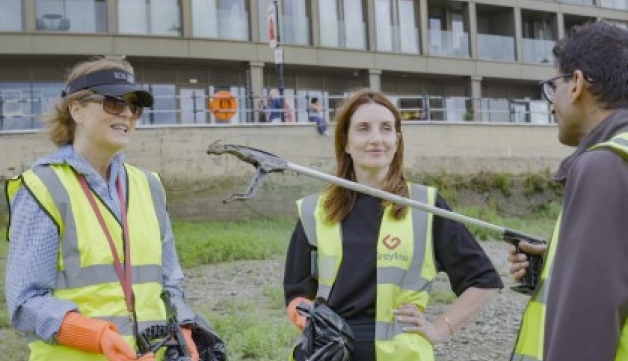
Be it the guys at Whalley Range Cricket & Lawn Tennis Club, who are planting trees on the outskirts of playing fields to better soak up excess water, or the river clean-ups hosted by Fulham Reach Boat Club – an organisation doing great work through Row to Rhythm, a project for individuals with visual impairments.

Actions like these collectively truly add up to major impact.

Going back to international competitions, the challenges facing the Winter Paralympics, and winter sport more widely, should not drive despair. They should galvanise us instead, because sport has always been about rising to the moment and responding to the now.

And right now, the moment demands that we confront climate change not just as an environmental issue, but as a justice matter – one that threatens to undo decades of progress in making sport accessible, inclusive and transformative.

If we want a future where Paralympians can still inspire the world from real snow and real ice, and where disabled people everywhere can access the benefits of movement, we must act together and we must do so right now.
 

Garon Park

Two people hold aloft onions in a community allotment. Learn more about Garon Park, a thriving community hub in Southend-on-Sea that tackles health inequalities while boosting biodiversity. Sustainability

The Green Runners

The Green Runners logo Learn more about The Green Runners, a community of environmentally conscious runners who have developed a clear approach to reducing carbon emissions within the running community. Sustainability

Active Devon

Active Devon logo, featuring an abstract icon of a person moving. Find out about Active Devon's simple approach to carbon footprinting, which has led the Active Partnership to become advocates for environmental stewardship and low-carbon lifestyles. Sustainability

Communities on the edge

Coastal communities are some of the most beautiful places in England and many of the country’s wealthiest spots are on the coast.

But it is also true in England that a disproportionate number of the places suffering the most deprivation, worst physical and mental health outcomes and lowest healthy life expectancy are on the coast too.

All this may read contradictory, but coastal communities haven’t ended up in this position by accident.

Many were once thriving seaside economies, built on tourism and seasonal work, but as those patterns changed, they left behind communities with deep roots but with fewer opportunities than those in urban and rural communities.

This deteriorating state of coastal living standards is driven by deprivation and the complex and challenging issues around housing, transport and employment, which together lead to disproportionate lower levels of physical activity.

As Sport England highlight with their sustainability strategy, Every Move, adding to these challenges is that those facing the greatest inequalities are often the least active and the most affected by climate change.

Plus, coastal communities are facing significant climate effects through coastal erosion, flooding and the fact that industries on the coast are the ones producing the majority of the UK’s carbon emissions.

So how can we turn the tide on physical inactivity on the coast?

Can you define ‘coast’?

It is amazing that whilst we are an island, there is no agreed government definition for the term ‘coast’, unlike clear definitions for urban and rural areas.

This leads to the coast often being lost in talks around deprivation as the debate revolves around those in urban and rural areas.

The deteriorating state of coastal living standards is driven by deprivation and the complex and challenging issues around housing, transport and employment, which together lead to disproportionate lower levels of physical activity.

The Coastal Navigators Network, which tackles health inequalities on the coast, has identified that whilst coastal communities are often small individual places, when considered together, they are as large and significant as a national population group (19%) and the near equivalent of the entire North West and North East regions combined.

So with this in mind, what inequalities do people living in coastal areas face in terms of access to sport and physical activity?

The most obvious one is that for coastal communities half their catchment area is in the sea!

Away games are often long car journeys to the far away urban areas for at least half of their season and let's not forget about those extra carbon emissions!

However, it is the opposite for their urban colleagues, who consider their fixture in the season on the coast as going to the seaside for the day!

Sport and physical activity has come late to the policy work across England about improving opportunities for coastal communities, but is now beginning to build the partnerships with organisations like the Coastal Communities Alliance, OneCoast, the Coastal Navigators Network, and the Coastal Cultural Network.

In fact, in February 2026, the APPG Coastal Communities have scheduled a briefing session on the Culture, Creative & Sport Sector in coastal communities. (Please note that while no final information is available yet, the Coastal Community Alliance is currently organising this with the APPG, so check their sites and socials for more information.)

Where is the good work happening?

Five years on from its launch, Active Withernsea is making a real difference in creating physical activity opportunities and lifestyles and transforming its local community.

Local data by Sport England-funded Active Withernsea highlights that while in 2018, 44% of people in Withernsea were inactive (that is doing under 30 minutes of exercise a week), this number has gone down to 15 % of residents being inactive in 2024.

Further, the percentage of residents who are now active increased from 44% to 62% over this time period.

Happiness and satisfaction with life have also improved and anxiety amongst Withernsea residents has decreased, while activity for those with a disability has seen the biggest increase.

A Physical Activity and Community Engagement (PACE) network has been established to lead physical activity projects going forward and ensure that the work continues with more than 100 residents, groups and partners now directing the next steps to continue to deliver physical activity for the people of Withernsea.

What Active Withernsea has shown is that when national policy makers do focus on coastal communities, significant change can help increase physical activity levels. 

What is also clear is that Sport England place-based funding has begun to turn the tide for coastal communities and that, together, we will keep working to improve the lives of those living by the sea.

Find out more

Active Humber

We need your help with ARI8

We've recently published our Sport England Areas of Research Interest (ARIs) that set out the key topic areas where we feel more evidence is needed to help us achieve our mission of tackling inequalities so everyone can enjoy the benefits of sport and physical activity.

One of these ARIs refers to the impacts of the changing climate on people, places and sport and physical activity, that's the one called ARI8.

We know that with greater knowledge of the implications of climate change for the sector we will be able to better develop evidence-based policy, practice and strategies for the future.

Help build our evidence base to inform policy and practice

For this reason we are now also looking to collate existing insight and evidence on how climate change impacts participation in sport and physical activity at grassroots level. Specifically, the impact on:

  • participants
  • those providing sport and physical activity opportunities (i.e. the workforce)
  • the places and spaces where people are active.

We are particularly keen on understanding how people may change their behaviours and how providers are adapting their activity offers in response to the changing climate.

We know that with greater knowledge of the implications of climate change for the sector we will be able to better develop evidence-based policy, practice and strategies for the future.

So if you have insight and evidence that can help fill this gap, please get in touch and share it with us by Friday 3 October.

We aim to produce a summary of the existing insight and evidence, as well as identifying where there are research gaps. This knowledge will help to guide policy, practice and future research.

What we’d love to hear about

To help us in understanding ARI8, we invite you to share any evidence and insight you have that addresses the following:

  • How climate change (e.g. more frequent and intense weather events) affects attitudes, behaviours and participation in sport and physical activity, for both the workforce and its participants.
  • How climate change is impacting facilities, infrastructure and the availability of opportunities to be active.
  • How the impacts of climate change and the ability to adapt vary across different audiences (including under-represented groups and those with higher health risks), places, sports and activities.
  • How the impacts of climate change on sport and physical activity are likely to evolve over the next five to 10+ years, and how the sector can adapt to these challenges, drawing on lessons from other countries and sectors.
  • Additional considerations and emerging areas of research that could enhance our understanding of the relationship between climate change, sport and physical activity.

What types of information are we looking for?

We’re looking for any research produced by our partners, researchers/academics, wider organisations or community groups.

Submitted insight should meet all of the following criteria:

  • It must address any of the five research questions outlined above.
  • Be predominantly focussed on grassroots (rather than elite) level sport and physical activity.
  • Be written in English or expressed visually.

How to share your evidence and insight 

Please share any evidence via the ARI contact form

As a reminder, the specific ARI relating to this is ARI8: Understanding the impacts of a changing climate on people, places and sport and physical activity.

By sharing evidence with us, you’ll become part of our ARI network as you'll have helped to build the evidence base and you’ll also be able to select, through the form, whether you’d like to hear about opportunities to connect with others on this area of interest.

Active environments – more than ‘a nice to have’

“If physical activity were a drug, we would refer to it as a miracle cure.”

This was the joint statement of the Chief Medical Officers of the UK in 2019 when referring to the evidence that physical activity can prevent and help treat many illnesses, including cardiovascular disease, type 2 diabetes, depression, cancers and dementia.

However, we know from Sport England’s most recent Active Lives survey that a significant proportion of adults, children and young people in England are not active enough to reap these benefits and, worse, some are entirely inactive (undertaking fewer than 30 minutes of activity a week).

And this is because, for many people, the barriers to getting active are still too high.

Moving around should be fun, easy and safe

According to Sport England research, if you are less affluent or live in a less affluent place and/or if you have a disability or long-term health condition, you are much less likely to be active.

The report also highlights that women and girls' activity levels are still lower than men’s.

But whilst inclusive and accessible sports opportunities and facilities are vital, at the Town and Country Planning Association we believe that where people live and their opportunities for easy and daily activity are crucial in getting people to move more.

Because whether people have the genuine opportunity to walk, wheel or cycle in their lives to commute, run errands and for leisure is important, especially for the least active.

The built and natural environments in which people live, work and play need to be ‘active environments’; that is, surroundings that facilitate activity for physical, social and emotional purposes.

Moving about a village, neighbourhood or city must be easy and fun, plus people must feel safe and comfortable in them, as active environments make 'the active choice' to be 'the easy choice' for everyone.

But creating active environments is not only a question of design but also of power, policy and participation.

Whilst inclusive and accessible sports opportunities and facilities are vital, we believe that where people live and their opportunities for easy and daily activity are crucial in getting people to move more.

Decisions about where new homes are built, how streets are laid out and whether parks, pavements and public transport are prioritised, all play a role in shaping how active people can be in their daily lives.

Yet too often, physical activity is seen as a leisure issue, rather than a systemic one rooted in spatial planning, social justice and public health.

To effectively embed physical activity into our environments and daily routines must be a shared ambition across sectors and professions – from planning and transport, to health and housing, as well as for leisure and open-space management.

Want to go out to play?

For example, it is no use creating miles of cycle paths if we are creating homes and town centres without space for secure cycle storage, not providing opportunities for our children to learn to ride bikes through programmes like Bikeability, or addressing poor attitudes towards cycling and reducing traffic speeds so that people (especially parents and caregivers) feel it is safe to ride even short distances.

Equally, we cannot expect our children to play out, like many of us used to do back in the day, if their neighbourhood streets and doorstep places are full of parked cars (too often on pavements) and moving traffic.

Research shows that basic, free outdoor play has fallen to its lowest level ever, with now only one in four children playing outside regularly compared to their grandparents’ generation, where almost three-quarters played outside on a regular basis.

Too often when we think about play in neighbourhoods, we default to thinking about structured activity and providing spaces that are designated and equipped.

Whilst play parks are important assets for all neighbourhoods, the doorstep and immediate street is also critical, and importantly, a space for children to play on a daily basis.

Accessible, safe street space is the most inclusive step we could take to make places more active and friendly for children, meaning we need to grapple with car and parking-centric design.

All of this is why a systems approach is needed – one that listens to communities, addresses inequalities and prioritises long-term health outcomes in decisions about land usage and investment.

Active environments cannot be a ‘nice to have’; they must be seen as essential infrastructure for a healthier, more equitable future.

The Town and Country Planning Association works to make homes, places and communities in which everyone can thrive.

We work to influence and shape the planning system at the national and local level, but we recognise the multi-dimensional nature of place-making and how places and spaces are shaped by communities and can be ‘activated’ for activity.

For the last six years, in a partnership with Sport England, we have worked to create healthier, more active communities, building knowledge and capacity with partners and local authorities and advocating for health and activity to be embedded in planning policy.

More than an award

Like in life, any career has ups and downs, ebbs and flows. This week was one of the highs.

It has been one of the privileges of my career to work with Olympic legend and Sport England Chair Chris Boardman CBE, culminating last week in winning the Environmental Sustainability Award at the Sport Industry Awards.

Anyone who works in sport will know this one is a big deal, no disrespect to the multitude of corporate back-slapping ceremonies.

Sport England executive director for digital, marketing and communications poses with CBE and Chair for Sport England, Chris Boardman while holding the Environmental Sustainability award at the Sport Industry Awards

It has been an incredible team effort, across the organisation and in my own team.

From co-authoring our Every Move strategy with our environmental sustainability lead Denise Ludlam, to the high-impact and agenda-setting campaign activations to mobilise our sector.

For those who haven't read it, Every Move is the most ambitious strategy ever to encourage the sports sector to play its part in driving the net zero transition, backed up by £100 million of investment.

We must all support Keir Starmer and Ed Miliband's clean energy and carbon-cutting mission.

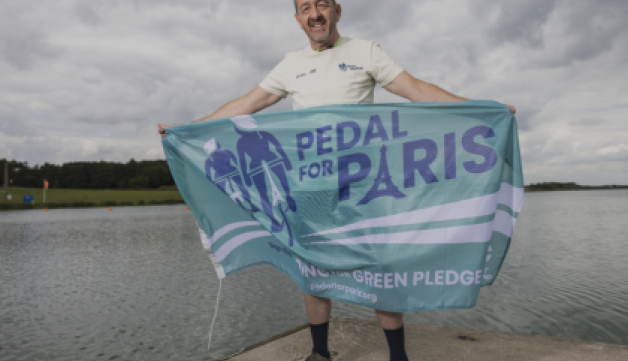
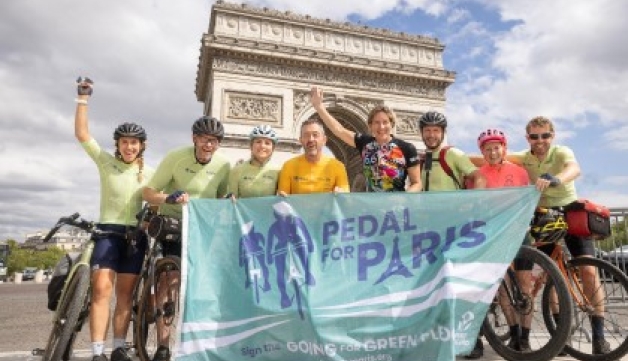
This included the Pedal for Paris activation – which generated huge media interest and sports industry engagement – and which was showcased at COP29 in the British pavilion.

Even now, there are still those who still question: how is this core to Sport England’s work?

It is not in any way a stupid question, but I hope this week is a vindication that our answer stacks up.

Firstly, climate change is one of the biggest barriers to sports participation. More than 60% of people who have experienced extreme weather in the last year have had participation in activity cancelled, many of them kids.

Every Move is the most ambitious strategy ever to encourage the sports sector to play its part in driving the net zero transition, backed up £100 million of investment.

Tackling climate change and maintaining the health benefits of sport are two sides of the same coin, not mutually exclusive.

And don’t let anyone tell you it’s pointless doing anything in England as ultimately it’s all about China and India.

Our investment does make a direct difference, whether it’s simple adaptation – like planting trees around sport pitches to reduce the impact of flooding and getting people back playing more quickly – or reducing energy costs of councils, which can be reinvested in sports, by upgrading swimming pools through new technologies.

Secondly, our royal charter explicitly sets out Sport England’s duty to promote the ethical practice of sport and physical activity.

It’s a core part of our remit and environmental sustainability and net zero are at the heart of most ethical organisational frameworks, including the UN’s sustainable development goals.

Thirdly and finally, sport has a unique global megaphone to reach, mobilise and galvanise people.

With an estimated three billion fans worldwide – roughly a third of the global population – the sports sector is a direct and practical mouthpiece to communicate climate and energy issues to large and diverse audiences.

And Sport England has the power to be the nation’s biggest convener – from the more than 130 system partners, including the national governing bodies of sport to our precious grassroots community system, where 17.2m or more than 35% of the population are members. Why wouldn’t we use this voice and network to tackle the biggest challenge facing the planet?

We still have a lot of work to do, but it was a proud moment to beat such strong competition in the likes of Formula E, the International Olympic Committee, Sail GP, the MCC and Wembley Stadium.

Thanks to the Sport Industry Awards for their recognition that we are on the right track and thanks to so many of you who have made a difference at Sport England.

Thanks to Tim Hollingsworth, our CEO, for championing this work and speaking eloquently at the ceremony. Invariably we are doing this on the side of the desk on top of our wider work, because we believe it matters.

Winning awards shouldn’t be why we do this work, but it can give us confidence, pride and energy to help us go faster.

Now for accelerating our work on the journey.

The future is coming; let’s act now

In 2021 we published our first horizon scanning project, looking at the key trends likely to shape sport and physical activity over the following decade.

At the time we were emerging from the pandemic, artificial intelligence (AI) was still a niche topic and economic uncertainty was turning from a concern into a crisis.

Fast forward to today and the world looks very different: AI isn’t just evolving, it’s everywhere; the cost-of-living impact is reshaping the way people spend on leisure and fitness; and climate change is actively changing when and where people can be active.

So three years on, we knew it was time we took another look around us.

We asked ourselves a series of key questions: what’s progressed faster than expected? What’s shifted in unexpected ways? And what do these changes mean for the future of sport and physical activity?

We worked with Trajectory, a specialist foresight agency, to revisit and refresh our original Horizon Scan, which allowed us to get a clearer picture of how the world is changing and what that could mean for our sector.

What is horizon scanning? (and why does it matter to us?)

Horizon scanning isn’t about predicting the future. No one has a crystal ball that works like that!

Instead, it’s about spotting signals of change, challenging assumptions and thinking ahead so that when shifts happen, we’re ready.

This way of working helps us ask the bigger questions, like:

  • what if rising living costs permanently change how people engage with sport and fitness?
  • what happens if extreme weather patterns disrupt traditional sports seasons?
  • how will AI and automation reshape the way we track, coach and even participate in physical activity?

Our aim is not to spread alarm, but to explore these issues now so we can build more resilient strategies for the future.

Most of the key trends from our original scan still hold strong, but some have evolved more than others.

The full Horizon Scan explores 16 trends under six major themes and there are two that stand out:

The cost of living is reshaping sport and leisure

In 2021, we highlighted growing income inequality as a long-term concern, but what we’re seeing now is more than a trend it’s a lived reality.

Horizon scanning isn’t about predicting the future. No one has a crystal ball that works like that! Instead, it’s about spotting signals of change, challenging assumptions and thinking ahead so that when shifts happen, we’re ready.

Rising costs, slow wage growth and job insecurity mean people have less disposable income for things like gym memberships, fitness classes and sports participation.

Families are making tough choices about where to spend and for many, paid-for physical activity is slipping down the priority list.

At the same time, local authority budgets remain stretched, making it harder to provide affordable sport and leisure facilities.

Some communities are feeling the impact more than others, deepening inequalities in access to physical activity.

This shift means organisations may need to rethink pricing models to keep participation affordable, local authorities will have to balance economic constraints with long-term health benefits and the rise of low-cost and community-driven physical activity – like parkrun or outdoor group workouts – could accelerate.

As a result, we can see that affordability and accessibility are becoming even bigger factors in how people stay active.

Climate change is already changing the way we move

Three years ago, we identified sustainability and climate change as an important but emerging trend. Now, it’s clear: it’s not just emerging. It’s here.

Heatwaves are affecting summer participation in outdoor sports, floodings are making pitches and playing fields unusable, and government sustainability targets are reshaping sports infrastructure and travel habits.

But there’s a tension emerging: economic pressures could slow down sustainability efforts in sport and leisure because when people are struggling to make ends meet, will eco-friendly sports initiatives remain a priority, or will financial concerns push them down the agenda?

Facility managers will need to balance sustainability investments with budget realities, outdoor sports may need to adapt to new weather patterns – from changing competition calendars to investing in weather-resistant facilities  and we can see that the push for active travel, such as walking and cycling, is growing but whether it will be supported at a local level is something that remains uncertain.

Climate change isn’t a future issue it’s a right now issue, and sport and physical activity will have to adapt.

Ok, so what’s next?

This is just a snapshot.

As we mentioned, the full Horizon Scan explores 16 key trends across six broad themes, from demographic changes to the role of digital technology in sport.

For those working in the sector, this isn’t just about awareness it’s about action, so we encourage you to read the report and to ask yourself questions like:

  • what challenges or opportunities do these trends present for my organisation?
  • how can we ensure sport and physical activity remain inclusive, accessible and resilient in the face of change?
  • what can we do now to prepare for the next wave of shifts?

English music legend David Bowie once said: “Tomorrow belongs to those who can hear it coming.”

Let's listen.

Sustainability maturity tool

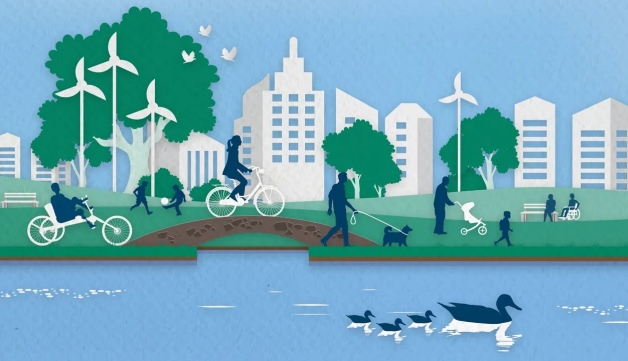
Front cover of Every Move, featuring illustrations of people being active in park, alongside wind farms and ducks on a river. Framework to help our system partners understand their current environmental sustainability maturity and inform next steps for the development and implementation of their action plan. Sustainability

Chair: Let's be on the right side of history

All of us here have a vital role in making our sector sustainable.

We know it’s not an easy task, and sadly 2025 has seen our headwinds strengthen. This year brings a raft of new reports and research highlighting the growing threat, and of course sport is being impacted along with everyone else.

Last month was the world’s warmest January on record.  

UK insurers confirmed that flooding is getting worse, with record claims in 2024 totalling over half a billion. And part of that is ever-more waterlogged pitches and stadia.

A report by the Scientists for Global Responsibility and the New Weather Institute – entitled Dirty Tackle – found that, without action, a quarter of the UK’s football pitches could be partially or totally flooded by 2050.

At the same time as football is bearing the sporting brunt, the report also claims that the global football industry is responsible for between 64 and 66 million tonnes of CO2 each year. 

That’s as much as the entire nation of Austria, a country with a population of over nine million.

However, I don’t want to linger on constantly reiterating and quantifying the problem – we know what it is. I want to talk to you proactively and positively about sustainable facilities, and about our sector, including football, moving to be part of the solution.

Every Move and the circular economy

Sport England’s mission is to get more people active and we can’t do that if pitches are unusable, you can’t reach them because of flooding or events are too hot to hold. So this is personal for us and to our stakeholders for very pragmatic reasons. 

People who are active are much more likely to be happy and healthy. And healthy people is what the health care system desperately needs. Active people already relieve some of the NHS burden, preventing 1.3 million cases of depression, 600,000 of diabetes and 57,000 of the UK’s leading cause of death – dementia – saving billions a year.  

We can also be the link here. Which is what led Sport England to publish our first-ever environmental sustainability strategy, Every Move, last year. 

In developing the strategy, we talked to the sector – many of you – and participants. 

We found three in five adults had at some point been prevented from taking part in a sport or being active by extreme weather.  

Four in 10 sports organisations had experienced weather-related disruptions to their activities.  

The FA alone estimated that 120,000 football matches are being lost annually due to adverse weather conditions. That’s the equivalent of seven million minutes of community football lost in one year alone.

A big focus of our strategy is promoting the move to a circular economy, and I am delighted to be joined today by so many pioneers in that area. 

Launching a strategy is not difficult… but delivering one is. 

What we’re doing

So, let me tell you a little about the work we are actually doing to make it a reality.

Firstly, Sport England owns three big national sports centres: Bisham Abbey, Lilleshall and Plas Y Brenin in Wales. 

We are working alongside their operators to insulate buildings and invest in new heating technologies, to make them energy efficient and ultimately, sustainable.

We are being deliberate about the equipment and food we buy, favouring sustainable suppliers, and we are actively increasing our understanding of biodiversity to maximise our ‘ecosystem service’, such as creating places to hold excess rainfall. 

Secondly, we’re using Sport England’s spending power to help create circular economies. 

Alongside this, we will promote and enable the recycling and redistribution of sports clothing and equipment to benefit grassroots clubs and participants most in need. 

Thirdly, we, in partnership with the government, are investing £80 million to improve the energy efficiency of public leisure facilities with pools.

In fact, as I speak, there are already 570 interventions – from solar power installation to the fitting of air handling units –  under way.  

Each and every one is improving the energy efficiency of a facility and, crucially right now, reducing running costs.

Without action, a quarter of the UK’s football pitches could be partially or totally flooded by 2050. But I don’t want to linger on constantly reiterating and quantifying the problem – we know what it is. I want to talk proactively and positively about sustainable facilities, and about our sector, including football, moving to be part of the solution.

Our partners are stepping up too. I applaud the FA for their Greener Game programme in partnership with E.ON, supporting grassroots clubs to decarbonise, reduce their energy needs, and cut their bills and environmental impact. 

And one of the ways the Premier League supports clubs to develop their infrastructure sustainably is through the LED Floodlight Fund, which provides grants to clubs throughout the National League System and Women’s Football Pyramid to install energy-efficient floodlights, helping to reduce their energy costs and carbon footprint.

But lastly, and this is a tough one, we have committed to tackling the issue of plastics.

Plastic does not biodegrade and can take up to 1,000 years to break down. And even when it does, it simply breaks down into smaller and smaller pieces.

Micro-plastics leaching into soil and water causing what we are now realising is huge damage to the environment and our health.  

And while the majority of plastic does not come from the sport and physical activity sector, we must acknowledge the part we play in this problem.

So how do we want history to judge us?  

Kicking single-use plastics out of sport

It was certainly heartening to see both athletes and organisations starting to act – such as a cohort of over 100 athletes calling on Coca Cola and Pepsi to increase their use of reusable packaging ahead of the 2024 Olympics.

That leadership makes a difference, and it needs to: in 2021 the Environment Agency found major sporting events each generate up to 750,000 plastic bottles.

Putting a spotlight on action – or inaction – is needed for change. Not just castigating but applauding those who are acting strongly. 

Front cover of Every Move, featuring illustrations of people being active in park, alongside wind farms and ducks on a river.

And we are seeing change all around us. For example, The Oval cricket ground has become completely plastic-free. The venue has banned the use of plastic straws, introduced compostable coffee cups, and has phased out the use of plastic bags in the club shop. 

The Wimbledon Championships has reduced the number of single-use plastic water bottles by more than half a million over the last six years. 

They’ve proved it’s doable and, in doing so, created a positive pressure on others to follow suit. 

We are not trying to sell something unpopular here either.60% of British adults saying they will try and cut down the amount of plastic they use over the next 12 months; they just need to be given a way to join in.

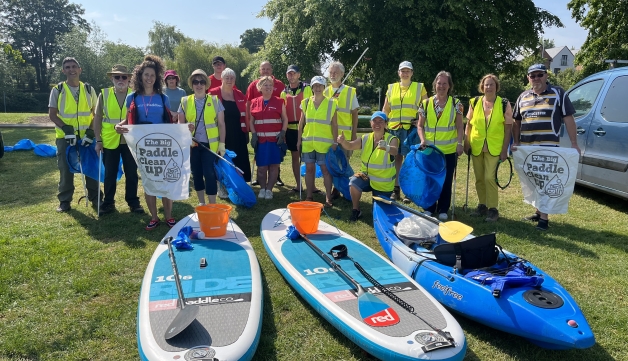
And people are prepared to do their bit. More than 2,500 paddlers joined in last year’s Big Paddle Clean Up, removing more than 1,800 sacks full of plastic from British waterways. It’s inspiring stuff.

3G pitches, microplastics and rubber infill 

If we are going to be authentic in talking about plastics, we do have to discuss artificial grass pitches, a topic that is one of the most difficult in Sport England’s in-tray. 

Do you ever wonder why we stopped calling them ‘plastic pitches?’ Is it because it makes us feel more comfortable about them? 

From a sporting point of view, artificial grass pitches, or AGPs, have become an integral part of community sport because as far as activity is concerned, they’re brilliant.

They provide a reliable, year-round playing surface, regardless of the weather. A properly maintained artificial grass pitch can sustain up to 80 hours of use a week, or 1,400 playing opportunities. 

Compared to a natural grass pitch, which can sustain just six hours a week and around 100 playing opportunities… that kind of difference is hard to ignore.

Almost half of these pitches are based at schools or in education settings and have become integral to the PE curriculum. 

This reliability of service and availability, often in areas of greater need, is incredibly attractive, especially as we’re now much more aware of what the burden of inactivity costs us.

People who are already active save our country £540 million on reduced GP visits and £780 million every year on reduced mental health service use. 

Artificial pitches play a significant part in realising those benefits. In fact, our current stock of 3G pitches across England is estimated to be worth almost £500 million per year in social value.

But we can’t shy away from the fact that these wonderful health benefits are producing negative costs downstream.

The breakdown of plastic grass, and the roughly 50 tonnes of rubber infill each pitch currently requires, are producing microplastics.

If we are to continue using them, we must:

  • In the short term, get very good at containment.
  • And at the same time, vastly improve end-of-life recycling.

Up to 500 pitches reach the end of their life every year – two to three times the current UK capacity for recycling at the single venue capable of doing it.

If we don’t change, history will judge us and rightly so. I and Sport England are determined to be on the right side it. 

Today, we are committing to work together with Government and our partners to tackle these two issues, and kick more plastic out of sport. 

It feels uncomfortable, focusing on football so much. We know there are other sports and activities that use artificial pitches but, as our nation’s most popular sport, change here would have a ripple effect across our sector.  

There are steps we can take now.

In September 2023, the European Commission adopted the EU REACH Regulation (Registration, Evaluation, Authorisation and Restriction of Chemicals) on the sale of intentionally added microplastics onto the European market. This includes rubber infill for artificial pitches.

Pragmatically, the Commission confirmed an eight-year transition period before the new restriction becomes effective. From October 2031, you'll no longer be able to purchase rubber infill within the EU. 

The ruling does not prevent the continued use of this material for 3G pitches, nor does it prevent the construction of new pitches with rubber infill before 2031.

But it will make the maintenance of these pitches after this time difficult, incentivising us all to commit to moving away from its use and giving time to make that change. 

A female footballer looks to dribble away from her opponent during a game on an outdoor artificial pitch.

However, that clear leadership and a fixed date mean that change is now guaranteed. 

Following the UK’s exit from the EU, we are not bound into this: the regulatory framework for these matters now sits at a UK level.

The Department for Environment, Food & Rural Affairs (Defra) recently commissioned an evidence project to review emissions of intentionally added microplastics in the UK, including rubber infill. 

That project is expected to report in the spring. It will shine a light on this issue and inform any potential future regulatory action in Great Britain.

We are already working with the Football Foundation to explore a potential transition away from rubber infill, looking at what infill has the least impact on the environment and finding more recycling capacity for 3G pitches when they come to the end of their useful life. 

Indeed, the Foundation are currently testing six alternative infill systems and the effectiveness of containment measures to reduce the level of infill leaving the pitches.

I’d like to acknowledge this important groundwork, but I also want us to do more as a sector. 

Today, I would like to set out how Sport England is committed to working in partnership with three key audiences.

Firstly, working with the government, we must do three important things.

  1. End uncertainty and decide whether or not we will follow the EU’s directive. If so, then let’s set a deadline for the transition away from rubber infill as our neighbours have.
     
  2. Secondly, alongside this, increase the capacity for end-of-life recycling. Over the next five years, it is estimated that the total amount of carpet in England reaching the end of life, and that could be recycled, is equivalent to an area larger than Truro in Cornwall.  
     
  3. Finally, we will work with Defra to prioritise these issues and work with the sporting sector in its work to promote a circular economy.

To the sporting system, including partners like the Football Foundation, I say let’s prove the cynics and the sceptics wrong, who say the current pilots are a way of – if you excuse the pun – kicking the issue into the long grass. 

Let’s redouble efforts and increase investment to find the sustainable solutions needed.

Nobody is pretending it’s easy but, from what I have seen this year, I am now fully convinced it is doable. 

And finally, to participants and users of 3G pitches, as well as those in charge of sites: do everything you can to keep plastics on the pitch. 

Banging your boots before you leave the pitch seems incredibly simplistic advice to give against a far bigger issue, but it’s certainly a start. Let’s make it cultural. 

For our part, Sport England will continue to step up. We are actively looking at how we can deliver a coordinated information and guidance campaign for artificial pitches. 

We will work with partners including SAPCA, the Football Foundation and the Grounds Management Association to influence consumer behaviour.

We must coordinate guidance to minimise the loss of rubber infill into the environment, whilst we also find alternative solutions, at pace.

Users, operators pitch designers, consultants, manufacturers and installers: we must all work together to succeed.

Sport England will use its convening power to help, but it will require a multi-agency approach, so I call on SAPCA, its members, NGBs and other partners in the room to play your part too. 

Conclusion

From wireless gears in cycling, super shoes and faster Mondo tracks in athletics, to the widespread use of wearable tech across all levels of sport, the sector has long been at the very forefront of innovation.

Let’s harness that thirst for improvement and commitment to innovation in the service of something even bigger. 

Let’s take action we can be proud of.

Are we there yet?

When we are travelling it is easy to get impatient and start wondering how long we’ll still have to go before we reach our destination.

And this edginess often appears even more so when we are on a long journey – like our quest for sustainability in the sport and physical activity sector.

But it is not just sustainable sports centres (to name one example) that we’re after.

We also want more sustainable homes, more sustainable businesses and more sustainable communities – so we are in for a long ride!

Looking back as we celebrate

And just to finish with the journey metaphor, it’s true that sometimes a trip can take you through breathtaking and inspiring places, while other times it drags on with no apparent progress being made.

The efforts around the sustainability journey are no different.

Cynics amongst us may say we are not making any progress with our sustainability efforts but I’d like to disagree.

At Sport England sustainability is a key part of our work, so I thought that as we celebrate the fourth anniversary of our long-term strategy, Uniting the Movement, it’d also be a great moment to reflect on the steps we’ve made so far and how we can keep moving ahead while ensuring we make the most of our natural resources without damaging or limiting our environment.

In 2022, we committed to ‘stepping up on environmental sustainability’.

Back then we highlighted three key points:

  • We recognised there was considerable work to do not only to reduce our negative impact on the environment but also to prepare our sector for a changing climate.
  • We committed to being clear on what actions we needed to take and to improving Sport England’s own environmental performance.
  • We said we’d collaborate with other organisations to make these things happen across the sector.

So, can we say we are nearly there? I’m afraid not quite, but we we’ve taken our first steps and we’re not alone, so we can’t stop now.

Plus we’ve done what we said and more. Much more!
 

Cynics amongst us may say we are not making any progress with our sustainability efforts but I’d like to disagree.

We listened to our partners and our internal teams and produced an environmental sustainability strategy and action plan, which we called Every Move.

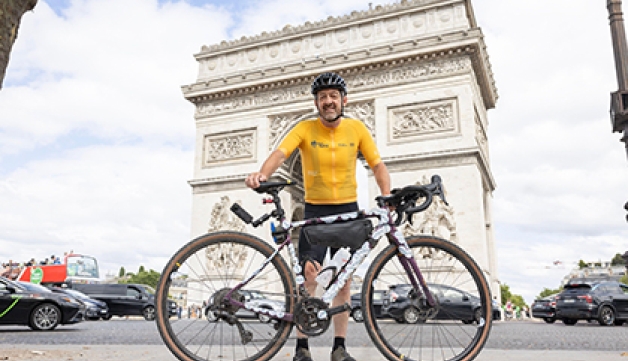
We have a small team to deliver the action plan and embed sustainability across all our work but we can see people across the sector getting constantly involved with our efforts, like when almost 200 organisations signed our Going for Green Pledge last summer after our our Chair Chris Boardman cycled for eight days from Manchester to Paris to inspire action for climate change.

But perhaps the biggest change I’ve noticed is the cultural attitude to sustainability across the sport sector.

Our partners have embraced sustainability and a sign of this is that the language around sustainable development is dropped into everyday conversations.

As a collective we’re really beginning to understand the inter-connection between climate change, inequalities, participation in sport and our role in tackling that.

Environmental social governance is now included in the Code for Sports Governance, setting out levels of transparency and integrity for our funded partners.

Working together for everybody's future

In addition, many of our partners have developed, or are developing, their own sustainability action plans and these recognise the importance of tackling climate justice - addressing the unequal impacts of climate change on disadvantaged communities.

There are shining examples of projects across the country which reduce emissions, increase biodiversity, improve the sustainability of the things they buy and improve the accessibility and quality of our natural environment.

Projects include recycling, second-hand buying or looking at repairing broken items before buying brand new ones, using LED flood-lighting and solar panels on facilities, improving access to natural environments, purchasing goods without plastic packaging and medals made from bamboo, re-distributing good quality kit, cleaning up our natural surroundings or sowing wildflower gardens around cricket pitches.

These initiatives invariably make sport more accessible and appealing to a wider audience by creating inviting natural environments, reducing utility costs or providing the kit to enable sport to happen, plus these are ventures most of us can get involved with.

In England there’s over 75,000 sports and physical activity centres and, according to our latest Active Lives Adult Survey, our sector is powered by 10 million volunteers.

These numbers show that we have the perfect vehicle to spread the word around sustainable action being able to improve the quality of everyone’s life.

The journey ahead looks exciting but it looks tough too as, let’s face it, we still have a long way to go!

The focus must now be on delivery and ensuring we talk about it and share good work practices.

We need to make sure that we tackle sustainability at place-level, underpinning our actions with sustainable approaches.

Sustainability is inextricably connected to deprivation and will become even more so as our climate continues to change.

We must prepare for the future ensuring the places where we are active do not overheat or flood, have clean air and clean water, and are welcoming and accessible for all.

We also need to ensure energy security for our communities, building confidence in the ability to budget and plan.

So no, we’re not there yet, but will we ever get there? I believe the answer is yes.

Happy fourth anniversary, Uniting the Movement. Let's keep working to ensure we have even more to celebrate for your fifth!
 

You've viewed of items.