Skip to content

Taxonomy term

Content type

Making winter sports accessible and inclusive

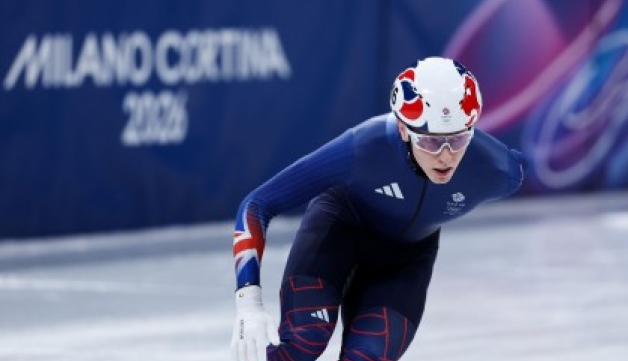
As the Milano Cortina 2026 Winter Olympic and Paralympic Games start we would like to extend our very best wishes to the athletes and the support team behind Team GB (and in the coming weeks ParalympicsGB) as the spotlight of Olympic and Paralympic sport shines upon them.

It is worth remembering that during the 2018-22 cycle the winter sports and athletes were particularly impacted by the resultant post-Brexit travel restrictions and also (how soon we forget!) by the Covid pandemic.

UK Sport and the British Olympic Association have an ambitious target this year and I think, and hope, that at this iteration of the ‘winters’ we will see our athletes and sports realise their aspirations as they showcase the rich and diverse sporting offer we have in England and across the UK.

Proudly supporting our talent

At Sport England we are extremely proud of the role that we play in supporting partners and thereby enabling aspiring athletes in winter sports to explore and fulfil their potential, but what does that support look like and why does it matter?

Starting with the second question first, let’s address the elephant in the room – why winter sports?

There is a rather lazy misconception that we don’t have winter sports facilities and that those sports are exclusively the pursuit of people from affluent backgrounds – the truth, like many things in life, is much more nuanced that that.

Starting with the sliding sports (bobsleigh, skeleton or luge to name a few) there is an established track record of athletes coming from the British Army - shout out at this point to our colleagues at British Army Sport which continues to be a key partner of and contributor to the UK High Performance System - or from track and field athletics.

These athletes often transition in to sliding sports (or should it be pushing sports!) through established UK Sport-led talent ID programmes such as Find Your Greatness, and those sports have brilliant pathways to take them all the way to the podium.
 

At Sport England we are extremely proud of the role that we play in supporting partners and thereby enabling aspiring athletes in winter sports to explore and fulfil their potential.

The skating sports are typically populated with athletes who started their careers at ice rinks and ice centres scattered across the major ‘second cities’ of England.

Funding centres across the country

The National Ice Centre in Nottingham has long since been the base for aspiring short track speed skaters and a great partnership between Sport England, Nottingham City Council and recently British Ice Skating, who received Sport England talent funding into their pathways.

Other English rinks feature prominently in the athletes’ biographies and it was great to see Sheffield hosting the recent Figure Skating European Championships as part of the build up to the Games.

English Snowsport athletes often start their careers at outdoor ‘dry’ (not so much in the rain!) ski slopes, which continue to be popular and affordable community sport facilities, enabling athletes such as the Summerhayes sisters or, for Milan-Cortina, veteran James ‘Woodsy’ Woods (who will compete at his fourth Olympic Winter Games) to progress from Sheffield Ski Village to the X-Games podium.  

Arguably Great Britain's most successful ever Alpine skier, Dave Ryding will contest his fifth Olympic Winter Games, having purportedly earned his stripes at a dry ski-facility up at Pendle Ski Club, a member-owned club located in the Ribble Valley, Lancashire.

Sport England investment supports the talent pathways in a range of winter sports to ensure that performance pathways in these sports are accessible and inclusive, well-led and managed, and that they offer the support needed to allow our aspiring young people to progress to the very highest level.

Through our funded partners, most prominently SportsAid, we also fund programmes such as Backing The Best and the TASS programme that collectively provide direct financial and athlete support services, such as strength and conditioning, physiotherapy and sports medicine services to enable our players to be fit, healthy and optimally prepared for graduation into high performance programmes and success at major events and games.

As an example, of the Team GB class of 2026 in Milan-Cortina, at least 10 athletes (including Dave ‘The Rocket’ Ryding) have received Sport England support through TASS - five of which are current TASS-supported athletes enabling them to be in the very best of health as they embark on one of the biggest events of their careers.

Finally, as we look ahead to the winter Paralympics, we could not be prouder of the English athletes who will represent PGB as the spotlight shines on them from 6 March, I am particularly looking forward to seeing trailblazing English wheelchair curlers: Yorkshire’s Jo Butterfield, Newcastle’s Jason Kean, Wigan’s Karen Aspey and Northumbria’s Stewart Pimblett.

Collectively, they will make history as the first English curlers ever to take to the ice at the ‘winters’.

Their inspirational journey (look them up, their stories are remarkable) was enabled through an innovative partnership with British Curling, which saw Sport England invest in performance pathways in the sport for the very first time.

Best of luck to all our athletes. No need to ask you to make us proud. We already are.
 

Find out more

Talent

Opening the river

At Fulham Reach Boat Club (FRBC), we believe rivers should belong to everyone and this year we took an exciting step forward with the launch of our new accessible rowing programme on the Thames.

What began as a small pilot called Row the Rhythm for blind and visually impaired participants and supported by Love Rowing funding, has quickly grown into a powerful learning journey for our coaches, volunteers, partners and those travelling from across London to try rowing, many of them for the first time.

This is the story of how we’re opening up rowing, what we’ve learned along the way and where we hope to go next – a journey that starts before reaching the water, because one of the most meaningful parts of the programme wasn’t actually on the river, it was the journey from Hammersmith Station.

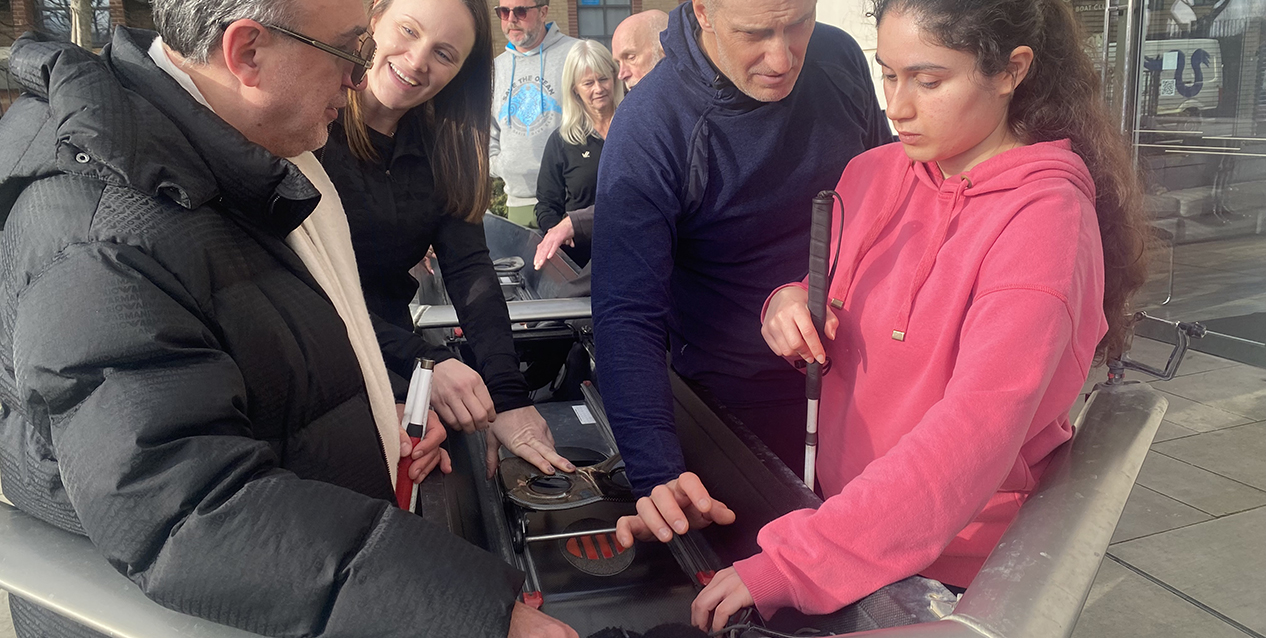
A blind girl and a blind man touch a boat during a rowing training session in the street.

We chose to meet participants at the station to guide them safely to our Boathouse, but it became far more than a practical step.

That short journey created space for honest conversation about the barriers disabled people face, about how few accessible sporting opportunities exist and about the courage it takes to try something new when the world isn’t designed with you in mind.

These walks helped build trust before a single stroke was taken and set the tone for the kind of programme we wanted to deliver – human, patient and centred on the individual.

Slowing down to go far

Rowing coaches are used to getting people onto the water quickly, but accessible rowing requires a different pace, which brought in our biggest challenge: slowing everyone down.

For safety and confidence, the first session had to take place entirely on land.

What began as a small pilot for blind and visually impaired participants has quickly grown into a powerful learning journey for our coaches, volunteers, partners and the people who travelled from across London to try rowing, many of them for the first time.

Participants learned about the layout of the site, boat handling, water safety and how rowing feels and works before ever stepping into a boat.

At first, some were disappointed not to get onto the Thames straight away, but by session two or three  the benefits were clear as starting slowly meant that once on the water, participants felt calm, informed and ready.

Their progress was extraordinary!

A growing community of rowers with complex needs

What surprised us the most was how working in this space naturally attracted more people with complex and varied needs, far beyond our original plans.

People travelled long distances across London, and in some cases far beyond, simply because accessible rowing doesn’t exist elsewhere. That willingness to travel underlined the scale of unmet demand.

Our local partners at Action on Disability and sight loss charity, VICTA helped us understand the huge range of disabilities and access needs in our community.

That is why we chose to start by focusing on just one area of need – visual impairment and blindness – building specialist expertise before widening out.

And the appetite is growing.

What we learned: coach the person

Across the programme, one principle kept resurfacing: empathy and understanding go a long way. See beyond the disability. Coach for the individual, not for the sport.

We learned to ask different questions, to describe space differently, to adjust our language, to use one voice in busy environments and to understand what independence looks like for each person.

We also learned that accessible rowing isn’t just about equipment – it’s about culture, about slowing down, about listening and about co-creating the experience.

Building a sustainable accessible rowing pathway

We’re proud of what Row the Rhythm achieved, but this is only the beginning.

Our long-term goal is to build a permanent, specialist accessible pathway at FRBC and to fully integrate disabled rowers into our wider club community.

To make this sustainable we're:

  • recruiting a disability advisory group to inform our programmes
  • improving the accessibility of our site, including new crew room layouts and an accessible ramp to the foreshore
  • co-creating future sessions with participants, ensuring their voices shape the programme
  • working with VICTA, Love Rowing, Action on Disability and other local partners to reach people who've never had the chance to try rowing
  • raising funds to support free-to-access programmes as well as offering self-funded opportunities.

Our vision is a sport where disabled people can learn, progress and row independently and where adaptive rowing blends seamlessly into our mainstream offer.

Looking ahead

This first year has shown us two powerful truths: there is a huge untapped demand for accessible rowing and that when you remove barriers, people thrive.

Participants told us the experience was “life-changing”, “freeing” and something they've never thought that they'd be able to do.

And for us, the learning has been just as transformative and rewarding.

We now know that accessible rowing is not a niche add-on – it is essential to creating a sport that truly belongs to everyone.

The river has room for all of us and at Fulham Reach Boat Club, we’re committed to making sure everyone who wants to row can find their place on the water.

Changing the game

At Sport England, we want to make physical activity and sport a normal part of life for everyone, as movement is not only great for everybody's mental and physical health, but because it also brings communities together, develops skills and confidence, and even contributes to boosting our economy.

However, we know that when it comes to being active, it’s not a level playing field across the country and some groups in our communities face additional barriers due to their background, gender, postcode, culture and/or disability (amongst others).

That’s why our focus on Equity, Diversity and Inclusion (ED&I) runs through everything we do and aims to tackle some of these systemic challenges, because for us it’s not about ticking boxes, but about making the world better for everyone.

As part of our long-term organisational strategy, Uniting the Movement, and our ED&I ambition to tackle inequalities, we have a specific focus on disability.

Our latest Active Lives data shows that one in five people in England have a long-standing limiting disability or illness, and that disabled people are almost twice as likely to be physically inactive.

We also know that an estimated 15% of the UK population are neurodivergent and that the more barriers people face, the less likely they are to be active.

On the other hand, we believe in the social model of disability – which means that people are disabled by society, not by their impairment – so we want to change the systemic and practical barriers they have to face as these, and not the person, are the real problem. 

Historically, societal systems and sporting traditions have (often invisibly) excluded neurodivergent people and that's why at Sport England we're so excited to be working with Neurodiverse Sport and Autism Action. Together we want to begin to address these issues and drive more inclusive practice.

We are all included

Everyone is neurodiverse because everyone’s brains are different, but 'neurodivergence' refers to the cases when cognitive profiles differ further from the statistical norm, as happens with autism, Attention Deficit Hyperactivity Disorder (ADHD), dyslexia or dyspraxia.

As with everything, neurodivergence is different for each individual and some experience greater challenges than others.

We believe in the social model of disability – which means that people are disabled by society, not by their impairment – so we want to change the systemic and practical barriers they have to face as these, and not the person, are the real problem.

A person’s experience depends on how their unique strengths and challenges interact with their environment – so designing better environments is key to better outcomes.

Not everyone sees neurodivergence as a disability and this often links to whether they align with the social or medical model of disability, which sees the disability as the problem.

But as a disabled person, this makes sense to me – I don’t see myself as disabled if I use the medical model, yet I do under the social model.

Being disabled doesn’t stop anyone from having significant strengths, experiences or ambitions. 

In fact, it definitely doesn’t stop those wanting to be involved in sport and activity, from grassroots through to elite (Paralympics, anyone?).

So what we want to see, and what our partnership with Neurodiverse Sport and Autism Action will help us progress with, is a more inclusive and skilled sector for neurodivergent people.

The investment will focus on increasing awareness, upskilling the workforce, creating health and wellbeing partnerships, and building best practice and innovation for change.

Additionally, it will develop a 'Blueprint to Inclusion' to develop, pilot and replicate neuroinclusive practices across the sport and physical activity sector that will equip it with tools and resources to change understanding and practice.

The document will be co-produced with people with lived experience and it'll focused on people's strengths, promoting practical and reasonable adjustments as standard, and considering both performance and wellbeing.

More information about how this work is developing will be shared in the new year.

Bringing barriers down 

In spite of our best efforts and Uniting the Movement, it’s clear that there are deep-rooted inequalities in sport and physical activity that mean many people feel excluded.

We want to reduce this for neurodivergent people by working together to understand the barriers some are facing, finding solutions and supporting the sector to take this forward.

But we can’t do this alone – not even with the extensive networks of our partners. So if you want to be involved and are curious and ambitious in how we can collectively make the world better, please get in touch. We’d love to hear from you.

Find out more

Moving to Inclusion

Inclusive practice makes business sense

Imagine you’re missing out on talent, innovation and fresh perspectives, but not because they don’t exist, but because your systems weren’t built with them in mind.

That’s the quiet cost of inaccessibility in the workplace.

But with any challenge comes an opportunity and, in this case, it’s to realise that inclusive organisations perform better because they’re more adaptable, more trusted and more representative of the communities they serve.  

And with nearly one in four people in the UK identifying as disabled, this isn’t a niche issue – it’s a mainstream one.

So, just as the EmployAbility Guide highlights: “Inclusion isn’t just the right thing to do;  it’s a smart business decision.”

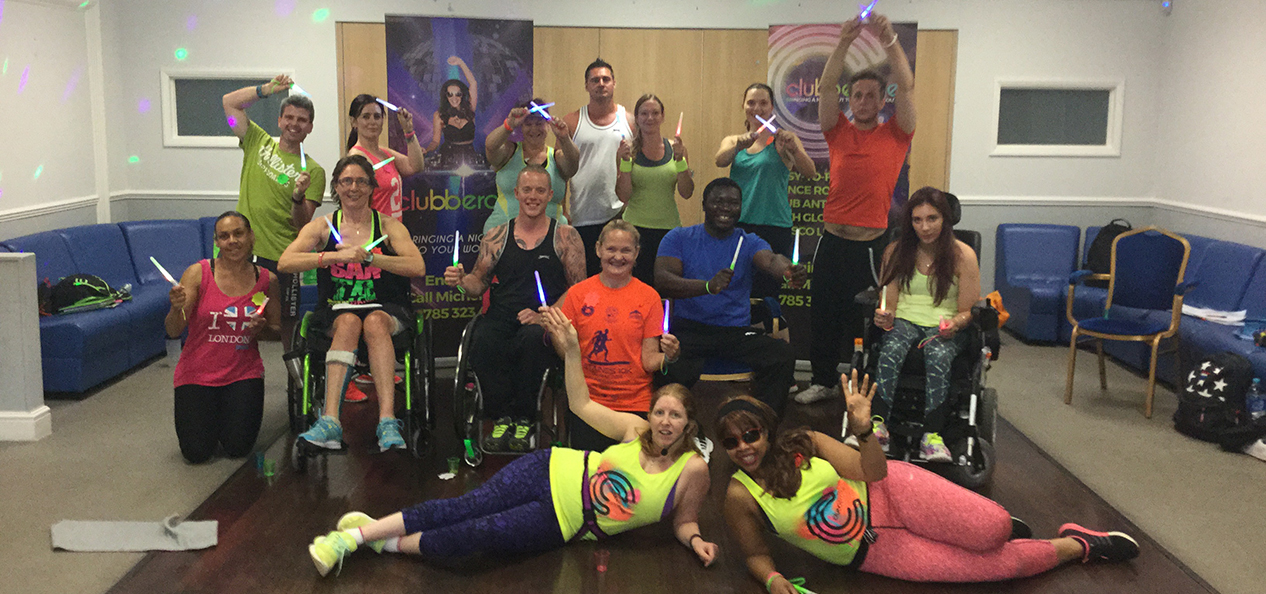
Group photo of disabled fitness professionals on a dance fitness certification training day at an indoors gym.

As someone who works at the intersection of disability and fitness, I’ve seen what’s possible when inclusion is built in, not bolted on, so I’m inviting employers and training providers to be part of shaping a sector that welcomes everyone and reflects our society.

What we’re building and why

The EmployAbility Leisure Strategic Partners Group was formed in 2022, and its members include Activity Alliance, CIMSPA, Community Leisure UK, EMDUK, Sport England, ukactive and UK Coaching.

The researchers are Professor Brett Smith and Dr Juliette Stebbings, and the lived-experience professionals are Lee Welch, Sam James and myself.

Together, we’ve developed three practical guides that support:

  • Employers recruiting and retaining disabled staff.
  • Training providers supporting disabled learners.
  • Disabled people building careers in the sector.
     

As someone who works at the intersection of disability and fitness, I’ve seen what’s possible when inclusion is built in, not bolted on, so I’m inviting employers and training providers to be part of shaping a sector that welcomes everyone and reflects our society.

Our mission now goes further and we promote sector-wide change by highlighting career pathways for disabled people, supporting inclusive education and recruitment and creating accessible cultures – physically and digitally.

From curiosity to commitment: my journey

As a partially blind person, I was excited – and curious – about training as a fitness instructor through the InstructAbility programme.

In 2014, I became the YMCA Fit’s first visually-impaired Exercise to Music trainee.

That milestone launched a career delivering audio-described dance fitness for blind groups, accessible fitness sessions for diverse audiences across the sector, and corporate energisers and team-building services.

I’m now an Exercise referral specialist and a member of the EmployAbility Strategic Partners Group.  

Why digital accessibility matters

I believe that inclusion must go beyond access to physical spaces and it must include the digital world, too, because we’re living in a digital age and accessibility is vital across the entire journey – from recruitment to training, development and as a constant on daily tasks in the workplace.

Accessible formats for blind and visually impaired people include Word documents and websites built to Web Content Accessibility Guidelines (WCAG), enabling screen-reading software to convert text into speech.

While I’ve had great support from training providers, some newer online platforms introduced unintended barriers, such as being incompatible with screen-reading software.

The good news? These issues are easily addressed through accessibility audits and expert scripting, making the platforms usable again.

You don’t need to scrap your systems but you do need to review them, so start where you are, get an audit, plan for access in your budgets and keep moving forward.

Why this work matters

In the UK, 16.1 million people, that is 24% of the population, are disabled yet only 54.2% of working-age disabled adults are employed, compared to 82% of non-disabled people, causing a 27.9 percentage point gap.

In our own sector, the gap is more acute with just 9% of disabled people saying they’ve had the opportunity to coach or deliver sport and physical activity, compared to 24% of non-disabled people.

At the same time, disabled adults are almost twice as likely to be physically inactive as non-disabled adults (39.5% vs. 20.2%).  

Good work is already happening, will you join in?

I’ve experienced inspiring commitment from training providers like YMCA Fit and dance fitness brands like Clubbercise and SOSA Dance Fitnesswho’ve trained and certified instructors with a wide range of disabilities.

Employers using Guide C have already improved our sector through an increased level of confidence among the staff, made recruitment more inclusive and enhanced feedback and onboarding processes.

Let’s connect!

Our free guides are here to support you, your team and your workplace. You don’t need to get it all right immediately, but taking steps forward is what matters.

We also want to say that we’re here for you and since Activity Alliance is currently acting as secretariat for the group, you can contact Dawn Hughes, their strategic partnerships advisor, and/or their workforce lead, Helen Newberry if you’ve got any questions, want to highlight any barriers or give us your feedback.

Let’s have a conversation, swap ideas, compare notes, celebrate your wins, tackle the challenges and keep learning together.
 

The great (and inclusive) outdoors

For more than 10 years, I’ve had the privilege of being part of a partnership between Sport England and the National Trust that’s been quietly but powerfully changing lives.

This is more than just getting people outdoors – it’s about creating real, lasting opportunities for everyone, especially those who need it most, to connect with nature and feel the benefits of being active in green and blue spaces.

Being outdoors and connected to nature has demonstrable health and wellbeing benefits.

Studies have shown impact such as lowering stress levels and reducing cortisol and inflammation, which are increasingly seen as factors in depression, autoimmune diseases and cancer.

Our work at the National Trust is shifting towards a more ‘place-based’ approach, but what exactly do we mean by that?

Rather than parachuting in with one-size-fits-all solutions, we’re considering what’s already happening in local communities, at National Trust properties and on their land, and finding ways to make those spaces more accessible, more welcoming and more connected to the people who live nearby.
 

This is more than just getting people outdoors – it’s about creating real, lasting opportunities for everyone, especially those who need it most, to connect with nature and feel the benefits of being active in green and blue spaces.

Whilst we consider how to be more locally responsive, we continue to work at a national scale on initiatives such as improving navigational and orientation signage to ensure paths are easy to find and follow, and refining path-grading methodologies to better reflect the diversity of users.

This work focuses on describing the path itself rather than the person using it and it goes in line with the Equality, Diversity & Inclusion (EDI) principles and the Equality Act.

What I love about our work is that it’s about making meaningful connections between the land and the community.

It’s not just about trails or facilities – it’s about creating safe, natural, traffic-free environments where people can walk, cycle, run, paddle or simply be.

I’ve seen firsthand how many barriers can stand in the way of people accessing the outdoors.

Things like fear of getting lost, finding themselves in unfamiliar terrain, safety concerns, challenges around travelling to our places or just not knowing where to start.

We’ve worked hard to design experiences that support people who are new to the outdoors and it’s making a real difference.

For that we’ve been able to capitalise on the strength of the National Trust brand.

Our properties are trusted spaces, with essential facilities like cafés and toilets, which makes them perfect for families, groups or individuals who might be taking their first steps into nature.

The multi-use trails that have been developed are a great example. They’re accessible, enjoyable and range from three to 5km, which makes them ideal for walking, wheeling, running or cycling.

And the impact has been incredible!

We’ve seen a 23% rise in visits from people of ethnic backgrounds, which indicates we’re reaching new audiences and helping more people feel like they belong in these spaces.

This is fantastic news since we strive to improve the experience for communities that often find barriers to exploring the great outdoors.

I’ve also been inspired by the way this work helps those who may need deeper support.

Whether it’s supported paddling sessions, inclusive activities for families with SEN, or community-led cycling groups like the Muslim Cycle Sisters at Osterley, there’s a real commitment to inclusion.

And it’s not just about participation but about representation, too.

The Trust is working with partners to tackle underrepresentation in the outdoor workforce, for example through our walking leaders programme, which is such an important step toward long-term change.

Nature restoration and biodiversity play a big part in our work.

Our infrastructure developments are designed to improve visitor experience and get people active whilst protecting some of the most sensitive nature areas.

We are strengthening our knowledge and skills in designing experiences that deliver real, meaningful and lasting nature connection to inspire more people to care for nature and their local environment.

Looking ahead

As I reflect on the past decade, I feel proud of what we’ve achieved and even more hopeful about what’s to come.

Our partnership with Sport England shows that when we focus on people, place and purpose, we can create spaces that are not only beautiful, but truly inclusive and life-enhancing.

And that’s something worth building on.

Find out more

National Trust

Cricket opening doors

There has never been more opportunity for young people with a disability to access and thrive in cricket.

In my short time as Chair of Lord’s Taverners, I’ve been privileged to witness the transformative power of our disability cricket programmes, not just for the young people who take part, but for their families, schools, and communities.

These experiences aren’t just inspirational, they are life-changing.

The need for our work has never been greater. That’s why I’m proud to be leading an organisation committed to making cricket the UK’s most inclusive team sport. And few moments capture that ambition more powerfully than the recent Disability Cricket Day at Lord’s.

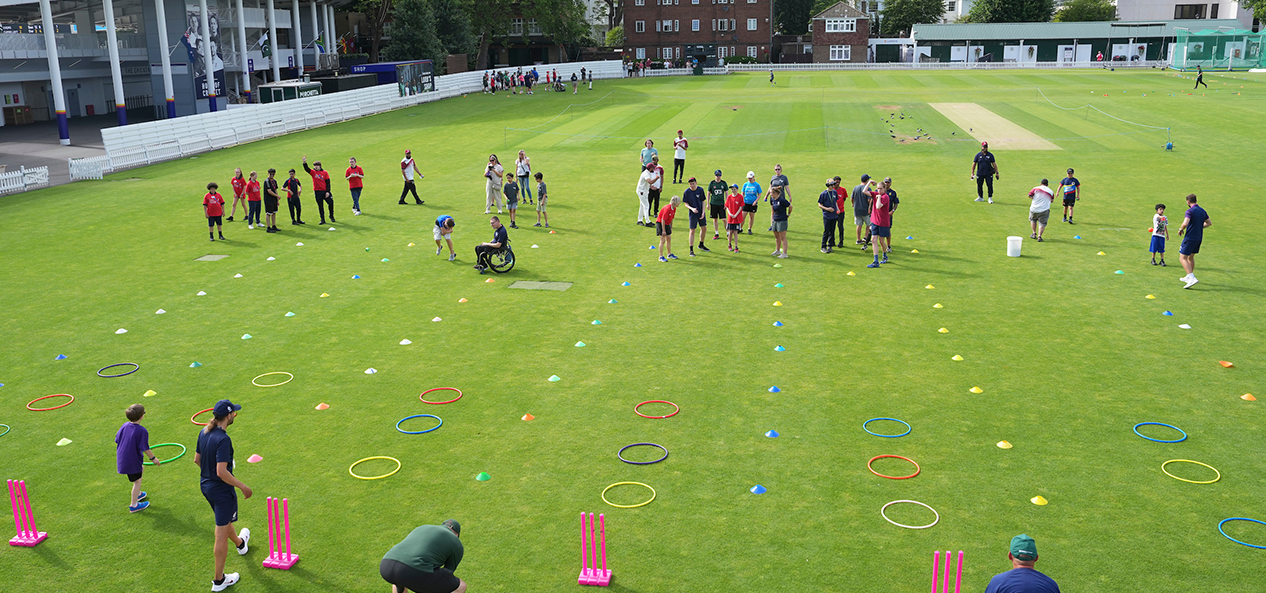
Young people take part in cricket drills during the Disability Cricket Day at Lord's.

This landmark event, delivered in partnership with the England and Wales Cricket Board (ECB) and Marylebone Cricket Club (MCC), and with the support of Sport England, was far more than a celebration of cricket. It was a bold statement of inclusion.

Together, we opened not just the gates of the Home of Cricket, but doors for thousands of young people across the country – offering a glimpse of what is possible when barriers are removed, and potential is given room to grow.

From grassroots to elite, the day showcased the full spectrum of disability cricket. This was the largest celebration of its kind and a testament to what can be achieved when organisations unite with a shared purpose.

Stakeholders from across the sporting landscape, disability advocates, educators and representatives from international cricketing nations gathered to witness and discuss how we can continue to evolve and grow the game.

There were moments of pride and passion throughout, not least in the conference sessions exploring inclusion across junior, recreational and elite levels. We heard directly from young people whose lives have been transformed through cricket. Their voices – often underrepresented – helped underline why inclusive sport isn’t a luxury or a bonus. It’s a necessity.

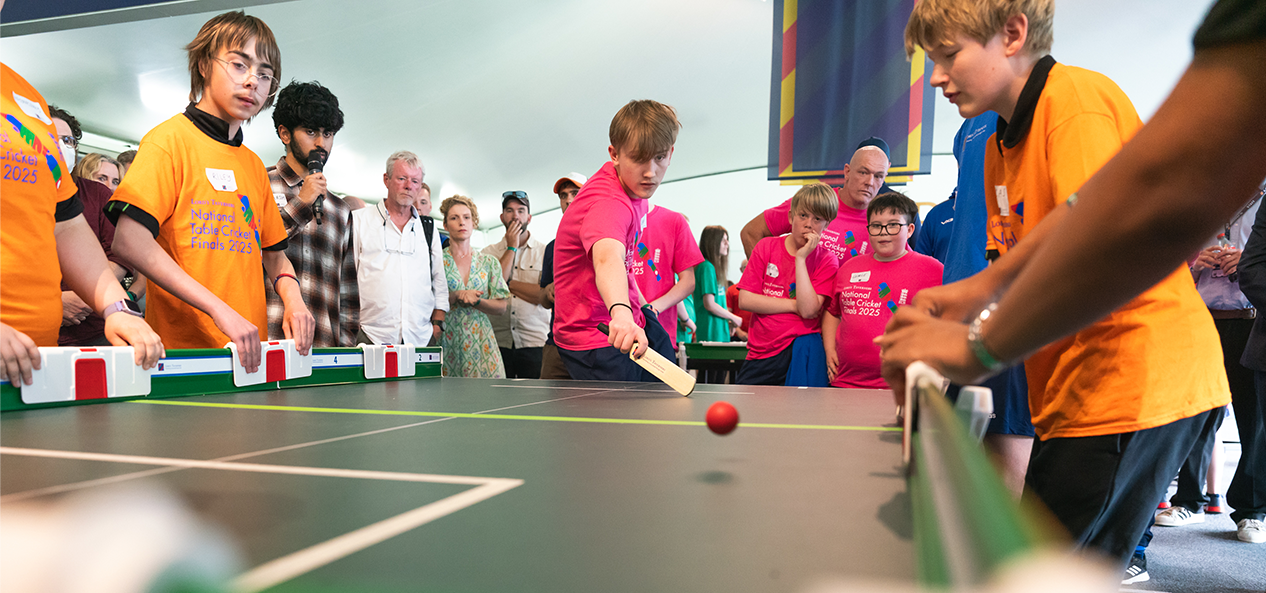
Young people take part in a mini cricket game on a table during the Disability Cricket Day at Lord's.

One of the day’s highlights was our own Lord’s Taverners’ National Table Cricket Finals, where 12 regional champions competed at Lord’s after a nationwide series involving hundreds of special educational needs and disabilities (SEND) schools from across the UK during the previous six months.

Table Cricket – a brilliantly adapted, fully inclusive version of the game – opens up a world of opportunity for young people with a wide range of learning and physical disabilities. It helps build confidence, foster independence and teach vital teamwork and leadership skills – all within the joy and discipline of sport.

To see these young athletes compete on the same day and at the same venue as their elite counterparts was incredibly powerful.
 

Together, we opened not just the gates of the Home of Cricket, but doors for thousands of young people across the country – offering a glimpse of what is possible when barriers are removed, and potential is given room to grow.

The event closed with history being made: the first ever international disability cricket fixture played on the main ground at Lord’s, a mixed-disability T20 between England and India. It was a moment that united grassroots passion with elite aspiration, showing every young person in attendance what’s possible.

This remarkable alignment – national youth competition and elite international showcase, side-by-side – is a beacon for what sport can be when inclusion is placed at its heart. It’s a demonstration of the pathway that exists and is strengthening year-on-year for cricketers with a disability, and a reminder of the importance of representation. Because when young people see others like themselves competing at the highest level, they begin to believe: this is for me, too.

The success of the day was only possible because of the strong partnership between the ECB, MCC, and the Lord’s Taverners – a spirit that reflects Sport England’s Uniting the Movement strategy. Together, we’re not only creating unforgettable moments; we’re laying the foundations for long-term change.

Cricket – like all sport – holds the power to change lives. But that power is only realised when it’s accessible to all. Too many young people with a disability still face barriers: lack of opportunities, inaccessible environments, or simply not seeing themselves reflected on the field. The message they hear can all too often be: this isn’t for you.

At the Lord’s Taverners, we are here to change that.

And thanks to events like Disability Cricket Day – and the partnerships that make them possible – we’re showing that our sport can lead the way in making inclusion not just a principle, but a reality.
 

Find out more

Lord's Taverners

No-one left on the sidelines

People might not expect Hazel, who is blind and living with complex disabilities, to enjoy skiing – but it’s an activity she absolutely loves

Hazel is a lot of fun – she’s got an amazing imagination and the warmest smile. However, because she’s blind and disabled, there have been times in her life when Hazel has been isolated and hasn’t had any opportunities to join in activities.

Amongst the many barriers preventing people like Hazel from being active is the lack of knowledge within the sports workforce to ensure disabled people feel included in activities.

A key figure for disabled people 

The 2023-24 Annual Disability and Activity Survey by Activity Alliance shows that the number of disabled people agreeing that ‘The activity leader met my needs’ has continually decreased over the past four years.

The role of the coach is crucial to the experience that a participant has in sport and physical activity.

We know it’s challenging for any coach to ensure their session is engaging for everyone in their group, so imagine working with a group of participants with complex disabilities, like Hazel.

In addition to adapting to their skill level, a coach must also consider their level of vision and hearing, their mobility and their understanding of the task.

They must ensure that both the environment and their own approach are tailored so that each participant can actively participate in the activity.

This requires changes to how a coach prepares, communicates and interacts.
 

Amongst the many barriers preventing disabled people from being active is the lack of knowledge within the sports workforce to ensure disabled people feel included in activities.

It's also important to reflect on the idea of ‘active participation’.

Any coach can deliver an ‘off-the-shelf’ session but it takes real commitment, care and creativity to develop opportunities which ensure people with complex disabilities can engage meaningfully and appropriately – in a way which supports them to achieve all the outcomes they want to achieve by being active.

Whether it’s their physical, mental or social wellbeing they are trying to improve, it’s never been more important for a coach to ensure they are meeting their participant’s desired outcomes.

Sense’s Potential and Possibility research found that 26% of people with complex disabilities report their health as ‘bad’ or ‘very bad’, compared with 9% of the general population.

In response to this data, we are determined to ensure that no-one is left on the sidelines.

We believe that everyone, no matter how complex their disabilities, should have access to high-quality opportunities that help them achieve the outcomes they desire.

Our 'person-centred' approach

That’s why our recently launched Complex Disabilities in Sport training has been designed to help coaches understand the outcomes people want to achieve from sport and physical activity and design their sessions in a way which supports them to do so.

The training was developed following consultation with Sense’s own coaching networks, as well as the wider sport and physical activity sector, who identified training on ‘How to plan sessions which are person-centred’ and in a face-to-face format, as the most desirable learning scenario.

Following plenty of piloting and tweaking, we’re now in the process of delivering these three-hour, practical and theory-based workshops across the country, targeting sport and physical activity providers who have a real commitment to utilising their newly learnt skills with a complex disabilities audience.

And we’re really pleased with the results so far, with coaches reporting on average a 30% increase in their confidence in coaching people with complex disabilities, post-workshop.

It’s safe to say that Hazel’s positive experience with skiing would not have been possible, had instructor James not taken a person-centred approach to delivery.

By understanding Hazel’s need to take things slowly, allowing her to explore her surroundings and feel supported, James created an environment in which Hazel slowly started to feel more comfortable.

We hope that over the remainder of our Sport England funded ‘Active Lifestyles’ programme and beyond, we can continue to build the confidence of the coaching workforce, allowing more people, like Hazel, experience what her key worker Tracey describes as ‘a real sensory explosion’.
 

Making the outdoors work for everybody

I’ve lost count of the times people assume better inclusion means compromise or something that’s expensive, difficult or time-consuming. It doesn’t.

What it really means is changing how we think and design spaces, activities and experiences so they are built with everybody in mind.

It also means not asking large parts of society to work around barriers that shouldn't be there in the first place, because 24% of the population are part of the disabled community and, what many don’t realise, is that any one of us could join them at any point in our lives.

At the heart of Accessible Outdoors Month is a simple message: being active outdoors should be for everybody, in whatever way works for each person.

That could mean simply stretching in a quiet garden and moving through a local park, or taking on something more high-energy like skateboarding or climbing.

The campaign returns this July for its second year as part of ParalympicsGB’s Every Body Moves, powered by Toyota.

Closing the gap for an accessible outdoors

Too often disabled people are left out of the picture when it comes to getting active, particularly outdoors.

There are different reasons for this: the terrain’s wrong, the facilities don’t meet the community’s needs, signposting isn’t accessible or access just wasn’t a consideration. 

When access isn’t considered, people are excluded. Not because of their ability, but because the environment wasn’t built with them in mind.

According to Activity Alliance's research, only 44% of disabled people say it’s easy to access outdoor spaces, compared with 78% of non-disabled people.

And yet, around three-quarters of disabled people want to be more active and many of them want to do that outdoors: on beaches, in parks or through forests or towpaths, to name just a few.

So the demand is real but it’s not always being met.

Accessible Outdoors Month is our way of showing how, together, we can start to close that gap between demand, provision and uptake.

It’s a social media-led campaign platforming real people and real experiences that launched in 2024 with community-led content showing accessible beach days, inland water sports, inclusive cycling, adaptive mountain biking and all-terrain wheelchair walks.

We didn't use glossy ads on our campaign, but simply honest, joyful stories rooted in lived experience.

When access isn’t considered, people are excluded. Not because of their ability, but because the environment wasn’t built with them in mind.

We saw standout examples right across the UK along with moments of challenge and connection with people saying: “Let’s try to make this work for everybody.”

We saw people refusing to ignore the problem and we saw movement in every sense of the word.

Together, those short clips reached over 240,000 people and generated more than 4,000 meaningful engagements.

The need for collective action

This year we’re attempting to go even further by shining a light on more inclusive ways to get active outdoors.

That part’s a given and this time it’ll include urban parks, coastlines and more examples of the disabled community choosing to move in whatever way works for them across our great outdoors.

We now want even more of you to get involved and embrace the idea of a truly accessible outdoors.

At the heart of the campaign is the social model of disability, which tells us that it’s the environment, not the individual, that disables people, so meaningful progress relies on collective action and everyone (designers, organisers, providers, funders etc) has a role to play.

The outdoors shouldn’t be a privilege.

It should be welcoming with everybody in mind, so we’re encouraging organisations, community groups, clubs and disabled people to join the conversation and we want you to share what’s happening in your area.

Post about your experiences and help grow visibility using the hashtag #AccessibleOutdoors, all in the spirit of celebrating the great examples we know are out there and that crucially encourage change, so more and more of our outdoor spaces are available to everybody.

Throughout July, we’ll be curating and sharing those stories through our social media channels with @EveryBodyMoves and on our website.

We’ve also launched the ‘Every Body Moves Club' on Strava to help more people connect, so please follow along and join the conversation with like-minded people.

Every Body Moves is co-produced with disabled people and exists to transform how sport and physical activity are delivered, represented and accessed across the UK.

Campaigns like #AccessibleOutdoors help shift public perception, influence design decisions and create ripple effects that stretch far beyond a hashtag.

There’s still a way to go, but the more people taking part or spreading the message, the closer we can get and I hope you’ll be part of it.

Follow #AccessibleOutdoors Month or join us on social media by searching @EveryBodyMoves on X (formerly Twitter), Facebook, Instagram, Threads, TikTokYouTube and LinkedIn.

A welcome new approach to school sport

The Prime Minister has announced a bold new vision for school sport, introducing plans for new School Sport Partnerships and an Enrichment Framework.

The announcement also sets a clear commitment for equal access and the protection of two hours of high-quality physical education for every child each week, along with the introduction of new ‘sport profiles’ that outline each school’s sport and enrichment provision.

We welcome this announcement as the latest Active Lives Children and Young People Survey Report highlights persistent and significant challenges in how children and young people engage with sport and physical activity, reinforcing the urgent need for more inclusive, youth-led and enjoyable movement experiences:

  • Fewer than half of children meet the Chief Medical Officer’s Physical Activity Guidelines.
  • Only 49% of children strongly agree that they enjoy being active.
  • Government guidelines recommend that children and young people achieve 30 minutes of physical activity during the school day, and 30 minutes outside of school. However, our research indicates that only 45% of children meet this target during school hours and just 56% meet it outside of school, with participation levels varying significantly across different demographic groups.
  • For some young people, school is their only opportunity to experience the benefits and enjoyment that sport and physical activity can bring in these formative years.

The announcement sets out a clear strategic vision that will benefit generations to come.

We welcome this announcement as the latest Active Lives Children and Young People Survey Report highlights persistent and significant challenges in how children and young people engage with sport and physical activity.

Given the strong link between physical activity and improved whole-school outcomes – from embedding essential life skills to broadening horizons and helping young people build a positive, lifelong relationship with movement – we support plans for this more concerted effort around the school sport agenda.

The announcement builds on the work the government is already doing with partners including the Youth Sport Trust and ourselves to boost participation, having already invested £100m to upgrade sports facilities back in March this year.

We strongly believe that this new approach to school sport should build on the existing strengths, assets, and resources of the current school sport system.

We look forward to working with government to bring this new approach to life, sharing the insights from the recent School Games Organisers Network Review (whose Objective A report will be published towards the end of the month), shaped by the contributions and time of many colleagues across the school sport landscape.

A new step in tackling inequalities

At Sport England, our mission, which we call Uniting the Movement, is clear: to ensure that sport and physical activity are accessible to everyone, particularly those who need it most.

As part of this commitment, we are excited to launch the Place Need Assessments.

These are a collection of key resources designed to help organisations better understand the specific needs of different communities and where (and how) to target efforts in tackling inequalities, so everyone is able to be active.

The new assessments demonstrate how our Inequalities Metric and Place Need Classification can enable us and our partners to make more informed and data-driven decisions.

But what exactly are the Inequalities Metric and Place Need Classification?

The Inequalities Metric is a tool that identifies the key characteristics that have the most impact on people's minutes of activity.

It shows that those with two or more characteristics of inequality (for instance, someone with a disability and who is also over 65 years old) are significantly less active than those without these attributes helping us focus our support where it’s needed most.

On the other hand, the Place Need Classification highlights the areas with the greatest need by combining data on physical activity levels and wider social information, including the Index of Multiple Deprivation and Community Need Index.  

The new assessments demonstrate how our Inequalities Metric and Place Need Classification can enable us and our partners to make more informed, data-driven decisions.

This classification helps us and our partners target investment and action in the areas where it will have the most impact.

These tools have been instrumental in shaping our work and informing investment decisions..

The importance of intersectionality

A key message from the Inequalities Metric is that intersectionality has an impact on activity levels.

If we're to level the field so everyone is able to be active, we need to do more to cater for people with multiple characteristics of inequality.

The numbers are clear:

  • 75% of adults with no inequality characteristic meet activity guidelines, compared to 44% for those with two or more.
  • 51% of children with no inequality characteristics meet activity guidelines, compared to 39% for those with two or more.

These figures prove that if adults with one, two or more characteristics of inequality were active at the same levels as those with zero characteristics of inequality, there would be over four million more active adults and an estimated £15.6 billion more annual social value created by sport and physical activity.

Therefore, the good news is that there is an opportunity to be more focused and tailored to those whose behaviour we’re trying to influence and where (which places).

This doesn't mean we should solely focus on people with two or more characteristics of inequality, or that there aren't other groups who experience inequalities in participation or who experience discrimination. 

What it means is that where we're applying the Inequalities Metric (and Place Need Classification, of which the Inequalities Metric is a component), we're using the data to inform (not restrict) our decisions, and we'd expect the same from our partners and other organisations.

How the Place Need Assessments work

The Place Need Assessments are designed specifically to support other organisations to use the Inequalities Metric and the Place Need Classification to support localised decision-making.

These two tools provide a structured approach to identifying and understanding inequalities in sport and physical activity at local and neighbourhood levels. 

Using national and local data, organisations can:

  • identify priority areas and groups where interventions can have the greatest impact
  • assess both sporting needs (where people are less active and inequalities in participation are high) and social needs (where health, wellbeing and economic outcomes are poorer, meaning that increased activity could have the greatest benefits)
  • tailor interventions and programmes to address local characteristics effectively.

The assessments are an example of how to take a data-driven approach to guide decision-making and ensure that investment, support and interventions are directed towards, and tailored to, the communities where they can create the most meaningful change. 

Thanks to our Place evaluation we know that this type of analysis is an important foundation for locally productive partnerships.

And we also know that partners collaborating on an approach like this can help build shared understanding and purpose, increasing the likelihood that combined actions are aligned and effective.

They are not an exhaustive approach and, within them, we highlight where different types of data (e.g. local, national, qualitative – including lived experience – and quantitative) can play a role.

They are intended to provide a framework where organisations might need support but, of course, there are other datasets and other means of analysis that can achieve similar outcomes.

Next steps and how to get involved

We've developed a range of resources to support organisations to use the Place Need Assessments. These are:

  • What you need to know: a summary highlighting the insights you'll gain from carrying out a Place Need Assessment.
  • A Step-by-Step Guide: a document outlining how to conduct a Place Need Assessment.
  • Real-World Examples: three assessments to serve as examples demonstrating how need differs from place to place and how to draw conclusions from the data.
  • Supporting data files: the data needed to conduct a Place Need Assessment, following the approach outlined in the Step-by-Step Guide.

By using these resources, you'll be able to better target interventions, ensuring that sport and physical activity reach those who need them most.

If you’d like to learn more, please visit our new webpages or get in touch to discuss how the assessments can support your work.

Let’s continue working together to tackle inequalities and to create more opportunities for everyone to be active.

Find out more

Place Need Assessments

Let’s talk about clean sport

I've always loved enjoying the outdoors, being active and healthy, and throughout my life sport has had a profound impact on me.

In my 20s I had a series of strokes that left me unable to walk, but keeping active helped me heal and gave me back my identity, so I believe that sport contributes to lots of people healing when suffering life-changing injuries or illnesses.

I've been in Paralympic sport since 2012 with athletics, triathlon and cycling, and I’ve also been involved in ultra-cycling, in which athletes' endurance is tested by cycling distances of at least 200 km/125 miles.

Mel Nicholls, paralympian and member of the UK anti-doping athlete commission member, pushes her chair on a race outdoors.

There have been many highlights across my career but for me, London 2012 was a huge moment and it always will be – it was my first Games and at home!

I remember being a relatively new athlete and new to international competitions and taking it all in.

My career in athletics, plus running London marathons and then triathlons, has taken me to some incredible events and I’ve seen some amazing places from racing on the streets of Swansea to Tasmania's coast.

Remember your 'why'

I remember so clearly during competing – however I performed, and whether I got the desired result or not – that I would see young people in the crowds cheering me on and that they would light up with magic when I came over to give them high fives.

When I’m speaking with school children I love hearing their stories of what sport they do and seeing the pride on their faces when they say “I want to be an Olympian or Paralympian”. That’s what makes sport special – the legacy it holds.

One thing that I would say to every athlete is remember your ‘why’. Look back at your journey and ask yourself, why do I love sport?

When I was young, it was the pure joy of being out with friends and playing sport that made me fall in love with it. At the time I didn’t even know how much of an impact sport would have on my journey.

As youngsters, you're taught in a playground, or with your siblings, that sport is about being fair and playing fair, not cheating. There's no reason it should be any different as you grow up.

When I’m speaking with school children I love hearing their stories of what sport they do and seeing the pride on their faces when they say "I want to be an Olympian or Paralympian". That’s what makes sport special – the legacy it holds.

For me, it’s about having faith in those values and understanding them clearly.

Everyone is participating at their very best ability, showing their respect of the sport, respect for themselves, for their teammates, for their competitors and always with integrity at the core, because clean sport is about playing fair.

Creating some positive noise 

This week is Clean Sport Week – a time for focused action and awareness, as well as positive noise around anti-doping, and about empowering athletes, support personnel, families and teachers.

We want everyone to know about clean sport, the importance of anti-doping education, awareness around things like medications, supplements and what testing involves.

All of this looks at enabling athletes to come away from Clean Sport Week with a toolkit of the knowledge they need.

Clean Sport should be a normal conversation in clubs, in schools, in the family, around the dinner table... whatever that might be.

So go ahead and use the knowledge you’ve learnt from Clean Sport Week to talk about clean sport and make it routine  just like brushing your teeth twice a day.

Find out more

Clean Sport Week

Movement, wellbeing and social justice

One of the central views of social work is the key value and importance of everyone having access to the same opportunities to live full, active and healthy lives, regardless of anyone’s circumstances and background.

In the spirit of this rights-based approach and as we celebrate Social Work Week, I wanted to highlight the Moving Social Work (MSW), a training programme that harnesses the skills and values of social workers to support the health, wellbeing and human rights of people with disabilities.

MSW focuses on increasing physical activity and the benefits this generates for the mind and body, actively creating resources and co-produced strategies for new and established social workers to adopt as part of their practice.

The initial research findings (our study will continue through 2025 and until the end of next year) indicate that disabled people want to have more conversations about physical activity with health and social care professionals, including social workers.

Our ongoing analysis also indicates that social workers are trusted because they are empathic, a reliable source of information and knowledgeable of individual circumstances.

They also tend to spend more time with the people they support and are best placed to advocate for the upholding of their human rights.

That said, our research showed that conversations in relation to improving physical activity can be lacking, so this is where MSW can and has helped.

What kind of programme are we talking about?

MSW is an education programme designed to encourage social workers to speak about physical activity to disabled people and other groups.

The programme is evidence-based and has been co-produced with multiple partners including Sport England's funding and Durham University, who's leading on the training delivery and research – while always keeping disabled people’s needs at the front and centre of it all.

Moving Social Work is embedded in the Government Disability Strategy (2021) and is a real opportunity to tackle health inequalities.

Listening to the research

Social workers are highly trusted professionals and disabled people welcome conversations with them about physical activity.

Organisational leaders also agree that these key workers can play a vital part in advocating physical activity – but why?

We know that physical activity improves wellbeing and mental health, but on top of that it’s also an excellent way of upholding the Care Act (2014) about the care and support for adults and for those looking after vulnerable people.

Another benefit associated with being physically active is that moving helps tackle health inequalities and social challenges, including loneliness, substance abuse, crime, unemployment and community involvement (to name just a few!) showing the adaptability of the training throughout social work practice.

Initial research findings indicate that disabled people want to have more conversations about physical activity with health and social care professionals, including social workers.

Along with these benefits, our ongoing research showed a need to improve the knowledge, skills and confidence of social workers in physical activity.

The goal of MSW is to do just that and the quantitative and qualitative results show that it works!

Echoing the evaluation from those who’ve attended the training in the past, the MSW proposal is considered “interesting, insightful and valuable” with people coming out of it feeling “enthused and energised” by what they learnt.

Many considered MSW as more than just learning about physical activity or disability, but as a facilitator that opened up conversations to help understand the Care Act and that helped guide conversations about mental health, drug and alcohol use and prevention, adult and child social work, strength-based working or community wellbeing.

And the fact that many consider they’d “100% recommend” MSW to their peers is a great cause for pride for those behind the training.

Is physical activity really part of social workers' role?

As we mentioned at the start of this blog, social work is about improving people’s lives by helping them with social difficulties, upholding human rights and promoting wellbeing, and one way to do this is by empowering people to be more active, so we could say the answer to the above question is yes.

But does that mean a social worker should tell everyone to play sport or go the gym every day? No, really.

Research tells us that small amounts of movement, such as gardening, walking to the shops and making a cup of tea are equally good for people, and this analysis also highlights that physical activity is safe for nearly everyone when done at a level that works for them.

MSW aims to ensure social workers can confidently promote physical activity and recognise the benefits for disabled people and themselves making everyone a winner.

We continue to roll out MSW nationally, in universities, county councils, for the NHS and elsewhere in the health and care sector.

So if you’d like free physical activity training and education to support wellbeing, promote social justice and tackle health inequalities, or want to learn more about us and our goals, please get in touch.

The game improving everybody’s lives

Since 2018, we’ve worked with Sport England towards a healthier, more inclusive society.

Becoming a system partner in 2022 has allowed us to develop a more direct relationship with local communities, which in turn has help us create stronger partnerships and drive large-scale impact.

Through collaboration, Beat the Street evolved from a game into a community tool, improving public health through cross-sector partnerships and local engagement.

Beat the Street allows partners to engage across a community by working closely with people, local organisations and assets, such as parks and canals, to make a shift in behaviours and attitudes in order to deliver positive, lasting change.

At its core, Beat the Street is a free, real-life game designed to encourage people to move more, explore their local areas and connect with their communities.

Its purpose is to connect people to each other and their place and it works as a major event where the participants are the residents – whether these are adults or children.

Participants of the Beat the Street programme pose with the cards on the street.

The game takes part in social institutions – schools, workplaces and community groups – where people compete on leaderboards and have fun in the process.

In order to take part, participants register providing demographic and attitudinal data on how they move and how they feel about their place and their community.

Policy and practice

Our system work has helped us articulate the value movement and social connection have for people and our planet.

We believe that our social nature is core to us as humans and activity, civic or physical, can enable us to connect and thrive.

It also makes us care more about our environment.
 

At its core, Beat the Street is a free, real-life game designed to encourage people to move more, explore their local areas and connect with their communities.

We also believe that health is created in and by communities and that our role is to create the supportive conditions to enable it. 

We use our Sport England system partner funding to champion policy asks to improve health through movement, using insight to make the case and working closely with many partners to build a unified voice.

For 2025, our policy priorities are underpinned by these beliefs and the vision for a better future that must include children’s voices.

In a nutshell, our policy focus includes:

  • creating healthy childhoods
  • activating healthy and engaged communities
  • designing healthy places
  • nurturing thriving, natural environments
  • walking, wheeling and cycling towards an active nation.

Driving systemic change at scale

We use our delivery funding to unlock local funding and support from public health, transport and integrated care board partners for places. 

With at least 10% of the local population taking part, Beat the Street builds a narrative on how good health could be, with everyone working together with a clear purpose, using the programme as a platform to prototype new ways of working in a place.

The evidenced behavioural change continually benefits the participants well beyond the intervention, with positive outcomes lasting at least two years and possibly longer.  

There is so much positive activity already happening in place, but it often is in siloes.

We now see that Beat the Street’s galvanising mechanics bring partners together, supporting policy and professional practices.

The programme also surfaces rich data and marginalised voices tackling structural inequalities by working with local institutions and assets, plus it enables people to act in ways that strengthen them both as individuals and their roles in the community.  

We understand that Beat the Street's real impact is in social connection, increased feelings of belonging and trust across a place.

Ultimately, the programme has shown that even small, sustainable steps toward active living can have lasting impacts on community health and social connectedness.

This sustainability manifests itself in three key ways:

  • Shared purpose – there is value and energy in bringing partners and community together, developing collective purpose.
  • Insight-led direction - using insight to inform next steps.
  • Behavioural change - building trust, sense of belonging and agency for citizens that enable small changes in daily behaviour, now and in the future.

We're really proud of what the programme has achieved so farTo date, Sport England’s Beat the Street has engaged 754,000 participants.

The programme has:

  • achieved 10% of population engagement on average, comprising 48% adults and 52% children.
  • reached a third of participants (27%) belonging to areas of Index of Multiple Deprivation (IMD) 1 and 2 (the two most deprived areas in a classification of five areas in England). Out of the people reached, 69% are women and 19% have disabilities or a long-term health condition.
  • engaged with 1042 schools, 1133 community groups and workplaces.

In terms of behavioural change, the data from 31,461 matched pairs across 31 Sport England games shows an average 9% decrease in adult inactivity and 7% reduction in proportion of less active children.

However, the greater change was seen in adults with a disability or long-term conditions, showing an 18% decrease of inactive adults and, for girls, a 9% decrease in less active.

But the impact goes beyond just physical activity as Beat The Street fosters social interaction, strengthens community ties and improves mental wellbeing.

We will also continue to work across the country, including a return to Burnley for the third time as they use Beat the Street to drive forward their collective Outdoor Town vision.

It’s been an incredible journey and eight years in it feels like we are only getting started!
 

Find out more

Beat the Street

Tools to close our sector’s work gap

When looking at creating inclusive opportunities for disabled people in our sector a lot of focus falls on participation, but fairness for this group of people applies to its workforce too.

For years our Annual Disability and Activity Survey has shown disabled people as underrepresented in our sector’s workforce. 

Understanding what needs to change 

The 2023-24 edition revealed that disabled people are half as likely to see ‘people like me’ working in sport and physical activity compared to their non-disabled peers, and that only 9% of disabled people agreed they have the opportunity to become a coach or take on a role in delivering sport or physical activity compared to 24% of non-disabled people.

Off the back of these concerning figures, we commissioned a research project to explore the barriers and enablers for disabled people to work in our sector.

The final report has now been published on our website and is fascinating reading for anyone working in sport and physical activity.

Initial findings showed that there are limited sources of data and that most of the insights were very high level, identifying barriers such as negative attitudes towards disabled people. 

However, the evidence to help understand these in more detail was limited and while national disability employment statistics delved into specific impairments, these were not broken down to reflect the reality in our sector.

When looking at creating inclusive opportunities for disabled people in our sector a lot of focus falls on participation, but fairness for this group of people applies to its workforce too.

Some research considered other marginalised groups in the sport and physical activity workforce, but did not take an intersectional perspective and treated each identity in isolation.

Coverage of enablers and barriers to disabled people’s participation in the sport workforce was limited, tending to offer a wider commentary reflecting statistics, rather than personal perspectives of disabled people. Only a handful of sources provided some insights, which helped us structure the primary research design and interview questions.

Two of these were Aspire’s EmployAbility Guides and ukactive’s Everyone Can initiative.

Based on initial findings we decided to carry out in-depth interviews to understand the barriers and enablers experienced by disabled people in the professional world, and to develop recommendations that would make a real difference.

Interviewees shared personal stories with examples of both good and bad practices, including a personal trainer who had to hear that the reasonable adjustments put in place to help them do their job were perceived as ‘unfair’ by a colleague.

The need for further change

Accessible application processes, upfront information about roles or inclusive approaches to interviews (for example, choice of video or in-person) made a real difference and gave many the opportunity to consider a role.

To truly understand the reality of employment for disabled people in sport and physical activity, the report should be viewed as a whole and organisations should take a person-centred approach to ensure people can apply and remain as part of our sector’s workforce.

We published three key headline recommendations:

  • Adopt a ‘flexible by default’ approach to job roles. Normalise adaptations and consider flexibility beyond whether the employee could choose their hours to include how adjustments could be made across the wider team. For example could the disabled employee do certain tasks while a non-disabled colleague picks up others?

  • Provide advice and guidance for employing disabled people. There is a clear need for an effective source of advice and guidance for employers to turn good intentions into action and organisations should aim to create a culture that values - and is informed by - diverse voices and experiences.

  • Proactively identify and remove barriers that exist at all stages of the 'work journey'.
    In our research we tried to break down this path into different stages to explore barriers and enablers at each point, but it became clear that many challenges recurred throughout. Employers need to provide clear information about their available role using diverse and suitable communication platforms. They need to learn continually and listen to their disabled staff continually. A good way to achieve this is employing disabled consultants to identify and remove barriers through an inclusive culture.

Organisations who were seen to be committed to inclusion appealed to participants, but the main conclusion to take from the report is clear: there is still a lot of work to be done in creating equal opportunities for all and there’s an urgent need for the sport and physical activity sector to address recruitment and retention strategies.

We hope that in highlighting real-life experiences we can shine a light on both the good, the bad and on the way forward.

There is undoubtedly a desire in the sector to ensure disabled people do not have to overcome barriers to enter the workforce and we firmly believe that this piece of research could be a key tool to unlocking those opportunities.

The continued work for equity in our sector

The EmployAbility Leisure project was launched in 2022 to develop guidance and structure to inspire and support more disabled people to find a job in the sport, physical activity and leisure workforce.

This project was initially led by Aspire, funded by Sport England and supported by a coalition of national organisations (Activity Alliance, CIMSPA, Community Leisure UK, EMD UKukactive, UK Coaching) academics (Professor Brett Smith and Dr Juliette Stebbings) and disabled professionals (Michelle Felix, Lee Welch and Sam James).

The project is now taken forward by the coalition of partners and together we promote and support careers in the sector as an attractive and achievable option for disabled people.

A young man on a wheelchair coaches an older lady during a machine session in a gym.

I had the honour of chairing the strategic partners group that oversaw this project in 2024 and I am proud to share an update on our work.

Free guides and support

The first thing I should tell everyone about us is that the outcomes of our original project are still available and we’d love for you to use them!

Three free guides were created:

  • Guide A is called ‘Training and working in the fitness and leisure sector’ to support disabled people to start a career in the sector
  • Guide B is called ‘Training disabled learners in the fitness and leisure sector’ and it aims to help those delivering training
  • Guide C is called ‘Employing disabled people in the fitness and leisure sector’ and it provides guidance about inclusion and how to become a disability confident employer and recruit and develop more disabled staff.

Lessons learned

In my last meeting as group chair we had the chance to review the evaluation report of the original project and discuss its recommendations.

The report highlighted that there are many examples of extremely good practice of supporting disabled people into the workforce, showcasing the change highlighted in our guides.

This includes practices such as adjustments to staff meetings, changes to company imagery and branding around sport and physical activity in leisure centres or the fact that some organisations in our sector have inclusion policies as a live-working document that is open to staff to feed into on a regular basis.

The evaluation also highlights a greater awareness amongst some disabled people that the sport, physical activity and leisure sector is an area they can get a career in.

Our guides have been used by disabled people to research jobs in the sector, to increase confidence about discussing adjustments with prospective employers or for tips about creating a strong employment application, and how to disclose impairments and health conditions in a manner which shows life skills like resilience, time management or empathy. 
 

The report highlighted that there are many examples of extremely good practice of supporting disabled people into the workforce, showcasing the change highlighted in our guides.

We have also seen changes with training providers and employers who are adopting recruitment strategies – including outreach to disabled communities, schools and colleges, offering job-shadowing opportunities in their organisations, trial commute runs and ‘get-to-know-your-colleagues’ lunches – and inclusion policies and are actively collecting more demographic data about their employees.

However, while this good practice is happening, the report concluded that the sector is not yet doing enough to consistently promote and utilise the EmployAbility Leisure Guides and to support the training and employment of disabled people in a collaborative way.

Plus the results of the Annual Disability and Activity Survey (2023-24) by Activity Alliance says that disabled people are more than half as likely to ‘see people like me’ participating, working, and volunteering in sport and physical activity (17% disabled people vs. 43% non-disabled people).

So there's still work to be done.

Next steps

At present our group has made a commitment to keep working collaboratively to achieve sustainable change in the UK’s physical activity and leisure sector to get more disabled people into their workforce.

In the last 12 months we have developed a new Terms of Reference for the group with a new focus and have discussed the learning from the original project.

We are now putting together an action plan, using the learning from the past two years, to guide us – and the sector – forward.

The new aims the group include:

  • keep promoting careers in the sector as an attractive and achievable option for disabled people
  • building confidence and knowledge within the workforce with regards to working with disabled people as employees
  • developing more inclusive and accessible internal cultures across training, education and employer organisations.

I know that there is a lot of work that still needs to be done and I’m certain that, under the guidance of Activity Alliance (who’ll chair the group in 2025), our group will make great progress in the year ahead.

I invite anyone interested in this work to use the EmployAbility guides and to get in touch to be more involved on a strategic level.

We look forward to hearing from you, so please send us your questions or any interesting case study that you think we should be aware of.

Let's work together so the sport, physical activity and leisure sector improves its efforts to offer suitable work opportunities to everybody. 
 

Why integrate activity into health and care?

Health has never been higher on the nation’s agenda and if this was ever in doubt, the launch of the government’s consultation to build a health service fit for the future confirms this.

Their ambitions are clear and aim to move health care ‘from the hospital to community’ and for us at the Active Partnerships network, this is high on our agenda too. 

Unfortunately we also know that our health and care systems are under huge pressure.

According to the Richmond Group of Charities, more than 14 million adults in England live with two or more long-term health conditions. That’s one in four of us and as an ageing population this number is set to grow.

We believe that wealth will be built through health, as people leading active lives turbo-charge our wellbeing and help to prevent and manage illness, saving the NHS billions and thereby boosting economic growth.

Backing this statement is Sport England’s latest social value of sport and physical activity report, which found that being active relieves some of the NHS burden by preventing 1.3 million cases of depression, 600,000 cases of diabetes and 57,000 of dementia. 

Health has never been higher on the nation’s agenda and if this was ever in doubt, the launch of the Government’s consultation to build a health service fit for the future confirms this.

Further, their research found that leading active lives saves the NHS £540m on reduced GP visits and £780m on reduced mental health services usage.

It’s clear that supporting people to get active is the sustainable way to secure the future of our NHS and that this is key to creating healthy, active and long lives for everyone in England.

Physical activity and sport must therefore be at the heart of a prevention-first health system and, by default, integrating physical activity into our health and care systems will help achieve this. 

Local work for a national ambition

Across England, we are seeing more and more collaboration between physical activity and the health and care sectors, but we need to keep moving this forward and at pace. 

However, for this to work it must happen locally, starting at a community level. But what does this look like in practice? Let me share a couple of examples.

Take the work of wesport. The team there has brought the falls prevention programme – Fall-Proof – to communities across the West of England, including Bath, Bristol, parts of Somerset and South Gloucestershire. 

This strength-and-balance campaign consists of easy-to-follow guides, a series of Move to Improve self-help cards and classes to prevent falls.

By building simple exercises into people's everyday lives and routines, this helps to keep them steady, strong and able to get out and about, improving their quality of life and opportunities. 

The programme was made possible because of the system-wide advocacy and investment across the South West – from integrated care boards and from the voluntary and community sectors.

Elsewhere, Active Essex forged a strategic partnership with Essex County Council’s adult social care and community organisation, Sport For Confidence.

The aim is to create further opportunities for disabled people and for those living with long-term health conditions to be active and to engage in physical activity within their community in order to enable independence and to achieve wider outcomes.

The resulting Prevention and Enablement Model (PEM) was a range of system-led, co-designed and context-specific opportunities.

The programme also included an integrated falls-prevention programme, inclusive activity sessions in leisure centres and support for health and social care professionals to embed physical activity into their everyday practice.

Independent assessments of the programme by the University of Essex, found that the social value calculation was that for every £1 invested there was a £58 return of investment of social value.

And their insights revealed that people who accessed PEM services perceived themselves to have experienced benefits such as enhanced health, wellbeing, confidence, skills, independence and improved routine and structure to their days. 

The success of the programme speaks for itself as it is now being rolled out county-wide through Reconnect.

A goal best achieved together

Ours is a complex challenge where collaboration is key, which is why – thanks to funding from Sport England – our network is working with specialist physical activity consultancy Move Consulting on a 15-month project that will support people living with, or at risk of, long-term health conditions to be more active.

Our Integrating Physical Activity Pathways for Health project will provide consistent, quality-assured models of delivery trusted by health and care colleagues to offer better assistance for those communities in most need.

Together, we aim to develop a framework of support that includes information, guidance and resources and tools that can be applied and used locally to help improve access to community-based activity.

By working closely with the health and care sector – including our partners NHS Horizons, the Richmond Group of Charities and CIMSPA  and in a sustained and systemic way that allows understanding, listening and acting on the needs of our communities, physical activity can be delivered alongside routine care as a key intervention to support our health. 

So our mission is clear: working together to develop physical activity as a core component of our health and care systems and provide opportunities and programmes of support for those who need it most, so people feel empowered to lead more active, healthier and happier lives for longer.

Enabling disabled people to thrive at work

Disabled people face significant challenges in participating, volunteering and working in sport and physical activity due to financial, physical, psychological and structural barriers.

This data has inspired a partnership programme called Recover and Reinvent between Sport for Confidence (SfC) and Activity Alliance (AA) designed to promote roles enabling people with lived experience to work in the sector.

According to the Department for Work and Pensions, in 2023 the employment rate of disabled people was 53%, compared to 82% of non-disabled people – a gap representing a difference of over two million individuals.

And disability charity Scope says that disabled people are almost twice as likely to be unemployed, with jobseekers often facing barriers at every stage of the employment ladder.

Many employers have not seriously considered the inclusivity of their workplaces and, as a result, biases or misconceptions – such as believing it’s too difficult, risky or expensive to hire disabled individuals – remain widespread.

Sharing my experience

These attitudes impact disabled jobseekers’ ability to apply and get into work every day, plus they can also create inaccessible workplaces, so this problem needs to be addressed.

I am proud to contribute to the Recover and Reinvent partnership, which works to foster positive change because for many of us involved, discrimination is not theoretical – it is lived and deeply felt.
 

Disabled people face significant challenges in participating, volunteering and working in sport and physical activity due to financial, physical, psychological and structural barriers.

In my experience a failure to make reasonable adjustments meant my health constantly worsened – I would burn out, end up bed-bound or in hospital, recover and return, only for it to happen all over again.

The pressure to turn up to work every day despite the pain, fatigue, mental strain and sense of failure I felt was intense and overwhelming. 

This negative cycle eventually reduced my capacity to stay in long-term stable employment despite all the years of training and dedication to my profession, which ended in my career and purpose in life being taken away from me.

The lack of flexibility in many professions exacerbates these challenges, which have also been further amplified by the COVID-19 pandemic and cost-of-living crisis.

I was expected to use my planning and preparation time (which is time given to teachers to allow them time away from classroom delivery to do planning, preparation and assessment-based work each week) to attend hospital appointments and had to cancel many others because they didn’t ‘fit’ within the timetable and working hours.

As a result I missed treatments and my mental health spiralled, leading to a five-week hospital stay and recovery that meant I was unable to leave the house by myself for seven years let alone consider employment.

Finding solutions together 

So the solution is clear: workplaces must adapt to ensure equal opportunities for all current or future employees.

Change is needed across the board, making job advertisements, application processes and interview practices accessible to disabled individuals.

We need to support candidates through often rigid recruitment systems to foster experiences where people feel safe and supported.

For example, in my recent interview for the position on the Recovery and Reinvent Programme I felt much safer knowing that my lived experience would be considered a strength rather than a weakness or an obstacle to being able to do the job.

Potential employers may offer reasonable adjustments for application and interviews, but are these being communicated effectively to the 10 million working-age disabled people in the UK?

Simple measures can make a big difference.

For me, it was helpful to be able to bring my personal assistant to the interview without feeling self-conscious about it.

And for my personal assistant it was great having a place to wait and to be welcomed by the interview panel and provided with a drink.

This adjustment allowed me to focus on my interview with reduced anxiety levels.

Employers face challenges in integrating disabled people into the workplace, but these are not excuses.

Barriers like inaccessible environments, inadequate adjustments, biases and a lack of understanding must be addressed.

Talent assessment organisation Chally published an inclusion quote that I really relate to:

 “The workplace is one of the best scenarios where these differences can engage, support, challenge, and inspire curiosity. Championing diversity in an organisation leads to better outcomes and greater success for individuals and teams.”

Through our partnership we are collaborating with many national partners to reduce inequalities for disabled people to challenge organisations, partners, employers and individuals to bring about lasting societal change.

And we need to acknowledge and work against negative attitudes towards disability as these disempower individuals and fuel social exclusion.

Empowered by our lived experiences, occupational therapists and peer support workers working with the sport and physical activity sector are essential to the success of the programme.

Together, we aim to create a network of individuals who will enhance opportunities for disabled people to engage in physical activity, sports, volunteering  and employment.

If you share our passion and values, please get in touch and share your experiences (good or bad) because both will help us grow.

Let’s learn together, grow together and create opportunities that foster belonging among disabled people.
 

Advocating for inclusivity at work

I have a massive passion for sport.

In the past, I’ve had challenges when trying to take part in sport and have also experienced negative attitudes by some people, so I don’t want others to have to go through the same difficulties I've faced.

I became a sports coach with Arsenal football in the community so I could help others and, following this position, I was asked to tutor with an organisation called Advocacy on their Employment Ambassadors programme.

After that I was advised to apply for my current role with Mencap, co-tutoring their Learning Disability in Sport Workshop.

A programme for disabled people in sport

This programme aims to help clubs, coaches and providers of sport understand how to support people with a learning disability to access sporting opportunities in an inclusive environment.

As part of the workshop, which was first delivered 10 years ago, I talk about my experiences - including the barriers and the challenges I face on a regular basis.

This inspires people to think about their own delivery and gets them to reflect on what they need to consider when coaching and to make new pathways for disabled people in our sector.
 

In the past, I’ve had challenges when trying to take part in sport and have also experienced negative attitudes by some people, so I don’t want others to have to go through the same difficulties I've faced.

People sometimes wonder if this kind of workshop is necessary and I think it is, because activity must be inclusive for everyone.

Those with learning disabilities face a lot of barriers to taking part in sport and physical activity, but the workshop helps people and organisations to be aware of these and how to overcome them.

According to Sport England, people with learning disabilities are also less likely to take part in sport and physical activity, but that doesn't mean they don't want to be active - they just don’t have the same opportunities to participate.

But this workshop helps to improve understanding of how to help disabled people get active.

Since the pandemic we have delivered 58 workshops across the country reaching 989 people and we'll keep working to reach many more.

People have passed on great compliments about the course, too, including the following:

‘Thank you so much for explaining everything and for the amazing practical exercises, which clearly and practically made us understand what a person with learning difficulties needs to deal with on a daily basis, and how that can affect them and how those around them (coaches and helpers) that are giving the session need to adaptable.’

So what examples of practical things can be done to help coaches and helpers to design better sessions for people with disabilities?

Take time think about the language you use.

Language that some people use in their day-to-day lives can be hard to understand for others.

So as a coach, if you need to explain how to do a particular exercise, ask yourself: 'can someone with a learning disability understand what I'm saying?'

If they can’t, how do you think that makes them feel?

So use simple language and break information down into smaller chunks and, where needed, give people enough time to understand new information.

Some people don’t know there are pathways to global competitions for people with learning disabilities.

Find out what is out there for people with a learning disability and how they can get involved.

Inclusive recruitment in our sector

So as well as disabled people being active, how easy is it for disabled people to work in our sector? We need to ensure there are inclusive recruitment possibilities.

For me, inclusive recruitment looks like people with learning disabilities having an equal chance for jobs.

When you’re in employment, you’re included in different parts of the company and you’re seen as an equal, which means you don’t get excluded.

I also think that speaking to people and understanding their training or accessibility needs is important because that helps them feel included in their workplace and beyond.

In this sense, learning disability-focused training helps employers to understand things from the perspective of someone with a learning disability.

They can then make changes to the workplace to make it more inclusive, like communicating in different ways because for instance, some people may prefer voice notes rather than emailing.

The most important thing is knowing that each person is different and will have different needs, so if we can understand those differences we can then go about helping them.

The benefits of inclusive work environments

When I think of the benefits I bring to those I work with as a tutor with lived experience as a disabled person, I think of talking about my life experiences and sharing advice to help them be more inclusive in their coaching offers.

But what’s more important is that when people see me in a leadership role, it opens their eyes to a better understanding of how people with a learning disability can and must be employed.

As an employer you don’t want to tell people’s stories for them.

Instead, working to employ disabled people helps you to better understand them and letting them tell their own stories has a massive impact and something that I think is key is for employers to think of different ways to advertise job opportunities to people with learning disabilities.

This could be word-of-mouth, contacting or visiting local organisations to present the job opportunities, or providing easy-read information about the available positions.

The easier the better.

I feel that recruiters could have better ways of allowing people with learning disabilities to fill in applications, possibly with video applications.

They could also allow voice notes or online meetings, depending on the person and their individual needs, and it's important to give people the space to have comfortable conversations and to not make interviews an intimidating situation. 

Those in charge of recruiting could offer people the chance to have support during the interview if needed and, most importantly, they should chat to disabled people like regular people, because we are!

As a leader make sure you take action  rather than just talking  and don’t make empty promises.

Help inspire others to be the leaders they want to be in their life and in their community by helping them feel like they have a fair chance and equal opportunities to get the advertised job.

If you would like to find out more about the workshop, please get in touch.
 

We're Disability Confident – are you?

I am proud to announce that last month Sport England achieved the Disability Confident Leader level, the highest level in the Department for Work and Pensions’ Disability Confident Scheme.

This recognition highlights our ongoing commitment to creating an inclusive workplace for all employees, an effort that firmly links our way of operating with our long-term strategy Uniting the Movement and with tackling inequalities.

We’ve been working consistently on one cultural element and that’s ‘sharing’.  

Being there for those who need it

Openness around sharing a hidden disability or long-term condition can be challenging to measure, plus we understand that not everyone will choose to share for a number of reasons and that’s absolutely fine.

It’s more about knowing that if you choose to ‘share’ – whether that’s now or in the future, when you decide – that’s okay.  

For us it’s been about raising confidence and building trust through various initiatives that we hope are enhancing employee satisfaction, engagement and inclusion.

Openness around sharing a hidden disability or long-term condition can be challenging to measure, plus we understand that not everyone will choose to share for a number of reasons.

By becoming a Disability Confident Leader, we are not only aiming to lead by example within our industry.

We also want to support other organisations in their journey to build inclusive practices.  

We are delighted that our inclusive hiring practices and workplace activities have earned us the recognition as a Disability Confident Leader.

This was very much a collaborative project across a number of functions, and I was especially pleased to have representation from our staff disability Network, STRIDE, and our recognised staff trade union, PCS.

Our work involved a level of challenge, with insights gained as part of the process.  

All in all, the journey to becoming a Disability Confident Leader has involved:

  • evidencing our approach to attract, recruit and retain disabled people
  • building an inclusive workplace culture, including disability awareness equality training and policy development
  • guiding staff to information and advice on mental health conditions
  • collaborating with external partners to ensure that our workplace practices align with inclusion
  • through our procurement, encouraging our suppliers to be Disability Confident
  • a commitment to publicly reporting the percentage of staff who consider themselves a disabled person or are living with a long-term health condition
  • providing networks for staff, valuing their feedback and providing occupational health services if required
  • providing human resources staff with specific Disability Confident training.

Our work continues

Sport England has now joined a growing list of organisations recognised as Disability Confident Leaders and we’re truly happy and proud of all the work we’ve done to get to where we are.

We look forward to our ongoing commitments and to continuing our work to ensure that everyone can thrive in a truly inclusive environment.

We’ll be working through recommendations and guidance from our validator – the Business Disability Forum – and ensuring improvements continue to be made through regular assessments.  

This accreditation signals our core values – we are ambitious, we are collaborative, we are inclusive and we are innovative – and demonstrates a forward-looking commitment to maintaining the scheme and evolving practices.

We will be voluntarily reporting about our Disability Confident work in the coming 12 months, as part of our commitment to being a Disability Confident Leader, because we are happy to grow and we want all our employees to be able to contribute, participate and benefit from that growth.

"The inclusion revolution is on"

“It’s like the Olympics but even better” said my 10-year-old, as I watched him and his younger sister glued to the T54 marathon on the TV, not long after I had returned from four days in Paris.

They had fully engaged with the Paris 2024 Paralympics from the get-go and not just because it was constantly on our TV in the lounge.

They were not afraid to ask the usual questions about the sports, the athletes and the countries represented, but I also heard (and welcomed) the inquisitive questions around inclusion, adaptations and the different equipment used, and I was embracing the teachable moments with them!

A true game-changer

I echoed their excitement as my short visit to the Paralympic Games in Paris was nothing short of incredible.

The energy, determination and strength that radiated from the athletes made it clear that the Paralympic Games are more than just a showcase of sporting excellence.

They represent the culmination of years of effort, dedication and commitment to their sport.

At the events I went to, the majority-French spectators were generous with their support  even if it wasn’t for their team.

The venues had been dressed for the occasion and tried hard to be as accessible as they could be for both participants and spectators.
 

The energy, determination and strength that radiated from the athletes made it clear that the Paralympic Games are more than just a showcase of sporting excellence.

But what about the public transport? Well, the organisers recognised they couldn’t do much about their old and dense Metro system and the city's sometimes inaccessible street layout, but they focused on what they could change.

So they created more accessible bus routes, shuttle buses and accessible taxis that together with a relatively accessible public transport app, aimed to cater for the 350,000 disabled visitors.

The system was by no means perfect, but it showed progress nonetheless.

During my time there I was lucky enough to see wheelchair basketball, athletics, boccia, para table tennis and goalball.

In each sport the skill level was high, the playing quality was outstanding and I saw records broken. I felt incredibly grateful to be there!

Because in what any other four days can anyone ever see that much live sport and at that level? 

The ParalympicsGB team delivered outstanding results and thrived in a full (and loud!) stadium and, for the third consecutive Games, they were second in the medal table.

And even if you couldn’t attend in person, you could follow the action on Channel 4, from where 20 million people watched, achieving the biggest audience share in 12 years for the channel.

Paris’ were also the most accessible Games ever, as 91% of the presenting and commenting team were disabled  30% of crew in total.

There were also repeated adverts for Every Body Moves the inclusive sport and physical activity finder.  

All these elements have truly set the bar for future Games high. Very high.

The main purpose of my visit to Paris was to attend the Championing Change reception with ParalympicsGB.

This was the launch of their new social impact strategy together with the launch of Equal Play –  their campaign and policy paper to garner a commitment to ensuring every child has the same access to PE and sport at school.

The Equal Play campaign’s goal is to ensure that no child is left on the sidelines, as just one in four disabled children say they take part regularly in sport at school.

There are 1.5 million disabled children – 15% of the school population – and so the figures of those who do not participate are stark, but the documentary that goes with it has been brilliantly done.

Present at the event were multiple stakeholders from across the sector, which included a notable visit from UK’s Government Minister of State for Culture, Media and Sport, Lisa Nandy.

She echoed the call to support the human rights of disabled children to play sport, as part of a bold new ambition to raise the healthiest generation of children in our history.

Gathering momentum afterwards, there has now been an open letter sent to Prime Minister Sir Keir Starmer about Equal Play from ParalympicsGB that has gained significant traction across the sector and on social media, as well as from the athletes themselves.

So much more to come

However, despite all the progress we have seen there is still so much to be done to challenge the many inequalities faced by disabled people in sport and physical activity.

Our Active Lives surveys constantly tells us that disabled people are still twice as likely to be physically inactive.

And of course not every disabled person can or wants to become a Paralympian and it is true that elite sport is only for a few. However, getting society to the point where every disabled person can play sport, be active and move more in everyday life is even more important.

So it’s everybody’s responsibility to step up, to consider our approaches and to provide wholly accessible opportunities for everybody to be able to enjoy the benefits from moving.

In the words of Paralympian Stef Reid MBE: “The inclusion revolution is officially on!” and I couldn't agree more. 
 

A methodical approach towards equity

Today we've launched our brand new Accessible and inclusive sports facilities (AISF) guidance.

It is aimed at anyone who is involved in designing, updating or operating sports and leisure facilities in England.

The guidance is available on our site as a suite of screen-reader-friendly, accessible PDFs and is soon to be available in easy-read format.

An essential tool for our long-term strategy Uniting the Movement, AISF signals a step change in our standards for designing and maintaining the sector’s built environments.

Our 10-year strategy imagines “a nation of more equal, inclusive and connected communities” in which everyone can enjoy the benefits of being active.

Yet for far too many people, the places and spaces designed to support physical activity are the very barriers that prevent them from taking part. For example, we know that:

  • almost half of disabled people (49%) say they lack suitable options for taking part in sports or physical activity in their local area
  • only 8% of disabled people would choose to be active at a sport-specific facility (e.g. a football, tennis or cricket club, climbing centres, etc.) compared to 15% of non-disabled people.

What’s different about AISF?

In the past, we’ve produced guidance that focused solely on meeting people’s physical access needs and, rightly, AISF continues to set the industry standard for accessibility.

For far too many people, the places and spaces designed to support physical activity are the very barriers that prevent them from taking part.

Our new guidance includes information that supports the needs of people living with a wider range of impairments and/or long-term health conditions.

The document takes both physical and mental health needs into consideration, as well as neuro or cognitive differences.

Beyond accessibility, AISF also calls for an approach to inclusion that meets a broader range of needs across our communities, because we know that:

To succeed in Uniting the Movement, we know our facilities must be accessible and that they must also be safe, inclusive and genuinely welcoming of everyone, regardless of their age, bank balance, culture, faith, gender, sex or sexuality. 

Equality versus equity

A crucial concept to bear in mind when talking about AISF is the difference between equality and equity, because lots of people use these interchangeably but they have two very different meanings.

'Equality' means that everyone is treated the same way, regardless of their individual needs, whereas 'equity' recognises that people have unique needs, which must be met to ensure that everyone has a fair and equal opportunity to participate.  

This cartoon from the Interaction Institute for Social Change illustrates these differences well.  

Bearing this important distinction in mind, the AISF guidance supports an equitable approach to creating and maintaining facilities.

Its use will enable designers, owners and operators to go beyond minimum statutory requirements and move away from one-size-fits-all solutions.

AISF guides users toward an approach that is proactive, supporting design that can meet the specific needs of unique and diverse local communities.

How was AISF developed?

AISF is a comprehensive blend of legal and industry standards, current best practices and consultation with key stakeholders, who contributed a vital range of professional and lived-experience expertise throughout the development process.

The guidance was also created in line with the following principles of inclusive design:

  • placing people at the heart of the design process to reflect the needs of the community
  • acknowledging diversity and difference to help make everyone feel welcome, safe and at ease
  • offering choice where a single design solution cannot accommodate all users
  • providing for flexibility in use
  • providing convenient and enjoyable environments for everyone.

It’s often assumed that inclusive practice is more of an art than a science, but I disagree.

A methodical approach to engagement and decision-making can ensure that inclusive practice is quite literally designed into the environments around us.

A framework of technical information

Everything from the size of the doors, the colour or texture of the flooring, down to the leaflets in the foyer are the result of a deliberate choice.

They’re also signals of who is welcome in that space (and who is not).

I’m excited to see AISF published because it provides the framework and technical information needed to ensure that those choices are inclusive ones.

To support our nation to be more active, our facilities must be practical and welcoming environments, where anyone can feel that they truly belong and AISF will be a key tool for making this a reality.

You've viewed of items.