Skip to content

Taxonomy term

Content type

The NHS at 75 – a time to celebrate and collaborate

As I start this blog, I reflect on the many times I, my friends and family have relied on the NHS - GP appointments, exploratory testing, psychological therapy, A&E visits, labour wards, cancer treatment, the list could go on.

And it strikes me just how accessible, diverse and expert the NHS is, and how easy it can be to take all this for granted. 

But, whilst there is much to celebrate, there is no escaping the many challenges the NHS faces, both now and looking ahead.

It’s a complex picture

The data’s clear: we’re an ageing population and we're spending more of our time in poorer health.

Almost half of us has at least one long-term health condition (LTHC) and one in four live with multiple LTHCs - a statistic that's projected to worsen over the next decade. 

An old lady and an old gentleman perform stretching exercises while sitting on a chair indoors

The complexity and severity of health needs are also increasing for some groups. 

According to research by Harvard Medical School professor R.C. Kessler (et al), 50% of all mental health problems are established by the time we’re 14, and 75% by 24.

On this subject, an analysis by The Health Foundation has shown that people living in the most deprived parts of the country typically have two or more LTHCs a decade earlier in their life than those in more affluent areas.

Add in a pandemic, significant staff shortages (both of which have contributed to 7.4m of us waiting for treatment) and record NHS staff sickness rates (primarily due to mental health challenges), and it all makes for a truly complex situation. 

Can physical activity be part of the solution?

In short: yes. The transformational effects of physical activity are well established.

From helping to prevent, delay and manage many health conditions, to averting and reducing loneliness through social interaction, being active helps us lead happier, more mobile and independent lives.

We know that the greatest health gains are achieved by supporting those most likely to be inactive to move more. 

Insight from the We Are Undefeatable campaign highlights that, whilst 59% of people with LTHCs would like to be more active, many say they lack the motivation to act on it, or that they fear activity will make their health condition or symptoms worse.

This is despite evidence suggesting the benefits of being active far outweigh the risks.
 

From helping to prevent, delay and manage many health conditions, to averting and reducing loneliness through social interaction, being active helps us lead happier, more mobile and independent lives.

We Are Undefeatable research also tells us that almost 25% of people with LTHCs look to the NHS for trusted advice on how to get active.

And whilst our latest Active Lives Survey highlights a welcome return to pre-pandemic activity levels for adults, you’re still almost twice as likely to be inactive if you live with one or more LTHCs when compared to those without.  

In fact, physical inactivity is associated with one in six deaths in the UK, and it's estimated to cost the UK £7.4 billion annually (including £0.9 billion to the NHS alone).

So, what can we do?

Physical activity can expand the capacity and capability of the health and care workforce.

According to the CIMSPA's State of the Nation report 2023 (due to be published in summer), there is a 588,000-strong paid physical activity and sport workforce, alongside millions more volunteers - 8.8m in 2018/19, according to our latest Active Lives Adult Survey - who could help to provide the 'first mile of healthcare' if fully optimised.

Furthermore, the sector’s vision for the future of public leisure reveals a renewed commitment to work with the health sector and support more people to be active in a way that works for them.

Importantly, there is some real momentum to build upon (particularly at an Integrated Care System/Partnership level), driven by the likes of Active Partnerships and drawing upon resources such as the Moving Healthcare Professionals Programme, the Royal College of General Practitioners Active Practice Charter, and the We Are Undefeatable campaign

We’re also making great strides to build physical activity into NHS talking therapies, while supporting person-centred approaches, such as social prescribing, to deliver a range of positive health and wellbeing outcomes.

Additionally, our work to activate NHS systems is helping to open doors and enable positive change within the NHS, as reflected by the recent series of blogs on our work with the Office for Health Disparities and Disparities and NHS Horizons.

Taking an integrated approach

The forthcoming Major Conditions Strategy provides a key opportunity for physical activity to become a core part of the solution to some of the NHS’s biggest challenges. 

Building on the new NHS Long Term Workforce Plan, this isn’t about adding workload to an already overstretched health system, but about doing things a little differently and together.

We’ve been listening to partners and feel there are key opportunities that can help create the right conditions for enabling positive change. These include:

  • A clear, accountable leadership – nationally and locally – that, through a cross-sectoral and collaborative approach, positions physical activity as key to supporting health and care agendas and priorities. This includes a focus on preventative health, but woven into all policies that aspire to improve our health and wellbeing.
  • A health and care system that prioritises physical activity as part of and alongside routine care, recognising physical inactivity as a key risk factor for poor health, and taking a systematic approach to identifying and supporting inactive patients. This includes enabling all current and future healthcare professionals to value physical activity and to feel confident in delivering evidence-based, personalised advice, and building trusted relationships and pathways between health and physical activity.
  • Supporting the wider determinants of health through greater promotion, protection and utilisation of green spaces, using active design to support active travel, and the integration of physical activity into government commissioning frameworks for children, young people and families.

Our NHS

The NHS is part of who we are as a country. It’s part of our identity.

By reframing physical activity as part of our health and care system, we can all work to support the NHS, helping it to overcome its challenges (our challenges) so that in return it can keep helping us for another 75 years - and beyond. 
 

Want your kids (and you and the planet) to feel better?

Walking is one of the easiest ways for people of all ages to keep healthy and spend time with friends and family but less than half of primary school children walk to school in England today, compared with 70% in the 1970s.

So, each year Living Streets runs Walk to School Week to help reverse this decline.

Walk To School Week sees us motivate families to swap the school run for a school walk and celebrate the many benefits of walking to school.

Families are encouraged to walk, wheel, cycle, scoot or ‘Park and Stride’ for the week to see the big differences that come from small steps - from healthier and happier children to fewer cars outside the school gates.

Our fun and engaging week-long activity packs for primary schools are designed to teach pupils about the importance of this simple activity.

Last year, more than 200,000 pupils across the UK took part in our Walk to School Week challenge, and we’re hoping that this year will be bigger than ever. 

This year's theme, Walk with Wildlife, encourages children to travel actively to school every day of the week.

With a different animal for each day of the school week, kids can learn about the important reasons to walk and the difference it can make for individuals, communities and the planet.
 

Walking is one of the easiest ways for people of all ages to keep healthy and spend time with friends and family, but less than half of primary school children walk to school in England today compared with 70% in the 1970s.

Because while, according to Sport England's Active Lives Children and Young People Survey, children and young people’s activity levels overall have recovered to pre-pandemic levels (47% are exercising for 60 minutes or more each day), which is definitely good news, there are many more kids who could – and should – be enjoying a regular walk.

Walking to school helps contribute to the 60 active minutes a day recommended by health experts to keep children healthy and happy.

Being active helps to prevent long-term chronic health conditions such as certain cancers, type 2 diabetes and heart disease, and the potential mental health benefits of walking to school from a young age are also significant.

Walking stimulates the release of neurotransmitters and brain chemicals, including endorphins, oxytocin and serotonin. These trigger positive and happy feelings, help improve mental wellbeing and reduce stress and anxiety.

A boy and a girl walk side by side towards their school.

An active lifestyle can tackle more serious forms of mental health issues, including depression and social withdrawal, too.

Encouraging children to move is a great way to balance out screen time and regular walks can improve sleep cycles, as well as the quality of their rest.

Walking with your kids also provides quality time together as a family and is a chance for children to spend time with their friends and peers outside of school.

But there's more - getting children into walking from a young age creates healthy habits for life, promotes independence and freedom, and teaches road awareness.

And let’s not forget that walking can protect the planet too!

In the UK, the school run is responsible for half a million tonnes of CO2 emissions each year, but swapping driving for walking reduces harmful emissions and improves the quality of the air we breathe.

In schools taking part in WOW, the walk to school challenge campaign from Living Streets, we see a 30% drop in cars driving all the way to the school gates, and this stops a massive 190kg of CO2 per participating school each year. 

It is never too early or late to start walking to school, so if you have a child going to school this week, give walking a go and you’ll soon notice the difference in how you all feel!
 

Find out more about Walk to School 2023

Walk with Wildlife

Our #PlanetaryPromise to help the environment

This week the National Lottery launched a special campaign to encourage all of us to make a #PlanetaryPromise to do our bit for the environment. 

As an organisation, we’ve been making a positive contribution to the environment for many years by creating and protecting the spaces and places where people are active, making them available for everyone to enjoy and supporting their environmental sustainability.

We want to make the choice to be active easier and more appealing for everyone because when we move, we’re stronger – and our communities and environment are stronger too.  

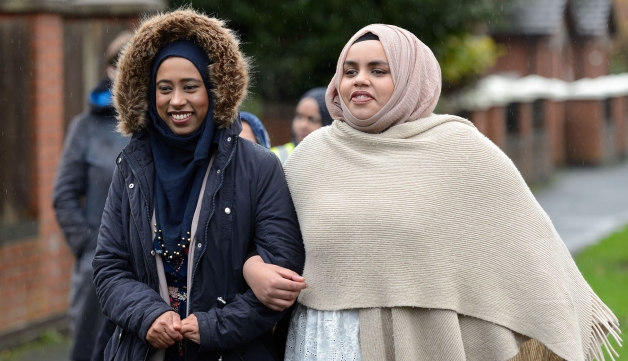
Two women enjoy a walk on a nice, wide path

Earlier this year, we launched our new 10-year strategy to transform lives and communities through sport and physical activity. Uniting the Movement focuses on five key big issues, including active environments.  

This means collaborating with our partners to influence how people live and travel, and promote the sustainable planning and design of new communities and sport and leisure facilities.  

Our #PlanetaryPromise is to continue making sport and physical activity an easy choice for everyone and we’ll use our expertise, guidance, tools and support to make this happen. 

Recent research, that was commissioned by us, has found that:  

  • if the whole of England walked as much as London, 1.3 million more people would achieve a daily walk 
  • if the whole of England cycled as much as Cambridge, 10% of all transport trips would be cycled. 

During the past year, walking and cycling have been popular choices as many people were required to stay local during the pandemic.  

To help our nation continue these activities, the sport and leisure sector must support those who develop and manage local environments.  

Our #PlanetaryPromise is to continue making sport and physical activity an easy choice for everyone and we’ll use our expertise, guidance, tools and support to make this happen.

The 10 principles of Active Design we developed with Public Health England to promote healthy design can be used to encourage active lifestyles and maximise the potential of local green spaces.  

If our communities are more walkable and facilities are in easy reach of each other, we can help people to improve their health and reduce their carbon footprint through better design and by using the built and natural environment around us. 

The sport and leisure sector can also rise to the challenges of climate change in the design and management of sports, recreation, and leisure facilities.  

Sustainability helps to drive down running costs and protect against extreme weather and flooding that regularly affect sports across the country, stopping play each season.   

We’ll be updating the resources available on our website that can help sport and leisure organisations tackle climate change, drive industry innovation and do their bit for our health, communities and environment.  

We know there’s already a keen interest in environmental sustainability across our sector and a willingness to promote change to help meet our nation’s net-zero targets.  

As part of the National Lottery family, the #PlanetaryPromise we make today can make it as easy and as beneficial as possible to be active in our communities in the next 10 years and beyond.  

The power of a leaderless approach: Rossendale’s response to coronavirus

In early 2020 many of Pennine Lancashire’s local delivery pilot (LDP) workstreams were progressing at a fast pace, then of course coronavirus (Covid-19) hit, and things have changed.

Whilst many of the workstreams have adapted and changed, it’s been amazing to see how many of the things we have been working on as part of the LDP have influenced the coronavirus response.

In Rossendale we launched the Rossendale Connected initiative as a collection of statutory partners, and a diverse range of third sector organisations who came together and divided up the work.

A banner dedicated to the nation's key workers

Council colleagues were incredible at ‘giving away’ power and enabling and facilitating those best placed in the heart of the community to respond to local need.

Rather than a statutory response, we built a sustainable ‘micro-community’ approach with a focus on neighbours looking after each other and community-led solutions. By pairing a volunteer with a family/person in need, we rapidly reduced demand through the ‘hub’ as we created support networks.

Several foodbanks rallied together, sharing resources, expertise and approaches. And hundreds of volunteers were co-ordinated through community organisations who had the connections to get things done.

We have seen ‘leaders’ everywhere, the huge presence and power of local leadership has been so common that it’s almost been like there are no leaders at all! It has been so rewarding to reflect on the fact that many of these principles and approaches have been fostered through the system-focused learning and influence of the LDP.

Whilst the Rossendale Connected coronavirus response is a powerful one, it’s important to recognise that the story started a couple of years before.

System-wide approach to primary care networks

Early on, primary care leaders recognised the important part community partners could play and, from the moment primary care networks (PCNs) were announced, Rossendale’s clinical directors factored this into their PCN structure.

The primary care community network was established, which tagged a health-focused community partnership meeting onto the end of the clinically-focussed meeting, and I was asked to chair the group. The two groups have very much blended into one, tackling local issues such as excess winter deaths and suicide prevention.

Importantly, the PCN was the designated governance group for the Together an Active Future (TaAF) project. When coronavirus came, we had the foundation of a network that knew how to work together across the system on a place and person-centred way, and the network sprang into action. Weekly calls with 40+ organisations coordinated the work with input from council officers, community partners, GPs, the clinical commissioning group, public health colleagues from the county council and many others.

What have we learned?

As part of our Rossendale Connected initiative, like most places we’ve pondered the things we’ve learned and the ‘take-aways’ from this awful pandemic. I’ve reflected on this and these are the top five things I’ve learned:

  1. Connection beats control. In Rossendale our coronavirus response was leaderless, everyone was a leader. We all allowed each other to do the thing we were good at and focus on connection rather than control. The council was responsible and played a crucial role in being accountable, but collectively we demonstrated the principle of distributed leadership brilliantly. Our greatest power comes by recognising the power in others.
  2. Authenticity is absolutely vital. It’s a non-negotiable characteristic of a leaderless approach. Our group of 40+ local people with a passion for place were constantly scared together, kind to each other, worried together and at times were openly bewildered. But we admitted mistakes and sought collective solutions.
  3. Be thankful. Through our Rossendale Connected initiative, our currency has been gratitude. We’ve paid our way in collective ‘thank yous’ and ‘well dones’. There have been few conversations about contracts, service level agreements or transactions, but incredible continued expressions of thanks and appreciation for each other. This has been the currency that has driven our collaboration.
  4. Build bridges not tunnels. If you are taking a journey together with a group of people, it is so much better to go over a bridge than through a tunnel. The difference is not the destination but simply that everyone can enjoy the view and see where they are going. Determining the vision together and communicating effectively so that everyone can ‘see’ what is vital.
  5. Compassion is the compass. As an accountant I find it hard to get away from numbers, and cash, and figures. What I’ve seen in Rossendale is decision-making based on compassion for people and a passion for place. Being guided by compassion as the compass has led to great decisions.

We have combined a leaderless, connected approach with gratitude as the currency and compassion as our compass. Our relentless focus on self-sufficient micro communities has yielded unimaginable levels of neighbourliness, care, concern and support on almost every street and in almost every home.

My hope is that the connections we have forged will result in a sustainable change to the system that we could only have dreamed of before the pandemic; and that it will lead to healthier, happier and more active lives for people within our towns and villages for generations to come.


You've viewed of items.