Skip to content

Taxonomy term

Content type

Preventing crime from the ring

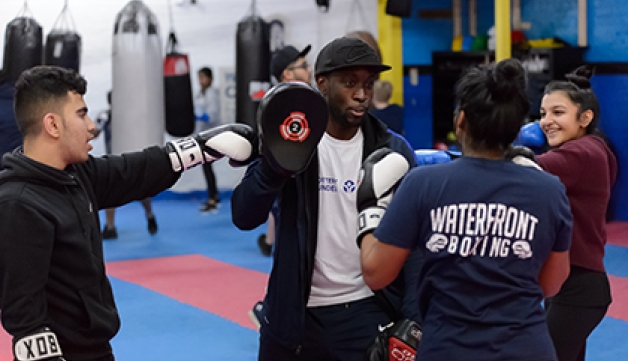
Boxing is my religion. Like all spiritual journeys it began with a moment of divine inspiration and my baptism was conducted whilst watching Muhammed Ali defeat George Foreman in “The Rumble In The Jungle”.

I grew up in boxing gyms with the sport giving me purpose, discipline and titles – including representing my country on numerous occasions.

These days it offers me the chance to inspire the next generation of boxers and to help anyone who walks through the gym door, to believe in themselves and choose a positive path in life. 

When people ask me why boxing matters so much to me, my answer is simple: it changes and saves lives.

A safe space for all

Of course, it also improves health and builds confidence, but boxing keeps people – especially young people – away from anti-social behaviour and crime, something that I can personally verify as a former Youth Justice Manager. 

With the number of proven offences committed by children seeing an increase of 4%change has never been so important and there are many ways boxing helps fight crime.

Firstly, boxing gives young people structure and boundaries.

Many of the children and young people who walk through the doors of a boxing gym – like mine in Oldham, Greater Manchester – come from difficult backgrounds and have challenging lives. 

Having little or no access to opportunities and therefore a lack of agency in the world, may result in challenging behaviours. But not dealing with these pressures means they risk spilling out onto the streets and that’s where crime starts. 

Not because young people are 'bad', but because they have nowhere positive to pour their energy into. But boxing gyms can change that, as these spaces are built on discipline, respect, routine and team spirit.

Boxing gyms offer me the chance to inspire the next generation of boxers and anyone who walks through the gym door, to believe in themselves and choose a positive path in life.

You don’t just turn up to your gym whenever you feel like it. Instead, you’re expected to train on time, plus you have to listen to your coach, and you learn that effort leads to results and that shortcuts rarely work.

These lessons transfer directly into everyday life and children who understand discipline in a boxing gym are far less likely to make reckless decisions outside it.

Boxing also teaches emotional control, becasue contrary to what some may think, this sport helps a young person understand how to control their emotions, particularly aggression, and how to think and act under pressure.

I’ve seen it first hand – children who once lashed out can calm themselves because boxing gave them an outlet for their emotions and that allows them to thrive.

The many lessons of boxing

Boxing is a good metaphor for life and can help to develop those personal and social skills that people need, contributing to tackling deep seated worklessness and low aspirations.

The sport also fosters the development of positive character, self-esteem, self-discipline, courage, perseverance and resilience.

Instead of throwing punches on the street, they hit the pads, the bags and their coach or opponent inside the ring, but always with respect to the sport’s rules, under supervision and with a reason.

Boxing also teaches respect — for yourself and for others. You shake hands, you follow rules and you learn that real strength comes from self-control, not intimidation. These values reduce crime at its roots.

Another factor that's key is the sense of belonging among those practising the sport. A boxing gym offers identity and loyalty because, at a gym, you’re part of a team.

You train together, look out for each other and you wear the gym name with pride. That sense of identity can pull someone away from a path that leads to anti-social behaviour and crime.

I’ve seen boxing change lives in Oldham and Greater Manchester, where young people that were heading toward trouble now have focus and a reason to stay on the straight and narrow, and I’ve also seen young people who had no confidence, find self-belief.

Not all these children will become a champion boxer and that's okay.

Building better lives through sport

The real victories happen when a young person chooses to stay in school, can find a job or simply chooses not to commit a crime because they don’t want to let their gym or coach down.

At our newly refurbished Greater Manchester Boxing and Development Hub, we’ve been lucky enough to benefit from Sport England funding. 

To my mind, our investors aren’t just putting money into a boxing club and community gym. They’re investing in crime prevention and harm minimisation.

It costs less to fund a gym than it does to deal with the consequences of crime and anti-social behaviour policing, court cases, prison and reform  as recent estimates place the total economic and social cost of serious youth violence at £11 billion between 2009 and 2020.

For me, boxing is more than titles and trophies, it’s about giving people a chance.

Every time a young person chooses to walk into a gym and away from 'the road', I believe that’s crime prevention in action and that’s why boxing will always matter. 

As one of the 10 boroughs of Greater Manchester, Oldham forms part of Sport England’s Place Partnership with Greater Manchester Moving and other local bodies to implement Sport England's Uniting the Movement strategy for getting people active.

I’m proud of what boxing can do to change lives.

In the words of the iconic social activist, pacifist and politician, Nelson Mandela: “Sport can awaken hope where there was previously only despair.

Every day, I get to see the truth in these great words in action.
 

What kids really need

He wasn’t lazy. He was bright, funny and desperate to be out in the world. But his local park felt unsafe, the youth club had closed and the nearest sport sessions cost more than his family could spare.

By the time he came to my paediatric clinic, what looked like a 'health problem' – low mood, poor sleep, weight gain – was really a place problem.

Why local spaces are key

We often talk about children’s health as if it starts in the hospital or the GP surgery, but as I explored in my recent BBC Radio 4 series, Three Ages of Child, the real foundations of health are laid much earlier and elsewhere: in homes, schools, streets and parks – places where children feel they belong in their own areas.

Sport England’s latest place work and research puts into numbers what many of us see every day – like the fact that over half a million children, one in ten 12-17-year-olds, say they don’t feel they belong in their community.

This means that almost one in five don’t feel proud of where they live, often because there’s nowhere for young people to go to, and because of the worries about crime and antisocial behaviour.

Take a step back and look at how this paints a stark picture of children growing up in places that feel unsafe, unwelcoming and not really 'for them', so it’s no surprise that in those conditions activity levels are low and health problems multiply.

The same research also points to part of the answer.
 

We often talk about children’s health as if it starts in the hospital or the GP surgery, but the real foundations of health are laid much earlier and elsewhere: in homes, schools, streets and parks – places where children feel they belong in their own areas.

When asked what gives them a sense of community – beyond friends and family – the top answer from young people was sports clubs and activity groups.

Anyone who has ever watched a child beam with pride after football training or a dance class knows why: a club is not just about exercise; it’s about belonging.

It offers a safe place to go with people who know your name and that offers the chance to be part of a team.

Dangers of the postcode lottery

But access to those opportunities is deeply unequal.

In England’s most deprived places, over a third of people are inactive, compared to around a fifth in the least deprived areas – a postcode lottery for physical activity that deepens health inequalities.

As a paediatrician, I see every day that a child’s postcode can be a stronger predictor of their health than their genetic code.

When local streets feel unsafe, there’s nowhere affordable to go and young people don’t feel they belong, it shows up in their bodies and in their minds.

If we care about the future of public health, we have to turn our thinking on its head, because health isn’t built in hospitals. It’s built in communities.

Exercise and sport are a kind of miracle cure – for health, wealth and happiness – but only if everyone can actually take part.

According to research by Sport England, every pound spent on community sport and activity brings multiple pounds back in benefits to health, wellbeing and the wider economy.

That’s why I welcome efforts to work in a genuinely place-based way – including Sport England’s commitment to invest in the areas facing the greatest challenges.

But beyond the work of any single organisation, the principle stays: you can’t fix place-based problems with purely top-down solutions.

Making children proud

For me, this is what it looks like to move from treating symptoms to changing systems.

You can’t lecture a child into feeling proud of their area or prescribe their way out of a broken play park.

But you can bring together the people who know that place best – including children and young people themselves – and invest in the spaces, clubs and connections that allow them to move, play and belong.

That means co-production, not just consultation: listening to what families say they need, backing trusted local organisations, designing activities that reflect different cultures, bodies and lives and being in it for the long haul.

Our children are telling us they want to feel proud of where they live and that they want to be part of something bigger.

Working locally, listening deeply and backing places over the long term is how we start to make that real – street by street, pitch by pitch, park by park.
 

Find out more

Place Partnerships

Making physical activity fun for all

At Get Doncaster Moving (GDM) we have a mission: to support the youngest in our society and their families to be as active as possible, because the benefits of moving are something that will accompany them for the rest of their lives.

It is with that mission in mind that across Doncaster, partners within our network are working together to create the conditions to help children, young people and their families build healthier, more active lives.

Through a place-based approach, the network is enabling innovative programmes, unlocking new partnerships and supporting communities to develop sustainable activity habits.

This is something we’ve undertaken as a long-term mission.

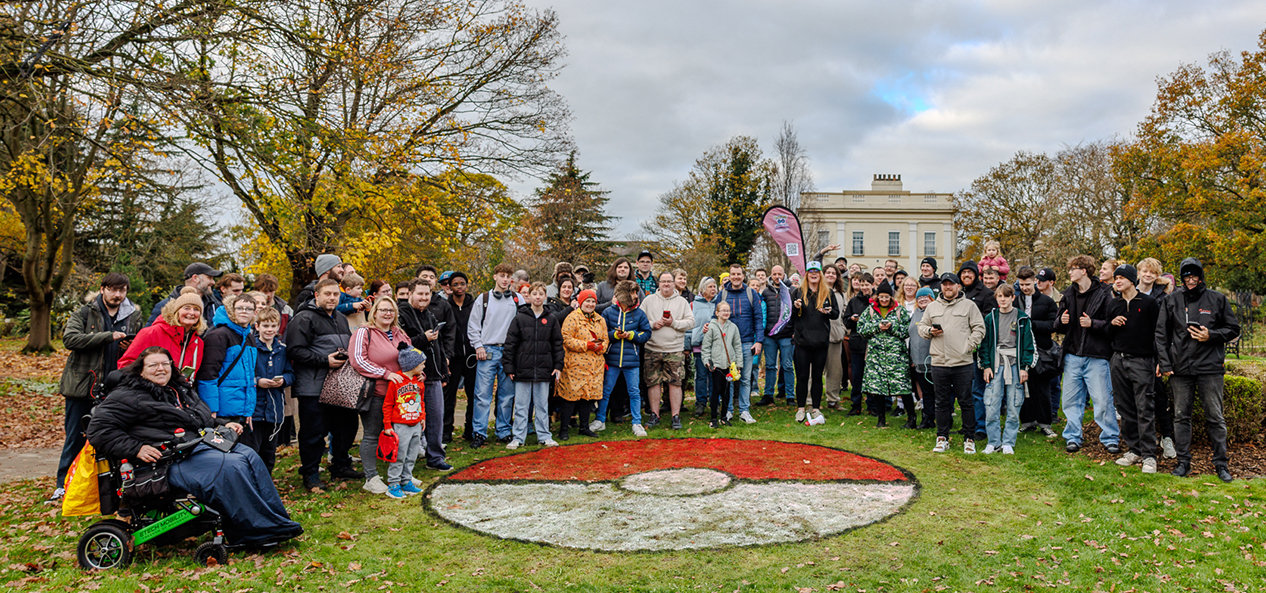
A group of poeple pose around a Pokemon ball that's been painted on park's floor.


Thinking outside the pitch

Reflecting on the past year, there are some stand out examples of how innovative partnerships have been the key driver behind GDM’s work to support children and young people – and their families – to move more.

Firstly, we’ve been developing new outdoor experiences to help children and families connect with local parks in different ways.

For example, GDM’s partnership with Enigma.Rooms introduced interactive digital trail games in parks across the city that engaged new and younger audiences through fun problem-solving and exploration.

The initiative was a success and contributed to Hexthorpe Park receiving the national ‘Green Space Innovation Award’ in 2025.

Then in November, and thanks to the efforts of the local Pokémon community, Doncaster was selected to host a Pokémon GO: Community Celebration event (the first place in Europe be chosen!), attracting thousands of local players and visitors.

The trails across two major parks showcased Doncaster’s green spaces while promoting movement through play.

Through a place-based approach, the network is enabling innovative programmes, unlocking new partnerships and supporting communities to develop sustainable activity habits.

GDM is continuing its work with local Pokémon Go group ‘Raiding Doncaster and beyond’ to grow this welcoming, inter-generational walking and gaming community, and encouraging new players to engage in this family-friendly activity, and to move more – particularly within Doncaster’s parks and green spaces.  

Trying something new

In sport, the ‘Free Park Tennis’ initiative started a couple of years ago in a local park to expand opportunities for children and families.

Resident volunteers have been trained as Free Park Tennis Activators to deliver free, weekly sessions to the community in two Doncaster parks, which led to one park being awarded ‘Park Venue of the Year’ by Yorkshire Tennis.

Our most recent park venue to host Free Park Tennis sessions, Haslam Park, which started in May this year, has already seen 369 attendances, with four local volunteers upskilled to deliver the weekly sessions.

This has been a fantastic opportunity for people to come along and 'have a go' at tennis in a relaxed and social setting, and it has been very popular with both children and families.

Doncaster’s place-based model played a key role in connecting partners and enabling the Active Start initiative, a programme designed for staff working with children aged 2–5.

Active Start is led by Yorkshire Sport Foundation, working in partnership with, and funded by, the South Yorkshire Integrated Care Board's Children and Young People’s Alliance. Their latest Impact Report: Giving children an Active Start is full of learnings and data.

This information is key to the training and resources they provide to early years professionals to help embed movement and active play throughout everyday learning.

This approach not only supports physical development but also communication efforts, social skills and school readiness, giving children the strongest start in life.

Doncaster’s Public Health and Early Years teams have trained as tutors, offering one-on-one support, continuing professional development opportunities and resources to nurseries, schools, childminders and all 12 family hubs, which are places for families to go within their communities to access groups and support.

Many settings have already taken part in centralised training and are now better equipped to encourage movement in class and at home.

But this is not all, because work will continue into the 2025/26 academic year as the programme develops further across South Yorkshire.          

Looking ahead, shifting the dial on children’s engagement in activity will require continued place-based collaboration.

Sustained shared learning, creativity and innovation – alongside a connected, empowered GDM network – will help Doncaster’s young people to move more, play more and thrive.

Find out more and connect with us

Building on what we’re learning

In February I wrote a blog sharing our first Learning Synthesis Report, which gave a snapshot of how Sport England's System Partner investment is helping organisations across the country tackle inequalities and transform how people access sport and physical activity.

That initial report, produced by Ipsos, NPC and Sheffield Hallam University, highlighted different aspects within the sector and Sport England:

  • There is an ongoing shift from transactional relationships to more open, trusting partnerships with a more diverse range of stakeholders.
  • Identifying and engaging local champions can accelerate system change as these often hold the keys to unlocking new opportunities and relationships.
  • There are ongoing challenges where qualitative data is not valued as it is difficult to track and evaluate over time.
  • It is challenging to embed evaluation and learning into our work, and barriers like language, staff turnover, strategic planning and the complexity of demonstrating impact are very real.

Why this matters

As we reach the half-way point of our long-term strategy, Uniting the Movement, it’s vital that we reflect honestly on what’s working, where progress is happening and what barriers still stand in our way.

That’s why we’re sharing this second round of learning, which is based on extensive interviews, workshops and feedback from more than 130 system partners.

How this new report builds on the first

The original synthesis captured the foundations: diverse partners, new ways of working and the initial cultural shift towards greater collaboration and shared purpose.

This new report, which you can download below, shows how those ideas are taking root and where more focus is needed.

It also provides a clearer picture of how different organisations are playing unique roles – as connectors, deliverers, influencers or governance improvers – all contributing to system change.

As we reach the halfway point of our long-term strategy, Uniting the Movement, it’s vital that we reflect honestly on what’s working, where progress is happening and what barriers still stand in our way.

What are we learning?

There are different lessons that have come up from our research:

  • A diverse portfolio of partners playing different roles: No single organisation can change the system alone. System Partners are taking on roles such as improving governance and Equality, Diversity and Inclusion (EDI), influencing policy and local decisions, delivering programmes to underrepresented communities and connecting local networks – all working together to drive system-wide change.
  • Capacity remains a key challenge: many System Partners, especially smaller organisations, are telling us that their staff and volunteers' capacity is stretched. This can limit their ability to collaborate, deliver on compliance requirements and influence wider system change. Building stronger partnerships and investing in people is helping tackle this but it will need ongoing focus.
  • Delivery funding pressures are real: even with Sport England’s investment, partners face funding constraints that limit their ability to deliver activities in communities. Rising costs, limited local authority budgets and competing priorities mean that generating strong evidence and insights to influence other funders is becoming increasingly important.
  • Culture change takes time: shifting mindsets and ways of working to fully realise the vision of Uniting the Movement isn’t quick. System Partners are seeing the benefits of having time and space to innovate and build the right skills but changes in politics and performance expectations can slow their progress. That’s why ongoing support for organisations to recruit, develop and embed new ways of working is vital.
  • Consistency and coordination matter: partners report that inconsistent ways of working across Sport England teams can lead to duplication, extra workload and missed opportunities for collaboration. Clearer, more joined-up processes will help everyone work better together and make the most of Sport England investments.

Looking ahead and building on our learnings

The report contains recommendations for Sport England and questions for System Partners (overall and with different roles influencing, delivery, connector).

Sport England should commit to improving consistency, supporting partners in their distinct roles and keeping the focus on long-term, systemic change.

Over three years into our five-year, more than £600million investment in System Partners, we’re seeing the difference this collective effort can make across the system.

And here’s what we’ll do next:

  • Keep listening and adapting by using insight from the evaluation to refine how we support, fund and connect partners.
  • Back system enablers by investing in people and organisations that help others collaborate, learn and grow.
  • Improve how we convene by making our events, communications and shared spaces more purposeful and coordinated.
  • Act on feedback by being open about where we can do better and using your insights to improve our role.
  • Stay focused on system-wide impact by keeping the long-term view in mind as we plan for the next funding cycle and beyond.

Some considerations for partners are:

  • We ask all partners to continue sharing evidence of impact especially where it aligns with Uniting the Movement through their evaluation and reporting. This will be vital as our ability to demonstrate the value of working in this way and having compelling evidence and insight to support our shared mission and vision continues to be key.
  • Encourage partner-led collaboration  we ask all partners to create new, and continue existing, collaboration and to deepen the way they work with others, creating shared spaces and goals on the things that matter most and sharing their learnings around with other partners.

Why this matters to us all

Together, these insights reinforce the belief that transforming access to sport and physical activity isn’t just about delivery – it’s about culture, partnerships and everyone playing their part in the system.

We hope this report prompts reflection, sparks ideas and encourages all of us to keep challenging ourselves to do better for the communities we serve.

If you’d like to read more or share your thoughts, please get in touch.

We’d love to hear from you.
 

Find out more

Current evaluations

A welcome new approach to school sport

The Prime Minister has announced a bold new vision for school sport, introducing plans for new School Sport Partnerships and an Enrichment Framework.

The announcement also sets a clear commitment for equal access and the protection of two hours of high-quality physical education for every child each week, along with the introduction of new ‘sport profiles’ that outline each school’s sport and enrichment provision.

We welcome this announcement as the latest Active Lives Children and Young People Survey Report highlights persistent and significant challenges in how children and young people engage with sport and physical activity, reinforcing the urgent need for more inclusive, youth-led and enjoyable movement experiences:

  • Fewer than half of children meet the Chief Medical Officer’s Physical Activity Guidelines.
  • Only 49% of children strongly agree that they enjoy being active.
  • Government guidelines recommend that children and young people achieve 30 minutes of physical activity during the school day, and 30 minutes outside of school. However, our research indicates that only 45% of children meet this target during school hours and just 56% meet it outside of school, with participation levels varying significantly across different demographic groups.
  • For some young people, school is their only opportunity to experience the benefits and enjoyment that sport and physical activity can bring in these formative years.

The announcement sets out a clear strategic vision that will benefit generations to come.

We welcome this announcement as the latest Active Lives Children and Young People Survey Report highlights persistent and significant challenges in how children and young people engage with sport and physical activity.

Given the strong link between physical activity and improved whole-school outcomes – from embedding essential life skills to broadening horizons and helping young people build a positive, lifelong relationship with movement – we support plans for this more concerted effort around the school sport agenda.

The announcement builds on the work the government is already doing with partners including the Youth Sport Trust and ourselves to boost participation, having already invested £100m to upgrade sports facilities back in March this year.

We strongly believe that this new approach to school sport should build on the existing strengths, assets, and resources of the current school sport system.

We look forward to working with government to bring this new approach to life, sharing the insights from the recent School Games Organisers Network Review (whose Objective A report will be published towards the end of the month), shaped by the contributions and time of many colleagues across the school sport landscape.

Building a movement for change

At Sport England, collaboration and learning are at the heart of what we do.

That’s why we’re excited to share the highlights from the recent interim evaluation of our investment into system partners – the Learning Synthesis report – a document that offers valuable insights and lessons for organisations tackling inequalities through system change.

In short, our system partner investment is a new approach that’s aligned with our Uniting the Movement strategy by committing over £500 million since 2022 to more than 120 partners. 

This long-term funding provides up to five years of financial security and stability for organisations to focus on addressing the systemic changes needed to tackle the inequalities stopping individuals and communities from being physically active.

Learning together – why this report matters

It’s important to highlight that this investment by Sport England is about more than funding. It’s about building a movement for change and the Learning Synthesis report is key in this mission.

The report was conducted by Ipsos, New Philanthropy Capital (NPC) and Sheffield Hallam University, and it sheds light on what’s working and where challenges remain within the sector.

But it goes beyond that by posing questions – and presenting answers – about how we can work together to tackle inequalities so everyone can enjoy the benefits of being active.

What we’ve learned so far

The result? Insights that are key for our work at Sport England and for critical points of reflection to anyone striving to make a difference through systemic change at local or national level.

Some of the main findings of the report are:

Overcoming challenges to collaboration is key

System partners build partnerships with diverse stakeholders – from local councils to schools and community groups – that create a more cohesive and integrated approach to system change.

We know that Uniting the Movement has provided a framework for building trust and encouraging alignment and shared goals, but we also know that collaborative working takes time, and that this is often hindered by financial constraints, recruitment challenges and cultural barriers.

These obstacles are further exacerbated by political and leadership changes, which can disrupt momentum and require the continual rebuilding and realignment of relationships.

Change champions make a difference 

System partners have found that identifying and engaging local champions can accelerate system change as these often hold the keys to unlocking new opportunities and relationships.

It is important for us and our system partners to think strategically about how we can influence the system, through engaging with these individuals and groups moving forwards, and how we can best identify them within our communities, places and/or organisations.

Quantitative and qualitative data together tell the full story

While numbers are important, stories and case studies provide rich context for understanding our impact and uncovering learnings about why things work, for whom and in what context.

We need to tackle the ongoing challenges within the system, where qualitative data is not valued as it is difficult to track and evaluate over time.

Learning from challenges

System partners recognise that system change isn’t easy. Barriers like language, staff turnover, strategic planning and the complexity of demonstrating impact are very real. But recognising these hurdles allows us to address them head-on with a mindset of learning and growth.

Looking ahead – building on these learnings

As an organisation, Sport England is on a journey to reshape its relationship with its partners and develop a more relational approach to working together to tackle inequalities in physical activity.

It’s important to highlight that this investment by Sport England is about more than funding. It’s about building a movement for change and the Learning Synthesis report is key in this mission.

Our evaluation to understand the impact of this ‘new way of working’ is therefore very complex and it's represented in an evolving theory of change.

This hypothesis sets out how and why we think change will happen over the short, medium and long-term, and guides our evaluation accordingly.

The interim evaluation findings we’re sharing today provide a foundation for reflection and learning on our progress so far.

The conclusions and the improvements achieved by our partners, plus the challenges these partners and also us at Sport England still need to face, underscore the importance of adaptability, transparency and a long-term perspective in driving system change.

As we move forward, we think it will be essential to:

  • continue sharing what works and what doesn’t work when addressing the challenges that arise through our collaboration between our partners and colleagues
  • use our successes and our innate value in our work with system partners to continue to build new partnerships and engage with diverse stakeholders, whilst nurturing those we’ve already established
  • focus on sustainable approaches to evaluation, learning and insight that balance the immediate need to demonstrate impact, whilst recognising that true systemic change is a long-term impact.

Join the conversation

We're already working closely with our system partners to share and act on these findings through our capability and capacity-building sessions, and our learning and knowledge exchange work.

We also think the findings have wider value to anyone who’s part of a complex system and exploring how to reduce inequalities. Is this you?

If that’s the case, we’d love to hear your thoughts on these findings, what resonates most with your work or what lessons we can learn together.

And if you have any questions, reflections or feedback on this report or any other element on this blog, please get in touch.

Find out more and get involved

A personal campaign against diabetes

November is National Diabetes Month, which brings us an opportunity to consider those living with this long-term health condition.

Without intervention and management, diabetes can limit a person's life satisfaction and can affect all sorts of opportunities including the enjoyment of work and leisure.

According to Diabetes UK, nearly 10% of the Blackburn with Darwen population has this long-term condition and more people have been diagnosed with it in the borough than anywhere else in the North West.

An old gentleman is seen bare chest and witha swimming cap on with an indoors swimming pool behind him. The words" Diving in at the deep end." appear to his right and behind him and over a yellow rectangle on the bottom left it says "Blackburn with Darwen" and then on the bottom right the copy says "Proudly supporting We Are Undefeatable" and the suffix "able" is underlined.

Research by the NHS shows that people who move less are more likely to develop Type 2 Diabetes and that physical inactivity is responsible for an estimated 15% of diabetes cases.

On top of that, last year's Active Lives adults data show that people across Blackburn with Darwen are significantly less physically active than the national average with only 58.5% of people doing 150 minutes a week of physical activity in this borough, compared to the national average of 63.4%.

We also know that inactivity is one of the key factors driving premature mortality from non-communicable diseases in our area, including cardiovascular disease, diabetes, respiratory diseases and cancers.

And thirdly, we knew that there was so much we could do to support our residents living with diabetes and other long-term health conditions and that physical activity had a huge part to play.

Without intervention and management, diabetes can limit a person's life satisfaction and all sorts of opportunities including the enjoyment of work and leisure.

So in June 2024 we began working with Blackburn with Darwen Borough Council and other partners to bring We Are Undefeatable to communities across our region.

We Are Undefeatable is a national behaviour change campaign which encourages people with long-term health conditions to stay active.

Exactly what we needed!

But we wanted it to really resonate and to have maximum impact and for that we needed to make the campaign relevant to our residents.

Combining national efforts with local faces

Developed by 15 leading health and social care charities and backed by The National Lottery funding from Sport England, We Are Undefeatable supports people with a range of health conditions, including (but not limited to) arthritis, Alzheimer’s, asthma, cancer, dementia, heart disease and diabetes.

Through We Are Undefeatable, we wanted to support our residents living with these long-term health conditions to lead a full life and to show them that they can actually improve their physical and mental wellbeing by being active.

So, together with partners across the borough, we sought to localise the campaign by featuring Blackburn with Darwen residents living with these conditions and signposting others to local services. 

We created bus shelter adverts, images for digital screens in the town centres and a social campaign across multiple accounts and platforms with pictures of our residents living with long-term health conditions being active, and – more importantly  feeling the benefits derived from it.

From boxing and wild swimming to cycling and walking, these inspiring individuals showcased the diverse ways to be active, regardless of their condition.

One of these residents was Ralph. 

Ralph has had two heart attacks, a heart bypass and lives with Type 2 Diabetes, which led to him becoming visually impaired.

In films, photos, in print and online, we showed that Ralph loves to swim and how he walks whenever he can to keep as active as possible.    

This approach is working! 

We’ve seen the power of a localised health initiative, in partnership with a national campaign, to help tackle and reduce health inequalities in our borough.

Working together, we took a whole-systems approach to tackling physical inactivity.

We engaged all stakeholders, including council and health leaders, community, voluntary organisations, the wider public sector, private business and local communities themselves, to make a significant difference to the health and wellbeing of our residents.

Using data-driven insights, including population health data at ward-level, and collaborating with a diverse array of partners, the campaign has gone above and beyond initial expectations and made significant impacts in targeted communities.

The collective strength that resides within our communities is inspiring and empowering.

Through localising We Are Undefeatable and through people like Ralph, we’ve shown the transformative power of collaboration and how together we can create a culture of health and wellbeing in Blackburn with Darwen and beyond.
 

Happy anniversary, Place Expansion

They say time flies and while this is a cliché, it is one that’s undeniably true. 

It’s certainly the case when it comes to our Place Partnerships, because as we celebrate a year since we kickstarted our Place Expansion, a lot has happened!

Back in November 2023, our Place Expansion programme committed to investing £250 million of National Lottery and Exchequer funding into local communities across England in the following five years, to ensure those in greatest need were able to get active.

We've had a busy and positive year

In the past 12 months, and through this first phase of this Place Expansion, we’ve invested in 53 new places across England, partnering with 27 Active Partnerships and the dedicated organisations they work alongside.

From Swindon to Stoke-on-Trent, Blackpool to Brent and Walsall to West Norfolk, we’ve been partnering with key stakeholders in each of these places to establish what the local ambition and approach will be.

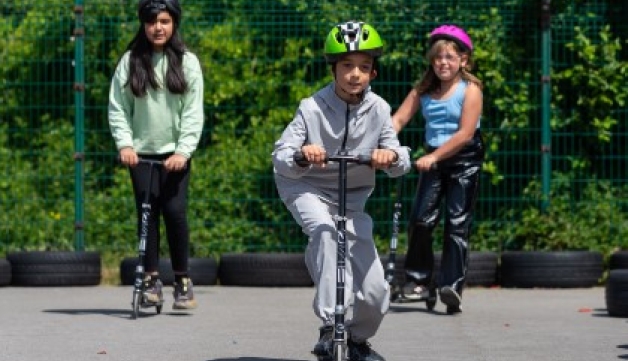
A group of kids play on a scooters park in Exeter during the Cranbrook Pump Track launch event in September 2024. Image credited to Matt Round Photography.

And through this way of working we have engaged partners from local government, the health sector, the community and voluntary sector, and the transport and housing sectors.

The result? A real positivity from these stakeholders about the approach we are taking.

We are currently working alongside our partners to establish ‘where next?’ so that we can continue to grow this approach with pace and impact (spoiler alert: we have plans to expand our investment to 80 places in the coming months).

We’ve also begun to invest £35m into our original 12 Place Partnerships to help deepen and strengthen these relationships so that, together, we can have an even greater impact.

Yet, we want all places to feel part of this approach.

With that aim in mind, most recently work began to roll out our Universal Offerwhich will see a £25m investment to support the whole sector to supercharge their efforts to tackle inequality and inactivity and evaluate the impact they are having. 

We are currently working alongside our partners to establish ‘where next?’ so that we can continue to grow this approach with pace and impact.

Our support will ensure all places across England will gain access to the tools, resources, learnings and capabilities to help them work more collaboratively and achieve the systemic change that is needed at a local level to address the barriers to getting people active. 

By galvanising the system in this way, we know we can bring about lasting and sustainable change to every part of the country.

Working together for local change

Since launching our place-based expansion last November, we’ve invested nearly £20m to help each of our place partners develop their individual approach.

This way of working – ground up and rooted in the needs of local communities – is contributing towards achieving a positive impact that we have not seen previously. 

We’ve seen that baking in physical activity into local, long-term strategic and policy commitments is a key solution to driving change within wider outcomes such as health, environmental sustainability and community cohesion.

Take Exeter as an example.

They have embedded our Active Design principles into their Liveable Exeter strategy –  a 20-year housing plan – by which they will build 12,000 homes where giving people chances of being physically active are at the front and centre of those developments.

We’re also seeing greater connection and collaboration amongst partners within a place than we’ve ever seen before.

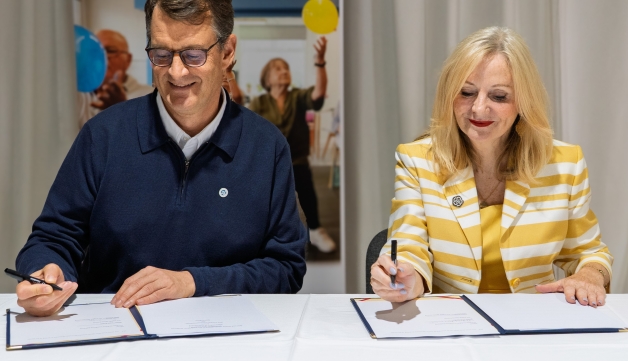
At the end of September, the Greater Manchester Memorandum of Understanding brought together the combined authority, integrated care partnership, the transport, voluntary and community sectors, leisure providers, the GM Moving Active Partnership and Sport England. 

Through this collaboration, we will see resources aligned to support the integration of physical activity and sport at the highest decision-making levels in the city and region. 

And within these communities, we are seeing that this work is contributing towards positive signs of inequalities reducing and the inactivity gap closing. 

The contribution of the work and the focus of partners in Greater Manchester has seen year-on-year reductions of inactivity levels in children and young people and, for the first time, this is lower than the national average.

Meanwhile, in Pennine Lancashire, direct engagement and collaboration with the Muslim community has seen over 5,000 young people increase their daily activity levels through the Active Madrassahs programme.

More positive change to come

Impact like this is being felt up and down the country and this work really does speak for itself with a robust message: together we are stronger. 

Our Place Partnerships will see us work in every corner of the country, partnering with organisations in areas that face the biggest barriers to a more active life. 

Together we will create lasting change within the communities that need it most to ensure that more people can live active and healthier lives for longer.

So, looking forward to reaching new places in the next year and to keep celebrating across the country.
 

Find out more

Place Partnerships

Building active regions for everyone

Equity, Diversity, and Inclusion (EDI) has become a key focus over the past two years at Active Oxfordshire.

Our work in this area has helped to transform physical activity and sport in the region, creating inclusive opportunities for people in most need to be active.

Thanks to these efforts we are now able to reach over 16,000 residents that are at highest risk of inactivity and we are seeing significant results.

For example, we know that in the 2023-24 period, 60% of participants on our Move Together adult programme with long-term health conditions increased their activity levels by the equivalent of 4,500 steps per day.

Making EDI everybody's business

Our main approach is fostering collective responsibility for EDI across the team by truly embedding its principles throughout the organisation.

To achieve this we offer integrated online EDI training from day one for all new team members, plus annual refreshers.

This is just one of a series of opportunities. Others are: 

  • Monthly EDI meetings to discuss internal culture and ways to make physical activity more inclusive in our communities. These include a targeted, place-based approach to increasing activity levels in highest priority areas, ensuring that our programmes prioritise residents who are facing the biggest barriers to being active.
  • Training sessions based on lived experiences to provide authentic insights into the barriers to physical activity in Oxfordshire. Our partner, MyVision Oxfordshire, offered a Visual Impairment Awareness session linked to physical activity and sport that was delivered by team members with lived experience of visual impairment.
  • Inclusive communications assessing whether our messaging may unintentionally exclude people, making our language more accessible and working with local residents to shape our messaging. For example, as a team we made the decision to use the term Ethnically Diverse Communities rather than BAME (Black, Asian and Minority Ethnic). This move came from studying the research by Sporting Equals, which has lived experience at its heart. As well as this, based on feedback from local residents, we now also use the term ‘priority neighbourhoods’ rather than ‘areas of highest deprivation’.

It's also key that our chief executive and senior leadership team lead by example and we have also removed the EDI board champion role to emphasize that EDI is everyone’s responsibility, fostering collective ownership and integration of EDI work into all agendas.

Our EDI work has helped to transform physical activity and sport in the region, creating inclusive opportunities for people in most need to be active.

To support these efforts, we’ve invested in resources – including a part-time EDI role – and introduced recruitment principles that strengthen both our hiring processes and team culture.

Using lived experience to drive change

On top of these measures, we are also in the process of co-developing a lived experience engagement policy to support individuals and communities facing barriers to physical activity by listening to their challenges and using their input to drive meaningful change.

This will be available in early 2025, so watch this space!

Our data was also showing that men were less likely to engage in the Move Together pathway so we decided to hold male focus groups to better understand how we can adapt the programme to make it more accessible to this audience.

We've also edited some marketing materials to make them more relevant to men, plus we are monitoring data to assess their impact.

Transforming inclusion in the sport and activity sector

Our EDI initiatives are already making a difference across various programmes in Oxfordshire. Some of them are:

  • embedding disability inclusion training in the Young Leaders Programme to enhance future coaches' understanding of the topic
  • delivering inclusivity training to 54 participants from 21 organisations, helping young people with additional needs engage in physical activity
  • working closely with clubs such as Gosford All Blacks  who launched Oxfordshire’s first Inclusive Rugby Network to make rugby more accessible  and Barton United, who helped five girls to complete their football refereeing qualifications in the 2023-2024 period
  • we work with a group of volunteer active ambassadors, who have lived experience of facing barriers to activity and help to develop and shape our work. An example of this is Natasha, a resident from one of our highest priority areas who now works for our team two days a week on our Active Neighbourhood community funding programme
  • one of our biggest flagship activity programmes for families on low incomes – known as You Move  now has in excess of 10,000 residents engaged, compared to 6,208 residents in the 2022-2023 period. As a result of our focus on EDI and partnerships working across Oxfordshire, 28% of participants are from a background other than White British and 25% have a disability.

Learning from the community 

We're very proud of the results of our EDI efforts and that these extend beyond Active Oxfordshire, plus we’ve also taken steps to learn from others while sharing our insights, such as:

  • convening an EDI peer-to-peer group to bring local organisations together to discuss EDI topics and share ideas every two/three months
  • collaborating with partners to develop an Inclusive Communications Toolkit for wider use across the county. This will be updated in early 2025.

We understand that our EDI journey is ongoing, and we remain committed to evolving and working with others to share learnings and strive towards a truly inclusive world where everybody – regardless of their background or ability – is able to enjoy the many benefits of being active.

If you’d like to share insights or ask questions, please get in touch.

Find out more

Active Oxfordshire

Becoming aware of what we didn’t know we didn’t know

In 2023, the Yorkshire Sport Foundation completed the Digital Futures survey  a tool designed by ukactive and Sport England with the help of digital consultants Rewrite Digital.

It helps the sector better understand our digital maturity – that is, how capable we are to respond to changes in the digital landscape – and improve our readiness for future challenges.

I think it’s fair to say we were a bit sceptical when we first did the survey.

Unexpected but helpful outcomes

We thought we were already in a good place digitally and were unsure about what it would tell us, but the benefits of doing the survey for us have been great and it has made us aware of things we didn’t even know that we didn’t know.

According to the survey we are “digital experimenters” and we think that’s probably a fair reflection.

But what does being “digital experimenters” mean?

The term refers to organisations that are already making some great advances in digital but that would benefit from a committed and ongoing investment in digital from the top to accelerate business performance and to be ahead of other companies or groups.

As part of the survey we also received a digital score, which we are hoping to increase when we complete the survey again this year.

This result was pulled from five areas and allowed us to see how we were performing compared to the sector.

We thought we were already in a good place digitally and were unsure about what it would tell us, but the benefits of doing the survey for us have been great.

It also gave us some tips on how to improve it over the coming year.

The key learning we took from the survey is the benefit of having a digital strategy.

At Yorkshire Sport Foundation, we commit to five continuous improvement areas each year – the Moving the Dial items.

Writing our digital strategy became one of these and this was supported by our Board.

But how should we start?

Getting the impulse to improve

The Digital Futures survey provided us with advice on the key elements to include, as well as real-life examples from organisations outside the sector.

Our digital strategy sets out the principles we will work to and the main topic areas we need to focus on, which are:

  • internal digital skills
  • reviewing emerging digital areas 
  • digital infrastructure
  • data, security and collaboration.

These topics have an action plan that sits underneath them and we have already begun working towards some of these.

Some of the tactics we’ve put into practice include:

  • auditing our hardware to make sure that the team have the right equipment to do their jobs in the most efficient ways
  • dedicating some staff time to explore artificial intelligence and how it can be used within our work
  • setting up a new mapping solution for the team to be able to make decisions based on data in a more timely and efficient way
  • redeveloping our website while thinking about additional digital benefits
  • providing a wider range of data through digital solutions.

We also now assess everything in the strategy against the principles we want to deliver by, which are:

  • passion in innovation
  • integrity through data-driven actions
  • being people-centred
  • fairness and inclusivity
  • collaboration
  • security
  • being climate-conscious
  • a focus on learning.

Time well spent

So, to other organisations who may be unsure whether completing the Digital Futures survey is worth the time (it takes about 30 minutes to do it properly) we say: “It is!”

Because if you want to be conscious of what you don’t know when it comes to digital, this will help highlight where to focus first and will also help you identify small or bigger actions that you can take to increase the critical role that digital can play within your organisation.

As with any survey, it’s the analysis of the results and the next-steps actions that you create that will add value to the insights the test gives you, so we would encourage you to make sure you have time dedicated to do that when the results come out in November. 

It really is time well spent for you, your team and your organisation.

Being flexible and local - the key to our success

Our Navigating Local Systems work across Luton started from the premise that physical activity is beneficial for everyone – no matter anyone's age, ability or additional needs. 

And so, physical activity should be everyone’s business, from awareness of the benefits to access to sessions to producing information for different groups. 

But was it? 

Active Luton was delighted to be involved in this project, alongside our hosted Active Partnership, Be Active.

'So many ‘actives’!' You may think, but we were obviously the right people to get physical activity on the agenda and all of these ‘actives’ made us different.

Team work 

Most of the work being done around local systems was being led by Active Partnerships.

Active Luton is a wellbeing trust working across the community to improve health, wellbeing and life chances. 

Our excellent relationship with our Active Partnership meant that we could lead the work on the ground, enlist their support with data and insight, and also in deciphering the technical jargon. 

We felt it was crucial we present the project to local partners in plain English for maximum engagement, plus we could always enlist the Active Partnership to translate back for reporting purposes.
 

Our Navigating Local Systems work across Luton started from the premise that physical activity is beneficial for everyone – no matter anyone's age, ability or additional needs.

Our approach was a practical one, with the aim of achieving tangible outcomes. 

However, we were mindful that this was ambitious and we sought to chunk up the system in a phased approach. 

There was no point jumping right in and biting off more than we could chew. 

Our work began with children’s social care, is now moving on to adult social care and will go on to include services for people with special educational needs and disabilities (SEND).

For phase one, looking at children, the starting point was deciding where we should have better links.

Why was no-one coming to us as the local provider and expert on physical activity? It was clear that it was up to us to establish connections with the right influencers. 

We were fortunate that there was, and still is, an appetite for this work with the wellbeing of Luton’s children - one of the central themes of the council’s cornerstone 2040 strategy.

Like an octopus spreading its tentacles, we were able to capitalise on the appetite for improvement in the local children’s offer. 

Realising the differences among groups

Bit by bit, working through an enabler/connector strategy, we joined dots by putting people, groups and organisations in touch with each other. 

By facilitating and creating this environment it enabled the same message to be spread through the growing network. 

As a result, we are now positioned at the centre of the children’s social care system and have been able to implement change in a number of different ways. 

We now have regular contact with portfolio holders for children’s services and have developed programmes to support children under the care of the virtual school and are the provider for our extensive Holiday Activity and Food programme, which continues to grow its reach and impact.

Our work has even extended across the integrated care system with our Young Person’s Social Prescription programme being adopted across its remit due to the proven benefits in addressing equalities. 

It’s particularly interesting to note that we didn’t ask anyone for additional funding as part of this phase one work. 

However, additional funding did come to us and it continues to come, as a by-product of the work to educate and spread the vision.

The appetite to make it happen grew, but of course it wasn’t all plain sailing.

We were reaching a strong position when Covid-19 struck and stalled our momentum, so we had to start again, if not from the baseline, certainly not from where we left off. 

We also came to recognise that working with adult social care would pose more challenges than working with children's.

It’s a highly complex system which we underestimated. 

We anticipated the same speed of change but the work is proving much more challenging, however we’re confident that it will be equally rewarding.

On a personal level, given the timing of this work in the immediate period before I leave Active Luton, it will inevitably form part of my legacy. 

Reflecting on this, it’s been an exercise in devolving leadership and developing a new way of thinking – right across the project team. 

It’s been important to set clear expectations and know who’s accountable and can make things happen. 

Spreading ownership for different elements of the work will hopefully spread a sense of empowerment and ensure the right reach and impact are achieved.

As a final thought, I think it’s important to highlight that, although numbers are key, there are many other crucial factors to consider as outcomes and impact can’t solely be measured numerically. 

The quality of partnership working and enablement is vital, but less easily ‘measured’.

And it’s important to remember that people care about different things, so answers to a question may vary depending who’s asking and that is the key to an adaptable and responsive approach to system change.
 

Uniting the Movement through Place

There’s no better feeling in the world than seeing your work (and that of your colleagues) of the last five years materialising in front of you.

And that’s exactly what happened last week, when I had the pleasure of joining partners on Canvey Island, Essex, to celebrate our work supporting Uniting the Movement.

Active Essex hosted us at the Waterside Farm Leisure Centre, a fantastic backdrop to see the impact of place-based systemic work.

Activities were being delivered for all ages and adapted to be inclusive for all.

I also heard some brilliantly emotional stories of impact and life-changing journeys from individuals in the community.

On top of that, a panel of system leaders from local health and government organisations, as well as Sport England, spoke about how this way of working is creating lasting change and is enabling us all to focus unashamedly on the people that have most to gain from being active.

It was a brilliant day and the perfect platform for launching the expansion of our place partnerships.

Sport England's Place expansion launch in Essex

Over the next five years we’ll be investing £250m of National Lottery and Exchequer funding into places across the country that have greater levels of inactivity and inequality.

But as we often say, we can’t work alone.

Instead, through our network of Active Partnerships and current place partnerships we will work with a further 80-100 places to take a more systemic approach to reducing inactivity, increase activity, tackling inequality and providing positive experiences for children and young people.

This project started in 2018 when we began piloting this work in a small number of places across the country – testing out the conditions, behaviours and approaches needed to work more systemically and creating more sustainable solutions to the barriers that exist to moving more, in a way that is right for every individual.

Over that time, we’ve learnt heaps and we now know more not only about the complexity of these barriers, but also how we can work to remove them.

Key learnings that stood out are:

  • Leadership is key at all levels - developing understanding on the importance of 'how' you do things not just ‘what’.
  • Change takes time - it doesn't happen overnight. We need committed partners standing shoulder to shoulder for the long term and especially when the going gets tough.
  • Progress moves at the pace of trust - when we create strong connections, trust builds which is a great platform for momentum and change.
  • Understand the lived experience of communities – ground up, not top down. Meet people where they’re at, not where we think they’re at.
  • Asset-based community development is critical - start with what is 'strong' not what is 'wrong'. Our communities have pride in their places and we need to support them to unlock their potential.  
     

It was a brilliant day and the perfect platform for launching the expansion of our place partnerships.

We are now ready to grow this as a movement across the country.

We all know how tough life is right now. Particularly prevalent is the cost of living, which is forcing individuals, families and communities to make difficult choices which ultimately means the decision to be active is becoming harder and harder.

For many, though, the cost-of-living crisis isn’t a new phenomenon – it’s just even tougher than ever before and this means that our collective work hasn’t just got bigger, but even more crucial.

We have to find a way, as partners in places, to come together and share our resources behind a common purpose and agenda, to better serve those communities that for too long have been left behind by our sector.

We all appreciate the physical and mental health benefits we receive when we move and this should be an opportunity for everyone, no matter who they are and where they live.

I mentioned that we will be taking a targeted approach that is needs-led in 80-100 places.

However, we want to provide an offer to all – it’s our ambition that all places work in this way and take a systemic approach to these issues.

That’s why we're developing an enhanced ‘Universal Offer’.

This will be an easily accessible suite of tools, resources, investment and support.

Please watch this space for more information on this in the coming weeks and if you are interested in helping us to shape this offer for the future then please complete this short form.

I really hope you want to come on this exciting journey with us.

If we can collaborate and not compete, if we can start with lived experience and build on local assets, if we can focus our collective resources towards those that need it most – then I truly believe by Uniting the Movement in places, we can create a more active and healthier nation.
 

The importance of safeguarding

Being active is not just good for our physical health. It has the power to do so much more!

It can, for example, reduce anxiety or stress and improve our confidence or self-esteem.

But when being active it’s important for us to feel safe and confident that our welfare is paramount. That’s why club welfare officers exist.

Club welfare officers are roles undertaken across clubs in England by incredible volunteers who make a vital contribution to community sport.

They are responsible for managing welfare issues and putting safeguards in place in their clubs.

They need to work carefully in a potentially sensitive area, so it’s no surprise that hands don’t always shoot up to take on the role.

But we’re planning to change that and we’ll know we’ve been successful when, as one national governing body of sport (NGB) pointed out, ‘it won’t be the last role filled at a club’s annual general meeting’.

The Whyte Review into British Gymnastics, published in July 2022, spoke to the safeguarding responsibility delegated to volunteers at a regional/local level.
 

When being active it’s important for us to feel safe and confident that our welfare is paramount. That’s why club welfare officers exist.

Consequently, Sport England published its policy response with UK Sport in January 2023, which included a proposal to fund a new, professional network of sport welfare officers across England.

A proposal grounded in our strategy, Uniting the Movement.

In June 2023, the plan became a reality when our board approved a new investment of £14.83 million from October 2023 until March 2027.

This support will create a network of up to 59 sport welfare officers, based in and employed by the network of 42 Active Partnerships who will promote good practices and safe sport.

But the investment itself is not the story of this blog.

The story is what took place between February and June of this year, and continues now, in order to get to that investment.

Since February I’ve created, led and continue to lead a project group of 28 colleagues from across the sport sector to co-design the sport welfare officers project.

I’m thankful to have the expertise of nine NGBs, six Active Partnerships, the Active Partnerships National Team, the Ann Craft Trust, the NSPCC’s Child Protection in Sport Unit and five Sport England teams.

In case you’re wondering, we all get on great. The teams challenge but support each other and are driven by what’s best for the project.

I’m also especially thankful to have had expertise of the club welfare officers from three NGBs: Badminton England, British Triathlon and Table Tennis England.

They volunteered their time on sunny summer evenings (when they could have been at their clubs rather than at their computers) and I was grateful when they green-lit the project.

While club welfare officers work in their local clubs, the sport welfare officers will mentor and support club welfare officers of their respective Active Partnerships across their county (or sub-region).

They will bring club welfare officers from different sports together to share good practices, prioritise visits to local clubs or events and work closely with other sport welfare officers, NGBs and wider organisations.

They will also connect people working on welfare and safeguarding, both inside and outside sport, but they will not, however, manage cases.

That’ll remain the responsibility of NGBs.

To do this, the sport welfare officers will have relationship building and communication skills, and professional welfare experience.

They will receive support locally from their active partnerships and, centrally, from the Active Partnerships National Team.

They will contribute to a culture of good practice, with safer club environments for those taking part in sport.

In turn, those safer spaces will lead to inclusive, improved experiences for children and adults, and narrowed inequalities in sport.

At Sport England we are ready to step forward and create this change.

It won’t guarantee that club welfare officer roles aren’t the last ones filled in clubs across England, but what matters most is these incredible volunteers will be better supported and connected thanks to the sport welfare officers project, and we'll all be better for it.
 

You've viewed of items.