Skip to content

Taxonomy term

Content type

Communities on the edge

Coastal communities are some of the most beautiful places in England and many of the country’s wealthiest spots are on the coast.

But it is also true in England that a disproportionate number of the places suffering the most deprivation, worst physical and mental health outcomes and lowest healthy life expectancy are on the coast too.

All this may read contradictory, but coastal communities haven’t ended up in this position by accident.

Many were once thriving seaside economies, built on tourism and seasonal work, but as those patterns changed, they left behind communities with deep roots but with fewer opportunities than those in urban and rural communities.

This deteriorating state of coastal living standards is driven by deprivation and the complex and challenging issues around housing, transport and employment, which together lead to disproportionate lower levels of physical activity.

As Sport England highlight with their sustainability strategy, Every Move, adding to these challenges is that those facing the greatest inequalities are often the least active and the most affected by climate change.

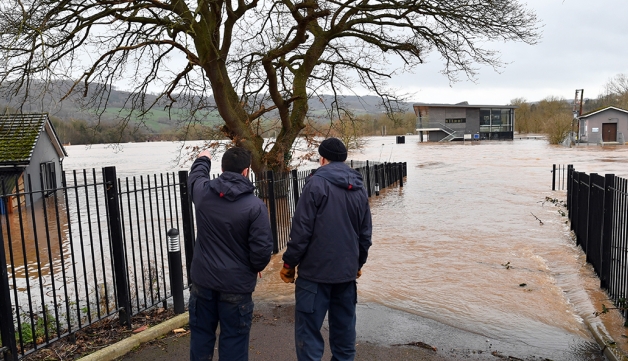
Plus, coastal communities are facing significant climate effects through coastal erosion, flooding and the fact that industries on the coast are the ones producing the majority of the UK’s carbon emissions.

So how can we turn the tide on physical inactivity on the coast?

Can you define ‘coast’?

It is amazing that whilst we are an island, there is no agreed government definition for the term ‘coast’, unlike clear definitions for urban and rural areas.

This leads to the coast often being lost in talks around deprivation as the debate revolves around those in urban and rural areas.

The deteriorating state of coastal living standards is driven by deprivation and the complex and challenging issues around housing, transport and employment, which together lead to disproportionate lower levels of physical activity.

The Coastal Navigators Network, which tackles health inequalities on the coast, has identified that whilst coastal communities are often small individual places, when considered together, they are as large and significant as a national population group (19%) and the near equivalent of the entire North West and North East regions combined.

So with this in mind, what inequalities do people living in coastal areas face in terms of access to sport and physical activity?

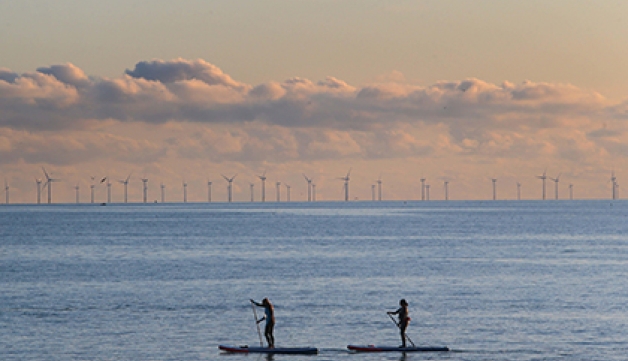
The most obvious one is that for coastal communities half their catchment area is in the sea!

Away games are often long car journeys to the far away urban areas for at least half of their season and let's not forget about those extra carbon emissions!

However, it is the opposite for their urban colleagues, who consider their fixture in the season on the coast as going to the seaside for the day!

Sport and physical activity has come late to the policy work across England about improving opportunities for coastal communities, but is now beginning to build the partnerships with organisations like the Coastal Communities Alliance, OneCoast, the Coastal Navigators Network, and the Coastal Cultural Network.

In fact, in February 2026, the APPG Coastal Communities have scheduled a briefing session on the Culture, Creative & Sport Sector in coastal communities. (Please note that while no final information is available yet, the Coastal Community Alliance is currently organising this with the APPG, so check their sites and socials for more information.)

Where is the good work happening?

Five years on from its launch, Active Withernsea is making a real difference in creating physical activity opportunities and lifestyles and transforming its local community.

Local data by Sport England-funded Active Withernsea highlights that while in 2018, 44% of people in Withernsea were inactive (that is doing under 30 minutes of exercise a week), this number has gone down to 15 % of residents being inactive in 2024.

Further, the percentage of residents who are now active increased from 44% to 62% over this time period.

Happiness and satisfaction with life have also improved and anxiety amongst Withernsea residents has decreased, while activity for those with a disability has seen the biggest increase.

A Physical Activity and Community Engagement (PACE) network has been established to lead physical activity projects going forward and ensure that the work continues with more than 100 residents, groups and partners now directing the next steps to continue to deliver physical activity for the people of Withernsea.

What Active Withernsea has shown is that when national policy makers do focus on coastal communities, significant change can help increase physical activity levels. 

What is also clear is that Sport England place-based funding has begun to turn the tide for coastal communities and that, together, we will keep working to improve the lives of those living by the sea.

Find out more

Active Humber

Now is the time

This week is National Inclusion Week, an initiative started by our friends at Inclusive Employers to celebrate inclusion and to make changes that build workplaces where everyone can thrive.

This year the theme is 'Now is the time', but what does this mean exactly?

Basically, that there’s no moment like the present to take action and to make those practical steps in your organisations that embed inclusion and create a sense of belonging.

This really is one of my favourite weeks of the year!

‘Being inclusive’ is one of the guiding values for the work we do at Sport England and it highlights a collective commitment to Equality, Diversity and Inclusion (EDI) in sport and physical activity.

But we don't approach our commitment to EDI alone, because Moving to Inclusion is an initiative by all the home nations sports councils.

Its purpose is to provide resources and support for physical activity and sport organisations moving towards a more diverse, inclusive and socially responsible sector.

These commitments include an opportunity for self-reflection and continual improvement, which is key in our compromise to keep progressing and living by the values we want to promote.

A bit of history

The Moving to inclusion Framework was created to replace the former ‘Equality Standard - A Framework for Sport’ following a review and consultation with the sport and physical activity sector back in 2021, and it was later soft-launched in Autumn 2023.
 

This week is National Inclusion Week, an initiative started by our friends at Inclusive Employers to celebrate inclusion and to make changes that build workplaces where everyone can thrive.

The Framework guides organisations on developing inclusive practice through self-reflection and continuous improvement using the Moving to Inclusion Diagnostic Toolkit.

Through this self-reflection tool, our aim is simple: to embed equality, diversity and inclusion through incorporating action planning, implementation and review into an organisation’s everyday work.

It is important to note that the diagnostic tool is not mandatory to complete, or part of any performance management for partner-organisations' funding conditions in England. 

Benefits for everybody

In any case, and whichever way you choose to start your inclusivity journey, we believe there are benefits to joining our Moving to Inclusion community:

  • This framework enables your organisation to break down the areas around inclusion to make it more manageable and realistically achievable to embed change.
  • The process is broken down into five pillars: Culture, Leadership, Experience, Relationship and Communication.
  • The self-diagnostic tool within the Moving to Inclusion Framework will help you assess where your organisation is now on its EDI journey and consider where you might need to focus effort and make further improvements.
  • The Framework provides practical suggestions and resources to help you drive continuous improvement in your organisation. The reason for this is that a greater focus on EDI will benefit the whole business, including staff satisfaction and retention, reputation, diversity of workforce and thought, growth in participation and membership, innovation, better resilience and increased business opportunities.
  • Partners who are funded by Sport England may be able to access mentor support upon completing their diagnostic.  
  • As Moving to Inclusion evolves, it will create a learning culture and community to be part of.

Any organisation (either inside the sport sector or outside) can undertake the self-reflection process and benefit from the online resources that support it.

To get an idea of the impact it is currently having, check out this infographic for April 2024-March 2025.

Leading change on EDI in our sector

Sport England (and UK Sport) have introduced Diversity and Inclusion Action Plans (DIAPs) as a mandatory requirement of the Code for Sports Governance.

DIAPs set out the ambitions and practical steps that organisations in the sport and physical activity sector will take to achieve greater diversity and create inclusive cultures.  

The plans are applicable to Tier 3 organisations, with the aim to improve representation and inclusion on boards, in senior leadership teams and throughout the wider organisation. 

To date, Sport England and UK Sport have signed off 116 DIAPs that are now with partners to deliver on the actions within their plans and to improve diversity within their organisations and beyond.  

Organisations funded by Sport England will find that Moving to Inclusion provides additional, complementary and enduring support for their DIAP processes.

The themed pillars within Moving to Inclusion will help those organisations refresh their DIAPs and they may choose to incorporate the actions arising from their self-assessment within their own plans.

This National Inclusion Week (and every other week in the calendar, if you ask me) we all have a role to play in changing our behaviour, championing inclusive practices and challenging discrimination.

Collectively, we can create the conditions that support a kind, welcoming and nurturing environment for everyone to lead healthier and happier lives and we hope Moving to Inclusion can help you in that journey.
 

Together to Inspire

It’s only been a few weeks since I completed my first year as CEO of BAFA and I’ve been reflecting on the journey we’ve taken.

It’s been over 12 months of learning, growth and of laying foundations for the future of American football in the UK and this week I’m proud to share Together to Inspire – our new three-year strategy to inspire the next generation of British American football players, coaches, officials and volunteers by bringing the Britball (British American Football) community together alongside its partners and supporters.

Since securing our initial investment by Sport England we’ve made strong strides as a national governing body.

One of our first priorities was to reset the National Flag Football League under BAFA’s direct management, while reconnecting with clubs and players and also fostering a more inclusive, development-focused culture.

The support from the investment has allowed for some immediate short-term participation growth, but we now have a big opportunity in this space to grow the sport as we build towards the Olympic and Paralympic Games in Los Angeles in 2028.

We’ve also invested in our digital infrastructure – recognising that sound systems and processes are critical for long-term sustainability.

Platforms like JustGo are being enhanced to capture better data, helping us understand who’s playing and how to support them.

And in the meantime, our team continues to balance the efforts of our incredible volunteers with the consistency brought by skilled staff and contractors that then align into our chair and board members.

It hasn’t always been easy, but we think all these efforts are vital to our future.

Leading for now and what’s next

A key lesson this year was balancing ‘the urgent and important’ with the long-term priorities.

There’s always something pressing – a complaint to attend to, another scheduling to fix or a new opportunity for growth to be pursued.

But for me it’s been key to be able to step back away from the day-to-day business and connect with members across the game to ask them about the kind of sport we want to build.

That’s what our new long-term strategy aims to answer.

The support from the investment has allowed for some immediate short-term participation growth, but we now have a big opportunity in this space to grow the sport as we build towards the Olympic and Paralympic Games in Los Angeles in 2028.

With Together to Inspire we’re not just solving today’s problems – we’re building tomorrow’s potential.

And we’re doing so in continuing our alignment with Sport England’s long-term strategy, Uniting the Movement, by creating a sport that’s inclusive, connected and sustainable.

Whether it’s supporting clubs, widening access or growing the workforce, we’re proud to be part of that mission and the work we have delivered in year one.

Listening, learning and leading with community

The biggest insights in our strategy have come from conversations.

Hearing from coaches, volunteers, officials and players has shaped our understanding of what’s needed, but this is an ongoing activity.

Through National Flag League resets, youth competitions and GB performance camps, we’re creating more spaces for meaningful dialogue – not just consultation, but connection with our community.

U19 regional 11v11 pilot

In 2024, we piloted a regional 11v11 league for under-19 players – removing barriers while offering meaningful development.

It reached 400 players across 12 camps and six fixtures, and it led to 80 additional GB trial invites.

The result? A boost of 16% in under-19 registrations!

The pilot also developed new coaches, several of whom now contribute to GB performance teams.

This model reflects the Uniting the Movement’s focus on youth engagement and inclusive talent pathways.

Strengthening safeguarding

This year, we implemented MyConcern – a secure case management platform powered by First Advantage.

It streamlines case-tracking and integrates DBS checks via JustGo to streamline the process and make it easy and secure for the user.

We’re also working with CPSU and NSPCC to ensure our policies reflect best practice, by furthering a safe and trusted environment for all.

Looking ahead

There’s a lot to be excited about, including:

  • reimagining our participation pyramid around accessibility and values
  • building a flag-performance system for LA28 and beyond – backed by uksport
  • strengthening clubs, empowering volunteers and investing in coaches and officials.

The Los Angeles 2028 Olympic and Paralympic Games present a huge opportunity for us, not just for visibility, but for exciting partnerships with the likes of the NFL UK and BUCS that’ll aid long-term growth together.

We look at these games as the beginning, rather than the end.

Looking back, I’m proud of how far we’ve come – and even more excited about what’s next.

We’ll keep working with our clubs, volunteers and partners to build a thriving future for contact and flag football in the UK.

Together to Inspire is more than a strategy – it’s a goal to work with our partners to create a sport that is values-driven, to make a difference for our clubs, workforce and athletes.

Find out more

Together to Inspire

Making the outdoors work for everybody

I’ve lost count of the times people assume better inclusion means compromise or something that’s expensive, difficult or time-consuming. It doesn’t.

What it really means is changing how we think and design spaces, activities and experiences so they are built with everybody in mind.

It also means not asking large parts of society to work around barriers that shouldn't be there in the first place, because 24% of the population are part of the disabled community and, what many don’t realise, is that any one of us could join them at any point in our lives.

At the heart of Accessible Outdoors Month is a simple message: being active outdoors should be for everybody, in whatever way works for each person.

That could mean simply stretching in a quiet garden and moving through a local park, or taking on something more high-energy like skateboarding or climbing.

The campaign returns this July for its second year as part of ParalympicsGB’s Every Body Moves, powered by Toyota.

Closing the gap for an accessible outdoors

Too often disabled people are left out of the picture when it comes to getting active, particularly outdoors.

There are different reasons for this: the terrain’s wrong, the facilities don’t meet the community’s needs, signposting isn’t accessible or access just wasn’t a consideration. 

When access isn’t considered, people are excluded. Not because of their ability, but because the environment wasn’t built with them in mind.

According to Activity Alliance's research, only 44% of disabled people say it’s easy to access outdoor spaces, compared with 78% of non-disabled people.

And yet, around three-quarters of disabled people want to be more active and many of them want to do that outdoors: on beaches, in parks or through forests or towpaths, to name just a few.

So the demand is real but it’s not always being met.

Accessible Outdoors Month is our way of showing how, together, we can start to close that gap between demand, provision and uptake.

It’s a social media-led campaign platforming real people and real experiences that launched in 2024 with community-led content showing accessible beach days, inland water sports, inclusive cycling, adaptive mountain biking and all-terrain wheelchair walks.

We didn't use glossy ads on our campaign, but simply honest, joyful stories rooted in lived experience.

When access isn’t considered, people are excluded. Not because of their ability, but because the environment wasn’t built with them in mind.

We saw standout examples right across the UK along with moments of challenge and connection with people saying: “Let’s try to make this work for everybody.”

We saw people refusing to ignore the problem and we saw movement in every sense of the word.

Together, those short clips reached over 240,000 people and generated more than 4,000 meaningful engagements.

The need for collective action

This year we’re attempting to go even further by shining a light on more inclusive ways to get active outdoors.

That part’s a given and this time it’ll include urban parks, coastlines and more examples of the disabled community choosing to move in whatever way works for them across our great outdoors.

We now want even more of you to get involved and embrace the idea of a truly accessible outdoors.

At the heart of the campaign is the social model of disability, which tells us that it’s the environment, not the individual, that disables people, so meaningful progress relies on collective action and everyone (designers, organisers, providers, funders etc) has a role to play.

The outdoors shouldn’t be a privilege.

It should be welcoming with everybody in mind, so we’re encouraging organisations, community groups, clubs and disabled people to join the conversation and we want you to share what’s happening in your area.

Post about your experiences and help grow visibility using the hashtag #AccessibleOutdoors, all in the spirit of celebrating the great examples we know are out there and that crucially encourage change, so more and more of our outdoor spaces are available to everybody.

Throughout July, we’ll be curating and sharing those stories through our social media channels with @EveryBodyMoves and on our website.

We’ve also launched the ‘Every Body Moves Club' on Strava to help more people connect, so please follow along and join the conversation with like-minded people.

Every Body Moves is co-produced with disabled people and exists to transform how sport and physical activity are delivered, represented and accessed across the UK.

Campaigns like #AccessibleOutdoors help shift public perception, influence design decisions and create ripple effects that stretch far beyond a hashtag.

There’s still a way to go, but the more people taking part or spreading the message, the closer we can get and I hope you’ll be part of it.

Follow #AccessibleOutdoors Month or join us on social media by searching @EveryBodyMoves on X (formerly Twitter), Facebook, Instagram, Threads, TikTokYouTube and LinkedIn.

The game improving everybody’s lives

Since 2018, we’ve worked with Sport England towards a healthier, more inclusive society.

Becoming a system partner in 2022 has allowed us to develop a more direct relationship with local communities, which in turn has help us create stronger partnerships and drive large-scale impact.

Through collaboration, Beat the Street evolved from a game into a community tool, improving public health through cross-sector partnerships and local engagement.

Beat the Street allows partners to engage across a community by working closely with people, local organisations and assets, such as parks and canals, to make a shift in behaviours and attitudes in order to deliver positive, lasting change.

At its core, Beat the Street is a free, real-life game designed to encourage people to move more, explore their local areas and connect with their communities.

Its purpose is to connect people to each other and their place and it works as a major event where the participants are the residents – whether these are adults or children.

Participants of the Beat the Street programme pose with the cards on the street.

The game takes part in social institutions – schools, workplaces and community groups – where people compete on leaderboards and have fun in the process.

In order to take part, participants register providing demographic and attitudinal data on how they move and how they feel about their place and their community.

Policy and practice

Our system work has helped us articulate the value movement and social connection have for people and our planet.

We believe that our social nature is core to us as humans and activity, civic or physical, can enable us to connect and thrive.

It also makes us care more about our environment.
 

At its core, Beat the Street is a free, real-life game designed to encourage people to move more, explore their local areas and connect with their communities.

We also believe that health is created in and by communities and that our role is to create the supportive conditions to enable it. 

We use our Sport England system partner funding to champion policy asks to improve health through movement, using insight to make the case and working closely with many partners to build a unified voice.

For 2025, our policy priorities are underpinned by these beliefs and the vision for a better future that must include children’s voices.

In a nutshell, our policy focus includes:

  • creating healthy childhoods
  • activating healthy and engaged communities
  • designing healthy places
  • nurturing thriving, natural environments
  • walking, wheeling and cycling towards an active nation.

Driving systemic change at scale

We use our delivery funding to unlock local funding and support from public health, transport and integrated care board partners for places. 

With at least 10% of the local population taking part, Beat the Street builds a narrative on how good health could be, with everyone working together with a clear purpose, using the programme as a platform to prototype new ways of working in a place.

The evidenced behavioural change continually benefits the participants well beyond the intervention, with positive outcomes lasting at least two years and possibly longer.  

There is so much positive activity already happening in place, but it often is in siloes.

We now see that Beat the Street’s galvanising mechanics bring partners together, supporting policy and professional practices.

The programme also surfaces rich data and marginalised voices tackling structural inequalities by working with local institutions and assets, plus it enables people to act in ways that strengthen them both as individuals and their roles in the community.  

We understand that Beat the Street's real impact is in social connection, increased feelings of belonging and trust across a place.

Ultimately, the programme has shown that even small, sustainable steps toward active living can have lasting impacts on community health and social connectedness.

This sustainability manifests itself in three key ways:

  • Shared purpose – there is value and energy in bringing partners and community together, developing collective purpose.
  • Insight-led direction - using insight to inform next steps.
  • Behavioural change - building trust, sense of belonging and agency for citizens that enable small changes in daily behaviour, now and in the future.

We're really proud of what the programme has achieved so farTo date, Sport England’s Beat the Street has engaged 754,000 participants.

The programme has:

  • achieved 10% of population engagement on average, comprising 48% adults and 52% children.
  • reached a third of participants (27%) belonging to areas of Index of Multiple Deprivation (IMD) 1 and 2 (the two most deprived areas in a classification of five areas in England). Out of the people reached, 69% are women and 19% have disabilities or a long-term health condition.
  • engaged with 1042 schools, 1133 community groups and workplaces.

In terms of behavioural change, the data from 31,461 matched pairs across 31 Sport England games shows an average 9% decrease in adult inactivity and 7% reduction in proportion of less active children.

However, the greater change was seen in adults with a disability or long-term conditions, showing an 18% decrease of inactive adults and, for girls, a 9% decrease in less active.

But the impact goes beyond just physical activity as Beat The Street fosters social interaction, strengthens community ties and improves mental wellbeing.

We will also continue to work across the country, including a return to Burnley for the third time as they use Beat the Street to drive forward their collective Outdoor Town vision.

It’s been an incredible journey and eight years in it feels like we are only getting started!
 

Find out more

Beat the Street

Are we there yet?

When we are travelling it is easy to get impatient and start wondering how long we’ll still have to go before we reach our destination.

And this edginess often appears even more so when we are on a long journey – like our quest for sustainability in the sport and physical activity sector.

But it is not just sustainable sports centres (to name one example) that we’re after.

We also want more sustainable homes, more sustainable businesses and more sustainable communities – so we are in for a long ride!

Looking back as we celebrate

And just to finish with the journey metaphor, it’s true that sometimes a trip can take you through breathtaking and inspiring places, while other times it drags on with no apparent progress being made.

The efforts around the sustainability journey are no different.

Cynics amongst us may say we are not making any progress with our sustainability efforts but I’d like to disagree.

At Sport England sustainability is a key part of our work, so I thought that as we celebrate the fourth anniversary of our long-term strategy, Uniting the Movement, it’d also be a great moment to reflect on the steps we’ve made so far and how we can keep moving ahead while ensuring we make the most of our natural resources without damaging or limiting our environment.

In 2022, we committed to ‘stepping up on environmental sustainability’.

Back then we highlighted three key points:

  • We recognised there was considerable work to do not only to reduce our negative impact on the environment but also to prepare our sector for a changing climate.
  • We committed to being clear on what actions we needed to take and to improving Sport England’s own environmental performance.
  • We said we’d collaborate with other organisations to make these things happen across the sector.

So, can we say we are nearly there? I’m afraid not quite, but we we’ve taken our first steps and we’re not alone, so we can’t stop now.

Plus we’ve done what we said and more. Much more!
 

Cynics amongst us may say we are not making any progress with our sustainability efforts but I’d like to disagree.

We listened to our partners and our internal teams and produced an environmental sustainability strategy and action plan, which we called Every Move.

We have a small team to deliver the action plan and embed sustainability across all our work but we can see people across the sector getting constantly involved with our efforts, like when almost 200 organisations signed our Going for Green Pledge last summer after our our Chair Chris Boardman cycled for eight days from Manchester to Paris to inspire action for climate change.

But perhaps the biggest change I’ve noticed is the cultural attitude to sustainability across the sport sector.

Our partners have embraced sustainability and a sign of this is that the language around sustainable development is dropped into everyday conversations.

As a collective we’re really beginning to understand the inter-connection between climate change, inequalities, participation in sport and our role in tackling that.

Environmental social governance is now included in the Code for Sports Governance, setting out levels of transparency and integrity for our funded partners.

Working together for everybody's future

In addition, many of our partners have developed, or are developing, their own sustainability action plans and these recognise the importance of tackling climate justice - addressing the unequal impacts of climate change on disadvantaged communities.

There are shining examples of projects across the country which reduce emissions, increase biodiversity, improve the sustainability of the things they buy and improve the accessibility and quality of our natural environment.

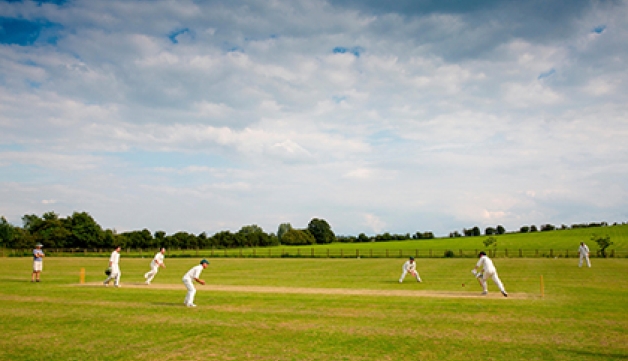
Projects include recycling, second-hand buying or looking at repairing broken items before buying brand new ones, using LED flood-lighting and solar panels on facilities, improving access to natural environments, purchasing goods without plastic packaging and medals made from bamboo, re-distributing good quality kit, cleaning up our natural surroundings or sowing wildflower gardens around cricket pitches.

These initiatives invariably make sport more accessible and appealing to a wider audience by creating inviting natural environments, reducing utility costs or providing the kit to enable sport to happen, plus these are ventures most of us can get involved with.

In England there’s over 75,000 sports and physical activity centres and, according to our latest Active Lives Adult Survey, our sector is powered by 10 million volunteers.

These numbers show that we have the perfect vehicle to spread the word around sustainable action being able to improve the quality of everyone’s life.

The journey ahead looks exciting but it looks tough too as, let’s face it, we still have a long way to go!

The focus must now be on delivery and ensuring we talk about it and share good work practices.

We need to make sure that we tackle sustainability at place-level, underpinning our actions with sustainable approaches.

Sustainability is inextricably connected to deprivation and will become even more so as our climate continues to change.

We must prepare for the future ensuring the places where we are active do not overheat or flood, have clean air and clean water, and are welcoming and accessible for all.

We also need to ensure energy security for our communities, building confidence in the ability to budget and plan.

So no, we’re not there yet, but will we ever get there? I believe the answer is yes.

Happy fourth anniversary, Uniting the Movement. Let's keep working to ensure we have even more to celebrate for your fifth!
 

An integrated approach to increase activity and wellbeing

The first time the importance of spatial planning in creating population-level increases in physical activity was articulated was through the You’ve Got This (YGT) programme – the Sport England-funded Place Partnership in South Tees.

Sport England has worked on different approaches to capacity and hosting when taking a place-based, whole-systems perspective to work and I'm happy to have contributed to the latest set of resources published by the organisation.

YGT adopted the socio-ecological approach to systemic change, where policy and the physical environment appear as key components of the wider determinants of health. 

These aspects are recognised as carrying a high weighting in this framework – difficult to influence but once achieved, the changes are highly impactful over the medium and long-term.

The need for cooperation and understanding

These considerations resulted in the creation of my role.

My post looks at improving collaboration between public health, transport planning, and planning departments across South Tees to promote health, well-being, and physical activity through the Local Plan, the wider policy framework, and innovative new programmes.

My job looks at improving the collaboration between public health, transport planning and planning departments across South Tees to promote physical activity through the Local Plan and the wider policy framework for local healthcare services in a number of community wards and venues across Middlesbrough, Redcar and Cleveland, and Hambleton and Richmondshire.

Previous attempts to enhance collaboration across South Tees had faltered due to time constraints and heavy workloads.

Recognising this, YGT facilitated initial meetings where urban planners, transport planners and public health practitioners could gather away from the office environment.

This process revealed issues such as a limited understanding of each other's roles and decision-making processes, alongside a shared commitment to creating healthier environments and a strong desire to collaborate.

You've Got This has adopted the socio-ecological approach to systemic change, where policy and the physical environment appear as key components of the wider determinants of health.

Over the course of a year, three additional workshop sessions were convened to further explore these issues.

Simultaneously, through Sport England's partnership with the Town and Country Planning Association (TCPA), YGT established a new relationship with one of their experts, Gemma Hyde, who played a pivotal role in charting a path forward.

The culmination of these efforts brought together senior planners, transport planners and public health practitioners supported by Sport England, the TCPA and The Royal Town Planning Institute (RTPI).

Despite initial slow progress, participants valued the time for reflection and identified key issues like capacity and staff training.

Collectively, it was agreed that there were specific challenges related to coordinating the work and addressing the need for knowledge and training among staff and elected members.

To support the process, YGT agreed to fund a position initially for a period of two years and that this role would encompass the whole of South Tees, with Middlesbrough Council (MC) serving as the employer.

This is where I join the story.

Reflecting on progress to date

My background as a behavioural scientist and public health spatial planner definitely came together on this project, as behavioural science studies the patterns, motivations, and factors that influence human behaviour across different contexts, using scientific methods to understand why people make the decisions they do and how behaviour can be modified or improved at individual and societal levels.

Our boroughs, MC and Redcar and Cleveland Borough Council (RCBC) are currently at different stages of the Local Plan cycle.

In the emerging Local Plan for MC, I contributed to the Health and Wellbeing Policy and successfully secured an agreement to require Health Impact Assessments (HIAs) for all residential developments that exceed 100 dwellings.

I also devised an additional HIA screening process based on health and open-space ­deprivation on a ward-by-ward basis to be conducted for all major development across town.

There was also the completion of a Health in All Policies (HiAP) assessment of the emerging plan (Regulation 18).

Productive discussions with colleagues in RCBC have centred on the potential for a similar approach in the future review of the Local Plan.

I've also facilitated, with colleagues across public health and spatial planning and other stakeholders, the creation of MC’s first HIA toolkit, which has physical activity at its heart and taking as our primary model the well-respected HIA materials created by John Wilcox and colleagues at Wakefield City Council.

Public Health South Tees recently completed our Joint Strategic Needs Assessments (JSNAs), to which I also contributed, ensuring that the JSNA is integrated into MC's emerging local plan for health and wellbeing policy.

Once adopted in late 2025 or early 2026, this will provide developers with clear baseline information about our communities and our priority goals for health and wellbeing across the borough.

Looking ahead

The foundational changes we're beginning to implement in South Tees represent a significant shift in how we integrate public health, planning and transport policies to promote physical activity and wellbeing.

However, we face significant challenges ahead.

We'll need to secure sustained funding beyond the post's initial two-year period, maintain momentum across different planning cycles between our boroughs and ensure consistent implementation of our new policies.

Looking to the future, our next steps of sharing best practices through Sport England's expansion process and deepening collaboration with the Tees Valley Combined Authority are crucial for scaling our innovations.

If we succeed, we could contribute to a new standard for how local authorities approach integrated planning for health and physical activity, potentially influencing national strategy and contributing to more active, healthier communities across England.

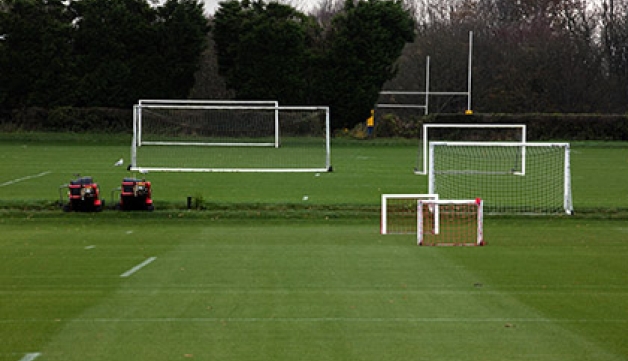
Planning applications

Young girls jumping on long trampoline. We have an established role providing advice and guidance to local authorities, sports clubs and other parties on a range of planning applications. Planning
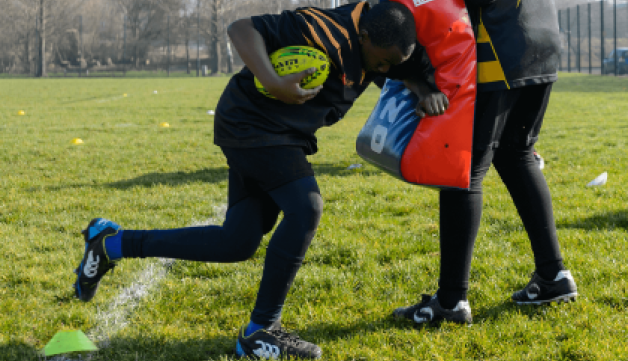
Playing fields policy

Young boy practicing american football tackle using cushion. Local planning authorities are required by law to consult us on planning applications they receive that affect playing fields. Planning
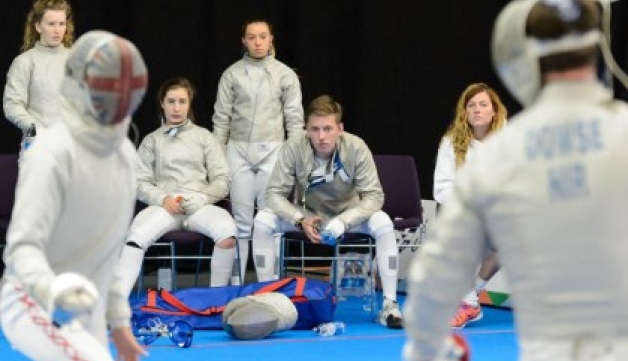
"The inclusion revolution is on"

“It’s like the Olympics but even better” said my 10-year-old, as I watched him and his younger sister glued to the T54 marathon on the TV, not long after I had returned from four days in Paris.

They had fully engaged with the Paris 2024 Paralympics from the get-go and not just because it was constantly on our TV in the lounge.

They were not afraid to ask the usual questions about the sports, the athletes and the countries represented, but I also heard (and welcomed) the inquisitive questions around inclusion, adaptations and the different equipment used, and I was embracing the teachable moments with them!

A true game-changer

I echoed their excitement as my short visit to the Paralympic Games in Paris was nothing short of incredible.

The energy, determination and strength that radiated from the athletes made it clear that the Paralympic Games are more than just a showcase of sporting excellence.

They represent the culmination of years of effort, dedication and commitment to their sport.

At the events I went to, the majority-French spectators were generous with their support  even if it wasn’t for their team.

The venues had been dressed for the occasion and tried hard to be as accessible as they could be for both participants and spectators.
 

The energy, determination and strength that radiated from the athletes made it clear that the Paralympic Games are more than just a showcase of sporting excellence.

But what about the public transport? Well, the organisers recognised they couldn’t do much about their old and dense Metro system and the city's sometimes inaccessible street layout, but they focused on what they could change.

So they created more accessible bus routes, shuttle buses and accessible taxis that together with a relatively accessible public transport app, aimed to cater for the 350,000 disabled visitors.

The system was by no means perfect, but it showed progress nonetheless.

During my time there I was lucky enough to see wheelchair basketball, athletics, boccia, para table tennis and goalball.

In each sport the skill level was high, the playing quality was outstanding and I saw records broken. I felt incredibly grateful to be there!

Because in what any other four days can anyone ever see that much live sport and at that level? 

The ParalympicsGB team delivered outstanding results and thrived in a full (and loud!) stadium and, for the third consecutive Games, they were second in the medal table.

And even if you couldn’t attend in person, you could follow the action on Channel 4, from where 20 million people watched, achieving the biggest audience share in 12 years for the channel.

Paris’ were also the most accessible Games ever, as 91% of the presenting and commenting team were disabled  30% of crew in total.

There were also repeated adverts for Every Body Moves the inclusive sport and physical activity finder.  

All these elements have truly set the bar for future Games high. Very high.

The main purpose of my visit to Paris was to attend the Championing Change reception with ParalympicsGB.

This was the launch of their new social impact strategy together with the launch of Equal Play –  their campaign and policy paper to garner a commitment to ensuring every child has the same access to PE and sport at school.

The Equal Play campaign’s goal is to ensure that no child is left on the sidelines, as just one in four disabled children say they take part regularly in sport at school.

There are 1.5 million disabled children – 15% of the school population – and so the figures of those who do not participate are stark, but the documentary that goes with it has been brilliantly done.

Present at the event were multiple stakeholders from across the sector, which included a notable visit from UK’s Government Minister of State for Culture, Media and Sport, Lisa Nandy.

She echoed the call to support the human rights of disabled children to play sport, as part of a bold new ambition to raise the healthiest generation of children in our history.

Gathering momentum afterwards, there has now been an open letter sent to Prime Minister Sir Keir Starmer about Equal Play from ParalympicsGB that has gained significant traction across the sector and on social media, as well as from the athletes themselves.

So much more to come

However, despite all the progress we have seen there is still so much to be done to challenge the many inequalities faced by disabled people in sport and physical activity.

Our Active Lives surveys constantly tells us that disabled people are still twice as likely to be physically inactive.

And of course not every disabled person can or wants to become a Paralympian and it is true that elite sport is only for a few. However, getting society to the point where every disabled person can play sport, be active and move more in everyday life is even more important.

So it’s everybody’s responsibility to step up, to consider our approaches and to provide wholly accessible opportunities for everybody to be able to enjoy the benefits from moving.

In the words of Paralympian Stef Reid MBE: “The inclusion revolution is officially on!” and I couldn't agree more. 
 

Active Essex: beyond the numbers

March was an important month for Active Essex, as we launched our digital 2023/24 Impact Report.

The report shines a light on the fantastic work of the partners, stakeholders, groups and individuals that the Active Essex team works with, all uniting towards a common purpose – ‘an active Essex for everyone’s health and wellbeing’.

The Impact Report highlights our contribution to our Essex Fit for the Future strategy as well as the Sport England Uniting the Movement strategy.

The importance of storytelling

The study, which is presented on a microsite, shows that in Essex - just like in the rest of the country - we are still recovering from the devastating effects the pandemic had on the general physical activity levels of the population. 

However, in the case of our region I am delighted that Essex has seen:

  • an overall increase in activity levels and reduction of inactivity levels. We have seen a 3.9% increase in the number of physically active residents in the county and a 0.9% reduction in the number of inactive residents across Essex.
  • increased levels of girls and women's activity levels. More females in Essex are active now compared to the year 2022. Brentwood has seen more active females than males over the past year, which is the first time this has happened since we've had Active Lives data.
  • increased activity levels for those living with long-term health conditions like cancer or diabetes.
  • those belonging to under-represented groups getting more active.  

Stats are important but can often be dry and not appeal to our human nature, so one key area that the Active Essex team has prioritised is the power of storytelling.

Through our work and our partnerships we have uncovered incredible stories of how physical activity is transforming lives, families and communities.

And it’s precisely through our Impact Report that we tell these stories by using an engaging mix of video, audio, photos and quotes.

Talking of quotes, Active Essex is very fortunate to have an inspirational Chairman - Dr William Bird.
 

Stats are important but can often be dry and not appeal to our human nature, so one key area that the Active Essex team has prioritised is the power of storytelling.

He opened the report highlighting how for him, and the rest of our organisation, using a place-based approach is paramount in achieving significant change in our communities.

His vast experience, knowledge and imagination in health, nature, community resilience and physical activity are all having a phenomenal positive impact on the Active Essex Board and the overall team.

The place-based approach signalled by Dr. Bird is especially relevant as we grow our collective place-based work as part of the £250 million investment by Sport England’s Place Partnerships expansion, announced in November 2023.

Learning and sharing our knowledge

In Essex we are carefully planning our transition from local delivery pilot to Place Partnerships.

Adopting a long-term place-based working model has been one of our most fundamental learnings over the past few years.

It ensures a common purpose, secures collaboration between local residents, local voluntary and community organisations, and the networks across the public sector.

The trusted relationships that these create, guarantee that we all understand the unique local conditions and needs, as well as the main barriers and enablers within each place.

Our Impact Report can be easily navigated to look closely at our places, our five strategic priorities and our showcase portfolio programmes, and it underlines our commitment to share and learn.

For instance, since the last edition of this work, we’ve increased our workforce training and system networking and we now produce share-and-learn events to inform and inspire all of us that make up the Essex physical activity system.

We’re excited about what the new year will bring to the people of Essex and how we’ll find new ways of helping them reap the many benefits of being active.

And especially how we’re going to keep sharing all those amazing stories with you all.
 

Let’s jam! Designing to reduce inequality

What can a team of strangers achieve in 11 hours?

Every year the Innovation Unit partners with the Royal College of Art to host a ‘service design jam’ to address a different pressing social challenge.

This year we sponsored the jam and provided the brief for the session to explore new and novel ways to ensure that disabled people from a diverse range of backgrounds can be more active.

OK… but what exactly is a service design jam, I can hear you ask.

A service design jam is a two-day, high-paced, high-energy design sprint, where participants split into teams to design a service that addresses a real-world problem.

The aim is to apply user-centred design methods to complex systems, creating practical and innovative services or products to improve user experiences.

A group of women seat around a table on their computers discussing ideas to reduce inequality.

At the end of the second day ideas are presented to a panel and prizes are awarded to the winning design.

It is a great platform for collaborative problem-solving, a chance to develop new solutions and a way to grow design capabilities.

What was the brief?

Through Uniting the Movement we are committed to focussing our investment and energy on the people and communities who face the biggest barriers to being active.

We know that disabled people experience some of the biggest challenges and the more characteristics related to inequality a person has, the less likely they are to be active.

So we asked teams to choose between two disabled communities to focus on either disabled young people from culturally diverse communities or LGBTQ+ disabled adults.

The process

We introduced our brief and then teams were formed. The groups included Sport England staff, partners and students from the Innovation Unit Design Academy and Royal College of Art’s service design course.

Teams followed the double diamond structure – discover, define, develop and deliver.

Through Uniting the Movement we are committed to focussing our investment and energy on the people and communities who face the biggest barriers to being active.

Day one was about ensuring teams ‘design the right thing’ through the proper research and framing of the challenge.

Teams conducted desktop research and interviews with their target audience and users were placed at the front and centre of the design process.

Specialists from partner organisations Disability Rights UK, Mermaids, Activity Alliance, Street Games, Sport England colleagues and individuals with lived experience provided support, guidance and feedback to the teams (either online or in person).

Teams also took to the streets of London to speak to members of the public: from faith leaders at local mosques, to parents waiting for the school pick-up or at the park.

Day two was all about ensuring teams designed ‘the thing right’, generating ideas and creating prototypes to put the stakeholders to test, learn and adapt.

One team spoke to two PE teachers who were so impressed with the concept, they asked for it to be pitched to their headteacher!

Theories of change, user journeys and pitches were created ready to wow the judging panel.

The ideas

The jam culminated in presentations from all six teams hoping to hit the criteria the judges were looking for: beauty, brains, heart, magic, mastery and bravery; plus Sport England’s values of being innovative, collaborative, inclusive and ambitious.

A whole range of tools including Lego, Canva documents and even pipe cleaners were used to bring ideas to life, always with the user in mind.

Reflections

It is hard to capture the energy, creativity and power of design-thinking that I witnessed over the two days, but my biggest takeaways are:

  • Collaboration is key. It was brilliant to see the dynamics of the teams, with students working alongside professionals and service design experts, as well as individuals new to the subject, and all bringing a diverse range of lived experiences. It was this variety of backgrounds, working collaboratively on a shared brief, that created truly innovative magic.
  • The power of partnerships. The insights that teams gathered from our partners, in person and online, made a huge difference to really grounding the concepts to build upon.
  • The importance of freedom. From live user research, ideation, testing prototypes and forming presentations, it was truly remarkable what the teams achieved in just two days to tackle such complex system challenges when seeing barriers to innovation disappear.

What’s next?

These are truly exciting times!

We will be sharing more information and some of the brilliant ideas and concepts that came from the jam over the next few months, so keep an eye on our channels.

Thank you to all our partners and those who joined our efforts during the jam.

If you want to keep learning about innovation, we’d love to hear from you.

Unlocking digital innovation: the power of Open Working

In our previous blog, we discussed the state of digital skills in our sector and this time we will explore the mindset and practice of 'open working', also called working in the open, and how it can promote innovation and build digital skills in our sector.

I have always liked this quote by visionary Jimmy Wales, founder of Wikipedia: "Imagine a world where every single person on the planet has free access to the sum total of all human knowledge. That's what we're doing."

We all know and love Wikipedia, so much so that it's the fifth most visited website in the world, just behind Google, YouTube, Facebook and Twitter.

But Wikipedia is fundamentally different - it is not only a great example, but a global example of how open working can facilitate collaboration, knowledge-sharing and community-driven content creation and moderation.

What is open working?

Put simply, it is sharing the work you are doing as you’re doing it.

This is integrated already in many organisations, but is even better if it's shared with external stakeholders too, so others can learn and contribute to the work we do.

For a digital product or service, open working can mean sharing a product brief, a roadmap, or even just an update on progress.

Big tech companies, like Amazon, use practices like this internally. For example, by writing a mock product press release or frequently asked questions to help engage internal staff, and to collect feedback on an idea before diving into development.
 

I have always liked this quote by visionary Jimmy Wales, founder of Wikipedia: "Imagine a world where every single person on the planet has free access to the sum total of all human knowledge." That's what we're doing.

Benefits of open working

In today's fast-paced digital world, open working is becoming an increasingly popular way to promote innovation and build digital skills with lots of benefits. Open working can:

  • increase engagement with communities we want to reach, creating a link between the actions and the mission and soul of our organisations
  • create faster innovation, with ideas coming from inside and outside the organisation, thereby harnessing early-stage input and building on existing learning. It’s a handy way to also spot duplication and avoid repeating other people’s mistakes.
  • promote greater collaboration, as we can all see what is in development and where work connects. This can help us work towards our goals in unison, like with the shared vision of Uniting the Movement.

And on a personal level, it can also:

  • build greater trust with the communities we are working with. It is a genuine step towards the sentiment in the disability rights slogan “nothing about us, without us”.
  • be authentic by sharing the passion in our work and listening to others, people can understand we care and help us channel our energy into the right solutions.

Open working in practice

The idea of open working sounds simple enough, but it can feel hard to know where to start. Some of my personal favourites for overcoming the feared open-writers block are:

  • weeknotes: quick summaries of what has been done and learnt in a week. These are shared by our partners and staff via email or internal blog posts.
  • show-and-tell sessions: open-invite events where a team presents on recent progress and helps show the work via a live demo.
  • posting updates all together: collectively posting short updates can help carve out the space and time to do it. We recently trialled this at a partner event and it helped to provide a snapshot and connect people around similar work.
  • blogs and vlogs: writing up or recording sessions can create valuable and open resources. The Innovation and Digital Accelerator, Digital Marketing Hub and OpenActive, routinely shares all the sessions they host as standard.
  • service recipes: a novel way of showing how a digital solution was built by showing the ingredients and steps in the building process. It’s a type of open working we are keen to explore more and currently Street Soccer Scotland is leading the charge for the sector.

In short, open working is gaining popularity and we believe it can help our sector promote innovation and build the digital skills it needs.

We can use open working to foster greater collaboration and engagement with the communities we are trying to reach.

In doing so, breaking down traditional barriers and promoting knowledge-sharing and transparency.

As the sector continues to evolve and face new challenges, open working will undoubtedly play an increasingly important role in driving innovation.

Please let us know if you are practicing open working or you can tag us on Twitter. We’re also on LinkedIn, as well as on Instagram and you can find us on Facebook too. If you want to start trying it, check out the resources below.”

Useful resources on open working

For those keen to learning more about open working, here are some resources I have found useful:

Sustainability

A harvest mouse peeks out of a hole in a tennis ball placed on the end of a stick among wildflowers. Using the Every Move strategy and action plan, we want to lead, inspire and support the sector to become environmentally sustainable, enabling greater opportunity for all people to participate in sport and physical activity, now and in the future. Facilities Planning Sustainability
Essex Design Guide: Building activity into new development

The 10 Principles of Active Design have been included in the latest review of the Essex Design Guide.

The Essex Design Guide (EDG) was first published in 1973, this seminal work led the way in the planning and development sectors for urban design guidance.

The EDG has helped to shape and influence the design and layout of new development in Essex over the past 40 years to help create places of quality and identity which respond to their Essex context.

The EDG has received significant praise throughout its history for pioneering local design. Richard Simmons, Chief Executive of CABE described the guide as “an icon for our times” and “has also come to symbolise the vision, leadership and commitment to quality of place that all local authorities should show”.

The guide was reviewed and updated in 1997, 2005 and more recently in 2018. The 2018 EDG has retained the pioneering aspirations of the original while focusing firmly on the future.

This includes embracing the 10 Principles of Active Design.

Blackbridge Athletics Track

Blackbridge Athletics Track was saved after a solution was found to complex land ownership issues by a brand new organisation being established to take over the facility’s management.

This story demonstrates how dedicated management by passionate people can draw in investment, grow usage and create a new offer for ‘all ability’ sportspeople with wheelchair racing and other Paralympic disciplines.

What was the problem?

Blackbridge Athletics Track, built and owned by Gloucester City Council (GCC), and used by two different athletics clubs – as well as schools and individuals – was in a poor state of management and disrepair. Floods in 2007 had worsened the situation, and parts of the facility were closed for health and safety reasons.

There were large holes in the track and equipment was in a poor state of repair. Gloucester City Council made the decision to close the track and invest in new athletics facilities on a different site as part of a major sports complex. These plans fell through in 2011 however, when they could not raise enough partnership funding for the project.

Meanwhile, a coach at one of the athletics clubs using the track decided to launch an appeal to raise money towards the planned new track. When the big plans were abandoned, there were donations of £35,000 already pledged or made, and a decision had to be made as to what to do with the money.

A meeting was arranged with a city councillor with responsibility for sports and leisure, to discuss the future for athletics in the city. What came from that meeting was a plan for rescuing Blackbridge Track.

What was the solution?

The Council had funds available from flood insurance to reinvest in sports facilities. However, there was no money for the ongoing running or management of the track. However, if the athletics clubs could take on management of the site, the Council would be willing to make some much needed repairs before handing it over. The final piece of the funding jigsaw would be the Sport England Inspired Facilities fund.

Club members began work on a business plan for running the facility, whilst GCC put in a funding application to Sport England, with the emphasis on making the site safe and secure with facilities fit for all levels of training from schools to elite sportspeople. They were awarded £100,000 in late 2011. One of the terms of the funding was for GCC to have a lease in place for at least seven years with the potential of asset transfer at some point in the future.

The emphasis was on making the site safe and secure with facilities fit for all levels of training from schools to elite sportspeople

They were awarded £100,000 in late 2011 and one of the terms of the funding was for GCC to have a lease in place for at least seven years, with the potential of asset transfer at some point in the future.

There were two more hurdles to overcome in the transfer plans. At the time, two athletics clubs were using the track facilities and the adjoining club house. It was not a fair solution for the track to be handed to just one of the clubs, nor did the council favour a competitive solution.

The emphasis was on making the site safe and secure with facilities fit for all levels of training, from schools to elite sportspeople

So the team involved in negotiations decided to establish a new charitable company to take on management of the track from the Council. Gloucester Athletics Track Management Ltd. (GATM) was incorporated in 2011 and registered as a charity in 2012. There were a mix of trustees, with about half coming from the athletics clubs.

£60,000

was raised by GATM to fund equipment

The final hurdle was the land ownership situation. Blackbridge Athletics Track was built and managed by Gloucester City Council but the land on which it sits was owned by the trustees of Gloucester United Schools. The trustees were not keen to alter the existing lease with the city council or allow a sub-lease, but Sport England funding was dependent on some degree of transfer.

The compromise solution was a five-year management agreement for GATM along with a peppercorn license to occupy. Whilst this appears in legal terms to lack security, GATM are confident that the intention of the council is for GATM to be the long term manager of the site for as long as they are able, and that in the future they will be offered a long lease.

An interesting element is the financial agreement between GATM and GCC. GATM is responsible for collecting all income and maintaining the facility. Any surplus generated must be used for ‘the accumulation of a sinking fund to meet the cost of any future renewal or replacement of the running track’.

What's the business model?

This is a lean and mean business model with the primary aim of keeping the athletics facilities accessible and affordable. It's totally based on volunteer staffing. Trustees and other volunteers are very hands on, taking on everything from bookings and collecting fees to carrying out minor repairs, stewarding events and purchasing equipment. The biggest costs are equipment replacement, utilities and insurance, and £10,000 has been put into a sinking fund in the first three years of operation.

Yearly income averages around £20,000 and this is made up of club hire, fees for occasional use and hire for events. Clubs pay a booking fee for regular use and club members can also use the facilities on a pay as you go basis. Trusted users can access the site themselves at times when it is not open for clubs. There is a degree of trust in terms of payment for use on a ‘pay-as-you-go’ basis.

In addition, GATM has raised more than £60,000 in donations towards equipment such as race wheelchairs, hurdles etc. They have received a lot of favourable press coverage and support from their local MP and others, and this has helped hugely with fundraising – including introductions to business sponsors such as EDF. Legal support has been provided pro-bono, too. The website is managed by volunteers and sponsored by a local sports shop and one of the trustees as a PR specialist.

Trustees and other volunteers are very hands on, taking on everything from bookings and collecting fees to carrying out minor repairs, stewarding events and purchasing equipment

They have massive support from their local MP, many if not all city and county councillors, the Lord Lieutenant and through her, the Princess Royal. Local industry has supported them financially, as well as a host of other local and national charities

GATM has more plans to help them generate enough income to maintain and invest in the site. Adjoining the track but on a separate piece of land owned by the county council is the clubhouse of the Gloucester Athletics Club which is urgently in need of refurbishment. Working with the city and county councils, GATM hope to lease the land and develop and improve the clubhouse using a Section 106 contribution to improve the changing facilities, the gym, the bar and social area. This will enable more income to be generated for both the club and the track upkeep.

What was the result?

As a result of the strong partnership between GATM and GCC, a derelict and unsafe athletics facility has been brought back into use. The track itself has been resurfaced and widened to eight lanes. There is floodlighting, a new throwing cage and new long jump pit. The facility is in regular use by schools, athletics clubs and individuals. The diversity of the club has also greatly improved with 120 children training regularly, although there is still more work to be done to get children from the local area, which is one of the more deprived neighbourhoods in Gloucester, using the facilities.

One of the proudest achievements is the increase in facilities for all-ability athletics. A number of racing trikes and race runners have been purchased and are already in use. There are partnerships in place with a local special school, with the Leonard Cheshire charity and Active Gloucestershire. This is an area of athletics which is set to grow in Gloucester.

Learn more

For more information, visit the Blackbridge Athletics Track website.

Flitwick Leisure Centre

Flitwick Leisure Centre provides a key strategic facility for Central Bedfordshire promoting community health and wellbeing in the local communities.

The facility includes a range of innovative sports and leisure features including swimming pools, a station health and fitness suite which includes a gym and separate spinning and fitness studios.

In addition, there is a four-court sports hall, two squash courts, a climbing wall and new artificial 5-a-side pitches.

Active Campus: Loughborough University’s new student village

Loughborough University has invested almost £50 million in developing a new student village, to build a landscape that includes a suite of courtyards which offer a range of activities encompassing exercise, relaxation and social interaction.

Throughout the site, facilities are provided that offer outstanding recreation and fitness opportunities specifically designed to support learning, health and wellbeing in an exceptional environment.

Alconbury Weald: delivering active design in new communities

In October 2014, outline planning permission was granted for development of the 575 hectares former RAF/USAF airfield to provide 8,000 new jobs and 5,000 new homes.

The project aimed to create both places to live and work, within a layout encouraging walking and cycling.

The scale of Alconbury Weald also means that a number of exciting sustainable opportunities are being explored, including renewable energy projects.

Our Parks: bringing activity to the community

Our Parks runs its exercise classes in parks across several London boroughs and works to improve the health and wellbeing of local communities.

It uses a phone app and website to allow users to book a variety of classes remotely and help connect people who may not normally sign up for exercise sessions.

Using social media to create a sense of community also keeps users engaged while creating a self-supporting network. The classes use the existing network of local parks and open spaces close to where people live and work to increase access and practicality.

The National Forest: connectivity through walking and cycling

Over 25 years, the National Forest has planted more than 8.5 million trees, creating an integrated green infrastructure network of cycling and walking routes by creating new woodland spaces.

Spanning parts of Staffordshire, Derbyshire and Leicestershire, the National Forest extends over 200 square miles and provides local communities with easy access to recreational opportunities on their doorstep and implements Active Design principles.

Westway development trust

In the late 1960s the Westway A40 elevated flyover, providing a fast route from White City into Central London, was driven through the heart of North Kensington. Around 600 houses were demolished and more than 1,000 local people moved away. By 1970, a decade of community action networks had grown up in North Kensington fighting for better housing and open spaces.

The following year, the trust’s original incarnation – the North Kensington Amenity Trust – was set up in partnership with the local authority. It had two goals: to use the mile-long strip of land under the motorway to compensate the community for damage and destruction caused by the road, and to ensure that local people would be actively involved in determining its use.

Long-term benefits

Over the years the trust has successfully combined the roles of charity, developer, social enterprise and landlord. Eighty per cent of the land has been developed for community facilities and 20% developed commercially, providing a long-term income stream.

As well as managing the commercial portfolio and delivering community projects, education and the arts, the trust also provides a wide range of sport and fitness opportunities to the community of Kensington and Chelsea through the trust’s flagship facilities – the Westway Sports Centre, (354,000 user visits in 2009/10), and the Portobello Green Fitness Club, (95,000 user visits in 2009/10).

Portobello Green pioneered GP-referral fitness programmes in the late 90s, while Westway operates a Performance Tennis Centre, one of the country's leading climbing and bouldering centres and football pitches, basketball and netball courts, cricket nets and the only publicly available handball fives court in London. The trust's ethos is about all members of the community enjoying sport in a fantastic environment on a 'pay and play' basis.

The trust learnt very quickly that well-used facilities can become very tatty, very quickly

John O'Brien

Sport and fitness director, Westway Development Trust

Although the specific circumstances surrounding the origins of the trust are naturally unique, a history of pragmatic financial management and a policy of re-investment in facilities is a transferable principle for the sustainability of any asset transfer of a community sports facility. Scheduled refurbishment works to the playing surfaces of pitches and large sections of the climbing wall are vital elements of meeting the demands of the trusts' customers.

As John O'Brien, sport and fitness director at the trust, explains: "The trust learnt very quickly that well-used facilities can become very tatty, very quickly. We used the published industry standards for the life-span of materials but found that going and seeing similar operations elsewhere in the country gave us a much better idea of typical wear and tear.

"From that benchmark we've built up historic cost models with suitable inflation measures for sub-elements, which are under periodic review in response to fluctuations in price."

Facilities management

The trust has also developed a pragmatic, but realistic, approach to its facilities management. After large scale contractor arrangements did not bring the promised economies of their scale, the trust now uses the services of a smaller local provider combined with a policy of training duty managers in day-to-day preventative maintenance and minor repair tasks.

"Our new contractor is smaller, but locally based and more responsive," says John. "The relationship is more of a partnership. They give us health and safety credibility and, combined with using committed staff as our eyes and ears on the ground, many issues can be tackled relatively cheaply before they become critical."

155,000

Kensington and Chelsea is the fourth most densely populated borough in London

Other contractor and supplier arrangements are also under constant review to maximise their efficiency and effectiveness. Cleaning is currently outsourced, (with a condition that the supplier pays the 'living wage' of £10.55), and a longstanding catering franchise has proven better value than in-house efforts.

A specialist climbing kit retailer rents a unit from the trust, which provides a consistent income stream and provides customers with a more specialised service than the trust itself could provide. And, as a result of a recent partnership with a new enterprise, customers can now enjoy the experience of 'endless pools', which use a flow of water to swim against.

Innovative partnerships

Although the trust has won national awards for its approach and is often cited as an example for others to replicate, with mainstream fitness club competition the trust has to continually look at forging innovative partnerships and providing distinctive programmes.

"We need to take another big step to stay ahead", says John. "Being known for GP referrals isn't enough. We're now planning a more holistic wellbeing offer that will positively affect the health of a critical mass of the local population. This will be attractive to the NHS as well as trusts and foundations whose priorities also include youth and education."

This ambition will also entail a big investment in upskilling the trust's staff, so that more of them will have a broader knowledge of the health benefits of exercise.

The continuous development of staff is seen as a critical success fact for the trust. Enthusiastic staff who have sympathy for the area and the community they serve bring an extra level of commitment to their roles.

Long-serving coaches have built deep networks into the community

John O'Brien

Sport and fitness director, Westway Development Trust

"Their friendliness rubs off on customers, particularly young people", says John. "Long-serving coaches have built deep networks into the community and when the kids keep coming back, their parents start to get familiar with the environment and the staff, and want to get engaged too."

In an effort to revitalise itself, the trust has also taken on five apprenticeships, with an ambition to bring this up to 10.

Beyond sport, staff are also encouraged to build relationships with key people and networks in the local authority and NHS Kensington and Chelsea, including the local education authority, environmental services, children and families and adult social services.

"You don't know where that new funding opportunity is going to come from next sometimes, so you need to keep knocking on a lot of doors and making yourself known", says John.

"We benefited from some last-minute funding from a local Olympic legacy fund. If we weren’t known and trusted, I suspect we would have missed out on what was a good opportunity for us."

Despite its status as a royal borough and its glamorous image, Kensington and Chelsea, with a population of around 155,000, is the fourth most densely populated borough in the UK where extremes of wealth and poverty co-exist.

For more than 50 years the trust has been meeting the changing demands and expectations of its cosmopolitan, multi-ethnic and multi-faith community. Through its re-investment in physical assets and continuous improvements in programming and maintaining highly skilled and motivated staff, the trust provides a good model of how to run a community sports facility for the long term.

Critical success factors

  • Scheduled maintenance and re-investment in facilities is essential for health and safety reasons, but also maintains their value as an asset to the organisation.
  • Benchmark against similar operations to understand patterns of usage and wear and tear, rather than relying on industry and supplier data.
  • Keep supplier and franchise contracts under constant review to ensure value for money and customer expectations are met.
  • Health and safety is everyone's job - staff can play a vital role in spotting things before they become critical and expensive to tackle.
  • Invest in staff skills and areas of interest, encouraging them to build key relationships with partners beyond their job role.

Learn more

For more information, visit the Westway Development Trust's website.

Planning for growth: Central Bedfordshire and the Facilities Planning Model

The Facilities Planning Model

The FPM is a spatial modelling tool that can help to assess the strategic provision of community sports facilities. The FPM is a computer model developed and used on license from Edinburgh University. The FPM covers the major community sports facilities of sports halls, swimming pools and artificial grass pitches. It has in the past been used for indoor bowls centres.

The FPM has been developed as a means of:

  • Assessing the needs and requirements for different types of community sports facilities on a local, regional or national scale;
  • Helping local authorities determine an adequate level of sports facility provision to meet local needs;
  • Testing ‘what if’ scenario’s to see the potential impact changes to the supply of provision and changes in demand may have on meeting needs for sports facilities in an area – this can include testing the impact of opening, relocating and closing facilities and of population changes (e.g. from new development); 
  • Helping to provide an evidence base to underpin strategies, plans and policies.

Outside view of Dunstable Leisure Centre

Securing investment

This 2018 use of the FPM followed on from CBC using the FPM in 2013 to help develop an evidence base to under pin its 2014 Leisure Facilities Strategy.

The development of this strategy led us, through our Strategic Facilities Fund, to contribute £2m towards the construction of the new Flitwick Leisure Centre and a further £1m to the redevelopment of Dunstable Leisure Centre. The evidence base provided by the FPM played a key part in helping to secure this investment and in CBCs decision to commit over £36m of capital funding to these two projects.

Growth in Central Bedfordshire

Central Bedfordshire is a unitary authority created from the merger of Mid Bedfordshire and South Bedfordshire District Councils on 1 April 2009. In 2017 the total population was 280,000 and is projected to increase to 322,600 by 2028 (the period modelled by FPM) which represents a 15% increase.

The projected population growth comes from CBC’s allocated housing delivery requirement of an additional 20,000 homes by 2035. CBC’s Local Plan (2018-2035) addresses both the locations of the growth and the supporting infrastructure required to serve the existing and new communities.

Understanding the needs

The extensive housing and population growth will generate significant needs for sport and recreational provision.

To help plan for this growth and inform the Local Plan, CBC wanted to understand the extent and nature of these needs and how they could be met (i.e. what scale of provision would be required and where should it be located).

This information would then enable CBC to:

  • establish an evidence base of facility requirements to help decide where facilities should be located and whether it would be better to provide new facilities, or modernise existing ones;
  • integrate the evidence base into the Local Plan, leisure policy and master planning for new developments; and
  • use the evidence base to help secure developer contributions for the demand created by the new developments.

CBC used the FPM to help provide this information and evidence base for swimming pools and sports halls which was integrated with other facilities research, to create their Leisure Facilities Strategy.

A map of central Bedfordshire

The challenges

There were several challenges which the FPM helped CBC to overcome, including:

  • Determining the options for change - Central Bedfordshire already had an extensive supply of swimming pools and sports halls, so the first challenge was to determine if the existing facilities could meet the needs generated by growth. If they couldn’t, what additional provision would be required? Would it be more effective to modernise/replace the existing facilities, or provide new facilities to meet the needs?
  • Understanding the best locations for any new facilities - If new facilities were required would it better to locate them within existing towns, or as part of new settlements or a combination of both?
  • Knowing what neighbouring local authorities were planning and how planning for new school sports facilities be integrated with community needs Any planned changes to facility provision in neighbouring areas and within the education sector had to be factored in to understand their impact on meeting the needs of population growth in Central Bedfordshire (e.g. any plans for new/enhanced provision, removing community use or closing existing facilities).
  • Identifying what the future needs are and where they are located – The scale, location and timescale for delivery of the new housing developments and the needs they would each generate all had to be included.

A staged approach

As its starting point the FPM uses information from Sport England’s Active Places PowerOpen in a new window tool for details of the supply of provision. These details for swimming pools and sports halls were checked by CBC and all the known projected changes to the supply in Central Bedfordshire, surrounding local authorities and the educational sector were identified and added to the FPM supply side information.

To help Central Bedfordshire Council overcome the identified challenges a three staged approach was taken to using the Facilities Planning Model and a series of different sequential facility options were modelled.

The stages were:

  • A 2018 baseline assessment of current provision

    The first stage established an understanding of the current supply, demand and access to swimming pools and sports halls in 2018 within Central Bedfordshire.

    This established a baseline picture of provision helping CBC to understand what things looked like now, and where any current areas of unmet demand or over supply are located. Understanding the current picture is an essential stage before applying and assessing the impact of changes in both population and facilities.

    Read less about A 2018 baseline assessment of current provision
  • A 2028 assessment

    The second stage considered the impact of population growth and focussed on the location and scale of the planned new developments.

    Crucially, understanding the scale of the new developments, their locations and the phasing of their delivery. This allowed the FPM to build up the picture of changing demand across Central Bedfordshire.

    Read less about A 2028 assessment
  • Options for change

    The third stage looked at testing options for facility changes to meet the demand created in the 2028 assessment.

    This included assumptions about:

    • changing the existing supply of facilities, modernising or replacing them at the same location;
    • assessing the options for providing new facilities within the new developments.

    This options analysis enabled CBC to carry out a “test it and try it” approach so that findings could be reviewed and then options refined accordingly to help build up a picture of what change was required. Six different options were assessed for both swimming pools and sports halls. The FPM is set up for this iterative process allowing additional ‘model runs’ to be easily added, and scenarios tested.

    Read less about Options for change
A map of central Bedfordshire

Results

  • Outcomes

    The key outcomes for CBC from using the FPM were:

    • A strategic assessment of the future need for swimming pools and sports halls using the most comprehensive data available;
    • An evidence-base from which to develop the new CBC Leisure Facilities Strategy;
    • An evidence-base that informs and helps to justify Local Plan policy;
    • The evidence can be applied in site allocations documents and master planning, ensuring new facilities to meet the needs from the planned growth are integrated into development plans at the appropriate location and scale;
    • An evidence-base that supports securing developer contributions;
    • By specifying the location and population of new housing it was possible to establish how much demand the new developments would generate. This is compared to the existing supply to establish if the existing facilities can accommodate the new demand. Often studies only identify the new demand without taking account of the existing supply . This is only half the story and has resulted in challenges to the evidence-base and protracted discussions with developers. The FPM brings together supply and demand and identifies the net new demand generated by the developments;
    • Results which could be considered at a sub-area level within the authority;
    • Whilst the findings were Central Bedfordshire-wide, the FPM allows for results to be looked at by sub-area providing the basis for INDIVIDUAL feasibility studies by identifying the right location, scale and the catchment area for facilities. While sub-area analysis is often used with larger authorities the approach may not be appropriate for small study areas;
    • Answers to “what if” questions;
    • By building up the sequential picture of change it became clear when the right balance was reached. Some options would have resulted in over provision and could be discounted – based on evidence. The FPM can also temper and challenge aspirations for new facilities;
    • Knowledge that for some options modernisation and expansion of existing pools and sports halls at their current locations would be the better approach to meet the needs arising from new developments;
    • Knowledge of the impact of changes to the age structure of the population;
    • By 2028 there will be fewer residents in the age bands with the highest participation in swimming and hall-based sports. The increased needs from population and housing growth will be partially offset by the ageing of the resident population and its reduced demand;
    • The evidence to challenge calls for new provision where it may not be needed to best meet the communities’ needs;
    • The FPM helps to explore the interaction of a range of complex factors to provide measured results. It is often assumed population growth automatically means the need for more (new) facilities. The work challenged that assumption and provided evidence for the right scale of facilities, in the best locations, to meet the demand up to 2028 and beyond.
    Read less about Outcomes
  • Using the FPM findings

    CBC is using the findings of the FPM as a key evidence-base for strategic planning. The FPM findings have fed into:

    • The development of a new Leisure Facilities Strategy, to be completed in early 2020;
    • Securing developer contributions to part fund new or modernise existing facilities;
    • Up to the end of December 2018 the previous 2013 FPM work and existing facilities strategy helped CBC secure £2.35m in developer contributions;
    • The master planning of new developments and ensuring the requirements for new and/or enhance provision are integrated into the earliest stages of this work;
    • The development of Local Plan policy to protect facilities required in the future and provide new facilities;
    • Securing investment for new facilities or modernisation of existing facilities;
    • Working with neighbouring local authorities to ensure there is the right balance in the supply and access to sports facilities serving all areas.
    Read less about Using the FPM findings

For a full description of Sport England’s facilities planning model click here.

You've viewed of items.