Skip to content

Taxonomy term

Content type

Let’s make 2026 the year every child is active

Children and young people today are creative, passionate, and full of potential.

Their energy and ambition feel hopeful in a world that often feels uncertain and unstable.

But they’re also facing new challenges: social media addiction, rising mental health concerns, climate anxiety.

In 2025, parents, teachers, and leaders across the country voiced concerns about a growing disconnect between online and offline life.

School absence is rising; wellbeing is worsening. And physical inactivity remains a stubborn problem: more than half of children aren’t active enough.

The inequalities are stark. Children from less affluent families are far less likely to be active than wealthier peers.

Girls remain less active than boys, and Black and Asian children are less likely to be active than White children.

If these trends continue at pace, we could be heading for a children’s health crisis within a decade.

The Youth Sport Trust’s (YST) Class of 2035 report warns that without robust action, we’ll see soaring screen time, rising obesity, disengagement from education, and more children diagnosed with diseases like Type 2 diabetes – a condition once almost exclusive to adulthood.

But this isn’t a story of despair, it’s a call to action.

And the good news? We are making progress - and 2025 was testament to this.

Promising Signs of Progress

In December 2025, Sport England data shows children’s activity levels are now at their highest since the first Active Lives Survey in 2018.

Half a million more children are meeting the UK Chief Medical Officers’ guideline of 60 minutes of activity a day compared to seven years ago.

That’s thanks to the incredible work of schools, clubs, and community organisations and the people that run them.

Government action has also been integral.

The National Youth Strategy can be a landmark moment, creating more opportunities for young people to connect offline - and sport has a huge role to play.

Its emphasis on being shaped by young people is vital: policy done with young people, not to them.

The commitment to halt the decline in PE and ensure at least two hours of reimagined PE each week is another big step forward, as is the ambition to increase access to enrichment activities.
 

If these trends continue at pace, we could be heading for a children’s health crisis within a decade.

The new PE and School Sport Partnerships Network can build on past progress.

Campaigns like Let’s Move from the Department for Culture, Media and Sport (DCMS) and YST’s Inclusion 2028 programme (funded by the Department for Education) show what’s possible when national leadership meets local delivery.

Let’s Move is inspiring families to get active together.

Inclusion 2028 is empowering children with special educational needs and disabilities (SEND) to thrive through PE, school sport, and physical activity.

These initiatives prove that inclusive change is possible - and it’s already happening.

All this is happening against the backdrop Sport England’s £250m investment in place-based partnerships across more than 90 communities.

Why Movement Matters and Our Vision for 2026

Physical activity is often called the 'miracle cure' by medical experts - and for excellent reason.

It boosts physical and mental health, reduces stress and improves mood. And it’s a social salve too, helping to forge friendships and build connection across communities in the face of the polarising online world.

It’s also fantastic for people and the public purse; every £1 invested in community sport and activity generates over £4 for the economy and society.

School and community sport aren’t 'nice to have'; they’re essential for healthy development.

Research consistently shows us that active children are happier, more resilient and perform better at school.

And building good activity habits young is key for our country’s future health and wealth: active children are more likely to become active adults who enjoy better health, greater productivity and place less strain on the NHS.

That’s why we need to make movement easy and normal everywhere: in schools, communities, families, parks, and urban spaces.

This means working with partners beyond education, like UK Youth and community sport organisations, to embed activity into where young people live and socialise.

Sport England’s place partnerships have some fantastic examples of this happening from the ground up – from JU:MP in Braford to Move Together Blackpool.

Young people must be at the heart of this change. They want experiences that are fun and engaging; not just minutes of activity to be ticked off to hit targets.

Here’s what we think just some of the opportunities to achieve getting every child active in 2026 are:

  • a return to longer school breaks to give children more time to move and play.
  • increasing uptake of Always Active Uniform, building on new national guidance and making being active easier and more comfortable – particularly for girls and children with SEND.
  • greater restrictions on social media use for children, to free up time and attention for real-world play.
  • protecting the real-world places and spaces that children get active and play in
  • advocate for child-first coaching: supporting coaches to give children and young people voice and choice in physical activity. The Play their Way campaign is a fantastic example of child-first coaching in action.  

By rethinking existing policy and being bold, we can create system-wide changes that deliver a healthier, happier future for every child.

Our Mission and Call to Action

Our mission is clear: to inspire a generation that loves to move by making physical activity and everyday movement a normal part of life - giving every child 60 minutes of PE, sport, and play every day.

This is a cornerstone of Youth Sport Trust’s Inspiring Changemakers, Building Belonging strategy and Sport England’s next phase of Uniting the Movement. Working with schools, communities and families, we will redouble our efforts to create experiences that build the foundations for an active life.

Together, we can create a future where every child and young person has the opportunity to move, connect and thrive through sport and physical activity.
 

Find out more

Youth Sport Trust

Youth Matters and the role of sport and physical activity

The publication of Youth Matters, the Government’s first national youth strategy in 15 years, sets an important direction for how we support young people over the next decade.

For us at Sport England, it also reinforces a clear message: if we are serious about improving young people’s wellbeing, connection and opportunities, sport and physical activity must be central to that ambition.

This response is not simply a welcome of the strategy, but a statement of intent.

It sets out why Youth Matters is important to our work, what young people have told us they need, and how our sector can help turn the strategy’s ambitions into meaningful change in places and communities across the country.

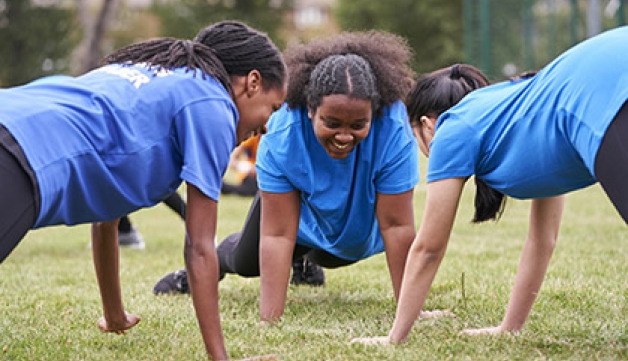
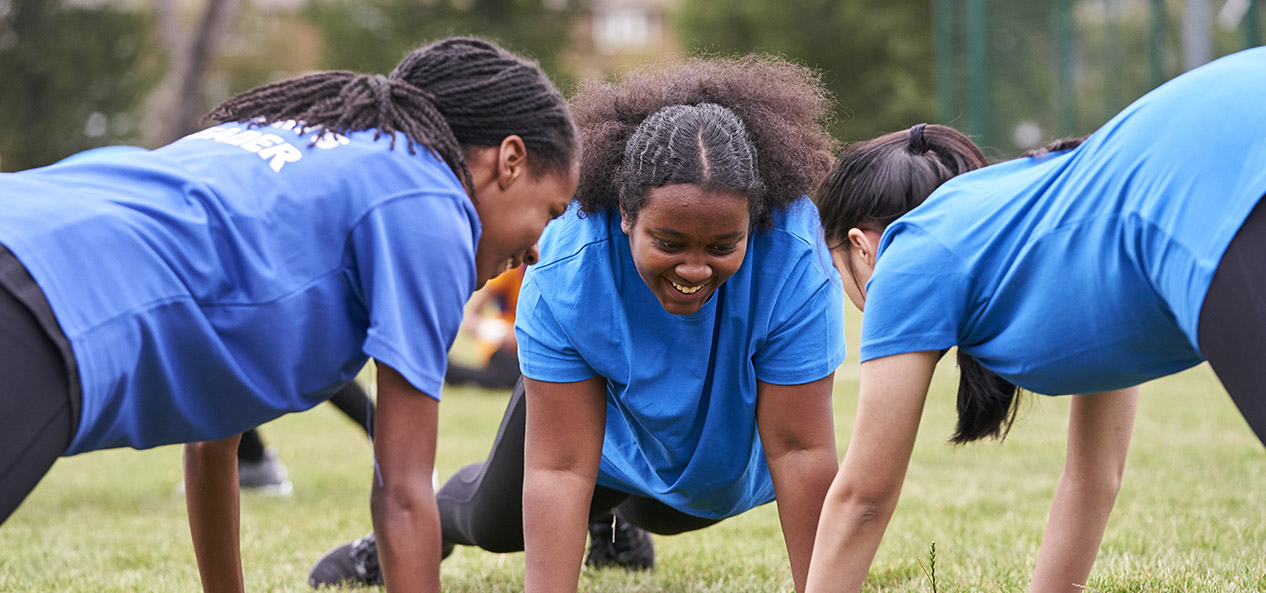
Three young girls adopt a press-up position on the grass outside, all facing each other in a circle

What young people are telling us

The strategy reflects what young people themselves have been saying for some time.

Many feel increasingly socially isolated, are worried about their mental wellbeing and financial security, and want to feel safer and more connected in their communities.

Crucially, they are also clear about what would most improve their daily lives: access to affordable, welcoming recreational and leisure opportunities, and the support of trusted adults.

These insights matter.

They underline the importance of spaces where young people can come together in person, build confidence, develop relationships and feel a sense of belonging – particularly at a time when pressures on services, families and communities are growing.

Why sport and physical activity matter

Sport and physical activity are not a 'nice to have' in responding to these challenges.

They provide proven, evidence-backed ways to support young people’s physical and mental wellbeing, create positive relationships with trusted adults, and strengthen connection to community and place.
 

They are also clear about what would most improve their daily lives: access to affordable, welcoming recreational and leisure opportunities, and the support of trusted adults.

Our sector already delivers experiences that young people value: inclusive activities, strong role models through coaches and volunteers, and environments where young people can feel safe, welcomed and supported to be themselves.

When done well, sport and physical activity can be a powerful protective factor in helping young people thrive, not just cope.

Inequality remains a barrier

Youth Matters rightly highlights the need to halve the participation gap between disadvantaged young people and their peers when it comes to enriching activities.

This is an area where urgency is needed.

Our latest Active Lives Children and Young People survey shows that while overall activity levels are rising, stubborn inequalities remain.

Young people from the least affluent families are still the least likely to be active, and too often face barriers related to cost, access, safety and whether opportunities feel designed for 'people like them'.

Less than half of young people say they are happy with the activities and services in their local area, and even fewer feel those opportunities reflect their needs and expectations.

Addressing this must be a priority if the ambitions of the strategy are to be realised.

Alignment with Uniting the Movement

The emphasis in Youth Matters on putting young people and communities at the heart of decisions, shifting from fragmented to collaborative working, and empowering local delivery strongly aligns with our long-term Uniting the Movement strategy.

Our Place Partnership approach is already focused on tackling inequalities, working alongside local partners and investing in long-term, community-led solutions.

Youth Matters validates this direction and reinforces the importance of sustained, place-based action rather than short-term interventions.

Our commitment

Delivering the ambitions of Youth Matters will require coordinated action across Government, sectors and communities.

Sport England is committed to playing our part: working with partners nationally and locally to ensure sport and physical activity are accessible, affordable, welcoming and shaped by young people themselves.

By listening to young people’s voices, focusing on the places facing the greatest challenges and continuing to address inequality head-on, we can help ensure this strategy delivers lasting impact over the next decade.

We look forward to continuing to work with Government, the youth sector and partners across sport and physical activity to turn this ambition into action for young people.
 

A positive force in many ways

On 26 November the Chancellor will deliver a much-anticipated budget.

In her pre-budget video message, the Chancellor has described the pressure on the NHS and the challenge of increasing growth, but among all the uncertainty, one thing is clear – finding the right package of measures will not be easy.

Against this backdrop, it feels timely to be publishing an update to our social value of sport and physical activity work. 

The new and expanded information shows what a positive force community sport and physical activity are.

A great cure with many benefits

The health and wellbeing benefits of sport and physical activity are well rehearsed and the UK Chief Medical Officers have previously described physical activity as the closest thing to a “miracle cure”, but based on the information we’ve published today, even that high praise seems to sell its value short.

Here are a few of the headlines from our latest data:

  • Sport and physical activity are good for the nation’s wellbeing and health. In 2023/24, the wellbeing value of sport and physical activity was estimated at £107 billion, and it prevented over 3.3 million cases of non-communicable diseases or chronic health conditions ranging from depression to heart disease. 
  • A more active nation means a more productive workforce. In 2023/24, £5.8bn of productivity losses due to morbidity were avoided due to sport and physical activity. 
  • A more active nation saves the health care system money. In 2023/24, sport and physical activity saved £8bn in direct healthcare costs through disease prevention and reduced use of health services. 
  • Community sport and physical activity is a net contributor to the public finances. In 2023, our sector generated tax revenue of £14bn for central government, compared with £2bn of public sector funding. This means community sport and physical made a net fiscal contribution of £12bn.

Furthermore, we know that sport and physical activity is a significant part of the economy. In fact, the Department for Culture Media and Sport’s 2024 Sport Satellite Account for the UK show that the direct contribution of sport and physical activity the English economy was £47 billion of gross value added and supports one million jobs.

So, from a public policy perspective, what’s not to like?!
 

Physical activity has been described as the closest thing to a “miracle cure”, but based on the information we’ve published today, even that high praise seems to its value short.

The value of sport and physical activity is significant and wide-ranging but with the right support it could be even greater.

The information published today also includes our estimate of the social cost of inequality in sport and physical activity, that is the amount of social value we miss out on because some groups of people are less likely to be active than others.  

We estimate this to be £19.6bn a year.

Tackling inequality in sport and physical activity, and realising this value, is at the core of our long-term strategy, Uniting the Movement, so I’d like to end by paraphrasing the Chancellor: “I commend the value of sport and physical activity to the House.”

10 Year Health Plan – opportunities for physical activity

It’s been just over a month since the 10 Year Health Plan was published – a key milestone in the government’s commitment to create an NHS fit for the future.  

It’s taken me time to navigate the headline ambitions, shifts in language, structural implications and, critically, what this all means for physical activity. There are 160 pages to get through, after all… 

There’s lots to unpick and this post from the Medical Consulting Group includes a visual that usefully summarises the key points.

For patients, it’s a positive and empowering tone, underpinned by a digital revolution and receiving care closer to home.  

With Neighbourhood Health a cornerstone of the Plan and elected mayors playing a greater role in prevention, combined with Local Government Reorganisation and Devolution, this all presents big opportunities to align with Sport England’s investment into communities that need it most.
 

To what extent does physical activity play a role?

Well, there were multiple references, including: 

Since publication, much commentary has reflected that the Plan could have gone further in utilising physical activity’s preventative powers.

It’s true: the evidence and opportunity for impact at scale are significant. I have two glass-half-full thoughts on this:

  1. This Plan feels like it goes further on physical activity than any previous national NHS/health strategy. Whilst we can go (much) further, this is progress to build upon.
     
  2. Rather than considering ‘potential’ purely through physical activity’s reference, there are numerous levers throughout the Plan to capitalise upon. We’ve learned that framing physical activity’s role in supporting wider, shared outcomes is key – whether that be tackling health inequalities, preventing and managing multi-morbidity, falls/frailty or social isolation… the list goes on.
     

So, what next?

Below are five opportunities that could deliver significant impact, particularly for those who do little or no activity (where health and economic gains are the greatest), those at risk of or living with long-term health conditions and those out of work due to poor health (including the NHS workforce).

As with any emergent thinking, I’m also holding questions... 

1. A core part of Neighbourhood Health

An excellent opportunity to connect people with local physical activity that works for their holistic needs.

Whilst finding ways to move is about more than structured or organised activity, there’s a diverse asset and activity offer in almost every neighbourhood to connect with, build trust in and enable frictionless access into.

Work co-led by the Faculty of Sport and Exercise Medicine alongside the Active Partnership National Organisation can help make this a reality.

Additionally, could co-located services, often including leisure provision alongside GP practices, become neighbourhood health centres?

2. Support embedded within the ‘doctor in our pocket’

Physical activity must be embedded within the evolving NHS app – leaning into behavioural science and AI to ensure people get the level of support they need.

There’s lots of great work to build upon – for example, the ORCHA-accredited We Are Undefeatable app.

3. Maximising health and care data systems

Interoperability of data systems can help target the least active, empower decision-making and better understand local opportunities and demonstrate impact.

The Open Data Institute’s recent white paper makes the case for better use of physical activity data.

4. Wraparound provision of obesity and mental health support

Increased use of anti-obesity medicines (such as GLP-1) provide opportunities for physical activity’s complementary role in muscle maintenance/gain, strength and maintaining a sustainable healthy weight.

For mental health, particularly in children and young people, physical activity can intervene and support early, including within expanded school mental health support teams and new Young Futures Hubs.

5. Building upon what’s already working

And much is working, led locally by our network of Active Partnerships alongside wider place, leisure and system partners.

Learning and effective practice must spread and approaches should be rooted in lived experience and considered in the context of community need – underpinned by strong system leadership, applied proportionate universalism and applying consistent impact/return on investment measures (i.e. the WELLBY).

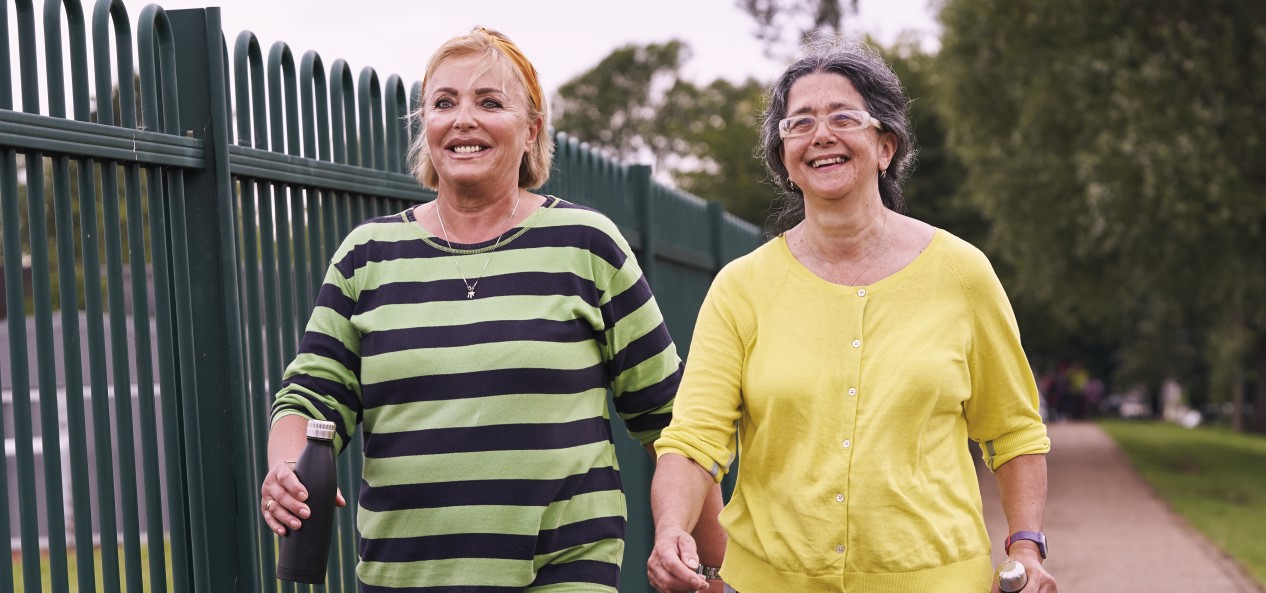
Two women walking in a park with water bottles

Five questions

  1. What does a coordinated physical activity response look and feel like?
    How do we ensure we’re coherent and consistent in our narrative, messages and offer? Is more support required for our wonderful frontline activity workforce?
     
  2. How do we maintain relationships and momentum throughout complex change?
    People are at the heart of this change – compassionate and supportive leadership is critical. 
     
  3. How can we capitalise on levers to support NHS England’s ambitions to harness the benefits of physical activity?
    A real milestone in our collective ambitions to integrate physical activity into routine healthcare. Perhaps this is an opportunity in itself! 
     
  4. How can we develop healthcare professionals’ confidence to promote activity, when mandated training is being reduced?
    The Physical Activity Clinical Champion programme is delivering brilliant impact and evolving the offer to support place-based working. 
     
  5. Are we still missing certain types of evidence?
    We’re not short on ‘why’ physical activity, but do we have enough around the ‘how’ we enable it in different contexts? 

So, could the Plan have gone further on physical activity? Of course. But are there opportunities throughout the Plan to capitalise on? Absolutely.

Yes, we’re still holding lots of questions, but let’s not dwell on what could have been and instead focus on the collaborative opportunities in front of us.  
 

Safety can be simple

After a suicide bomber attacked concert goers at the Manchester Arena in 2017, it was plain that a change was needed in how we protected people visiting public spaces.

In particular, there was widespread agreement that security and safety wasn’t just a matter for the police and emergency services; event organisers and the venues they used had to have a larger role in prevention and planning.

That realisation led to the campaign for Martyn’s Law, which is currently going through Parliament.

Officially known as the Terrorism (Protection of Premises) Bill, it will place a duty on premises and events to have security procedures in place to reduce the risk of harm if there’s an attack.

Some larger events and premises would need documented measures to reduce their vulnerability but it may well be some time before it fully comes into force as organisations and premises will need time to prepare.

As explained on ProtectUK – the dedicated website of the Home Office on counter-terrorism security information, training and materials – it will only directly apply to larger events and premises.

Yet we know that the people who want to do harm are just as capable of targeting small venues and small organisations.

Attacks on high-profile events or locations are getting harder to pull off, so how can we ensure people are protected everywhere they play, compete or train?

Luckily, we’re a society where voluntary associations have always taken responsibility to look after their people.

UK sports clubs and teams are exemplars of good practice in introducing safety and safeguarding protocols, and doing it with only the goodwill of volunteers to draw on.
 

Attacks on high-profile events or locations are getting harder to pull off, so how can we ensure people are protected everywhere they play, compete or train?

At the National Counter Terrorism Security Office we have been developing simple and easy-to-follow tools that are intended to demystify the steps needed to make people safer.

As well as working with some of the country’s biggest sporting organisations with large security set-ups, we’re conscious that security and terrorism are often the last thing on the mind of a club secretary who has to organise coaches, book referees, sweet talk parents into overseeing the car park or finding someone to collect the weekly subs.

Few people probably want to worry about having a plan to stop an intruder with a knife or think through how to manage multiple casualties caused by a rogue vehicle, but they want to know that someone has thought about the risks and that there are procedures in place.

Those procedures may be as simple as making sure you know who is coming into the building, organising the car park to limit the risk of an attacker getting up speed in a vehicle or having a protocol for getting people to safety inside a clubhouse, the changing rooms or the equipment store.

Or they might just involve regular volunteers by asking them to do a short free online security-awareness course.

Working with security experts across Government, industry and a number of national bodies, we’ve built a number of free tools on the ProtectUK website that clubs and teams are welcome to use.

You’ll find advice and resources covering subjects including identifying risks, event safety and eLearning for staff and awareness posters.

And if you can’t find what you need on our website – please, tell us. If it means that people can go about their sport in safety, we’re listening.
 

Find out more

ProtectUK

Happy anniversary, Place Expansion

They say time flies and while this is a cliché, it is one that’s undeniably true. 

It’s certainly the case when it comes to our Place Partnerships, because as we celebrate a year since we kickstarted our Place Expansion, a lot has happened!

Back in November 2023, our Place Expansion programme committed to investing £250 million of National Lottery and Exchequer funding into local communities across England in the following five years, to ensure those in greatest need were able to get active.

We've had a busy and positive year

In the past 12 months, and through this first phase of this Place Expansion, we’ve invested in 53 new places across England, partnering with 27 Active Partnerships and the dedicated organisations they work alongside.

From Swindon to Stoke-on-Trent, Blackpool to Brent and Walsall to West Norfolk, we’ve been partnering with key stakeholders in each of these places to establish what the local ambition and approach will be.

A group of kids play on a scooters park in Exeter during the Cranbrook Pump Track launch event in September 2024. Image credited to Matt Round Photography.

And through this way of working we have engaged partners from local government, the health sector, the community and voluntary sector, and the transport and housing sectors.

The result? A real positivity from these stakeholders about the approach we are taking.

We are currently working alongside our partners to establish ‘where next?’ so that we can continue to grow this approach with pace and impact (spoiler alert: we have plans to expand our investment to 80 places in the coming months).

We’ve also begun to invest £35m into our original 12 Place Partnerships to help deepen and strengthen these relationships so that, together, we can have an even greater impact.

Yet, we want all places to feel part of this approach.

With that aim in mind, most recently work began to roll out our Universal Offerwhich will see a £25m investment to support the whole sector to supercharge their efforts to tackle inequality and inactivity and evaluate the impact they are having. 

We are currently working alongside our partners to establish ‘where next?’ so that we can continue to grow this approach with pace and impact.

Our support will ensure all places across England will gain access to the tools, resources, learnings and capabilities to help them work more collaboratively and achieve the systemic change that is needed at a local level to address the barriers to getting people active. 

By galvanising the system in this way, we know we can bring about lasting and sustainable change to every part of the country.

Working together for local change

Since launching our place-based expansion last November, we’ve invested nearly £20m to help each of our place partners develop their individual approach.

This way of working – ground up and rooted in the needs of local communities – is contributing towards achieving a positive impact that we have not seen previously. 

We’ve seen that baking in physical activity into local, long-term strategic and policy commitments is a key solution to driving change within wider outcomes such as health, environmental sustainability and community cohesion.

Take Exeter as an example.

They have embedded our Active Design principles into their Liveable Exeter strategy –  a 20-year housing plan – by which they will build 12,000 homes where giving people chances of being physically active are at the front and centre of those developments.

We’re also seeing greater connection and collaboration amongst partners within a place than we’ve ever seen before.

At the end of September, the Greater Manchester Memorandum of Understanding brought together the combined authority, integrated care partnership, the transport, voluntary and community sectors, leisure providers, the GM Moving Active Partnership and Sport England. 

Through this collaboration, we will see resources aligned to support the integration of physical activity and sport at the highest decision-making levels in the city and region. 

And within these communities, we are seeing that this work is contributing towards positive signs of inequalities reducing and the inactivity gap closing. 

The contribution of the work and the focus of partners in Greater Manchester has seen year-on-year reductions of inactivity levels in children and young people and, for the first time, this is lower than the national average.

Meanwhile, in Pennine Lancashire, direct engagement and collaboration with the Muslim community has seen over 5,000 young people increase their daily activity levels through the Active Madrassahs programme.

More positive change to come

Impact like this is being felt up and down the country and this work really does speak for itself with a robust message: together we are stronger. 

Our Place Partnerships will see us work in every corner of the country, partnering with organisations in areas that face the biggest barriers to a more active life. 

Together we will create lasting change within the communities that need it most to ensure that more people can live active and healthier lives for longer.

So, looking forward to reaching new places in the next year and to keep celebrating across the country.
 

Find out more

Place Partnerships

More movement, more often

World Mental Health Day brings a welcome opportunity to shine a light on mental health awareness.

With mental health issues on the rise, action is needed now.

But how can we deliver this change through a system that, as outlined by the Darzi report, is on its knees after years of neglect?

This is the genuine challenge that the Government and policymakers face, and while work on the future of the NHS continues, I believe we still have an incredible opportunity – through sport and physical activity – to deliver real change for mental health outcomes.  

Earlier this week I sponsored a roundtable meeting in Parliament which focused on the role of physical activity in supporting improved mental health – and how the healthcare system can do more to support people to be active as part of their treatment. 

The evidence shows that being active has a profoundly positive impact on mental health. New research from an upcoming Sport England report has found that in 2022/2023, 1.3 million cases of depression were prevented through active lifestyles.

And being active can save our services money too; the report also calculated that reduced mental health service usage, thanks to sport and physical activity, saved £780 million. 

The annual Active Lives Survey demonstrates a clear positive link between activity levels and mental wellbeing.

While some activity is good, more is better.
 

With mental health issues on the rise, action is needed now.

Adults with higher wellbeing scores and without a diagnosed mental health condition are more likely to be active than others.

In fact, nearly two thirds of people (65%) without a mental health condition are active – but just over half (53%) with a mental health condition are active. 

The NHS, despite the challenges it faces, remains a deeply trusted organisation; more than half of adults say they look to the NHS for advice on how to be active.

Our health system and the dedicated people that run it is uniquely placed to support and encourage people to be active, and to empower them to enjoy better mental health.

In fact, nearly all (99%) of NHS Talking Therapy staff – those at the forefront of helping patients – say physical activity is important in improving outcomes for people with common mental health conditions, like anxiety. 

So, what can the healthcare system do to improve mental health?

As was done in Parliament yesterday, with a cohort of experts and leaders coming together, better connecting the health system with the sport and physical activity sector is a welcome start. 

From there, we can build meaningful change.

Every interaction with the health system should be seized upon as an opportunity to encourage people experiencing poor mental health to be active. 

We can train clinicians to routinely talk about physical activity within their practices and connect community exercise and activity groups with local health services – particularly in communities that are more like to report poor mental wellbeing. 

We can prioritise and integrate physical activity within mental health prevention and treatment pathways and plans, making it as important as other forms of intervention.

We can encourage and normalise active working cultures so that everyone has the opportunity to be active in their daily life.

When I was a junior doctor, I developed a passion for keeping people well.

When my colleagues were interested in mending a broken bone, I wanted to know how we could stop it breaking in the first place. 

We do not have to accept poor mental health as inevitable.

More movement, more often, to protect mental health from being broken, is my priority as an MP and I will do all I can to deliver this.
 

Tackling inequalities: our priority in a summer of sport

While England’s men came up short in their quest to bring home the Euros trophy, the competition was a fantastic reminder of the power of sport to unite and inspire us. 

And with the Olympic and Paralympic Games days away, it’s a brilliant summer to be part of sport in this country.

It’s vital though, that we see this as part of a much bigger picture – and I have been heartened to see how much of the government’s response to the football has focused on grassroots and community opportunity.  

Collectively, we must continue to break down the barriers that still exist for too many when it comes to playing sport and being active.

State of the nation

Our latest Active Lives survey found that nearly two thirds of adults meet the Chief Medical Officer’s guidelines for physical activity. There are 2 million more adults getting active regularly than there were in 2016.  

That is great news, but certain groups are still more likely to be inactive, like disabled people, people on lower incomes and people from diverse communities.  

Collectively, we must continue to break down the barriers that still exist for too many when it comes to playing sport and being active.

Uniting the Movement, our ten-year strategy, has one aim at its heart: deliver the life-changing benefits of sport and physical activity to everyone regardless of background, bank balance or postcode – through a ruthless focus on tackling inequalities.   

This aligns with the government’s aim to break down barriers to opportunity and it was great to see the focus announced by the new Culture Secretary Lisa Nandy, as she looks beyond Westminster for progress and change. As she said last week, too often ‘geography is destiny’. 

It’s all about the Place

A devolved, community-focused and collaborative approach – our Place-based partnerships – is the framework that we’re delivering through Uniting the Movement.

Where a person lives and the environment around them has a huge impact on how likely they are to be active.  For example, people in low-income communities don’t have access to the same facilities or opportunities as wealthier areas. 

We spent the past five years piloting ‘Place-based partnerships’ in 12 areas. And it worked, with inactivity levels reducing at a faster rate than other comparable areas, so we have radically focused our wider approach to laser-focus on helping communities that need the most support.  

We are expanding into 80 to 100 new places, spending a quarter of our annual budget on this approach and working hand-in-hand with local partners who truly understand what people in their postcode need to overcome barriers to activity. I invite you to listen to our Place Changemakers podcast series to learn more.  

Our network of Active Partnerships will have a critical role working with mayors and local government too - and stand ready to help deliver change from the ground and grassroots up.  

Wealth through health   

Sport and activity must also be the beating heart of the government’s focus on preventative health measures as both help build an NHS fit for the future and kickstart economic growth.  

We build wealth through health as every £1 invested in sport and activity generates nearly £4 in economic and social returns. Prevention is better than cure is a cliché for a reason: because it’s true.  

 If we can make getting active a normal and everyday part of life for us all – walking to school and work (active travel); affordable local sports clubs in every postcode; planning systems that enshrine space to get active into new developments and prioritising school sports, we’ll save the NHS billions and we’ll be a happier, more resilient and more connected nation as a result.  

And as we’re updating our value of sport research, ready to be launched in the coming weeks,  I look forward to seeing fresh insight on the incredible social impacts and savings that sport and activity generate and working with the government and our partners to turn the research into reality.

The five Government Missions

Sport can play a role in all five of the new government’s stated missions.  

The entire sport and physical activity sector – the grassroots sports clubs, gyms and leisure centres, the swimming pools, national governing bodies, the community instructors – can line up behind them. 

Collectively we help save lives, boost mental health, create opportunity and grow the economy.

Our role cannot be underestimated as we are a pivotal part of building a country where people live happier, healthier and more fulfilled lives. 

Sport England looks forward to working alongside you all, in partnership with our new government to go further, faster and to make everyone’s lives better through playing sport and being active. 

People making a difference

People. When I think about sport and physical activity, my mind is always on the people that are supporting others to be active.

That might be a coach, a friend, a lifeguard or perhaps a receptionist that sets you on your journey to accessing a class.

Without them, sport and physical activity could not happen.

No more acutely was this so than during the Coronavirus pandemic and the passion of millions of people that enabled sport and physical activity to return; a passion that remains to this day among those who continue to give up their time and/or dedicate their careers to help others be active.

Celebrating the positive trends

The latest data around the workforce from the newly released Workforce Insight report from CIMSPAUK Coaching’s ‘Coaching in the UK’ report and our very own Active Lives reportare all showing shoots of positivity, such as an increase in trust and confidence of coaches and a strong demonstration of the transferable skills developed by working in our sector.

Through all of these we are seeing the number of people involved in volunteering, coaching and employment through sport and physical activity recovering and, in some cases, even beginning to grow.
 

When I think about sport and physical activity, my mind is always on the people that are supporting others to be active.

This gives us some confidence in the effectiveness of the government’s retention schemes through the pandemic and the impact of the re-training and deployment efforts that were so central to supporting the workforce in being able to deliver again.

Key to all of this was our investment; Retrain to Retain, which we used to support CIMSPA, EMD UK and UK Coaching to minimise the loss of the skills and experience needed as we moved people from lockdown to recovery and movement.

It is encouraging to see that increased emphasis on skill development. But whilst there are common skill sets, we need to increase our understanding and support of the different abilities and talents required for different roles, and how these manifests themselves within a place.

This very much aligns with taking a place-based and community-led approach to enabling sport and physical activity to happen, as they ensure the workforce has the right skills and opportunities to answer its local needs.

This is something that is at the very core of our commitment within our long-term strategy, Uniting the Movementbut it’s also critical in our recent investment into CIMSPA with the establishment of the Local Skills Hubs, driven by local organisations and the workforce.

The challenges ahead

We are still seeing a real lack of diversity within the workforce, showing that we still have some way to go in our ambition to be truly reflective of society and the places in which we live and work.

Commitment to change means taking action and recruiting more people from diverse and under-represented backgrounds into senior and management roles, as this will contribute towards our mission to encourage more of the population to move more.

The lack of diversity across age, gender, disability and ethnicity is also more acute among occupations in our sector than those across the wider UK economy.  

For example, 13% of the sport and physical activity workforce report having a disability, compared with a national average of 16% across all occupations, and 87% are white British compared to 77% of all occupations.

While the report recommends building better talent-retention strategies and clearer career pathways, these efforts need to be looked at through the lens of the lived experiences of people under-represented in our workforce so we can understand and respond to the specific challenges they face.

We must also guard against complacency when it comes to the millions of sports coaches who provide activity sessions for others.

Our own consultation with coaches and instructors across the sector showed worrying signs of a workforce that is feeling undervalued, overwhelmed, demotivated and unsupported by the increased demands of their role.

We need to provide better support while, at the same time, ensuring every coach can be properly identified as being ‘safe to practice’.

Put simply, we must collectively make a stronger effort to engage, involve and empower more people, from more places, to be part of the workforce and make the space much more open and accessible to all.

From all of this, I have hope that we are moving in the right direction and that shoots we see now can soon blossom.

But we cannot take the sport and physical activity workforce for granted and we must ensure we give great experiences, support, opportunities and recognition to all of those that enable others to be active.
 

Notes

The CIMSPA Workforce Insight report and data covers the UK and the workforce in England makes up the majority of the UK workforce, so the trends, positives and challenges identified in the workforce insight report and this blog apply to England.

However, the data for England only is available here:

Find out more

CIMSPA Insight Hub

You've viewed of items.