Skip to content

Taxonomy term

Content type

Health drives wealth: gyms, pools and leisure centres play a big part

January is a difficult month for many of us. It’s dark, cold, wet and the glow of the festive season feels a long time ago.

But it’s also a moment when millions of people make a conscious decision to reset – to move more and invest in their health.

That’s why January matters so much for gyms, swimming pools and leisure centres. It’s consistently their busiest month of the year and not just because of New Year’s resolutions.

But beyond the first month of the year, there is a growing understanding that physical activity is preventative medicine and that a healthy population drives a healthy economy.

The places we move are of critical importance.

Earlier this week, alongside ukactive, I visited three very different facilities in one day – across both the public and private sector.

What struck me was how similar the stories were.

Operators talked about strong footfall, rising memberships and people coming through the doors for more than just exercise.

They’re coming for health, of course – but also for confidence, connection, and support.

This feels vitally important in a time that is characterised by increasing isolation, screens and polarised views.

Spaces open to everybody

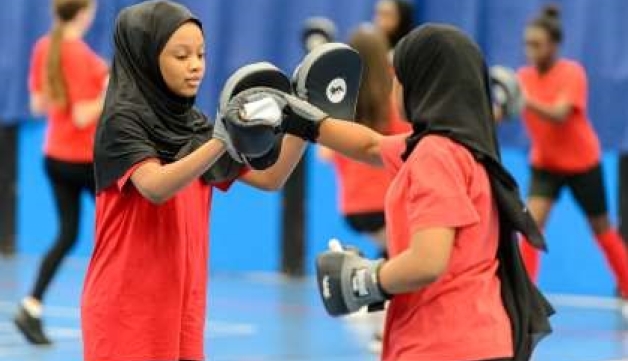
Another feature which stood out was the remarkable diversity of the people there – from teenagers arriving in their uniforms after school, to the group of retirees who had originally been referred by the next door hospital and now were coming four days a week (and spending as much time over lunch as in the class).

It was also fantastic to see the level of innovation and use of technology to bring health and leisure closer together – with sophisticated health checks, devising personalised programmes for each individual, linking to 'e-gyms' and other virtual support.

This is the preventative health agenda in action. It’s getting active from the ground up and it sits at the heart of our ambition at Sport England, working with our partners to help millions more people become active.

January brings this ambition to life, but the real story is what’s happening year-round.

The scale and growth of the gym and leisure sector are significant.

The UK Health & Fitness Market Report 2025 shows a record 11.5 million people are now members of a health or fitness club – up 6.1% on the previous year – with 616 million facility visits recorded, an increase of 8.2%.

These are not short-term spikes. Participation has been growing over consecutive years, supported by a unique infrastructure of public, private, large, medium and independent operators working across the country.
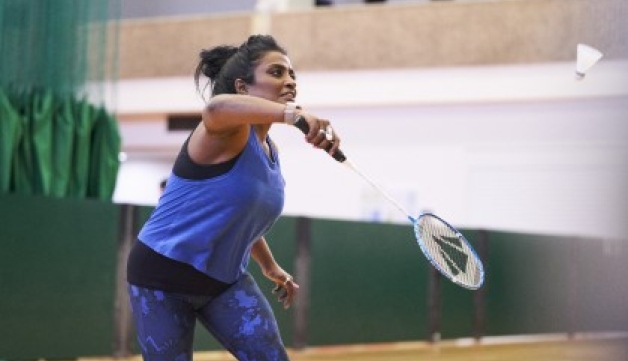
 

Beyond the first month of the year, there is a growing understanding that physical activity is preventative medicine, and that a healthy population drives a healthy economy.

Sport England’s Active Lives Adults survey 2023-24 reinforces this picture.

Fitness activities and swimming continue to be major drivers of physical activity behind walking, with 904,000 more adults taking part compared to the previous year.

Demand is being driven by what people value most.

Polling from ukactive shows that 77% of members join a gym or leisure facility primarily to improve their mental health and wellbeing.

People also cite better sleep, increased confidence, managing health conditions and making new friends. This is about quality of life, not just physical fitness.

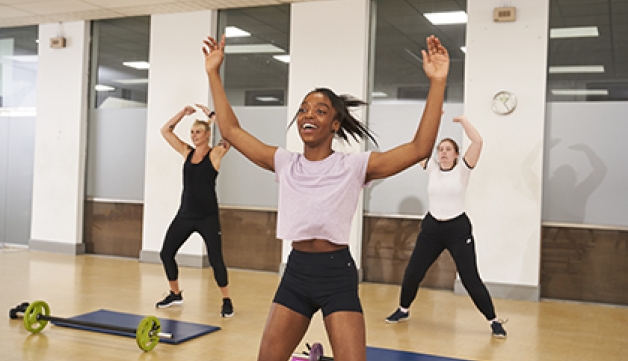
We’re also seeing important shifts in who is taking part. Female participation continues to grow, particularly through group exercise and classes.

Projects like Safer Spaces to Move, delivered with This Girl Can, are helping to remove barriers and make facilities more welcoming and safer for women.

Key community assets

Our latest Moving Communities report shows participation in public leisure has increased for every age group over 45, while gym activity is rising among under-16s, over-65s and people living in the most deprived communities.

Since 2017, the number of children and young people taking part in gym and fitness activity has increased by more than 12%.

Standards matter too. Facilities are improving every year, driven by initiatives such as The Active Standard, Quest and FitCert, ensuring that quality, safety and inclusion keep pace with growing demand.

All of this sits squarely within the Government’s priorities for economic growth and improving the NHS through the 10-year plan.

Health drives wealth and the social value created by being active is immense.

The sector contributes £122.9 billion in social value each year, including £15.9 billion in healthcare savings and £106.9 billion in wellbeing value – the equivalent of £2,600 per active adult – and more than double that for people with long-term health conditions or disabilities.

We gain £6 billion in productivity, thanks to a healthier workforce that takes fewer sick days.

The sector creates £5.7 billion in revenue and supports hundreds of thousands of jobs, many for young people at the start of their working lives.

These are extraordinary numbers.

January is important. But the real opportunity lies beyond it.

Gyms and leisure centres are not just places we go at the start of the year; they – and the people that work in them – are essential community assets, powering healthier lives, stronger communities and a more resilient economy all year round.
 

Find out more

ukactive

The great (and inclusive) outdoors

For more than 10 years, I’ve had the privilege of being part of a partnership between Sport England and the National Trust that’s been quietly but powerfully changing lives.

This is more than just getting people outdoors – it’s about creating real, lasting opportunities for everyone, especially those who need it most, to connect with nature and feel the benefits of being active in green and blue spaces.

Being outdoors and connected to nature has demonstrable health and wellbeing benefits.

Studies have shown impact such as lowering stress levels and reducing cortisol and inflammation, which are increasingly seen as factors in depression, autoimmune diseases and cancer.

Our work at the National Trust is shifting towards a more ‘place-based’ approach, but what exactly do we mean by that?

Rather than parachuting in with one-size-fits-all solutions, we’re considering what’s already happening in local communities, at National Trust properties and on their land, and finding ways to make those spaces more accessible, more welcoming and more connected to the people who live nearby.
 

This is more than just getting people outdoors – it’s about creating real, lasting opportunities for everyone, especially those who need it most, to connect with nature and feel the benefits of being active in green and blue spaces.

Whilst we consider how to be more locally responsive, we continue to work at a national scale on initiatives such as improving navigational and orientation signage to ensure paths are easy to find and follow, and refining path-grading methodologies to better reflect the diversity of users.

This work focuses on describing the path itself rather than the person using it and it goes in line with the Equality, Diversity & Inclusion (EDI) principles and the Equality Act.

What I love about our work is that it’s about making meaningful connections between the land and the community.

It’s not just about trails or facilities – it’s about creating safe, natural, traffic-free environments where people can walk, cycle, run, paddle or simply be.

I’ve seen firsthand how many barriers can stand in the way of people accessing the outdoors.

Things like fear of getting lost, finding themselves in unfamiliar terrain, safety concerns, challenges around travelling to our places or just not knowing where to start.

We’ve worked hard to design experiences that support people who are new to the outdoors and it’s making a real difference.

For that we’ve been able to capitalise on the strength of the National Trust brand.

Our properties are trusted spaces, with essential facilities like cafés and toilets, which makes them perfect for families, groups or individuals who might be taking their first steps into nature.

The multi-use trails that have been developed are a great example. They’re accessible, enjoyable and range from three to 5km, which makes them ideal for walking, wheeling, running or cycling.

And the impact has been incredible!

We’ve seen a 23% rise in visits from people of ethnic backgrounds, which indicates we’re reaching new audiences and helping more people feel like they belong in these spaces.

This is fantastic news since we strive to improve the experience for communities that often find barriers to exploring the great outdoors.

I’ve also been inspired by the way this work helps those who may need deeper support.

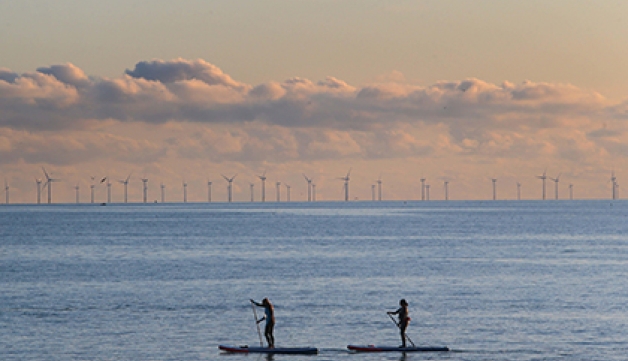
Whether it’s supported paddling sessions, inclusive activities for families with SEN, or community-led cycling groups like the Muslim Cycle Sisters at Osterley, there’s a real commitment to inclusion.

And it’s not just about participation but about representation, too.

The Trust is working with partners to tackle underrepresentation in the outdoor workforce, for example through our walking leaders programme, which is such an important step toward long-term change.

Nature restoration and biodiversity play a big part in our work.

Our infrastructure developments are designed to improve visitor experience and get people active whilst protecting some of the most sensitive nature areas.

We are strengthening our knowledge and skills in designing experiences that deliver real, meaningful and lasting nature connection to inspire more people to care for nature and their local environment.

Looking ahead

As I reflect on the past decade, I feel proud of what we’ve achieved and even more hopeful about what’s to come.

Our partnership with Sport England shows that when we focus on people, place and purpose, we can create spaces that are not only beautiful, but truly inclusive and life-enhancing.

And that’s something worth building on.

Find out more

National Trust

Safety can be simple

After a suicide bomber attacked concert goers at the Manchester Arena in 2017, it was plain that a change was needed in how we protected people visiting public spaces.

In particular, there was widespread agreement that security and safety wasn’t just a matter for the police and emergency services; event organisers and the venues they used had to have a larger role in prevention and planning.

That realisation led to the campaign for Martyn’s Law, which is currently going through Parliament.

Officially known as the Terrorism (Protection of Premises) Bill, it will place a duty on premises and events to have security procedures in place to reduce the risk of harm if there’s an attack.

Some larger events and premises would need documented measures to reduce their vulnerability but it may well be some time before it fully comes into force as organisations and premises will need time to prepare.

As explained on ProtectUK – the dedicated website of the Home Office on counter-terrorism security information, training and materials – it will only directly apply to larger events and premises.

Yet we know that the people who want to do harm are just as capable of targeting small venues and small organisations.

Attacks on high-profile events or locations are getting harder to pull off, so how can we ensure people are protected everywhere they play, compete or train?

Luckily, we’re a society where voluntary associations have always taken responsibility to look after their people.

UK sports clubs and teams are exemplars of good practice in introducing safety and safeguarding protocols, and doing it with only the goodwill of volunteers to draw on.
 

Attacks on high-profile events or locations are getting harder to pull off, so how can we ensure people are protected everywhere they play, compete or train?

At the National Counter Terrorism Security Office we have been developing simple and easy-to-follow tools that are intended to demystify the steps needed to make people safer.

As well as working with some of the country’s biggest sporting organisations with large security set-ups, we’re conscious that security and terrorism are often the last thing on the mind of a club secretary who has to organise coaches, book referees, sweet talk parents into overseeing the car park or finding someone to collect the weekly subs.

Few people probably want to worry about having a plan to stop an intruder with a knife or think through how to manage multiple casualties caused by a rogue vehicle, but they want to know that someone has thought about the risks and that there are procedures in place.

Those procedures may be as simple as making sure you know who is coming into the building, organising the car park to limit the risk of an attacker getting up speed in a vehicle or having a protocol for getting people to safety inside a clubhouse, the changing rooms or the equipment store.

Or they might just involve regular volunteers by asking them to do a short free online security-awareness course.

Working with security experts across Government, industry and a number of national bodies, we’ve built a number of free tools on the ProtectUK website that clubs and teams are welcome to use.

You’ll find advice and resources covering subjects including identifying risks, event safety and eLearning for staff and awareness posters.

And if you can’t find what you need on our website – please, tell us. If it means that people can go about their sport in safety, we’re listening.
 

Find out more

ProtectUK

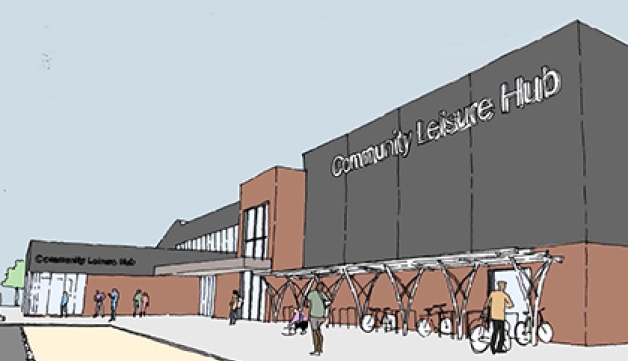
Community Leisure Hub

An illustration of a Community Leisure Hub - a large building with bike racks outside it Aiming to encourage well-designed facilities that meet the needs of sport and physical activity and consider 'Active Design' and the 'Active Environment' principles. Facilities
Leisure Local

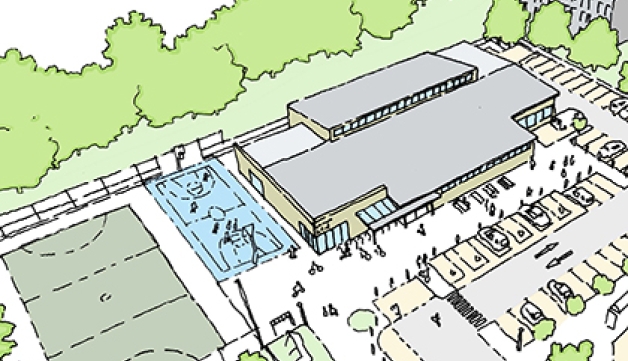
An illustrated scene of a local leisure centre, with a netball court, basketball court, parking spaces and planting outside. A concept aiming to encourage well-designed facilities that meet the needs of sport and physical activity and are a pleasure to use. Facilities
Raising the bar with The Active Standard

Our sector is the nation’s engine room of physical activity as we support health and wellbeing by welcoming people from all communities – whatever their age, background or ability – on their journey to a more active lifestyle.

Customer-facing and facility-based environments work hard to ensure that users, staff and buildings are operating to the right standards.

These continued efforts enable customers to feel safe and confident in getting active in these spaces and to build wider trust that the sector is taking safety seriously.

And this is key, because in an increasingly complex regulatory environment, compliance standards are vital and operators across the country are being given a new opportunity to strive for excellence with the launch of a new certification from ukactive called The Active Standard, also known as TAS.
 

Our sector is the nation’s engine room of physical activity as we support health and wellbeing by welcoming people in all communities on their journey to a more active lifestyle.

The certification has been developed over four years in partnership with Sport England, The Chartered Institute for the Management of Sport and Physical Activity (CIMSPA), Right Directions (which delivers Quest – the quality scheme by which our sector is measured), and EuropeActive and The Royal Netherlands Standardisation Institute (NEN), which together deliver the European FITcert scheme.

TAS is a baseline certification available to all ukactive members that operate sport, fitness and leisure facilities in the UK.

Co-developed with the industry, it has been designed to provide value for facility operators across the public, private and independent sectors, no matter how small or large.

How can TAS help get more people active?

The certification has been designed to unite operators in their pursuit of operational excellence and to help them demonstrate quality and compliance with the UK law.

As a baseline certification, TAS can be achieved by demonstrating that an operator is meeting the requirements for areas such as health and safety laws and regulation, professional standards, safeguarding measures and data protection.

The recognition is achieved through a 40-question process conducted by an independent assessment body.

By making it accessible and achievable to operators of any size, this recognisable quality mark will help to instill trust and confidence for more consumers, as well as supporting wider partners such as healthcare professionals and the NHS to feel confident referring patients to our sector’s facilities.

This will be crucial to aid us in our shared mission to reduce health inequalities across England.

Importantly, this baseline certification also encourages operators to continue their improvement journey by introducing new pathways to Quest certification and the FITcert scheme.

How are standards evolving?

In 2020, the physical activity sector – like many other customer-facing sectors – was experiencing the impact of the Covid-19 pandemic, with facilities around the world being forced to close throughout long periods of lockdown.

The importance of demonstrating the sector’s safety procedures was paramount during this time.

In fact, it was this ability to prove the high standards of the sector that led many gyms and leisure centres to opening earlier than other sectors and services following the second national lockdown.

As time progressed, the sector’s commitment to standards continued and the industry was well aware of the role health and safety commitments could ultimately have on reputation and on being able to welcome even more people through the door.

Since then, TAS has been meticulously tested and piloted with a broad range of operators, to ensure it is a certification all ukactive member operators can achieve, with a clear pathway for those that decide to further progress their journey to excellence through the likes of Quest and FitCert, without duplication.

Research by Sport England shows that the sport and physical activity sector in the UK already generates £107.2 billion in social value each year.

We also know from their most recent Children’s Active Lives survey, that participation in gyms and leisure facilities has more than doubled in the past five years, with 908,000 more young people taking part compared to 2017-18.

By recognising this growing demand and the expectations of the next generation, we have the opportunity to use a unified standard to showcase just how safe, supportive and inclusive our sector’s facilities really are.

Doing so will enhance the sector’s reputation, help even more people to feel confident in getting active and ultimately boost the long-term health, happiness and prosperity of the nation.
 

Find out more

The Active Standard

Supporting England stars' grassroots journeys

Like millions of people around the country, I’ve been keenly following England men’s bumpy progress at Euro 2024, and now we're all looking forward to another semi-final!

Whenever I’m watching the Three Lions or the Lionesses – or any football match – I can’t help but feel proud of our continued investment into football at Sport England.

Our goal is to make sport and physical activity a normal part of life for everyone in England, regardless of who you are.

Football is our national game and is a really important activity for us, as it is accessible and plays a big role in keeping the nation active.

Not only does it stir our emotions and help to get people talking (just think of that overhead kick v Slovakia!) but it plays a big part in the delivery of our 10-year strategy, Uniting the Movement

Our Active Lives surveys tell us that nearly four million adults participated in football last year and nearly three million children and young people currently play once a week or more.

So whether it's through turning out for your local team in one of the thousands of brilliant grassroots clubs up and down the country, playing with mates in a local five-a-side centre, or a kickabout in the park, football provides reach into communities and audiences that are important to us.

"Whether it's through turning out for your local team in one of the thousands of brilliant grassroots clubs up and down the country, playing with mates in a local five-a-side centre, or a kickabout in the park, football provides reach into communities and audiences that are important to us."

Our partners are key to delivering long-term change by transforming lives and communities through sport and physical activity, and we are investing over £6 million a year in long-term partnerships with the FA and EFL in the Community (formerly the EFL Trust). 

This includes supporting the FA’s work to make the football coaching workforce more representative of its community and in driving positive change for disabled people.

Our partnership with EFL in the Community will support their network of Professional Club Community Organisations working in areas of greatest need to play their part in tackling inactivity levels and the associated inequalities.

We also work in partnership with the Football Foundation, the Premier League, the FA and the government’s charity, helping support and influence their significant collective investment to help communities improve their local football and multi-sport facilities.  

The Football Foundation also deliver our £15m lottery-funded Active Through Football programme in 25 places, making a positive impact in people’s lives through recreational football and wider activity informed by community engagement. 

The grassroots journeys of more than half of the current England squad in Germany – including stars like Harry Kane, Jude Bellingham and Trent Alexander-Arnold – have been supported by Football Foundation investment in things like new and refurbished pitches, new stands and spectator toilets.

It’s hugely rewarding to see some of the players who once benefitted from improvements to their junior clubs going on to shine on the international stage. 

But it’s even more important for us that our investment leads to more and more people from all backgrounds being able to access football in their communities – and reaping the many benefits of that.

We’ll continue to do our bit for the game. For now, here’s to an England win on Wednesday night and another step towards bringing the Euros home!

Celebrating four years of crowdfunding

In the last few years we are hearing more and more about crowdfunding. A concept that basically refers to people and/or organisations coming together to raise money in order to fund a project.

When it comes to crowdfunding in sport, we could say that this is a collaboration that, at its core, has a shared vision -  to encourage healthier lifestyles and stronger communities by making match-funding available to help the sport and physical activity sector.

This summer we celebrated the fourth anniversary of our partnership with Crowdfunder UK, and what a wonderful collaboration this has been!

Combining the expertise of this great organisation – one of the most renowned crowdfunding platforms in the country – and our commitment to investing in grassroots sports initiatives, we have created a joint endeavour that continues to redefine the landscape of sports funding.

This is how it works.

Organisations can apply for up to £10,000 in match funding to contribute to their live campaigns.

All clubs need to do is apply via the Crowdfunder UK platform, and by raising a portion of their total across a certain number of supporters, our pledge will automatically be dropped on to a live campaign.

Our main driver for the initiative was to help change the behaviour and thinking within VCSE (voluntary, community and social enterprise) organisations our sector.

Advocating self-help and empowering people to achieve success from running a campaign is key and the additional resource that we provide to achieve this, paramount.

 A common misconception is that the more deprived areas struggle to raise funds from their local communities.

However, areas with an IMD (Index of Multiple Deprivation) 1 recieve an amplification of £1.46 for every £1 of Sport England investment.

This illustrates that with regards to crowdfunding, more deprived areas may not be at a disadvantage as is commonly thought.

We have two campaigns that are examples of this partnership: Active Together - a programme to help sport and physical activity organisations move forward with priority projects and running costs that they might be struggling with; and Places and Spaces - a programme for community sport and physical activity groups looking to create, enhance or redevelop their sports facilities for the benefit of the community as part of the Birmingham 2022 Commonwealth Games legacy.

Sustainable funding

One of the most remarkable feedback items we have consistently received from project leads benefitting from this model, refers to the wider impact the crowdfunding experience has had on their organisations.

Aside from the financial backing, thanks to the pool of support and tools on offer, organisations have reported many benefits, including:

  • better connection to the local community
  • improved digital skills 
  • activated wider sponsorship on top of their campaigns
  • increased number of new members
  • a growing sense of togetherness throughout the organisation.
     

When it comes to crowdfunding in sport, we could say that this is a collaboration that, at its core, has a shared vision - to encourage healthier lifestyles and stronger communities.

Therefore, as a team, we really can’t highlight enough the full impact the fund has the potential to have on an organisation and its stakeholders.

A huge element of this was the customer experience on offer throughout the campaign and the application process.

Alongside Crowdfunder UK we have consistently championed diversity, aiming to break down barriers that hinder access to activity for underrepresented groups, something that lies at the core of our long-term strategy, Uniting the Movement, and that guides everybody’s efforts at Sport England.  

A win-win proposition 

Sport England's decision to partner with Crowdfunder UK provis proving to be a win-win proposition for all parties involved, based on the consistently high amplification figures derived from the application of this model.

Moreover, this approach to funding emphasises the value of community involvement in bringing sports projects to life.

This is because individuals, local businesses and organisations have a unique opportunity to become active stakeholders in initiatives that matter to them, investing in their communities and contributing to the nation's collective health and wellbeing.

How can you help…

We are one of a growing number of sports bodies venturing into Crowdfunding, and we are trying to further signpost its benefits to our partners.

So if you are having conversations, please do share the latest infographic and details for the webinars.

We also have some fantastic, free support tools to help you on your crowdfunding journey.

These include short courses online, monthly webinars (including an interview with past campaign owners), one-to-one support with a Crowdfunder Sport coach as well as a 24/7 help centre.   

There's also a handy guide that includes all of these details and the Crowdfunder coaches will be available to talk you through some of the most frequently asked questions.  

It's in our nature

Crowdfunding in sports makes lots of sense for a lot of people. We are, in the end, social animals and sport and physical activity are intrinsically team efforts.

Because in sport, even if you compete solo, you always have a crew behind you, guiding you and making sure you perform to the best of your ability.

And even if you prefer to be active by yourself, chances are you’re still benefitting from other’s efforts like exercising on a renovated local park.

Working together for the common good is not only human nature. It may truly highlight what’s best within us, as we’re stronger together, and together we can achieve more.
 

You've viewed of items.